
Reviewed · HISTORICAL TOURS
Pula: Historic Walking Tour with Local Guide & City Views
Pula rewards a slower look. I like the local perspective of Marina, a licensed guide born in Pula who has worked in Istria for more than 18 years. I also like the route, which links the Roman Amphitheatre, ancient gates, farmer’s market, and Forum instead of treating each sight as a separate photo stop. The main consideration is that this is a compact 1.5-hour walk, and entrance fees are not included.
This tour is conducted in German, so it is best suited to German-speaking visitors. Marina can shape the conversation around local life, food, culture, nature, or history, but you should not expect a long museum visit or a full-day survey of Pula. At $28 per person, the value comes from the personal explanation and efficient route through the old center.
In This Review
- Key points at a glance
- Starting beneath Pula’s Roman Amphitheatre
- What Marina adds to the old streets
- Three Roman gates and the details between them
- The farmer’s market and Pula’s everyday side
- The Forum, the August Temple, and a goat on the flag
- What $28 buys you in 90 minutes
- Access, pace, and who will enjoy it most
- How to get the most from Marina’s tour
- Should you book this Pula walking tour?
- FAQ
- Where does the tour begin?
- Where does the tour end?
- How long does the walking tour last?
- What language is the tour conducted in?
- Who leads the tour?
- Is admission to the Amphitheatre included?
- Is the tour wheelchair accessible?
- Can I cancel for a full refund?
- Do I have to pay when I reserve?
Key points at a glance
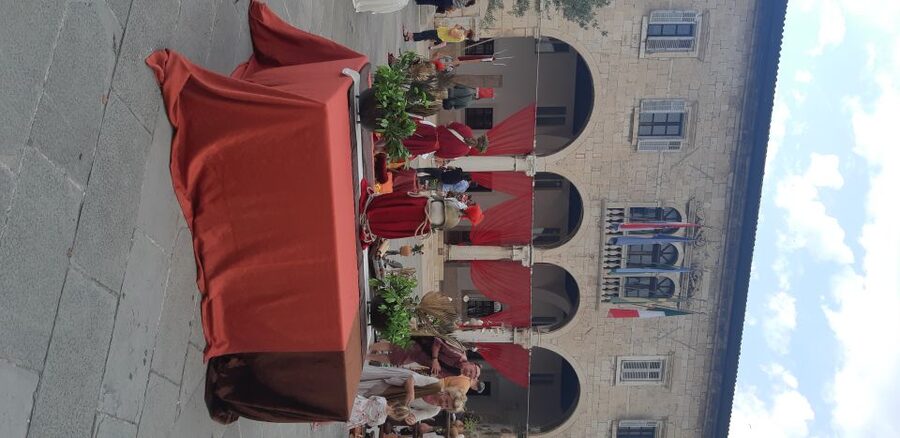
- Marina brings local memory to the walk: She was born in Pula and has guided in Istria for over 18 years.
- The Roman Amphitheatre is more than a gladiator arena: You learn about its wider purpose and place in Pula’s story.
- Three surviving Roman gates add detail: The Twin, Hercules, and Sergii gates each offer preserved features to examine.
- The farmer’s market connects ancient and modern Pula: You see where local products are bought and sold today.
- The Forum ties together Roman and Venetian Pula: The August Temple and Venetian city hall provide a compact history lesson.
- The walk returns to its starting point: Meet at the Amphitheatre entrance, under the wooden roof, and finish there as well.
Starting beneath Pula’s Roman Amphitheatre
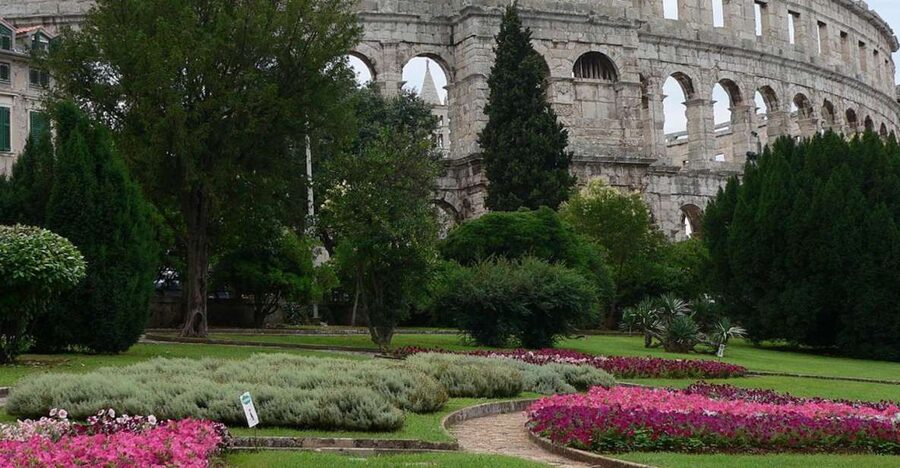
The tour begins at the entrance to Pula’s Amphitheatre, under the wooden roof. This is a sensible meeting point. The building is the city’s most recognizable sight, so you do not need to hunt for a small office or memorize a complicated street address.
The Amphitheatre gives Marina a strong opening subject. You learn what the Romans built it for and how its role reached beyond gladiator contests. That wider view matters. It keeps the arena from becoming just a large ancient shell where you take a few photographs and move on.
I like beginning here because the building immediately gives scale to Pula’s past. The rest of the walk then moves into the streets and smaller remains of the old city. The contrast helps you see how Pula developed over several periods, rather than thinking of it as only a Roman site.
Admission to the Amphitheatre is not part of the $28 tour price. The activity is a walking tour with a guide, so you should budget separately if you want to enter paid sights. The information provided does not promise an interior visit, and the route should be understood primarily as a guided look at the city and its landmarks.
More Walking Tours in Pula
- Pula walking tour
★ 5.0 · 96 reviews - Pula: Historic Sites Guided Walking Tour
★ 4.8 · 78 reviews - Pula Essentials Walking Tour
★ 4.8 · 64 reviews
What Marina adds to the old streets
A local guide can point out details that are easy to miss when you walk alone. Marina was born in Pula, speaks very good German, and has worked as a licensed Istrian guide for more than 18 years. That background gives the tour a useful mix of formal history and personal connection.
She also says she has lived through parts of the city’s story. That does not turn the walk into a personal memoir, but it can give local events and changes a human frame. You are not simply hearing dates and names. You can ask about daily life, local customs, food, nature, or culture, then let the conversation move toward your interests.
The tour also promises alternative facts and lighter details about Pula. That is important during a short city walk. A good guide needs to explain the main story, but the small surprises are often what help you remember a place after you leave.
The strongest praise in the supplied feedback focuses on this quality. One person described the walk as very entertaining and said it revealed much about the city and its people. Another said the information offered a completely different view of Pula. Those comments point to the tour’s main strength: interpretation, not simply sightseeing.
Because the tour is in German, language fit matters. If you are comfortable following a spoken tour in German, Marina’s specialty should make the visit easier and more engaging. If you need English or another language, this is not the right choice based on the available information.
Three Roman gates and the details between them
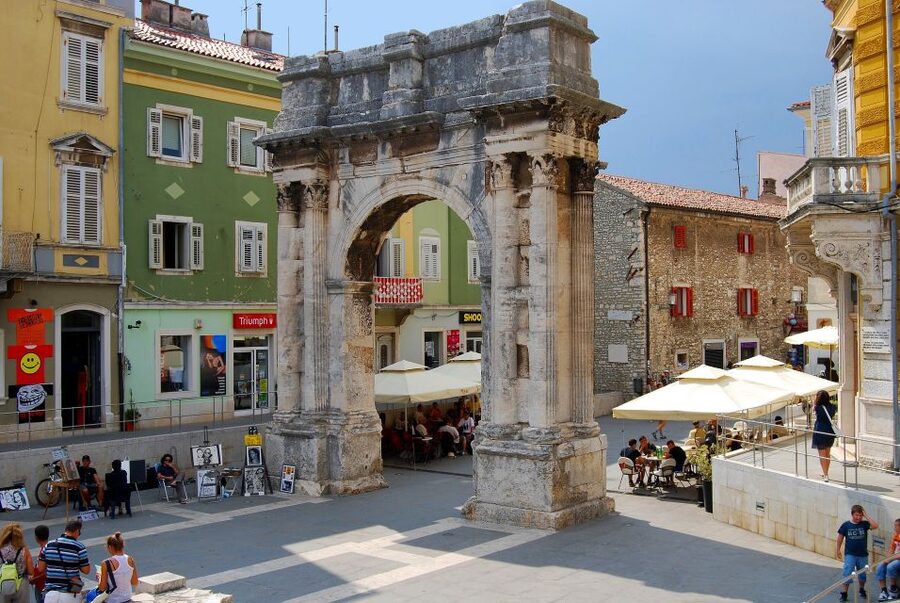
Pula still has three Roman city gates: the Twin Gate, Hercules Gate, and Sergii Gate. The tour uses these remains to show how the old city was entered and connected.
The names alone are not the main attraction. Look closely at the preserved details. A guide can help you understand why a gate was built, what its decoration suggests, and how it fits into the city’s Roman plan. Without that context, gates can look like isolated stone fragments. With explanation, they become clues to the shape and importance of ancient Pula.
The Twin Gate is especially useful for showing how surviving pieces can point to a larger vanished structure. Hercules Gate carries a name that invites questions about Roman symbolism and local memory. The Sergii Gate offers another chance to examine how public monuments could honor people and power.
I appreciate that this part of the route does not depend on grand interiors. You are looking at details in the streets, where the old city and present-day Pula overlap. It also makes the walk feel less predictable than a simple route from one famous building to another.
The exact amount of time spent at each gate will depend on the guide’s pacing and your questions. Since the whole tour lasts 90 minutes, you should expect short explanations rather than a long archaeological lecture at every stop.
The farmer’s market and Pula’s everyday side
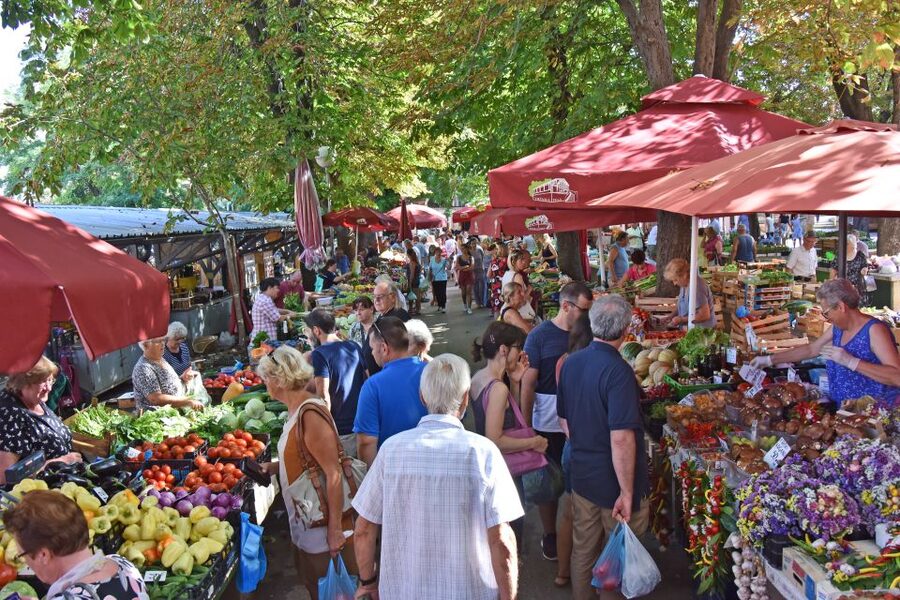
The farmer’s market gives the tour a welcome change of pace. Instead of focusing only on monuments, Marina takes you to a place where local products from Istrian soil are bought and sold.
This stop is valuable because food shows how a city works today. Roman ruins tell you about power and public life. A market tells you about ordinary routines, local produce, and the connection between the city and its surrounding region.
Marina is a passionate cook and interested in local cuisine, so food is not an afterthought for her. You can ask about products, cooking, or the role of the market in local life. The information does not specify tastings or purchases as part of the tour, so you should treat this as a guided market visit, not a food tour with included samples.
I would pay attention to what is being sold and how people use the market. Even if you do not buy anything, this is a useful place to get a feel for Pula beyond its ancient monuments. If you are planning self-catering meals, the stop may also help you recognize local ingredients, although the tour does not promise shopping assistance or a market discount.
More Historical Tours:
- Olive Oil Guided Tasting and History in Pula
★ 4.5 · 34 reviews - Pula Roman Heritage Walking Tour
★ 5.0 · 12 reviews - Dubrovnik Old Town History Walking Tour
★ 5.0 · 1,684 reviews - Walking Tour of Split with a ‘Magister’ of History
★ 5.0 · 1,122 reviews
The Forum, the August Temple, and a goat on the flag
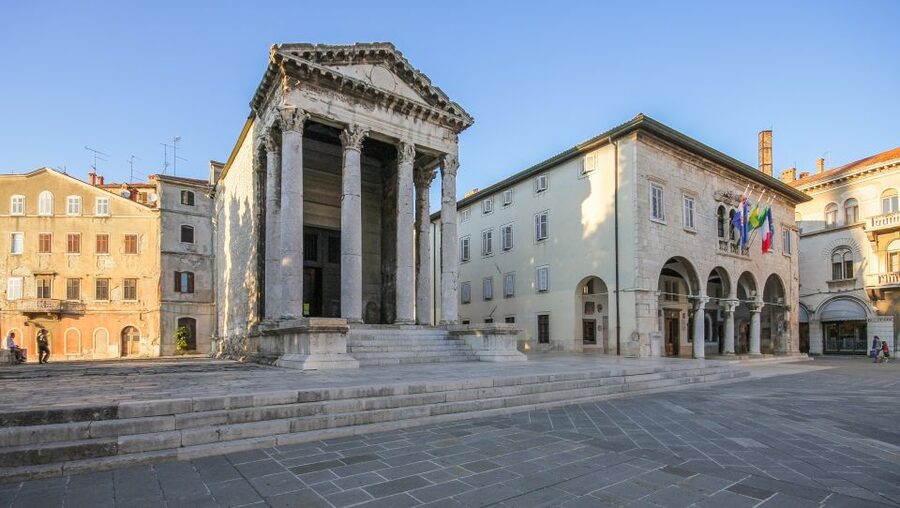
The route continues to the Forum, the Roman heart of Pula. In ancient times, the Forum served as a public center connected with trade and civic life. Today, it gives you a compact view of different periods layered into one square.
Here you see remains of the August Temple and the Venetian city hall. The pairing is useful because it shows that Pula’s story did not end with Rome. Later rulers and cultures reused the same central space, leaving their own marks beside earlier structures.
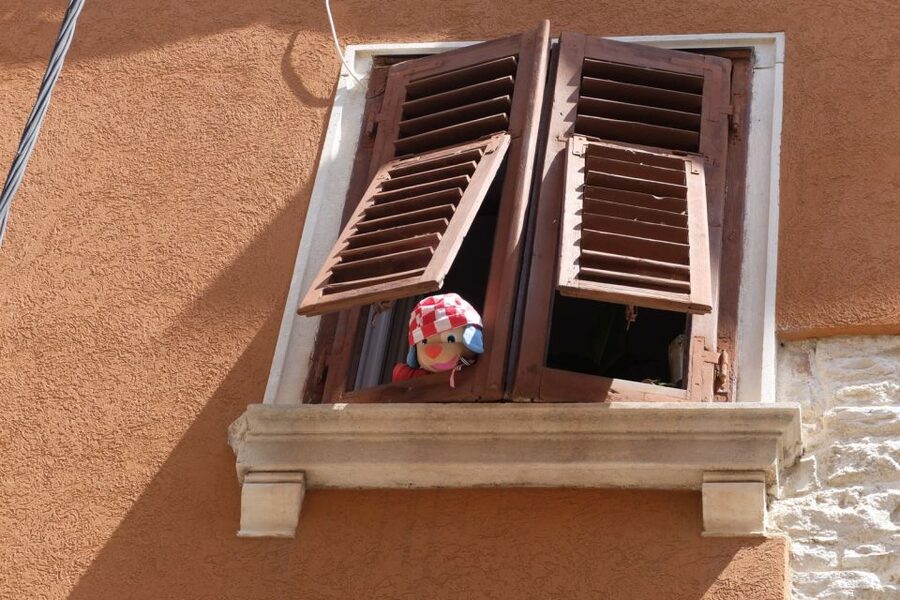
Marina also explains why there is a goat on the regional flag. That detail may sound small, but it is exactly the sort of local question that can make a walking tour memorable. You get a piece of regional identity rather than another broad statement about ancient history.
The Forum is a good final section because it gathers several themes together: Roman public life, later Venetian influence, local symbols, and the continuing use of the city center. It also gives you a clearer sense of how the old streets connect, rather than leaving you with a list of unrelated sights.
The tour ends back at the meeting point by the Amphitheatre. That makes the route easy to combine with your own plans afterward. You can continue exploring, visit the arena independently if you choose, or use Marina’s local tips to decide where to go next.
What $28 buys you in 90 minutes
At $28 per person, this is not the cheapest way to walk around Pula. You can see many exterior sights without paying anyone. The question is what you want from the visit.
The price is reasonable if you value a licensed local guide, German-language commentary, and a focused route that joins the city’s major Roman and later landmarks. Marina’s long experience and personal connection to Pula are the main reasons to pay for the tour.
The price is less attractive if you already know Pula well, plan to read about each monument yourself, or want a long visit inside the Amphitheatre. Entrance fees are separate, and the tour itself lasts only 1.5 hours. You are paying for interpretation and orientation, not a full admission package.
The short length can also be a benefit. You get a useful introduction without giving up half a day. I would place it early in a Pula visit if possible, since the route can help you understand the city before you explore independently. However, starting times vary, so check availability when you choose your date.
The activity allows cancellation up to 24 hours before the start for a full refund. You can also reserve now and pay later, which is useful if your Istrian schedule is still changing.
Access, pace, and who will enjoy it most
The walk is listed as wheelchair accessible. The information does not provide details about the exact surface, slopes, or restroom access, so you may want to confirm any specific mobility needs before booking.
No transport is involved. You meet at the Amphitheatre and walk through the central sights before returning to the same point. Wear comfortable shoes and bring whatever you normally need for a short city walk, since the tour is conducted outdoors through historic streets.
This tour suits you best if:
- You want a concise introduction to Pula.
- You speak German and prefer a guided explanation in that language.
- You enjoy history tied to local stories and daily life.
- You want food and market context alongside Roman monuments.
- You prefer a personal route that can respond to your interests.
- You are visiting Pula for the first time and want help getting oriented.
It may not suit you if you want a private, highly detailed archaeological study, a food tasting tour, or included admission to the Amphitheatre. The available information does not state the group size, so you should not book expecting a guaranteed private tour unless that is confirmed separately.
How to get the most from Marina’s tour
Before the walk begins, think about what you most want to learn. You can ask about local food, culture, nature, daily life, or history. A clear question gives Marina a chance to shape the conversation instead of delivering the same basic talk to everyone.
Listen for the connections between stops. The Amphitheatre introduces Roman public life. The gates show how the city was entered. The market brings you into present-day routines. The Forum then links Roman and Venetian periods in one central place.
I would also keep a little time after the tour for your own exploration. Since the walk returns to the Amphitheatre, you can decide afterward if you want to pay for entry or revisit a gate and look more carefully at its details. The tour gives you a framework, but the city still rewards wandering at your own pace.
The 4.8 rating from 143 reviews supports the idea that the guide’s personal delivery is a major part of the appeal. The most praised qualities are the lively pace, the amount of interesting information, and the fresh view of Pula that Marina provides. Those strengths matter more here than the number of stops.
Should you book this Pula walking tour?
Book it if you want a friendly, German-language introduction led by someone born in Pula. Marina’s 18 years of guiding experience, local knowledge, and interest in food give the 90-minute route more character than a basic monument checklist.
At $28, it offers good value for a first look at the city, especially if you want help understanding how Roman, Venetian, and modern Pula fit together. Skip it if you need English commentary, included entrance tickets, or a longer and more specialized archaeological tour.
For the right audience, this is a practical way to get your bearings and learn the stories behind Pula’s best-known sights, with enough local detail to make the old streets feel like more than scenery.
FAQ
Where does the tour begin?
The tour begins at the entrance to Pula’s Amphitheatre, under the wooden roof.
Where does the tour end?
The activity ends back at the meeting point by the Amphitheatre.
How long does the walking tour last?
The tour lasts 1.5 hours.
What language is the tour conducted in?
The live tour is conducted in German.
Who leads the tour?
The guide is Marina, a licensed Istrian guide who was born in Pula and has more than 18 years of guiding experience.
Is admission to the Amphitheatre included?
No. Entrance fees are not included in the tour price.
Is the tour wheelchair accessible?
Yes, the activity is listed as wheelchair accessible.
Can I cancel for a full refund?
Yes. You can cancel up to 24 hours in advance for a full refund.
Do I have to pay when I reserve?
No. You can reserve now and pay later, so you do not need to pay anything at the time of booking.
More City Tours
- Pula city tour in German
★ 5.0 · 34 reviews - Dubrovnik: City Walls Early Morning or Sunset Walking Tour
★ 4.8 · 1,523 reviews - Split: City Highlights Electric Tuk-Tuk Tour
★ 4.9 · 1,317 reviews - Dubrovnik: Ancient City Walls & Wars Walking Tour
★ 5.0 · 1,270 reviews
Just added around Pula
- Istria: Private Boat Tour with Skipper★ 5.0 · 9 reviews
- 3 Hours Private Wine and Sunset Tour★ 5.0 · 9 reviews
- Pula: Sunset/Night-time Illuminated Transparent Kayak Tour★ 4.0 · 9 reviews
- Electric Off-Road Scooter Tour in Pula★ 5.0 · 10 reviews
- Pula: Your Custom Full-Day Private Sail – Explore Istria’s Gems★ 5.0 · 10 reviews
- Pula Private 2-Hour Guided Walking Tour★ 5.0 · 10 reviews
- Pula: Private Brijuni Tour With Swimming, Dinner & Drinks★ 4.3 · 10 reviews
- Stop on Island & National Park Day Cruise with Lunch Drinks★ 5.0 · 10 reviews
Historical Tours, compared.

Walking Tour of Split with a ‘Magister’ of History
Read our review →


Split History and Gastro Small-Group Tour with Food and Drinks
Read our review →
PREMIUM Emperor’s Walking Tour for History Lovers + Museum
Read our review →Browse the lists this tour appears in