
Reviewed · WALKING TOURS
Pula Private 2-Hour Guided Walking Tour
Pula’s old town packs centuries into a short walk. This private tour makes the city’s Roman ruins, Venetian fortress, cathedral, market, and smaller gates easier to understand, especially if you have only two hours. I like the flexible route and the chance to ask a local guide about customs, food, and daily life. I also like that the guide can arrange quick entry to the Arena if you choose to go inside.
The main consideration is the pace. You cover several sights and roughly a couple of miles, with a few hills along the way. On a hot day, that can feel like a workout, although the guide can adjust the pace and find shade. The Arena entrance fee is extra at €10 per person.
In This Review
- Key things to know before you book
- Why this two-hour Pula walk works well
- Starting with Pula Arena and its Roman spectacle
- The Venetian Fortress and harbor views
- Pula Cathedral and the city’s religious past
- Augustus Temple and the Roman Forum
- The Punishment of Dirce mosaic
- Roman gates along a compact old-town route
- Pula Market and a taste of local daily life
- Walking distance, heat, and the private pace
- What the $145.50 group price really buys
- Who should book this Pula tour?
- Should you book the private Pula walk?
- FAQ
- How long does the Pula private walking tour last?
- How much does the private tour cost?
- Is the tour private?
- Is an English-speaking guide provided?
- Is the Pula Arena entrance fee included?
- Can the guide help purchase Arena tickets?
- Where does the tour start?
- Where does the tour end?
- How much walking is involved?
Key things to know before you book
- A private guide for up to 15 people: The $145.50 group price can be good value for a family or larger party.
- Nine stops in about two hours: You see the major center-city sights without spending a full morning on a tour.
- The Arena is optional inside: You can tour the Roman amphitheater from outside or pay €10 per person to enter.
- A local guide adds practical help: Guides such as Sinisa, also called Sini, can suggest olive oil, local dishes, and other places to try after the walk.
- Expect a couple of miles on foot: Comfortable shoes, water, and sun protection will make a real difference.
- The route ends near the Twin Gates: That leaves you in a useful part of the old town for continuing on your own.
Why this two-hour Pula walk works well
Pula is easy to underestimate. You can spot the Arena quickly, take a few photographs, and assume you have seen the main attraction. A good walking tour shows you how the amphitheater connects to Roman gates, the Forum, the cathedral, later Venetian rule, and everyday city life.
This experience is designed for a tight schedule. It starts at the Pula Arena on Flavijevska ul. and ends at the Twin Gate on Carrarina ul. The route links the main sights in a sensible order, so you spend your time seeing the city rather than working out where to go next.
The private format is the real advantage. Your group alone takes part, and you can ask for more detail at a favorite stop or move along when a site does not interest you. That is much more useful than a large group tour when your party has different interests or when someone needs a slower walking pace.
The guide speaks English and is a licensed guide. Sinisa, also known as Sini, has earned praise for being funny, professional, enthusiastic, and well informed about Pula and the wider Istria region. The useful part is not only the dates and names. He can also point you toward olive oil and local food to try after the tour.
More Walking Tours in Pula
- Pula: Historic Walking Tour with Local Guide & City Views
★ 4.8 · 143 reviews - Pula walking tour
★ 5.0 · 96 reviews - Pula: Historic Sites Guided Walking Tour
★ 4.8 · 78 reviews
Starting with Pula Arena and its Roman spectacle
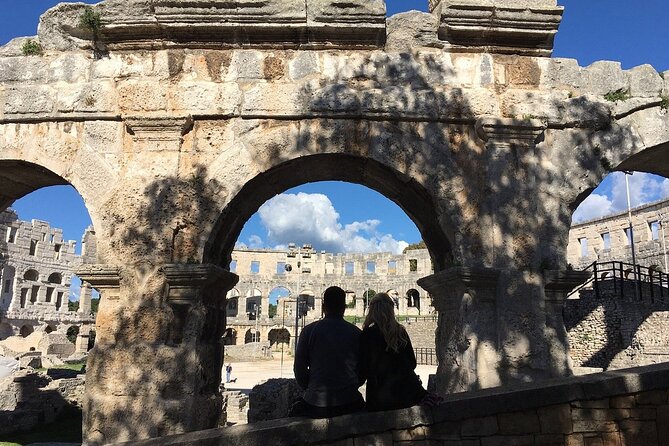
The tour begins at Pula’s Arena, the largest and most visually striking stop on the route. Built in the first century AD, the amphitheater gives you an immediate sense of Pula’s importance during Roman times.
You spend about 30 minutes here, the longest stop on the tour. The guide explains the building from outside, and you can decide whether to pay the €10 entrance fee to see the interior. That choice makes the tour more adaptable. If you have already visited the Arena, or if your schedule and budget are tight, the outside explanation may be enough. If this is your first visit, entering gives the guide more space to explain the structure and its use.
A useful practical detail is that the guide can buy the entry tickets at the entrance. This does not mean admission is included, but it can save time at the ticket point. The guide is also familiar with the process, which is helpful when you want to make the most of a short tour.
The Arena stop sets the pattern for the rest of the walk: ancient remains, later buildings, and small details that are easy to miss when you explore alone.
The Venetian Fortress and harbor views
From the Arena, you walk to the Venetian Fortress, built in the 17th century. The visit is from outside, with a view toward Pula harbor.
This stop lasts about 15 minutes. It is less about entering a monument and more about seeing how Pula’s defensive position changed over time. The fortress also gives the walk a useful shift in period. You begin with Roman engineering, then move toward the city’s later Venetian connections.
Because the fortress is explained from the outside, there is no admission cost or interior visit included here. If you prefer tours packed with interiors, this stop may feel brief. I see it as a quick change of pace and a chance to take in the harbor before returning to the central streets.
Pula Cathedral and the city’s religious past
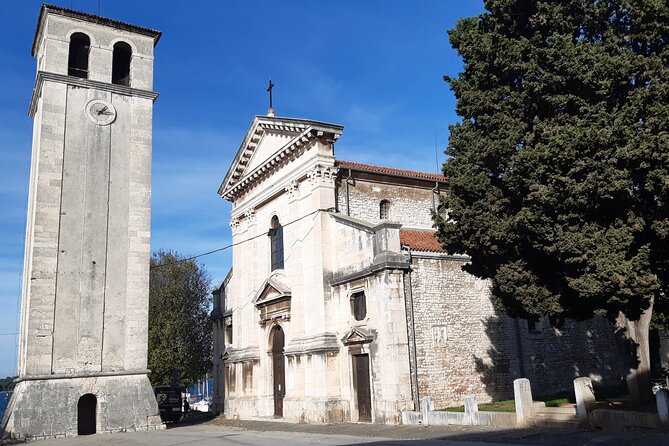
The Cathedral of Pula dates to the 5th century AD and is described as the city’s most important church. You walk around it for about 10 minutes, with an interior visit if it is open.
The important limitation is the opening condition. Going inside is not guaranteed, so you should think of the interior as a possible bonus rather than a promised feature. The outside explanation still gives the cathedral a place in the city’s long story and helps connect Pula’s Roman period with its later Christian identity.
Ten minutes is enough for an introduction but not a detailed architectural study. That is consistent with the tour’s purpose. You are getting a broad picture of Pula, not spending an hour at one church.
Something different for another day:
- Pula: Arena Entrance Ticket
★ 4.3 · 2,590 reviews - Medulin -Kamenjak 5h boat trip with lunch & drinks on Sandra Boat
★ 5.0 · 1,621 reviews - Full-Day Boat Tour of the Medulin Archipelago from Medulin
★ 5.0 · 1,389 reviews - 3hours all inclusive Sunset&Dolphin Tour from Medulin on Sandra
★ 5.0 · 1,130 reviews
Augustus Temple and the Roman Forum
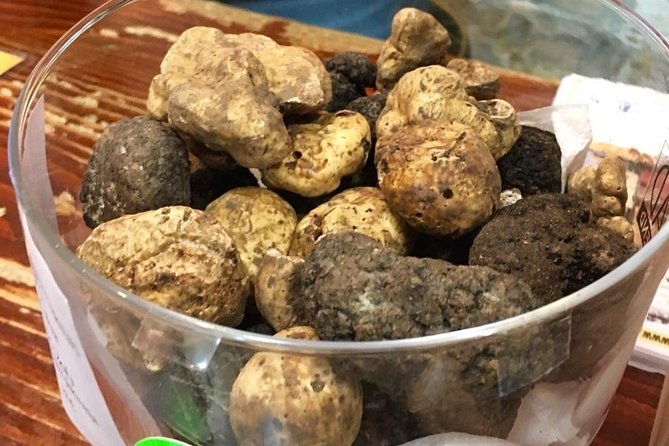
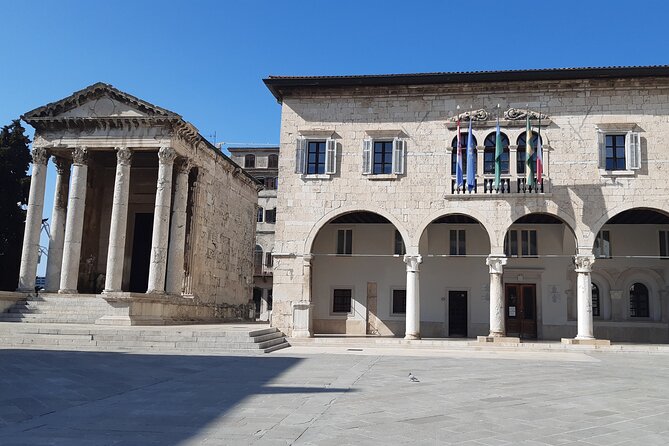
The route then reaches the Roman Forum, where the Temple of Augustus sits beside the City Hall, built in 1396. This is one of the most rewarding combinations on the walk because you see ancient and medieval civic power in the same public space.
The stop lasts about 15 minutes. The guide explains the temple and the City Hall while you walk around the area. The setting helps you understand that Pula was not simply a collection of isolated ruins. The buildings occupy a real civic center that continued to matter long after Roman rule ended.
The Temple of Augustus is viewed from outside during this tour. No separate entrance fee is listed for the stop, which keeps the cost predictable. If you want a detailed account of Roman religion or a long architectural lecture, you may want more time here after the tour. For a first look, the short visit works well.
The Punishment of Dirce mosaic
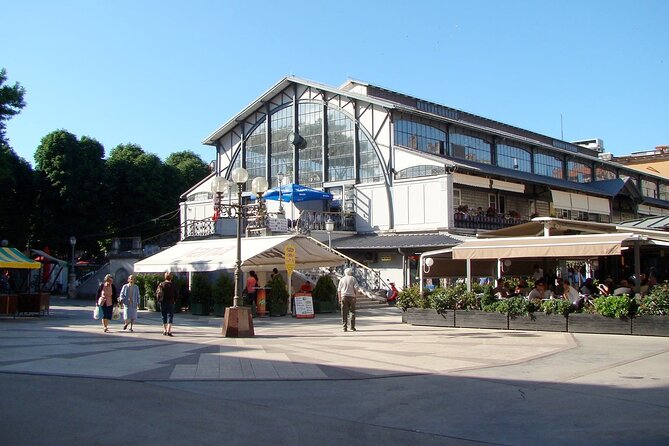
One of the route’s best small surprises is the second-century AD floor mosaic known as The Punishment of Dirce. The visit takes about 10 minutes and admission is free.
This stop matters because it is easy to miss when you focus only on Pula’s huge monuments. A guide helps you find it and explains what you are seeing. That is the value of having a local with you: you do not spend your limited time searching for a less obvious site, and you get context instead of just a photograph.
The mosaic also breaks up the sequence of large public buildings. After the Arena, fortress, cathedral, and Forum, this smaller piece of Roman art brings the city’s ancient past down to ground level.
Roman gates along a compact old-town route
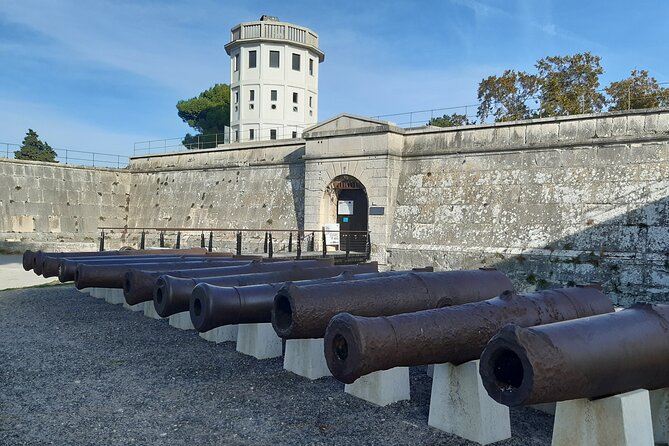
The tour includes three Roman gates or gate structures: the Arch of the Sergii, the Gate of Hercules, and the Twin Gates of Pula. Together, they make the old-town walk feel like a connected route through the former city rather than a checklist of unrelated sights.
The Arch of the Sergii takes about 10 minutes. You walk under and around this first-century BC city gate while the guide explains its decorations and inscriptions. It is a good stop for anyone who likes small details, since the lettering and ornament are more meaningful when someone points them out.
The Gate of Hercules takes about five minutes. It is one of the remaining Roman city gates and dates to the first century BC. This is a short stop, but it adds another piece to the city’s former defenses and street plan.
The Twin Gates take another five minutes and date to the second century AD. Since the tour ends here, the guide can finish by tying together the gates, the Roman city, and the route you have just walked.
These stops are brief by design. You will not get a long standalone talk at each gate, but you will see several remains that could easily blur together without explanation.
Pula Market and a taste of local daily life
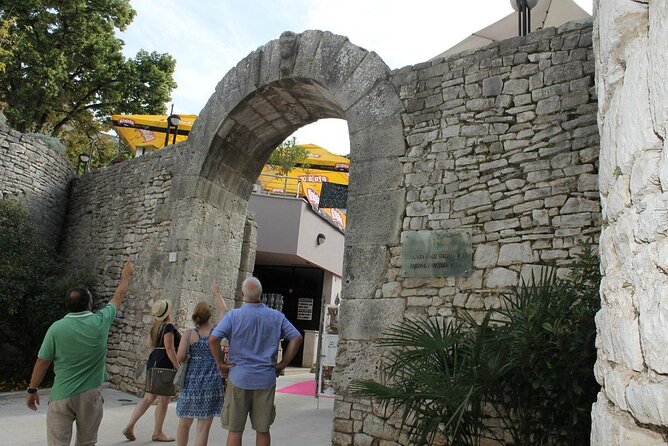
The Gradska Trznica Pula, or city market, occupies a building from 1903. You walk around and through the market, with a visit to the fish market if it is open. The stop lasts about 15 minutes and has no separate admission fee.
This is one of the most useful parts of the tour for anyone who wants more than old stones. A market shows the city in ordinary use, and the guide can help you understand what local people buy and eat. The fish market visit depends on whether it is open, so do not treat that portion as guaranteed.
The market is also a good place to ask practical questions. The tour’s guide has offered recommendations for olive oil and local cuisine, so this is a natural point to ask what to look for after the walk. You may not leave with a full food tour, but you should come away with better ideas for your next meal.
Walking distance, heat, and the private pace
The route is not a long hike, but it is more than a stroll around one square. One person described walking a couple of miles, and another noted that the old town includes a few hills. You should wear comfortable shoes and be ready to walk for most of the two hours.
Heat can be the bigger issue in summer. A very hot day was made easier by stopping in shaded areas, and the private setup allows the guide to respond to conditions. Bring water and sun protection. If someone in your group is not used to walking, tell the guide at the start so the pace can be managed.
A moderate level of physical fitness is recommended. There is no indication that this tour is designed for people who need minimal walking or step-free access, so ask the provider before booking if mobility is a concern.
The midday schedule shown for this experience is 12:00 PM to 2:00 PM, Monday through Sunday, during the listed operating period. That timing may be convenient for a short port or city visit, but it can also place you in the strongest heat. Check the confirmed start time and plan accordingly.
What the $145.50 group price really buys
The price is $145.50 per group, with up to 15 people included. The licensed guide is included, but the €10 Arena entrance fee is not.
For two people, the price works out to $72.75 each before any Arena admission, so it is not the cheapest way to get a basic orientation. For a larger family or group of friends, the value improves quickly. A full group of 15 would pay less than $10 per person for the guide service, before the optional Arena ticket.
The value also comes from time saved. You get the main sights in about two hours, avoid figuring out the route yourself, and can ask questions throughout. The guide can buy Arena tickets at the entrance without waiting, which is particularly useful when your schedule is limited.
If you want a slow, detailed visit inside the Arena, a long market stop, or extensive time at each monument, this tour may feel too compressed. If your goal is a clear introduction to Pula, the price is easier to justify.
Who should book this Pula tour?
I would choose this experience if you have only a short stay in Pula, want a private guide, or are traveling with a family or group. It also suits you if you like mixing major sights with smaller places such as the Dirce mosaic and the Roman gates.
The tour is especially helpful if you have not researched Pula in advance. You see all the main old-town sights, receive explanations at places you might otherwise pass, and get local suggestions for food and olive oil afterward.
I would be more cautious if you dislike walking, struggle in heat, or want to spend most of your time inside monuments. The route is active, the schedule is tight, and some stops are exterior visits only.
Confirmation is sent within 48 hours of booking, subject to availability. The tour is near public transportation, uses a mobile ticket, and is offered in English. Free cancellation is available if you cancel at least 24 hours before the start time. Changes or cancellations inside that window are not accepted for a refund.
Should you book the private Pula walk?
Book it if you want a fast, personal introduction to Pula with the freedom to ask questions and adjust the pace. The strongest parts are the private format, the guide’s local food advice, the quick Arena ticket help, and the range of sights covered in two hours.
Skip it if you prefer to explore slowly on your own or plan to spend serious time inside the Arena and cathedral. For most short visits, though, this is a practical way to get your bearings, understand the city’s Roman core, and finish with useful ideas for the rest of your day.
FAQ
How long does the Pula private walking tour last?
The tour lasts approximately two hours.
How much does the private tour cost?
The price is $145.50 per group, for up to 15 people.
Is the tour private?
Yes. Only your group participates in the activity.
Is an English-speaking guide provided?
Yes. The experience is offered in English and includes a licensed guide.
Is the Pula Arena entrance fee included?
No. Entry costs €10 per person and must be paid separately. You can also choose to hear the explanation from outside without entering.
Can the guide help purchase Arena tickets?
Yes. The guide can buy entry tickets at the entrance without waiting.
Where does the tour start?
The meeting point is Pula Arena, Flavijevska ul., 52100 Pula, Croatia.
Where does the tour end?
The tour ends at the Twin Gate, Carrarina ul. 8, 52100 Pula, Croatia.
How much walking is involved?
The route covers several old-town sights and is roughly a couple of miles, with a few hills. A moderate level of physical fitness is recommended.
Just added around Pula
- Istria: Private Boat Tour with Skipper★ 5.0 · 9 reviews
- 3 Hours Private Wine and Sunset Tour★ 5.0 · 9 reviews
- Pula: Sunset/Night-time Illuminated Transparent Kayak Tour★ 4.0 · 9 reviews
- Electric Off-Road Scooter Tour in Pula★ 5.0 · 10 reviews
- Pula: Your Custom Full-Day Private Sail – Explore Istria’s Gems★ 5.0 · 10 reviews
- Pula: Private Brijuni Tour With Swimming, Dinner & Drinks★ 4.3 · 10 reviews
- Stop on Island & National Park Day Cruise with Lunch Drinks★ 5.0 · 10 reviews
- Pula: Private Introduction to Scuba Diving★ 5.0 · 10 reviews
Walking Tours, compared.




Walking Tour of Split and Diocletian’s Palace
Read our review →


Krka Waterfalls tour with Trogir Walking tour and Krka panoramic boat cruise
Read our review →
City Walls Early Morning or Sunset Walking Tour
Read our review →Browse the lists this tour appears in