
Reviewed · HISTORICAL TOURS
Pula: Historic Sites Guided Walking Tour
Pula’s ancient center rewards a slow start. This 90-minute walk links the city’s biggest Roman sights with its Venetian castle and old market, giving you a useful first look at Pula without taking up half your day. I like the clear route and the chance to see Roman details that are easy to miss alone. The main drawback is that entry tickets are not included, and the walking may not suit people with mobility impairments.
I also like the price: at $20 per person, you are paying for a focused introduction rather than a long, padded excursion. The English-speaking guides, especially Sini, are praised for answering questions and keeping the tone friendly. Just remember that this is an outdoor walk, rain or shine, with no video recording allowed.
In This Review
- Key points at a glance
- Why this 90-minute walk works well in Pula
- Starting beneath the Pula Arena
- Pula Castle and its panoramic view
- The Cathedral and the layers of Pula’s center
- Roman Forum, Augustus Temple, and City Hall
- Roman mosaics and traces below the obvious sights
- Arch of Sergii and Pula’s old entrance points
- Pula Market and the everyday city
- The guide makes the short format count
- Who should book this Pula tour?
- Booking flexibility and overall value
- Should you book it?
- FAQ
- How much does the Pula historic sites walking tour cost?
- How long does the walking tour last?
- Where does the tour begin?
- How do I identify the guide?
- Where does the tour finish?
- Is the tour conducted in English?
- Are entry tickets included?
- Can I cancel and receive a refund?
- Does the tour operate in bad weather?
Key points at a glance
- The Pula Arena sets the scene: You begin outside one of Croatia’s best-known Roman monuments with a short, useful introduction.
- The route covers the city’s essential core: The walk includes the castle, Cathedral, Roman Forum, Augustus Temple, City Hall, Arch of Sergii, market, and Gate of Hercules.
- Pula Castle brings the best views: The 17th-century Venetian fortress gives you a broad look over the city and its surrounding area.
- Small Roman details matter here: Along with major monuments, you see mosaics and lesser-noticed traces of Roman Pula.
- Sini earns repeated praise: His clear English, humor, and broad grasp of ancient history make the short tour feel substantial.
- The tour ends at Twin Gate: The route is useful for getting oriented before exploring Pula on your own.
Why this 90-minute walk works well in Pula
Pula has a slightly unusual rhythm. Roman monuments do not sit in one fenced archaeological park. They are scattered through the modern center, mixed with later Venetian and Austro-Hungarian layers. That makes a guided walk useful, because the city’s story is easiest to understand when someone connects the pieces.
At $20 per person, this is a modest investment for a local introduction. You get a live English-speaking guide, a planned route, and historical context at each stop. You do not get admission to interior attractions, since entry tickets are separate, so think of this as a city orientation and monument walk rather than a ticketed museum tour.
The 90-minute length is one of its strengths. You can fit it into a morning, afternoon, or evening plan, and still have time for a meal, independent sightseeing, or another activity. The tradeoff is that some stops receive a concise explanation rather than a long visit. If you want to study every stone at the Arena or spend time inside the castle, you will need to return later.
More Walking Tours in Pula
- Pula: Historic Walking Tour with Local Guide & City Views
★ 4.8 · 143 reviews - Pula walking tour
★ 5.0 · 96 reviews - Pula Essentials Walking Tour
★ 4.8 · 64 reviews
Starting beneath the Pula Arena
Meet in front of the amphitheater entrance at Istarska ul. 50. Your guide should be easy to spot: look for a blue card around the neck and an umbrella. That meeting detail matters in a busy public area, especially if several walking groups are gathering nearby.
The Arena is the right place to begin. Pula’s Roman amphitheater is the visual anchor of the city, and the opening explanation gives you a framework for the rest of the route. You learn about the building and its place in Pula’s Roman past before moving into the old center.
This first stop is also a practical advantage. If you arrive early, you can take in the exterior before the walk begins. Since admission is not included, the tour does not replace an interior visit, but it helps you decide if buying a separate ticket fits your plans.
The guide’s opening overview is described as brief and informative. That is the right approach here. A long lecture at the first monument would leave less time for the compact streets and smaller remains ahead.
Pula Castle and its panoramic view
From the Arena, the route continues to Pula Castle, built by the Venetians in the 17th century. This change of period is one of the walk’s most useful features. You move from Roman Pula to Venetian Pula, seeing how control of the city changed and how later rulers used the high ground.
The guide explains the castle’s past and its previous inhabitants. You also get panoramic views from the site, making this one of the best moments to pause and look beyond the immediate streets. The view helps you understand Pula as a whole rather than as a string of isolated monuments.
I would pay attention here to the contrast between the fortress and the Roman remains. The castle is not simply another old building on the route. It shows that Pula’s importance continued long after the Roman period, and that later powers reshaped the city for their own needs.
There is one practical point to keep in mind: walking tours can involve uneven surfaces and changes in elevation around historic sites. The activity is specifically not suitable for people with mobility impairments, so you should consider that before booking.
The Cathedral and the layers of Pula’s center
The Cathedral comes next. Its presence adds another period to the story and keeps the walk from becoming a Roman-only history lesson. Pula’s center is more interesting when you see how religious, civic, military, and commercial buildings share the same compact area.
Your guide supplies the cultural and architectural background as the route continues. This is where a local guide can save you time. Instead of looking at an old facade and moving on, you get an explanation of why the building matters and how it fits into the city’s development.
The tour is designed for questions, and that is worth using. Several accounts praise the guide’s ability to respond to questions, so come prepared with the things you actually want to know. Ask about the Roman period, later Venetian rule, the buildings around the Forum, or the changes visible in the street plan.
The Cathedral stop is not presented as a long interior visit. The strength here is the connection between the building and the surrounding historic core. If you want detailed religious art or a slow architectural study, you may need a separate visit.
More Historical Tours:
- Olive Oil Guided Tasting and History in Pula
★ 4.5 · 34 reviews - Pula Roman Heritage Walking Tour
★ 5.0 · 12 reviews - Dubrovnik Old Town History Walking Tour
★ 5.0 · 1,684 reviews - Walking Tour of Split with a ‘Magister’ of History
★ 5.0 · 1,122 reviews
Roman Forum, Augustus Temple, and City Hall
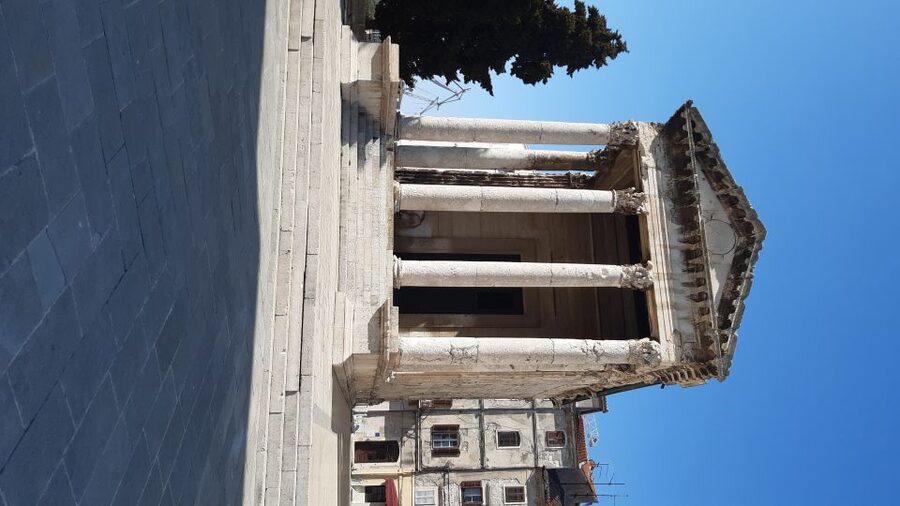
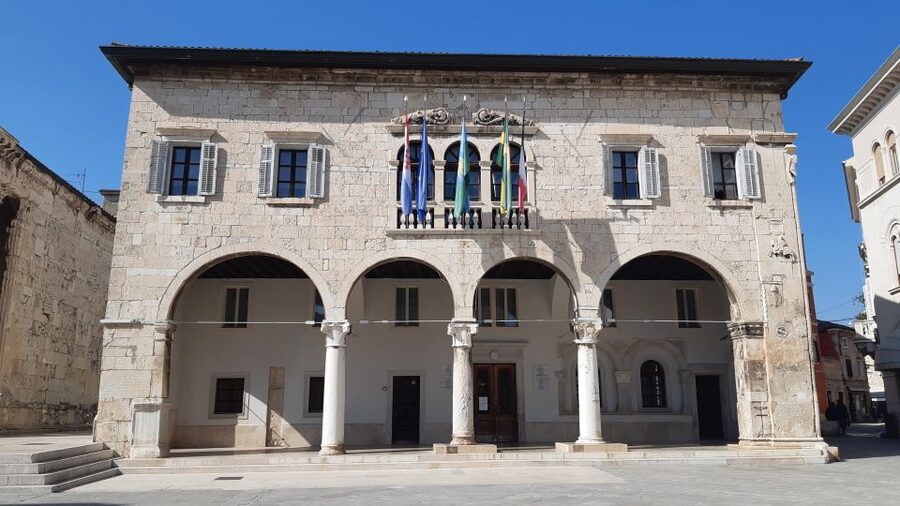
The Roman Forum is the heart of the central historical section. Here, the route brings together Augustus Temple and City Hall, two buildings that show how the same civic space changed over time.
The Augustus Temple is one of Pula’s most important surviving Roman monuments. At roughly 2,000 years old, it gives you a direct physical link to the ancient city. It is also a good reminder that Roman remains in Pula are not limited to the Arena. The city’s political and religious life once centered here.
City Hall adds a later layer beside the ancient temple. The pairing is especially helpful because it lets you compare Roman civic architecture with the needs of a later municipal government. You do not have to know much about Roman planning in advance. The guide’s explanation makes the relationship easier to read.
This is likely the section where the tour feels most concentrated. Several major sights sit close together, and the commentary helps you understand why the Forum mattered. The possible limitation is time. You will see and discuss these monuments, but the schedule does not promise an extended stop for independent inspection.
Roman mosaics and traces below the obvious sights
A good city walk teaches you where to look. Along this route, the guide points out Roman mosaics and other traces that you could easily pass without noticing. These smaller remains are valuable because they show that ancient Pula is not only represented by grand monuments.
The mosaics also bring the Roman period down to a human scale. An amphitheater and temple tell you about public life and power. A mosaic hints at domestic spaces and everyday decoration. That range makes the city’s past feel less like a collection of isolated ruins.
I especially like this part of the experience because it rewards attention. You are not simply moving from one famous photo stop to another. You are learning to read the pavement, walls, and building fragments around you.
The exact amount of time spent at each mosaic can depend on the group and the guide’s pace. The walk is deliberately compact, so expect explanation rather than a long archaeological inspection.
Arch of Sergii and Pula’s old entrance points
The Arch of Sergii gives the route another striking Roman landmark. It is an important reminder that Pula’s ancient story included families, public honors, and monumental gateways, not only temples and arenas.
Your guide places the arch within the wider Roman setting and points out what makes it significant. This is the sort of stop where a short explanation can change how you see an ordinary city crossing. Modern traffic and daily life continue around the monument, while the arch marks a much older civic world.
The route later reaches the ancient Gate of Hercules. Ending near Twin Gate gives the walk a useful sense of movement through old access points and city boundaries. You see how people entered and moved through Pula in different periods, rather than viewing the center as a random collection of old stones.
For independent exploring, make a mental note of these locations. The walk can help you build a simple map of Pula’s center, which is one reason several people consider it a good first activity in town.
Pula Market and the everyday city
The Pula Market, established in the early 1900s, brings the tour into a more recent and practical part of the city. This stop adds everyday life to the grand historical narrative. Markets are useful places to understand how a city functions, not just how it looked centuries ago.
The market also provides a change of mood after the Roman monuments and castle. You move from imperial remains and fortifications to a place connected with local shopping and daily routines. That contrast helps you see Pula as a living city rather than an open-air museum.
Do not expect a food tour or a dedicated market tasting experience. The market is one stop within a broader historical route. Its value comes from the context and location, not from a separate culinary program.
The walk then continues toward the ancient Gate of Hercules. Taken together, the market and gate show the range of Pula’s center: practical modern life, Roman remains, religious buildings, civic spaces, and Venetian defenses all within a manageable walking area.
The guide makes the short format count
The strongest part of this experience is the guiding. Sini is repeatedly singled out for clear English, friendliness, humor, and a broad grasp of ancient history. One account describes the tone as just right, which is important on a short walking tour. You want substance without a lecture that slows every step.
The guide also uses questions well. That makes the experience more useful for people with different levels of background knowledge. If Roman history is new to you, you get a basic structure. If you already know the main monuments, you can ask for more detail about architecture, culture, or Istria’s wider past.
One practical tip: if Sini is leading your departure, arrive with a few minutes to spare and look for the blue card and umbrella. The meeting point is specific, but the Arena area can still feel confusing when you are watching for a person rather than a building.
The tour is conducted in English only. The clear language praised by several participants makes it a good choice for English-speaking visitors, but you should not book it expecting multilingual interpretation.
Who should book this Pula tour?
I would choose this walk if you are visiting Pula for the first time and want a quick historical framework. It suits couples, solo visitors, families with older children, and anyone arriving with limited time.
It is also a smart choice before independent sightseeing. Once you understand the relationship between the Arena, castle, Forum, Arch of Sergii, market, and city gates, you can return to the places that interest you most with better context.
The tour is less suitable if you want to enter every major monument, spend a long time taking photographs, or move at a very slow pace. Admission tickets are not included, and the 90-minute schedule keeps the group moving.
You should also skip it if mobility is a serious concern. The activity is not suitable for people with mobility impairments, and the operator says the walk runs rain or shine. Wear practical shoes and check the forecast, even though poor weather does not automatically cancel the experience.
Booking flexibility and overall value
The tour costs $20 per person. For that price, you receive a local expert guide and a concentrated route through Pula’s most important historic sights. The value is strongest when you see it as a guided orientation, not as an all-inclusive attraction ticket.
You can cancel up to 24 hours before the start for a full refund, and the reserve-now, pay-later option keeps your plans flexible. Those terms are useful if your Croatian itinerary includes changing transport or uncertain weather.
The activity has a 4.8 rating from 78 reviews, with praise focused on the guide’s historical knowledge, friendly manner, strong English, and ability to cover the main monuments in a comfortable time. One lower rating of four stars still describes the commentary as very good, suggesting that the main appeal is consistent rather than dependent on a single spectacular feature.
At the end, you finish at Twin Gate. That is convenient for continuing into the old center, although no onward transportation is included or described. Plan your next stop independently.
Should you book it?
I would book this tour if you want to understand Pula quickly and prefer a local explanation to reading plaques on your own. The route covers the essential Roman sights, adds the Venetian castle and early 20th-century market, and costs little compared with a private guide.
Choose it with realistic expectations. You will not receive entry tickets, a long interior visit, or a fully accessible route. But for 90 minutes, $20, and an English-speaking guide such as Sini, it gives you a strong map of Pula’s past and a useful list of places to revisit.
FAQ
How much does the Pula historic sites walking tour cost?
The tour costs $20 per person.
How long does the walking tour last?
The tour lasts 90 minutes, or one and a half hours.
Where does the tour begin?
It begins in front of the Pula Amphitheater entrance at Istarska ul. 50.
How do I identify the guide?
The guide should have a blue card around their neck and hold an umbrella.
Where does the tour finish?
The tour finishes at Twin Gate.
Is the tour conducted in English?
Yes. The live tour guide conducts the experience in English.
Are entry tickets included?
No. Entry tickets are not included in the tour price.
Can I cancel and receive a refund?
Yes. You can cancel up to 24 hours in advance for a full refund.
Does the tour operate in bad weather?
Yes. The walk takes place rain or shine. Video recording is not allowed, and the activity is not suitable for people with mobility impairments.
Just added around Pula
- Istria: Private Boat Tour with Skipper★ 5.0 · 9 reviews
- 3 Hours Private Wine and Sunset Tour★ 5.0 · 9 reviews
- Pula: Sunset/Night-time Illuminated Transparent Kayak Tour★ 4.0 · 9 reviews
- Electric Off-Road Scooter Tour in Pula★ 5.0 · 10 reviews
- Pula: Your Custom Full-Day Private Sail – Explore Istria’s Gems★ 5.0 · 10 reviews
- Pula Private 2-Hour Guided Walking Tour★ 5.0 · 10 reviews
- Pula: Private Brijuni Tour With Swimming, Dinner & Drinks★ 4.3 · 10 reviews
- Stop on Island & National Park Day Cruise with Lunch Drinks★ 5.0 · 10 reviews
Historical Tours, compared.

Walking Tour of Split with a ‘Magister’ of History
Read our review →


Split History and Gastro Small-Group Tour with Food and Drinks
Read our review →
PREMIUM Emperor’s Walking Tour for History Lovers + Museum
Read our review →Browse the lists this tour appears in