
Reviewed · OLIVE OIL TASTINGS
Olive Oil Guided Tasting and History in Pula
Olive oil tells Pula’s story in one spoonful. I like the way this experience connects Roman olive oil production with modern Istrian methods, and I especially like that the tasting teaches you how to spot good and poor-quality oil rather than simply handing you a few samples. The sweet dessert pairing is another clever touch.
The museum is small, and its layout may feel a little odd. The exhibition is also more informative than interactive, so you should book this for the tasting and clear explanations, not for a large museum visit. At $36.04 per person, it offers solid value for food lovers, especially if you want a focused activity that fits neatly into a morning or afternoon in Pula.
In This Review
- Key Points Before You Book
- Starting at the House of Istrian Olive Oil
- Roman Olive Oil Production in Istria
- Learning the Language of Olive Oil
- The Supermarket Comparison Makes the Lesson Useful
- A Surprise Dessert With Extra Virgin Olive Oil
- Is $36.04 Good Value in Pula?
- Who Will Enjoy This Experience Most?
- What Could Be Better?
- Practical Details for Planning Your Visit
- Should You Book the Pula Olive Oil Tasting?
- FAQ
- How long does the olive oil experience last?
- Where does the experience begin and end?
- What is included in the tasting?
- Is the tour offered in English?
- How many people can join the activity?
- Can I cancel for a refund?
Key Points Before You Book
- Roman oil-making comes first: You begin with Istria’s ancient production methods, export routes, and Roman connections.
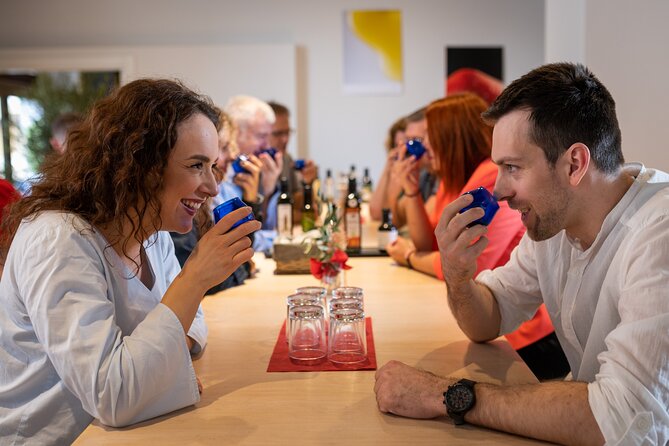
- The tasting teaches useful skills: You compare quality Istrian olive oils with a standard supermarket oil and learn to identify positive and negative traits.
- Polyphenols get a practical explanation: The tasting explains why these compounds matter in olive oil and health.
- A sweet finish makes the tasting memorable: The final course pairs high-quality extra virgin olive oil with a surprise dessert.
- The group can reach 20 people: This is small enough for questions, though it may not feel private at full capacity.
- The visit lasts about 90 minutes: The timing can be shorter or longer, depending on your interest and questions.
Starting at the House of Istrian Olive Oil
The experience begins at the House of Istrian Olive Oil on Istarska ul. 30 in Pula. It ends at the same place, which keeps the plan simple. You do not need to arrange transport between different parts of the city, and the venue is near public transportation.
The activity is offered in English, with a mobile ticket and confirmation provided when you book. The stated opening hours are Monday through Saturday from 10:00 a.m. to 6:00 p.m., for the operating period listed from March 30, 2022, through January 21, 2027.
That schedule makes this an easy addition to a day of sightseeing. You can place it between a morning walk through Pula and an afternoon visit to another sight, or use it as a break from monuments and museums. Since the tasting is indoors, it also gives you a useful option if the weather turns damp.
The group limit is 20 people. That is not a private tasting, but it is still far more manageable than a large food tour. If everyone arrives with questions, the group size may affect how much individual attention you receive. The stated average booking time is 23 days ahead, so booking early is sensible if your Pula dates are fixed.
More Food Tours in Pula
- Istria: Guided Tour of Inner Istria with Food Tasting
★ 5.0 · 67 reviews - Pula: House of Istrian Olive Oil Museum and Guided Tasting
★ 4.9 · 35 reviews - Pula Food Walking Tour
★ 4.5 · 22 reviews
Roman Olive Oil Production in Istria
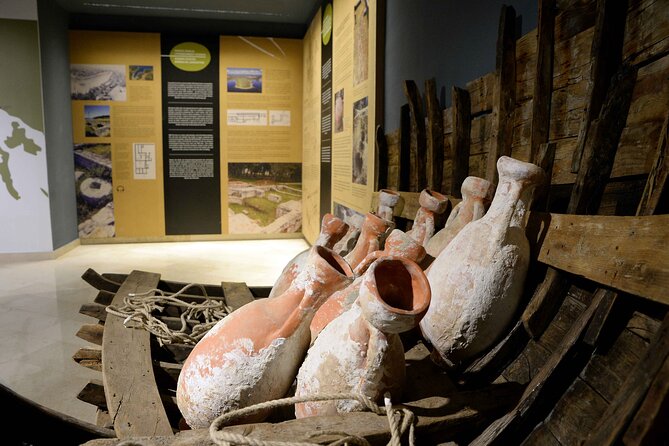
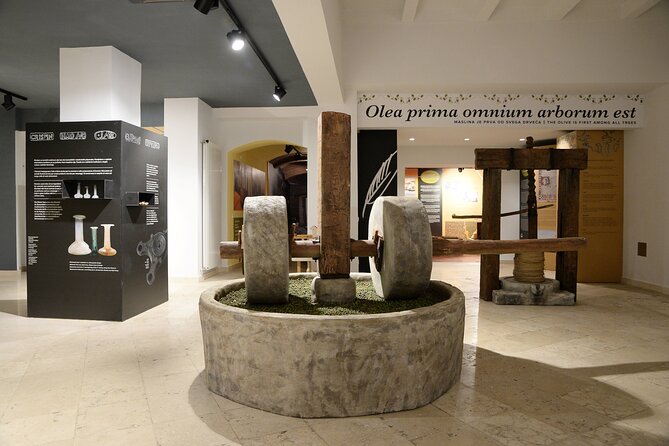
Your first stop is an exhibition about the long connection between Istria and olive oil. You see how the Romans made oil in the region, where it was exported, and how production fit into the wider Roman economy.
This opening section gives the tasting a useful foundation. Instead of treating olive oil as just another local food, it shows you that oil production has shaped Istria for centuries. The Roman material also helps explain why the subject belongs in Pula, a city with strong Roman remains and a long record of trade.
Two short films continue the introduction. One covers traditional processing, while the other shows how olive oil is made today. The contrast is the important part. You can consider what has changed in equipment and production, and what still depends on careful handling of the olives.
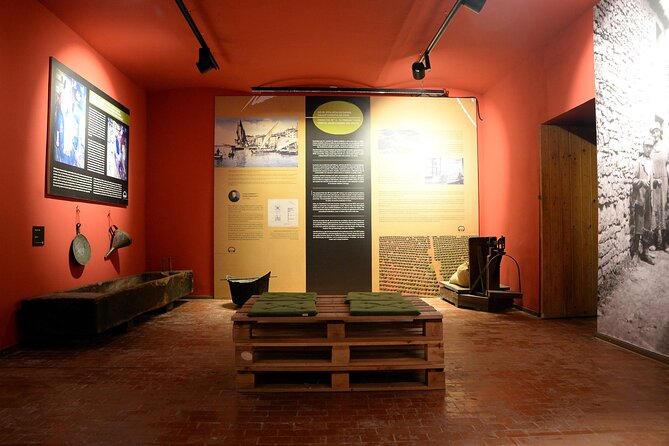
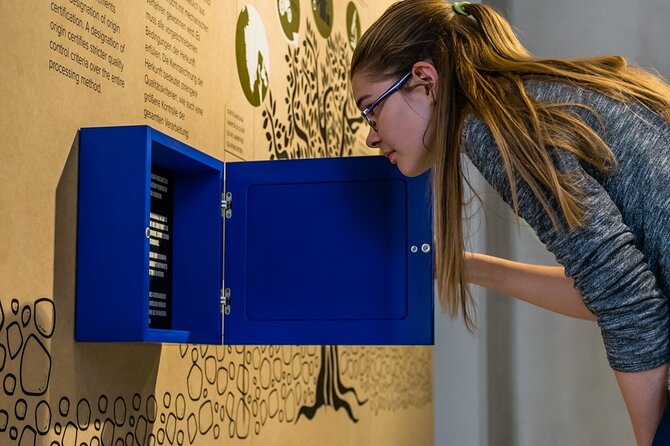
Keep your expectations measured here. The museum section is small, and the layout is not especially large or elaborate. It is useful rather than grand. Some people may wish for more hands-on displays, but the information gives you enough background to understand what follows in the tasting room.
I would allow roughly 15 to 25 minutes for this portion, although the total visit depends on your interest and the guide’s pace. Take time to look at the material, but do not expect a full museum afternoon. The tasting is where the activity becomes most distinctive.
Learning the Language of Olive Oil
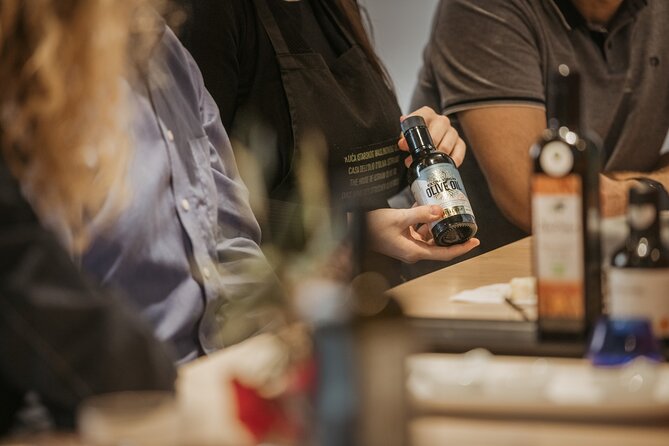
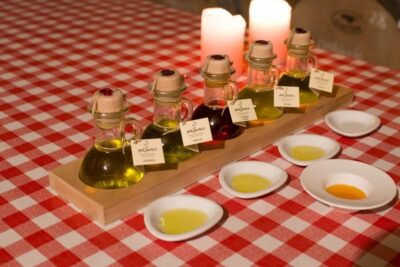
After the exhibition, you move to the tasting room for a sensory analysis of high-quality Istrian olive oils. This is more than a quick sample at a shop counter. The guide explains how to smell and taste the oil, then helps you notice qualities you may have overlooked before.
That lesson is valuable because olive oil labels can be confusing. Terms such as extra virgin may sound reassuring, but the name alone does not teach you how the oil should smell or taste. Here, you compare premium Istrian oils with one commonly bought in a supermarket.
The side-by-side comparison is the heart of the experience. It gives you a reference point, which is much more useful than tasting a single expensive oil and being told that it is excellent. You can notice differences in aroma, flavor, freshness, and balance.
You learn to recognize positive and negative attributes. The exact oils served may vary, but the method helps you understand what to look for when shopping or ordering food later. A good tasting should leave you with practical vocabulary and a better sense of quality. This one is designed to do that.
The guide also explains why polyphenols matter. These natural compounds are part of the reason olive oil is often discussed in relation to health, and they can affect the oil’s flavor. A peppery or bitter note may surprise you at first, but the tasting helps connect those sensations with the oil’s character.
This is a good moment to ask questions. The supplied information specifically emphasizes the guide’s ability to answer them, and the teaching is clearly meant to be conversational. If you already know a fair amount about olive oil, you may find the basic comparison familiar. If you usually buy oil by price or bottle design, you are likely to get more from it.
The Supermarket Comparison Makes the Lesson Useful

Many tastings serve only prestigious products. That can be enjoyable, but it leaves you without a realistic comparison. Including a supermarket oil makes this experience more practical because it reflects the choice you face in an ordinary grocery aisle.
I like this part because it helps you connect the tasting to daily life. You can ask yourself whether the differences justify paying more, how much freshness affects quality, and what sensory signs should make you cautious. The point is not simply that one oil costs more. The point is learning what you are paying for.
The comparison may also challenge your assumptions about extra virgin olive oil. The title of a bottle does not replace proper storage, careful production, or sound tasting qualities. You leave with a reason to pay closer attention to the oil’s smell and flavor rather than trusting the front label alone.
Do not expect a formal certification course. This is an introductory food experience lasting about an hour and a half, not professional training. Still, the lesson has real value because it gives you a way to make better choices at home and in restaurants.
More Olive Oil Tastings:
- Istrian hill top cities tour with truffle and olive oil tasting
★ 5.0 · 18 reviews - Split: Krka Waterfalls With Boat Cruise, Wine and Olive Oil
★ 4.3 · 1,507 reviews - Wine, food and olive oil by PhD student
★ 5.0 · 111 reviews - Hvar: Island tour with Wine and Olive Oil Tasting
★ 4.9 · 77 reviews
A Surprise Dessert With Extra Virgin Olive Oil
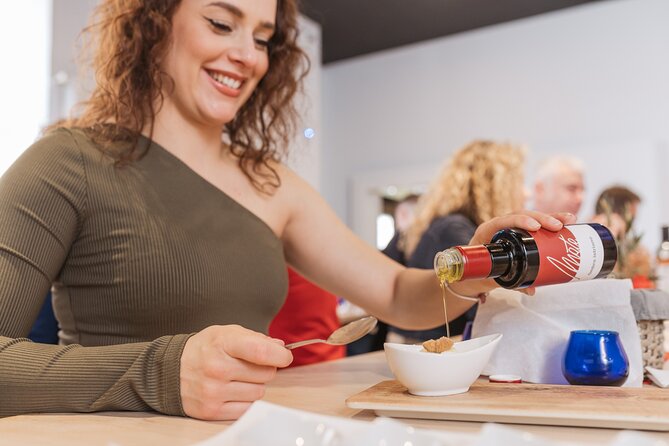
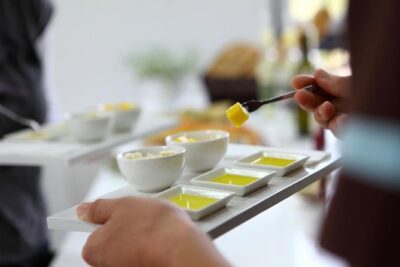
The final tasting pairs high-quality extra virgin olive oil with a surprise dessert. This may sound unusual if you have only used olive oil for salads, vegetables, or bread. The sweet course shows how flexible good oil can be.
Because the dessert is described as a surprise, you should not expect to choose from a menu or know the exact pairing in advance. That is part of the fun, but it also means the food element is more of a guided sample than a full meal.
The pairing gives the experience a pleasant finish. After concentrating on bitterness, pepper, aroma, and other qualities, you get to try the oil in a different setting. Sweet food can make the oil’s texture and flavor easier to consider without the usual savory ingredients.
Do not arrive hungry and expect lunch. The included snacks and dessert are tasting portions, not a complete meal. If you want a substantial meal afterward, plan one separately. The activity works best as a cultural food stop rather than a replacement for a restaurant visit.
Is $36.04 Good Value in Pula?
At $36.04 per person, this is not the cheapest way to spend 90 minutes in Pula. You are paying for a guided lesson, access to the exhibition, several oil samples, snacks, and the dessert pairing. The real value depends on how much you care about food knowledge.
For someone who enjoys local produce, the price is fair. You are not just sampling a product without context. You are learning how olive oil fits into Istrian history, how it was made in Roman times, how it is produced today, and how to judge it at the table.
For a visitor who wants a large museum or a full meal, the value is weaker. The exhibition is small, and the food portions are limited. You should choose this because you want a focused tasting with instruction, not because you expect a long attraction packed with displays.
The experience earns extra value if you plan to buy olive oil during your time in Croatia. The tasting can help you avoid choosing a bottle based only on its label or appearance. It may also change how you use oil once you get home.
The 94 percent recommendation rate and 4.7 rating from 34 ratings suggest a strong level of satisfaction, but the small number of ratings means you should still match the activity to your interests. The most praised elements are the friendly setting, clean venue, easy access, and strong tasting instruction. Those are exactly the parts that should guide your decision.
Who Will Enjoy This Experience Most?
I would recommend this activity to food-focused visitors, curious cooks, and anyone interested in how a regional product connects to history. It also suits people who prefer a short indoor activity with a clear beginning and end.
You will get the most from it if you are willing to taste carefully and ask questions. The experience is not built around spectacle. Its pleasure comes from noticing small differences and understanding why they matter.
It works well for couples, friends, and small family groups. Most people can participate, and service animals are allowed. Since the maximum group size is 20, children or adults with limited interest in food may find the museum and tasting less exciting than a more visual attraction.
This is also a good choice if you have already seen Pula’s major Roman sights. The exhibition adds another way to think about the city’s past, this time through production and trade rather than temples and amphitheaters.
What Could Be Better?
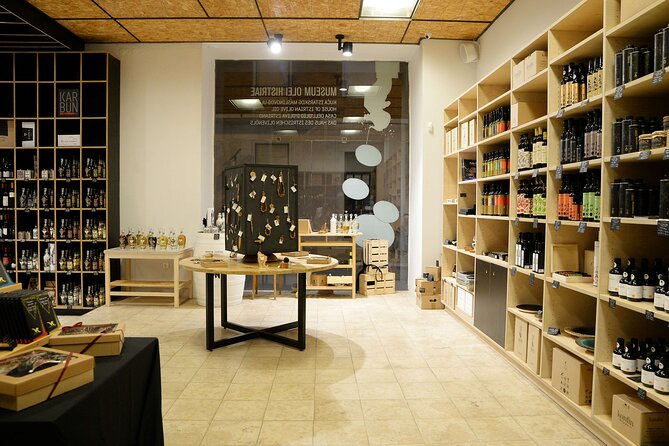
The small museum is the clearest limitation. If you picture a large interpretive center, you may be disappointed by the size and the layout. The films and displays provide useful information, but the exhibition is not especially interactive.
The group size can be another consideration. Up to 20 people is reasonable for a short tasting, but the room may feel less personal if it fills. You may need to speak up when questions are invited, especially if you want more detail about production or health claims.
The experience also depends on the guide. The tasting has received especially strong praise for clear explanations, friendly service, and thoughtful answers, but the exact feel can vary with the person leading your session. The information provided does not identify individual guides by name, so you should not book expecting a particular host.
Finally, the duration is flexible. The stated time is about one to one and a half hours, depending on your interests. That is helpful if you enjoy discussion, but less helpful if you have a tightly timed itinerary. Leave some space around the booking rather than scheduling another attraction immediately afterward.
Practical Details for Planning Your Visit
The meeting point is Istarska ul. 30, 52100 Pula, Croatia. The activity returns to this same location. A mobile ticket is accepted, and confirmation is received at booking.
The experience is offered in English. It operates Monday through Saturday from 10:00 a.m. to 6:00 p.m. during the stated operating dates. Since no Sunday hours are provided, do not assume the activity runs that day.
Free cancellation is available if you cancel at least 24 hours before the local start time. Cancellations made inside that window are not refunded, and late changes are not accepted. That rule is simple, but it matters if your Pula schedule depends on weather or changing ferry plans.
Should You Book the Pula Olive Oil Tasting?
Book it if you want a compact, useful introduction to Croatian food culture, especially if you cook with olive oil or plan to purchase some in Istria. The Roman background, direct comparison with supermarket oil, and dessert pairing give the 90-minute visit more substance than a basic sample session.
Skip it if you need a large museum, a full meal, or a highly interactive attraction. The exhibition is modest, and the experience rewards attention more than quick sightseeing.
For most food-minded visitors, I would make room for it. You leave with a better understanding of Istrian olive oil and a sharper sense of what extra virgin should actually taste like. That is a useful souvenir, and it takes up less space in your luggage than another bottle.
FAQ
How long does the olive oil experience last?
The experience lasts approximately one to one and a half hours. The exact length depends on your interests and the amount of discussion during the visit.
Where does the experience begin and end?
It begins at the House of Istrian Olive Oil, Istarska ul. 30, 52100 Pula, Croatia. The activity ends back at the same meeting point.
What is included in the tasting?
Olive oil tasting and snacks are included. The experience also finishes with a surprise dessert paired with high-quality extra virgin olive oil.
Is the tour offered in English?
Yes. The experience is offered in English, and a mobile ticket is available.
How many people can join the activity?
The maximum group size is 20 participants.
Can I cancel for a refund?
Yes. You can cancel for a full refund up to 24 hours before the experience start time. Cancellations or changes made less than 24 hours before the start time are not accepted for a refund.
More Historical Tours
- Pula: Historic Walking Tour with Local Guide & City Views
★ 4.8 · 143 reviews - Pula: Historic Sites Guided Walking Tour
★ 4.8 · 78 reviews - Pula Roman Heritage Walking Tour
★ 5.0 · 12 reviews - Dubrovnik Old Town History Walking Tour
★ 5.0 · 1,684 reviews
More Food Tours
- Wine Tasting Experience at the organic winery in Šišan
★ 3.5 · 13 reviews - Pula Food Walking Tour
★ 4.0 · 12 reviews - From Split: Krka Waterfalls, Food & Wine Tasting Tour
★ 5.0 · 9,326 reviews - From Split: Krka Waterfalls, Food & Wine Tasting Tour
★ 4.9 · 6,598 reviews
Just added around Pula
- Istria: Private Boat Tour with Skipper★ 5.0 · 9 reviews
- 3 Hours Private Wine and Sunset Tour★ 5.0 · 9 reviews
- Pula: Sunset/Night-time Illuminated Transparent Kayak Tour★ 4.0 · 9 reviews
- Electric Off-Road Scooter Tour in Pula★ 5.0 · 10 reviews
- Pula: Your Custom Full-Day Private Sail – Explore Istria’s Gems★ 5.0 · 10 reviews
- Pula Private 2-Hour Guided Walking Tour★ 5.0 · 10 reviews
- Pula: Private Brijuni Tour With Swimming, Dinner & Drinks★ 4.3 · 10 reviews
- Stop on Island & National Park Day Cruise with Lunch Drinks★ 5.0 · 10 reviews
Olive Oil Tastings, compared.
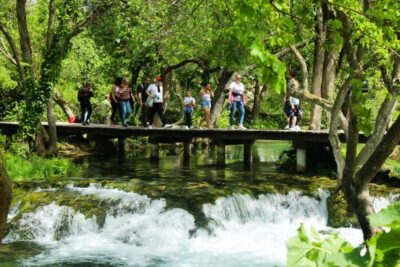
Krka Waterfalls With Boat Cruise, Wine and Olive Oil
Read our review →

Olive museum Klis with educational olive oil tasting
Read our review →
Krka Waterfalls Tour with Wine and Olive Oil Tasting
Read our review →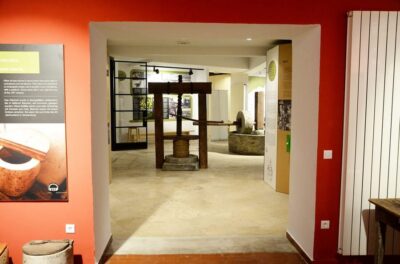
House of Istrian Olive Oil Museum and Guided Tasting
Read our review →
Browse the lists this tour appears in