
Reviewed · HISTORICAL TOURS
Pula Roman Heritage Walking Tour
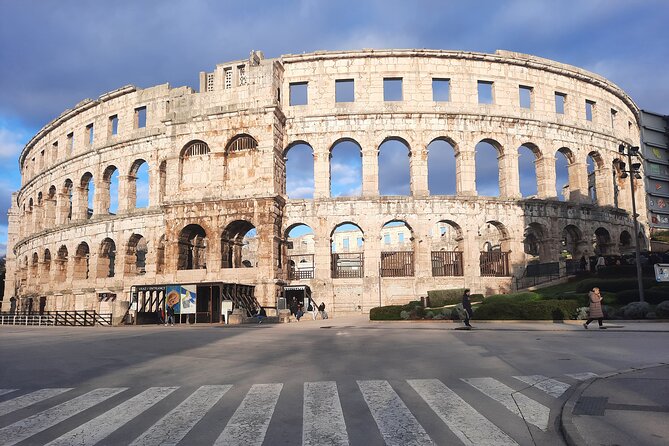
Roman stones tell the story. Pula’s Roman Heritage Walking Tour gives you a focused two-hour introduction to the city, with a local guide connecting the Arena, Temple of Augustus, Roman theatre, gates, and surrounding streets. I like that admission to the Pula Arena is included, and I like the small group size, capped at 15 people. The main drawback is the price: at $107.06 per person, it is a serious spend for a short walking tour.
The tour is offered in English, with morning and afternoon departures. Guides such as Dina, Jadranka, and Maslinka have earned praise for clear explanations, friendly service, and tailoring the route to each group. If your guide extends the outing, as some have done, you may get more than the advertised two hours, but you should still plan around the official duration.
In This Review
- Key points to know before booking
- Why Pula’s Roman past works well on foot
- Starting beside the Pula Arena
- The Temple of Augustus in the old center
- Reconstructing the Small Roman Theatre
- The guides are the heart of the experience
- What the two-hour schedule really means
- Is $107.06 a fair price?
- Who will get the most from this walk?
- Booking timing and cancellation basics
- Final verdict: Book it for context, not just monuments
- FAQ
- How long is the Pula Roman Heritage Walking Tour?
- What language is the tour offered in?
- Where does the tour start?
- Where does the tour finish?
- Is admission to the Pula Arena included?
- Are Temple of Augustus and the Small Roman Theatre admission tickets included?
- Is hotel pickup and drop-off included?
- How many people can join the tour?
- Does the tour require a minimum number of bookings?
- Can I cancel for a full refund?
Key points to know before booking
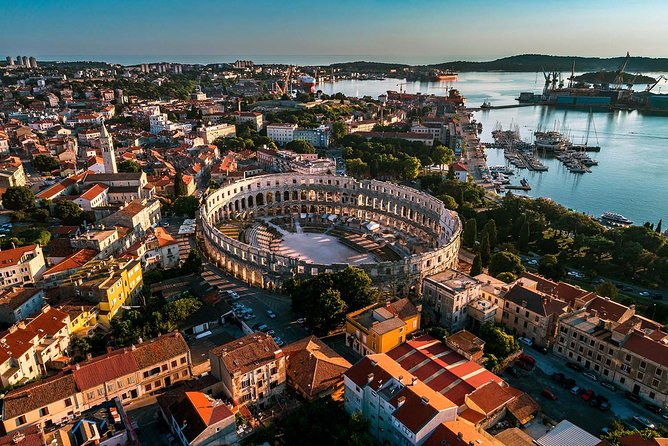
- The Pula Arena is the main event: You enter one of Croatia’s best-known Roman monuments, with admission included.
- Three important Roman sites fit into two hours: The route covers the Arena, Temple of Augustus, and Small Roman Theatre.
- The guides are the tour’s strongest feature: Dina, Jadranka, and Maslinka are praised for historical context, warmth, and adapting the walk to personal interests.
- Coffee or tea is part of the outing: This gives the tour a relaxed pause rather than making it a nonstop lecture.
- The group stays relatively small: A maximum of 15 people allows more room for questions than a large city tour.
- The meeting point is simple: You start and finish at Pula Arena, with no hotel transportation included.
Why Pula’s Roman past works well on foot
Pula is a good city for a Roman history walk because its major remains are spread through the center rather than hidden behind a single museum door. You can move from the huge Arena to a temple, then up toward the remains of the Small Roman Theatre, seeing how ancient public life occupied different parts of the city.
A guide adds the connecting thread. On your own, you might recognize the Arena and take a quick photograph of the Temple of Augustus. With an informed local at hand, you get an explanation of how the buildings were used, how the city was organized, and how Roman power shaped Pula.
That context matters most at the less complete sites. The Arena is easy to understand because its curved walls remain so impressive. The Small Roman Theatre requires more imagination. A guide can point out what the surviving stone means and help you picture a performance space that once sat outside the old city walls on the hillside of Zaro.
The tour is also a practical way to get your bearings early in a Pula visit. Jadranka was praised for offering useful suggestions for the next day of a trip, and another group ended the walk with a restaurant recommendation. That sort of local advice can be worth plenty if this is your first time in town.
More Walking Tours in Pula
- Pula: Historic Walking Tour with Local Guide & City Views
★ 4.8 · 143 reviews - Pula walking tour
★ 5.0 · 96 reviews - Pula: Historic Sites Guided Walking Tour
★ 4.8 · 78 reviews
Starting beside the Pula Arena
The tour begins at Pula Arena on Flavijevska Street, in the center of Pula. This is a convenient meeting point because the amphitheater is one of the city’s clearest landmarks. You do not need hotel pickup, so you should arrange your own way to the Arena and arrive ready to walk.
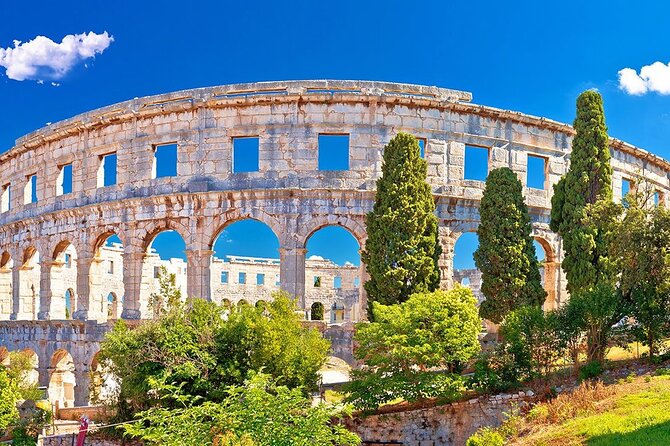
The Arena is where the tour spends its most important stretch. The official visit is listed at about 15 minutes, with admission included. That timing sounds brief for such a large monument, but the full walk is not limited to a quick look inside. Guides have also explained nearby Roman gates, temples, and surrounding streets, giving the amphitheater a wider setting.
Inside, you can expect an introduction to the building’s use for gladiatorial contests and public entertainment. The structure makes the scale of those events easier to grasp. The stone arches, seating levels, and open central area show that this was not simply a local arena. It was a carefully planned public building meant to hold a large crowd.
One useful detail from the tour experience is the mention of exhibits below ground. These displays help explain how the building worked and add something beyond the familiar exterior view. If you care about Roman engineering, construction, or daily life, pay close attention here and ask questions. The Arena is visually striking, but the explanations are what turn it into a history lesson rather than a photo stop.
Some tour groups have received a longer visit than the advertised schedule. Jadranka was praised for spending far more than two hours with her group, and Maslinka also continued the conversation because the group was enjoying the subject. That extra time is a welcome bonus, but I would not count on it when planning a train, meal, or other fixed appointment.
The Temple of Augustus in the old center
The next listed stop is the Temple of Augustus, with about 10 minutes set aside and no separate admission charge. The temple was dedicated to the goddess Roma and Emperor Augustus, which gives your guide a chance to explain both the political and religious side of Roman public life.
This stop works best as part of the larger story. The Arena shows mass entertainment and civic spectacle. The temple shows how Roman authority was presented through religion, monuments, and the public center of the city. A short explanation can make the building feel far more important than its small footprint suggests.
Ten minutes is enough for an introduction, but it is not a long museum visit. You may want to use this portion of the walk to ask about the building’s dedication, its place in the Roman city, and what happened to it over time. The stated schedule is compact, so the tour favors orientation and explanation over lengthy independent exploration.
The free entry also helps the tour’s value. You are not paying another admission charge at this stop, and you can see one of Pula’s central Roman monuments without arranging a separate visit.
Reconstructing the Small Roman Theatre

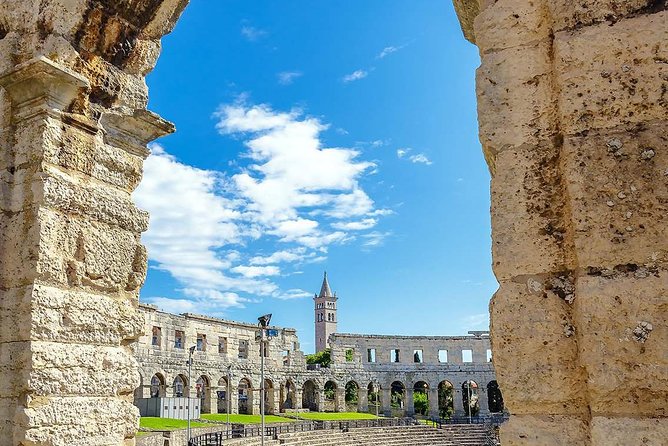
The Small Roman Theatre is the most demanding stop for your imagination. Only remains survive, and the site once served as an amphitheater outside the city walls on the hillside of Zaro. The planned visit is about 10 minutes, with no separate admission charge.
This is where a guide’s skill makes the greatest difference. A pile of ancient masonry can be hard to read without help. A guide can explain the likely purpose of the space, its position beyond the walls, and the part it played in Roman Pula.
The stop also broadens the tour beyond the Arena. You see that Roman public life was not concentrated in one building. Different venues served different needs, and the remains around Pula help show how the city grew and functioned.
Because the theatre is less intact, it may not impress you in the same immediate way as the Arena. If you want only grand monuments, this portion may feel modest. If you enjoy seeing how archaeologists and guides piece together an ancient city, it adds useful depth.
More Historical Tours:
- Olive Oil Guided Tasting and History in Pula
★ 4.5 · 34 reviews - Dubrovnik Old Town History Walking Tour
★ 5.0 · 1,684 reviews - Walking Tour of Split with a ‘Magister’ of History
★ 5.0 · 1,122 reviews - Split Walking Tour with Professor of History
★ 5.0 · 926 reviews
The guides are the heart of the experience
The strongest pattern in the feedback is the quality of the guides. Dina has been praised for a private tour of the Arena and nearby streets, with a professional, informative, fun, and attentive manner. She also offered useful advice for onward travel, a helpful extra if you are moving through Istria or Croatia.
Jadranka received especially warm comments for her historical and cultural explanations. She asked what the group wanted to focus on and adjusted the walk accordingly. A family of five appreciated having a private-feeling experience rather than being placed in a large group, and another group enjoyed her help choosing a restaurant afterward.
Maslinka was also praised for strong knowledge and for allowing the visit to run longer because the conversation was going so well. These names are useful when you book, but guides can vary by date. You should treat them as examples of the service level reported, not a promise that one particular person will lead your tour.
The guide makes a difference because this is not simply a route between monuments. The listed stops are fairly close in number and short in scheduled time. The real value comes from the explanations, questions, and local perspective along the way.
What the two-hour schedule really means

The official duration is approximately two hours. That makes this a useful choice if you have only a morning or afternoon in Pula, or if you want a historical introduction before exploring alone.
The schedule is concentrated. The Arena receives the most attention, while the Temple of Augustus and Small Roman Theatre are shorter stops. You should expect a walking overview, not a full archaeological course or a slow museum visit.
Morning and afternoon times make it easier to fit the experience around meals, sightseeing, or transport. Since the start and finish are both at the Arena, the route is also simple to combine with independent time in central Pula.
The small group limit of 15 is another plus. It does not guarantee a private tour, since other bookings may join, but it reduces the chance of a huge crowd. The minimum is two full-price adults, so the tour needs enough demand to operate. If that minimum is not reached and the tour is canceled, you are offered another date or experience, or a full refund.
Is $107.06 a fair price?
At $107.06 per person, this is not a budget walk. The price makes the most sense if you value a personal guide, want Arena admission handled, and prefer a compact introduction rather than researching Pula by yourself.
The cost is easier to justify for a small party, especially if the guide gives you tailored attention. A family of five enjoyed having the tour shaped around its interests, and several groups received more time than the advertised two hours. That kind of service can make the fee feel more reasonable.
Still, you should be clear about what is included. A local guide is included, and Arena admission is included according to the stop details. Temple of Augustus and Small Roman Theatre have free entry. Hotel pickup and drop-off are not included, so you must reach the Arena on your own.
Coffee or tea is included as part of the experience, adding a pleasant break. It is a nice touch, but it should not be the reason you book. The price is mainly paying for the guide’s time, historical explanation, and local advice.
Who will get the most from this walk?
I would recommend this tour to first-time visitors who want to understand Pula before exploring it independently. It suits people who enjoy Roman sites but do not want to spend an entire day in museums or ruins.
Families may find the shorter route and private-feeling group size helpful. The guides have shown an ability to adjust explanations to personal interests, which is useful when children, adults, or mixed-age groups want different levels of detail.
It also suits history fans who want more than the Arena alone. The Temple of Augustus, Roman gates, nearby streets, and Small Roman Theatre give you a broader view of the city.
You may want to skip it if you prefer to wander alone, already know Roman architecture well, or consider $107.06 too high for a two-hour activity. You can see several sites without a guide, though you will miss the organized explanations and local suggestions.
Wear smart casual clothing, as requested. Service animals are allowed, the activity is near public transportation, and most people can participate. The available information does not provide a detailed accessibility description for every section, so ask the provider if you have specific mobility needs.
Booking timing and cancellation basics
The experience is often reserved about 37 days ahead, so advance planning is sensible, especially if you need a particular morning or afternoon time. Confirmation arrives when you book, and the tour is offered in English.
You can cancel for a full refund up to 24 hours before the local start time. Changes or cancellations made within 24 hours are not refunded or accepted. Keep the minimum-booking rule in mind as well, though a cancellation for that reason comes with a full refund or another offered option.
Final verdict: Book it for context, not just monuments
You should book the Pula Roman Heritage Walking Tour if you want a guide to turn three Roman sites into one connected story. The Arena admission, small maximum group, coffee or tea, and strong guide reports all add value.
I would be more cautious if your budget is tight or if you want a long, leisurely archaeological visit. At this price, the guide needs to be the main reason you book. If Dina, Jadranka, or Maslinka brings the same personal approach described here, you can expect a friendly, useful introduction to Pula that may also help shape the rest of your Croatian trip.
FAQ
How long is the Pula Roman Heritage Walking Tour?
The tour lasts approximately two hours, though some groups have spent longer with their guide.
What language is the tour offered in?
The tour is offered in English.
Where does the tour start?
It starts at Pula Arena on Flavijevska Street, 52100 Pula, Croatia.
Where does the tour finish?
The activity ends back at the Pula Arena meeting point.
Is admission to the Pula Arena included?
Yes. Admission to the Pula Arena is included.
Are Temple of Augustus and the Small Roman Theatre admission tickets included?
Both stops are listed with free admission, so there is no separate ticket charge stated for either site.
Is hotel pickup and drop-off included?
No. Hotel pickup and drop-off are not included.
How many people can join the tour?
The tour has a maximum of 15 participants.
Does the tour require a minimum number of bookings?
Yes. At least two full-price adult bookings are required for the tour to operate.
Can I cancel for a full refund?
Yes. You can cancel at least 24 hours before the local start time for a full refund. Cancellations or changes made less than 24 hours before the start are not accepted or refunded.
Just added around Pula
- Istria: Private Boat Tour with Skipper★ 5.0 · 9 reviews
- 3 Hours Private Wine and Sunset Tour★ 5.0 · 9 reviews
- Pula: Sunset/Night-time Illuminated Transparent Kayak Tour★ 4.0 · 9 reviews
- Electric Off-Road Scooter Tour in Pula★ 5.0 · 10 reviews
- Pula: Your Custom Full-Day Private Sail – Explore Istria’s Gems★ 5.0 · 10 reviews
- Pula Private 2-Hour Guided Walking Tour★ 5.0 · 10 reviews
- Pula: Private Brijuni Tour With Swimming, Dinner & Drinks★ 4.3 · 10 reviews
- Stop on Island & National Park Day Cruise with Lunch Drinks★ 5.0 · 10 reviews
Historical Tours, compared.

Walking Tour of Split with a ‘Magister’ of History
Read our review →


Split History and Gastro Small-Group Tour with Food and Drinks
Read our review →
PREMIUM Emperor’s Walking Tour for History Lovers + Museum
Read our review →Browse the lists this tour appears in