
Reviewed · HISTORICAL TOURS
Split: History and Heritage Walking Tour
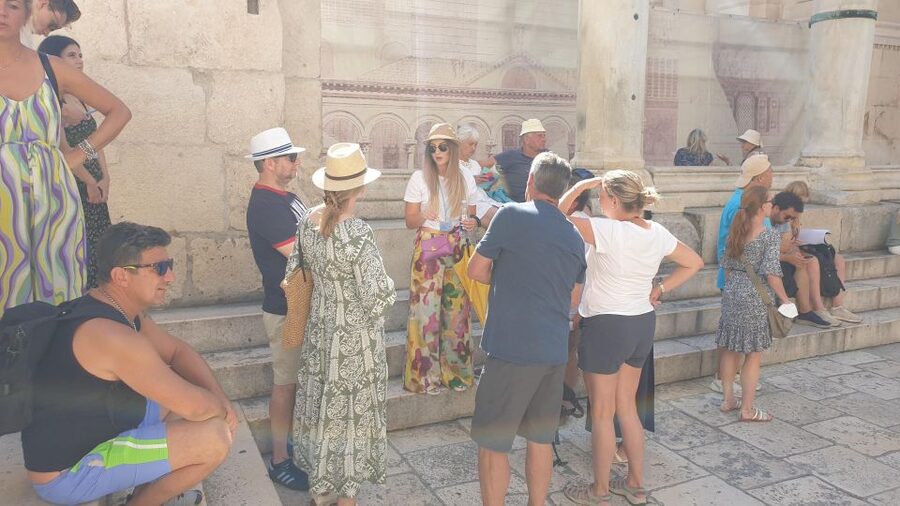
Ancient stones still serve daily life. This $18 walking tour makes Split’s old center easy to understand, linking Diocletian’s Palace with Roman, medieval, Venetian, and modern city life. I especially like the local storytelling and the way the guides explain how Emperor Diocletian rose from obscurity to become Rome’s most powerful man.
I also like the tour’s useful mix of major sights and small details, from preserved Roman architecture to Gothic palaces, traditional singing, and Game of Thrones connections. The main consideration is group size: although sold as a small-group walk, one outing reached nearly 30 people, which meant some time was lost waiting for the group to pass through crowded lanes.
In This Review
- Key points about Split’s history and heritage walk
- Beginning beneath the Roman arch on Peristil Square
- Diocletian’s Palace as a living neighborhood
- Romanesque churches and medieval changes
- Gothic palaces and Split’s changing architecture
- Stories that make the old town easier to remember
- What the group format means in practice
- Price, timing, weather, and practical comfort
- Who will enjoy this Split walking tour?
- Should you book the History and Heritage Walking Tour?
- FAQ
- Where does the tour start?
- Where does the tour end?
- What is included in the price?
- Are admission tickets included?
- What languages are available?
- Does the tour operate in bad weather?
- Can I cancel for a full refund?
Key points about Split’s history and heritage walk
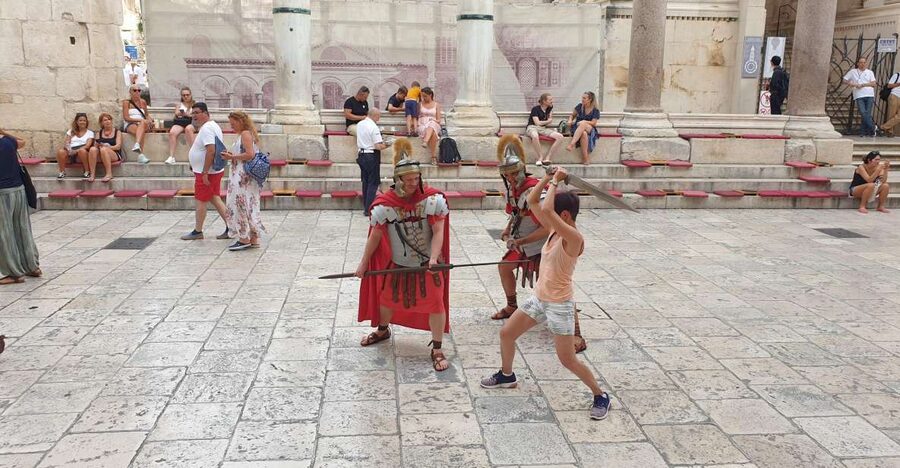
- Diocletian’s Palace still works as a city: Ancient walls now contain shops, homes, churches, and everyday streets.
- The tour links several eras: You move from Roman remains to Romanesque churches, medieval fortifications, Gothic palaces, Venetian influence, and modern Split.
- Storytelling is the main strength: Guides such as Antonella, Antonela, Nikolas, and Doris are praised for clear explanations, humor, and enthusiasm.
- The starting point is easy to find: Meet under the old Roman arch on Peristil Square, beside the Tourist Information Office, marked by a yellow shirt or umbrella.
- Game of Thrones is a bonus, not the focus: Fans get location details, while the main subject remains Split’s long story.
- Plan for changing weather: The walk operates in rain or sun, so comfortable shoes, a hat, and practical clothing matter.
Beginning beneath the Roman arch on Peristil Square
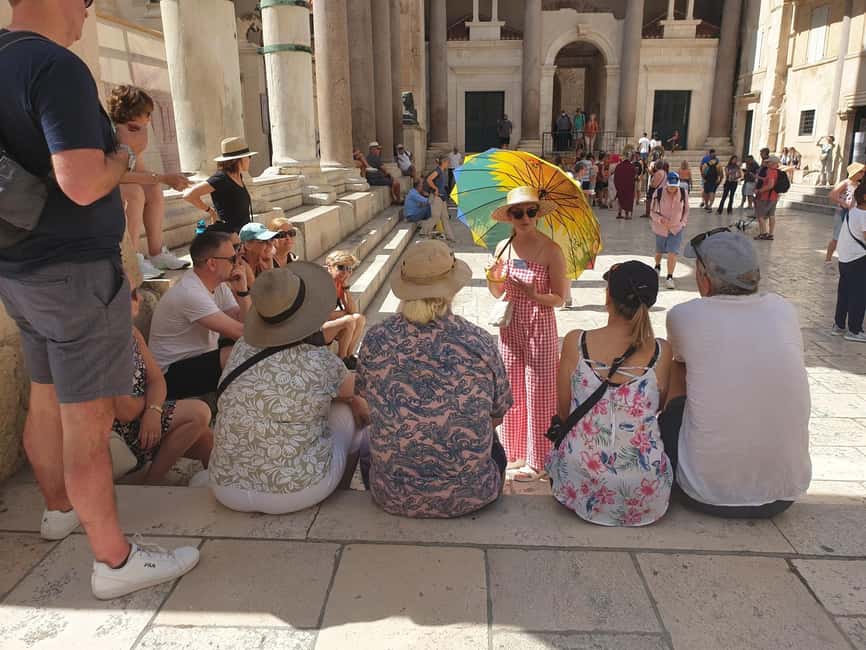
The tour starts on Peristil Square, the ceremonial heart of Diocletian’s Palace. Look for the guide in a yellow T-shirt or beside a yellow umbrella, under the old Roman arch on the north side of the square near the Tourist Information Office.
This meeting point is more than a practical landmark. Peristil gives you an immediate lesson in how Split works. Roman columns and arches frame a public space that still serves as part of the living city. You are not entering a quiet archaeological park. Shops, homes, churches, and foot traffic occupy the same old walls.
That contrast is the central pleasure of the walk. You see Roman construction, then turn into a medieval lane, pass a later church, and find modern life carrying on around it. A guide helps you notice the layers instead of seeing the palace as a collection of attractive stones.
The opening explanation also puts Emperor Diocletian in context. His palace was not simply a holiday villa. It was connected to the final years of a Roman ruler who had climbed from an obscure background to the top of the imperial world. The story gives human shape to the stonework.
More Historical Tours in Split
- Walking Tour of Split with a ‘Magister’ of History
★ 5.0 · 1,122 reviews - Split Walking Tour with Professor of History
★ 5.0 · 926 reviews - Split History and Gastro Small-Group Tour with Food and Drinks
★ 5.0 · 375 reviews
Diocletian’s Palace as a living neighborhood
The palace is about 1,700 years old, and its remains form the core of Split’s old center. A walk here is valuable because the palace is not preserved in isolation. It has been changed, reused, and absorbed into the city over many centuries.
You can expect the guide to point out what belonged to the Roman complex, what was added later, and what has been adapted for modern use. The result is a city within a city, where ancient walls can sit beside shops and newer interiors.
I find this kind of explanation more useful than a list of dates. The key question is not just when a wall was built, but how it survived and why the city grew around it. Your guide shows how the palace became part of Split rather than remaining a frozen monument.
The walk covers the important public areas of the palace and the old town’s main sights. It is particularly helpful if you have only a short stay, since the tour gives you a framework for exploring on your own afterward. One visitor with just 48 hours in Split found the introduction especially useful, and that makes sense: a good orientation saves you from wandering past important details.
The palace section also suits people who do not normally seek out Roman history. Guides are praised for keeping the explanations lively, using stories and fun facts instead of giving a dry lecture. If your companion is less interested in ancient history, the entertaining delivery may keep the walk enjoyable for both of you.
Romanesque churches and medieval changes

Split’s old center is not only Roman. The tour brings in Romanesque churches and medieval buildings, showing how the city changed after the imperial period.
These later structures are important because they explain why the old town feels layered rather than uniform. Roman construction provides the foundation, but medieval residents altered the spaces and built according to new religious and civic needs. The guide connects those changes to the larger story of Split.
You will also hear about the arrival of Croats and the influence of Venice. Those subjects help explain the mixture of styles around the old town. Roman arches, medieval stonework, Gothic details, and Venetian influence are not separate displays. They share the same compact streets.
Antonella and Antonela receive especially high praise for making this complicated story easy to follow. The names appear with slightly different spellings, but the repeated description is consistent: enthusiastic delivery, clear explanations, and a talent for keeping attention. One guide was compared to a teacher, which is a useful clue for anyone who prefers organized explanations over a fast walk with only surface facts.
The pace is described as comfortable, with enough time to take in the sights. Still, a larger group can affect that rhythm. In narrow lanes, people spread out quickly, and the guide may need to pause so everyone can hear and catch up.
Gothic palaces and Split’s changing architecture
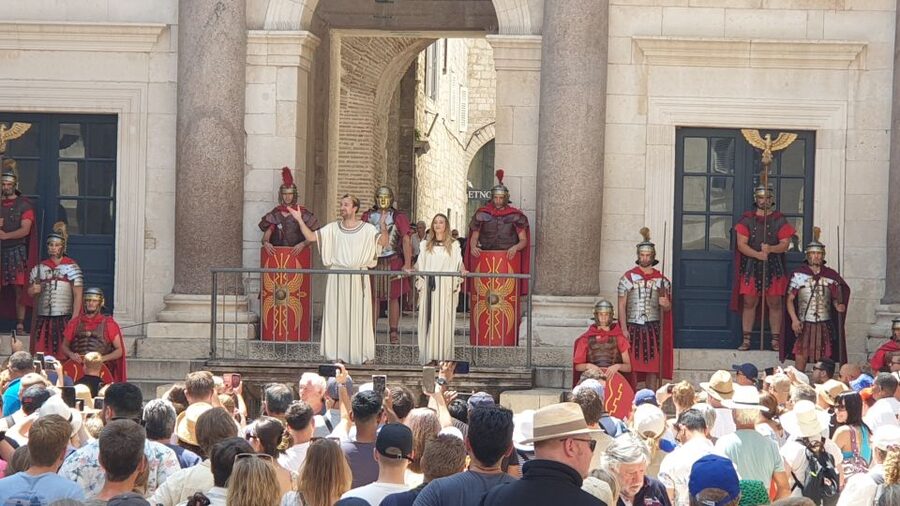
The walk also includes Gothic palaces and medieval fortifications. These stops widen the picture beyond the Roman palace and show how Split developed as a city with its own political and architectural identity.
Gothic buildings are worth seeing here because they help you read the old center as a place shaped by different periods of power. The guide explains how later construction used, covered, or sat beside older Roman remains.
The fortifications add another practical angle. Walls are not only impressive backdrops for photographs. They reveal the need to protect the city and help you understand the compact form of the old center.
This is where a local guide adds real value. On your own, you might admire a doorway or tower without knowing its period or purpose. The tour gives you the context to compare one building with the next. Several guides also connect the city’s past to their personal relationship with Split, which makes the material feel less remote.
The walk does not appear to include paid interior admissions, and admission tickets are not part of the price. That keeps the cost low, but it also means you should not expect a full museum tour or guaranteed entry into every sight. The strength is the guided route through the accessible historic center.
More Walking Tours in Split
- Split: Old Town and Diocletian Palace Walking Tour
★ 4.9 · 4,727 reviews - Walking Tour of Split and Diocletian’s Palace
★ 5.0 · 2,588 reviews - Krka Waterfalls tour with Trogir Walking tour and Krka panoramic boat cruise
★ 5.0 · 1,659 reviews - Split & Diocletian’s Palace Walking Tour
★ 5.0 · 1,125 reviews
Stories that make the old town easier to remember
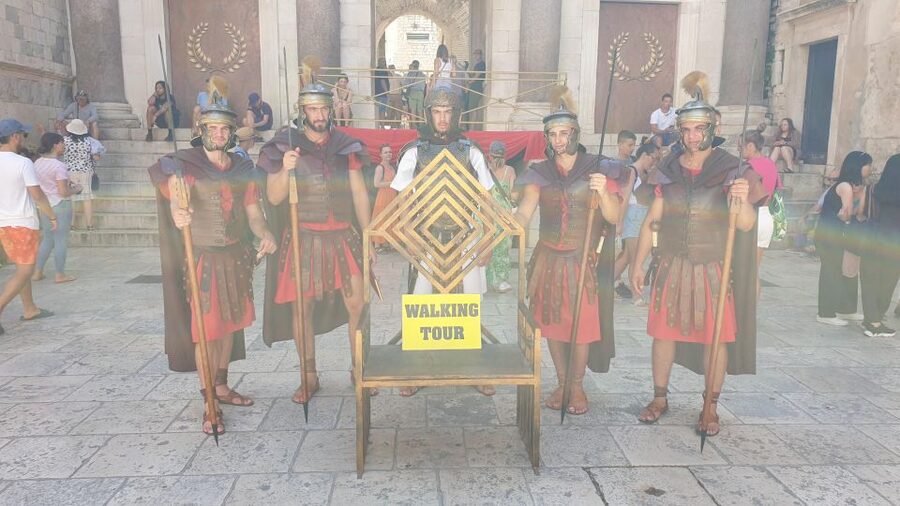
The best part of this experience is the storytelling. The subject covers 1,700 years, yet the tour aims to make the material manageable through anecdotes, factoids, and stories about rulers, invasions, cultural influences, and daily life.
Guides are licensed and educated, and the strongest comments focus on their ability to bring the past to life. Antonella is repeatedly praised for her passion, humor, and clear delivery. Nikolas is noted for explaining the influences that shaped the city. Doris helped keep people comfortable during rain by providing an umbrella.
The emphasis on storytelling matters. Split’s old center can feel confusing on a first visit because the historic layers are packed together. A guide who explains the connections gives you a mental map, not just a procession of photo stops.
You may also encounter traditional singing during the walk. It is not presented as the main feature, but it adds a pleasant cultural moment to a tour already focused on local identity.
The Game of Thrones material works best as an extra. Fans can hear about filming locations, while people who have never watched the show still get a full history tour. You should not book this primarily as a television-location walk. The palace, churches, fortifications, and stories of Split remain the main event.
What the group format means in practice
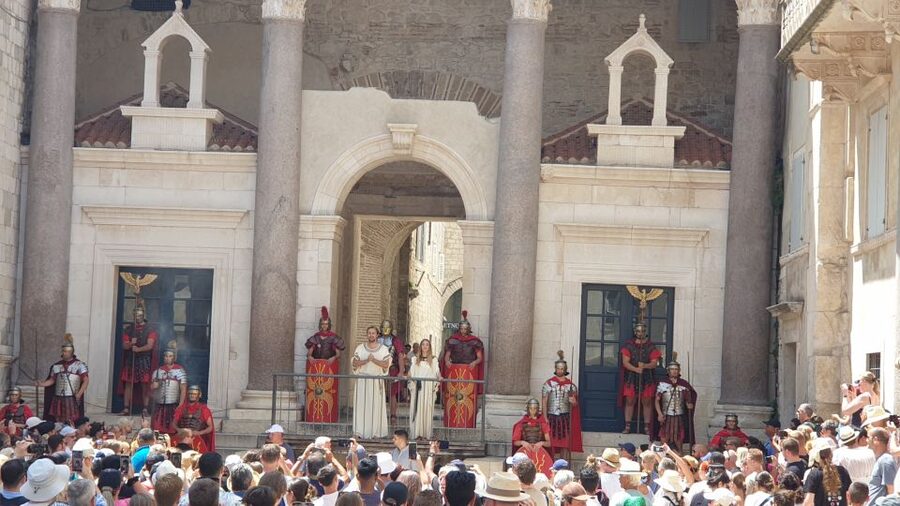
The tour is described as a small-group walk, but group size may vary. One reported outing had almost 30 people, and even the guide acknowledged that it was larger than ideal.
That matters in Split because the old center includes narrow passages and busy public squares. A big group can make it harder to stand close enough to hear, and pauses may take longer as people move between stops. The experience remains worthwhile, but you should set realistic expectations about the word small.
The positive side of a guided group is the shared pace and the chance to ask questions. Guides are praised for answering questions, speaking clearly, and checking that people are comfortable. If you position yourself near the guide, you will likely get more from the explanations than if you drift toward the back.
The tour ends where it begins, at the meeting point on Peristil Square. That makes it easy to continue exploring the old center, return to your accommodation, or use the square as a reference point for the rest of your day.
Price, timing, weather, and practical comfort

At $18 per person, this is a good-value introduction to Split’s core historic area. The price includes the walking tour and guide, but not food, drinks, hotel pickup, or admission tickets.
I see the value in paying for interpretation rather than transport. Split’s central sights are close together, so a vehicle would add little. The useful purchase is the explanation: why the palace was built, how it changed, and how Roman, medieval, Gothic, and Venetian influences fit together.
Wear comfortable shoes. The tour takes place on foot through an old urban center, and practical clothing will make the experience easier. A hat is useful in strong sun, while a light rain layer or umbrella helps because the tour operates in all weather.
The walk is listed as suitable for all ages, but it is not suitable for people with high blood pressure or people with hearing impairments. If hearing is a concern, the group setting and outdoor street noise may make it difficult to follow the guide.
The tour is offered in English, Russian, German, and French. You can reserve now and pay later, which is helpful if your plans are still shifting. Cancellation up to 24 hours before the tour allows a full refund.
Who will enjoy this Split walking tour?
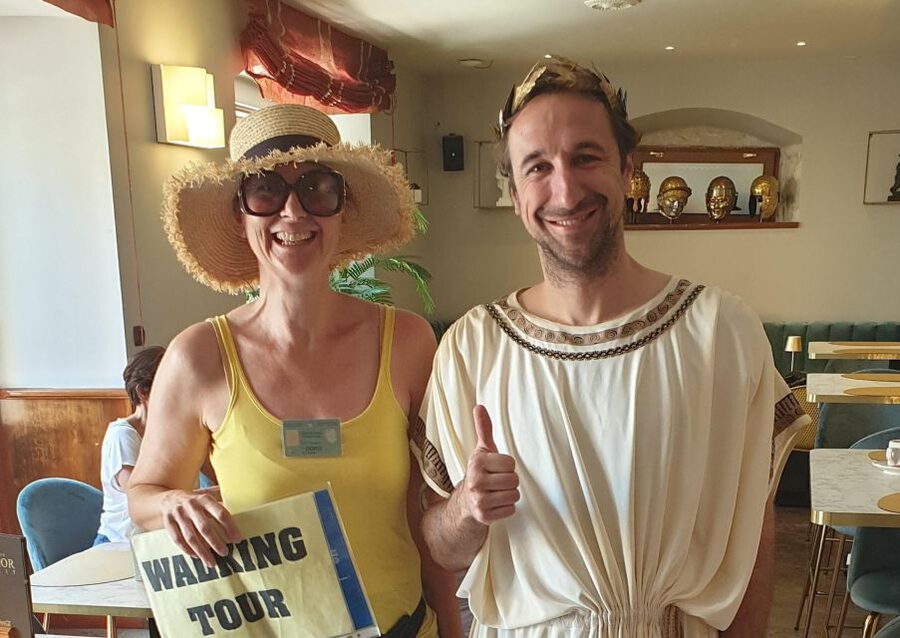
I would recommend it to a first-time visitor who wants a clear introduction before exploring independently. It is also a strong choice for anyone with limited time, since the route focuses on the city’s historic center and returns to the starting point.
History fans should enjoy the broad sweep from Roman rule through medieval and Venetian periods. The experience also works for mixed-interest groups because the guides use humor, local stories, and accessible explanations rather than relying only on formal dates.
Families may appreciate that the walk is listed as suitable for all ages, although a larger group could make it less relaxed for young children. Game of Thrones fans will enjoy the location information, but they should choose this tour for the full story of Split, not only for the show.
You may prefer another format if you want private guiding, guaranteed small numbers, extensive interior visits, or a dedicated food tour. Since paid admissions are not included, this is best understood as a guided orientation through the historic streets.
Should you book the History and Heritage Walking Tour?
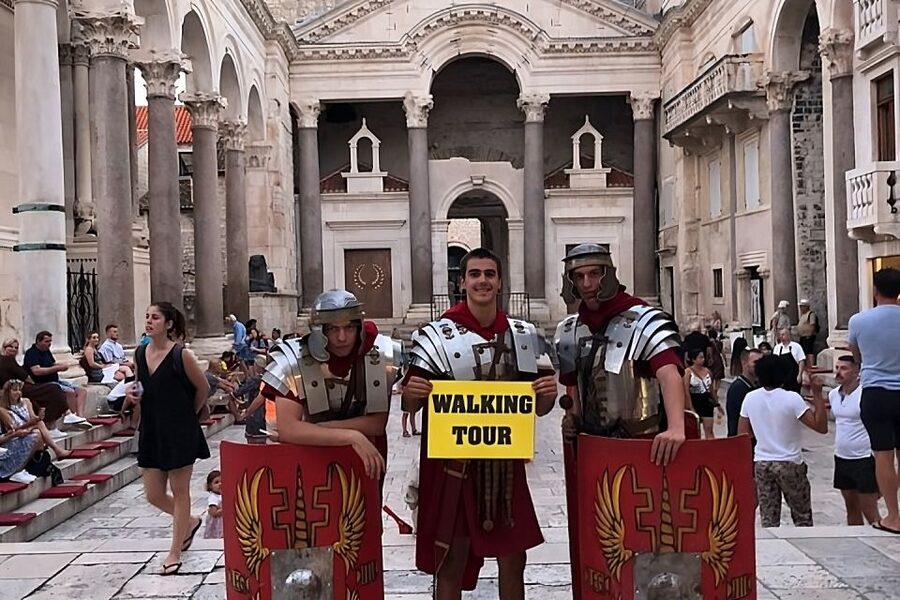
Book it if you want Split to make sense quickly. The strongest reasons are the central route, the low price, and guides such as Antonella, Antonela, and Nikolas, who turn a complex past into stories you can remember.
Just prepare for possible crowding, outdoor weather, and a tour focused mainly on accessible public areas rather than ticketed interiors. For $18, I think it offers particularly good value as your first activity in Split. Afterward, you will recognize the palace’s layers, understand the old town’s layout, and know which streets deserve a closer look.
FAQ
Where does the tour start?
It starts on Peristil Square under the old Roman arch on the north side of the square, beside the Tourist Information Office. Look for a yellow T-shirt or yellow umbrella.
Where does the tour end?
The activity ends back at the meeting point on Peristil Square.
What is included in the price?
The price includes a small-group walking tour and a tour guide.
Are admission tickets included?
No. Admission tickets, food, and drinks are not included.
What languages are available?
The tour is offered in English, Russian, German, and French.
Does the tour operate in bad weather?
Yes. The tour takes place in rain, sun, and other weather conditions. Bring comfortable clothing, suitable shoes, and a hat.
Can I cancel for a full refund?
Yes. You can cancel up to 24 hours in advance for a full refund.
Just added around Split
- Private VIP Blue Lagoon and 3 Islands Tour★ 4.5 · 9 reviews
- Split highlights – Evening walking tour★ 5.0 · 9 reviews
- Private boat transfer Split – Bol★ 5.0 · 9 reviews
- Private Photography Activity in Split★ 5.0 · 9 reviews
- From Split: Trogir & Blue Lagoon Boat Tour with Snorkeling★ 4.6 · 9 reviews
- Bike, Beer & Poljud Stadium Tour★ 5.0 · 9 reviews
- From Hvar: Blue cave group speedboat tour full day★ 5.0 · 9 reviews
- Split Walking Tour: History, Legends & Tales★ 5.0 · 9 reviews
Historical Tours, compared.


Walking Tour of Split with a ‘Magister’ of History
Read our review →


Split History and Gastro Small-Group Tour with Food and Drinks
Read our review →
PREMIUM Emperor’s Walking Tour for History Lovers + Museum
Read our review →
Browse the lists this tour appears in