
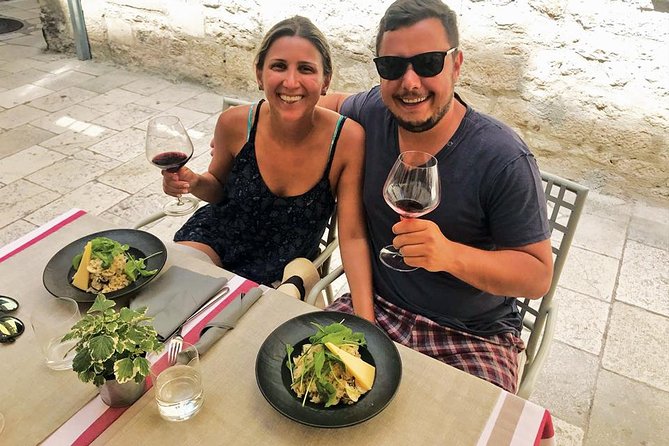
Reviewed · FOOD & DRINK
Split History and Gastro Small-Group Tour with Food and Drinks
Come hungry, leave better oriented. This three-hour walk combines Diocletian’s Palace with a generous tasting of Croatian food, wine, liqueur, and sweets. I like the smart mix of sightseeing and eating, and I like the small group size, capped at 12 people, which makes it easier to ask questions and chat with your guide. The main consideration is that much of the food is seafood, and the afternoon route does not include the Green Market itself.
The tour costs $139.13 per person, so it is not a cheap lunch. Still, I think the price can make sense if you want several tastings, multiple drinks, a guided look at central Split, and practical restaurant ideas in one sitting. The amount of food can be substantial, and some guides, including Ana, Hani, Honey, Doris, Christina, and Ela, have been praised for making the experience warm, personal, and fun.
In This Review
- Key points to know before booking
- Why this Split tour works so well
- Meeting the orange spoon outside Diocletian’s Palace
- Green Market: Split’s food cupboard
- Narodni trg and the medieval center
- Marmontova Street, seafood, and gelato
- The final table near Trumbićeva obala
- How much history will you get?
- The food and drink: what to expect
- Is $139.13 a fair price?
- Who should book this food walk?
- Should you book the Split History and Gastro Tour?
- FAQ
- How long does the Split History and Gastro Tour last?
- Where does the tour begin?
- Where does the tour end?
- Is the Green Market included on every tour?
- What food and drinks are included?
- Are dietary options available?
- How many people can join the tour?
Key points to know before booking
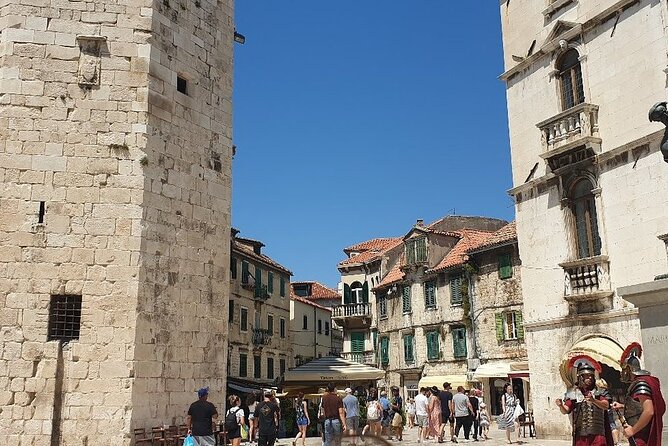
- The orange spoon is your meeting clue: Look for a person outside Diocletian’s Palace at Hrvojeva 1.
- Food replaces a formal restaurant crawl: Expect cured meats, cheese, seafood, pasta, black risotto, regional bread, sweets, and wine.
- The Green Market depends on your start time: It is part of the morning route, but the market is closed in the afternoon.
- The group is limited to 12 people: That is a useful size for conversation and individual food requests.
- Seafood is central to the menu: Octopus, anchovies, mussels, shrimp, tuna, and black risotto may appear.
- The tour ends near the Riva: The final stop is around Trumbićeva obala, with the last food and wine tasting near the promenade.
Why this Split tour works so well
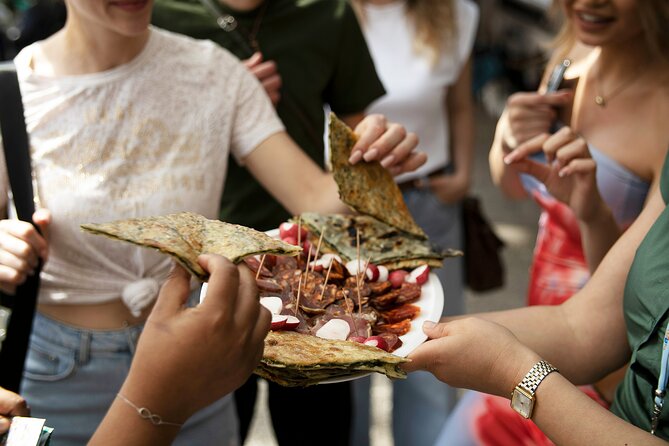
Split is easiest to understand when you connect its stones with its food. The palace is not a museum sealed behind velvet ropes. It is the working center of the city, with homes, shops, cafés, restaurants, squares, and narrow lanes built into the remains of a Roman emperor’s residence.
This tour uses that setting well. You move through the old center while your guide explains Split’s past, local customs, seasonal ingredients, and everyday eating habits. Then you sit down and taste the place instead of simply taking photographs of it.
I especially like the balance. You are not walking for three hours while listening to a long lecture, and you are not simply being moved from one restaurant table to another. The route includes food stops, short walks, and history in between.
The experience is also social without being too large. A group of six, for example, gives you enough company for conversation while still allowing the guide to keep everyone together in crowded streets. The maximum of 12 keeps the outing more personal than a large coach excursion.
More Food Tours in Split
- From Split: Krka Waterfalls, Food & Wine Tasting Tour
★ 5.0 · 9,326 reviews - From Split: Krka Waterfalls, Food & Wine Tasting Tour
★ 4.9 · 6,598 reviews - Split: Blue Lagoon and 3 Island Cruise with Food and Drinks
★ 4.8 · 1,969 reviews
Meeting the orange spoon outside Diocletian’s Palace
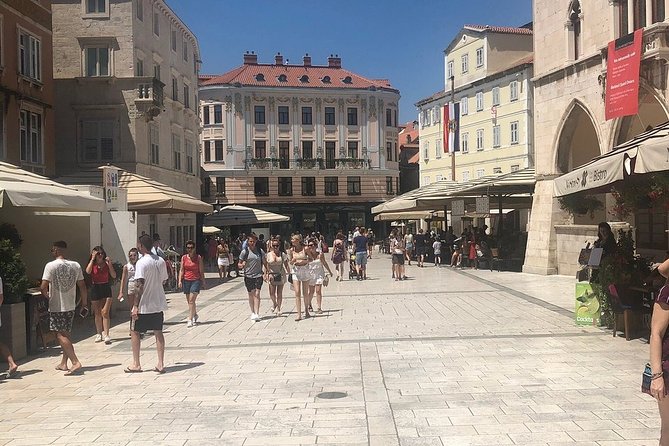
The starting point is Hrvojeva 1, outside Diocletian’s Palace. Look for the guide holding an orange spoon. That detail matters because the palace area has plenty of foot traffic and several nearby entrances, and a clear visual marker saves time.
You do not need hotel pickup, and none is provided. The meeting point is close enough to the cruise port for a walking excursion, which makes this a practical option if you are in Split for a short port call. The tour ends at Marmontova ul. 2, near the Riva Promenade, so you finish in a central part of town rather than at a distant restaurant.
Wear shoes suited to old-town pavement and a moderate amount of walking. The physical requirement is listed as moderate, and the route includes markets, squares, shopping streets, taverns, and cafés.
Green Market: Split’s food cupboard
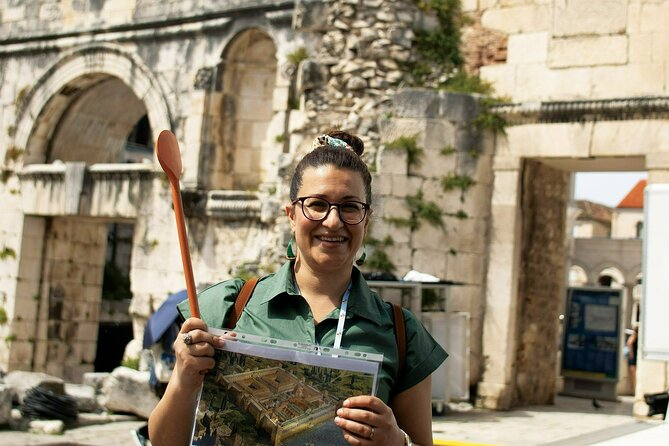
On the morning tour, the first stop is Split’s Green Market, known locally as the city’s belly. This is a useful opening because it puts ingredients before finished dishes.
You may taste prosciutto, cheese, traditional bread, prosciutto pâté, and soparnik pie. Soparnik is a traditional savory pie, and it gives you a chance to try something beyond the seafood that appears later in the meal.
The guide also explains seasonal produce and local food customs. This is one of the strongest parts of the route for anyone who wants context. You are not just sampling cheese from a plate. You are seeing where local ingredients are sold and learning how the seasons shape Croatian cooking.
The Green Market is not included on the afternoon tour because it is closed later in the day. The afternoon option replaces those market tastings with food served in local taverns. That is an important difference, especially if browsing markets is a priority for you.
I would choose the morning departure if you want the market atmosphere and a closer look at local produce. Choose the afternoon if the octopus stew with gnocchi and liqueur appeals to you, since that dish is listed for the afternoon route only.
Narodni trg and the medieval center
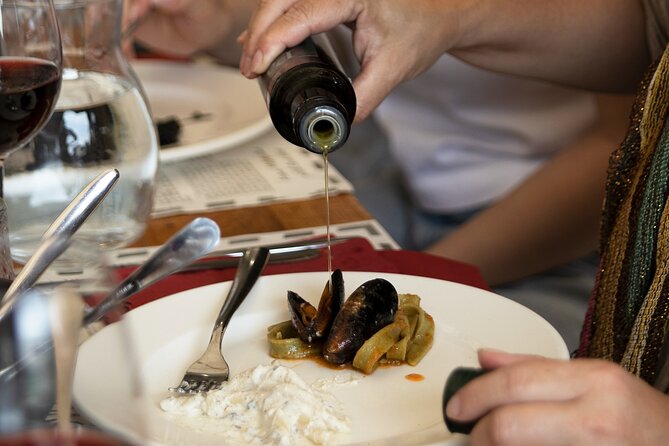
After the opening tasting, you walk through the Old Town to Narodni trg, Split’s largest medieval square. The stop is brief, about 10 minutes, but it helps connect the Roman palace area with the later medieval city.
The square is known for its mix of medieval architecture, and it gives the guide a natural place to explain how Split changed over the centuries. This is not a full archaeological tour, so you should expect short explanations rather than a detailed lecture on every building.
That lighter pace suits the food-focused format. You get enough background to recognize the layers of the city, then continue to the next tasting before your attention or appetite fades.
More Historical Tours in Split
- Walking Tour of Split with a ‘Magister’ of History
★ 5.0 · 1,122 reviews - Split Walking Tour with Professor of History
★ 5.0 · 926 reviews - Split: History and Heritage Walking Tour
★ 4.9 · 650 reviews - SPLIT-PREMIUM Emperor’s Walking Tour for History Lovers + Museum
★ 5.0 · 333 reviews
Marmontova Street, seafood, and gelato
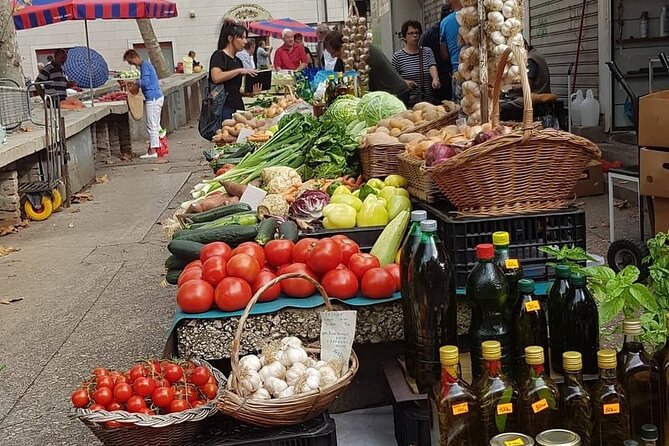
Marmontova Ulica is a French-style shopping street and home to Split’s largest fish market. It is another good setting for discussing the role of seafood in local cooking.
The menu can include tuna pâté, salted and pickled anchovies, seafood pasta, mussels, shrimp, and black risotto. The seafood plate is paired with white wine, while red wine accompanies the pasta and risotto. The sample menu also includes noodles with truffles, so the exact combination can vary.
That seasonal variation is worth keeping in mind. Ingredients may change in spring, summer, and fall, and the operator asks you to share dietary restrictions or allergies in advance. Vegetarian, vegan, and gluten-free options are available, but you should not expect the same seafood-heavy menu if you need substitutions.
The octopus stew with gnocchi is listed for the afternoon tour, along with a sweet liqueur. One food-focused account found the octopus less popular with the group, so this is not a guaranteed crowd-pleaser. If you are cautious about octopus, anchovies, or other strong seafood flavors, tell the guide early.
Marmontova is also where you have gelato on both the morning and afternoon tours. The dessert stop is at the city’s oldest pastry shop, where traditional sweets are made from old family recipes. Depending on the season, dessert may be a traditional cake or gelato.
The gelato is a welcome change after savory seafood and wine. It also keeps the route from feeling like one long formal meal.
The final table near Trumbićeva obala
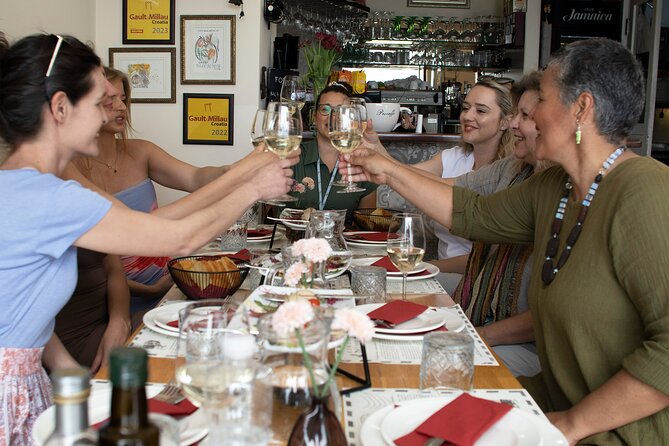
The last food and wine stop takes place around Trumbićeva obala, a pleasant promenade lined with local taverns and coffee shops. This is where the tour shifts from tasting while walking to settling in and enjoying the company.
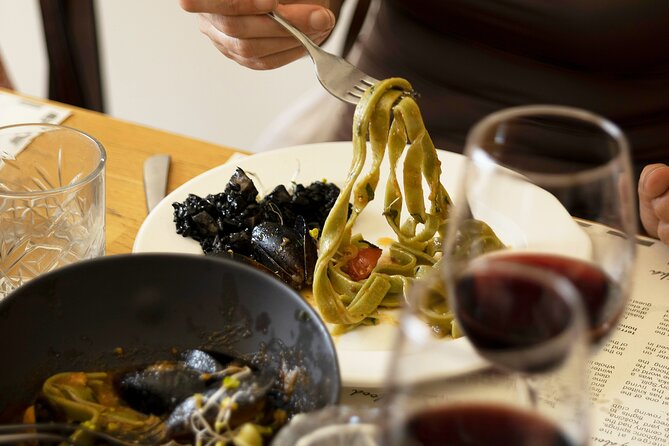
The meal may include several substantial dishes: two types of seafood pasta, black risotto, noodles with truffles, or pasta with mussels and shrimp. Red wine is served with this part of the meal.
The portions can be larger than you expect from a tasting tour. One account described the food as more than enough after stops at four places and five different dishes. Plan accordingly. This is not a small nibble before your real dinner.
The final stop also gives you time to ask about restaurants and places to visit later in your stay. Several guides have offered practical suggestions, and the best guides make this feel like a relaxed meal with a local rather than a rushed sales pitch.
How much history will you get?
The history is a useful part of the experience, but the depth depends on your guide. Guides such as Ana, Hani, Honey, Doris, Christina, Dubravka, and Ela have been praised for mixing local stories, food traditions, and background about Split.
The strongest feedback centers on guides who keep the history connected to what you are seeing and eating. Ela, for example, was praised for keeping a group together in crowded streets while stopping to explain the city. Hani was appreciated for blending historical details and personal stories.
You should set your expectations correctly. This is not a dedicated Diocletian’s Palace history tour. One less positive account felt that the guide talked more about herself than about the city. If your main goal is Roman architecture, palace archaeology, or an extended history lesson, book a specialist walking tour instead.
If you want a friendly introduction to the city with history woven between meals, this format is a better fit. The food gives the information somewhere to land in your memory.
The food and drink: what to expect
The menu is broad, but the common thread is Mediterranean and coastal Croatian cooking. You may receive:
- Cured meat, cheese, local bread, and rose wine
- Soparnik pie or prosciutto pâté
- Tuna pâté, anchovies, and other seafood
- Octopus stew with gnocchi on the afternoon route
- Seafood pasta with mussels and shrimp
- Black risotto
- Noodles with truffles
- Traditional cake or gelato
- White and red wine
- Traditional sweet liqueur on the afternoon route
The wine is included, as is the liqueur. The minimum drinking age is 18. Because the route includes several glasses, you should treat this as a food-and-drink experience, not simply a sightseeing walk with one sample at the end.
Seafood lovers will have the easiest time here. If you prefer meat or have a strong dislike of fish, the cured meats, cheeses, bread, soparnik, truffles, sweets, and available dietary alternatives help, but seafood remains a major part of the experience.
Is $139.13 a fair price?
At $139.13 per person, the cost needs more than one good plate of food to justify it. Here, you are paying for a three-hour guided route, several venues, a range of Croatian dishes, wine, liqueur, dessert, and a small group.
I see the value most clearly if you are visiting Split briefly. You get an introduction to the palace area, a taste of local specialties, and a meal that may be enough to replace lunch or dinner. That can save you from spending your first evening guessing at menus.
The value is weaker if you want a simple market snack or already know Split’s restaurants well. You also have less control over the menu than you would ordering à la carte, and not every dish will suit every palate.
The high overall rating of 4.8 from 375 ratings, with 96 percent recommending the experience, supports the idea that the package usually delivers. Still, the less positive feedback is useful: the octopus may divide a group, the history portion can vary, and one person considered the tour overpriced. I would book it for the combination of food, drinks, and orientation, not for bargain dining.
Who should book this food walk?
I would recommend it for first-time visitors who want to get their bearings in Split fast. It also suits cruise passengers, couples, small groups of friends, and solo visitors who enjoy meeting a few people while eating.
It is a particularly good first-night activity. You can learn the layout of the center, try dishes you may not order on your own, and leave with ideas for later meals.
Families can join, but children must be accompanied by an adult. The wine and liqueur are part of the experience, so this may be less appealing if nobody in your group drinks.
People with allergies or dietary restrictions should contact the operator before booking. Vegetarian, vegan, and gluten-free choices are available, but seasonal ingredients can change the menu.
The tour is offered in English and uses a mobile ticket. Confirmation arrives at booking, and free cancellation is available up to 24 hours before the start time. The experience requires a minimum number of participants, so a cancellation for that reason comes with a different date, another experience, or a full refund.
Should you book the Split History and Gastro Tour?
Book it if you want a friendly introduction to Split built around real food, especially if you are comfortable with seafood and several glasses of wine. The small group, central route, generous portions, and strong guides make it a practical way to combine sightseeing with dinner.
Choose the morning option for the Green Market and its produce, prosciutto, cheese, bread, and soparnik. Choose the afternoon option if octopus stew, gnocchi, liqueur, and tavern tastings sound more appealing.
Skip it if your priority is a detailed palace lecture, a low-cost meal, or complete control over every dish. For everyone else, this is a tasty and sociable way to meet Split through its streets, kitchens, and local food traditions.
FAQ
How long does the Split History and Gastro Tour last?
The tour lasts approximately three hours.
Where does the tour begin?
It begins at Hrvojeva 1, outside Diocletian’s Palace in Split. Look for a person holding an orange spoon.
Where does the tour end?
The tour ends at Marmontova ul. 2, near the Riva Promenade.
Is the Green Market included on every tour?
The Green Market is included on the morning tour. It is closed in the afternoon, so afternoon participants receive the market foods in local taverns instead.
What food and drinks are included?
Included items can include prosciutto, cheese, traditional bread, pâté or soparnik pie, seafood, seafood pasta, black risotto, sweets or gelato, wine, and liqueur. Octopus stew with gnocchi and sweet liqueur are listed for the afternoon tour only.
Are dietary options available?
Vegetarian, vegan, and gluten-free options are available. You should provide information about allergies or dietary restrictions in advance because ingredients change with the seasons.
How many people can join the tour?
The group can have a maximum of 12 participants. Children must be accompanied by an adult, and the minimum drinking age is 18.
Just added around Split
- Private VIP Blue Lagoon and 3 Islands Tour★ 4.5 · 9 reviews
- Split highlights – Evening walking tour★ 5.0 · 9 reviews
- Private boat transfer Split – Bol★ 5.0 · 9 reviews
- Private Photography Activity in Split★ 5.0 · 9 reviews
- From Split: Trogir & Blue Lagoon Boat Tour with Snorkeling★ 4.6 · 9 reviews
- Bike, Beer & Poljud Stadium Tour★ 5.0 · 9 reviews
- From Hvar: Blue cave group speedboat tour full day★ 5.0 · 9 reviews
- Split Walking Tour: History, Legends & Tales★ 5.0 · 9 reviews
Food & Drink, compared.


Blue Lagoon and 3 Island Cruise with Food and Drinks
Read our review →
Krka National Park Tour with tour Guide & Wine tasting from Split & Trogir
Read our review →
Full-Day Catamaran Cruise to Hvar & Pakleni Islands with Food and free Drinks
Read our review →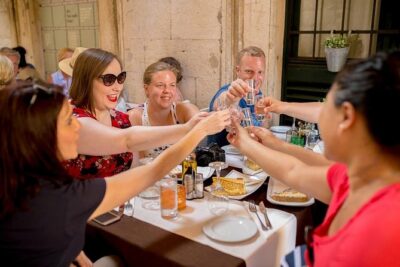
Dubrovnik Food and Drink Walking Tour with a Local Guide
Read our review →
Dubrovnik Guided Group Tour with Ston Oyster tasting from Split & Trogir
Read our review →Browse the lists this tour appears in