
Reviewed · HISTORICAL TOURS
Walking Tour of Split with a ‘Magister’ of History
Split makes a dramatic first impression. This walking tour gives the old city a clear story, guided by Toni Šare, a local historian who grew up in Split and uses his own 3D reconstructions to show how Diocletian’s Palace once looked. I especially like the mix of Roman, medieval, Venetian, and modern Croatian history, plus the chance to see lesser details that are easy to miss alone. The main trade-off is simple: you do not enter the cathedral, museums, or paid monuments, so you are paying for interpretation rather than admission tickets.
At about 1 hour 40 minutes to 1 hour 50 minutes, the tour is long enough to give Split shape without taking over your day. I would book it early in your stay, then use the rest of your time to return to the places that catch your eye. Evening departures can also help you avoid the summer heat.
In This Review
- Key points to know before booking
- Why Toni’s approach works in Split
- Starting at Riva Harbor and the Brass Gate
- The Peristyle: Split’s Roman heart
- Saint Domnius and the former imperial mausoleum
- The Temple of Jupiter and Roman building mistakes
- The Silver Gate and the surviving Roman road
- Grgur Ninski and Croatian identity
- The Vestibule and Diocletian’s private residence
- Noble palaces, Venetian influence, and later Split
- The Golden Gate and the medieval city wall
- Game of Thrones locations, if the group wants them
- Ending at Pjaca and planning the rest of your day
- Is $34.83 a fair price?
- Who should book this Split walking tour?
- My verdict on DiocleSpot Tours
- FAQ
- How long does the Walking Tour of Split with a Magister of History last?
- How much does the tour cost?
- Who guides the walking tour?
- Where does the tour start?
- Where does the tour end?
- Does the tour include entrance tickets?
- Do you enter the Cathedral of Saint Domnius?
- Do you enter the Temple of Jupiter?
- How many people can join the group?
- Is cancellation available?
Key points to know before booking
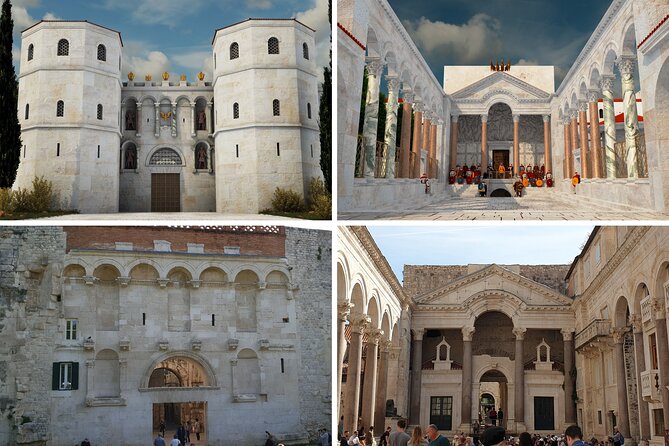
- Toni’s 3D reconstructions help you picture Diocletian’s Palace before later buildings and centuries of change altered it.
- The route covers more than Roman ruins, including medieval squares, Renaissance palaces, Venetian influence, Croatian culture, and Game of Thrones filming locations if the group is interested.
- The tour ends at Piazza Square, also called Pjaca, a useful central point for finding restaurants, museums, shops, and nearby streets.
- Admission tickets are not included, and the tour does not enter the Cathedral of Saint Domnius, the Temple of Jupiter, or museums.
- The group can include up to 18 people, with a private upgrade available for visitors who want more room for questions.
- The price is about $34.83 per person, a fair rate if you value a strong guide and historical context more than included attractions.
Why Toni’s approach works in Split
Split is not a conventional archaeological site where ruins sit behind fences. Modern homes, cafés, shops, churches, and narrow lanes occupy the old Roman complex. You can walk through Diocletian’s Palace without always realizing which stones are ancient and which belong to later centuries.
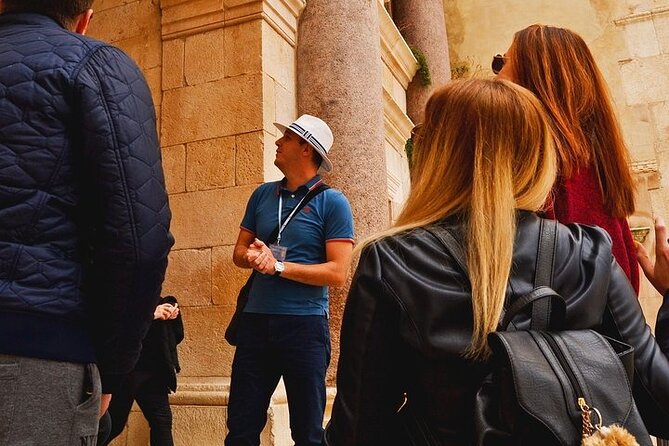
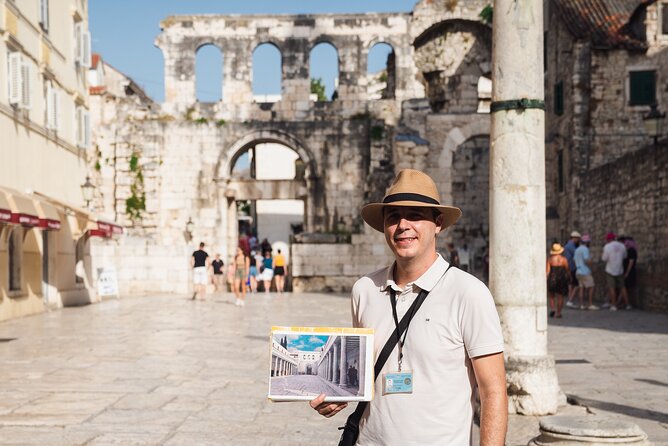
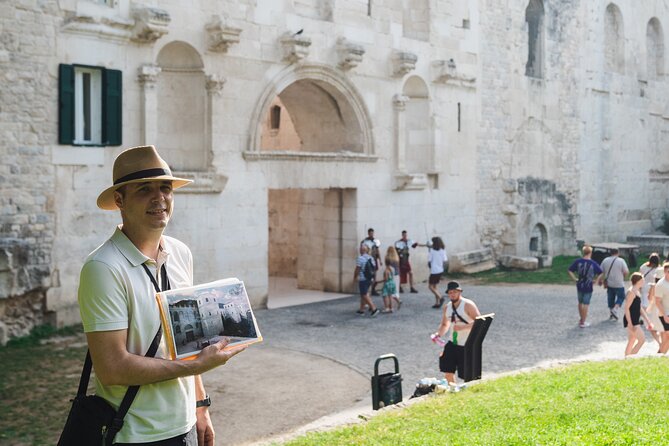
That is where Toni’s approach earns its fee. He does not simply point at a column and give you a date. He uses visual reconstructions to help you imagine the palace in its original form, when its walls, courtyards, decorations, and imperial rooms looked very different from what you see today.
The effect is practical. Once you understand the original plan, the surviving fragments make more sense. You begin to notice how the medieval city adapted Roman walls and entrances instead of replacing them.
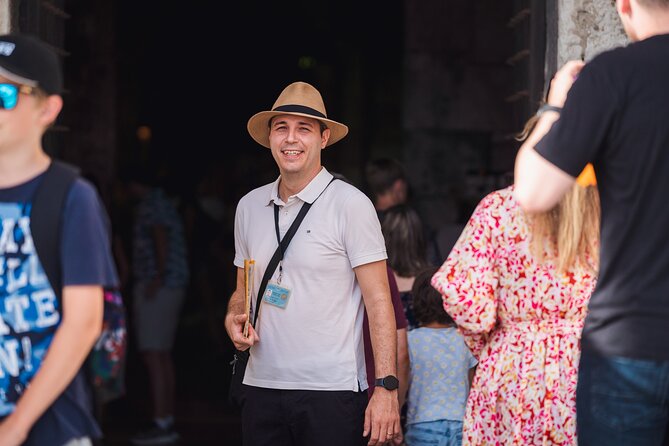
Toni’s background also adds weight to the experience. He was born and raised in Split, studied history, and has taught the subject. His explanations cover architecture, religion, politics, language, and local life, yet the strongest praise focuses on his enthusiasm and his ability to answer questions without making the walk feel like a classroom lecture.
The tour has earned a 5 out of 5 rating from 1,122 ratings, with 100 percent of participants recommending it. That is a striking record, and the comments repeatedly single out Toni’s passion, clarity, humor, local perspective, and vivid use of images.
More Historical Tours in Split
- Split Walking Tour with Professor of History
★ 5.0 · 926 reviews - Split: History and Heritage Walking Tour
★ 4.9 · 650 reviews - Split History and Gastro Small-Group Tour with Food and Drinks
★ 5.0 · 375 reviews
Starting at Riva Harbor and the Brass Gate
The meeting point is the Brass Gate, or Porta Aenea, at Obala Hrvatskog narodnog preporoda 22. This is near Riva Harbor, Split’s waterfront promenade and a key gathering place for local residents.
Toni uses the harbor as an introduction to the city and to Diocletian’s Palace. From here, you can see the palace’s southern wall, which faces the sea. Graphic displays and models help explain what you are about to see once you enter the old city.
This opening is useful because it gives you a broad view before the route narrows into lanes and courtyards. The first stop lasts about 15 minutes, and there is no admission charge.
You should arrive with comfortable shoes and a little patience for the meeting area. The tour starts in a public waterfront setting, so clear directions matter. The meeting instructions identify the Brass Gate precisely, which makes the start easier to find than a vague reference to the old town.
The Peristyle: Split’s Roman heart
The Peristyle is the central square of Diocletian’s Palace and one of the most important open spaces in Split. It is also where Toni’s reconstructions become especially useful.
The square contains remarkably preserved Roman structures, but the visual remains can be hard to read without context. Toni shows what the buildings and decoration looked like in the palace’s earlier days, allowing you to compare the original design with the later city built around it.
You get about 10 minutes here. That may sound brief, but the tour continues through other parts of the palace, and Toni’s explanations at the Peristyle set up much of what follows.
I like this stop because it deals with a common problem in Split: the old city is so visually striking that you may focus on taking pictures and miss how the pieces fit together. A guide who explains the original layout gives the square a stronger sense of purpose.
Saint Domnius and the former imperial mausoleum
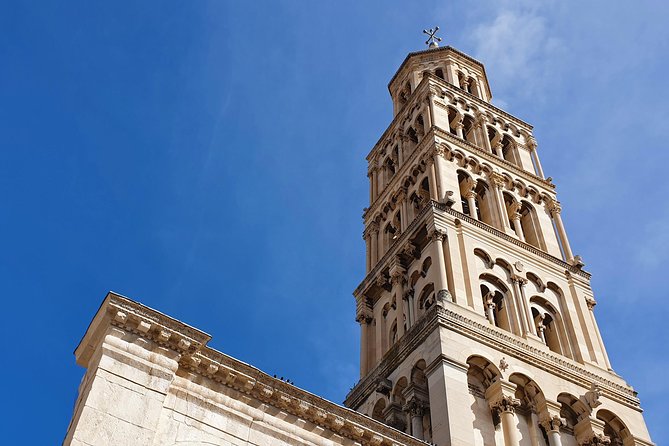
The Cathedral of Saint Domnius occupies what was once the mausoleum of Emperor Diocletian. It is among the best-preserved Roman structures in Split and remains in use as a cathedral.
Toni explains how a Roman imperial tomb became a Christian place of worship, along with the cathedral and bell tower. This is one of the clearest examples of Split’s long sequence of change: Roman power, Christian use, medieval development, and the living city you see today.
The stop lasts about 10 minutes. You do not go inside, and admission is not included. That point matters if you want to examine the cathedral interior or climb the bell tower. You would need to make a separate visit.
Still, the outside explanation has real value. You can understand the building’s original role and later religious use before deciding if you want to pay for entry on your own.
More Walking Tours in Split
- Split: Old Town and Diocletian Palace Walking Tour
★ 4.9 · 4,727 reviews - Walking Tour of Split and Diocletian’s Palace
★ 5.0 · 2,588 reviews - Krka Waterfalls tour with Trogir Walking tour and Krka panoramic boat cruise
★ 5.0 · 1,659 reviews - Split & Diocletian’s Palace Walking Tour
★ 5.0 · 1,125 reviews
The Temple of Jupiter and Roman building mistakes
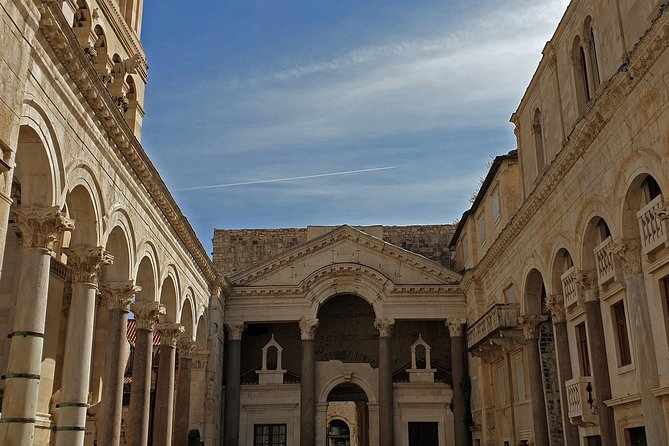
The Temple of Jupiter is described as one of the best-preserved late Roman temples in the world. Toni points out construction anomalies and mistakes, a small but memorable detail that makes the monument feel less abstract.
Ancient buildings can seem impossibly perfect when you see only their grand proportions. Looking at errors in the work gives you a more human picture of the builders and the long process behind the finished structure.
The tour spends about 15 minutes here, but does not enter the temple. Admission is not included. You will see the relevant details from outside, then continue through the palace.
For visitors who enjoy architecture, this may be one of the best stops. For anyone hoping to tour the interior, it is also the clearest reminder that this experience is an outdoor history walk, not an attraction pass.
The Silver Gate and the surviving Roman road
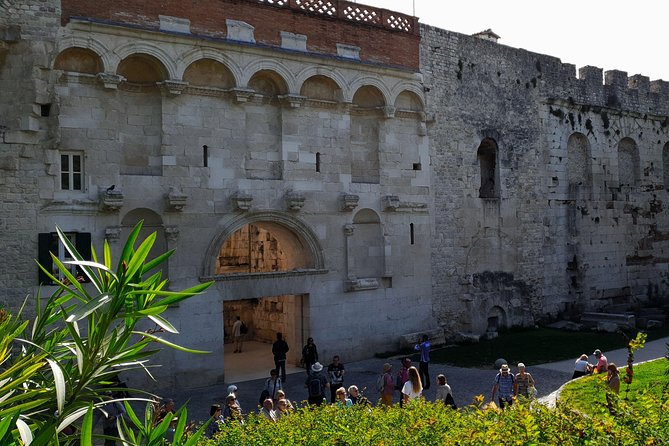
The Eastern, or Silver, Gate offers one of the strongest views of the palace complex. From this point, you can see the cathedral on one side, the gate on the other, and the only preserved section of the original Roman road below.
The stop takes about five minutes. It is short, but the view helps connect several parts of the palace at once.
Toni also explains how later residents continued to use Roman structures for defense. Split’s medieval city did not treat the palace as a dead monument. It adapted the walls, entrances, and roads to meet new needs.
That idea runs through the whole tour. You are not just looking at Roman remains. You are seeing how each period reused what came before.
Grgur Ninski and Croatian identity
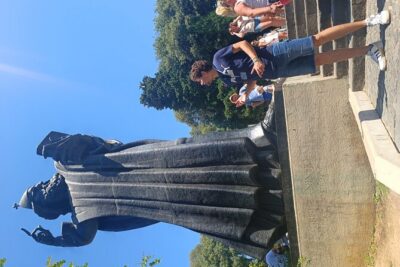
The statue of Grgur Ninski is one of Split’s most recognizable landmarks. Toni explains what the figure represents and why he matters to the Croatian language and early medieval culture.
This stop adds a different layer to the tour. Much of the route focuses on Roman architecture, but Split’s identity is not limited to the emperor who built the palace. The statue points toward Croatian cultural history and the role of language in shaping national identity.
You spend about five minutes here. It is a quick stop, yet it gives the walking route a wider frame and helps explain why the old city remains important beyond its Roman monuments.
The Vestibule and Diocletian’s private residence
The Vestibule was the ancient entrance to the emperor’s private residence. From here, Toni leads you around the remains connected with Diocletian’s personal quarters.
The stop lasts about 10 minutes. As with the Peristyle, 3D images help you picture a complex that no longer survives in its original form.
The word private can be misleading if you imagine a small retreat. Diocletian was an emperor, and his retirement residence was part of a large fortified complex. Toni’s explanation puts the surviving fragments into that larger setting.
This is also where the route begins to feel less like a march between famous landmarks. You move through details, walls, courtyards, and later buildings, with Toni pointing out noble palaces and other traces of the city’s development.
Noble palaces, Venetian influence, and later Split
Split’s old town contains more than Roman stone. Along the route, Toni shows noble palaces from later periods and discusses medieval, Renaissance, and early modern heritage.
The City Museum of Split sits inside a well-preserved Renaissance noble palace. You do not enter the museum, but you do visit its courtyard and see the palace from within. Toni uses this setting to explain the Venetian period and why this style of residence began appearing in Split.
This is an important part of the tour because it keeps the city from becoming a one-era attraction. Diocletian’s Palace is the headline, but the streets around it reveal centuries of adaptation.
If you have only one day in Split, this wider historical view is particularly useful. It tells you what to look for when you walk alone later, from Renaissance courtyards to medieval street patterns and early modern façades.
The Golden Gate and the medieval city wall
The Golden Gate is the main entrance to Diocletian’s Palace and the best preserved of the four entrances. It is also the most decorated and visually memorable.
Toni explains the northern wall from this vantage point, including how the medieval city continued to use the Roman structures for defense. You can also see where later residents removed sections that no longer served a purpose.
The stop takes about 15 minutes. This is one of the longer stops because the gate offers both a major architectural sight and a clear lesson about changing military needs.
The Golden Gate is also a good place to consider the difference between seeing Split alone and seeing it with a guide. On your own, you may admire the stonework and take a photograph. With Toni, you get a story about how the wall functioned across different periods.
Game of Thrones locations, if the group wants them
The route passes several filming locations used for Game of Thrones, and Toni can point them out if the group is interested. You also pass the series fan shop.
This is an optional thread rather than the main purpose of the tour. I would treat it as a pleasant extra, especially if you enjoy the show, but not as the reason to book. The stronger content is the city’s actual history, architecture, and culture.
Still, the flexibility is welcome. It lets Toni respond to the interests of the group without changing the basic route.
Ending at Pjaca and planning the rest of your day
The tour ends at Narodni trg, the main square known as Piazza Square or Pjaca. The 14th-century Town Hall and other historic buildings surround the square.
This is a smart ending point. You are not left beside an isolated monument or at the edge of town. From Pjaca, you can easily orient yourself and reach other parts of Split.
I recommend taking the tour near the start of your visit. If you go in the morning, you can use Toni’s explanations to decide which places deserve a longer return visit later. An evening tour is another good option, especially during hot weather. One five-star account specifically praised the 6 p.m. timing as a way to avoid the summer heat.
The stated duration is approximate, at 1 hour 40 minutes to 1 hour 50 minutes. Plan for a little flexibility if questions or group interests extend a stop.
Is $34.83 a fair price?
At about $34.83 per person, this is not the cheapest way to stroll through Split. You can walk into the old town for free and see many of the same exterior monuments without paying.
The value comes from the explanation. Toni’s historical training, local background, 3D reconstructions, and ability to connect Roman, medieval, Venetian, and modern events give you a stronger framework than a casual walk alone.
The price also includes the guide and the visual material, but not entrance tickets. That makes the tour a better fit for someone who wants orientation and context than for someone seeking a packaged sightseeing pass.
A private upgrade is available if you want a more personal format. The regular group can reach 18 people, which is still manageable for an outdoor walk, though a private option gives you more control over questions and pace.
Who should book this Split walking tour?
I would recommend it to first-time visitors who want to understand the old city before exploring it independently. It also suits history fans, architecture lovers, and anyone who prefers a guide who can answer questions about culture, religion, politics, and local life.
Families and mixed-age groups may appreciate the visual reconstructions because they make ruined or altered buildings easier to understand. Most people can take part, and service animals are allowed. The route is near public transportation.
You may want another type of tour if your priority is entering the cathedral, visiting museums, or spending time inside paid monuments. You should also keep the weather in mind. The experience requires good weather, and a cancellation caused by poor conditions leads to a different date or a full refund.
Free cancellation is available up to 24 hours before the start time. Changes or cancellations made less than 24 hours before the start are not refunded.
My verdict on DiocleSpot Tours
Book this tour if you want Split’s stones to make sense. Toni Šare’s strongest advantage is not simply the number of facts he knows. It is his ability to connect the palace to the living city around it, then make the missing pieces visible through his own reconstructions.
I would book it for the first morning or a cooler evening, then return to the cathedral, museum, or other paid sites afterward if they interest you. Skip it only if you prefer to explore silently at your own pace or already have a strong grasp of Split’s Roman and medieval past.
For most visitors, the roughly 100-minute walk offers a useful, lively introduction and good value for the price.
FAQ
How long does the Walking Tour of Split with a Magister of History last?
The tour lasts approximately 1 hour 40 minutes to 1 hour 50 minutes.
How much does the tour cost?
The listed price is $34.83 per person.
Who guides the walking tour?
The guide is Toni Šare, owner of DiocleSpot Tours. He was born and raised in Split, studied history, and has taught history.
Where does the tour start?
The meeting point is the Brass Gate, also called Porta Aenea, at Obala Hrvatskog narodnog preporoda 22 in Split.
Where does the tour end?
The tour ends at Narodni trg, the main square known as Piazza Square or Pjaca.
Does the tour include entrance tickets?
No. The tour does not include admission to museums or paid sites.
Do you enter the Cathedral of Saint Domnius?
No. Toni explains the cathedral, former mausoleum, and bell tower from outside, but the tour does not enter.
Do you enter the Temple of Jupiter?
No. The Temple of Jupiter is explained from outside, and admission is not included.
How many people can join the group?
The maximum group size is 18 people. A private tour upgrade is also available.
Is cancellation available?
Yes. You can cancel up to 24 hours before the start time for a full refund. Poor weather may lead to a different date or a full refund.
Just added around Split
- Private VIP Blue Lagoon and 3 Islands Tour★ 4.5 · 9 reviews
- Split highlights – Evening walking tour★ 5.0 · 9 reviews
- Private boat transfer Split – Bol★ 5.0 · 9 reviews
- Private Photography Activity in Split★ 5.0 · 9 reviews
- From Split: Trogir & Blue Lagoon Boat Tour with Snorkeling★ 4.6 · 9 reviews
- Bike, Beer & Poljud Stadium Tour★ 5.0 · 9 reviews
- From Hvar: Blue cave group speedboat tour full day★ 5.0 · 9 reviews
- Split Walking Tour: History, Legends & Tales★ 5.0 · 9 reviews
Historical Tours, compared.



Split History and Gastro Small-Group Tour with Food and Drinks
Read our review →
PREMIUM Emperor’s Walking Tour for History Lovers + Museum
Read our review →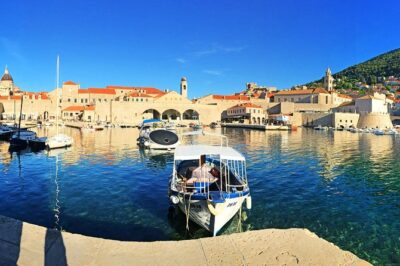
Browse the lists this tour appears in