
Reviewed · WALKING TOURS
Pula walking tour
Pula puts Rome within easy walking reach. This 90-minute walk brings you from the famous Pula Arena through Roman temples, medieval gates, an Austro-Hungarian market district, and the hilltop Kastel. I like the compact route and the chance to hear local stories instead of simply ticking monuments off a map. I also like the flexible departure time and the small maximum of 15 people.
The main limitation is simple: entry tickets are not included. Most stops are viewed from outside, and the Arena is explained without an interior visit. That makes this an excellent orientation walk, but you will need extra time and money if you want to explore Pula’s major buildings from within.
In This Review
- Five useful things to know before you book
- Why this 90-minute Pula walk works well
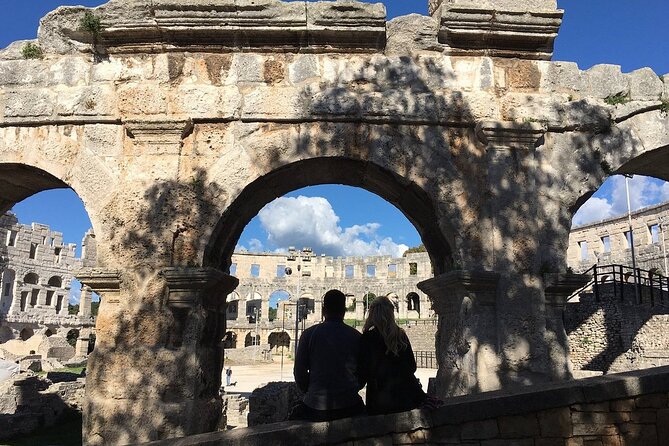
- Starting at the Pula Arena
- Kastel and the view toward the harbor
- Pula Cathedral and the Forum area
- Arco dei Sergi and Pula’s old city streets
- The market and Pula’s everyday side
- Hercules Gate and the Twin Gates finish
- What the $20.16 price gives you
- Guide quality and the experience for families
- Timing, weather, and practical planning
- Should you book the Pula walking tour?
- FAQ
- How long is the Pula walking tour?
- Where does the tour begin?
- Where does the tour end?
- Is the Pula Arena entrance included?
- Can I enter Pula Cathedral?
- What language is the tour offered in?
- How many people can join the tour?
- Is the tour suitable for children?
- Does the tour operate in bad weather?
- What does the price include?
- Can I cancel for a full refund?
Five useful things to know before you book
- The tour begins at Pula Arena: Meet at the entrance on Flavijevska Street, not just somewhere near the amphitheater.
- The route covers eight major sights: You see Roman, Venetian, medieval, Austro-Hungarian, and modern Pula in one short walk.
- The Arena is an exterior stop: About 20 minutes are spent learning about the amphitheater, but admission is not part of the tour.
- The guide is the main value: Local guides explain how Pula developed over roughly 3,000 years and can answer questions about Istria today.
- The walk ends at the Twin Gates: You finish near Carrarina Street, with time afterward to explore independently.
- It works well for families: The pace is generally easy, though you should expect steady walking and some uphill movement toward Kastel.
Why this 90-minute Pula walk works well
Pula can feel confusing at first. Roman ruins sit beside later churches, Venetian traces, Austro-Hungarian buildings, shops, and everyday city life. A short guided walk gives you the basic map in your head before you set off on your own.
The route also has a useful rhythm. You begin with the city’s biggest sight, move toward the fortress and harbor view, then pass through the cathedral area, the Forum, the triumphal arch, the market, and the old gates. You are not spending the whole time in one archaeological zone. Instead, you see how different periods overlap in the center of town.
I especially like this format for a first morning in Pula. The walk is long enough to explain the major sights, but short enough to leave the rest of the day free. Several people found that the 1.5-hour schedule covered the essentials and still left time for lunch, shopping, or a paid visit inside the Arena.
The guide makes a real difference. Guides such as Sini have been praised for clear English, humor, and the ability to keep both adults and teenagers interested. Jane is also mentioned in connection with a helpful recommendation. The strongest praise centers on guides who explain events in a lively way rather than reciting dates.
More Walking Tours in Pula
- Pula: Historic Walking Tour with Local Guide & City Views
★ 4.8 · 143 reviews - Pula: Historic Sites Guided Walking Tour
★ 4.8 · 78 reviews - Pula Essentials Walking Tour
★ 4.8 · 64 reviews
Starting at the Pula Arena
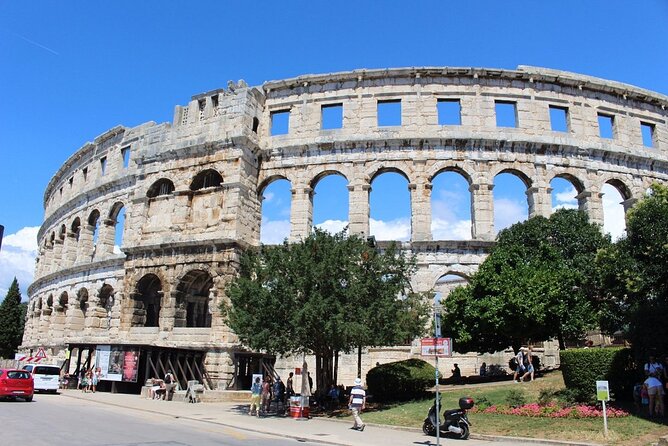
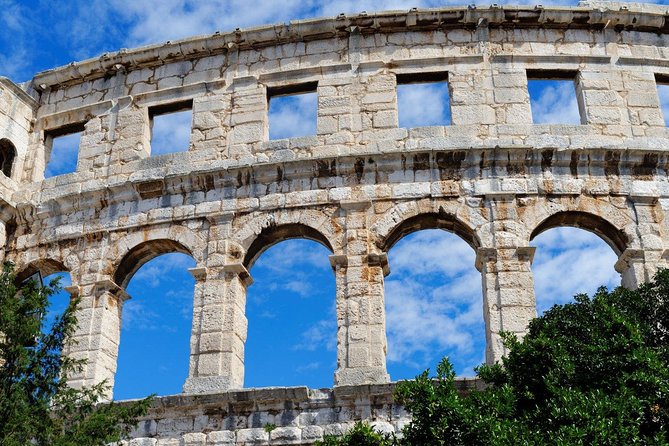
The Pula Arena is the natural starting point, and it gives the tour instant impact. This Roman amphitheater is the city’s best-known monument, so beginning here helps you understand why Pula is so important to visitors interested in ancient architecture.
You spend about 20 minutes with the guide outside the building. Expect an explanation of its purpose, age, and place in Pula’s past, along with answers to questions about Roman public life. The guide can also help you notice details that are easy to miss when you are taking photographs.
The key point is to understand what this tour does not include. You do not enter the Arena as part of the walk, and admission is not covered. If the interior is a priority, plan a separate visit. The exterior explanation still has value, especially if you want historical context before exploring the site on your own.
Arrive early and look for the meeting point at the entrance. One person had trouble because a map application directed them to a less precise location. The practical fix is to use the Arena entrance on Flavijevska Street as your reference, rather than relying only on the map pin.
Kastel and the view toward the harbor
From the Arena, the route continues to Kastel, Pula’s fortress. The guide explains the fortification from outside and pauses for about 10 minutes so you can take in the view toward the harbor.
This stop adds an important layer to the walk. The Arena shows Roman power and public entertainment. Kastel shifts your attention to Pula’s defensive position and its later military role. You get a better sense of why the city developed where it did, rather than seeing the Roman monuments as isolated leftovers.
The fortress is also one of the places where the walk feels less like a list of monuments. You are looking outward across the city and harbor, not only at stonework under your feet. If you enjoy photographs, this is likely one of the more useful pauses.
The tour explains Kastel from outside, so again, do not expect an interior fortress visit. The route includes some uphill walking, but the overall physical demand is described as moderate. Comfortable shoes are sensible, particularly on older paved streets.
Pula Cathedral and the Forum area

The cathedral stop is brief, around five minutes. The guide explains the church from outside, and if it is open, you may be able to enter. Admission is free.
This is a small stop, but it helps show how Pula’s center changed after the Roman period. You move from ancient civic monuments to a working religious building that is still part of the city’s daily life. Because the possible interior visit depends on opening conditions, treat it as a bonus rather than a promised feature.
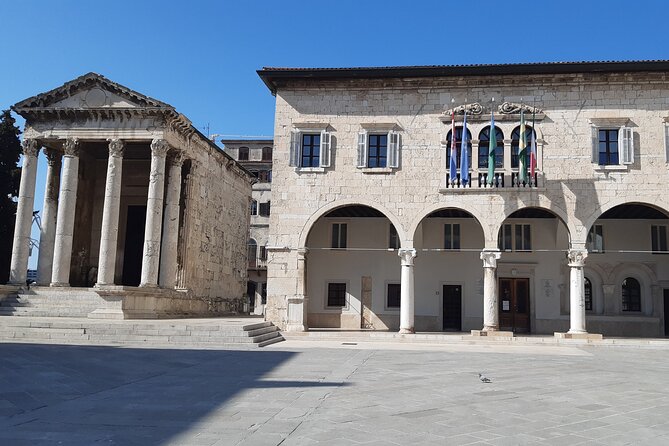
The next major pause is the Temple of Augustus, where you spend about 10 minutes. The guide explains the temple from outside, placing it in the setting of the old Roman forum. This is one of the clearest places to see how much of Pula’s identity is tied to Roman urban planning.
The temple stop also gives you a chance to ask questions. Guides are praised for explaining the city’s long story from ancient times through Croatian history and into the present. That wider context is one of the strongest reasons to take the walk instead of simply photographing the ruins.
Something different for another day:
- Pula: Arena Entrance Ticket
★ 4.3 · 2,590 reviews - Medulin -Kamenjak 5h boat trip with lunch & drinks on Sandra Boat
★ 5.0 · 1,621 reviews - Full-Day Boat Tour of the Medulin Archipelago from Medulin
★ 5.0 · 1,389 reviews - 3hours all inclusive Sunset&Dolphin Tour from Medulin on Sandra
★ 5.0 · 1,130 reviews
Arco dei Sergi and Pula’s old city streets
The Arco dei Sergi, or Arch of the Sergii, receives about 10 minutes. The guide explains the arch from outside, drawing attention to its Roman purpose and its place within the modern street plan.
This is a good example of Pula’s character. You may be looking at a monument from antiquity while ordinary city life carries on around it. The value here is not only the arch itself. It is seeing how the old city remains part of a functioning town.
The route through this area also gives the guide room to point out details that guidebooks may pass over. One particularly useful account highlights Roman and Byzantine remains, along with mosaics that are easy to overlook. Since the walk is led by someone familiar with the city, it can reveal small features you might otherwise pass without noticing.
Do not expect a long archaeological lecture at each stop. The schedule is tight, with several sights packed into 90 minutes. The benefit is variety and a clear overview. The tradeoff is that each monument receives only a short explanation.
The market and Pula’s everyday side
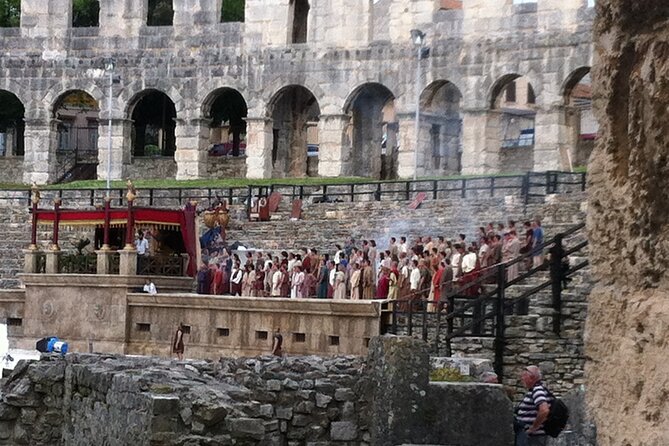
Gradska Trznica Pula, the city market, is viewed from outside for about 10 minutes. This gives the tour a welcome change of pace after the ancient monuments.
The market represents present-day Pula rather than a distant historical period. Even from outside, you get a sense of how the old center works as a place where people shop, eat, and carry on with daily routines. The guide can also offer suggestions for lunch afterward, which is useful if you have not planned your next meal.
Food and drinks are not included, so use the stop as local orientation rather than a tasting session. You might want to return later when you have more time. The market is especially useful for visitors who want a picture of the city beyond its Roman headline attractions.
I appreciate that this stop is included. A tour made up only of monuments can leave you with a beautiful but incomplete picture. The market helps connect Pula’s ancient center with the town you are actually visiting today.
Hercules Gate and the Twin Gates finish
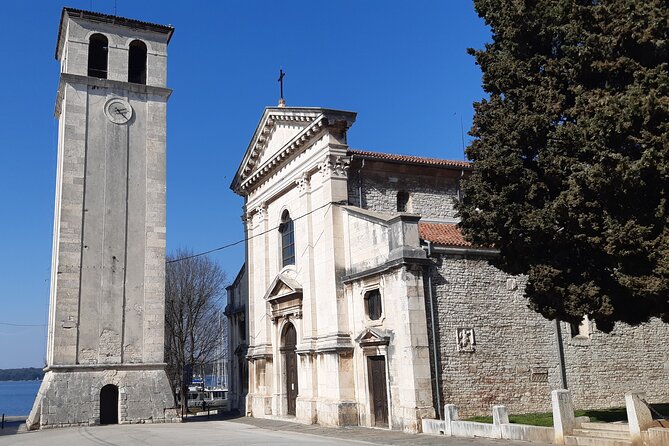
The Gate of Hercules is a quick five-minute stop. The guide explains it from outside, adding another Roman marker to the route.
The final stop is the Twin Gates of Pula, reached after another five minutes of explanation. The walk ends here on Carrarina Street, near number 8. These gates provide a fitting finish because they connect the ancient city with the later layers built around it.
Ending at the Twin Gates is practical. You are not returned to the Arena, so plan your afternoon with the endpoint in mind. If you want to revisit the amphitheater, shop near the center, or continue to another sight, you can do so independently from the finish.
The route is described as an easy walk overall, but it still involves quite a bit of time on foot. Children must be accompanied by an adult, and the stated fitness requirement is moderate. Families have found the pace manageable, including families with teenagers, especially when the guide keeps the stories moving.
What the $20.16 price gives you

At $20.16 per person, the price is reasonable if you want a guided introduction to Pula rather than a series of paid admissions. Your fee covers a professional local guide and the organization of the walk. It does not cover food, drinks, or entry to the Arena, Kastel, or other paid sites.
The value depends on how you travel. If you are comfortable reading plaques and following a map, you can see many of these exterior sights without paying for a tour. But you will miss the connections between them, and you may not notice the smaller remains and mosaics that a local guide can point out.
For a family, group discount options may improve the value. The maximum group size is 15, and some departures may feel smaller. A small group means more room to ask questions and less time waiting for people at each corner.
I would book this walk early if your schedule is fixed. It is often reserved about 28 days ahead, and confirmation is sent within 48 hours, subject to availability. The flexible departure arrangement is helpful, but you still need to receive confirmation before treating the time as final.
Guide quality and the experience for families
The most praised part of this experience is the guide. The strongest descriptions focus on clear English, local knowledge, humor, patience, and a genuine interest in Pula and the Istrian region.
That matters because the route moves across several periods. A good explanation can connect the Arena, Kastel, cathedral, temple, arch, market, and gates into one story. A weaker guide might simply announce each name and move on. The available feedback points strongly toward guides who answer questions and adjust their pace to the group.
Families appear to be a particularly good match. The walk has enough visual variety to hold the attention of younger visitors, and the 90-minute length avoids the fatigue of a half-day history lecture. Children still need adult supervision, and you should not expect a fully interactive children’s program.
The tour is offered in English. If you want a highly specialized archaeological lecture, this may feel too brief. If you want a friendly, well-organized introduction with room for questions, it fits better.
Timing, weather, and practical planning
The tour operates in all weather conditions, so check the forecast and dress sensibly. Sun protection, water, and comfortable shoes are useful in warm weather. On a wet day, a rain jacket is more practical than hoping the weather will change.
Allow more time than the advertised 90 minutes if you are with a larger group, stop often for photographs, or enter the cathedral when it is open. The schedule is approximate, and the route contains eight stops.
Do not schedule a tight connection immediately afterward. The tour is not responsible for missed departures caused by a late or non-arriving cruise ship, and refunds are not provided in that situation. If you are visiting Pula from a cruise, leave a generous buffer before returning to the ship.
Free cancellation is available up to 24 hours before the start time for a full refund. Changes or cancellations made within 24 hours are not accepted for a refund, based on local time.
Should you book the Pula walking tour?
Book it if you want a strong first look at Pula, prefer learning from a local guide, and like seeing major sights without spending half a day inside museums. It is especially suitable for families, first-time visitors, cruise passengers with a reliable time window, and anyone who wants practical suggestions for the rest of the day.
Think twice if entering the Arena and other monuments is your main goal. The tour explains nearly every stop from outside, so you will need separate admission and extra time for interiors.
For most visitors, I would use this as an orientation walk, then return to the Arena or another site that interests you most. At $20.16, the combination of a short route, clear local commentary, and eight central sights offers good value, as long as you understand that the guide provides context rather than admission.
FAQ
How long is the Pula walking tour?
The tour lasts approximately 1 hour and 30 minutes.
Where does the tour begin?
It begins at Pula Arena, on Flavijevska ul. in Pula, Croatia.
Where does the tour end?
The walk ends at the Twin Gates, at Carrarina ul. 8, Pula.
Is the Pula Arena entrance included?
No. The guide explains the Arena from outside, and admission is not included.
Can I enter Pula Cathedral?
If the cathedral is open, the group may enter. The stop itself is free.
What language is the tour offered in?
The tour is offered in English.
How many people can join the tour?
The maximum group size is 15 people.
Is the tour suitable for children?
Children may join, but they must be accompanied by an adult. A moderate level of physical fitness is recommended.
Does the tour operate in bad weather?
Yes. It operates in all weather conditions, so you should dress appropriately.
What does the price include?
The price includes a professional local guide. Food, drinks, and entry fees are not included.
Can I cancel for a full refund?
Yes, if you cancel at least 24 hours before the experience start time. Cancellations made less than 24 hours before the start are not refunded.
Just added around Pula
- Istria: Private Boat Tour with Skipper★ 5.0 · 9 reviews
- 3 Hours Private Wine and Sunset Tour★ 5.0 · 9 reviews
- Pula: Sunset/Night-time Illuminated Transparent Kayak Tour★ 4.0 · 9 reviews
- Electric Off-Road Scooter Tour in Pula★ 5.0 · 10 reviews
- Pula: Your Custom Full-Day Private Sail – Explore Istria’s Gems★ 5.0 · 10 reviews
- Pula Private 2-Hour Guided Walking Tour★ 5.0 · 10 reviews
- Pula: Private Brijuni Tour With Swimming, Dinner & Drinks★ 4.3 · 10 reviews
- Stop on Island & National Park Day Cruise with Lunch Drinks★ 5.0 · 10 reviews
Walking Tours, compared.




Walking Tour of Split and Diocletian’s Palace
Read our review →


Krka Waterfalls tour with Trogir Walking tour and Krka panoramic boat cruise
Read our review →
City Walls Early Morning or Sunset Walking Tour
Read our review →Browse the lists this tour appears in