
Reviewed · OLIVE OIL TASTINGS
Split: Olive museum Klis with Olive Oil Tasting
Olive oil gets its own classroom here. At Stella Croatica near Klis, you tour a working family estate, see traditional Dalmatian products being made, visit a small museum, and practice tasting two oils. I like the mix of hands-on tasting and local craft, and I like that the €18 price includes the museum, guided tour, sweets, and cosmetic testing. The main caution is simple: you will not see olive groves at the site, and the museum portion may feel slow if you want a more outdoorsy farm visit.
The experience is best for curious eaters, families, and anyone heading to Klis who wants more than a quick fortress stop. I especially appreciate the clear explanations and the free time afterward, but the quality of the museum presentation may depend on your guide’s energy.
In This Review
- Key points at a glance
- Reaching Stella Croatica near Klis
- Inside the family estate’s production rooms
- Dalmatian herbs and natural cosmetics
- A 500-species botanical collection
- The Olive Oil Museum and its 2023 award recognition
- Learning to smell and taste olive oil
- The concept store and free time afterward
- Is €18 a fair price?
- Who will enjoy this visit most?
- Practical details before you book
- Should you book Stella Croatica?
- FAQ
- Where is Stella Croatica?
- What does the €18 price include?
- Are the olive oils extra virgin?
- Is the tour offered in English?
- Can I buy products after the tour?
- Is lunch included?
- Can children join the experience?
- Can I bring food or record video?
Key points at a glance
- Two oils, one tasting lesson: You taste two products labeled extra virgin and learn how professionals use smell and taste to judge quality.
- A 500-species botanical collection: The garden includes Dalmatian herbs and other plants, with explanations of their practical uses.
- More than an olive oil stop: You also see traditional sweets, products made from figs, almonds, oranges, and lavender, plus natural cosmetics.
- A museum with European recognition: The Olive Oil Museum was a finalist for the European Museum of the Year Award in 2023.
- Good value at €18: Admission, guiding, two olive oil tastings, traditional sweets, and cosmetic testing are included.
- Free time adds flexibility: After the guided portion, you can browse the shop, walk around the park, or arrange a traditional lunch at your own expense.
Reaching Stella Croatica near Klis
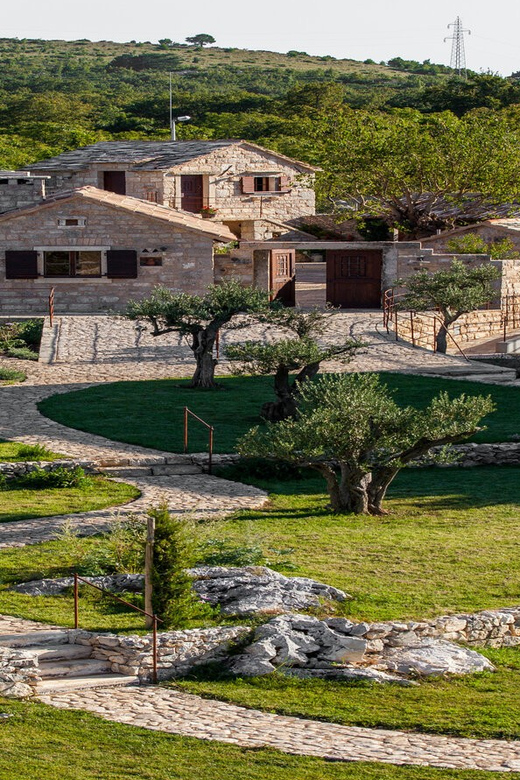
Stella Croatica sits in Dalmatia, near the well-known Klis area. You follow signs from the main road, enter the main building, and wait for your host. The activity returns to this same meeting point, so you do not need to arrange a second pickup point afterward.
That setup is useful if you are already visiting Klis or driving in the area. The supplied information does not include transport from Split, so do not assume hotel pickup or a shuttle. Plan your route to Stella Croatica before you set out, especially if you are building this visit around other sights.
The experience is offered in English. You should also know that food and drinks cannot be brought into the activity, and video recording is not allowed. You can still take part in the tasting and inspect the products on display, but keep your camera use within the stated rules.
More Food Tours in Split
- From Split: Krka Waterfalls, Food & Wine Tasting Tour
★ 5.0 · 9,326 reviews - From Split: Krka Waterfalls, Food & Wine Tasting Tour
★ 4.9 · 6,598 reviews - Split: Blue Lagoon and 3 Island Cruise with Food and Drinks
★ 4.8 · 1,969 reviews
Inside the family estate’s production rooms
The tour begins with the people and products behind Stella Croatica. You watch local women make and pack traditional goods using figs, almonds, oranges, and lavender. This is a useful opening because it gives you a better sense of Dalmatian food culture than a shop shelf alone.
The focus is not just on the finished product. You get to see how familiar regional ingredients become sweets and other packaged foods. Figs and almonds are especially tied to the dry, Mediterranean character of Dalmatia, while orange and lavender show how the estate works with both food and scent.
I like this part because it puts the family-estate idea into practice. You are not simply told that local traditions matter. You see products being prepared and packed, then get the chance to taste some of them later.
The scale matters, too. This is not presented as a large industrial factory tour. It is a look at a traditional food business, which makes it a good fit if you want a regional experience with a practical side. If you are hoping to watch every stage of production in detail, keep your expectations modest. The information provided promises an opportunity to witness the work, not a long technical demonstration.
Dalmatian herbs and natural cosmetics
The next stop explains how essential oils are taken from typical Dalmatian herbs. You then learn how those oils are used in natural cosmetics. This links the garden, the local plant life, and the shop products in a way that gives the estate’s different sections a clear purpose.
You also get to test natural cosmetics as part of the included experience. That small detail improves the value of the admission price, particularly if you enjoy botanical products or want to compare local scents before buying anything.
The cosmetic section will appeal most to you if you like the practical uses of plants. It is less important if your only goal is olive oil. Still, it helps broaden the visit beyond a single ingredient and shows how herbs can be used for more than cooking.
The information does not specify every product or the exact method used for extraction, so you should treat this as an introductory explanation rather than a specialist workshop. The strength is the connection between local plants and everyday goods.
A 500-species botanical collection
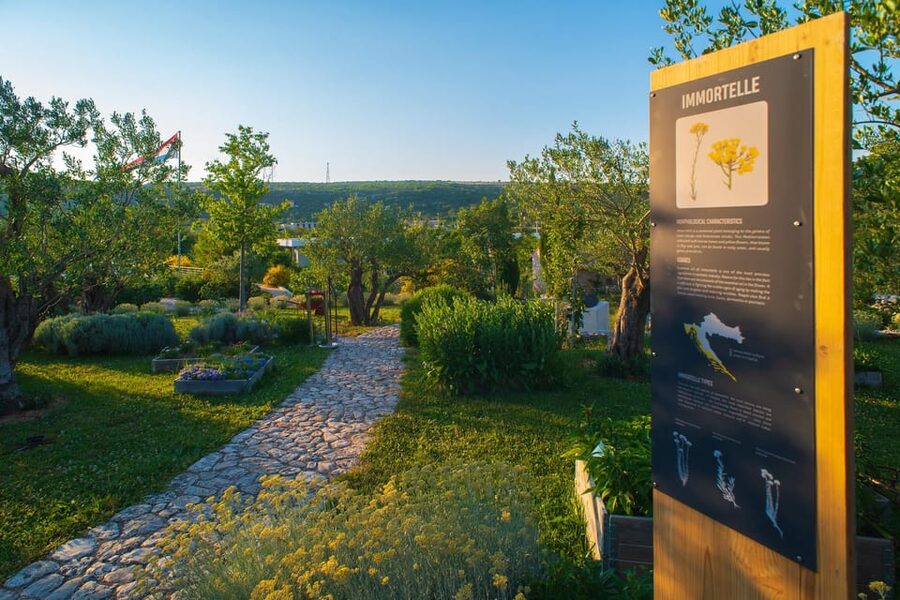
Outside, the botanical collection gives you room to slow down. It contains 500 species, and your guide explains what some of them can be used for. That can mean food, scent, cosmetics, or other household purposes, depending on the plant.
This is a pleasant change of pace after the production area. I like that the garden is not just decoration. It supports the lessons about herbs, essential oils, and regional ingredients. If you take your time, you can connect what you see growing with what you have already heard about in the building.
A small garden is also mentioned in one of the less enthusiastic assessments, so you should not expect a huge agricultural park or miles of planted olive trees. The botanical collection is a defined part of the estate, not a full olive farm tour.
That distinction is important. Stella Croatica is a useful place to learn about olive oil and Dalmatian products, but it is not the same as walking through working olive groves. If seeing rows of trees is essential to your visit, you may find this stop limited.
More Museums in Split
- Blue Lagoon & Underwater Museum from Split with Lunch & Drinks
★ 4.5 · 1,122 reviews - Split: Game of Thrones Museum Entrance Ticket
★ 3.8 · 385 reviews - SPLIT-PREMIUM Emperor’s Walking Tour for History Lovers + Museum
★ 5.0 · 333 reviews - Split: Klis Fortress GOT and Olive Museum Entry Tickets
★ 4.6 · 283 reviews
The Olive Oil Museum and its 2023 award recognition
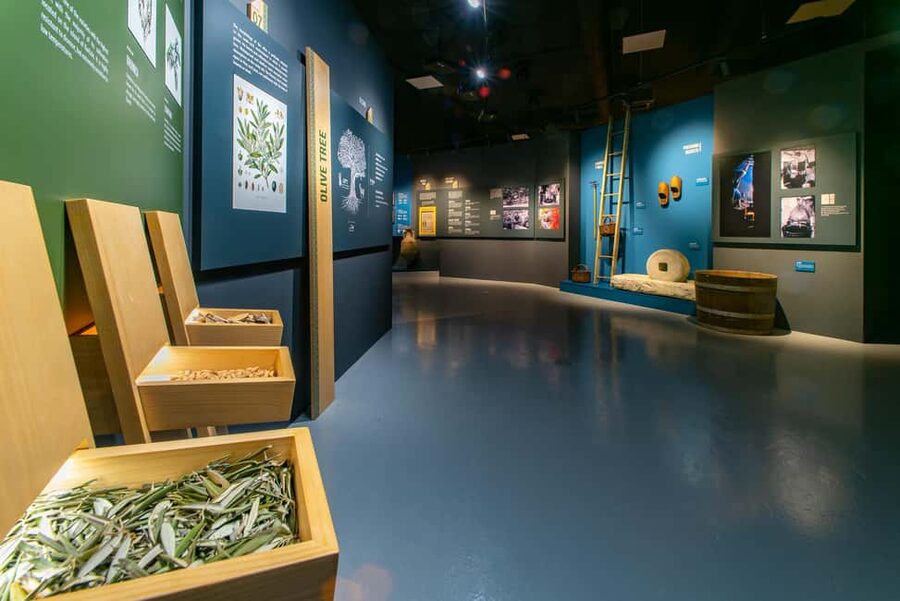
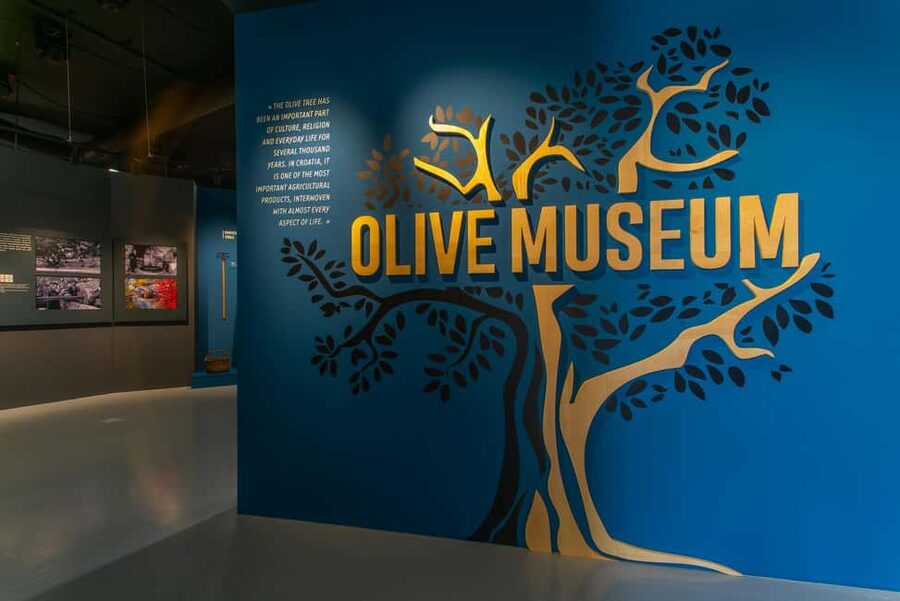
The Olive Oil Museum is the central indoor attraction. It introduces you to olive oil as liquid gold, a product with a major place in Croatian food culture. The museum was a finalist for the European Museum of the Year Award in 2023, which gives it some serious museum credentials.
The displays are intended to explain the role of olive oil and the way it is produced and valued in Croatia. You should expect a compact educational visit rather than a vast national museum. The museum works best when you are willing to read, listen, and connect the story to the tasting that follows.
This part has the most uneven feedback. Some visitors found the explanations clear and learned a great deal in a short time. One less positive assessment found the museum guide dull and unenthusiastic, and felt the museum could be skipped. That is worth taking seriously. The subject is interesting, but the delivery may affect how much you enjoy it.
I would not book this experience only for a grand museum visit. I would book it for the combination of museum, production rooms, botanical collection, tasting, and shop. Taken together, the pieces offer more than the museum could provide alone.
Learning to smell and taste olive oil
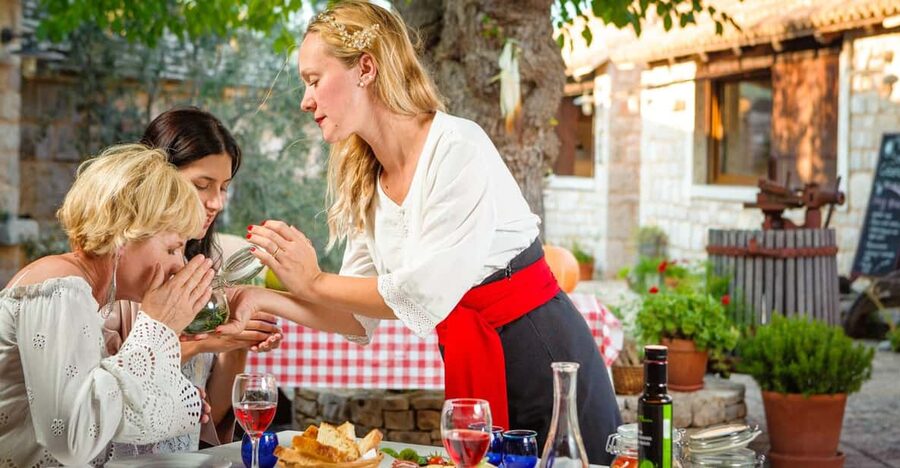
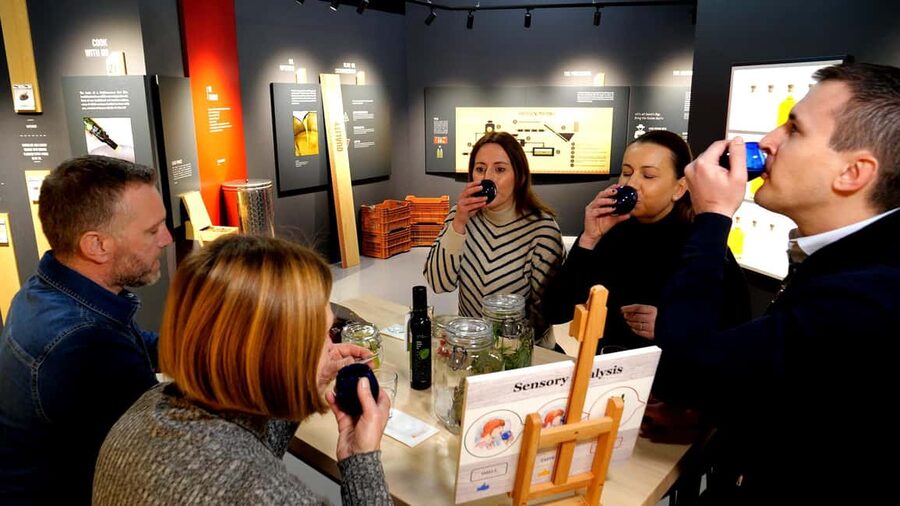
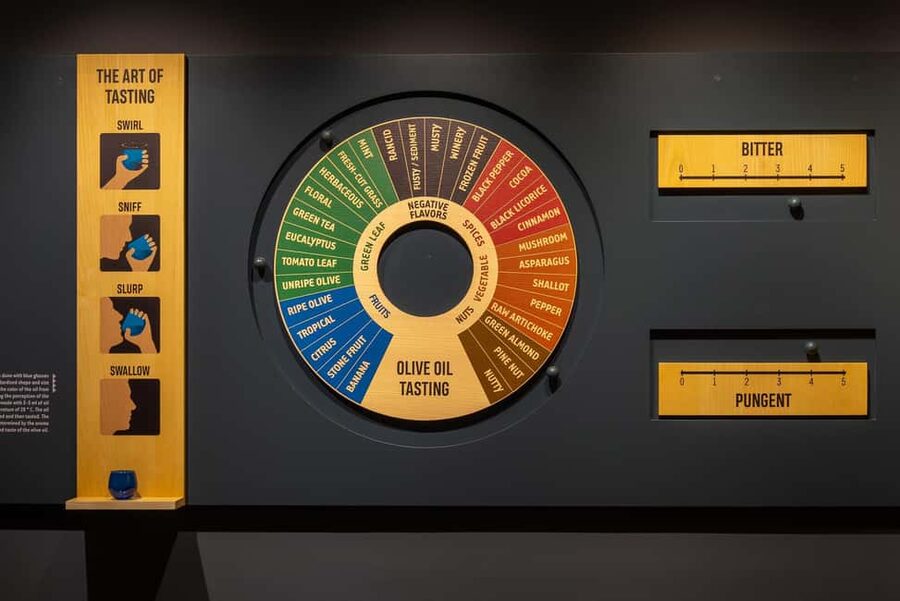
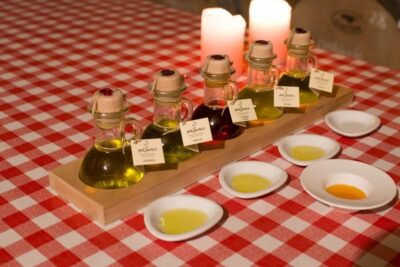
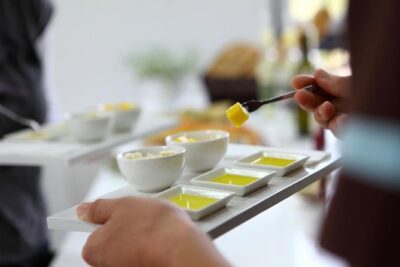
The tasting room is where the visit becomes interactive. Before you taste the two oils, your host explains how to recognize extra virgin olive oil. You learn the basics of professional tasting, including the use of smell and taste to identify differences in quality.
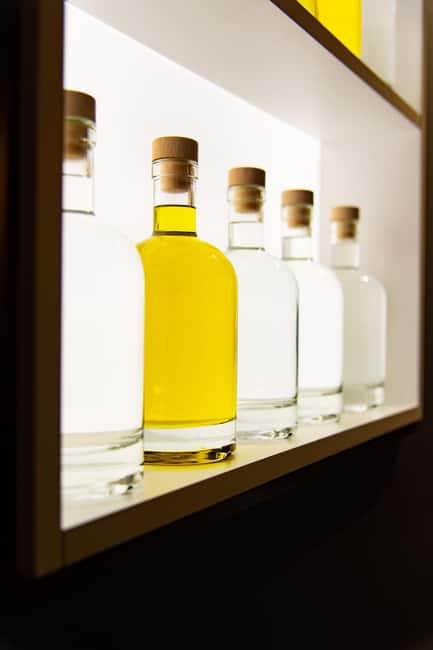
This is the most useful part for many people. Olive oil bottles often use polished labels and grand claims, but packaging alone cannot tell you what is in the bottle. The workshop gives you a simple way to pay attention to aroma and flavor instead.
You taste two different oils, and both are labeled extra virgin. The point is not simply to decide which one you prefer. You are taught to compare them and notice how quality can differ even when the label uses the same legal category.
The experience has been described as similar to a sommelier lesson, with participants sniffing and tasting to identify the difference between good and bad oil. That comparison is helpful, as long as you keep the scale in mind. This is an introduction, not professional certification or advanced olive oil training.
I like the way the workshop turns a familiar food into something you can assess. You do not need prior knowledge. You only need to pay attention and be willing to smell the oil before swallowing it. The host in this section has been praised for being clear and well informed, which matters because tasting lessons can become confusing when the instructions are vague.
Children can take part, too. A nine-year-old found the explanations and tasting interesting, so families should not dismiss this as an adults-only food lesson. Younger children may have their own reaction to the flavors, but the simple sniff-and-taste format gives them something active to do.
The concept store and free time afterward
After the guided activities, you can taste handmade products in the concept store. Products include the traditional items made with figs, almonds, oranges, and lavender, along with olive oils and natural cosmetics. You can purchase them at factory prices, which is a useful advantage if you are looking for edible souvenirs.
I like having time to browse after the formal tour ends. You are not rushed straight to the exit, and you can decide for yourself if a product is worth taking home. The tasting also helps you buy with more confidence, particularly when you are choosing between different olive oils.
The shop should not be treated as an obligation. You can try the products without buying them, which keeps the visit more relaxed. One practical tip is to taste first and shop second. After you learn to compare oils, you will have a better idea of what suits your own palate.
You also have free time to explore the park or have a traditional lunch. Lunch and additional drinks cost extra, so include them in your budget if you plan to stay longer. The supplied information does not give a menu, meal price, or schedule, so ask on arrival if lunch is important to your plans.
Is €18 a fair price?
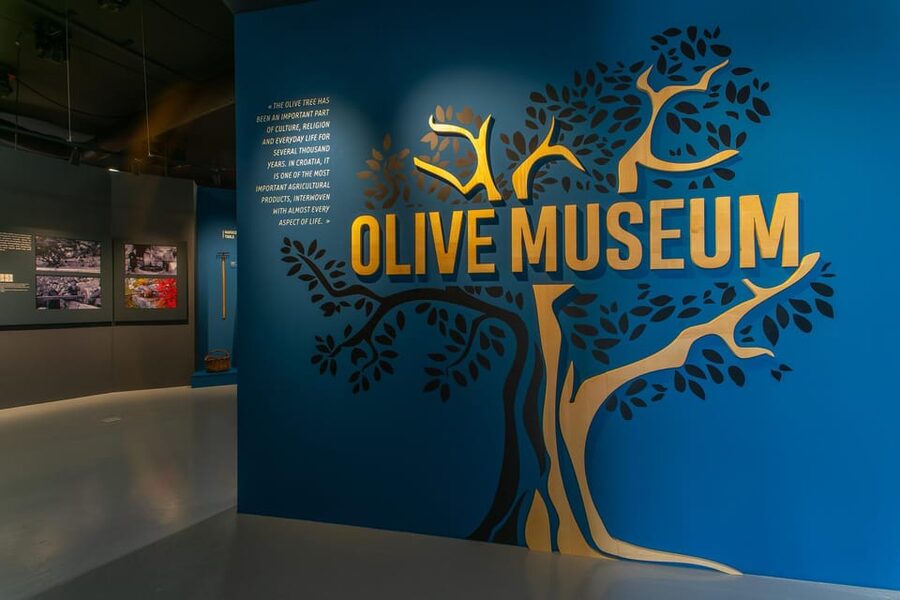
At €18 per person, the value is strong if you use the full visit. Your ticket includes entry to Stella Croatica and the Olive Oil Museum, a guided tour, two olive oil tastings, traditional sweets, and natural cosmetic testing. That is a lot of included content for a modest price.
The price looks especially good for visitors who enjoy food education rather than simply taking photographs. You get several connected subjects: local production, herbs, cosmetics, olive oil, and traditional sweets. The tasting lesson alone gives the visit a practical takeaway you can use when shopping elsewhere in Croatia.
The value is less convincing if you expect an expansive olive farm or a major museum experience. The site does not have olive fields to walk through, and the museum may feel dull if the guide’s presentation lacks energy. In that case, the experience becomes a pleasant extra rather than an essential sight.
I would compare it with the cost of a tasting at a restaurant or shop. Here, you also receive the tour and the museum entry, so the €18 price makes sense. Just do not confuse a good-value educational stop with a full-day food excursion.
Who will enjoy this visit most?
I would recommend Stella Croatica to you if you like knowing how food is made and prefer a structured visit with several short sections. The English-language explanations, sweets, botanical collection, and tasting make it accessible even if you know little about olive oil.
Families can also do well here. The hands-on tasting and garden give children a change of scene, and the clear explanations can work for older children. A nine-year-old was able to enjoy the museum and workshop, which is a useful guide for parents planning a family outing.
Food shoppers will get extra value. You can sample handmade products, compare oils, and buy items at factory prices. The visit helps you avoid choosing a bottle based only on an attractive label.
I would be more cautious if your priority is dramatic scenery, a long walk, or a working olive grove. The botanical area is pleasant, but it is not described as a large garden, and the site itself does not offer olive fields. The visit is about interpretation, tasting, and local products.
Practical details before you book
The experience is operated by Stella Mediterranea d.o.o. and has a 4.9 rating from 51 assessments, with especially strong praise for the clear teaching, pleasant setting, workshop, and friendly staff. One assessment rated it only three stars because the museum guide lacked enthusiasm and the absence of olive trees reduced the sense of place.
You can reserve now and pay later, which helps if your plans around Split and Klis are still shifting. You can also cancel up to 24 hours before the activity for a full refund. Those terms are useful, but the more important planning point is to confirm how this visit fits your transport and lunch plans.
Wear something comfortable for moving between the production rooms, museum, garden, and tasting room. No special equipment is stated as necessary. Bring your appetite for sampling, but do not bring outside food or drinks into the activity.
Should you book Stella Croatica?
Book it if you want an affordable, well-organized introduction to Croatian olive oil with extra food and botanical stops attached. The strongest reasons are the interactive tasting, the chance to sample traditional sweets, the 500-species collection, and the opportunity to buy products at factory prices.
Skip it if you need olive groves, sweeping rural views, or a museum that carries the whole visit by itself. The museum presentation may feel dry, and the site is better understood as a family food estate and tasting experience than as a major cultural attraction.
For most visitors already planning time near Klis, I would treat Stella Croatica as a worthwhile two-part outing: learn how local products are made, then test your nose and palate with olive oil. At €18, it is an easy add-on, especially for families and food-minded visitors.
FAQ
Where is Stella Croatica?
Stella Croatica is in Dalmatia, near Klis, Croatia. You follow signs from the main road, enter the main building, and wait for your host.
What does the €18 price include?
The price includes entry to Stella Croatica and the Olive Oil Museum, a guided tour, tasting of two olive oils, traditional sweets, and testing of natural cosmetics.
Are the olive oils extra virgin?
Both oils used in the tasting are labeled as extra virgin. The workshop explains how to recognize quality through smell and taste.
Is the tour offered in English?
Yes. The stated tour language is English.
Can I buy products after the tour?
Yes. The concept store sells olive oils and other handmade products, including traditional goods made with figs, almonds, oranges, and lavender. Products may be purchased at factory prices.
Is lunch included?
No. Additional food and drinks are not included. After the experience, you can have a traditional lunch during your free time, at your own expense.
Can children join the experience?
The information does not give a minimum age. A nine-year-old took part in the museum visit and tasting workshop, so the activity can suit families.
Can I bring food or record video?
Outside food and drinks are not allowed, and video recording is not permitted.
More Museums
- Split: Museum of Illusions Entrance Ticket
★ 4.2 · 254 reviews - Visit Klis fortress GOT & Olive museum Klis
★ 4.5 · 77 reviews - Private Split & Klis Fortress Tour, Olive Museum & Port Pickup
★ 4.5 · 13 reviews - Zagreb: Skip-the-Ticket-Line Museum of Broken Relationships
★ 4.5 · 847 reviews
More Olive Oil Tastings
- Split: Krka Waterfalls With Boat Cruise, Wine and Olive Oil
★ 4.3 · 1,507 reviews - Olive museum Klis with educational olive oil tasting
★ 4.5 · 50 reviews - Krka Waterfalls Tour with Wine and Olive Oil Tasting
★ 4.5 · 48 reviews - Wine, food and olive oil by PhD student
★ 5.0 · 111 reviews
Just added around Split
- Private VIP Blue Lagoon and 3 Islands Tour★ 4.5 · 9 reviews
- Split highlights – Evening walking tour★ 5.0 · 9 reviews
- Private boat transfer Split – Bol★ 5.0 · 9 reviews
- From Split: Trogir & Blue Lagoon Boat Tour with Snorkeling★ 4.6 · 9 reviews
- Private Photography Activity in Split★ 5.0 · 9 reviews
- Bike, Beer & Poljud Stadium Tour★ 5.0 · 9 reviews
- From Hvar: Blue cave group speedboat tour full day★ 5.0 · 9 reviews
- Split Walking Tour: History, Legends & Tales★ 5.0 · 9 reviews
Olive Oil Tastings, compared.
Krka Waterfalls With Boat Cruise, Wine and Olive Oil
Read our review →
Olive museum Klis with educational olive oil tasting
Read our review →
Krka Waterfalls Tour with Wine and Olive Oil Tasting
Read our review →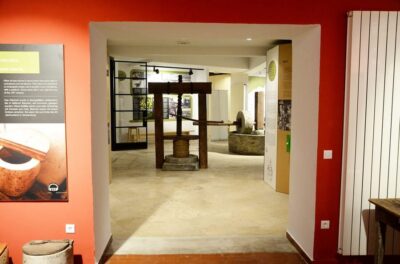
House of Istrian Olive Oil Museum and Guided Tasting
Read our review →
Browse the lists this tour appears in