
Reviewed · MUSEUMS
Split: Museum of Illusions Entrance Ticket
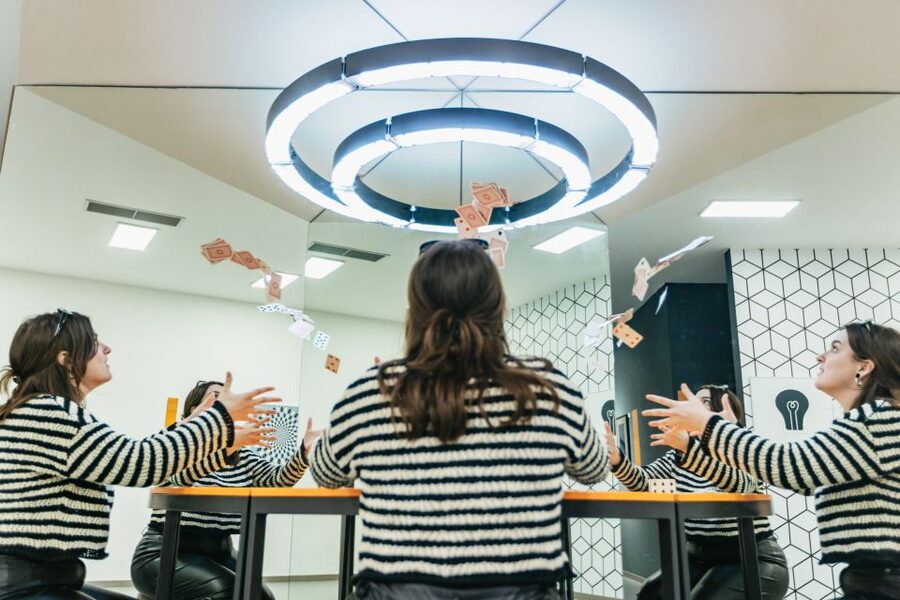
Your eyes can fool you in seconds. Split’s Museum of Illusions turns vision, balance, and scale into hands-on entertainment, with exhibits that make water appear to flow uphill, friends seem to grow or shrink, and ceilings become climbing surfaces. I like the playful mix of science and photography, especially the room that creates giant and tiny versions of the people inside it. I also like the freedom to move through the exhibits at your own pace rather than follow a fixed tour.
The main drawback is language coverage. Captions are available in English, German, Italian, and Croatian, but one French-speaking visitor found the lack of French explanations disappointing. At $14 per person, the museum offers good value for families, curious adults, and anyone needing a short indoor break, but it is not a full-day attraction in the usual museum sense.
In This Review
- Key points to know before you go
- What the $14 ticket gives you in Split
- Starting at the main entrance
- Testing gravity, scale, and your own eyes
- Mirror mazes and the fun of getting turned around
- A head on a tray and a climb onto the ceiling
- Playrooms that turn science into games
- How long to plan and when it fits best
- Who will enjoy this museum most
- Practical details that affect your visit
- Should you book the Split Museum of Illusions?
- FAQ
- How much does the Split Museum of Illusions ticket cost?
- How long is the ticket valid?
- What does the ticket include?
- Where do I show my ticket?
- Which languages are available?
- Is the museum wheelchair accessible?
- Can children visit alone?
- Can I cancel or pay later?
Key points to know before you go
- Gravity gets turned upside down: A special room makes water appear to run uphill, challenging what your eyes expect.
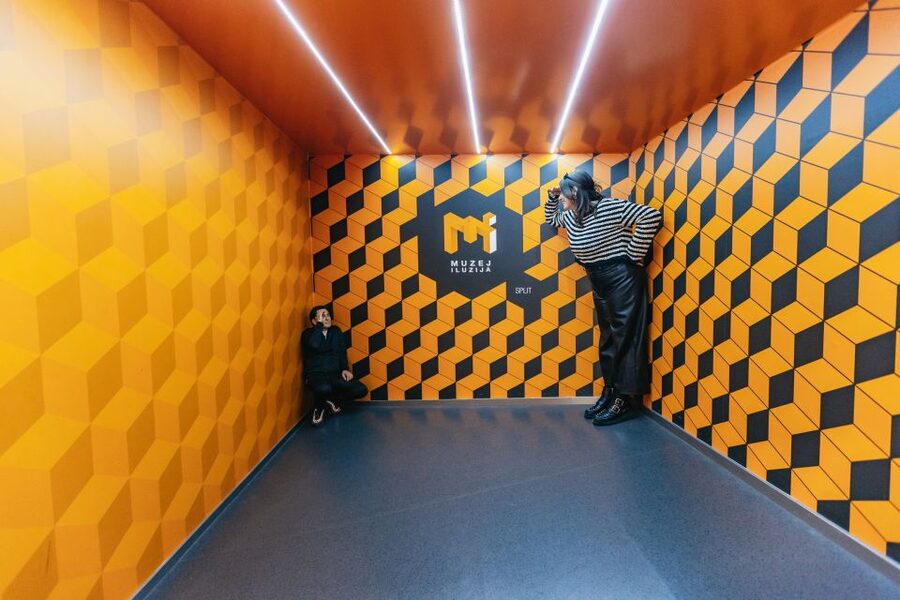
- The photo rooms are a highlight: You can create pictures that make people look unusually tall, tiny, or otherwise out of scale.
- Puzzles add an educational edge: Playrooms use games and brainteasers to explain vision, perception, and how the brain interprets information.
- The visit is self-guided: You can stop, study each installation, and take photos without following a guide or group.
- Your ticket is valid for one day: Check the available starting times when booking, then show your voucher at the main entrance.
- It suits families and adults alike: Unaccompanied minors are not permitted, but children with an accompanying adult can enjoy the interactive displays.
What the $14 ticket gives you in Split
Your ticket covers entrance to the Museum of Illusions Split. There is no transport, meal, or separate guided sightseeing component included, so think of this as a focused indoor attraction rather than a city tour.
At $14, the value depends on how actively you use the exhibits. If you hurry through, take a few pictures, and leave, the price may feel less appealing. If you test each installation, read the captions, work through the puzzles, and take creative photos, the visit becomes a compact activity with both entertainment and educational value.
The ticket is valid for one day, and availability shows the starting times offered for your chosen date. This gives you a useful amount of flexibility when planning around Split’s other sights. You do not need to commit to a long excursion, which makes the museum easy to fit into a busy day.
The attraction has a rating of 4.2 from 254 reviews, a solid result that suggests the museum generally delivers what it promises while not being perfect for every visitor. The French-language comment points to the clearest limitation: the displays may be less satisfying if you want explanations in a language outside English, German, Italian, and Croatian.
More Museums in Split
- Blue Lagoon & Underwater Museum from Split with Lunch & Drinks
★ 4.5 · 1,122 reviews - Split: Game of Thrones Museum Entrance Ticket
★ 3.8 · 385 reviews - SPLIT-PREMIUM Emperor’s Walking Tour for History Lovers + Museum
★ 5.0 · 333 reviews
Starting at the main entrance
Getting in is simple. Show your voucher at the museum’s main entrance, where an English- or Croatian-speaking host or greeter can assist you.
There is no complicated meeting arrangement and no need to search for a separate tour vehicle. That matters in Split, where you may already be managing a full schedule of historic sights, meals, and waterfront walks. The museum works well as a planned stop because your entry is tied to availability and a starting time, while the visit itself lets you explore at your own pace.
Bring a camera. The displays are designed for photographs, and many of the most enjoyable moments come from positioning yourself or a companion correctly inside an illusion. Your camera is not just a record of the visit here. It is part of the fun.
Testing gravity, scale, and your own eyes
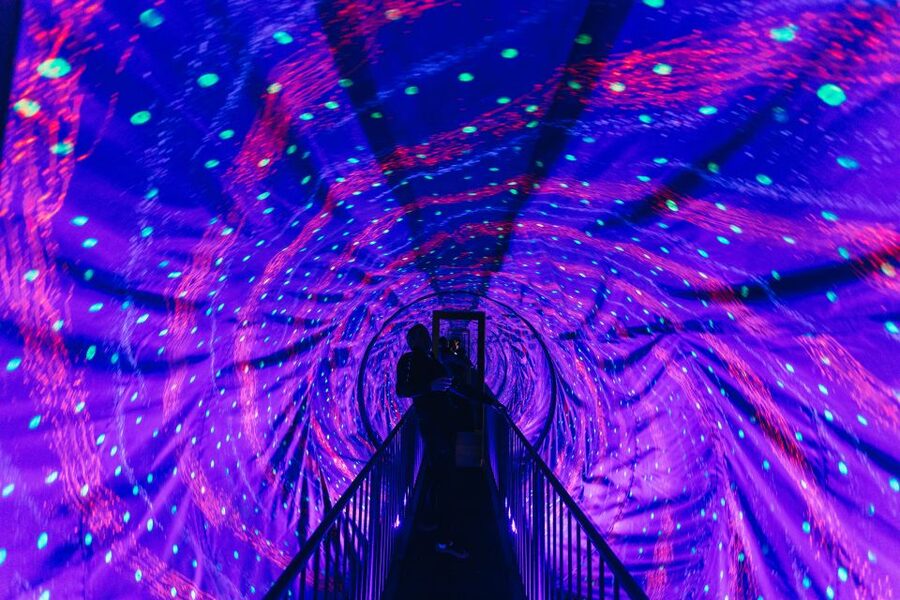
The first major appeal is the way the exhibits challenge ordinary expectations. In the room where water seems to flow uphill, your eyes receive information that conflicts with common sense. You know water should move downhill, yet the installation makes that familiar rule look uncertain.
That is the point of the museum. It is not simply presenting odd decorations. The installations show how perception can be shaped by the setting around you. Your eyes collect information, but your brain decides what that information means. When the two seem to disagree, the result is funny, surprising, and a little unsettling.
The size-changing room is another strong stop. It creates the impression that one person is much larger or smaller than another, making it especially good for photographs. A visitor from France singled out this room as a favorite, even while wishing the explanations had been available in French. That gives you a useful clue about the museum’s appeal: the visual effect can work even when you do not understand every caption.
Take a moment to try each angle rather than simply glance at the display. These installations depend on viewpoint, and a quick look may not show the full effect. If you are with children, this is a good place to let them experiment and explain what they think is happening.
Mirror mazes and the fun of getting turned around
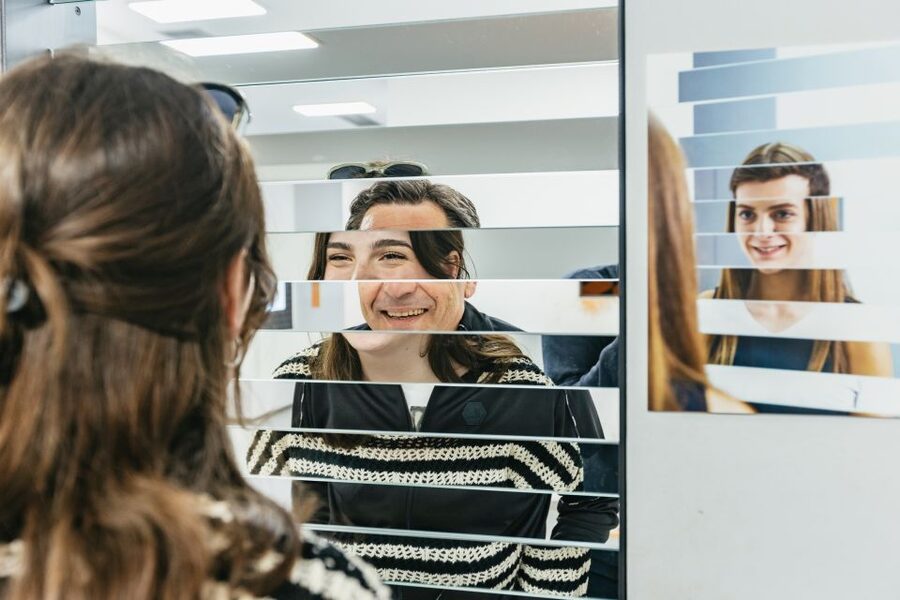
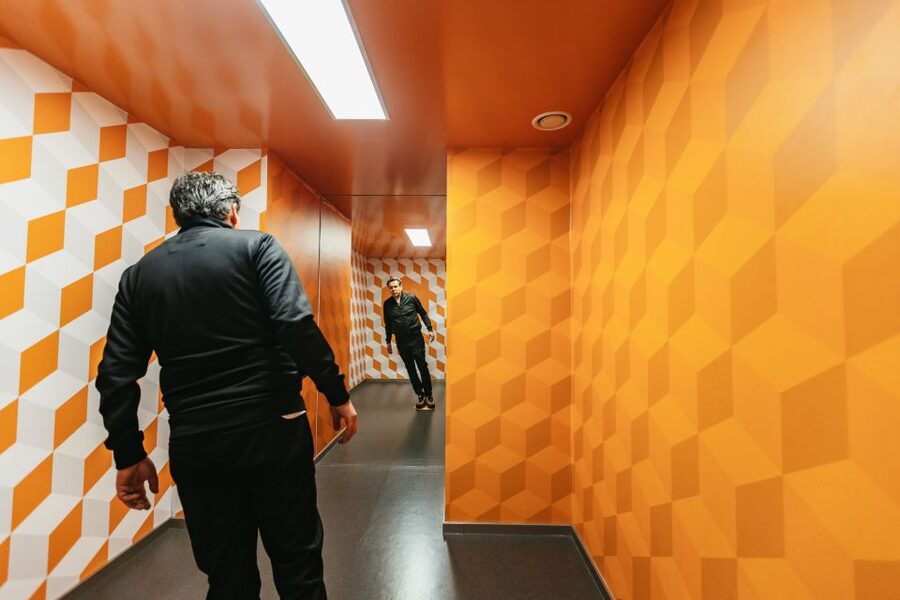
The mirror maze adds a different kind of challenge. Instead of asking you to understand one optical trick, it makes you work out where you are in a space filled with reflections.
A maze of mirrors can be amusing because it changes a familiar room into something hard to read. You may see several apparent paths, repeated versions of yourself, or reflections that make the space feel larger than it is. The experience is less about learning a single fact and more about noticing how quickly your sense of direction can become unreliable.
This section may be most enjoyable when you slow down. Look carefully before moving, and give yourself time to understand why the reflection appears where it does. The museum’s larger lesson keeps returning: what you see is not always a direct picture of what is there.
Something different for another day:
- Split: Krka Waterfalls Trip with Boat Cruise and Swimming
★ 4.8 · 10,519 reviews - From Split: Krka Waterfalls, Food & Wine Tasting Tour
★ 5.0 · 9,326 reviews - Blue cave, Mamma Mia and Hvar, 5 islands speedboat tour
★ 5.0 · 7,150 reviews - From Split: Krka Waterfalls, Food & Wine Tasting Tour
★ 4.9 · 6,598 reviews
A head on a tray and a climb onto the ceiling
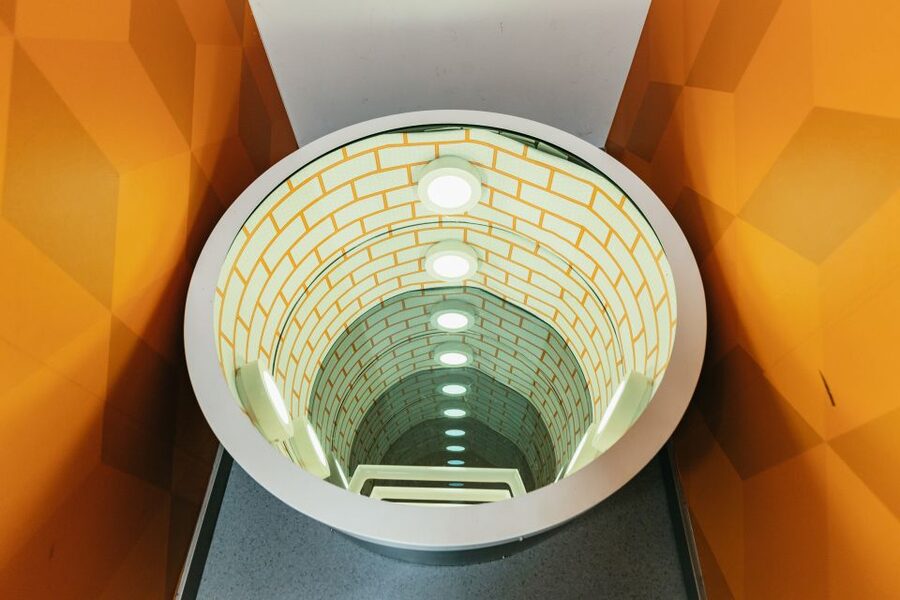
Some installations are built for a quick visual joke. Serving someone’s head on a tray is the kind of scene that works best in a photograph, provided you position the people correctly. It is playful, slightly strange, and designed to make the viewer question the picture for a moment.
Another display lets you appear to climb onto the ceiling. The effect is based on the room and the camera angle, not actual defiance of gravity, but the image can look convincing enough to surprise anyone who sees it without context.
These exhibits are valuable because they make the science social. You are not only observing an object behind glass. You are taking part in the illusion, directing a pose, and checking the result on your camera. If you are visiting with friends or family, the photo opportunities can become a shared activity rather than a passive museum stop.
Playrooms that turn science into games
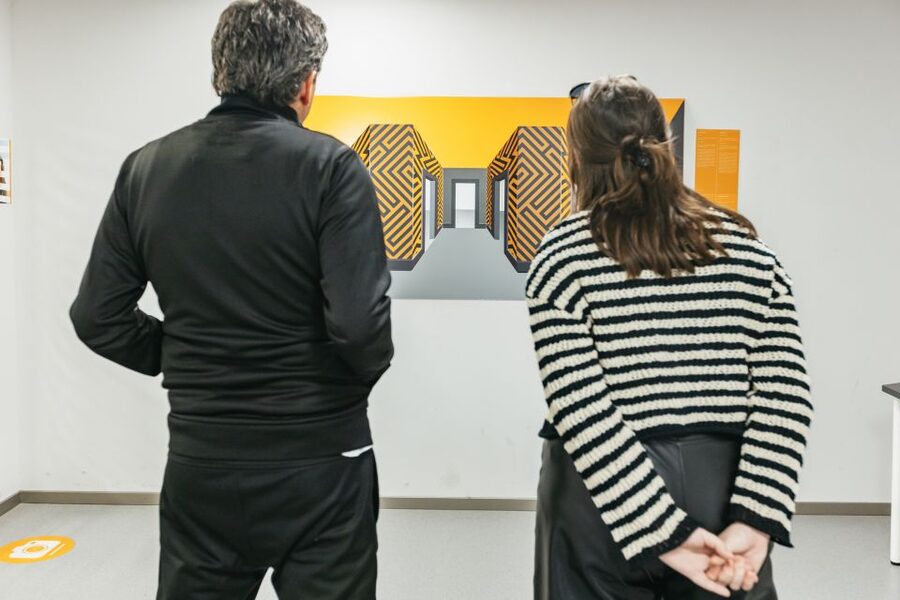
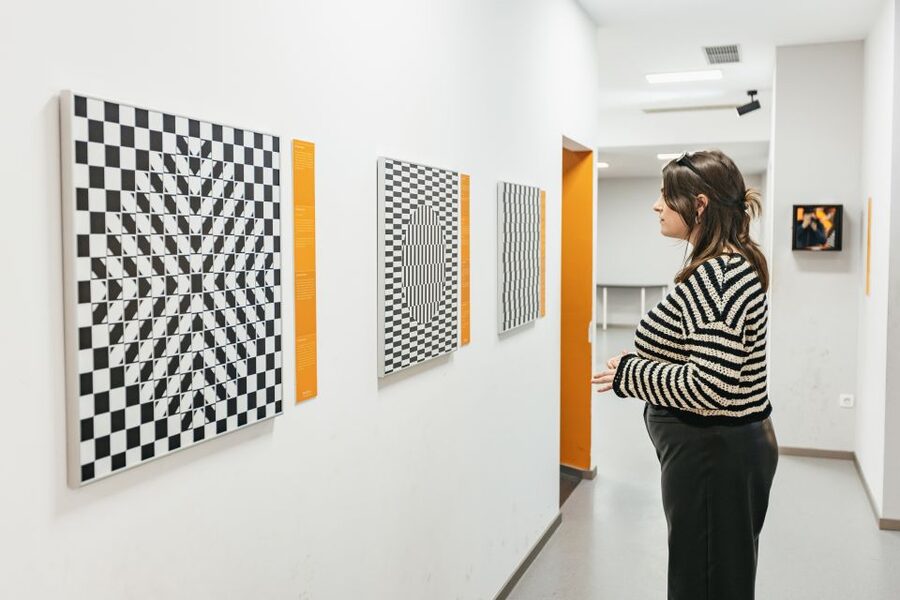
The playrooms give the museum more substance than a collection of photo tricks. They contain games and puzzles that explore vision, perception, and the way the human brain processes information.
You might find that a puzzle looks simple until you try to solve it. That small moment of confusion is useful. It shows how your brain relies on familiar patterns and quick judgments, even when those judgments are wrong. The exhibits are entertaining, but they also encourage you to ask why an illusion works.
For children, the playrooms offer a way to learn through action. Instead of reading a long explanation, they can test an idea with their own eyes and hands. Adults may enjoy them for the same reason, especially if they like logic puzzles or visual challenges.
The captions are available in English, German, Italian, and Croatian. English-speaking visitors should be able to follow the main explanations, while speakers of the other listed languages have more language support. If you need French explanations, plan for the possibility that the written information will not be available in French.
How long to plan and when it fits best
The ticket is listed with a duration of one day, but that refers to ticket validity rather than a stated number of hours inside the museum. The activity information does not give a precise visit length, so I would leave enough room to examine the installations instead of treating it as a rushed photo stop.
The museum makes sense as a flexible addition to a day in Split. You can use it when the weather is poor, when you want an indoor activity, or when younger members of your group need a break from conventional sightseeing. It may also work well between larger plans because you are not signing up for a long drive or a structured excursion.
Check the available starting times before booking. You should also remember that the experience is self-guided in character. The host or greeter speaks English and Croatian, but the attraction is built around your own movement through the rooms rather than a detailed guided talk.
Who will enjoy this museum most
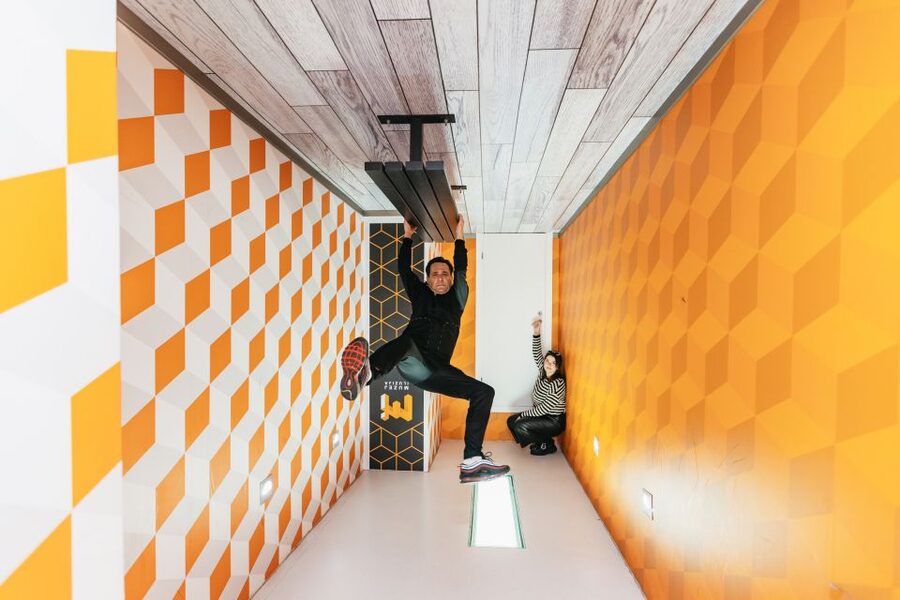
I would recommend it first to families with children who are old enough to engage with visual puzzles and who are accompanied by an adult. The museum gives children something to do, not just something to look at, and the photo rooms create easy shared memories.
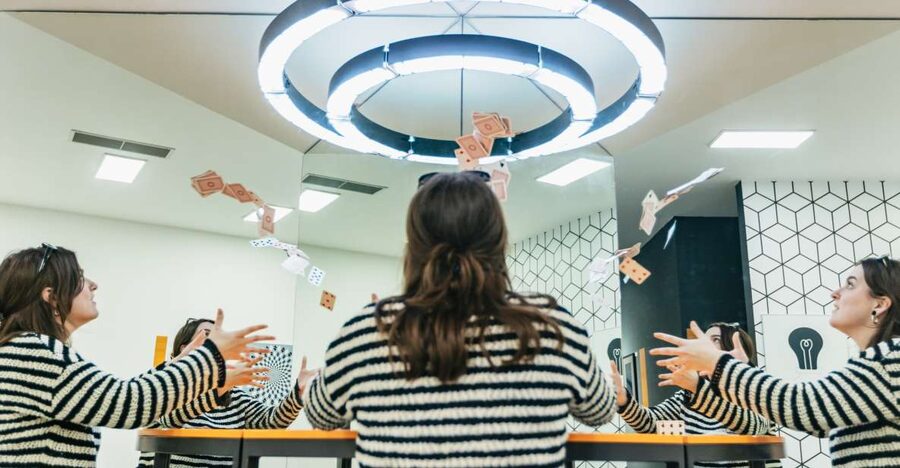
It also suits couples and groups of friends who enjoy taking unusual photographs. The giant and tiny room, mirror maze, tray illusion, and ceiling scene all reward cooperation. One person may need to pose while another finds the right camera position.
Adults without children should not dismiss it. The strongest exhibits raise genuine questions about perception, and the playrooms can be surprisingly absorbing if you enjoy puzzles. The museum is also a good choice if you want a lighter activity after a morning of churches, ruins, or formal cultural sights.
I would be more cautious if your main goal is a traditional museum with a large collection, long historical displays, or extensive interpretation in French. This attraction is about active optical illusions, not art, archaeology, or local history.
Practical details that affect your visit
The museum is wheelchair accessible, which makes it a more practical choice for visitors who need an accessible attraction. Service animals are permitted. These details are worth checking against your personal needs, since individual exhibit layouts can still matter even when a venue is described as accessible.
Unaccompanied minors are not allowed. Children therefore need to visit with an adult, and this is not a place to send older children in on their own while the rest of the group does something else.
Cancellation is free up to 24 hours before the scheduled visit for a full refund. You can also reserve now and pay later, which helps if your Split plans may change. Those policies make the $14 booking less risky, particularly when your day depends on weather or shifting arrival times.
The available languages for hosts or greeters are English and Croatian. Captions add German and Italian, along with English and Croatian. Bring a camera, and expect the best results when you take time to frame the scene rather than snap a quick picture and move on.
Should you book the Split Museum of Illusions?
Book it if you want a playful, indoor activity that combines optical tricks, puzzles, and memorable photos. At $14, it is a reasonable choice for families, groups, and adults who enjoy testing how the brain interprets what the eyes see.
I would make the museum a planned short stop, not the central reason for visiting Split. The attractions are clever and entertaining, but the experience does not replace the city’s major cultural sights. Give yourself enough time to read the captions and try the installations, and the ticket offers better value than a quick walk through.
Skip it if you want a conventional museum, extensive local history, or explanations in French. For everyone else, especially anyone intrigued by the room where people seem to change size, it is an easy and good-natured way to see how unreliable your own eyes can be.
FAQ
How much does the Split Museum of Illusions ticket cost?
The entrance ticket costs $14 per person.
How long is the ticket valid?
The ticket is valid for one day. Check availability for the starting times offered on your chosen date.
What does the ticket include?
The ticket includes entrance to the Museum of Illusions Split.
Where do I show my ticket?
Show your voucher at the museum’s main entrance.
Which languages are available?
Hosts or greeters speak English and Croatian. Captions are available in English, German, Italian, and Croatian.
Is the museum wheelchair accessible?
Yes, the museum is wheelchair accessible.
Can children visit alone?
No. Unaccompanied minors are not allowed.
Can I cancel or pay later?
You can cancel up to 24 hours in advance for a full refund. Reserve now and pay later is also available.
Just added around Split
- Private VIP Blue Lagoon and 3 Islands Tour★ 4.5 · 9 reviews
- Split highlights – Evening walking tour★ 5.0 · 9 reviews
- Private boat transfer Split – Bol★ 5.0 · 9 reviews
- From Split: Trogir & Blue Lagoon Boat Tour with Snorkeling★ 4.6 · 9 reviews
- Private Photography Activity in Split★ 5.0 · 9 reviews
- Bike, Beer & Poljud Stadium Tour★ 5.0 · 9 reviews
- From Hvar: Blue cave group speedboat tour full day★ 5.0 · 9 reviews
- Split Walking Tour: History, Legends & Tales★ 5.0 · 9 reviews
Museums, compared.
Blue Lagoon & Underwater Museum from Split with Lunch & Drinks
Read our review →
Skip-the-Ticket-Line Museum of Broken Relationships
Read our review →

PREMIUM Emperor’s Walking Tour for History Lovers + Museum
Read our review →
Klis Fortress GOT and Olive Museum Entry Tickets
Read our review →
Browse the lists this tour appears in