
Reviewed · MUSEUMS
Zagreb: Nikola Tesla Technical Museum Ticket
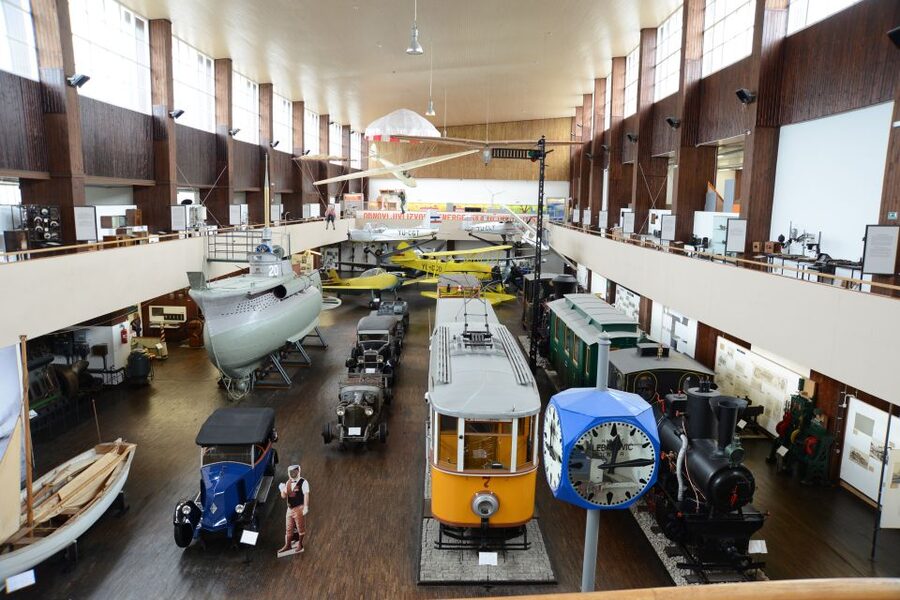
Science gets wonderfully hands-on here. Zagreb’s Nikola Tesla Technical Museum combines Tesla experiments, a walk through an underground mine, and a huge collection of engines, vehicles, aircraft, farming tools, energy systems, and space equipment. I like the mix of working demonstrations and real machines, and I like that the $8 ticket can fill a rainy afternoon or much longer. The main drawback is that some displays have limited English text, and the museum can feel cold or a little dated in places.
This is not only a Tesla museum. The Nikola Tesla Cabinet is the headline act, but the wider collection traces how people changed energy, transport, communication, farming, industry, and daily life. If you have only two or three days in Zagreb, it may not outrank the city’s historic center, but science fans, families with curious children, engineers, and anyone who enjoys big old machines should give it serious thought.
In This Review
- Key points before you go
- Why this museum is worth your Zagreb time
- Starting with Tesla’s Cabinet
- Walking through the underground mine
- The permanent exhibitions, from turbines to transport
- Farming, beekeeping, and renewable energy
- Radioactivity, space, and the planetarium
- Timing your visit around the free guided sessions
- How long should you spend here?
- Language, comfort, parking, and access
- Who will enjoy this museum most?
- Should you book the $8 ticket?
- FAQ
- How much does the Nikola Tesla Technical Museum ticket cost?
- How long is the ticket valid?
- Is a guided tour included?
- Is the Tesla demonstration available in English?
- Are food and drinks allowed inside?
- Is the museum suitable for wheelchair users?
Key points before you go
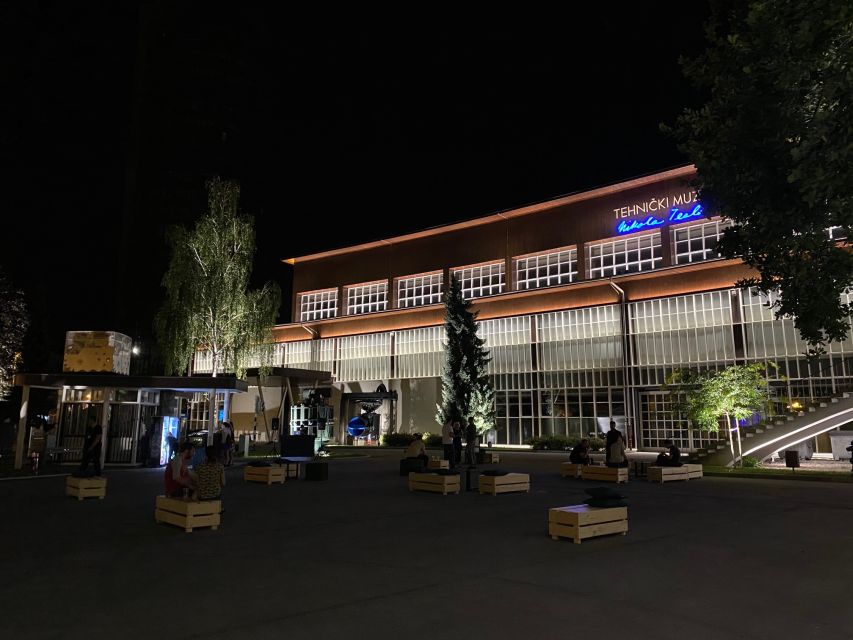
- Tesla’s Cabinet includes live demonstrations: At the scheduled session, you can see high-voltage experiments and take part with volunteers from the audience.
- The underground mine is a real highlight: A guided visit gives the museum a physical, practical side that display cases alone cannot provide.
- The collection is far wider than Tesla: Expect turbines, generators, cars, motorcycles, aircraft, mining tools, farming equipment, spacecraft, and more.
- Free guided sessions add real value: Visit at 3:00 PM Tuesday through Friday, or 11:00 AM Saturday and Sunday, to join the mine tour and Tesla demonstration at no extra cost.
- Allow more than one hour: An hour is enough for a quick look, but two hours or more makes sense if you want to cover the technical sections properly.
- English coverage is uneven: Many objects have English labels, but not all. A multilingual audio guide is available, though you may not notice it until after you start.
Why this museum is worth your Zagreb time
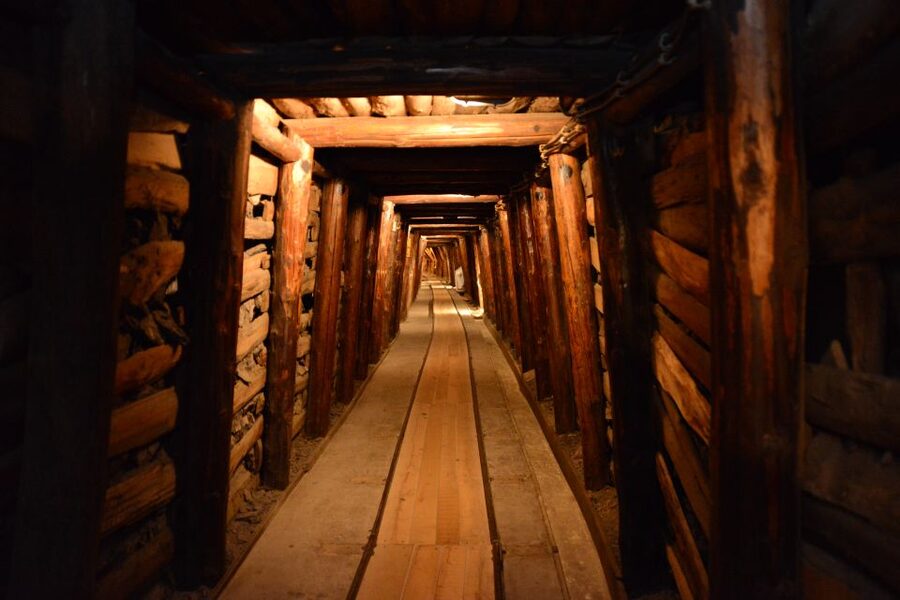
The museum’s strength is scale. You do not simply look at a few Tesla coils and leave. You move through a broad record of technological change, from early mechanical devices to modern ideas about renewable energy and efficiency.
That range gives the museum a useful story. Technology is not presented only as a series of famous inventions. You can also see the machines that made industry, transport, farming, communications, and public safety possible. A large turbine or generator may sound dry on paper, but the physical size of these objects makes their work easier to understand.
I especially like the way the museum connects old equipment with present concerns. Energy transformation, radioactive waste, renewable power, and energy efficiency all appear among the permanent displays. The result is not a polished future-themed attraction. It is a working museum of science and technology, with a few rough edges but plenty to think about.
The overall rating is 4.5 from 520 reviews, and the praise is strongest for the variety, the Tesla demonstrations, the large machines, and the value for money. The less positive points are also useful to know: English signs are not complete, some areas need clearer organization or upkeep, and winter temperatures may be uncomfortable.
More Museums in Zagreb
- Zagreb: Skip-the-Ticket-Line Museum of Broken Relationships
★ 4.5 · 847 reviews - Zagreb: Museum of Illusions Entrance Ticket
★ 4.0 · 261 reviews - Museum of Illusions Zagreb
★ 4.0 · 197 reviews
Starting with Tesla’s Cabinet
Begin with the Nikola Tesla Cabinet if you can. It gives you the most memorable part of the visit early, and the demonstrations help explain why Tesla remains such a powerful figure in the story of electricity.
The cabinet is designed around interactive demonstrations, not just static objects. The high-voltage and Tesla coil displays show scientific principles in a way that is easier to grasp than a paragraph of text. The museum may invite volunteers from the audience, so children and adults can feel involved rather than simply watching from behind a barrier.
The demonstrations are also the part most likely to make the visit feel alive. One of the strongest comments about the experience described the presentation as detailed and well demonstrated. Another praised the chance to see the experiments in English, so you should ask about that if you are joining an organized session.
Tesla’s section works best when you already know a little about his importance, but you do not need an engineering background. You can enjoy the spectacle of the electrical experiments first, then connect them to the wider collection afterward.
Do not assume the Tesla Cabinet is the entire museum. It is an important stop, but the surrounding technical exhibits explain how electrical ideas became machines used in factories, homes, transport, and communications.
Walking through the underground mine
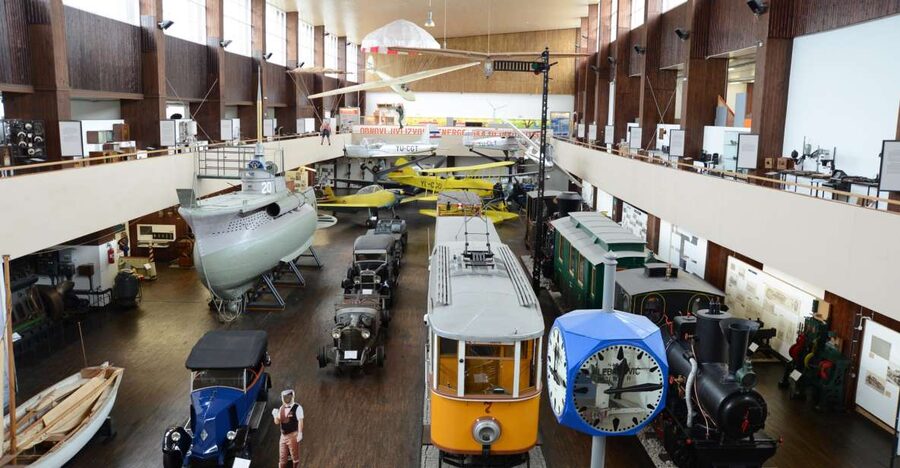
The mine is one of the museum’s most distinctive features. Instead of only showing mining tools in a glass case, the museum lets you enter an underground setting and see how the work environment was organized.
The guided mine visit is especially useful because the museum’s written explanations are not always complete in English. A guide can supply the links between the tools, geology, extraction, and the human work behind the technology.
This section also adds physical variety to the visit. After looking at engines, generators, and vehicles in large halls, you move into a more enclosed industrial space. It helps you understand that technological progress was not only about clever inventors. It also depended on mines, fuel, materials, transport, and workers.
The mine tour is not suitable for people with mobility impairments or wheelchair users. If you have limited mobility, contact the museum before booking rather than assuming every part of the experience will be accessible.
The permanent exhibitions, from turbines to transport
The permanent collection is divided into thematic units. You can expect sections on the transformation of energy, aircraft engines, transportation, firefighting, geology and oil, geodetics, cadastre, mining, and a demonstration laboratory.
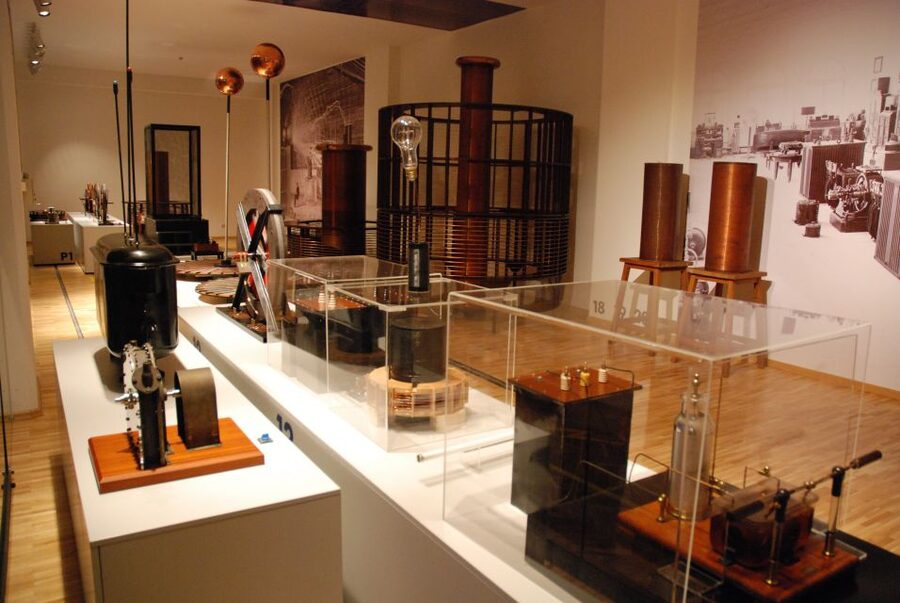
The machinery is a major reason to come. The collection includes large engines, motors, turbines, generators, cars, motorcycles, aircraft, railway-related objects, and spacecraft. You can get close to many of the objects, which makes their size and construction easier to appreciate.
For an engineer or mechanically minded visitor, this may be the museum’s best feature. The development of turbines and generators shows how power production changed over time. You can also follow the progression of transport through bicycles, motorcycles, cars, aircraft, and railway equipment.
I would not rush these sections. A quick pass gives you an impressive collection of old machines, but a slower look reveals the practical questions behind them. How was power produced? How was it transmitted? How did people move goods and themselves? How did machines change farming and manufacturing?
The firefighting display offers another useful change of pace. It shows technology in a direct human context, where equipment is built to protect people and property. Geology, oil, geodetics, and cadastre may appeal most to visitors with a technical interest, but they help explain the systems behind maps, land records, construction, and industry.
Something different for another day:
- From Zagreb: Plitvice & Rastoke Guided Day Trip with Ticket
★ 4.9 · 2,955 reviews - Zagreb: Rastoke & Plitvice Lakes Guided Tour with Ticket
★ 4.9 · 1,897 reviews - Communism & Croatian Homeland War Tour
★ 5.0 · 1,355 reviews - Best of Zagreb with the WW2 Tunnels
★ 5.0 · 973 reviews
Farming, beekeeping, and renewable energy
The collection reaches into areas you might not expect, including the foundations of agriculture and an apiary. These displays can feel far removed from Tesla’s electrical work, but that is part of the museum’s charm.
Agricultural tools show how much labor was once done by hand or with simple mechanical equipment. The apiary adds a small but memorable look at beekeeping and the technology used around it. These sections make the museum more than a parade of engines.
The renewable energy and energy-efficiency displays bring the visit back to modern concerns. They ask you to compare older systems with the ways we now think about power use and sustainability.
This is one reason the museum works well for families and younger visitors. A child may be drawn first to a vehicle or aircraft, then notice a farming tool, a mine, or a solar-energy display. The subjects keep changing, so the visit does not depend on one narrow interest.
Still, do not expect every section to be highly interactive. One useful criticism is that the displays could offer more opportunities for children to touch or operate something. Tesla’s demonstrations are the most active part of the experience, while many permanent exhibits are for looking and reading.
Radioactivity, space, and the planetarium
The museum also covers radioactive waste, astronautics, and the planetarium. These subjects widen the time frame from early industrial technology to the risks and ambitions of the modern age.
The radioactive-waste section gives the collection a serious edge. It reminds you that scientific progress brings practical problems as well as useful inventions. The astronautics section then shifts your attention outward, toward spacecraft and human efforts to understand and reach beyond Earth.
The planetarium adds another layer, though the supplied information does not specify a separate show schedule or whether a presentation is included with every ticket. Treat it as part of the permanent museum visit, and check locally if a particular planetarium program matters to you.
These exhibits are valuable because they prevent the museum from becoming a display of nostalgia. You see old machines, but you also encounter questions about energy, safety, space, and the future.
Timing your visit around the free guided sessions
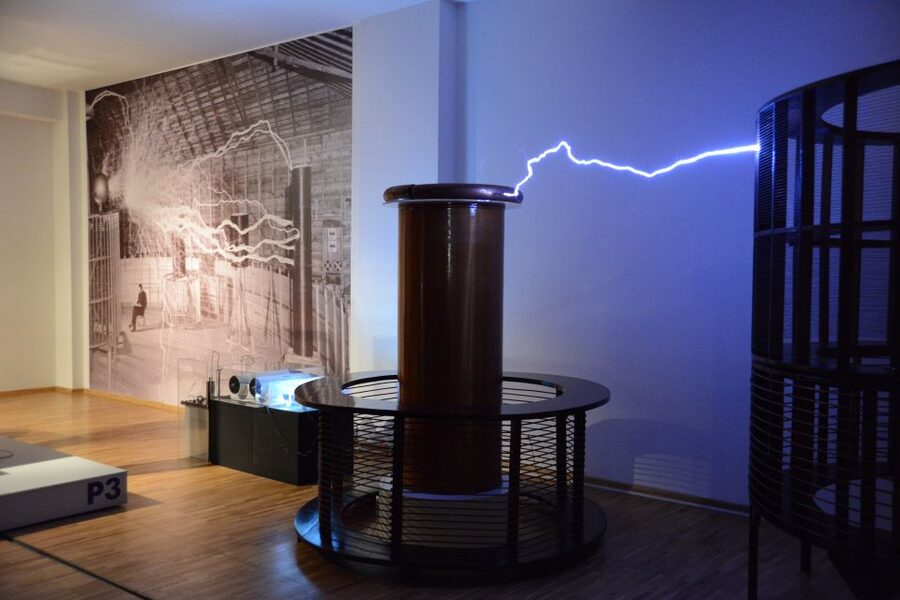
The best practical tip is to plan around the free guided session if possible. At 3:00 PM Tuesday through Friday, or 11:00 AM Saturday and Sunday, you can join a guided tour through the mine and a demonstration of Tesla’s experiments at no extra charge.
This matters for two reasons. First, the guide can make sense of displays whose explanations are mainly in Croatian. Second, the Tesla demonstration is more engaging when someone explains what you are seeing and brings volunteers into the presentation.
Do not make the mistake of arriving early, finishing the halls, and leaving before the scheduled session. One visitor arrived at 9:30 AM and had completed the main exploration by about 10:30 AM, missing the later tour and demonstration. If you have flexibility, check the current start time before setting out and build the rest of your visit around it.
Guide quality can shape the experience. Tonka received praise for her history presentation, while Eva was singled out for sharing information about Zagreb as well as guiding the museum. Names and schedules can change, but the useful lesson is simple: the guided portion adds more than directions through the building.
How long should you spend here?
The ticket is valid for one day, and the admission price is about $8 per person. That is strong value if you enjoy science, engineering, transport, or industrial history.
For a quick visit, allow around 90 minutes. That gives you time for the Tesla Cabinet, a selection of the permanent halls, and the most striking vehicles and machines.
I would plan on two hours if you want to read labels and cover the main themes without rushing. A technically minded visitor could spend much longer, perhaps most of an afternoon, because the museum contains so many categories and large specimens.
The time you need depends less on the building than on your interests. Someone focused on Tesla may be satisfied with the cabinet and demonstration. Someone fascinated by turbines, generators, engines, aviation, mining, or energy systems will likely want much more time.
On Sundays, check the opening hours carefully. One visitor had only about an hour and could not see everything before closing. That is frustrating at a museum of this size, so do not leave your visit until the last part of the day.
Language, comfort, parking, and access
English information is available for many exhibits, but not every object has a full English description. If you want context for the collection rather than only photographs of machines, ask about the audio guide, which is offered in several languages.
The free guided sessions are especially helpful for international visitors. The Tesla demonstration can be given in English, and a guide can explain the mine and technical displays in a more direct way than short labels.
The building may be cold in winter. A December visit was described as very cold and without enough heating, particularly uncomfortable for small children. Spring and summer may be more pleasant, but the museum can also be a sensible rainy-day stop when outdoor sightseeing is less appealing.
Food and drinks are not allowed inside. Plan to eat before or after the visit.
If you arrive by rental car, do not rely only on the first navigation pin. A practical parking tip is to drive past the gate on the tram lane, take the first right, and keep to the right lane for the entrance behind the museum building. Parking was reported at roughly €1.50 per hour, though you should confirm the current charge.
The experience is not suitable for wheelchair users or people with mobility impairments, mainly because of the mine and the nature of the museum spaces. This is an important limitation, not a minor footnote.
Who will enjoy this museum most?
I would recommend it most strongly to:
- People interested in Nikola Tesla and electrical experiments
- Mechanical engineers and science students
- Families with children who enjoy machines, vehicles, and demonstrations
- Anyone interested in the history of transport, energy, farming, or industry
- Visitors looking for a worthwhile rainy-day activity in Zagreb
- Adults who enjoy seeing technology from their childhood or earlier generations
You do not need technical training to enjoy the museum. The old cars, aircraft, motorcycles, engines, and high-voltage demonstrations provide plenty of visual appeal. But if you prefer polished, highly interactive museums with extensive English text everywhere, you may find parts of this collection old-fashioned.
Should you book the $8 ticket?
Book it if Tesla, machines, engineering, or the story of technological change interests you. At $8, the museum offers more material than most short city attractions, and the free guided mine tour and Tesla demonstration make the value even better.
Try to visit at 3:00 PM Tuesday through Friday or 11:00 AM on weekends, and allow at least two hours if your schedule allows. I would place it below Zagreb’s essential sights on a very short first visit, but it becomes an excellent choice for a longer stay, a wet afternoon, or anyone who wants to see the city’s scientific side.
Skip it only if you have limited time, mobility concerns, or little patience for uneven English labeling and older displays. For the right audience, this is an unusually broad and affordable museum, with Tesla’s electrical show as the spark and the mine, machinery, transport, and energy exhibits filling out the story.
FAQ
How much does the Nikola Tesla Technical Museum ticket cost?
The listed price is $8 per person.
How long is the ticket valid?
The ticket is valid for one day.
Is a guided tour included?
You can join a free guided tour through the museum’s mine and a demonstration of Tesla’s experiments if you visit at 3:00 PM Tuesday through Friday or 11:00 AM Saturday and Sunday.
Is the Tesla demonstration available in English?
The Tesla experiments demonstration can be provided in English. Ask about the current session when you arrive.
Are food and drinks allowed inside?
No. Food and drinks are not allowed inside the museum.
Is the museum suitable for wheelchair users?
No. The experience is listed as unsuitable for wheelchair users and people with mobility impairments.
Just added around Zagreb
- Zagreb: VR 3D Immersive Film Experience – Voucher★ 4.6 · 9 reviews
- Zagreb GRAND Private Walking Tour★ 4.5 · 9 reviews
- Zagreb: Explore with an Art Historian – Private Walking Tour★ 4.9 · 9 reviews
- From Zagreb: Plitvice Lakes & Rastoke Private Tour★ 5.0 · 9 reviews
- Croatian cuisine cooking class with Dolac market tour★ 5.0 · 9 reviews
- Private Guided Tour of Ljubljana and Lake Bled from Zagreb★ 5.0 · 9 reviews
- Picturesque Samobor & Samobor Castle Half-day Tour★ 4.5 · 9 reviews
- Zagreb to Split Private Transfer via Plitvice Lakes National Park★ 5.0 · 9 reviews
Museums, compared.

Blue Lagoon & Underwater Museum from Split with Lunch & Drinks
Read our review →
Skip-the-Ticket-Line Museum of Broken Relationships
Read our review →

PREMIUM Emperor’s Walking Tour for History Lovers + Museum
Read our review →
Klis Fortress GOT and Olive Museum Entry Tickets
Read our review →

Browse the lists this tour appears in