
Reviewed · ZAGREB TOURS
Communism & Croatian Homeland War Tour
History changes how you see a city. Zagreb’s streets hold stories that are easy to miss, and this walking tour brings them into focus through World War II, Yugoslavia, and Croatia’s 1990s war for independence. I like the small group of up to 20 people and the use of maps, photographs, personal stories, and a multimedia presentation rather than a string of dates. I also like that the tour enters real underground shelters, not just a museum room.
The main drawback is that this is a serious history lesson, not a light sightseeing walk. The title suggests a strong focus on communism, but much of the time covers Croatia’s wider 20th-century story and the Homeland War. You should also allow closer to two and a half hours, since the listed stops add up to that and some experiences have run longer than the advertised two hours.
In This Review
- Key points to know before you book
- Why Zagreb’s recent past deserves your time
- Meeting at Ban Josip Jelačić Square
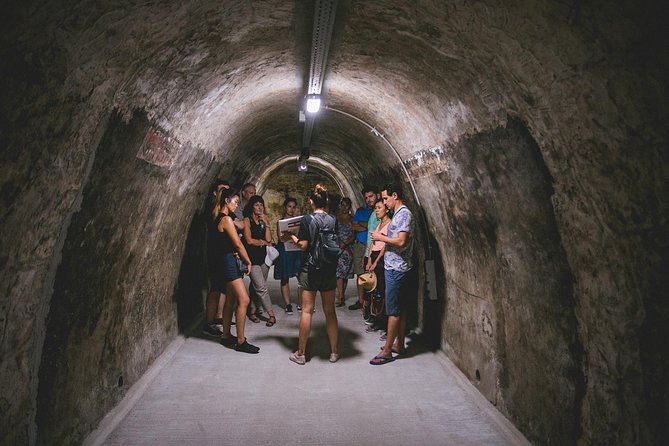
- Inside Tunel Grič and its air-raid shelter
- Kaptol and the basement shelter
- The guides shape the whole experience
- How much history fits into two and a half hours
- Is the $47.16 price good value?
- Who should book this Zagreb tour?
- Practical details that affect your choice
- Should you book the Communism & Croatian Homeland War Tour?
- FAQ
- Where does the tour start?
- Where does the tour finish?
- What time does the tour begin?
- How long does the tour last?
- Is the tour offered in English?
- What is included in the price?
- Can children join the tour?
- Can I cancel for a full refund?
Key points to know before you book
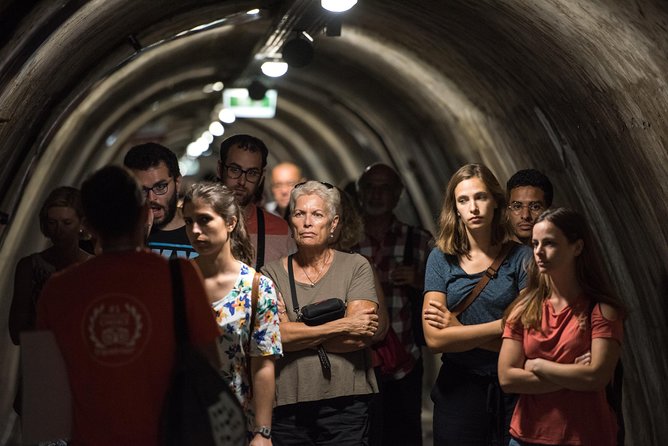
- Real wartime spaces: Walk through Tunel Grič, a World War II-era tunnel and air-raid shelter in central Zagreb.
- A serious history course: The guide covers Croatia, Yugoslavia, the breakup of the country, and the 1990 to 1995 war.
- Strong visual teaching: Maps, photographs, and a multimedia presentation help make a complicated subject easier to follow.
- Guides with different strengths: Ivana, Darko, Luka, and Diana have all been praised for clear explanations, warmth, humor, and personal insight.
- Easy city walk: The tour starts and finishes at Ban Josip Jelačić Square, with no admission fees listed for the stops.
- Best for curious visitors: You will get more from this if you want context and are willing to listen carefully.
Why Zagreb’s recent past deserves your time
Zagreb is often introduced through its old town, cathedral, cafés, markets, and Austro-Hungarian buildings. Those sights matter, but they do not explain the political wounds that still shape Croatia and its neighbors. This tour gives you a framework for understanding the country beyond pretty streets and coastal postcards.
The subject reaches back roughly a century. You hear about the political changes that affected Croatia during the 20th century, the Second World War, life in socialist Yugoslavia, and the conflicts that followed the collapse of that state. The goal is not simply to memorize leaders or borders. The better guides explain how large political decisions affected ordinary people.
That context is useful if you are visiting other parts of Croatia. A later visit to a war museum, a damaged building, or a memorial can mean much more once you understand the basic sequence of events. The tour can also help you read the region with care, since Croatian, Serbian, Bosnian, and other national viewpoints do not always match.
The subject is heavy. You will hear about air raids, political repression, displacement, and war. Yet the experience is not described as grim from start to finish. Guides such as Darko have been praised for using humor at the right moments, while Ivana is known for mixing facts with personal and family stories. That balance helps keep a difficult topic human without turning it into entertainment.
Other Zagreb trips people book alongside this one:
- From Zagreb: Plitvice & Rastoke Guided Day Trip with Ticket
★ 4.9 · 2,955 reviews - Zagreb: Rastoke & Plitvice Lakes Guided Tour with Ticket
★ 4.9 · 1,897 reviews - Best of Zagreb with the WW2 Tunnels
★ 5.0 · 973 reviews
Meeting at Ban Josip Jelačić Square
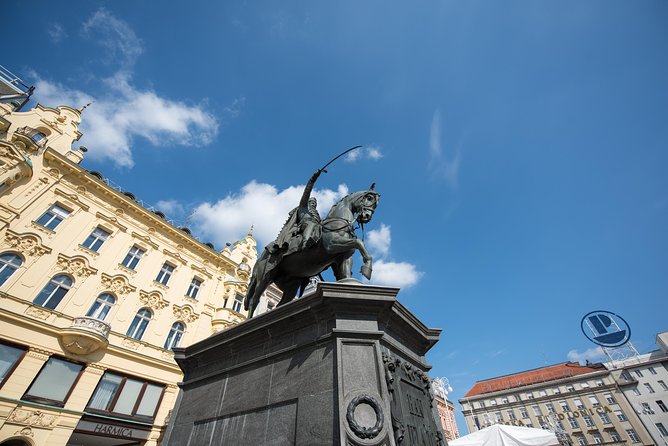
The tour begins at the Ban Josip Jelačić statue, at Trg bana Josipa Jelačića 15. This is one of Zagreb’s easiest meeting points to find, and the tour returns here at the end. It is near public transportation, so you can fit it into a day of exploring the center without arranging a separate ride.
The meeting time is 3 p.m. from Monday through Saturday and 11 a.m. on Sundays. The afternoon departure works well if you want to see Zagreb’s main sights first, then use the tour to add historical context. The Sunday morning start leaves your afternoon open.
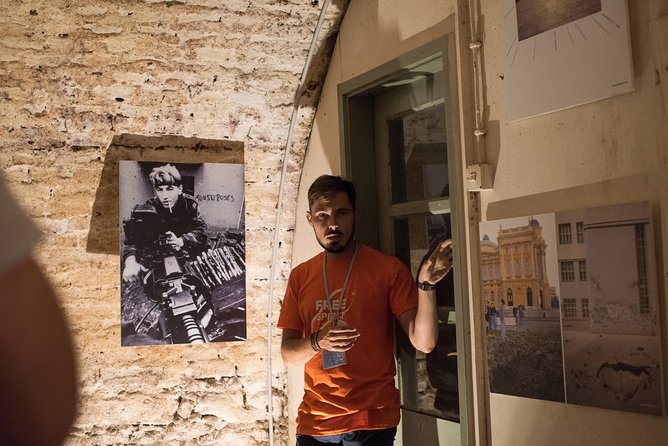
At the square, your guide begins with the setting and the political background. The open space is practical for maps and photographs, especially when the group needs to gather around a visual aid. Guides have been praised for answering detailed questions from people with different national backgrounds, which matters on a subject where terms and loyalties can become confusing fast.
You are not coming here for a long monument visit. Think of the square as the launch point for the lesson. Wear comfortable shoes, since the experience takes place on foot, and be ready to stand while listening. On hot days, guides have made a point of moving the group into shade when possible.
Inside Tunel Grič and its air-raid shelter
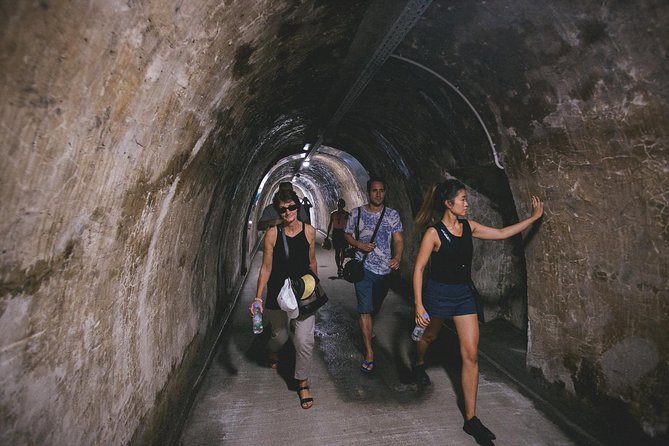
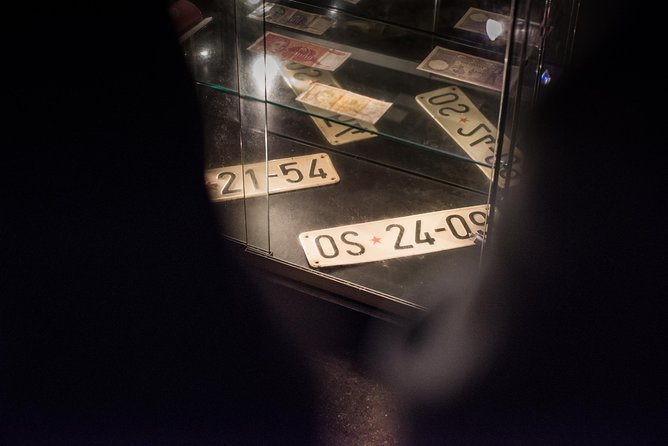
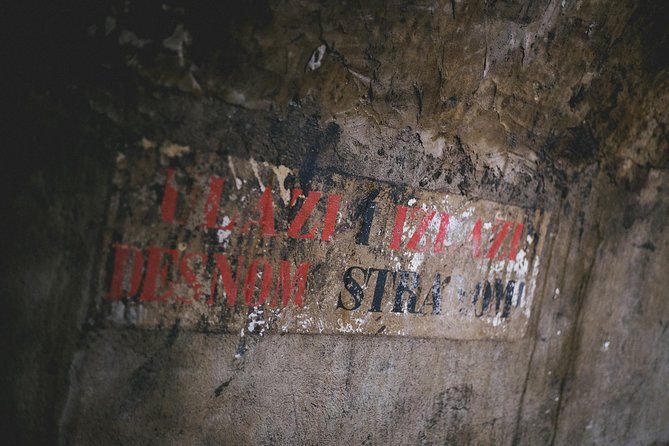
Tunel Grič is the most tangible part of the experience. This underground passage dates to the World War II period and includes space used as a shelter during air raids on Zagreb. Walking into a place built for protection changes the tone of the tour. You are no longer hearing only about wartime life from a street corner. You are standing in one of the spaces connected to it.
The tunnel also provides a bridge to the communist period. Your guide explains what daily life in Zagreb was like during the Yugoslav era, using the underground setting to discuss fear, civil defense, and the changing political climate. The tunnel itself is free to enter, but the guide adds the part that a quick independent visit cannot provide: sequence, context, and explanation.
This is not a polished museum attraction in the usual sense. Its value comes from its physical setting and the stories attached to it. If you prefer monuments, galleries, and grand architecture, the stop may feel plain. If you want to see where people sought safety, it carries more weight.
There is one important limitation. Access to the tunnel is not included when public events are taking place there, including the Christmas Market. Check the date if this stop is a major reason for booking. The tour still includes its historical commentary, but the experience changes when you cannot enter the tunnel.
Kaptol and the basement shelter
The Kaptol portion shifts from an open city setting to an authentic basement used as a shelter during bombing. This is another practical reminder that the war was experienced in ordinary buildings and private spaces, not only on distant battlefields.
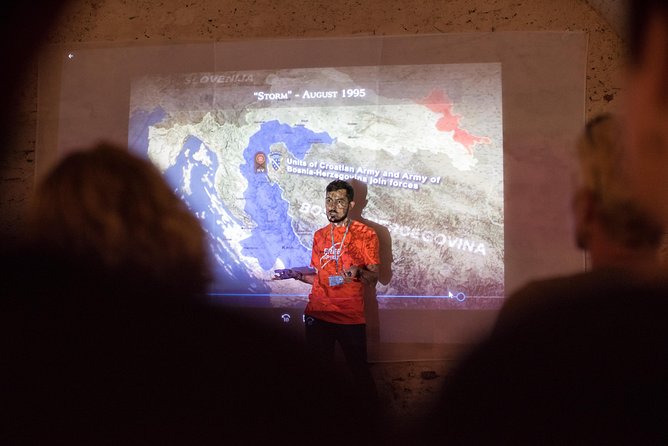
Here, the tour uses a multimedia exhibition about the Croatian Homeland War. A film of about 20 minutes has been part of the final presentation on some departures. That makes the ending more focused than the street commentary and gives you a visual account of Croatia’s struggle for independence.
The basement is important because it connects political history to civilian experience. You are asked to think about what it meant for people to live through uncertainty, bombardment, and the breakup of a country. The presentation can be sobering, so this is not the best choice if you want a cheerful final activity before dinner.
The multimedia section also helps solve a common problem with Balkan history: there are too many names, parties, dates, and changing borders to absorb through speech alone. The maps and photographs give you something to look at while the guide explains the sequence. Still, listen closely. This is a lot of material in a short time.
Something different for another day:
- Plitvice Lakes with Ticket & Rastoke Guided Tour from Zagreb
★ 5.0 · 966 reviews - Zagreb: Small Group Walking Tour City Center and WW2 Tunnels
★ 4.9 · 895 reviews - Zagreb: Skip-the-Ticket-Line Museum of Broken Relationships
★ 4.5 · 847 reviews - Zagreb: City and WWII Tunnels Walking Tour
★ 4.9 · 845 reviews
The guides shape the whole experience
The guide matters greatly here. The company assigns certified local guides, and the team is described as having more than 500 tours of experience. Ivana, Darko, Luka, and Diana are among the guides praised for their preparation and delivery.
Ivana is especially associated with a passionate, teacher-like approach. She has used a booklet filled with maps and photographs, brought personal family context into the discussion, and openly acknowledged that a Croatian guide can present only one side of a regional conflict. That admission is a strength. It encourages you to keep learning rather than treating one tour as the final word.
Darko is praised for being direct, warm, and funny while handling a complex subject. His style appears to work well for people who want a clear overview without a dry lecture. Luka has been described as organized and suitable for different age groups, while Diana has been praised for her charisma, careful answers, and habit of finding shade on hot days.
The guides do not all sound identical, and that is normal. Some may lean more toward personal stories, some toward political structure, and some toward visual explanation. The best approach is to ask questions, especially if you are unsure about a timeline or the difference between a political movement, a state, and an ethnic identity.
One particularly good teaching choice is the reminder that the Croatian view is only one perspective. You are encouraged to learn how other communities understand the same conflicts. That does not make the tour neutral in the impossible sense. It does make it more honest about its starting point.
How much history fits into two and a half hours
The advertised duration is about two hours, but the planned stops total roughly two and a half hours: 30 minutes at Ban Josip Jelačić Square, one hour at Tunel Grič, and one hour in Kaptol. Some accounts also describe the tour as lasting around two and a half hours.
Plan your schedule around the longer figure. Do not book a tight restaurant reservation, train, or museum entry immediately afterward. The tour is designed to explain a large stretch of history, and questions can add time.
The pace is generally described as quick but manageable. You walk between locations, then spend long stretches listening. This is not a strenuous hike, but you may be standing in outdoor areas and moving through underground spaces. Comfortable shoes and water are sensible, particularly for warm afternoons.
Children can participate if accompanied by an adult, but the topic is more suitable for older children and teenagers who can follow political history and difficult wartime material. The group limit of 20 is small enough for questions without making the walk feel like a large parade.
Is the $47.16 price good value?
At $47.16 per person, the tour costs more than a basic free walking tour, but the comparison is not quite fair. You are paying for a specialist subject, an experienced local guide, access to wartime spaces, prepared visual material, and a multimedia presentation.
The stops themselves do not carry admission fees according to the tour details. That means the price mainly covers the guide’s time and preparation rather than entry tickets. If you only want to see Tunel Grič, you can visit the tunnel independently when it is open. You would not receive the explanations, maps, political timeline, or basement presentation that make this experience useful.
I consider the price reasonable if you care about recent Croatian history and would otherwise spend time piecing information together from scattered museums and signs. It is less appealing if you want a standard introduction to Zagreb’s architecture, food, or medieval sights. This is a focused history walk, not a general city tour.
The strong ratings, with 100 percent recommendation and a 5.0 score from 1,355 reviews, suggest that the format is working for its intended audience. Still, a high rating does not remove the central issue: you must enjoy listening to a serious explanation. The value comes from understanding, not from the number of famous sights visited.
Who should book this Zagreb tour?
I would choose this tour early in a Croatia visit if you know little about the country’s recent past. It gives you a useful base for later stops in Zagreb and elsewhere. It also suits repeat visitors who have already seen the main center and want to understand the forces behind modern Croatia.
It is a particularly good fit for:
- People interested in 20th-century European history
- Visitors planning to travel through several former Yugoslav countries
- Travelers who want local voices and personal stories
- Families with older children who can handle serious wartime subjects
- Anyone who prefers a focused lesson over a general sightseeing loop
You may want to skip it if your time in Zagreb is extremely short and you want only the cathedral, market, museums, and old town. You may also find the subject too intense if you are looking for a relaxed afternoon activity.
The tour does not pretend that Croatia’s recent history is simple. That is one of its best qualities. You may leave with more questions than you arrived with, but they will be better questions.
Practical details that affect your choice
Confirmation is provided when you book, and the activity is offered in English. The group can include no more than 20 people, and most people can take part. Children must be with an adult.
The tour starts and ends at the Ban Josip Jelačić statue. Since the meeting point is near public transportation, it is easy to reach from central Zagreb. The return to the same location is convenient if you want to continue sightseeing or eat nearby.
Free cancellation is available up to 24 hours before the start time for a full refund. Cancellations or changes made within 24 hours are not refunded or accepted. The tour also requires a minimum number of participants, so a cancellation by the operator can result in another date, a different experience, or a full refund.
Because the tunnel may be unavailable during public events and the Christmas Market, confirm the date if underground access is essential. The tour can still be worthwhile for its talks and multimedia material, but the physical sites are a major part of its appeal.
Should you book the Communism & Croatian Homeland War Tour?
Book it if you want to understand modern Croatia rather than simply look at it. The combination of open-air explanation, Tunel Grič, a real bombing shelter, maps, photographs, and the Homeland War presentation gives the subject a human scale.
I especially like the guides’ willingness to explain Croatia’s point of view while admitting that other perspectives exist. That is a better way to approach Balkan history than pretending one short walk can settle every argument.
Give yourself two and a half hours, wear comfortable shoes, and arrive ready to concentrate. If you want a light sightseeing tour, choose something else. If you want a clear, personal introduction to Croatia’s difficult recent past, this is one of Zagreb’s most useful tours.
FAQ
Where does the tour start?
It starts at the Ban Josip Jelačić statue at Trg bana Josipa Jelačića 15 in Zagreb.
Where does the tour finish?
The activity ends back at the Ban Josip Jelačić meeting point.
What time does the tour begin?
It begins at 3 p.m. from Monday through Saturday and at 11 a.m. on Sundays.
How long does the tour last?
The listed duration is about two hours, but the planned stops add up to roughly two and a half hours. Allow the longer amount of time.
Is the tour offered in English?
Yes. The experience is offered in English.
What is included in the price?
The price includes guidance by a certified local guide, the multimedia presentation about the Croatian Homeland War, access to the World War II underground tunnels when available, and the authentic basement shelter.
Can children join the tour?
Yes, but children must be accompanied by an adult.
Can I cancel for a full refund?
Yes, if you cancel at least 24 hours before the experience starts. Cancellations or changes made less than 24 hours before the start time are not refunded or accepted.
Just added around Zagreb
- Zagreb: VR 3D Immersive Film Experience – Voucher★ 4.6 · 9 reviews
- Zagreb GRAND Private Walking Tour★ 4.5 · 9 reviews
- Zagreb: Explore with an Art Historian – Private Walking Tour★ 4.9 · 9 reviews
- From Zagreb: Plitvice Lakes & Rastoke Private Tour★ 5.0 · 9 reviews
- Croatian cuisine cooking class with Dolac market tour★ 5.0 · 9 reviews
- Private Guided Tour of Ljubljana and Lake Bled from Zagreb★ 5.0 · 9 reviews
- Picturesque Samobor & Samobor Castle Half-day Tour★ 4.5 · 9 reviews
- Zagreb to Split Private Transfer via Plitvice Lakes National Park★ 5.0 · 9 reviews
Zagreb Tours, compared.
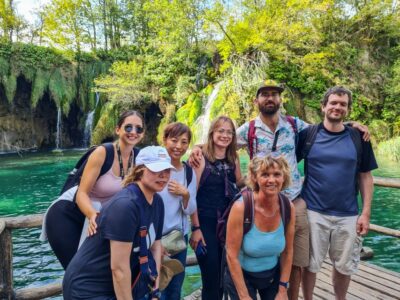
Plitvice & Rastoke Guided Day Trip with Ticket
Read our review →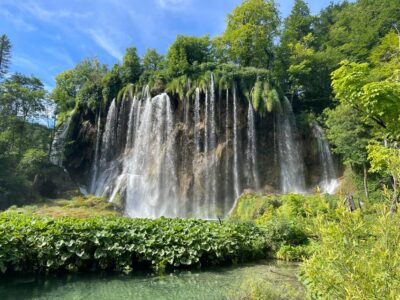
Rastoke & Plitvice Lakes Guided Tour with Ticket
Read our review →
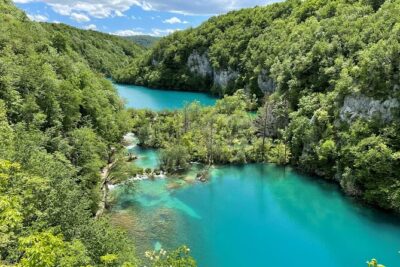
Plitvice Lakes with Ticket & Rastoke Guided Tour from Zagreb
Read our review →
Small Group Walking Tour City Center and WW2 Tunnels
Read our review →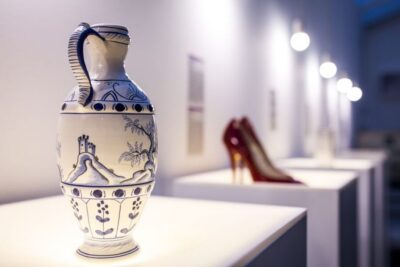
Skip-the-Ticket-Line Museum of Broken Relationships
Read our review →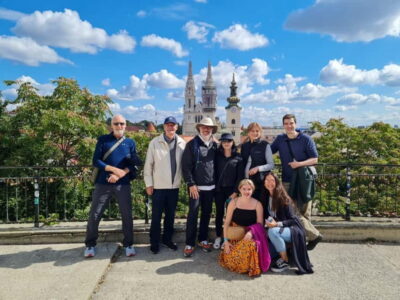
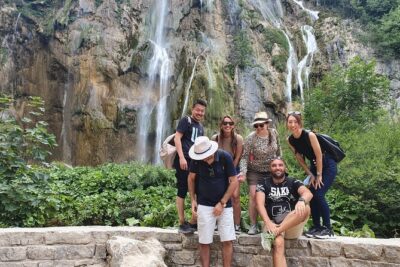
Plitvice and Rastoke day trip from Zagreb w/ticket (guar. dep.)
Read our review →Browse the lists this tour appears in