
Reviewed · WALKING TOURS
Zagreb: Small Group Walking Tour City Center and WW2 Tunnels
Zagreb reveals itself one story at a time. This 2.5-hour small-group walk gives you a useful first look at the Croatian capital, linking grand squares, medieval lanes, local customs, the Cathedral, Dolac Market, Upper Town, and the Gric Tunnel. I especially like the mix of major sights and everyday Zagreb culture, plus the way the English-speaking guides connect old events with modern city life. The small group format also makes it easier to ask questions and hear the guide clearly.
The tour offers strong value at $23 per person, especially if you have only one day in Zagreb or want help finding places you might miss alone. Guides such as Petra, Tom, Bernarda, and Maja have been praised for their storytelling, restaurant suggestions, and personal knowledge of the city. The main drawback is that this is a walking tour with slopes, steps, and uneven old-town surfaces, so it is not suitable for wheelchair users. The WWII tunnel can also be closed for an exhibition or performance.
In This Review
- Key points at a glance
- Why this is a smart first walk in Zagreb
- Zrinjevac begins the story
- Ban Jelačić Square and the Cathedral
- Dolac Market and the art of lingering
- Inside the Gric Tunnel
- Gradec, the funicular, and the climb uphill
- Lotrščak Tower and the city’s postcard church
- Stone Gate, the old pharmacy, and local legends
- Group size, pace, and guide quality
- Is $23 good value?
- Who should book this Zagreb walk?
- Final verdict: book it if you want context with your sightseeing
- FAQ
- How long does the Zagreb walking tour last?
- How much does the tour cost?
- Where does the tour start?
- Where does the tour finish?
- What language is the tour conducted in?
- Is the WWII tunnel visit guaranteed?
- Can I ride Zagreb’s funicular during the tour?
- Is the tour suitable for wheelchair users?
- Is food included?
- Can I cancel the booking?
Key points at a glance
- Start beside Zrinjevac’s weather station: Meet at Trg Nikola Šubić Zrinski 2, next to the small display showing temperature and barometric pressure.
- See Zagreb’s central sights in one route: The walk covers Ban Jelačić Square, the Cathedral, Dolac Market, Tkalčićeva Street, Gradec, St. Mark’s Square, Stone Gate, and more.
- Walk through a real WWII-era tunnel: Gric Tunnel adds a darker, more unusual chapter to the city tour, although access is not guaranteed.
- Learn local habits, not just dates: Guides explain coffee culture, lounging, food, witchcraft stories, and how Zagreb residents use their city.
- Reach Upper Town without riding the funicular: The historic funicular is closed for renovation until March 2026, so expect to walk that section.
- Finish at the main square: You end at Trg bana Josipa Jelačića, a handy place to continue sightseeing or stop for a meal.
Why this is a smart first walk in Zagreb
Zagreb is compact enough to explore on foot, but its history is layered. The modern lower city, the medieval Upper Town, churches, markets, war shelters, and café streets all sit within a fairly small area. A guide helps you connect those pieces instead of seeing them as a string of unrelated photo stops.
I like the tour’s shape. It begins in Zrinjevac, moves through the city center, heads underground into the Gric Tunnel, then climbs toward Gradec before returning to the main square. You get an introduction to Zagreb’s past, but you also hear how people live there now.
The guides are a major part of the experience. Petra is repeatedly praised for combining history, architecture, social trends, and personal anecdotes. Tom has been appreciated for clear English, patient answers, and food advice, including recommendations for Ficlek and Stari. Maja brings a local perspective from having lived in Zagreb all her life, and Bernarda is described as polished and especially strong on the history of her hometown.
That range matters because a city walk can become dry when every stop turns into a list of dates. Here, the best moments appear to come from the explanations around the sights: how Zagreb got its name, why locals enjoy lingering over coffee, and how the city has changed through war and different periods of rule.
More City Tours in Zagreb
- Zagreb: City and WWII Tunnels Walking Tour
★ 4.9 · 845 reviews - Hop On Hop Off Panoramic bus – Zagreb City Tour
★ 3.7 · 769 reviews - Zagreb: Guided City Tour with WWII Tunnels
★ 4.9 · 155 reviews
Zrinjevac begins the story
Your meeting point is beside the meteorological station in Zrinjevac Park. Look for the small display on the north side of the park that shows the temperature and barometric pressure. The official meeting address is Trg Nikola Šubić Zrinski 2.
Zrinjevac is a pleasant place to begin because it gives you room to gather before entering the denser center. The guide uses the park as an introduction to Zagreb and its layout, then leads you toward Ban Josip Jelačić Square. The scheduled explanation here lasts about 15 minutes.
This first stop is useful for orientation. You begin to understand how the lower city connects with the older settlement on the hill. If Zagreb is new to you, this early overview can save time later, especially when you return to the main square on your own.
Ban Jelačić Square and the Cathedral
Ban Josip Jelačić Square is Zagreb’s central meeting place and the practical heart of the walking route. The tour explains how Zagreb got its name and places the city’s growth in a wider historical setting.
From here, you continue to Zagreb Cathedral, one of the city’s most important landmarks. The guide discusses the origins of the Cathedral of the Assumption of the Blessed Virgin Mary, the damage and difficulties it has faced, and its ongoing renovation.
This is not simply a quick look at two church towers. The Cathedral gives you a way to understand Zagreb’s religious and political past, while the square shows how the city functions today. Allow yourself time to look up as you walk. Zagreb’s central streets reward attention to façades, rooftops, and small details between the big sights.
Because the tour is outdoors for much of its length, weather affects the experience. Rain does not automatically cancel the walk, and one guide has been praised for keeping the tour enjoyable in poor weather. Still, bring suitable shoes and a rain layer if the forecast looks uncertain.
Dolac Market and the art of lingering
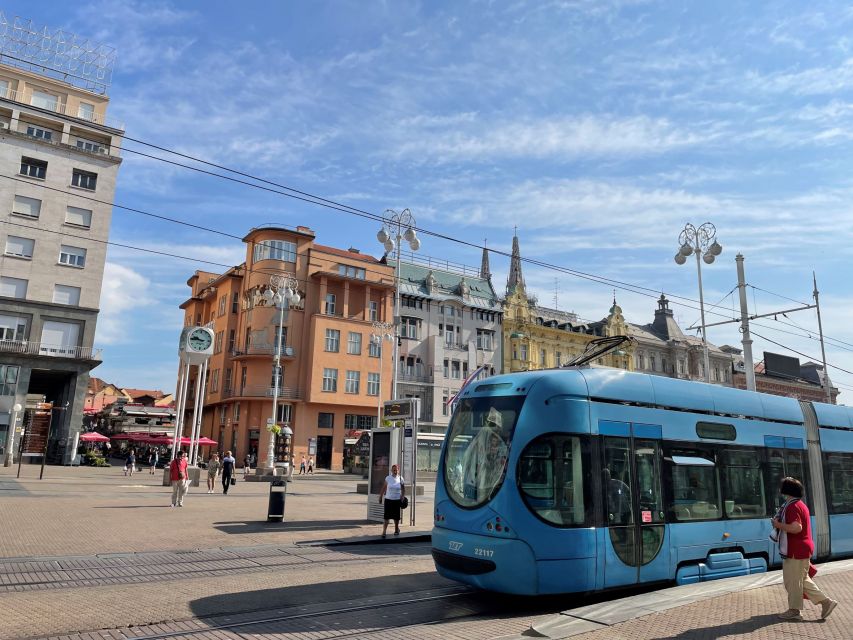
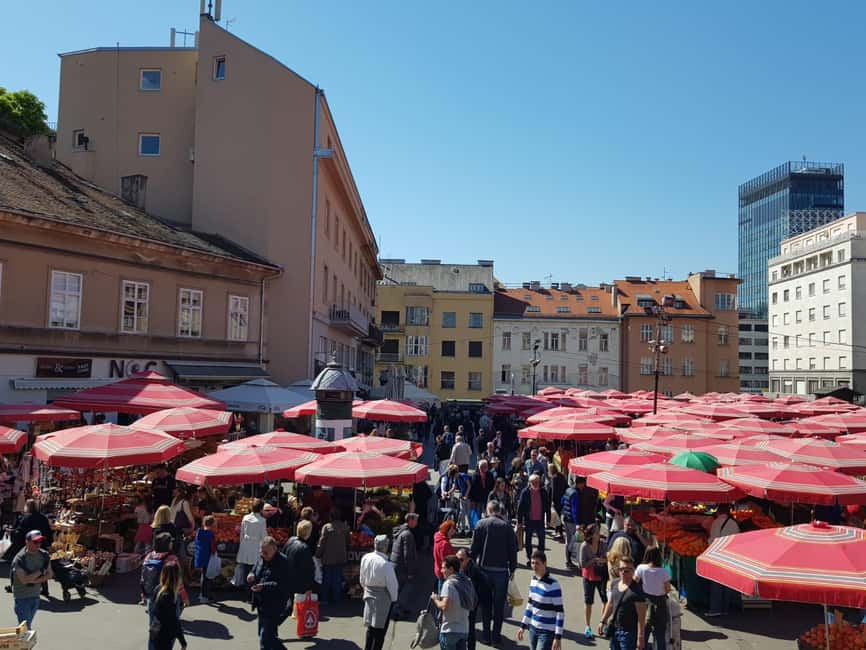
Dolac Market is often called the belly of Zagreb. It is one of the most useful stops on the route because it brings you closer to ordinary city life than a monument can.
The market is known for its red umbrellas and food stalls, though the tour does not include food or drinks. Your guide explains the market’s role and may help you understand how locals shop, eat, and use the surrounding streets.
Timing matters here. Dolac is closed in the afternoon and on public holidays, so an afternoon tour may offer only an exterior explanation or a quieter look at the area. If the market is important to you, check the starting time carefully and aim for a morning departure.
After Dolac, the route reaches Tkalčićeva Street, Zagreb’s well-known bar street. The guide talks about the local philosophy of lounging and the everyday habit of taking time over coffee or conversation. This is one of the tour’s strongest cultural details because it explains a behavior you will see repeatedly during your stay.
You are not just told where to eat and drink. You get a little help reading the city’s rhythm. That can make Zagreb feel more approachable, particularly if you come from a place where meals and coffee are usually rushed.
More Walking Tours in Zagreb
- Walking tour of Zagreb
★ 5.0 · 383 reviews - Zagreb Small Group Guided Walking Tour with WW2 Tunnels
★ 5.0 · 380 reviews - Zagreb: Restaurants, Food & Old Town Walking Tour
★ 5.0 · 191 reviews - Zagreb Unveiled: Private walking tour with a local guide
★ 5.0 · 185 reviews
Inside the Gric Tunnel
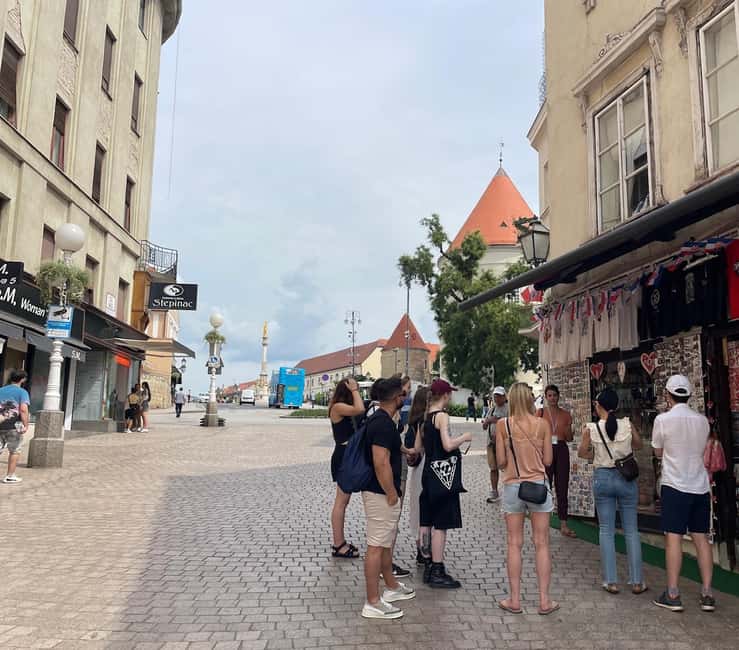
The Gric Tunnel is the tour’s most unusual stop. Built during the Second World War, it gives you a different view of Zagreb from the churches, squares, and cafés above ground. The planned visit lasts about 20 minutes.
A tunnel is a memorable change of pace in a city walk. It is cooler, enclosed, and tied to a difficult period in Zagreb’s past. The guide can place it in the context of wartime life and explain why this underground passage remains part of the city’s story.
Access is not guaranteed. The tunnel may close when an exhibition, theater performance, or similar event is taking place. If that happens, you will not be able to go inside, so treat the tunnel as an important possibility rather than a promise.
This stop also makes the $23 price easier to justify. You are not paying only for a standard central-city walk. You are getting access to a less obvious part of Zagreb, along with the guide’s explanation of what you are seeing.
Gradec, the funicular, and the climb uphill
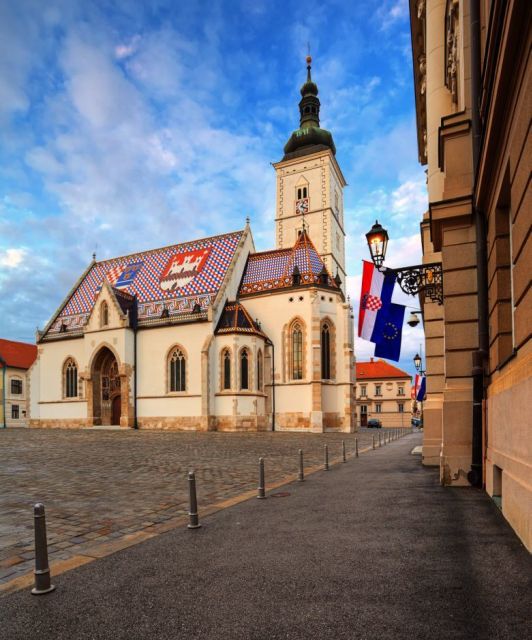
The route then moves into Upper Town, or Gradec, one of the two medieval settlements that formed Zagreb. This portion feels different from the lower city. Expect old lanes, a slower pace, and views across the rooftops.
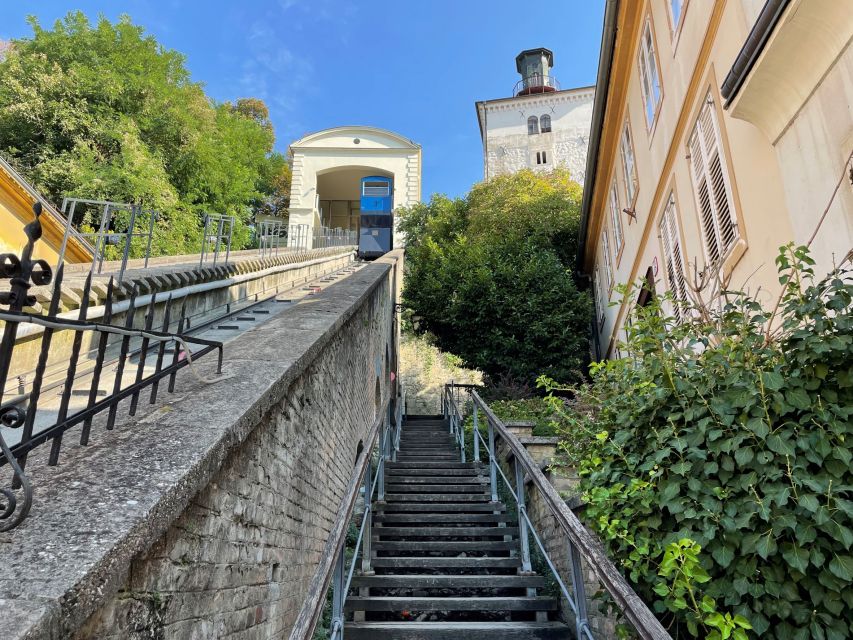
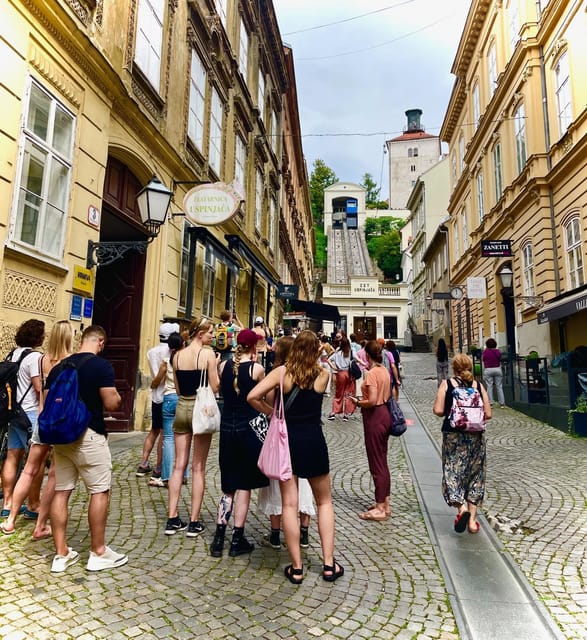
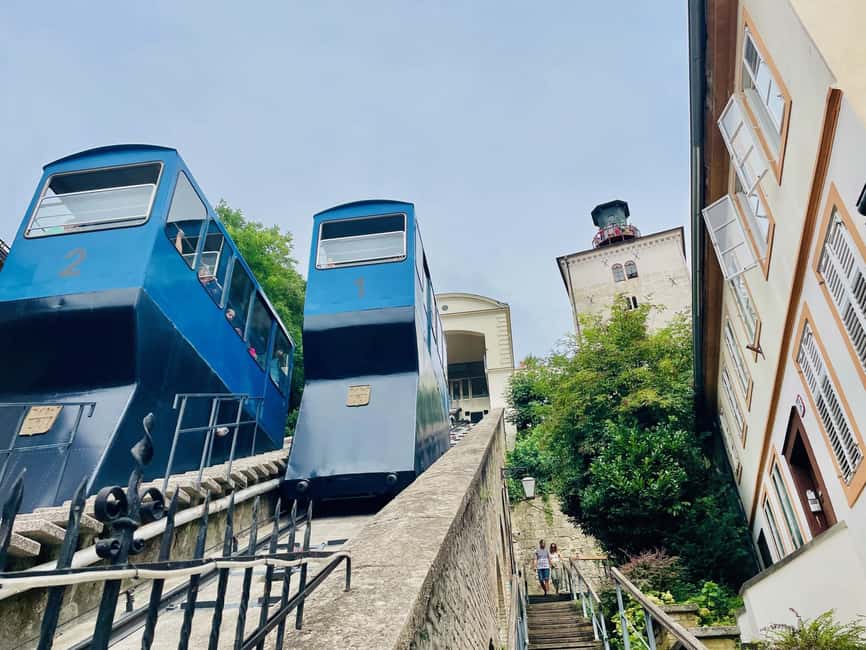
The famous Zagreb funicular is nearby. It is the oldest form of public transportation in the city and has served residents for more than 135 years. However, it is closed for renovation until March 2026. Do not book this tour expecting a funicular ride. The guide can still explain its place in Zagreb’s history, but you will walk this section instead.
That change is worth noting for anyone with limited mobility. Upper Town includes slopes and steps, and the route is not suitable for wheelchair users. Comfortable walking shoes are more important here than polished footwear.
The Strossmayer Promenade offers one of the best views on the walk, with Zagreb rooftops spreading below. It is a short scenic pause, but it gives you a helpful sense of the city’s shape. After several streets and courtyards, you can finally see how the lower center sits beneath Gradec.
Lotrščak Tower and the city’s postcard church
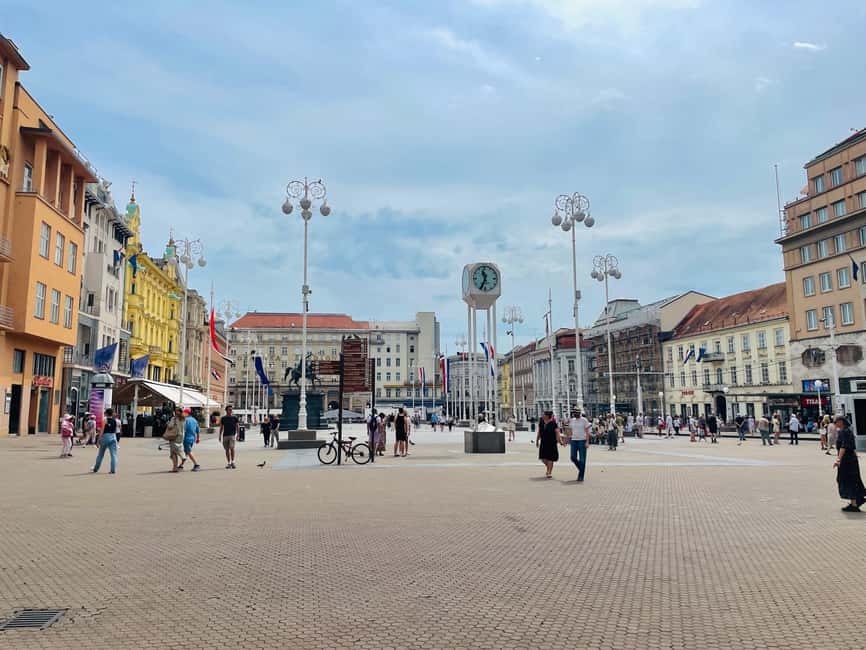
Lotrščak Tower receives about 20 minutes of guided attention. It is one of the Upper Town’s key landmarks and helps explain the defensive side of medieval Zagreb. You may not get a full interior visit, but the guide gives the tower a place in the story of the old settlement.
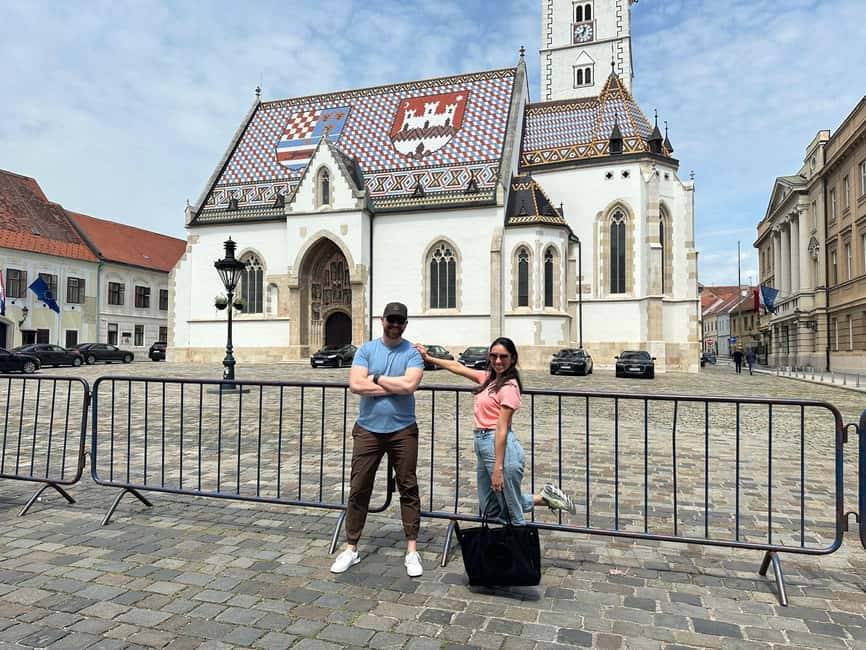
Nearby, St. Mark’s Square provides one of Zagreb’s most recognizable views. St. Mark’s Church is famous for its colorful tiled roof, which appears on many Zagreb postcards. The church is a strong photo stop, but the guide adds context that a quick picture cannot provide.
The route also passes the Museum of Broken Relationships. This is not a museum visit, just a brief look from outside or along the route. If the museum interests you, save it for another time because admission is not part of this walk.
That is typical of the tour. It introduces many places without trying to turn the morning into a series of full museum visits. You leave with a map in your head and a list of places worth returning to.
Stone Gate, the old pharmacy, and local legends
As you leave Gradec, the tour descends toward Zagreb’s oldest pharmacy, dating from the 14th century. This is a small but useful detail because it shows how much of Zagreb’s daily life has continued around the same old-town routes.
The path then reaches Stone Gate, the only surviving gate from the former city walls. Inside is a small chapel with a miraculous image of Our Lady, the patron saint of Zagreb. This is an active devotional site, not just a historic structure, so keep your voice low and follow the guide’s instructions.
The Stone Gate is one of the more intimate stops on the route. Large squares help you understand the city’s scale, but places like this show how history, faith, and daily routines overlap in Zagreb.
Near the end, the guide shares stories about witchcraft and points out less obvious corners of the city. These stories add humor and local color after the heavier wartime and religious subjects. The exact secret stop is not specified, which is part of the fun, but you should not expect a major attraction or a separate admission site.
Group size, pace, and guide quality
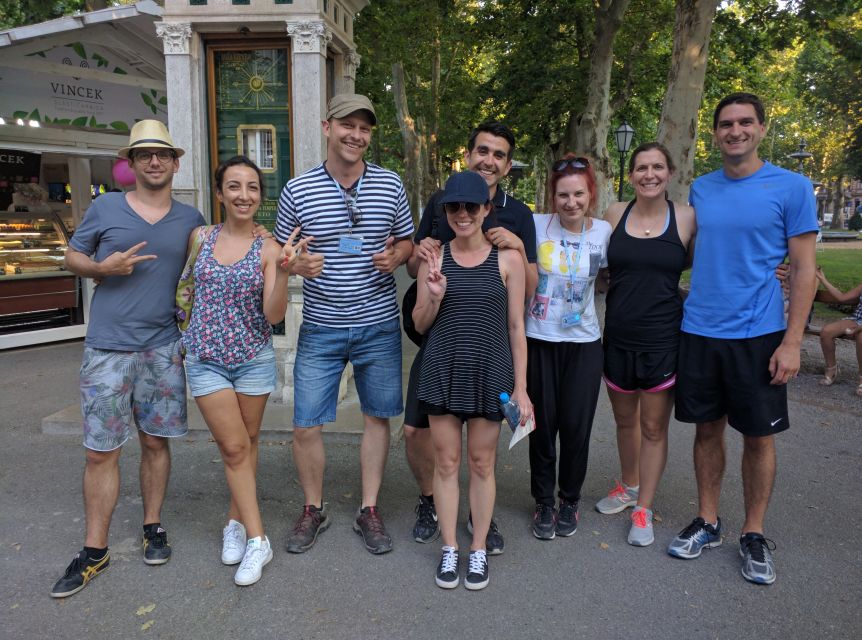
The small group setup is a real advantage. It gives you a better chance to ask questions, hear explanations, and stay connected with the guide in narrow streets. Several guides have been praised for answering questions clearly and tailoring advice to the group.
The walk is scheduled for 2.5 hours, with several stops lasting roughly 5 to 20 minutes. It is a full introduction rather than a slow architectural study. You will cover ground, pause often, and hear explanations at each main site.
If you want a very relaxed walk with long café breaks, this may feel busy. If you want to see the main center in one morning or afternoon, the pace makes sense. A few people have also received help joining after arriving late, but you should not count on that. Arrive at Zrinjevac on time.
The guides also offer practical food advice. Petra and Maja are praised for restaurant recommendations, while Tom’s suggestions include Ficlek and Stari. Treat these as useful starting points, then choose based on your own budget and appetite.
Is $23 good value?
At $23 per person, this tour is fairly priced for an English-language guided walk lasting 2.5 hours. You receive a licensed local guide and the walking tour itself. Food, drinks, museum admission, and a funicular ride are not included.
The value is strongest if you are new to Zagreb, have limited time, or want a clear introduction before exploring alone. You see the central sights, hear local stories, and visit the Gric Tunnel without spending a full day on a formal sightseeing program.
The value is less clear if you already know Zagreb well or prefer to set your own pace. You will pass several places without entering them, including the Museum of Broken Relationships, and the funicular is currently closed. The market may also be shut if you choose an afternoon or holiday departure.
Free cancellation is available up to 24 hours before the tour, and you can reserve now and pay later. The guide language is English. The tour ends back at Trg bana Josipa Jelačića, so you can easily continue with lunch, shopping, or another central-city visit.
Who should book this Zagreb walk?
I would choose this tour for a first visit, a short stay, or a morning when you want someone else to organize the route. It suits couples, solo visitors, families with older children, and anyone who prefers history explained in plain language rather than read from a guidebook.
It is also a good fit if you enjoy local stories. The strongest parts are not only the Cathedral and St. Mark’s Church, but the explanations of coffee culture, witchcraft, wartime Zagreb, market life, and the way locals use Tkalčićeva Street.
I would think twice if you have difficulty with slopes, steps, or uneven surfaces. Wheelchair users should choose another activity. Check the market schedule, confirm the funicular closure, and understand that the WWII tunnel may be unavailable on the day.
Final verdict: book it if you want context with your sightseeing
Book this tour if you want to see Zagreb’s key central sights while learning how the city works. The route is well chosen, the $23 price is reasonable, and the guide can turn a short walk into a useful introduction to Croatian history and present-day life.
Petra, Tom, Bernarda, and Maja have each received especially warm praise for clear storytelling, personal warmth, and practical advice. That human touch is the tour’s greatest strength. Just arrive ready to walk, do not rely on a funicular ride before March 2026, and check whether Dolac Market and the Gric Tunnel will be open at your chosen time.
FAQ
How long does the Zagreb walking tour last?
The tour lasts 2.5 hours. Starting times vary, so check availability for the date you want.
How much does the tour cost?
The listed price is $23 per person.
Where does the tour start?
It starts at Trg Nikola Šubić Zrinski 2 in Zrinjevac Park, next to the meteorological station on the north side of the park.
Where does the tour finish?
The walk finishes back at Trg bana Josipa Jelačića, Zagreb’s main square.
What language is the tour conducted in?
The live tour guide speaks English.
Is the WWII tunnel visit guaranteed?
No. The Gric Tunnel may be closed if an exhibition, theater performance, or similar event is taking place.
Can I ride Zagreb’s funicular during the tour?
No ride should be expected. The funicular is closed for renovation until March 2026.
Is the tour suitable for wheelchair users?
No. The activity is not suitable for wheelchair users.
Is food included?
No. Food and drinks are not included in the tour price.
Can I cancel the booking?
You can cancel up to 24 hours in advance for a full refund. You can also reserve now and pay later.
Just added around Zagreb
- Zagreb GRAND Private Walking Tour★ 4.5 · 9 reviews
- Zagreb: VR 3D Immersive Film Experience – Voucher★ 4.6 · 9 reviews
- Zagreb: Explore with an Art Historian – Private Walking Tour★ 4.9 · 9 reviews
- Croatian cuisine cooking class with Dolac market tour★ 5.0 · 9 reviews
- From Zagreb: Plitvice Lakes & Rastoke Private Tour★ 5.0 · 9 reviews
- Private Guided Tour of Ljubljana and Lake Bled from Zagreb★ 5.0 · 9 reviews
- Picturesque Samobor & Samobor Castle Half-day Tour★ 4.5 · 9 reviews
- Zagreb to Split Private Transfer via Plitvice Lakes National Park★ 5.0 · 9 reviews
Walking Tours, compared.




Walking Tour of Split and Diocletian’s Palace
Read our review →


Krka Waterfalls tour with Trogir Walking tour and Krka panoramic boat cruise
Read our review →
City Walls Early Morning or Sunset Walking Tour
Read our review →Browse the lists this tour appears in