
Reviewed · WALKING TOURS
Zagreb Small Group Guided Walking Tour with WW2 Tunnels
Zagreb reveals itself one story at a time. This 2.5-hour walk links the Croatian capital’s main squares, medieval Upper Town, WWII tunnel, market, cathedral, and Stone Gate in one well-priced introduction. I especially like the small group limit of 16 and the way the route mixes major sights with everyday Zagreb life, including coffee culture and local food. The main drawback is that the advertised funicular ride is unavailable during renovation until March 2026.
I also like the range of guides, including Petra, Tomislav, Tom, and Maya, who have been praised for clear explanations, humor, local restaurant advice, and patience with questions. You should expect a proper city walk, not a slow photo stop at every corner. One complaint described rushed sections after time was lost earlier, so the experience may depend on the guide’s pacing.
In This Review
- Five things to know before you book
- Starting among the trees at Zrinjevac
- Zagreb’s heart at Ban Jelačić Square
- The cathedral, Dolac Market, and local food culture
- Coffee culture on Tkalčićeva Street
- Entering Gric Tunnel beneath the Upper Town
- The funicular and Lotrščak Tower
- Strolling through Gradec and Strossmayer Promenade
- Through Stone Gate to the final square
- How the pacing and group size feel
- Is $24.20 a fair price?
- Weather, timing, and practical planning
- Who should book this Zagreb walk?
- Should you book it?
- FAQ
- How long does the Zagreb walking tour last?
- Where does the tour start?
- Where does the tour end?
- Is the funicular ride included?
- Can I visit Dolac Market on an afternoon tour?
- What happens if the WWII tunnel is closed?
- How large is the group?
- Can I cancel for a full refund?
Five things to know before you book
- The route covers both Lower and Upper Town: You begin in Zrinjevac and finish near Ban Jelačić Square, with Zagreb’s main historic center between them.
- The WWII tunnel is a real highlight: Gric Tunnel gives the walk a darker, more unusual edge than a standard city orientation.
- The group is capped at 16 people: That makes it easier to hear the guide and ask questions than on a large coach excursion.
- The funicular is temporarily closed: The ride is included in the tour plan, but renovation means you will need to use the stairs until March 2026.
- Timing affects the market stop: Dolac Market is closed during afternoon tours and on public holidays.
- The tour costs $24.20 per person: For a licensed guide and a broad central Zagreb route, that is a fair price, especially on a first visit.
Starting among the trees at Zrinjevac
The meeting point is Zrinjevac 2, in front of the small meteorological station on the north side of Zrinjevac Park. This is a central, easy-to-find starting point, close to public transportation and within Zagreb’s compact core.
The park gives the tour a calm opening. From here, your guide sets the scene for Zagreb’s development from its medieval beginnings to the modern capital you see today. That early context matters because the city is easier to understand once you know that its historic center grew from two medieval settlements, Gradec and Kaptol.
You will spend about 20 minutes here. Use the opening minutes to ask your guide how the walk will run, especially if you have an interest in local food, recent history, or restaurant suggestions. Past guides such as Petra, Tomislav, and Maya have been praised for adding personal cultural details rather than limiting the tour to dates and building names.
More Walking Tours in Zagreb
- Zagreb: Small Group Walking Tour City Center and WW2 Tunnels
★ 4.9 · 895 reviews - Zagreb: City and WWII Tunnels Walking Tour
★ 4.9 · 845 reviews - Walking tour of Zagreb
★ 5.0 · 383 reviews
Zagreb’s heart at Ban Jelačić Square
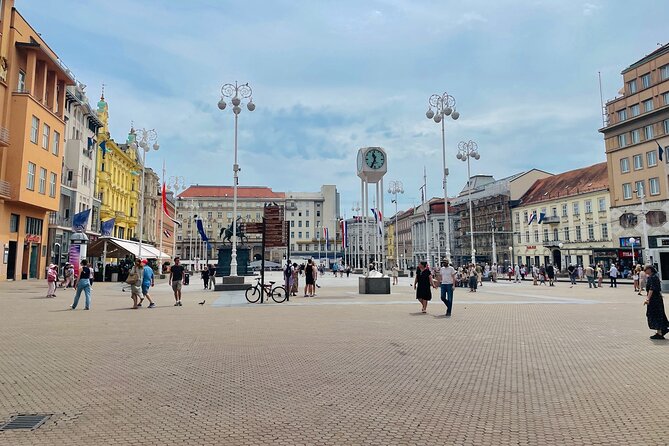
From Zrinjevac, the route moves to Ban Josip Jelačić Square, the city’s main meeting point. This is the place to get your bearings. Streets, trams, cafés, shops, and public activity all gather around this large central square.
The guide explains how Zagreb got its name and why the square matters to local life. I like this stop because it is not just a monument or a pretty façade. It shows you how Zagreb functions as a city. You can also use it as a reference point for later independent exploring, since the tour ends here.
The stop lasts about 20 minutes. Listen for practical suggestions about where to eat or what to revisit later. Several guides have been praised for giving useful restaurant recommendations, which can be one of the best benefits of a first-day orientation walk.
The cathedral, Dolac Market, and local food culture
The Cathedral of Zagreb is one of the tour’s most imposing sights. Its Neo-Gothic form gives you a sharp change from the open square and leafy park. The stop is short, about 15 minutes, so expect an exterior-focused explanation rather than a long interior visit.
The cathedral has been affected by earthquake damage and restoration work in recent years, but the tour information describes it as a monumental Neo-Gothic building. Conditions can change, so your guide’s explanation on the day will be the best way to understand what you can see.
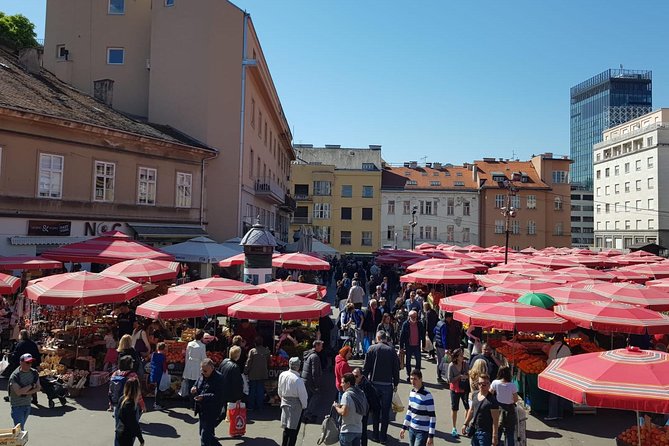
Next comes Dolac Market, Croatia’s largest farmers market. This is where the tour shifts from grand architecture to the daily business of food. You will hear about Croatian cuisine and the statue of Kumica, associated with the market women who traditionally brought produce into Zagreb.
If you take the morning departure, Dolac can be one of the most enjoyable stops. You get the sounds, colors, and practical rhythm of a working market rather than a museum display. If you book an afternoon tour, the market is closed, and public holidays can also affect access. In that case, the guide still includes the location and its story, but you will miss the full market atmosphere.
Coffee culture on Tkalčićeva Street
Tkalčićeva Street is known for its bars and cafés. The guide uses this stretch to explain the Croatian habit of taking time over coffee and the local philosophy of lounging. That may sound like a small subject, but it gives you a useful look at how people use the city.
This is a good place to notice Zagreb’s social side. The street is lined with places to stop later, though the tour itself is a walking visit rather than a scheduled café break. I would make a note of any recommendation from your guide and return after the tour if you want to experience the coffee culture at a slower pace.
The stop is about 10 minutes. That is enough for orientation and explanation, but not enough for a full meal or drink. Plan accordingly.
Something different for another day:
- From Zagreb: Plitvice & Rastoke Guided Day Trip with Ticket
★ 4.9 · 2,955 reviews - Zagreb: Rastoke & Plitvice Lakes Guided Tour with Ticket
★ 4.9 · 1,897 reviews - Communism & Croatian Homeland War Tour
★ 5.0 · 1,355 reviews - Best of Zagreb with the WW2 Tunnels
★ 5.0 · 973 reviews
Entering Gric Tunnel beneath the Upper Town
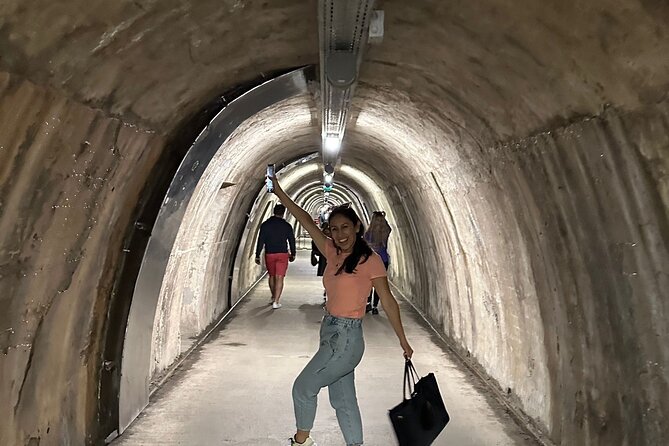
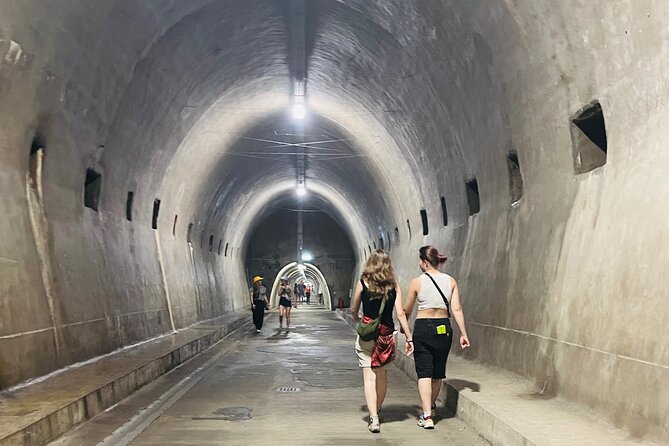
The WWII tunnel is the tour’s most unusual stop. Gric Tunnel was built during World War II and runs beneath the historic Upper Town. Walking through it gives you a physical sense of Zagreb’s wartime past, something a description on a square or church façade cannot provide.
The tunnel visit lasts roughly 10 minutes. It is not a long underground expedition, but it breaks up the architectural sightseeing and adds a different layer to the city’s story. Several positive comments singled out the tunnel as one of the most memorable parts of the walk.
There is an important limitation: the tunnel may close for an exhibition, theater performance, or another event. If that happens, the visit cannot take place. This is not a reason to reject the tour, but you should book it for the overall Zagreb orientation, not for the tunnel alone.
The funicular and Lotrščak Tower
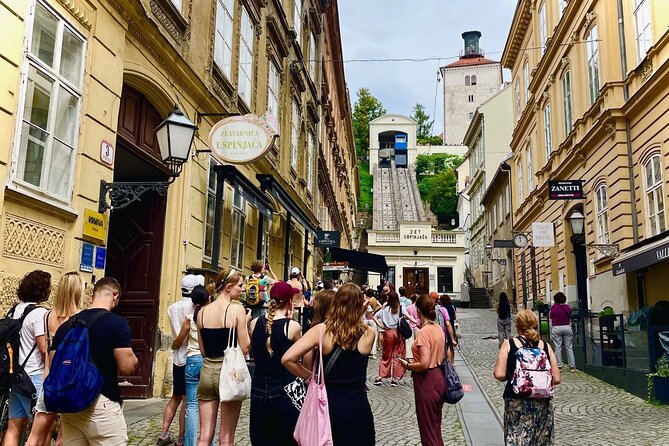
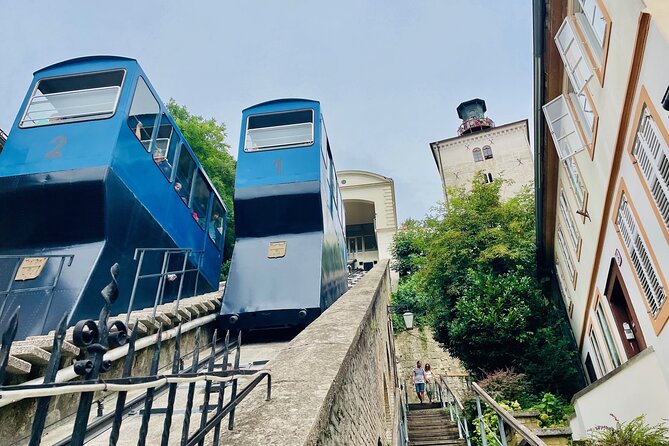
The route normally includes a ride on Zagreb’s famously short funicular. It is described as the oldest form of public transportation in the city and has served residents for nearly 135 years. Under normal conditions, this is a pleasant little transition between the Lower Town and Upper Town.
At present, the funicular is closed for renovation until March 2026. The ride remains part of the advertised tour plan, but you should not count on using it before reopening. Instead, expect stairs on the climb toward the Upper Town. One review specifically advised preparing for plenty of steps while the funicular is out of service.
The stairs make the walk more demanding than the short distance might suggest. Wear supportive shoes, especially in wet weather. There is no need for specialist hiking gear, but this is not a flat pavement stroll.
Near the top, Lotrščak Tower provides another strong historic marker. The tower houses the Gric cannon, which fires at noon each day. If your tour reaches the area at the right time, you may hear the cannon report. One guide, Tom, was praised for timing the route so the group experienced the noon firing.
The cannon is a small event with a big effect. It connects the old defensive tower with the living city, and it gives the tour a memorable moment that does not require an admission ticket.
Strolling through Gradec and Strossmayer Promenade
The Upper Town, also called Gornji Grad or Gradec, receives the longest portion of the tour, about 50 minutes. This is the core of the experience. The narrow streets, medieval connections, political buildings, churches, and viewpoints make the area feel different from the busy squares below.
Your guide explains that Gradec was one of the two medieval settlements that formed Zagreb. You will walk along the Strossmayer Promenade, a popular spot for views across the rooftops. The panorama helps you see the city’s layout and gives you a welcome pause after the stairs.
The route also passes the exterior of the Museum of Broken Relationships. The museum is not included as a visit, but the location fits naturally into the guide’s explanation of Zagreb’s cultural life. If it catches your interest, save it for another visit because the tour does not provide time for a full museum stop.
You will also see the Croatian Parliament and Government buildings. These stops help connect the medieval Upper Town with Croatia’s modern political identity. The guide’s job here is to explain what you are seeing without turning the walk into a long civic lecture.
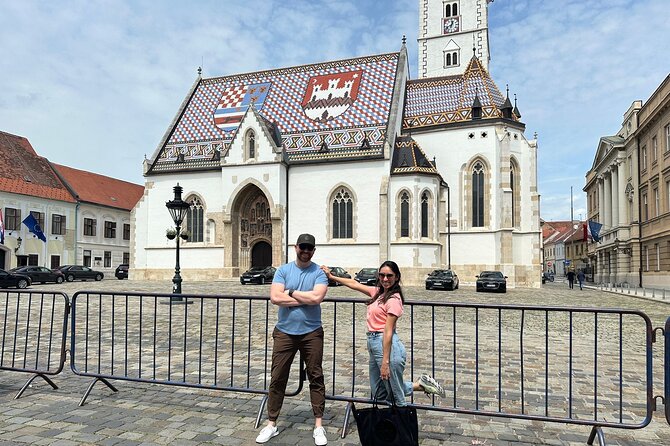
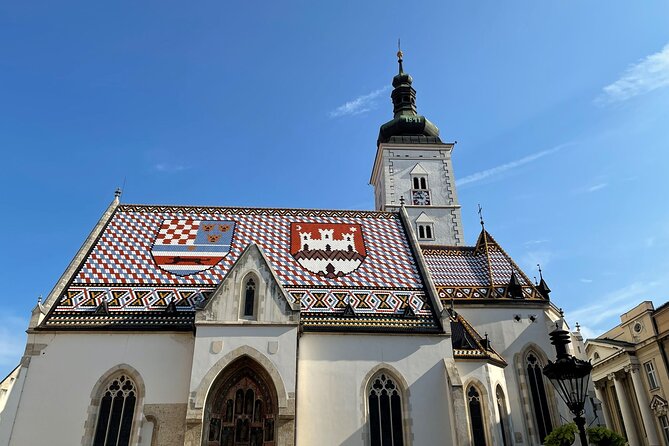
St. Mark’s Church is another major highlight. Its colorful tiled roof is among Zagreb’s most recognizable sights. The church is especially effective as part of the walking route because you approach it through the Upper Town rather than viewing it in isolation.
Access around St. Mark’s Square can change for official events or security reasons. The supplied tour details do not promise an interior visit, so plan on seeing the exterior and hearing the story from your guide.
Through Stone Gate to the final square
The final historic stop is Stone Gate, known in the tour details as Petrini Pyli. It is the only medieval city gate in Zagreb that has survived to the present day.
Inside the gate is a small chapel with a picture of Our Lady, regarded as miraculous and connected with Zagreb’s patron saint. This is a quiet, devotional place in the middle of the old town. Be respectful, keep your voice low, and do not treat it simply as another photo stop.
The tour then returns to Ban Jelačić Square, where it ends. This is a useful finish because you are left in the center of town with transportation nearby and plenty of options for lunch, coffee, or further sightseeing.
How the pacing and group size feel
The advertised duration is about two hours and 30 minutes. That is enough time to see the central sights, but only if the guide keeps explanations moving. One positive comment described the pace as just right, while another felt that two hours would have been enough and noticed idle time between some stops.
Those two impressions can both be true. The route includes many stops, and guides vary in how long they speak at each one. Petra has been praised for enthusiasm and clear stories, while Tomislav and Tom were noted for humor, local advice, and keeping people engaged. Maya was especially praised for explaining Croatian customs in a clear, personal way, including the importance of bread and the varied uses of homemade liquor.
Small groups help. With a maximum of 16 people, you should have a better chance of hearing the guide and asking questions. Some departures have been much smaller, with only six or eight participants. That can make the walk feel more conversational, though it does not guarantee the same guide or pace every time.
The route includes stairs, uneven historic streets, and plenty of standing. Most people can take part, but the closed funicular means you should be ready for a climb. Children must be accompanied by an adult.
Is $24.20 a fair price?
At $24.20 per person, this is a solid-value introduction to Zagreb. The fee includes a licensed local guide and the planned funicular ride, though the funicular closure means that part is currently unavailable. You are not paying for entry to museums or major interiors, but most of the route’s sights are free to view from the street.
I see the best value in the amount of ground covered and the local context. In one walk, you get the main square, cathedral, market, café street, WWII tunnel, tower, Upper Town, St. Mark’s Church, Stone Gate, and a city orientation. That can save you time during a short stay.
Book it near the start of your visit if you want help planning the rest of your days. The route shows you where the main areas are, and guides have offered restaurant recommendations and suggestions for further exploring. If you already know Zagreb well, the walk may feel basic in places.
The overall rating is 4.9 from 380 reviews, with 98 percent recommending it. That is a strong record, though the single detailed complaint about poor time control and a dismissive guide response should not be ignored. It suggests a sensible approach: judge the tour as a good-value overview, while keeping your expectations realistic about individual guide style.
Weather, timing, and practical planning
The tour requires good weather. If poor weather cancels the experience, you are offered another date or a full refund. For your own comfort, I would choose comfortable shoes and check the forecast before booking, especially in winter. One participant had to leave early because of the cold, and another found persistent rain made the walk less comfortable.
Morning departures are better if Dolac Market matters to you. Afternoon tours miss the market’s active trading hours, and the market is also closed on public holidays.
The WWII tunnel can close for special events. The funicular is closed until March 2026. These are the two most important schedule caveats, and they are worth checking before you book if either feature is the main reason you are interested.
Free cancellation is available up to 24 hours before the start time. Changes or cancellations made inside that window are not accepted for a refund.
Who should book this Zagreb walk?
I would choose this tour for a first visit, especially if you have one or two days in Zagreb and want a clear introduction before exploring alone. It suits people who enjoy stories about architecture, local customs, wartime history, and city life rather than only taking photographs.
It is also a good match for families with older children and teenagers. A guide has been praised for keeping 16 and 17 year olds interested, and the tunnel and noon cannon add variety to the usual church-and-square route.
You may want a different experience if you dislike stairs, need a very slow pace, or want long visits inside museums and churches. You should also postpone the booking if the funicular ride is essential to you and your visit falls before March 2026.
Should you book it?
Yes, I would recommend it as a first-day Zagreb tour. The route is broad, the price is reasonable, the group is limited to 16, and the mix of market, medieval streets, political landmarks, tunnel, cannon, and local customs gives you more than a basic architecture walk.
Book a morning departure if you want Dolac Market at its best. Expect stairs while the funicular is closed, and remember that the tunnel may be unavailable for special events. If you can accept those limits, this is an efficient and enjoyable way to get your bearings and begin understanding Zagreb.
FAQ
How long does the Zagreb walking tour last?
The tour lasts approximately 2 hours and 30 minutes.
Where does the tour start?
It starts at Zrinjevac 2 in Zagreb, in front of the meteorological station on the north side of Zrinjevac Park.
Where does the tour end?
The tour ends at Ban Jelačić Square, also called Trg bana Josipa Jelačića.
Is the funicular ride included?
The funicular ride is included in the tour plan, but the funicular is closed for renovation until March 2026. During the closure, you should expect to walk the stairs instead.
Can I visit Dolac Market on an afternoon tour?
Dolac Market is closed during afternoon tours and on public holidays, so an afternoon departure will not include the market at its active trading hours.
What happens if the WWII tunnel is closed?
The tunnel may close because of an exhibition, theater performance, or another event. If it is closed, the tunnel visit will not be possible.
How large is the group?
The tour has a maximum of 16 participants and is designed as a small-group experience.
Can I cancel for a full refund?
You can cancel at least 24 hours before the start time for a full refund. Cancellations or changes made less than 24 hours in advance are not refunded.
Just added around Zagreb
- Zagreb: VR 3D Immersive Film Experience – Voucher★ 4.6 · 9 reviews
- Zagreb GRAND Private Walking Tour★ 4.5 · 9 reviews
- Zagreb: Explore with an Art Historian – Private Walking Tour★ 4.9 · 9 reviews
- From Zagreb: Plitvice Lakes & Rastoke Private Tour★ 5.0 · 9 reviews
- Croatian cuisine cooking class with Dolac market tour★ 5.0 · 9 reviews
- Private Guided Tour of Ljubljana and Lake Bled from Zagreb★ 5.0 · 9 reviews
- Picturesque Samobor & Samobor Castle Half-day Tour★ 4.5 · 9 reviews
- Zagreb to Split Private Transfer via Plitvice Lakes National Park★ 5.0 · 9 reviews
Walking Tours, compared.




Walking Tour of Split and Diocletian’s Palace
Read our review →


Krka Waterfalls tour with Trogir Walking tour and Krka panoramic boat cruise
Read our review →
City Walls Early Morning or Sunset Walking Tour
Read our review →Browse the lists this tour appears in