

Reviewed · CITY TOURS
Pula city tour in German
Pula reveals itself in layers. This 90-minute private walking tour brings those layers into focus, from the Roman Arena and Temple of Augustus to a small mosaic most people pass without seeing. I like the German-speaking local guide Marina, whose relaxed, conversational style makes room for questions, and I like the mix of famous monuments and easy-to-miss details.
The tour costs $28.66 per person, a fair price if you want a short orientation with personal attention instead of a large group. The main consideration is time: one and a half hours goes quickly, and one guest felt the walk could have included more nearby sights. Also remember that admission to the Arena and Temple of Augustus is not included.
In This Review
- Key points about this Pula walking tour
- Why Marina’s local approach matters
- Starting at the Pula Arena
- Pula Market and the morning advantage
- Arco dei Sergi and Pula’s Roman gateways
- The Temple of Augustus and the Roman forum
- The Punishment of Dirce mosaic
- Twin Gate, Gate of Hercules, and the Roman Mausoleum
- A short route with a clear pace
- Price, group size, and what you receive
- Who should book this German-language walk
- Booking and cancellation details
- Final verdict: Is Marina’s Pula tour worth booking?
- FAQ
- How long does the Pula city tour last?
- What language is the tour conducted in?
- Where does the tour begin?
- Where does the tour end?
- What time does the tour start?
- Are admission tickets included?
- What is the cancellation policy?
Key points about this Pula walking tour
- Marina leads in fluent German, with a friendly style that works well for adults and children.
- The Roman Arena receives about 30 minutes, making it the clear centerpiece of the walk.
- The route mixes major sights with overlooked corners, including the Punishment of Dirce mosaic and Roman Mausoleum.
- The morning departure includes Pula Market, where you see the city’s food culture and daily rhythm.
- The group is capped at 15 people, giving you more breathing room than a standard big sightseeing tour.
- The tour ends at the market, not back at the Arena, which is useful for continuing into central Pula.
Why Marina’s local approach matters
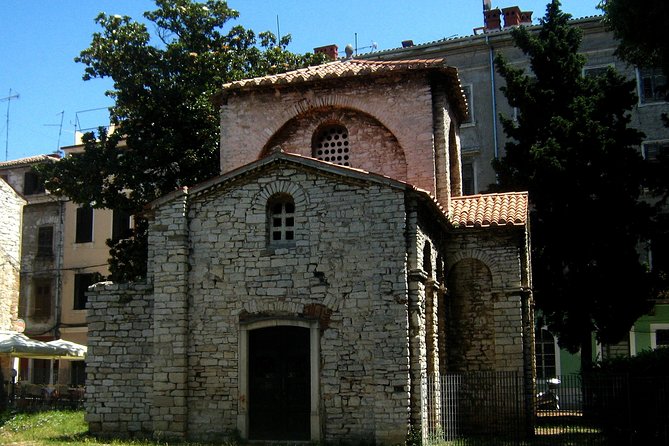
A city tour can turn into a march from one photo stop to the next. This one aims for something more personal. Marina is from Pula, speaks very good German, and explains the city through its Roman, Venetian, and Austrian chapters while also talking about ordinary life in Croatia and Germany.
That last part gives the walk a useful human scale. You are not only looking at stones and dates. You are also hearing why Pula is called a colorful city and how local life differs from what you may know in Germany.
The strongest feature is the dialogue. Marina welcomes questions and folds them into the conversation instead of delivering a fixed speech. That helps families, curious first-time visitors, and anyone who wants more than a list of monument names.
Her style also seems to suit children. The stories and legends keep the past from feeling like homework, and the Roman Arena offers plenty of material for young imaginations. If your children ask frequent questions, a private walk is often easier than a large group with a strict pace.
You also get practical help for the rest of your stay. Marina has offered restaurant advice and tips for continuing through Istria, which can be more useful than one extra date from a history book.
More City Tours:
- Pula: Historic Walking Tour with Local Guide & City Views
★ 4.8 · 143 reviews - Dubrovnik: City Walls Early Morning or Sunset Walking Tour
★ 4.8 · 1,523 reviews - Split: City Highlights Electric Tuk-Tuk Tour
★ 4.9 · 1,317 reviews
Starting at the Pula Arena
The meeting point is outside the Pula Arena on Flavijevska ul. at 10:30 am. This is a sensible place to begin because the amphitheater is Pula’s best-known landmark and gives the rest of the tour a clear historical starting point.
Expect about 30 minutes focused on the Arena. Marina explains its structure, purpose, and place in Roman public life through the old idea of bread and games. The subject is familiar, but a good guide makes the building easier to read. You begin to see how the entrances, seating, and performance space served a large public audience.
The Arena is more than an impressive shell. It opens a discussion about Roman entertainment, power, and the way emperors used public spectacles to keep citizens on their side. That context gives the monument more weight than a quick photograph from outside.
Admission is not included. This matters because you need to decide if you want to enter separately. The walking tour can explain the building from the meeting point, but an outside discussion is not the same as walking through the interior.
If you already plan to visit the Arena on your own, the tour still helps you understand what you are seeing. If you want a single ticketed visit with a guide inside, check the arrangements carefully, since the listed tour price does not cover entry.
Pula Market and the morning advantage
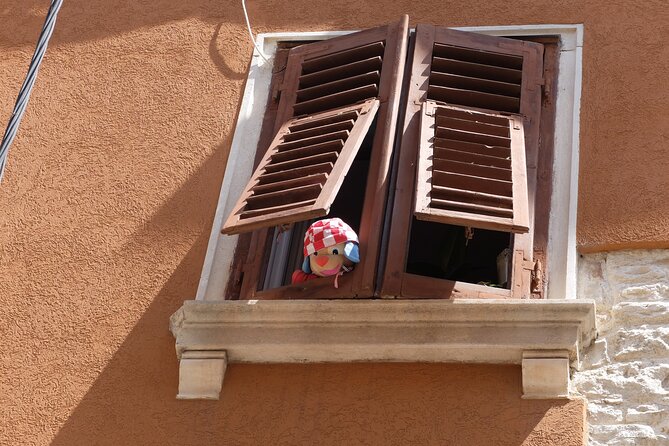
The route includes Gradska Tržnica Pula, the city market, for about 10 minutes. The market has a green market with local products and a fish market, making it a welcome change from the ancient monuments.
This stop is included only on the morning tour. Since the advertised start is 10:30 am, this schedule should work for the listed departure, but it is worth confirming the exact route when you book if the market is important to you.
I like this stop because it connects Pula’s past with its present. Roman ruins can make a city feel like a museum. A market reminds you that Pula is a living place where people still shop, eat, and meet.
Ten minutes is enough for an introduction, not a full market visit. You will not have much time to browse at length, and the stop is not designed as a food tasting. Still, it gives you a useful pointer for returning later on your own.
The tour ends at the market on Flanatička ul. 21. That finish is practical if you want to stay in the center, explore the stalls, or continue your own walk. It also means you should not expect to return to the Arena at the end.
Arco dei Sergi and Pula’s Roman gateways
The Arco dei Sergi is one of three Roman city gates in Pula. The stop lasts about 10 minutes and helps you understand that Roman Pula was not just an arena sitting outside a town. It was an organized city with entrances, streets, public buildings, and walls.
A gate can be easy to treat as background scenery. Marina’s job here is to give it a role in the city’s larger plan. You get a sense of how people entered and moved through ancient Pula, even if the surviving structure is not as large as the Arena.
This is also the kind of stop that benefits from a guide. Without context, you might take a quick picture and keep walking. With an explanation, the arch becomes evidence of how the city changed over time.
Something different for another day:
- Pula: Arena Entrance Ticket
★ 4.3 · 2,590 reviews - Medulin -Kamenjak 5h boat trip with lunch & drinks on Sandra Boat
★ 5.0 · 1,621 reviews - Full-Day Boat Tour of the Medulin Archipelago from Medulin
★ 5.0 · 1,389 reviews - 3hours all inclusive Sunset&Dolphin Tour from Medulin on Sandra
★ 5.0 · 1,130 reviews
The Temple of Augustus and the Roman forum
The Temple of Augustus receives about 15 minutes. It is described as Croatia’s most beautiful and oldest Roman temple, a strong claim that reflects the building’s importance to Pula’s Roman center.
The temple is not just another ancient facade. It helps explain the public and religious heart of the city. The nearby forum, which Marina has also included in the wider city discussion, gives the setting more meaning. This was a place where public life, worship, and civic business met.
Admission is not included here either. The tour gives you an introduction, but you may need to pay separately if you want to enter. Check the opening arrangements before relying on an interior visit, since the tour information confirms only that entry is excluded.
The 15-minute stop should be enough for a clear explanation and photographs. It is not a long archaeological session. If you want every architectural detail, you may need to return later with more time.
The Punishment of Dirce mosaic
The five-minute stop at the Punishment of Dirce mosaic is short but memorable. This is one of the tour’s best examples of Marina’s promise to show details you might otherwise miss.
The mosaic is easy to overlook when walking through Pula. That is precisely why it adds value. Famous monuments are simple to find on a map. Smaller remains require someone to point them out and explain why they matter.
Five minutes will not give you an exhaustive lesson in Roman mosaic art. It does give you a brief story and a reason to slow down. I would keep your eyes open and listen carefully here, since the stop is quick.
Twin Gate, Gate of Hercules, and the Roman Mausoleum
The Twin Gate receives about 10 minutes. Its name points to the paired openings, but the stop also promises more than a Roman-era relic. The gate carries traces of the city’s later development, giving Marina a chance to show how Pula changed rather than remaining frozen in antiquity.
The five-minute stop at the Gate of Hercules is another small piece of the old city. Hercules is presented as a protector of Pula for millennia, so this is where legend enters the tour. A short story can make a modest gate easier to remember.
The Roman Mausoleum takes another five minutes. This octagonal structure sits near the Twin Gate, the Archaeological Museum, and the city wall. It dates from the first century, although only the lower remains are visible.
Do not expect a complete mausoleum rising above you. The appeal lies in learning to recognize what survives and understanding how the remains fit into this part of Pula. Because the stop is brief, you may want to return later if ancient architecture is your main interest.
Together, these smaller sights give the walking tour a useful rhythm. You get the big Arena and temple, then a series of lesser-known remains that help you read the city street by street.
A short route with a clear pace
The full experience lasts about 90 minutes. The listed stops add up to roughly 90 minutes, so the schedule is fairly tight. That explains both the tour’s efficiency and its main limitation.
You should expect a focused introduction, not a slow half-day exploration. Marina covers the Arena, market, arch, temple, mosaic, gates, and mausoleum without leaving much spare time for extra monuments.
One guest wished the walk were longer and felt that nearby sights could have been added. That is a fair point, especially if you enjoy lingering at archaeological sites. The response from Marina made the duration and stop list clear, so the practical lesson is simple: read the route before booking and choose this tour for orientation rather than exhaustive coverage.
The short format works well on your first morning in Pula. You can learn the basic shape of the center, mark places for a later visit, and still have most of the day free. It also suits a port call or a tightly planned holiday.
Price, group size, and what you receive
At $28.66 per person, the price is reasonable for a licensed guide and a private-style walk capped at 15 people. The value comes less from the number of monuments than from the explanations, German-language service, and chance to ask questions.
A larger group can sometimes cost less, but it often means standing at the back, waiting for everyone, or losing the chance to interrupt with a question. A maximum of 15 is not the same as a one-family private tour, yet it is still a manageable size.
The price does not cover admission to the Arena or Temple of Augustus. Add those costs if you want to go inside. The city tour itself is mainly about orientation and interpretation, so the total cost remains easy to understand.
The tour includes a licensed city guide and a mobile ticket. Confirmation arrives at booking. It operates near public transportation, and service animals are allowed. Most people can participate, but the supplied details do not give a full description of surfaces, stairs, or seating, so ask the provider if those points matter to you.
Who should book this German-language walk
I would choose this tour if you want:
- A German-speaking guide who can answer questions naturally
- A local introduction to Pula before exploring alone
- Roman sights mixed with small details and local stories
- A family-friendly explanation of the city
- A short morning activity with time left for lunch and further sightseeing
- Restaurant and Istria tips from someone who knows the area
I would look elsewhere if you want a long archaeological tour, extensive interior visits, or a route that covers every major Pula sight. You may also prefer a different option if the extra admission costs are a concern.
The walk is especially useful for first-time visitors who want a map in their head. Afterward, you can return to the Arena, temple, market, or museum with a better sense of what each place means.
Booking and cancellation details
The experience is booked an average of 16 days ahead, so reserving early is sensible if your dates are fixed. Free cancellation is available if you cancel at least 24 hours before the local start time.
Cancellations made within 24 hours are not refunded, and changes inside that period are not accepted. The tour begins at 10:30 am, so use the local time in Pula when calculating the deadline.
The provider is Acta East Fabula. Since Marina has contacted guests by WhatsApp before the tour to confirm details, keep an eye on your booking messages and make sure your contact information is correct.
Final verdict: Is Marina’s Pula tour worth booking?
Yes, if you want a friendly German-language introduction with real conversation and a strong Roman focus. Marina’s greatest strengths are her fluent German, personal manner, clear explanations, and eye for small sights such as the Punishment of Dirce mosaic.
The $28.66 price is fair for a 90-minute guided walk, especially for couples, families, and small groups who value questions and local advice. Just set your expectations correctly: it is a compact city orientation, not a full-day study of Pula.
Book it for the stories, the local perspective, and the chance to see more than the obvious monuments. Plan separate time and admission money for the Arena and Temple of Augustus, and you will get the most from the experience.
FAQ
How long does the Pula city tour last?
The tour lasts approximately 1 hour and 30 minutes.
What language is the tour conducted in?
The tour is conducted in German by a local German-speaking guide from Pula.
Where does the tour begin?
The meeting point is at the Pula Arena, Flavijevska ul., 52100 Pula, Croatia.
Where does the tour end?
The tour ends at Pula Market, Flanatička ul. 21, 52100 Pula, Croatia.
What time does the tour start?
The listed start time is 10:30 am.
Are admission tickets included?
Admission tickets are not included for the Pula Arena or the Temple of Augustus. Other listed stops are free.
What is the cancellation policy?
You can receive a full refund if you cancel at least 24 hours before the experience start time. Cancellations within 24 hours are not refunded.
Just added around Pula
- Istria: Private Boat Tour with Skipper★ 5.0 · 9 reviews
- 3 Hours Private Wine and Sunset Tour★ 5.0 · 9 reviews
- Pula: Sunset/Night-time Illuminated Transparent Kayak Tour★ 4.0 · 9 reviews
- Electric Off-Road Scooter Tour in Pula★ 5.0 · 10 reviews
- Pula: Your Custom Full-Day Private Sail – Explore Istria’s Gems★ 5.0 · 10 reviews
- Pula Private 2-Hour Guided Walking Tour★ 5.0 · 10 reviews
- Pula: Private Brijuni Tour With Swimming, Dinner & Drinks★ 4.3 · 10 reviews
- Stop on Island & National Park Day Cruise with Lunch Drinks★ 5.0 · 10 reviews
City Tours, compared.

City Walls Early Morning or Sunset Walking Tour
Read our review →
Dubrovnik Combo: Old Town & Ancient City Walls
Read our review →
Small Group Walking Tour City Center and WW2 Tunnels
Read our review →
Hop On Hop Off Panoramic bus – Zagreb City Tour
Read our review →
Browse the lists this tour appears in