
Reviewed · HISTORICAL TOURS
Split: Walking tour of Split with a ‘Magister’ of History
Ancient Rome still lives in Split. This 110-minute walk works especially well because Toni Šare combines a master’s degree in history with a lifetime in Split, and because he uses hand-made 3D images to show how Diocletian’s Palace once looked. I also like the open question-and-answer style, which turns the walk into a conversation rather than a speech. The main drawback is that the tour does not enter paid museums or monuments, so you are paying for interpretation and guiding rather than admission tickets.
The route covers Roman, medieval, Venetian, and modern Split in a fairly short time. The first available time slot is a smart choice, since the palace quarter becomes more crowded as the day goes on. Bring water, wear sensible shoes, and expect the tour to run in rain or shine.
In This Review
- Key points to know before booking
- Why this Split tour is more than a palace walk
- Meeting at the Bronze Gate beside the Riva
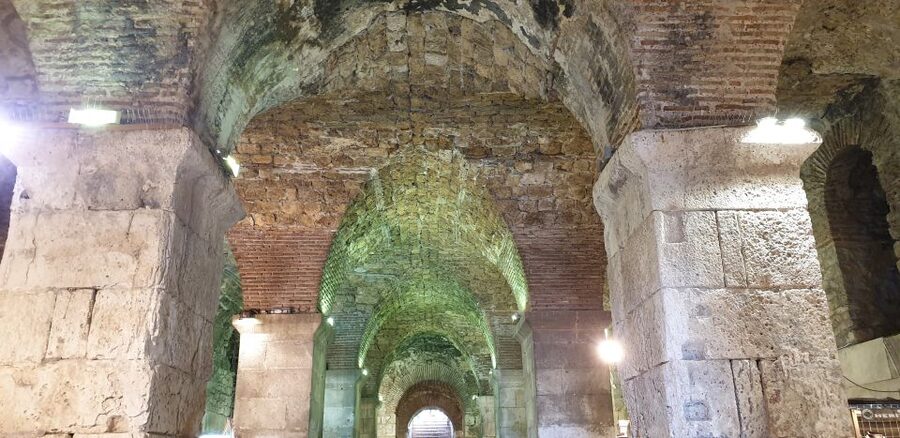
- The Bronze Gate and Diocletian’s Cellars
- One hour inside Diocletian’s Palace
- Peristyle, the palace’s grand central square
- The Vestibule and Triklinij
- Saint Domnius Cathedral and Jupiter’s Temple
- The Silver Gate and the route toward the Golden Gate
- How Toni’s teaching style shapes the experience
- Price, timing, and who gets the best value
- Who should book this tour?
- Should you book the Split Magister of History tour?
- FAQ
- Where does the walking tour begin?
- Where does the tour finish?
- How long does the experience last?
- Is admission to Diocletian’s Palace included?
- What language is the tour conducted in?
- What should I bring?
Key points to know before booking
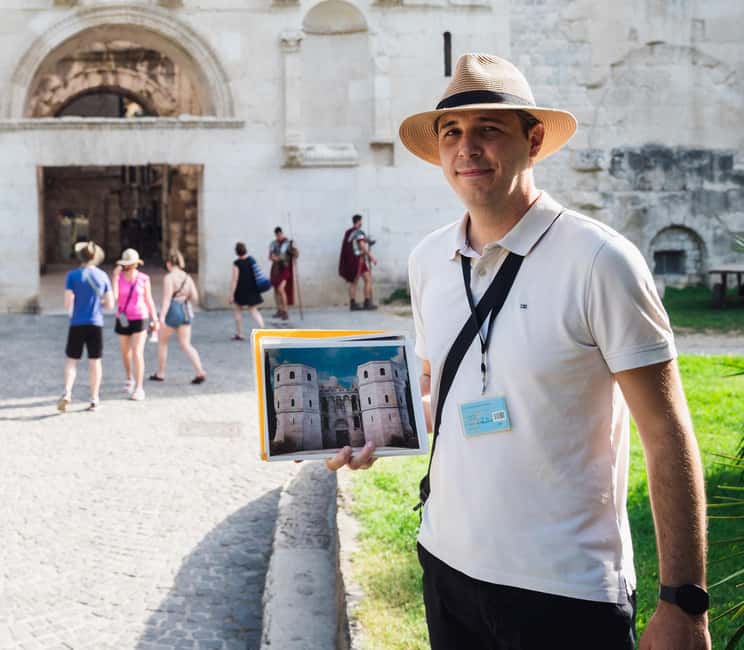
- A local guide with classroom experience: Toni Šare was born and raised in Split and formerly taught history, giving his explanations a clear, structured feel.
- The palace is a living city center: You walk through Roman ruins, medieval homes, later Venetian additions, and streets still used by modern Split.
- 3D reconstructions make the ruins easier to read: Printed images show the palace as it may have appeared in Roman times.
- Questions are part of the format: The guide encourages discussion and can connect ancient events with Croatia’s more recent past.
- The route ends at the Golden Gate: You begin beside the Riva and finish on the north side of Diocletian’s Palace.
- The $33 price reflects the guide, not entry tickets: No paid sites or museums are included, but entering the palace streets themselves costs nothing.
Why this Split tour is more than a palace walk
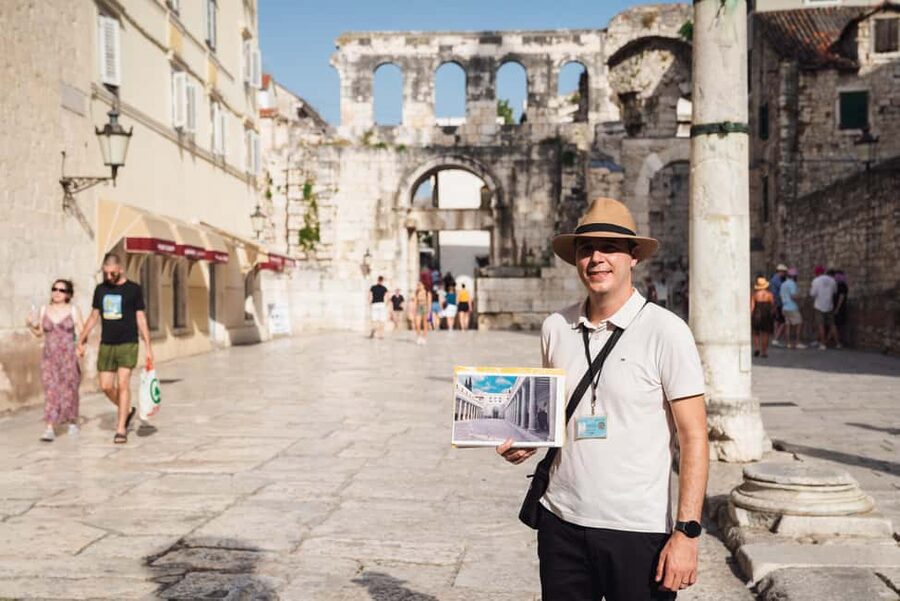
Diocletian’s Palace is not a tidy archaeological park with a gate, a map, and a clear exit. It is the center of Split. People live, work, shop, eat, and pass through its ancient walls every day. That makes the place exciting, but it can also make it hard to understand.
A guide helps you separate the Roman structure from the houses and streets built into it later. Without some explanation, you might see a column, a stone arch, or a weathered wall and simply take a photograph. With Toni, the aim is to understand what each piece once did and how the city grew around it.
His background as a history teacher is useful here. The information is arranged as a story that moves from the Roman emperor Diocletian to the medieval city, the Venetian period, and modern Split. You are not asked to memorize a string of dates. Instead, you get a sense of how one period physically shaped the next.
I especially like the use of printed 3D reconstructions. Ancient walls can be hard to picture when only fragments remain. Seeing an image of the original palace beside the stones in front of you gives the remains a clearer purpose. It is a simple teaching tool, but it adds a great deal.
More Historical Tours in Split
- Walking Tour of Split with a ‘Magister’ of History
★ 5.0 · 1,122 reviews - Split Walking Tour with Professor of History
★ 5.0 · 926 reviews - Split: History and Heritage Walking Tour
★ 4.9 · 650 reviews
Meeting at the Bronze Gate beside the Riva
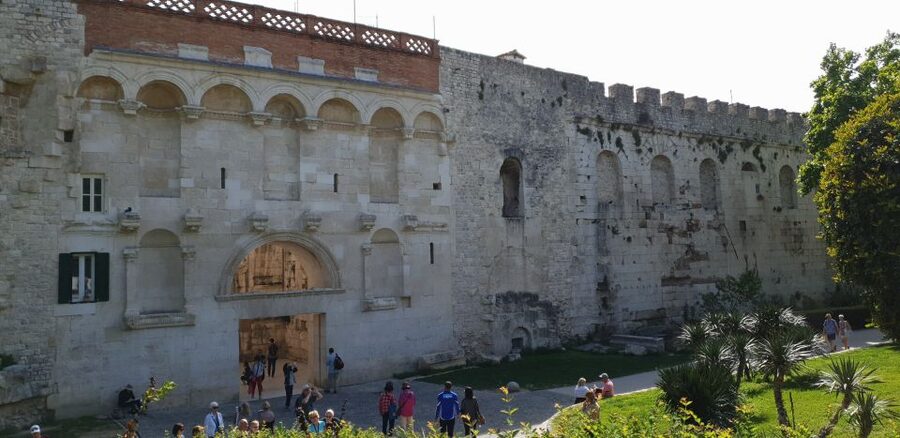
The tour begins at Obala Hrvatskog narodnog preporoda 22, at the Bronze Gate, also called the Brass Gate. This is the southern entrance to Diocletian’s Palace, right beside Split’s seafront promenade, the Riva.
The easiest way to find it is to reach the Riva first and walk toward the palace entrance. The meeting point is not an inland square or a hard-to-find side street. It is near the water, at the point where the promenade leads into the old core.
Starting here makes historical sense. You begin outside the palace, with the sea at your back, then pass through the same general southern approach that once connected the imperial residence with the waterfront.
Before setting out, I would check that you have water with you. The walk lasts 110 minutes, and the tour takes place rain or shine. Some stops offer shade, and Toni has been praised for trying to keep the group out of direct sun and away from the thickest crowds when possible, but this is still an outdoor walking tour.
The Bronze Gate and Diocletian’s Cellars
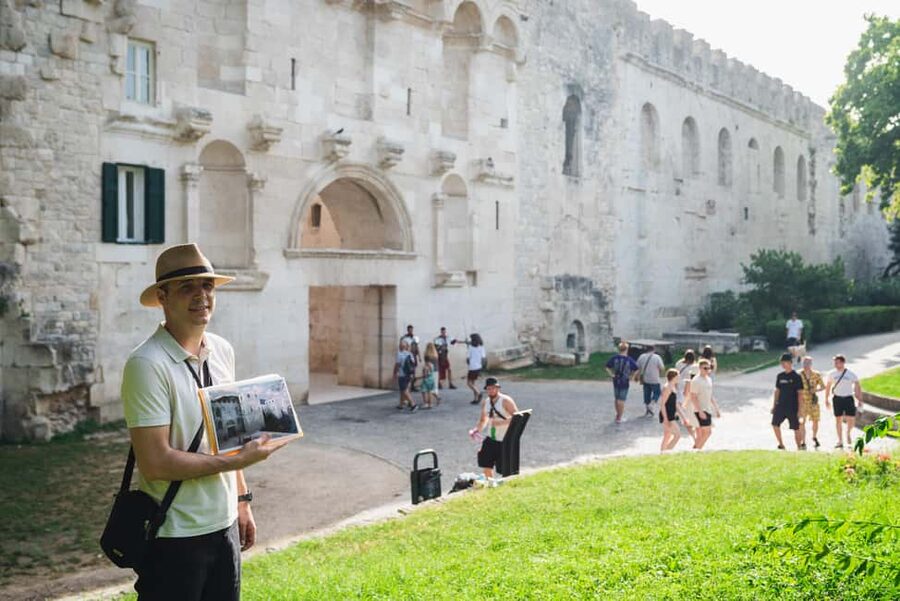
The Bronze Gate provides the first transition from modern Split into the palace quarter. It is a brief stop, but it gives you an immediate sense that Diocletian’s Palace is not just a monument. It is a passage used to enter the city’s oldest core.
From here, the route passes through the cellars of Diocletian’s Palace. The itinerary allows about 10 minutes in this area. The cellars are especially useful for understanding the palace plan because their layout preserves the shape of rooms above them.
You do not need a ticket simply to enter Diocletian’s Palace, but the tour does not include admission to paid sites or museums. The cellars may include areas with separate charges, so this experience focuses on viewing and explaining the site rather than taking you through every ticketed interior.
Toni’s explanations of the cellars are one of the tour’s teaching moments. Their practical use changed over time, and the lower rooms help show how the palace later became part of an ordinary urban settlement. The key idea is that the Roman palace did not remain frozen after Diocletian’s era. The city adapted it.
One hour inside Diocletian’s Palace
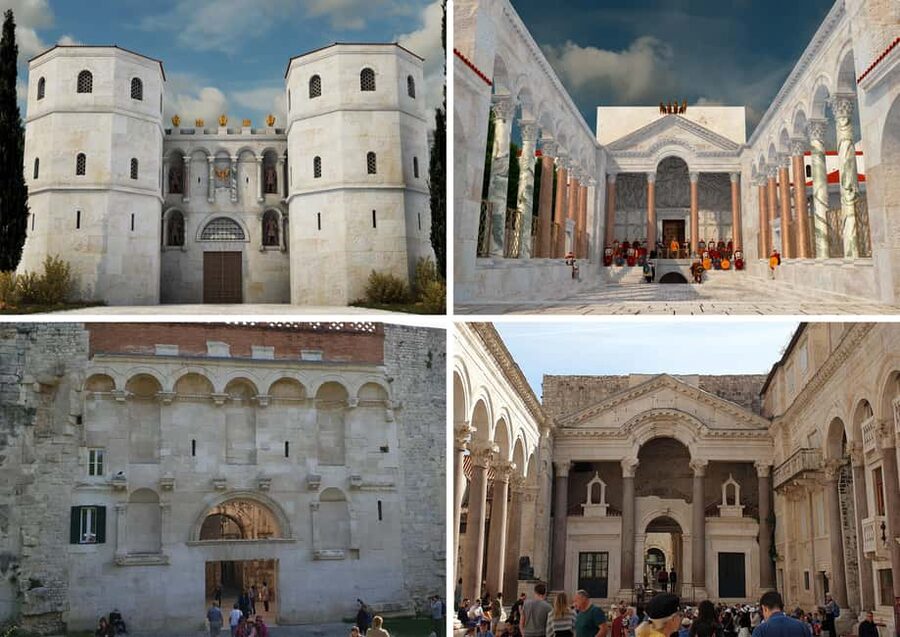
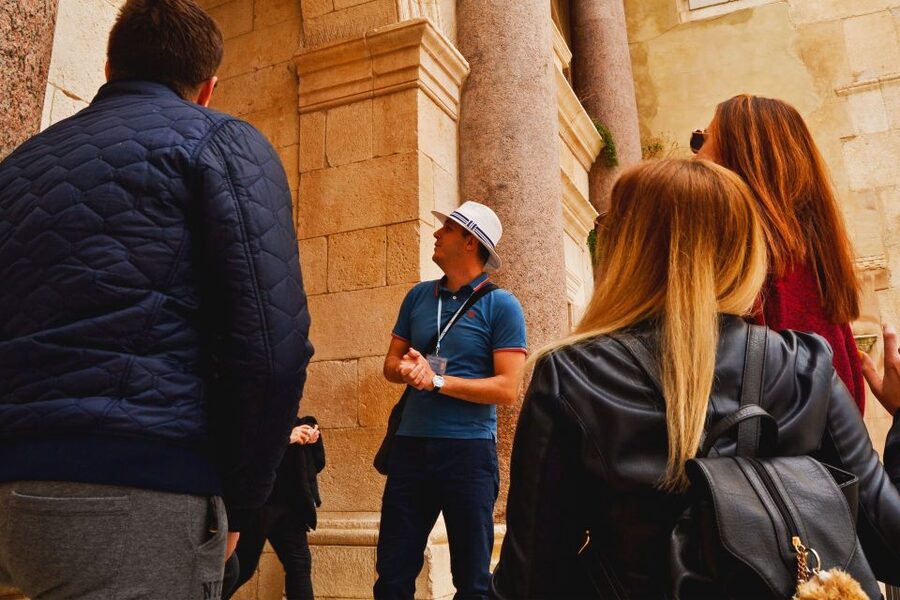
The main palace portion takes about an hour and combines guided stops with walking through the old streets. This is where the tour earns its price.
You move through the remains of Diocletian’s private residence and see medieval houses preserved within the larger Roman framework. This layered construction is the heart of Split. You are not looking at one period in isolation. You are seeing many centuries sharing the same walls.
That arrangement can be confusing without a guide. A medieval doorway may sit beneath a Roman arch. A modern home may occupy a space that once belonged to an imperial complex. Toni’s job is to point out those changes and explain how the palace became the city of Split itself.
I would pay close attention when he uses the 3D images. The pictures are not a decorative extra. They help you understand the scale and appearance of buildings that now survive only in part. The visual comparison also makes the palace easier to explore on your own after the tour.
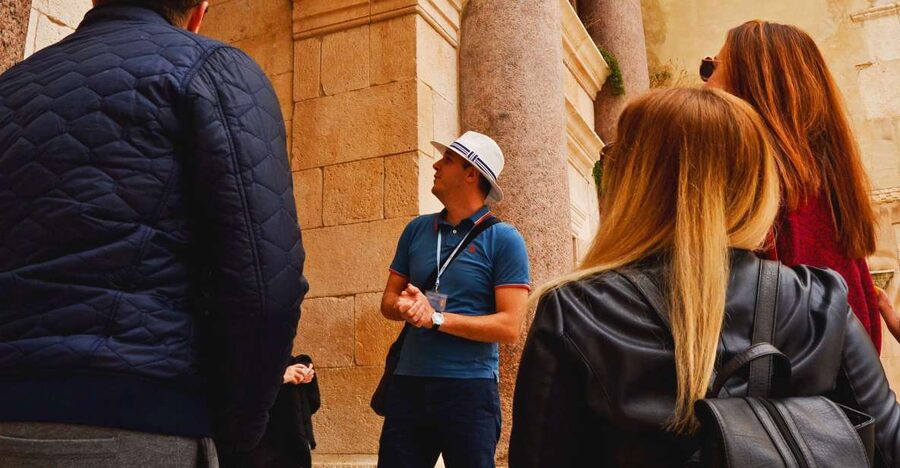
The walk is described as educational, but it is not meant to be stiff. Toni has been praised for being funny, warm, and willing to answer questions. His former teaching work shows in the way he keeps the group involved rather than simply reciting prepared facts.
More Walking Tours in Split
- Split: Old Town and Diocletian Palace Walking Tour
★ 4.9 · 4,727 reviews - Walking Tour of Split and Diocletian’s Palace
★ 5.0 · 2,588 reviews - Krka Waterfalls tour with Trogir Walking tour and Krka panoramic boat cruise
★ 5.0 · 1,659 reviews - Split & Diocletian’s Palace Walking Tour
★ 5.0 · 1,125 reviews
Peristyle, the palace’s grand central square
Peristyle receives about 10 minutes of guided attention, though the surrounding palace walk adds more context. This is one of the most important open spaces in the complex and one of the easiest places to appreciate the palace’s Roman design.
Here you see the remains of the Mausoleum of Diocletian, the Temple of Jupiter, and the Vestibule. The square gives the tour a strong visual center. Even if you know little about Roman architecture, the columns and formal layout make clear that this was designed as an imperial setting, not an ordinary neighborhood.
The 3D reconstructions are particularly helpful here. They allow you to compare the surviving stonework with the more complete Roman appearance. I find this more useful than being told that a building was once grand. You get a picture of what grand meant in this particular place.
Because Peristyle is a major stop in the old town, it can be crowded. That is another reason to choose an early departure if your schedule allows. Toni may seek out quieter positions and shade, but he cannot control the flow of people through a public square.
The Vestibule and Triklinij
The Vestibule receives about five minutes of guided explanation. This circular space formed part of the palace’s ceremonial approach and helps you understand how the emperor’s private quarters connected with more formal areas.
A short stop here works well because the Vestibule is close to other major remains. You are not spending half an hour in one room. Instead, Toni links it to the palace plan and uses the surrounding structures to explain how the imperial residence functioned.
The tour then covers Triklinij for another five minutes. This stop adds to the picture of Diocletian’s private world. The short timing means you should expect an overview, not an archaeological seminar on every room.
That is a fair trade for a walking tour. The route has a lot to cover, and Toni appears to focus on the parts that explain the city best. If you want extensive time inside each monument, you may prefer to add paid site visits later.
Saint Domnius Cathedral and Jupiter’s Temple
The route passes by the Cathedral of Saint Domnius and Jupiter’s Temple, allowing about five minutes for each. These stops show how Roman and later religious history occupy the same compact area.
Saint Domnius Cathedral is closely tied to the former Mausoleum of Diocletian. Even from a brief exterior visit, you can see the unusual way a Roman imperial structure became part of a Christian cathedral. That change is central to understanding Split’s layered identity.
Jupiter’s Temple provides another Roman religious reference point. The itinerary lists it as a pass-by stop, so do not expect a full interior visit or a long architectural lecture. Instead, Toni uses it to connect the religious buildings around Peristyle and explain their place in the original palace design.
This is a good example of why a guide matters in Split. The buildings are close together, but their purposes changed sharply over time. A few minutes of clear context can save you from treating each structure as an unrelated photo stop.
The Silver Gate and the route toward the Golden Gate
The Silver Gate receives a short, three-minute guided stop. It gives you another look at how the palace was entered and defended. The route then continues toward the Golden Gate, with about five minutes of guided attention there.
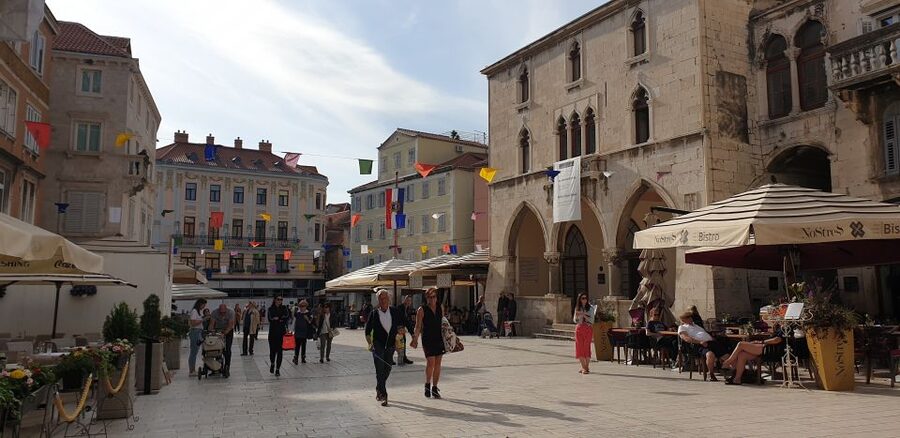
The walk gradually leaves the most intensely Roman center and brings you toward the medieval and Venetian layers of Split. This change in scenery is part of the tour’s design. You begin with the imperial palace and finish with the city that grew from it.
Along the north wall, you can see the statue of Bishop Gregory of Nin. The statue is one of Split’s best-known public landmarks and helps shift the story from Roman government to later Croatian and Dalmatian identity.
The Golden Gate is a fitting finish because it is one of the most impressive entrances into the palace complex. Ending here also gives you a useful orientation point for further exploring the old town after the tour.
How Toni’s teaching style shapes the experience

A history degree alone does not guarantee a good walking tour. The useful combination here is Toni’s academic training, experience as a teacher, and personal connection to Split. He was born and has spent his life in the city, so his explanations include both formal history and local perspective.
The strongest feature is the invitation to ask questions. You can ask about Roman life, medieval construction, Venetian rule, Croatia’s more recent past, or the way old events still affect modern Split. Toni has also been praised for being honest about what is firmly known and what remains uncertain.
That last point matters at ancient sites. A polished story can be entertaining but misleading. I prefer a guide who marks the difference between evidence and speculation. It makes the history more trustworthy, even when the answer is less dramatic.
The group experience also seems designed to stay personal. Several people have described the groups as small and the guide as attentive to everyone. The exact group size is not specified, so I would not book this expecting a private tour. Still, the question-friendly format should suit you if you want more than a one-way talk.
Price, timing, and who gets the best value
At $33 per person, this is not Split’s cheapest walking tour. Its value comes from the guide’s preparation and the amount of historical interpretation packed into 110 minutes, not from included admissions, food, or transport.
I think the cost is fair if Diocletian’s Palace is a main reason you are visiting Split. The 3D images, the chronological structure, and the ability to ask questions add something you would not get by simply wandering through the palace with a phone map.
The value is less clear if you only want a quick orientation or plan to spend most of your time taking photos. This is a history-focused walk. You need to be willing to listen, move through the old streets, and follow the story across several periods.
The first time slot is worth considering. The old town can become much busier later in the day, and an early start may give you better sightlines and more comfortable conditions. Toni can look for shade, but Split’s stone streets hold heat, especially in summer.
The tour is conducted in English. It is not suitable for wheelchair users, and people over 95 are excluded by the activity’s stated restrictions. The route is also not designed as a food or drink outing, so plan those separately.
Who should book this tour?
I would choose this tour if you want to understand why Split looks the way it does. It suits first-time visitors, history fans, architecture students, families with older children, and anyone who prefers a guide who welcomes questions.
It is also a strong choice for a short stay. In less than two hours, you get an introduction to the palace, the old town’s main Roman remains, medieval homes, Venetian traces, and modern Split. One 12-year-old was specifically reported to have enjoyed the experience, which suggests the teaching style can work for families.
You may want another option if you need step-free access, dislike walking in all weather, or want entry to paid museums included. You should also know that the route gives brief attention to several sites. It is designed to explain the city as a whole, not provide a long visit inside every monument.
Free cancellation up to 24 hours before the start and reserve-now, pay-later booking make the plan fairly flexible. Those policies are useful if your Split schedule depends on ferry or cruise timing, but you still need to confirm the available departure time before booking.
Should you book the Split Magister of History tour?
Yes, if you want a thoughtful introduction to Diocletian’s Palace rather than a quick circuit of famous stones. Toni’s local connection, teaching background, and 3D reconstructions give the tour unusual depth, while the open discussion keeps it from feeling like a school lecture.
Book an early slot if possible, bring water, and leave room in your day to revisit the palace after you know what you are looking at. At $33, it is a premium walking tour, but for a history-minded visit to Split, the added explanation can be worth far more than a cheaper fact list.
FAQ
Where does the walking tour begin?
The meeting point is at the Bronze Gate, also called the Brass Gate, at Obala Hrvatskog narodnog preporoda 22. It is the southern seaside entrance from Split’s Riva promenade into Diocletian’s Palace.
Where does the tour finish?
The tour finishes at the Golden Gate of Diocletian’s Palace.
How long does the experience last?
The walking tour lasts 110 minutes.
Is admission to Diocletian’s Palace included?
Entering the general palace area does not require admission. The tour does not include entry to paid sites or museums.
What language is the tour conducted in?
The live guided tour is conducted in English.
What should I bring?
Bring drinking water. The tour takes place rain or shine, so suitable clothing for the weather is also sensible.
Just added around Split
- Private VIP Blue Lagoon and 3 Islands Tour★ 4.5 · 9 reviews
- Split highlights – Evening walking tour★ 5.0 · 9 reviews
- Private boat transfer Split – Bol★ 5.0 · 9 reviews
- Private Photography Activity in Split★ 5.0 · 9 reviews
- From Split: Trogir & Blue Lagoon Boat Tour with Snorkeling★ 4.6 · 9 reviews
- Bike, Beer & Poljud Stadium Tour★ 5.0 · 9 reviews
- From Hvar: Blue cave group speedboat tour full day★ 5.0 · 9 reviews
- Split Walking Tour: History, Legends & Tales★ 5.0 · 9 reviews
Historical Tours, compared.


Walking Tour of Split with a ‘Magister’ of History
Read our review →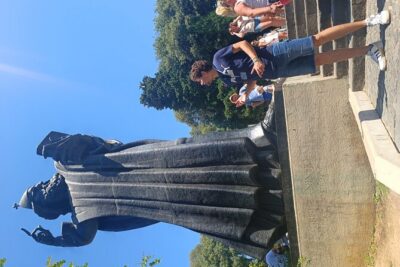


Split History and Gastro Small-Group Tour with Food and Drinks
Read our review →
PREMIUM Emperor’s Walking Tour for History Lovers + Museum
Read our review →Browse the lists this tour appears in