
Reviewed · HISTORICAL TOURS
Private History Split Walking Tour in Spanish
Split’s ancient core rewards a guide. This private 90-minute walk ties Diocletian’s Palace to the rise of Emperor Diocletian, medieval Split, Venetian rule, Croatian literature, and the city’s Jewish past. I like the private format, since your group can ask questions without waiting for a large crowd, and I like that the route includes more than the palace’s famous Roman stones.
The tour also earns praise for its attentive Spanish-speaking guiding and clear explanations. A Spanish-language review specifically praised the guide’s good Spanish, patience with questions, and explanation of the emperor and palace. The main consideration is physical: high steps can be difficult, and admission tickets are not included, even though the main walking stops are listed without entrance fees.
In This Review
- Key points to know before booking
- A 90-minute introduction to Split’s ancient center
- The Peristyle shows Diocletian’s power
- The substructures reveal how the palace was built
- The Golden Gate connects Roman rule with Croatian identity
- Riva Harbor adds Split’s public face
- Fruit’s Square brings in Venetian Split
- The Split Synagogue adds an important human story
- The Vestibule may bring traditional Dalmatian singing
- What the Spanish guiding is like
- Is $63.05 per person good value?
- Practical details that affect your day
- Who should book this Split walking tour?
- Final verdict: book it for context, not just monuments
- FAQ
- Where does the tour start?
- Where does the tour end?
- How long does the walking tour last?
- Is this a private tour?
- Is the tour conducted in Spanish?
- Are admission tickets included?
- Is the tour suitable for people with mobility issues?
- Can I cancel for a full refund?
Key points to know before booking
- Private Spanish-language tour: Your group has the guide to itself, making it easier to ask questions and adjust the pace.
- Nine connected history stops: The route covers the Peristyle, Jupiter’s Temple, palace substructures, Golden Gate, Riva Harbor, Fruit’s Square, the synagogue, and the Vestibule.
- A useful Roman-to-modern history lesson: You hear how Diocletian rose from obscurity to become one of the most powerful men in the ancient world.
- The substructures are a major highlight: You learn how the palace was built and how these lower spaces served different purposes over time.
- Good value for small groups: At $63.05 per person, the price makes more sense when shared by several people who want a Spanish-speaking private guide.
- Allow for uneven walking: The tour is not recommended for people who have trouble with high steps, and it does not include museum admission or gratuities.
A 90-minute introduction to Split’s ancient center
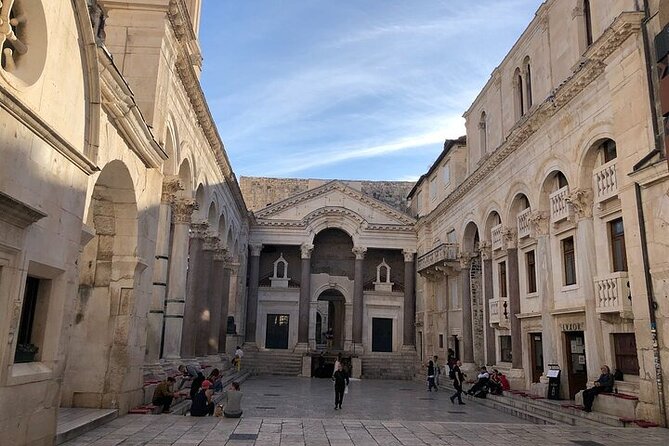
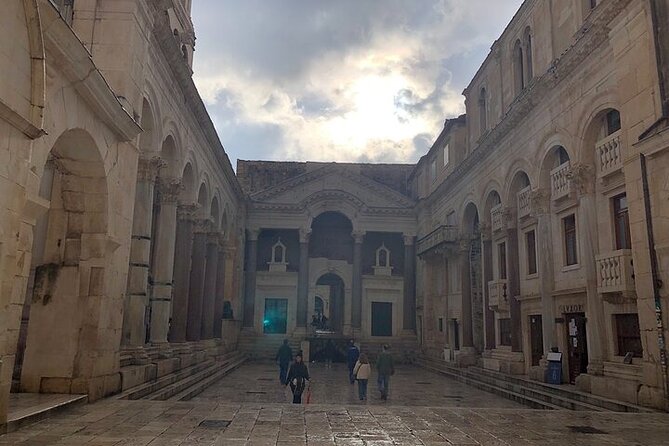
This tour begins on Peristil ulica, at the Peristyle, the central square inside Diocletian’s Palace. It ends within the palace area, not far from the starting point. If you want to return to the Peristyle, the guide can take you back.
That compact route matters in Split. The old center is not a single fenced archaeological site with one obvious entrance. It is a living part of town, filled with lanes, homes, cafés, shops, churches, and Roman remains. A guide helps you see how these pieces fit together instead of treating each stone as an isolated sight.
The tour lasts about 1 hour and 30 minutes. That is enough time for a well-organized introduction, but not enough for every museum or detailed interior visit. You should think of it as a strong orientation walk, not a complete archaeological survey.
Because it is private, your experience depends partly on your own questions. Ask about architecture, Diocletian, Croatian history, religion, or daily life in the palace. The guide is there to explain the connections, not simply point out monuments.
More Historical Tours in Split
- Walking Tour of Split with a ‘Magister’ of History
★ 5.0 · 1,122 reviews - Split Walking Tour with Professor of History
★ 5.0 · 926 reviews - Split: History and Heritage Walking Tour
★ 4.9 · 650 reviews
The Peristyle shows Diocletian’s power
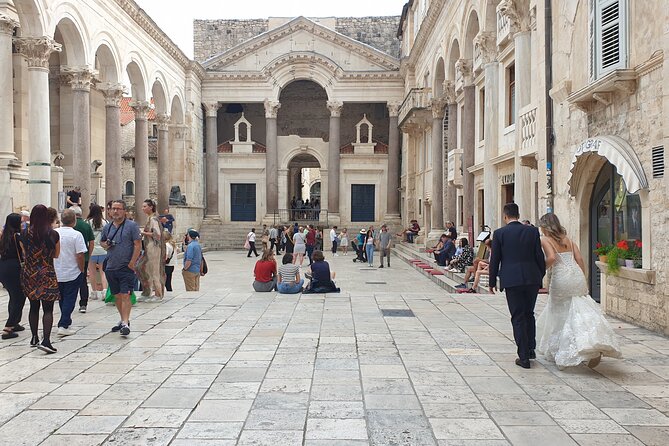
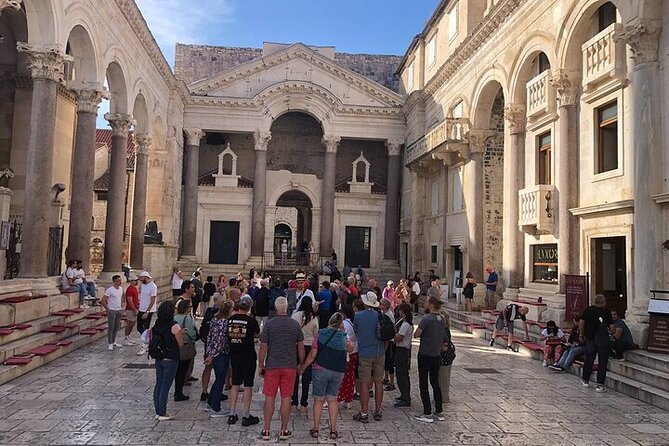
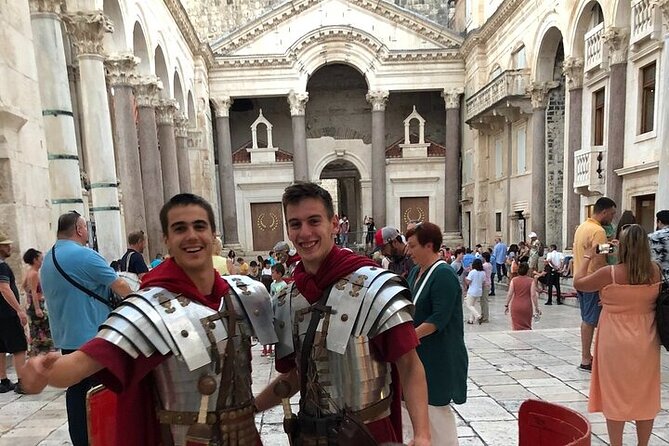
The Peristyle is the natural opening for a tour of the palace. This broad central square connected to many parts of Diocletian’s complex, so it is both a meeting point and the clearest place to understand the emperor’s design.
You learn how Diocletian moved from an unremarkable beginning to the highest level of Roman power. That story gives the palace a human angle. It was not just a retirement residence built by an emperor. It was a carefully planned statement about status, authority, religion, and control.
The guide also discusses the Roman temple of Jupiter, whom Diocletian regarded as his divine father. That detail helps explain the religious message built into the palace. Imperial architecture and worship were closely linked, and the square made that connection visible.
I would pay close attention here, since the Peristyle sets up nearly everything that follows. It explains why the palace was built, how its spaces connected, and why Diocletian chose such a powerful religious setting for his later years.
The substructures reveal how the palace was built
The palace substructures are one of the most useful parts of this walk. You pass through the lower levels while learning about their original construction and the ways they were used over time.
These spaces help you understand the palace above. Roman builders used the lower structure to support the upper rooms and streets, so the underground plan reflects the layout of the imperial residence. Without that connection, it is easy to see the substructures as a separate attraction. The guide gives them a practical purpose.
This tour does not include the museum section of the substructures. You can visit that part afterward, so the walk works well as a first look before a self-guided return visit.
The two listed stops at the substructures may catch your eye. The route includes them at two points, likely as part of entering and revisiting this important area. Since the exact sequence can depend on the guide and local access, ask at the start how the two visits will be handled.
The Golden Gate connects Roman rule with Croatian identity
The Golden Gate was the palace’s main entrance. It is a good place to shift from imperial Rome to the later history of Split.
Here you see the statue of Gregory of Nin, an important figure in Croatian history and language. The guide explains why he matters, giving you a glimpse of how national identity is expressed in public monuments.
This is one of the tour’s useful contrasts. Diocletian’s Palace began as an imperial Roman project, but later generations made the structure their own. The Golden Gate and Gregory of Nin help show that Split is not frozen in one historical period.
The stop lasts about 10 minutes. That is enough for an explanation and photographs, but you may want to return later if you want more time with the statue and the gate.
More Walking Tours in Split
- Split: Old Town and Diocletian Palace Walking Tour
★ 4.9 · 4,727 reviews - Walking Tour of Split and Diocletian’s Palace
★ 5.0 · 2,588 reviews - Krka Waterfalls tour with Trogir Walking tour and Krka panoramic boat cruise
★ 5.0 · 1,659 reviews - Split & Diocletian’s Palace Walking Tour
★ 5.0 · 1,125 reviews
Riva Harbor adds Split’s public face
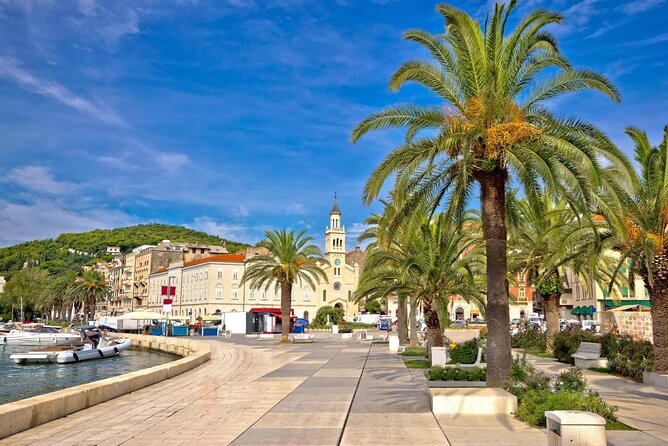
At Riva Harbor, the focus shifts from palace walls to the city’s waterfront promenade. You see a bronze model of Diocletian’s Palace and learn about the history of Riva.
The model is especially useful after the earlier palace stops. You can look at the complex as a whole and better understand its scale and position within modern Split. A three-dimensional model can make the layout clearer than a street-level view among narrow lanes.
The Riva stop also gives the tour a change of pace. After Roman remains and underground spaces, you get an open view and a broader sense of how Split functions today. The tour does not stay locked inside the palace, and that is a real strength.
Allow about 15 minutes here. If you have only one day in Split, this explanation helps you place the historic center within the city you are actually visiting.
Fruit’s Square brings in Venetian Split
Fruit’s Square, or Trg Braće Radić, introduces two more pieces of local history. You learn about a 15th-century Venetian citadel and Marko Marulić, often called the father of Croatian literature.
This stop shows why a palace tour should not end with Rome. Split’s identity developed through many periods, and Venetian influence is part of that story. The square’s architecture and defensive history add another layer to the city’s past.
Marko Marulić gives the stop a cultural focus. Instead of hearing only about rulers, walls, and military power, you also encounter Croatian literary history. That makes the route feel broader and more local.
The square is scheduled for about 10 minutes. I would treat it as a concise introduction. If Marulić or Venetian history interests you, note the details and ask the guide for suggestions on what to see afterward.
The Split Synagogue adds an important human story
The walk passes by Split’s 16th-century synagogue and explains the history of the city’s Jewish community. This is a short stop, but it prevents the tour from presenting Split as only a Roman and Christian city.
The synagogue is not listed with included admission, and the tour does not promise an interior visit. You should expect to learn about the site and its place in Split’s history while passing by, rather than plan on a full museum-style visit.
I value this stop because it broadens the story. A city’s past includes minority communities, religious change, and periods of coexistence and hardship. Even a 10-minute explanation can make the streets around the palace feel less like a collection of monuments and more like a place shaped by many communities.
The Vestibule may bring traditional Dalmatian singing
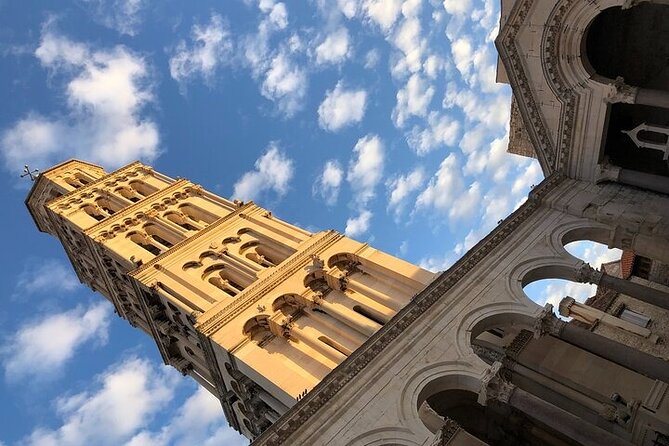
The Vestibule was part of Emperor Diocletian’s palace and gives you another look at the emperor’s private and ceremonial world. The stop is short, about five minutes, but the space has an unusual feature: you may hear traditional Dalmatian singing.
The word may matters. Singing is a possibility, not a guaranteed performance, so do not book the tour solely for that moment. If it happens, it adds a pleasant local touch to an otherwise highly historical walk.
The Vestibule also connects nicely with the Peristyle. You see how the palace moved from grand public spaces toward more restricted imperial areas. The guide can explain the function of the room and its place in the original complex.
What the Spanish guiding is like
The tour is designed for Spanish speakers and is led by an educated guide with strong knowledge of the palace and surrounding locations. The clearest praise concerns attentiveness, understandable Spanish, and a willingness to answer questions.
That combination matters more than a memorized list of dates. Split’s history moves quickly from Roman emperors to medieval figures, Venetian rule, literature, religion, and modern city life. You need a guide who can explain those changes in plain Spanish and respond when something catches your interest.
Since this is a private activity, you are not sharing the guide with unrelated groups. That makes it easier to ask for a slower explanation, repeat a point, or spend a little more time at a stop. The exact flexibility is not guaranteed, so ask politely at the beginning if there is a specific subject you want covered.
If your Spanish is intermediate, this format may be especially useful. You can ask the guide to repeat a name or explain a term without holding up a large group.
Is $63.05 per person good value?
The listed price is $63.05 per person. That is not the cheapest way to see Diocletian’s Palace, especially if you are traveling alone. You can walk through much of the old center independently, and the principal outdoor stops do not list admission fees.
The value improves when you are several people sharing the private guide. Group discounts are available, and a small private group gives you a more personal experience than a large scheduled walk. The price pays for explanation, structure, and questions, rather than entry to a major ticketed attraction.
I see this tour as good value for three types of visitors:
- People who want Spanish-language history explained clearly.
- Small groups who prefer a private guide to a large public tour.
- First-time visitors who want to understand the palace before exploring it alone.
It is less convincing if you only want a fast photo walk or plan to spend most of your time inside paid museums. Admission tickets are not included, and gratuities are also separate. Build those costs into your budget before booking.
The tour is often booked well ahead, with an average booking time of about 115 days. That suggests you should reserve early if your Split dates are fixed, especially if you need Spanish and want a private departure.
Practical details that affect your day
You receive confirmation within 48 hours of booking, subject to availability. A mobile ticket is offered, and the meeting point is at Peristil ulica, 21000 Split.
The route is near public transportation, though the main experience itself is a walking tour through the historic center. Service animals are allowed, and most people can take part. The key warning concerns high steps, so anyone with mobility problems should consider the route carefully before paying.
Wear shoes suited to uneven historic surfaces and bring water, particularly in warm weather. The tour is short, but Split’s stone streets and steps can make 90 minutes feel more demanding than the clock suggests.
Free cancellation is available up to 24 hours before the start time. Cancellations made later are not refunded, and changes within that 24-hour period are not accepted. The tour also requires a minimum number of participants, so a cancellation by the provider can result in another date, another experience, or a full refund.
Who should book this Split walking tour?
I would recommend it most strongly to Spanish-speaking couples, families, and small groups who want a private introduction to Split’s central sights. The mix of Roman architecture, Croatian identity, Venetian history, Jewish heritage, and local culture gives you a useful first picture of the city.
It also suits visitors who like to ask questions. A private format is wasted if you simply follow silently, but it is valuable if you want to understand why the palace was built, how it changed, and how modern Split grew around it.
You may want a different plan if you need wheelchair-friendly access, have trouble with high steps, or want extensive museum time. This is a brisk overview with outdoor explanations and limited interior access, not a full palace admission tour.
Final verdict: book it for context, not just monuments
Book this tour if you want Spanish-language guidance, a private group, and a clear story linking Diocletian’s rise to the many later chapters of Split. The strongest features are the attentive guiding, the palace substructures, and the range of subjects beyond Roman architecture.
Skip it if you are watching every dollar, traveling alone, or happy to read signs and explore without help. For a small group, though, $63.05 per person can be a fair price for a focused introduction that helps the rest of your time in Split make more sense.
FAQ
Where does the tour start?
The tour starts at Peristil ulica, Peristil ul., 21000 Split, Croatia.
Where does the tour end?
It ends at Diocletian’s Palace in Split, not far from the starting point. The guide can take you back to the Peristyle if you ask.
How long does the walking tour last?
The tour lasts approximately 1 hour and 30 minutes.
Is this a private tour?
Yes. Only your group participates in the activity.
Is the tour conducted in Spanish?
Yes. The experience is a private history walking tour in Spanish.
Are admission tickets included?
No admission tickets are included. The listed walking stops have no admission charge, but the museum section of the palace substructures is not part of the tour and can be visited afterward.
Is the tour suitable for people with mobility issues?
Most people can participate, but the tour is not recommended for travelers who have problems with high steps.
Can I cancel for a full refund?
Yes. You can cancel at least 24 hours before the start time for a full refund. Cancellations or changes made less than 24 hours before the start time are not accepted for a refund.
Just added around Split
- Private VIP Blue Lagoon and 3 Islands Tour★ 4.5 · 9 reviews
- Split highlights – Evening walking tour★ 5.0 · 9 reviews
- Private boat transfer Split – Bol★ 5.0 · 9 reviews
- From Split: Trogir & Blue Lagoon Boat Tour with Snorkeling★ 4.6 · 9 reviews
- Private Photography Activity in Split★ 5.0 · 9 reviews
- Bike, Beer & Poljud Stadium Tour★ 5.0 · 9 reviews
- From Hvar: Blue cave group speedboat tour full day★ 5.0 · 9 reviews
- Split Walking Tour: History, Legends & Tales★ 5.0 · 9 reviews
Historical Tours, compared.

Walking Tour of Split with a ‘Magister’ of History
Read our review →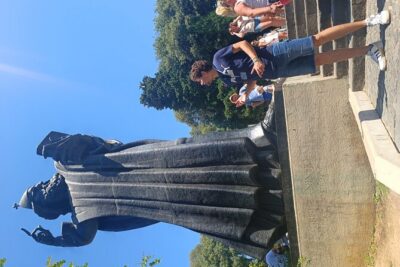


Split History and Gastro Small-Group Tour with Food and Drinks
Read our review →
PREMIUM Emperor’s Walking Tour for History Lovers + Museum
Read our review →Browse the lists this tour appears in