
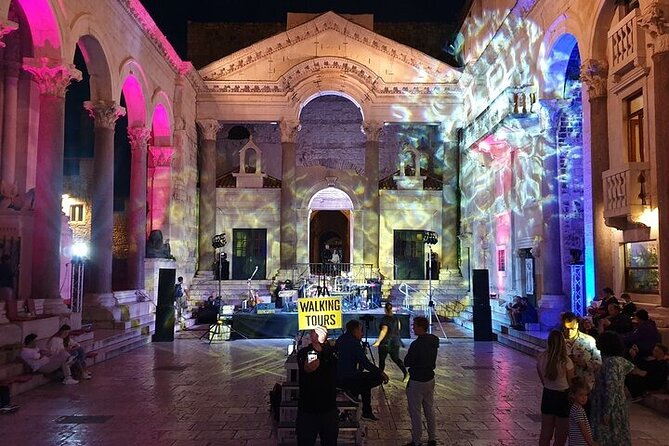
Reviewed · HISTORICAL TOURS
Private History Split Walking Tour in Italian – Small group
Split is an ancient palace you can still walk through. This 90-minute Italian tour links the city’s key sights with the story of Emperor Diocletian, from his rise from obscurity to Roman power. I especially like the private format and the chance to hear local stories in Italian. I also like that the route includes both palace landmarks and nearby city sights, not just the famous central square. The main drawback is that the tour is not a good fit if high steps are difficult, and the short running time means each stop gets only a brief look.
The tour begins and ends at the Peristyle, the heart of Diocletian’s Palace. You will walk through ancient passageways, the palace cellars, the Golden Gate, Riva Harbor, Fruit’s Square, and the old Jewish quarter. Guides such as Maria and Doris have been praised for clear Italian, strong preparation, warmth, and a lively style, though the exact guide is not guaranteed.
In This Review
- Key points at a glance
- Why this short Split walk works well
- Meeting at the Peristyle, Split’s Roman crossroads
- The Vestibule and a chance to hear Dalmatian singing
- The palace substructures and what lies below
- The Golden Gate and Gregory of Nin
- Riva Harbor and Split’s waterfront story
- Fruit’s Square, Venetian defenses, and Marko Marulić
- The old synagogue and Split’s Jewish community
- The Italian guides and the tone of the experience
- Timing, walking, and practical comfort
- Who should book this private Italian tour?
- Should you book it?
- FAQ
- Where does the tour start?
- Where does the tour end?
- How long does the tour last?
- Is this a private tour?
- Is the tour conducted in Italian?
- What is the price?
- Is admission to the palace substructures museum included?
- Are gratuities included?
- Can I cancel for a full refund?
Key points at a glance
- Private Italian-language walk: Only your own group takes part, making it easier to ask questions and keep the pace comfortable.
- The Peristyle anchors the visit: This central palace square helps you understand how Split grew around Roman architecture.
- Seven compact stops in 90 minutes: You see the palace, waterfront, medieval center, Venetian defenses, and former synagogue area.
- Local stories add color: Look for details about Gregory of Nin, Marko Marulić, Dalmatian singing, and Split’s Jewish community.
- The palace substructures are included: You see the historic basement passageways, but not the museum section.
- Good value for first-time visitors: At $69.39 per person, the tour works best when you want a focused introduction rather than a long museum visit.
Why this short Split walk works well
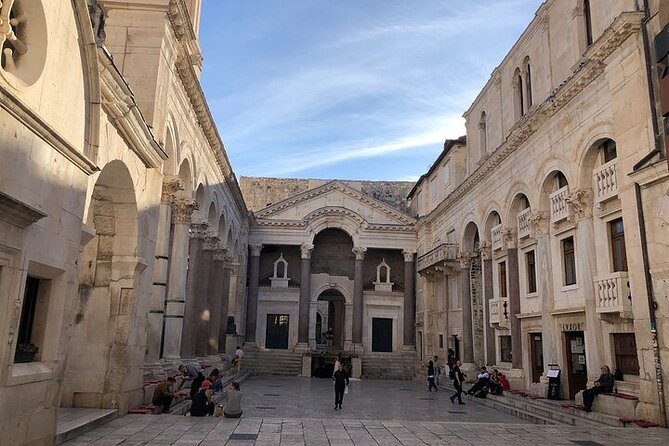
Diocletian’s Palace is not a single ruin fenced off from modern life. It is the core of Split, with streets, shops, homes, cafés, and churches woven into Roman walls. That can be confusing at first. You may walk through an alley and wonder if you are inside a palace, a medieval town, or both. In fact, you are.
That is why a guide helps. This walk gives you a clear route through the most important parts of the old center. Instead of stopping only for photographs, you get the broad story: Diocletian’s career, the building of the palace, its later uses, and the way Split developed around it.
I like the balance of the route. The first half concentrates on the palace itself. The second half moves outward to the harbor and old town squares. You get architecture, politics, religion, language, and everyday city life in one compact outing.
The private setup is another real advantage. Only your group participates, so you can ask for clarification in Italian without competing with a large crowd. A small group also makes it easier to hear in busy streets and narrow passageways.
The price is $69.39 per person. That is not a bargain-basement walking tour, but it can be fair value for a private experience with an Italian-speaking guide. Group discounts are available, so the cost becomes more reasonable when several people book together. You are paying mainly for the guide’s explanation and the convenience of a private route, not for entrance tickets to a collection of paid museums.
More Historical Tours in Split
- Walking Tour of Split with a ‘Magister’ of History
★ 5.0 · 1,122 reviews - Split Walking Tour with Professor of History
★ 5.0 · 926 reviews - Split: History and Heritage Walking Tour
★ 4.9 · 650 reviews
Meeting at the Peristyle, Split’s Roman crossroads
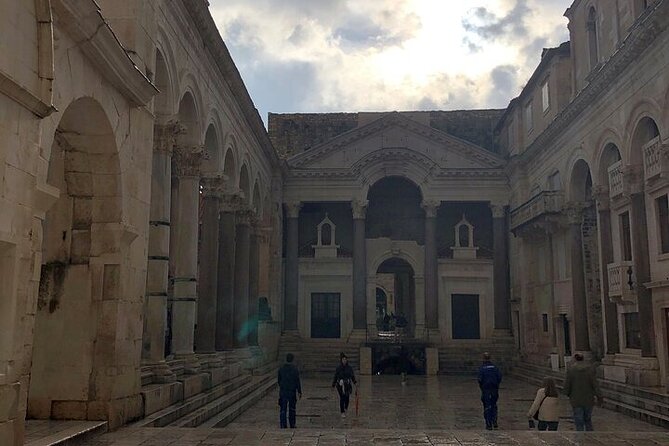
The tour starts on Peristil ulica at the Peristyle, also written as Peristil. This is the central square of Diocletian’s Palace, and it is the right place to begin because almost every major palace route leads from here.
Allow yourself enough time to find the meeting point. The listed location is in the old center, near public transportation, but the palace streets can be confusing if you are arriving for the first time. The activity ends back at the same meeting point, which is useful if you want to continue exploring on your own.
The Peristyle receives about 15 minutes. That is enough for an introduction to the square and the palace plan, but not enough for a slow architectural study. Listen carefully here, because the guide’s opening explanation should help you make sense of the stops that follow.
The larger story is especially useful. Diocletian was not born into the highest level of Roman society, yet he became emperor and one of the most powerful men in the ancient world. His palace was not merely a retirement home. It was a carefully planned statement of authority, built on a grand scale.
The square also shows how old and new overlap in Split. Roman columns and ceremonial spaces sit beside later buildings and daily city life. You are not simply looking at an archaeological site. You are standing in the working center of a modern city.
The Vestibule and a chance to hear Dalmatian singing
The Vestibule gets only five minutes, so this is a quick stop. It was the formal entrance space to the emperor’s residential area, and its round shape helps you picture the ceremonial approach to Diocletian’s private quarters.
One unusual possibility here is traditional Dalmatian singing. It is not guaranteed, so treat it as a pleasant extra rather than a promised performance. Still, the setting makes the possibility memorable. Ancient stone, local voices, and a short explanation can tell you something about the region that a list of dates cannot.
Because this stop is brief, you may want to ask your guide one direct question about how the vestibule functioned. The tour’s pace is fairly brisk, and five minutes passes quickly.
The palace substructures and what lies below
The palace substructures receive about 10 minutes. These underground spaces are valuable because they preserve the shape of the rooms above. They also reveal how the palace was built and how the lower level served different purposes over time.
The substructures are more than a basement walk. They help you understand the practical side of Roman construction. Once you see the supporting spaces below, the palace layout above becomes easier to read. The guide can connect the engineering of the building with its later use as Split expanded.
There is an important limitation. The tour does not visit the museum section of the substructures. You can visit that part after the walk, but any entrance arrangements or ticket costs for it are outside this experience.
That limitation may matter if your main goal is a longer underground visit. If you want a general introduction, 10 minutes gives you useful context. If you are passionate about Roman construction, plan extra time after the tour for the museum area.
More Walking Tours in Split
- Split: Old Town and Diocletian Palace Walking Tour
★ 4.9 · 4,727 reviews - Walking Tour of Split and Diocletian’s Palace
★ 5.0 · 2,588 reviews - Krka Waterfalls tour with Trogir Walking tour and Krka panoramic boat cruise
★ 5.0 · 1,659 reviews - Split & Diocletian’s Palace Walking Tour
★ 5.0 · 1,125 reviews
The Golden Gate and Gregory of Nin
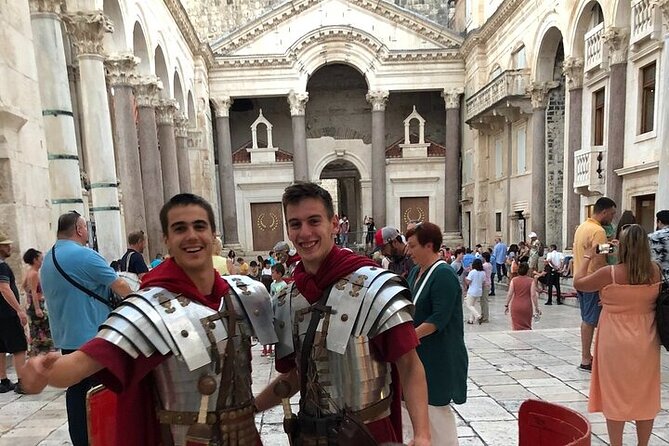
The Golden Gate is the palace’s main entrance and receives about 10 minutes. It is one of the strongest stops for understanding how the imperial complex faced the outside world.
The gate also introduces Gregory of Nin, whose statue is nearby. The guide explains his importance to Croatian history and language. This is a welcome shift from Roman politics to the later cultural story of Croatia.
You may have heard the local custom of touching the statue’s toe for good luck, but that detail is not specifically promised as part of this tour. The important point here is the meaning behind Gregory of Nin and the role of language in national identity.
I appreciate this stop because it prevents the visit from becoming a Roman-only lesson. Split’s story continued long after Diocletian, and the Golden Gate provides a natural bridge between imperial architecture and Croatian culture.
Riva Harbor and Split’s waterfront story
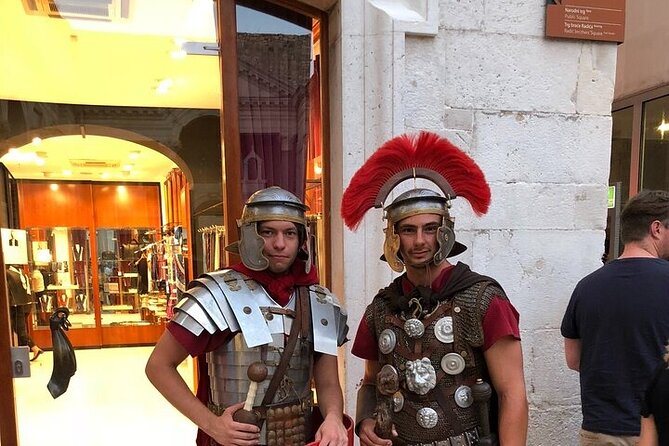
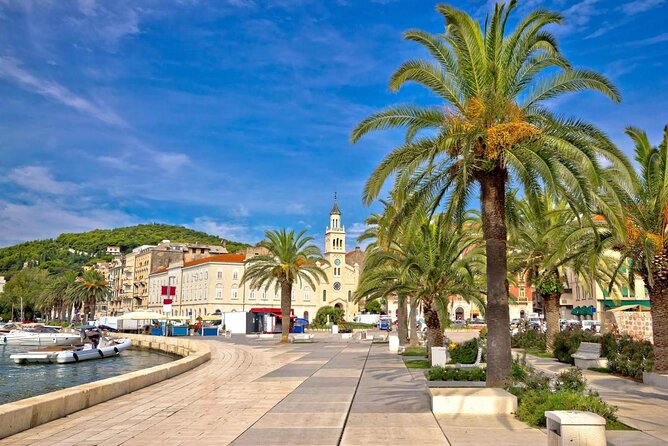
The walk then heads to Riva Harbor for about 15 minutes. Riva is Split’s well-known waterfront promenade, and it gives you a change of scale after the tight lanes and enclosed palace spaces.
A bronze model of Diocletian’s Palace helps you see the complex as a whole. This is especially useful after walking through it. From ground level, palace walls can feel fragmented. A model lets you connect the gates, central square, residential areas, and waterfront position.
The guide also explains Riva’s history. That matters because the harbor is not just a scenic pause. It helps explain Split’s relationship with the sea and the way the city opened outward from the palace.
The promenade can be a busy public space, so stay close enough to hear the guide. The private format helps, but it does not remove ordinary city noise. You might also appreciate this as a chance to pause, look back toward the old center, and get your bearings.
Fruit’s Square, Venetian defenses, and Marko Marulić
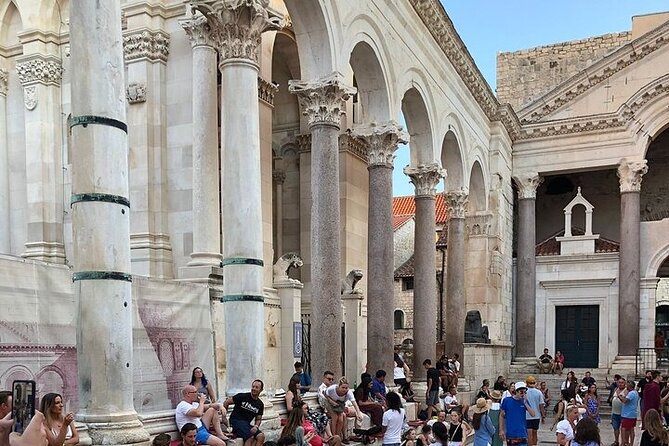
Fruit’s Square, or Trg Braće Radić, receives around 10 minutes. Its name comes from the market tradition associated with the square, while its architecture points to later chapters in Split’s story.
The stop includes a 15th-century Venetian citadel. This is a useful reminder that Split was shaped by more than Roman rule. Venetian power left a clear mark on the city, and the fortress helps you see how defense and trade influenced the old center.
You also learn about Marko Marulić, often called the father of Croatian literature. His connection gives the square a cultural angle. The tour is not only about emperors and stone walls. It also introduces the people who shaped Croatian writing and identity.
Ten minutes is enough for a focused explanation, but the square deserves more time if you enjoy details about later architecture. You can return after the walk without a guide and look more closely at the surrounding buildings.
The old synagogue and Split’s Jewish community
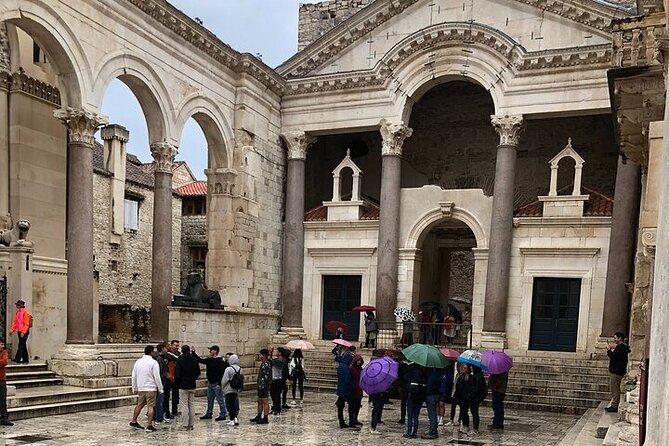
The final listed stop is the Split Synagogue, where you spend about 10 minutes learning about the city’s Jewish community. The route passes by the 16th-century synagogue rather than presenting it as a standard interior museum visit.
The activity data marks admission as not included, so do not assume an interior visit is part of the tour. The value here is the historical context and the chance to notice a place you might otherwise walk past.
This stop broadens the tour again. Split’s past includes Roman emperors, Venetian rule, Croatian writers, Christian traditions, and Jewish residents. A short explanation cannot cover every detail, but it can encourage you to look at the old center with more care.
The Italian guides and the tone of the experience
The strongest praise has focused on the guides. Maria has been singled out for speaking very good Italian and helping participants understand the city’s past. Doris has also been praised for professional, engaging explanations of Diocletian’s Palace and Split.
Other comments describe the guides as prepared, kind, funny, and able to tell stories and city secrets in an engaging way. One recurring strength is affection for Split itself. That matters in a walking tour. A guide who cares about the city can point out connections and small details that a printed outline tends to miss.
The exact guide may vary. Names such as Maria and Doris give you a useful sense of the standard to expect, but they are not a guarantee of assignment. The tour is described as being led by an educated guide with strong knowledge of the palace and nearby sights.
The Italian-language focus is important. If you understand Italian well, you should get more from the explanations than you would from a tour in a language you only partly follow. Several comments praise the Italian delivery as clear and pleasant.
Timing, walking, and practical comfort
The advertised duration is about 1 hour and 30 minutes. That makes this a good first activity after arriving in Split, especially if you want orientation before exploring independently.
The route has seven stops, but it is not a long stop-and-study visit. Several locations receive only 5 or 10 minutes. You will hear the main story and see the major points, then decide what deserves a second visit.
High steps are the key physical warning. The experience is not recommended for people who have problems with high steps. Most people can participate, service animals are allowed, and the route is near public transportation, but the palace is an old urban area with uneven movement between levels.
Wear shoes you can walk in comfortably. That advice is simple, but it matters more here than dressing for a formal sightseeing attraction. The experience is outdoors and on foot, with underground sections and historic streets included.
The stated operating period runs daily from 9:00 a.m. to 8:00 p.m., from December 31, 2023 through June 17, 2026. Your booking confirmation is provided within 48 hours, subject to availability. Gratuities are not included, so budget separately if you want to thank your guide.
Free cancellation is available when you cancel at least 24 hours before the local start time. A later cancellation or change is not refundable. The activity also requires a minimum number of participants, and if that minimum is not met, you are offered another date or experience, or a full refund.
Who should book this private Italian tour?
I would choose this tour if you are visiting Split for the first time and want the palace explained in Italian. It is also a good match if you prefer a private group to a large public walk, or if you want a short introduction before spending the rest of the day on your own.
It suits couples, families, and friends who enjoy history but do not want a long lecture. The mixture of Roman, Venetian, Croatian, Jewish, and waterfront stories gives you a broad picture in a short time.
I would hesitate if you want extensive time inside the substructures, a full museum visit, or detailed architectural study at every stop. The tour is an orientation, not an all-day examination of Diocletian’s Palace.
The price makes the most sense for a group that values Italian guidance and personal attention. If you are comfortable exploring alone and only want to see the outside of the palace, you may find the cost harder to justify. If you want the story to make sense and you plan to ask questions, the private format adds real value.
Should you book it?
Book this tour if you want a focused Italian introduction to Split with a private guide and a route that reaches beyond the palace walls. The best parts are the clear historical framework, the small-group setting, and the personal style praised in connection with guides such as Maria and Doris.
Skip it if high steps are a concern or if you want a long visit to the palace substructures museum. For most Italian-speaking visitors with 90 minutes to spare, it is a practical way to get oriented, learn the city’s big story, and leave with a good list of places to explore again at your own pace.
FAQ
Where does the tour start?
The tour starts at Peristil ulica, Peristil ul., 21000 Split, Croatia, at the Peristyle of Diocletian’s Palace.
Where does the tour end?
The activity ends back at the meeting point.
How long does the tour last?
The tour lasts approximately 1 hour and 30 minutes.
Is this a private tour?
Yes. Only your own group participates in the activity.
Is the tour conducted in Italian?
Yes. It is an Italian-language history walking tour.
What is the price?
The listed price is $69.39 per person. Group discounts are available.
Is admission to the palace substructures museum included?
No. The tour visits the palace substructures but does not include the museum section. You can visit the museum after the tour.
Are gratuities included?
No. Gratuities are not included in the price.
Can I cancel for a full refund?
Yes, if you cancel at least 24 hours before the experience start time. Cancellations made less than 24 hours in advance are not refunded.
Just added around Split
- Private VIP Blue Lagoon and 3 Islands Tour★ 4.5 · 9 reviews
- Split highlights – Evening walking tour★ 5.0 · 9 reviews
- Private boat transfer Split – Bol★ 5.0 · 9 reviews
- From Split: Trogir & Blue Lagoon Boat Tour with Snorkeling★ 4.6 · 9 reviews
- Private Photography Activity in Split★ 5.0 · 9 reviews
- Bike, Beer & Poljud Stadium Tour★ 5.0 · 9 reviews
- From Hvar: Blue cave group speedboat tour full day★ 5.0 · 9 reviews
- Split Walking Tour: History, Legends & Tales★ 5.0 · 9 reviews
Historical Tours, compared.

Walking Tour of Split with a ‘Magister’ of History
Read our review →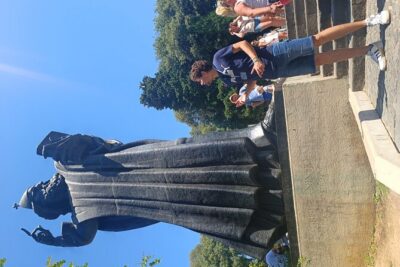


Split History and Gastro Small-Group Tour with Food and Drinks
Read our review →
PREMIUM Emperor’s Walking Tour for History Lovers + Museum
Read our review →Browse the lists this tour appears in