
Reviewed · HISTORICAL TOURS
History Split Walking Tour in German – Small group
Split’s Roman heart is still alive. I like the way this German-language tour connects Diocletian’s Palace with modern Split, rather than treating the palace as a sealed museum. I also like its tight route, which covers the Peristyle, substructures, Golden Gate, Riva, Fruit Square, and the old synagogue area in about 90 minutes. The main caution is price: at $165.08 per person, it is costly for a short walk, especially since the listed stops do not include museum admission.
The guides are the tour’s strongest asset. Antonella is praised for her humor, enthusiasm, and ability to handle questions, while Josip is described as friendly and especially good on German-language old-town tours. Marko, a history teacher, has also led the walk. You should be comfortable with high steps, and a group of up to 20 can feel less intimate than the small-group label first suggests.
In This Review
- Key points at a glance
- Why this short German tour works in Split
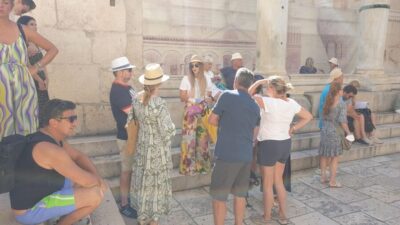
- Meeting at the Peristyle, the palace’s great stage
- The Vestibule and a chance of Dalmatian singing
- Palace substructures, the best lesson in how Split changed
- The Golden Gate and Gregory of Nin
- Riva Harbor, where the palace meets the sea
- Fruit Square and Split’s Venetian chapter
- The Split Synagogue and the city’s Jewish past
- A 90-minute pace, and what the group size means
- Is $165.08 a fair price?
- Who will get the most from this tour?
- Should you book the German Split walking tour?
- FAQ
- How long does the German-language Split walking tour last?
- Where does the tour start?
- Where does the tour end?
- What language is the tour conducted in?
- How many people can join the tour?
- Are entrance tickets included?
- Is the Split Synagogue an included interior visit?
- Is the tour suitable for people who have trouble with high steps?
- What is the cancellation policy?
Key points at a glance
- A compact route through Split’s Roman core: See the Peristyle, Vestibule, palace substructures, Golden Gate, and nearby old-town squares without spending half a day on your feet.
- German-language guiding: Antonella, Josip, and Marko have all been praised for clear explanations, humor, and thoughtful answers.
- The palace is still part of daily life: The route shows how Roman walls, medieval lanes, Venetian defenses, and modern cafés share the same space.
- No museum ticket is included: You pass through the palace substructures, but the museum section is left for you to visit later.
- A short but active walk: The tour lasts about 1 hour 30 minutes, with some high steps and uneven old-town surfaces to consider.
- A high price for a brief experience: Group discounts may help, but you should compare the cost with the amount of guide time and what you plan to see afterward.
Why this short German tour works in Split
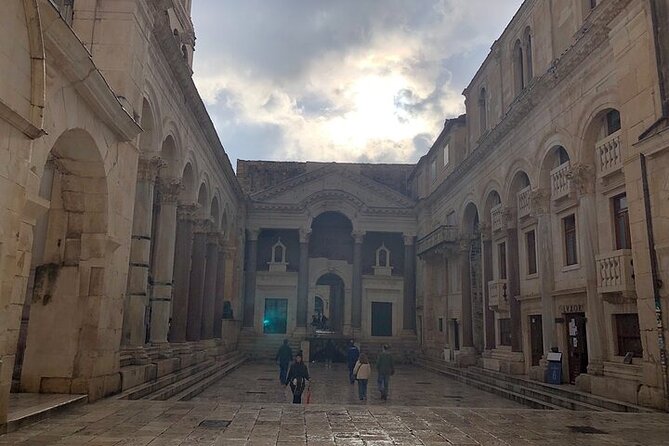
Diocletian’s Palace is not simply one ancient building. It is a large chunk of Split’s old town, with homes, shops, restaurants, lanes, courtyards, and churches fitted into Roman walls. Without context, you can walk through it and see impressive stone without understanding how one place moved from imperial residence to medieval town.
That is where a guide earns the fee. This walk explains how Diocletian rose from an obscure beginning to become one of the most powerful men in the Roman world. That personal story gives the palace a human center. You are not just looking at columns. You are following the career of the emperor who ordered this enormous retirement residence.
The German-language format is important for anyone who wants more than a quick set of facts. The strongest comments about the guides emphasize clear explanations, humor, lively delivery, and willingness to answer questions beyond the planned route. Antonella receives especially warm praise for being entertaining and well prepared. Josip is singled out for a friendly manner and strong German-language guiding, while Marko brings the perspective of a history teacher.
The walk is also useful early in a Split visit. It gives you a map of the old center, points out the main entrances and squares, and leaves you close to where you began. You can then return to the places that caught your interest, including the museum section of the substructures.
More Historical Tours in Split
- Walking Tour of Split with a ‘Magister’ of History
★ 5.0 · 1,122 reviews - Split Walking Tour with Professor of History
★ 5.0 · 926 reviews - Split: History and Heritage Walking Tour
★ 4.9 · 650 reviews
Meeting at the Peristyle, the palace’s great stage
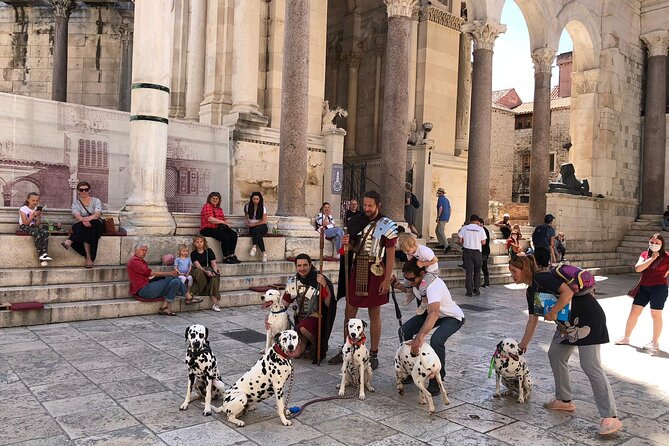
The tour begins on Peristil Street at the Peristyle, the central square of Diocletian’s Palace. This is the right place to start because nearly every important palace route branches from here.
Allow yourself enough time to find the meeting point. The old center is made for walking, but its lanes can feel confusing when you are arriving for the first time. The guide can take you back to the Peristyle at the end if you ask, although the official finish is elsewhere in Diocletian’s Palace and not far from the start.
The Peristyle gets about 15 minutes. That is enough for an introduction to the emperor, the design of the palace, and the square’s role as the center of the complex. It is also a good moment to look upward and around rather than rushing straight into the next stop.
I like this opening because it establishes the palace as a planned imperial compound. You get the basic layout before moving through smaller spaces. The drawback is that 15 minutes can go quickly if the group has many questions or if the guide needs to explain several layers of the site at once.
The Vestibule and a chance of Dalmatian singing
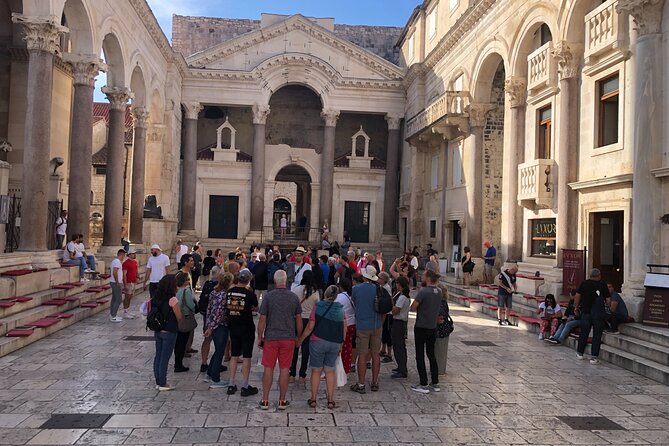
The next stop is the Vestibule, the entrance space connected with Emperor Diocletian. The visit lasts about five minutes, so expect a focused explanation rather than a long pause.
This small section can carry more atmosphere than its length suggests. The guide explains its past, and you may hear traditional Dalmatian singing. The word may matters here. Singing is a possibility, not a guaranteed performance, so you should book the tour for its historical content rather than count on a musical show.
The Vestibule also helps you see how the palace was built as a sequence of controlled spaces. The route moves from the broad public square into a more enclosed imperial setting. That change in scale makes the architecture easier to understand.
Palace substructures, the best lesson in how Split changed
The palace substructures receive about 10 minutes. You go through the lower parts of Diocletian’s Palace and learn about their construction and how they were used over the centuries.
This is one of the most useful stops because the lower rooms mirror the layout of the spaces above them. The substructures help explain the engineering of the palace and the practical work required to support the upper levels. They also show how old structures can acquire new purposes as a city grows around them.
There is an important limit. The guided route does not include the museum section of the substructures. You can visit that part after the tour, but admission is not included in the experience. If you want a longer archaeological visit, budget extra time and money for it.
I would pay close attention here, even if you plan to return later. The guide’s explanation gives you a framework for seeing the museum on your own. Without that introduction, the lower rooms can feel like a series of stone chambers. With it, their function and relationship to the palace become clearer.
More Walking Tours in Split
- Split: Old Town and Diocletian Palace Walking Tour
★ 4.9 · 4,727 reviews - Walking Tour of Split and Diocletian’s Palace
★ 5.0 · 2,588 reviews - Krka Waterfalls tour with Trogir Walking tour and Krka panoramic boat cruise
★ 5.0 · 1,659 reviews - Split & Diocletian’s Palace Walking Tour
★ 5.0 · 1,125 reviews
The Golden Gate and Gregory of Nin
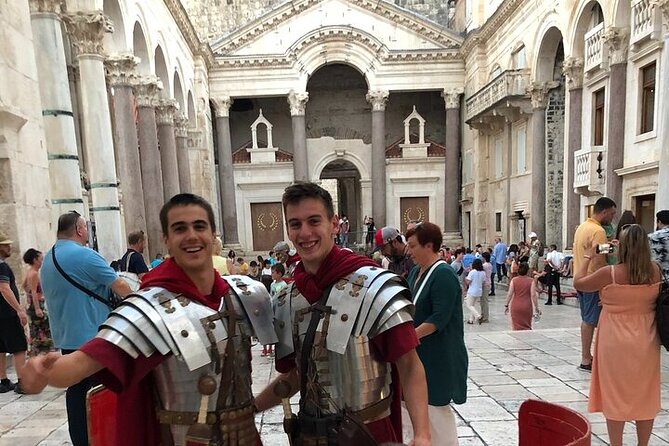
The Golden Gate is the main entrance to Diocletian’s Palace and gets about 10 minutes. This stop shifts the focus from the emperor’s private world to the public face of the palace.
You learn how the entrance worked and see the statue of Gregory of Nin. The guide explains his importance to Croatian history and language, adding a national and cultural layer to the Roman story.
That connection is one of the tour’s useful strengths. Split is not only about Roman ruins. Its identity was shaped by later people, languages, faiths, and political powers. Gregory of Nin gives the guide a natural way to show that the city’s story continued long after Diocletian left the scene.
The Golden Gate is also a practical orientation point. If you return later, you will recognize it as one of the palace’s key edges. The ten-minute stop should give you the essentials, though anyone fascinated by language or medieval Croatian history may wish for more time.
Riva Harbor, where the palace meets the sea
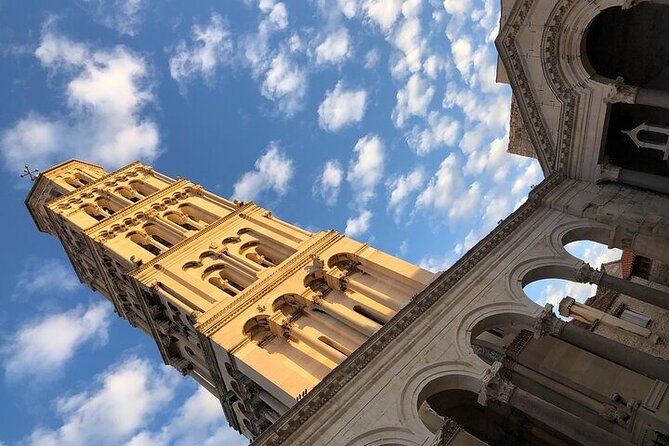
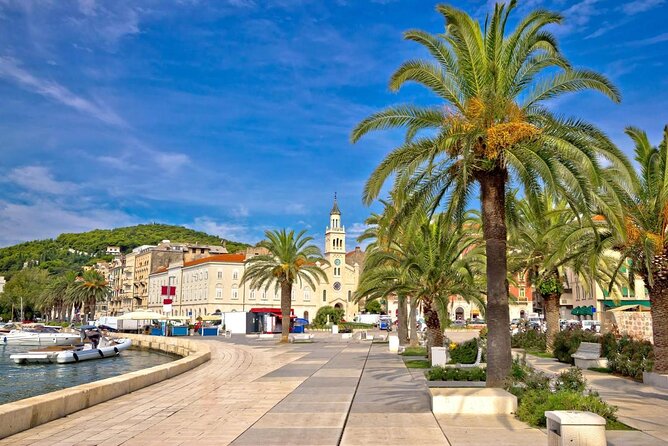
The route then reaches Riva Harbor for about 15 minutes. Here you see a bronze model of Diocletian’s Palace and hear about the history of Split’s famous waterfront promenade.
This is a welcome change after the enclosed lanes and stone interiors. The model helps you understand the palace from a broader angle, while the harbor shows how the old center relates to the water. The stop is not just a photo break. It connects the imperial compound with the public life of the city today.
I especially like this part for first-time visitors who struggle to picture the full shape of the palace. The bronze model can make the plan more legible than a quick glance at a map. Listen for how the guide describes the relationship between the palace and the Riva, since this is where ancient construction and modern Split are easiest to compare.
The route still keeps moving. Fifteen minutes is enough for an explanation and a look around, but not for a long waterfront pause. If you want time for coffee, views, or people-watching on the promenade, save that for after the tour.
Fruit Square and Split’s Venetian chapter
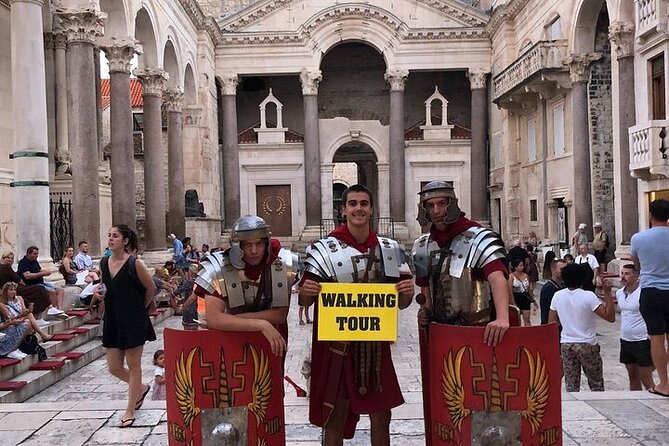
Fruit Square, officially Trg Brace Radic, receives about 10 minutes. Its name sounds casual, but the stop brings in a different era of Split’s past.
The guide points out a 15th-century Venetian citadel and explains the importance of Marko Marulic, widely regarded as the father of Croatian literature. This is a useful break from an itinerary centered on Roman history. You see how Venetian influence and Croatian literary culture fit into the same compact old town.
Fruit Square also shows why a palace tour should not remain inside the Roman walls alone. The surrounding city developed in stages, and the later additions are part of what makes Split worth exploring. The guide’s job here is to help you read those layers instead of treating every old stone as Roman.
The ten-minute stop is concise. If Marko Marulic or Venetian architecture interests you, note the location and come back when you have more time. The tour gives you the significance, but not a full standalone lesson on either subject.
The Split Synagogue and the city’s Jewish past
The final listed stop is the Split Synagogue, which you pass by for about 10 minutes. The guide discusses the 16th-century synagogue and the history of Jewish people in Split.
This is an important inclusion because it widens the story again. You move from imperial Rome to medieval and Venetian Split, then to the religious communities that helped shape the city. It is a reminder that old towns are made by many groups, not just rulers and armies.
The synagogue is passed by rather than presented as an included interior visit. Admission is not included, so you should not expect entry as part of the guided route. If you want to explore it further, ask the guide what can be visited separately, but the supplied tour details do not promise an interior visit.
Ending near the starting area is convenient. The guide can return you to the Peristyle if you ask, making it easy to continue sightseeing from the palace center.
A 90-minute pace, and what the group size means
The listed duration is approximately 1 hour 30 minutes. The stop times add up to about 75 minutes, leaving room for walking between locations, introductions, questions, and changes in pace.
That makes the timing feel realistic rather than padded. You cover a lot, but you do not get a long pause at any one site. I would choose this tour if you want a structured introduction before exploring independently. I would not choose it as your only Split experience if you prefer slow visits, extended photography stops, or detailed museum time.
The maximum group size is 20 people. That is smaller than a large coach tour, but it is not a private walk. Your experience will depend partly on where you stand and how many questions come up. The positive side is that the guide has room to respond to questions, something repeatedly praised in the feedback. The practical downside is that a group of 20 can make narrow lanes and busy palace spaces feel crowded.
The walk is near public transportation, and service animals are allowed. Most people can participate, but the tour is not recommended if high steps are a problem. Wear shoes that handle old stone surfaces, and bring water in warm weather. Those are simple precautions, but they matter more here than on a flat promenade walk.
Is $165.08 a fair price?
At $165.08 per person, this is an expensive 90-minute walking tour. The price may be easier to justify for a German-speaking group that values a live guide and wants a compact introduction to Split’s central sights. Group discounts are available, which could improve the total cost for several people booking together.
Still, you should look closely at what the price covers. The main value is the guide’s time, explanations, local context, and ability to answer questions. The listed stops do not require an admission ticket, and the museum area of the substructures is excluded. Gratuities are also not included.
I would book it when language access is a priority, when your time in Split is limited, or when you want a clear orientation before sightseeing alone. I would hesitate if price is your main concern, especially if you can comfortably explore the palace without German-language assistance.
The tour is commonly booked about 44 days ahead on average. That suggests you should not leave it until the last moment if your schedule is fixed, especially if you need a specific German-language departure. Confirmation arrives within 48 hours, subject to availability.
Free cancellation is allowed up to 24 hours before the local start time for a full refund. Inside that window, the payment is not refunded and changes are not accepted. The experience also requires a minimum number of participants, so a cancellation for that reason brings an alternative date or experience, or a full refund.
Who will get the most from this tour?
I would recommend it most strongly to German-speaking visitors who want history presented in a lively, human way. The strongest guide feedback points to humor, enthusiasm, clear teaching, and open answers, rather than a dry recitation of dates.
It also suits first-time visitors who want to understand the old center quickly. The route gives you the major palace spaces, a waterfront view, later Venetian influence, Croatian literary history, and the city’s Jewish past. That is a lot of ground in a short time.
Families and mixed-age groups may appreciate the short duration, but high steps are a real consideration. People who want a private, slow, highly detailed archaeological tour should look for a different format. The maximum group size of 20 means this is a shared experience, not an intimate personal guide.
Should you book the German Split walking tour?
Book it if you want a well-paced German introduction to Diocletian’s Palace and value a guide who can explain how Roman, Venetian, Croatian, Jewish, and modern Split fit together. Antonella, Josip, and Marko have each been praised for making the material lively and for handling questions well.
Think twice if $165.08 feels high for 90 minutes, or if you expect museum entry and extended time inside the substructures. For the right audience, the guide-led orientation can be worth the cost. For everyone else, use the route as a model for exploring Split independently, then spend your saved money on the sites and experiences that matter most to you.
FAQ
How long does the German-language Split walking tour last?
The tour lasts approximately 1 hour 30 minutes.
Where does the tour start?
It starts on Peristil Street, at the Peristyle in Split, Croatia.
Where does the tour end?
It ends in Diocletian’s Palace, not far from the starting point. The guide can take you back to the Peristyle if you ask.
What language is the tour conducted in?
The experience is a German-language walking tour.
How many people can join the tour?
The maximum group size is 20 participants.
Are entrance tickets included?
The listed stops have no admission ticket included. The tour does not include the museum section of the palace substructures, which you can visit afterward.
Is the Split Synagogue an included interior visit?
The route passes by the 16th-century synagogue and explains its history. Admission is not included.
Is the tour suitable for people who have trouble with high steps?
The tour is not recommended for people who have issues with high steps. Most people can participate, and service animals are allowed.
What is the cancellation policy?
You receive a full refund if you cancel at least 24 hours before the local start time. Cancellations or changes made less than 24 hours before the start are not refunded or accepted.
Just added around Split
- Private VIP Blue Lagoon and 3 Islands Tour★ 4.5 · 9 reviews
- Split highlights – Evening walking tour★ 5.0 · 9 reviews
- Private boat transfer Split – Bol★ 5.0 · 9 reviews
- From Split: Trogir & Blue Lagoon Boat Tour with Snorkeling★ 4.6 · 9 reviews
- Private Photography Activity in Split★ 5.0 · 9 reviews
- Bike, Beer & Poljud Stadium Tour★ 5.0 · 9 reviews
- From Hvar: Blue cave group speedboat tour full day★ 5.0 · 9 reviews
- Split Walking Tour: History, Legends & Tales★ 5.0 · 9 reviews
Historical Tours, compared.

Walking Tour of Split with a ‘Magister’ of History
Read our review →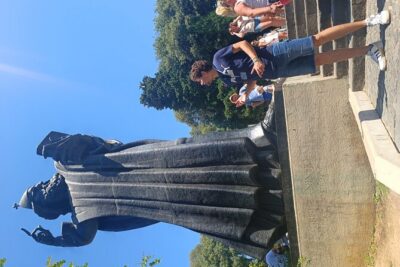


Split History and Gastro Small-Group Tour with Food and Drinks
Read our review →
PREMIUM Emperor’s Walking Tour for History Lovers + Museum
Read our review →Browse the lists this tour appears in