
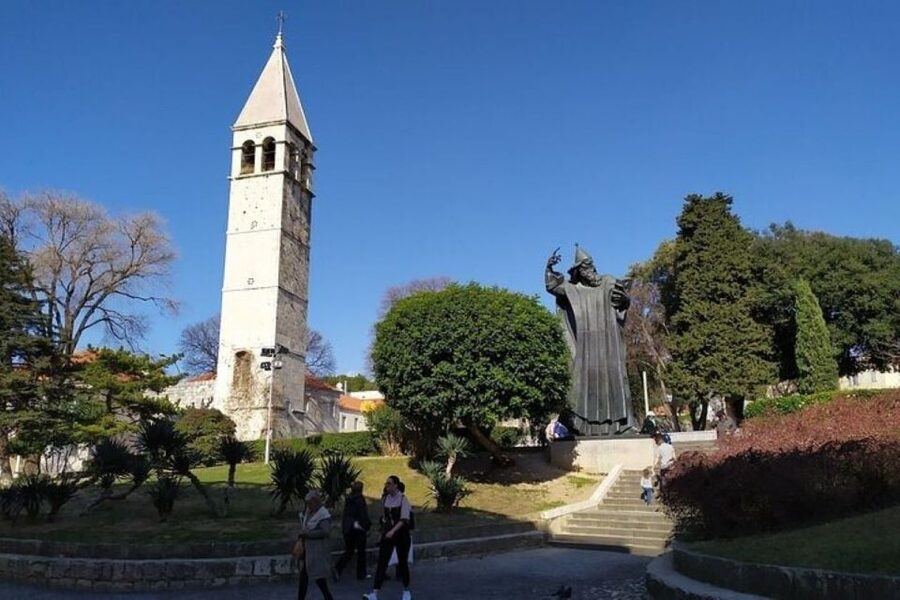
Reviewed · HISTORICAL TOURS
Experience Split History Walking Tour With Local Historian
Split reveals itself one stone at a time. This two-hour walking tour makes Diocletian’s Palace more than a cluster of old walls. With a local historian, you connect Roman power, medieval life, modern Croatian culture, and the everyday rhythm of Split. I especially like the small group size, capped at 12, and the use of 3D reconstruction images that help you picture buildings as they once appeared.
I also like the way the route moves beyond the palace. Peristil, the cathedral, Jupiter’s Temple, the cellars, Riva, Fruit Square, and People’s Square each add another piece to the city’s story. Boris, the guide named in the tour information and praised for his warm, clear answers, also adds useful food tips, including a well-regarded ice cream recommendation.
The main drawback is physical rather than historical: you spend two hours on foot over uneven stone, and the tour is not suitable for wheelchair users or people with mobility impairments. On sunny days, bring water, a hat, and comfortable shoes. The palace can also feel crowded, so some stops may be more about listening and looking carefully than standing alone with an ancient monument.
In This Review
- Key points to know before booking
- Why this two-hour Split tour works
- Meet at the Golden Gate with Gregory of Nin nearby
- Inside Diocletian’s Palace: Roman power meets daily life
- Peristil, the palace’s grand central square
- Jupiter’s Temple and the cathedral: Roman religion changes shape
- Vestibule and the Diocletian’s Cellars
- Riva: from Roman residence to the city’s living room
- Fruit Square and People’s Square
- The guide, group size, and teaching style
- Who should book this walking tour?
- Should you book it?
- FAQ
- Where does the Split history walking tour start?
- How long does the tour last?
- What language is the tour offered in?
- What is included in the tour price?
- Are food, drinks, and hotel transfers included?
- Is the tour suitable for wheelchair users?
Key points to know before booking
- Enter through the Golden Gate: The tour begins at Split’s northern Roman entrance, opposite the eight-meter statue of Gregory of Nin.
- See the palace as a living city: Homes, shops, churches, squares, and cafés occupy the old Roman complex today.
- Peristil gets proper attention: Expect time for the palace’s main square, its surrounding monuments, and the stories attached to them.
- History comes with visual help: The guide uses 3D reconstructions and pictures to show how vanished or altered spaces may have looked.
- The route reaches modern Split: Riva, Fruit Square, and People’s Square connect Roman remains with medieval and present-day life.
- Small groups improve the experience: A maximum of 12 people gives you a better chance to ask questions and hear the guide in narrow streets.
Why this two-hour Split tour works
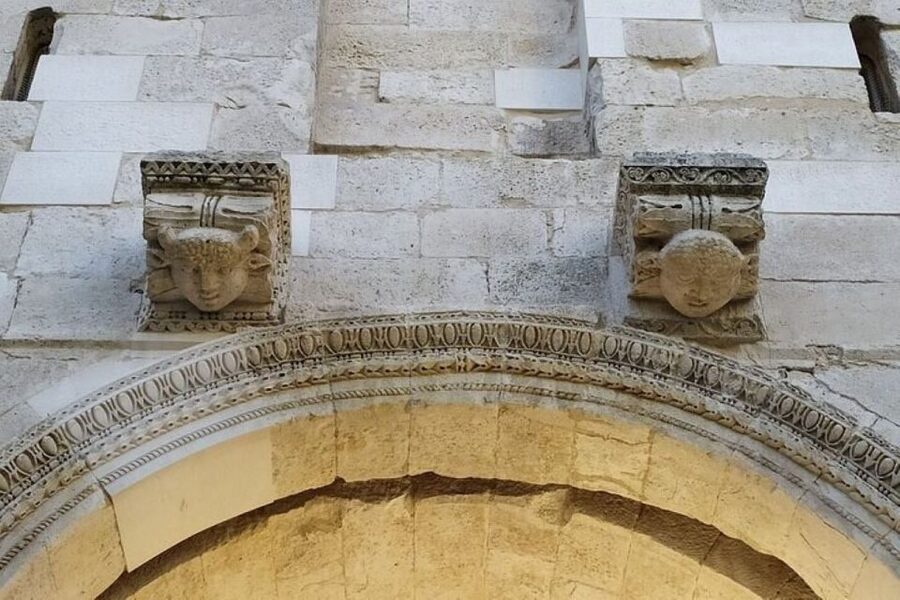
Diocletian’s Palace is not a quiet archaeological park. It is woven into the center of Split, with residents, cafés, lanes, churches, businesses, and public squares occupying the old Roman plan. That makes the place exciting, but it can also make it confusing. You may walk through an ancient gate without realizing its original purpose, or pass a Roman column while concentrating on a modern restaurant.
A local historian helps sort out those layers. Instead of treating the palace as one isolated sight, the tour explains how Emperor Diocletian’s retirement residence changed over time and how local people adapted it. That long view is the real value here. You are not just looking at Roman stone. You are learning how a city continued to live inside it.
The tour costs $37 per person for two hours. That is a fair price if you want a focused introduction and the chance to ask questions. The guide’s master’s degree in history adds academic training, while the comments and examples suggest a friendly, accessible approach rather than a lecture aimed at specialists.
I would not book this as a substitute for every paid sight inside the palace. The tour introduces the cathedral, cellars, temple, and other spaces, but you may want extra time afterward to visit them at your own pace. Think of the walk as a well-organized first look that helps you decide where to spend the rest of your day.
More Historical Tours in Split
- Walking Tour of Split with a ‘Magister’ of History
★ 5.0 · 1,122 reviews - Split Walking Tour with Professor of History
★ 5.0 · 926 reviews - Split: History and Heritage Walking Tour
★ 4.9 · 650 reviews
Meet at the Golden Gate with Gregory of Nin nearby
Your starting point is the Golden Gate, the northern entrance to Diocletian’s Palace. This is a practical meeting place because the gate is prominent and sits opposite Gregory of Nin, an eight-meter statue that is hard to miss.
The opening explanation covers Split and Croatia, then narrows to the gate itself. You learn its name, purpose, and importance before walking through it in the direction once used by the Roman emperor and empress. That opening gives the tour a clear beginning: you are not simply gathering on a random street corner and following a guide into the old town.
Gregory of Nin adds a later Croatian layer to the setting. The statue is one of Split’s best-known public monuments, and the guide uses it to introduce a person and period outside the Roman story. This helps set expectations for the rest of the walk. Split’s identity is not limited to Diocletian.
The Golden Gate area can be busy, and the broad introduction may compete with street noise. Stay close enough to hear, especially if the group reaches the maximum of 12 people. Arriving a few minutes early is sensible so you can identify both the gate and the statue without rushing.
Inside Diocletian’s Palace: Roman power meets daily life
Once inside, the tour begins treating the palace as a connected system. Diocletian built it as a retirement residence, but its role and appearance changed over the centuries. The guide explains the emperor’s life in and out of the palace, giving you a human figure to connect with the grand architecture.
You will hear about the palace itself, including why it was built and how the local Croat population adapted it over time. That second part matters. The most interesting feature of Split is not simply that Roman structures survived. It is that later generations used, altered, and lived among them.
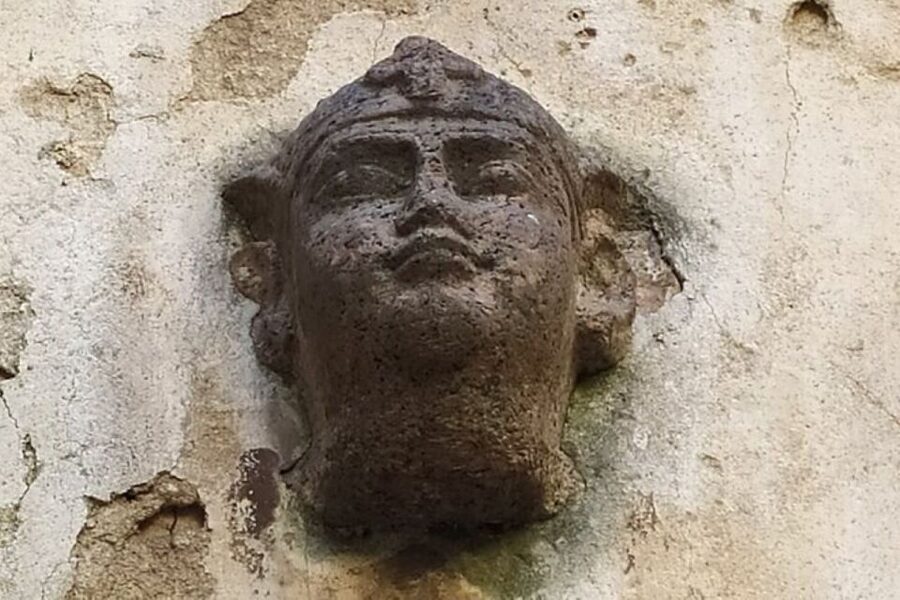
The route includes a short secret stop and a tucked-away corner. These brief pauses appear designed to reward close attention rather than take up large blocks of time. You may hear about a narrow church, a very narrow street, a lost sphinx head, or a secluded garden. The tour does not present Split as a museum where every important sight is obvious. It trains your eye to notice odd details in the old town.
A 3D display book with reconstruction images and pictures is particularly useful here. Ancient buildings are often difficult to understand from surviving fragments. A visual comparison can show you how a space may have worked when complete, making the stones around you easier to read.
Peristil, the palace’s grand central square
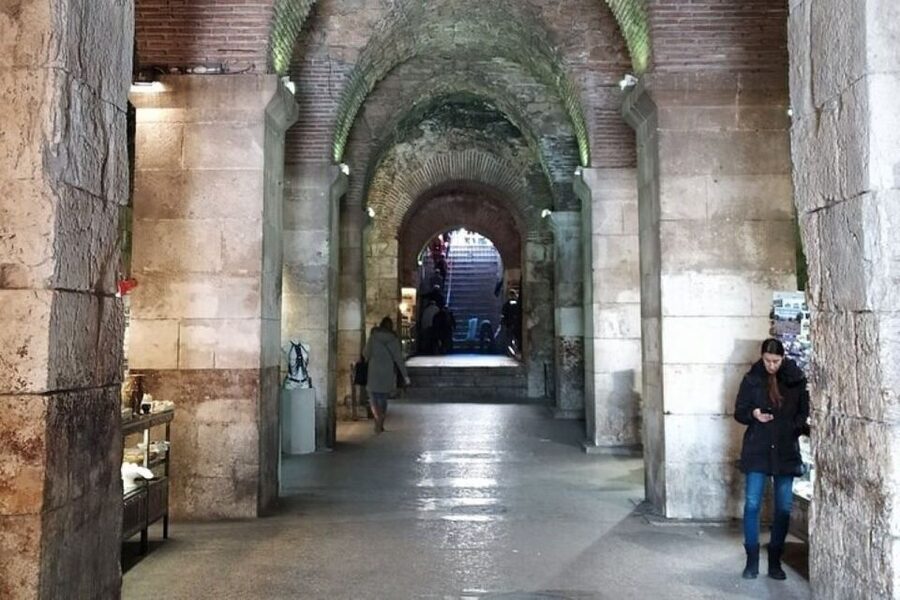
Peristil is the visual center of the route and receives about 15 minutes of attention. This is the place to slow down and look up, around, and across the square. Its monumental surroundings give you the clearest sense of imperial ambition within the palace.
The guide explains the square through facts, legends, and stories, rather than asking you to admire it without context. You can consider how ceremonial space, religious symbolism, and public movement worked together. The tour also connects Peristil to the buildings around it, so the square does not feel like a single postcard view.
Peristil is likely to be one of the busiest points on the walk. That is a drawback if you hope for a calm photo or a long uninterrupted look. Still, a guide is valuable here because the setting can be visually overwhelming. With a short explanation, you can distinguish the main features and return later for a quieter inspection.
I would make a note of what interests you at Peristil. The cathedral, the cellars, and nearby palace spaces are all worth revisiting after the tour if you want more time with the architecture.
More Walking Tours in Split
- Split: Old Town and Diocletian Palace Walking Tour
★ 4.9 · 4,727 reviews - Walking Tour of Split and Diocletian’s Palace
★ 5.0 · 2,588 reviews - Krka Waterfalls tour with Trogir Walking tour and Krka panoramic boat cruise
★ 5.0 · 1,659 reviews - Split & Diocletian’s Palace Walking Tour
★ 5.0 · 1,125 reviews
Jupiter’s Temple and the cathedral: Roman religion changes shape
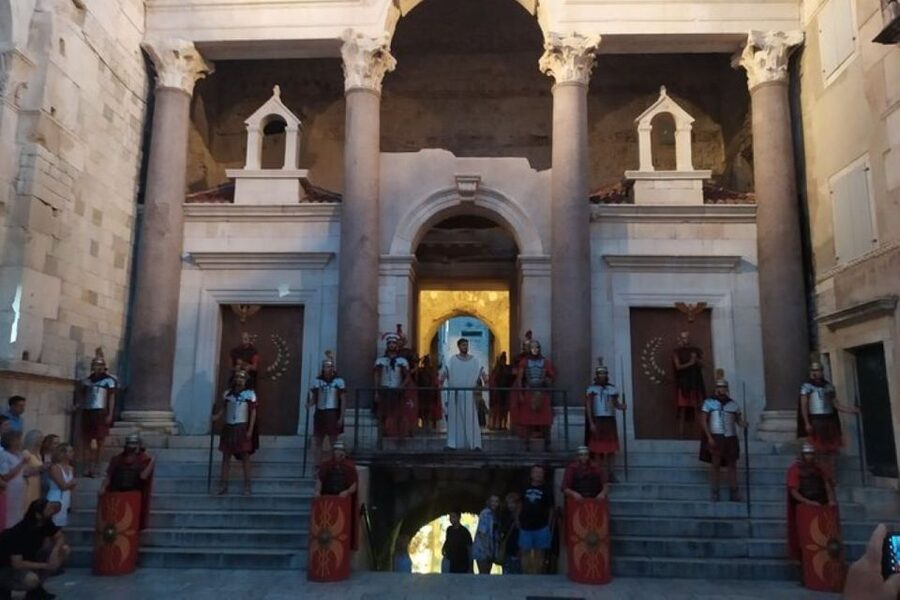
Jupiter’s Temple receives about 10 minutes of guided attention. The stop helps explain the religious side of the palace and the way Roman beliefs fit into Diocletian’s world. It also gives you a useful comparison with the Christian buildings encountered nearby.
The Cathedral of Saint Domnius follows, with another 10 minutes of explanation. Its placement in the former palace is one of Split’s most striking examples of historical layers sharing the same address. The structure’s connection to the Roman period and its later Christian role make it central to understanding how the palace changed.
The tour introduces the cathedral, but the schedule does not promise a long interior visit. If you want to climb, study religious art, or spend quiet time inside, plan to return independently after the walk. The same applies to other ticketed or more detailed areas. The tour gives you orientation, not unlimited time at every monument.
This is one reason the experience suits a first morning or early afternoon in Split. You get the broad framework first, then choose where to linger. It prevents you from spending your limited time on details before you know how the old center fits together.
Vestibule and the Diocletian’s Cellars
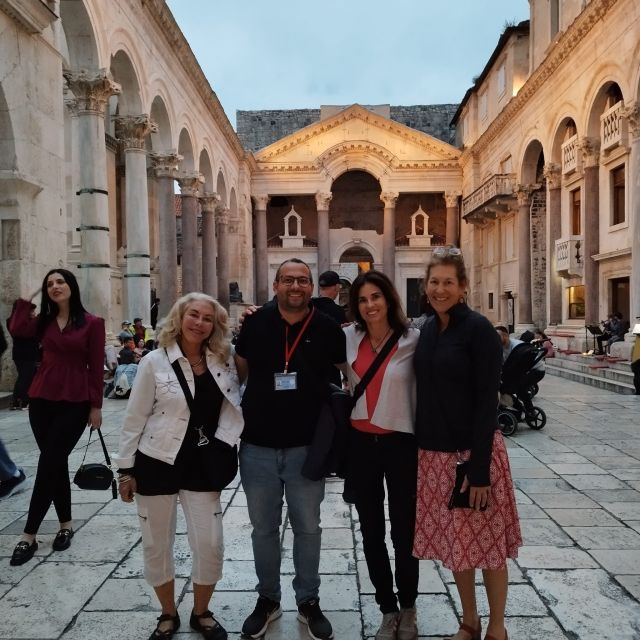
The Vestibule is given about 10 minutes. This space helps you understand the movement between different parts of the palace and the ceremonial character of the residence. It is the sort of place where a guide can point out proportions, purpose, and changes that are easy to miss when you are walking through on your own.
The Diocletian’s Cellars also receive about 10 minutes. These lower structures are among the most useful places for understanding the palace plan because they preserve a sense of the original organization. The guide explains what they reveal and how archaeology is making the palace more accessible to the public.
You should not assume that the guided portion covers every corner of the cellars. The timing is short, and the tour must keep moving to reach the medieval squares. If the underground spaces appeal to you, put them high on your list for a later visit. A previous tour participant found that returning to the palace substructure, the cathedral, and a local ice cream shop made the day much better.
The cellars may also feel less demanding on a hot day than walking in full sun, though the overall tour still requires steady movement. Wear shoes with a secure sole. Ancient stone is attractive, but it is not always smooth.
Riva: from Roman residence to the city’s living room
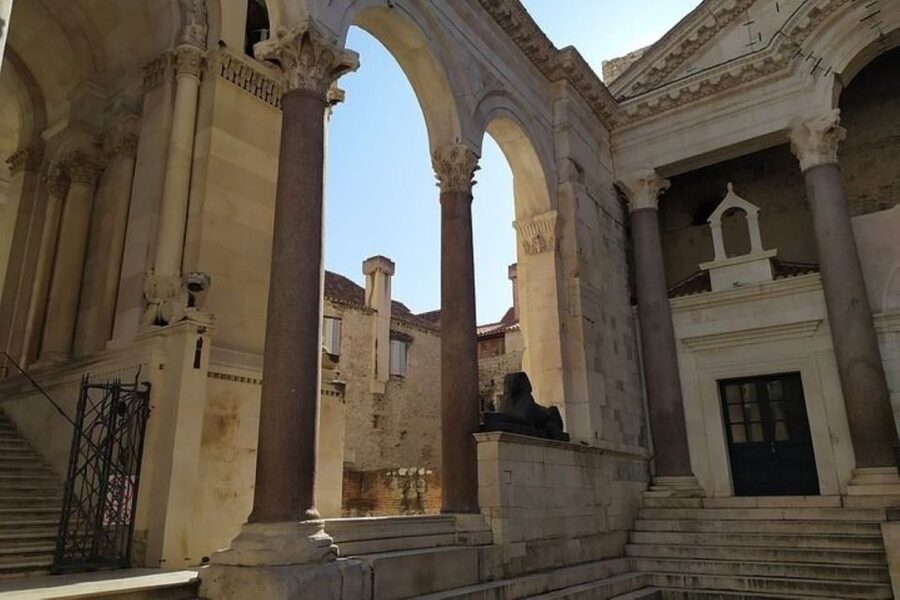
After the palace, the group reaches Riva, Split’s waterfront promenade. The stop is brief, about five minutes, but its purpose is important. Riva shows how the old center opens toward modern public life.
Here, the guide explains the connection between the Roman and medieval periods and introduces the local pomalo way of life. The word suggests a slower, more relaxed approach to time and daily routines. You are not asked to memorize a slogan. You are given a cultural clue that can help you read the pace of Split during the rest of your stay.
The promenade also provides a change of view after the enclosed lanes and monumental stone. Do not expect a long waterfront break or a meal stop. Food and drinks are not included, and the tour keeps to its route. Still, the guide may offer practical suggestions for eating or cooling off afterward. Boris’s ice cream recommendation received particular praise, so this is a good moment to ask for local advice.
Fruit Square and People’s Square
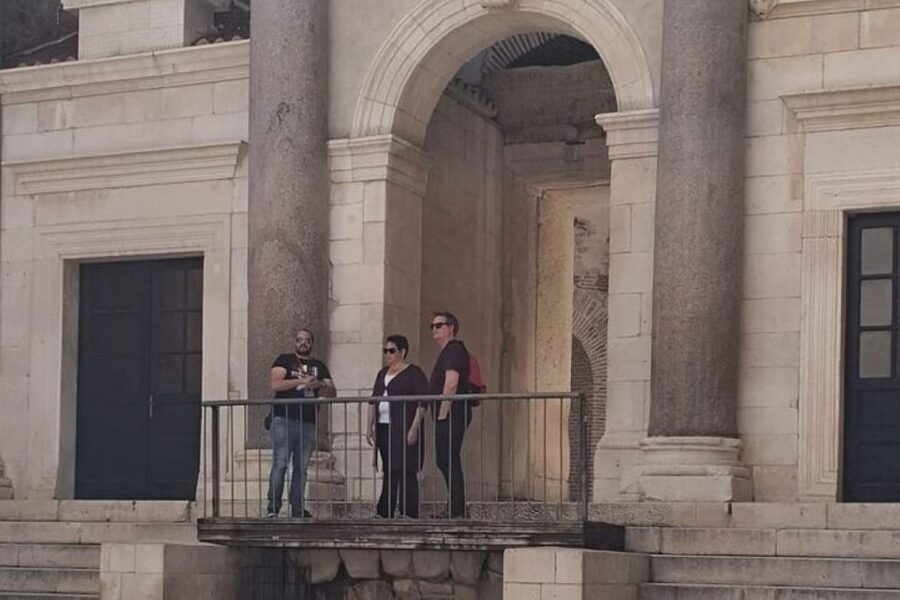
Fruit Square is the first of two medieval squares on the route. Its architecture and events help show how Split developed after the Roman palace was no longer an imperial residence. The guide uses the square to bring medieval and later life into the story.
People’s Square, the finishing point, receives about 10 minutes and completes that shift toward modern Split. You see how public space, buildings, and daily activity continued to shape the city. The route ends at Narodni trg, so you finish in a central area rather than returning to the Golden Gate.
These squares are useful because they broaden your picture of Split. If you focus only on the palace, you may leave thinking the city stopped developing after Diocletian. Fruit Square and People’s Square show the opposite. Split kept changing, and its later residents gave old spaces new purposes.
The end point is also convenient for continuing on foot, but hotel pickup and drop-off are not included. You need to make your own way to the Golden Gate and arrange your own return or onward plans.
The guide, group size, and teaching style
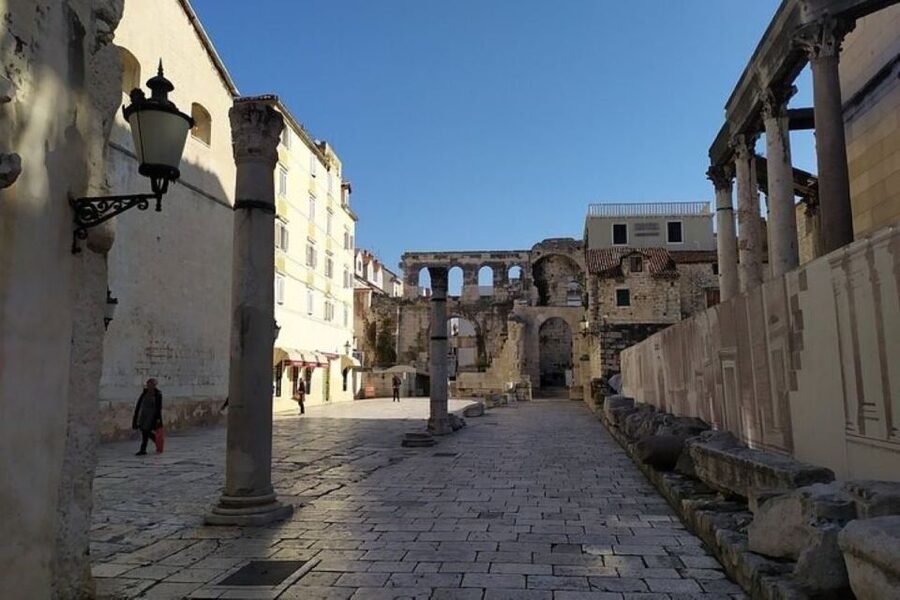
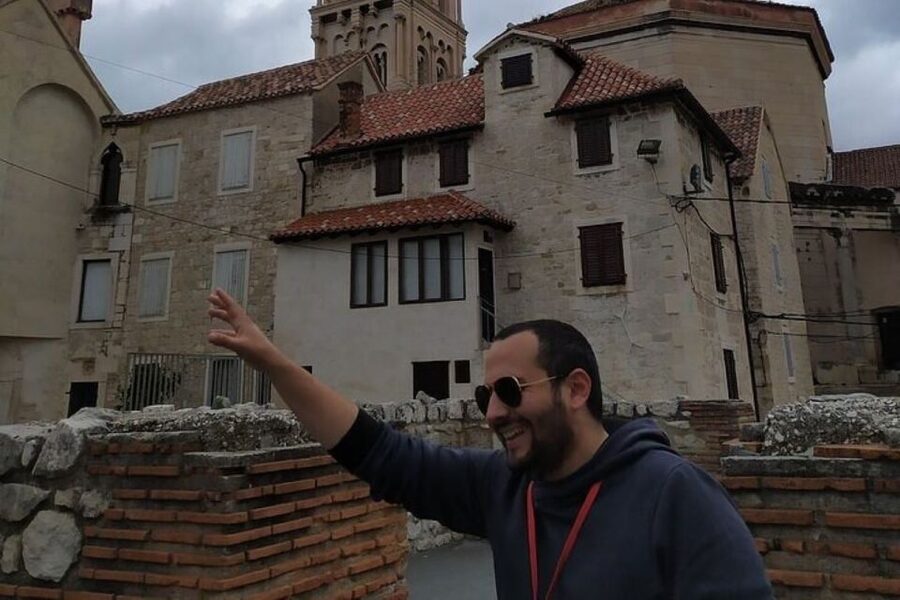
The guide is a licensed local professional with a master’s degree in history. Boris is specifically named in the experience information, and his role seems to be a major part of the appeal. He is described as kind, open to questions, and able to explain not only palace history but also Croatian culture, religion, and Split’s sense of community.
That balance matters. A guide can know dates and architectural terms yet still give a flat tour. Here, the strongest praise focuses on answers, clear explanations, visual material, and the ability to point out things you might otherwise walk past. The mood appears friendly and conversational.
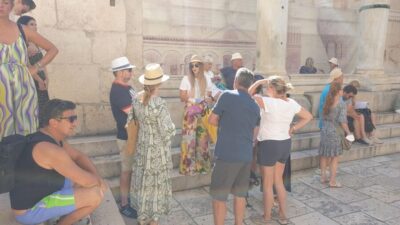
The group limit of 12 is another practical advantage. A group of five can feel almost private, and even a full group is far easier to manage than a large coach tour. You can ask about a detail, request a food suggestion, or clarify something without turning the walk into a formal classroom.
The tour is available in English or Croatian. If you have specialist interests, ask questions early. Two hours passes quickly, and the route covers a lot of ground.
Who should book this walking tour?
I would choose this tour if you are visiting Split for the first time and want a clear introduction before exploring alone. It suits people who enjoy architecture, archaeology, local customs, and stories about how old buildings were reused.
It is also a good fit for a short stay. In two hours, you see the palace’s main areas, Riva, and two medieval squares. That gives you a useful map of the center without committing half a day.
You may prefer another option if you want a slow photographic walk, a food tour, or a detailed visit inside every monument. The pace is easy according to the available feedback, but it is still a walking tour over historic surfaces. Anyone with mobility concerns should take the stated restriction seriously.
For families, the 3D images and legends may help younger visitors follow the story, though the tour is still history-focused. For serious history fans, the guide’s training and the chance to ask questions add value, but you should allow extra time afterward for the cathedral and cellars.
Cancellation is flexible up to 24 hours before the tour for a full refund, and you can reserve now and pay later. Starting times vary, so check availability when choosing your date.
Should you book it?
Book this Split history walk if you want a compact, human explanation of Diocletian’s Palace rather than a quick checklist of monuments. The strongest reasons are the small group, Boris’s approachable guiding style, the visual reconstruction material, and the route’s attention to medieval and present-day Split.
At $37, the experience offers good value for a first orientation, especially if you use the guide’s suggestions to plan the rest of your day. I would book it near the start of your visit, wear solid walking shoes, and keep time afterward for the cathedral, cellars, and any food stop you are given.
Skip it if you cannot manage uneven walking or if you want a completely self-directed visit. For most visitors who want the palace to make sense, this is a practical and personable way to begin.
FAQ
Where does the Split history walking tour start?
The tour starts at the Golden Gate, the northern gate of Diocletian’s Palace. The meeting point is opposite the eight-meter statue of Gregory of Nin.
How long does the tour last?
The walking tour lasts two hours. Starting times depend on availability when you book.
What language is the tour offered in?
The live tour guide speaks English or Croatian.
What is included in the tour price?
The price includes a local professional guide with a master’s degree in history and 3D reconstruction images and pictures.
Are food, drinks, and hotel transfers included?
No. Food and drinks are not included, and hotel pickup and drop-off are not provided.
Is the tour suitable for wheelchair users?
No. The experience is not suitable for wheelchair users or people with mobility impairments. Comfortable shoes are recommended, and water or a hat is advised on sunny days.
Just added around Split
- Private VIP Blue Lagoon and 3 Islands Tour★ 4.5 · 9 reviews
- Split highlights – Evening walking tour★ 5.0 · 9 reviews
- Private boat transfer Split – Bol★ 5.0 · 9 reviews
- From Split: Trogir & Blue Lagoon Boat Tour with Snorkeling★ 4.6 · 9 reviews
- Private Photography Activity in Split★ 5.0 · 9 reviews
- Bike, Beer & Poljud Stadium Tour★ 5.0 · 9 reviews
- From Hvar: Blue cave group speedboat tour full day★ 5.0 · 9 reviews
- Split Walking Tour: History, Legends & Tales★ 5.0 · 9 reviews
Historical Tours, compared.

Walking Tour of Split with a ‘Magister’ of History
Read our review →


Split History and Gastro Small-Group Tour with Food and Drinks
Read our review →
PREMIUM Emperor’s Walking Tour for History Lovers + Museum
Read our review →Browse the lists this tour appears in