

Reviewed · HISTORICAL TOURS
Zadar: Virtual Reality Guided History Walking Tour
History becomes a moving picture in Zadar. This two-hour walking tour pairs the old town’s major sights with Oculus Go virtual reality scenes, so you can see the Roman Forum, former city market, and wartime Zadar as they once appeared. I especially like the 360-degree views and animated reconstructions, plus the friendly assistant who helps you use the equipment. The audio guide comes in seven languages, including English, German, French, Italian, Spanish, Croatian, and Esperanto.
The main drawback is the technology itself. Some visitors found the images dated by current standards, and a few headsets needed frequent help. At $35 per person, the tour offers a creative way to understand Zadar, but you should book it for the historical storytelling and unusual access, not for cutting-edge graphics.
In This Review
- Key points about Zadar’s VR history tour
- Why virtual reality works well in Zadar
- Meeting the assistant beside the Sea Gate
- Standing in the Roman Forum
- Seeing the Fourth Crusade invasion of 1202
- Entering St. Chrysogonus’ Church virtually
- Finding the former city market
- Floating above Zadar in a hot-air balloon
- Looking at Zadar after World War II
- The headset, image quality, and comfort
- Who will get the most from two hours and $35
- How to make the most of the route
- Should you book Zadar’s VR history walk?
- FAQ
- Where does the Zadar VR history tour begin?
- How long does the tour last?
- How much does the experience cost?
- What equipment is included?
- Which languages are available?
- Do I need technical experience to use the VR headset?
- Is the tour wheelchair accessible?
- What should I bring?
Key points about Zadar’s VR history tour

- Roman Forum brought back to life: Use the headset to see the ancient center of Zadar’s public and commercial life in its historical setting.
- A rare look inside St. Chrysogonus’ Church: The VR experience lets you view a church that is otherwise closed to the public.
- History arrives from sea and air: Recreated scenes cover the Fourth Crusade invasion in 1202 and attacks on Zadar during World War II.
- Seven audio languages: Choose Croatian, English, Esperanto, French, German, Italian, or Spanish through the audio guide.
- Aerial views without leaving the peninsula: See Zadar from a hot-air balloon and examine the old city from above.
- Helpful human support: An assistant leads the walk, finds suitable places for VR stops, and helps if the headset or controller causes trouble.
Why virtual reality works well in Zadar
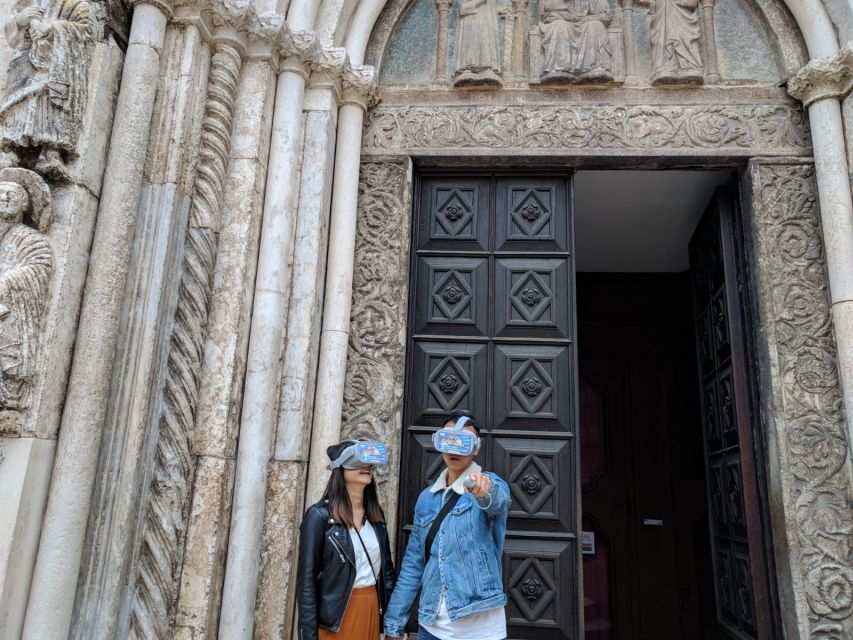
Zadar’s old town is easy to walk through, but its present-day streets can hide the shape and purpose of earlier buildings. A church may have lost its original surroundings. A square may look open and modern even though it once served as a market. The Roman Forum may be a set of stones until you picture the people, buildings, and activity that once filled it.
That is where this tour earns its price. Instead of asking you to picture ancient Zadar from a short description, the headset supplies a visual reconstruction. You still stand in the real old town, but the screen shows another version of the same place.
I like this approach because it connects history to exact locations. You are not sitting in a museum watching a general film about Dalmatia. You are walking to a point in Zadar, putting on the headset, and seeing that specific spot in another period.
The experience also helps if you are not naturally drawn to dates and architectural terms. A scene showing an attack from the sea or the old city market in a different position can make the timeline easier to follow. The history becomes something you can observe, not just memorize.
Still, virtual reality is a tool, not a substitute for the actual city. The graphics have received mixed reactions. Some people found them fun and effective, while others felt the image quality looked old compared with newer VR systems. Go in expecting useful historical scenes rather than a glossy modern video game.
More Historical Tours in Zadar
- Zadar: Private Walking Tour Through 3,000 Years of History
★ 4.7 · 71 reviews - Zadar: Private walking tour through history and modern time
★ 5.0 · 10 reviews - Group History Walking Tour in Zadar Old Town
★ 5.0 · 4 reviews
Meeting the assistant beside the Sea Gate
The tour begins at a souvenir shop in a red building beside the Sea Gate, at Poljana Pape Aleksandra III 7. This location places you near the old town peninsula and makes a practical starting point for a walking route through central Zadar.
The activity includes the walking tour, the assistant, an Oculus Go all-in-one VR headset, and a controller. You do not need advanced technical skills. The interface is designed to be simple, and you can choose when to move to the next point.
That last detail matters. You are not forced through every scene at the same speed. When you finish looking around, you can use the controller to continue. The assistant remains available throughout the tour, which is useful if the headset is not working properly or if you are unsure what to press.
The human support is one of the strongest parts of the experience. Veronica, one of the guides mentioned by name, received praise for giving enough information without overwhelming the group. That is the right balance for a VR walking tour. You need clear context before putting on the headset, but you also need time to look around without listening to a long lecture.
The tour instructor speaks English, while the audio guide offers seven language choices. If you book with children or with family members who prefer different languages, check that everyone understands how the audio system works before setting out.
Standing in the Roman Forum
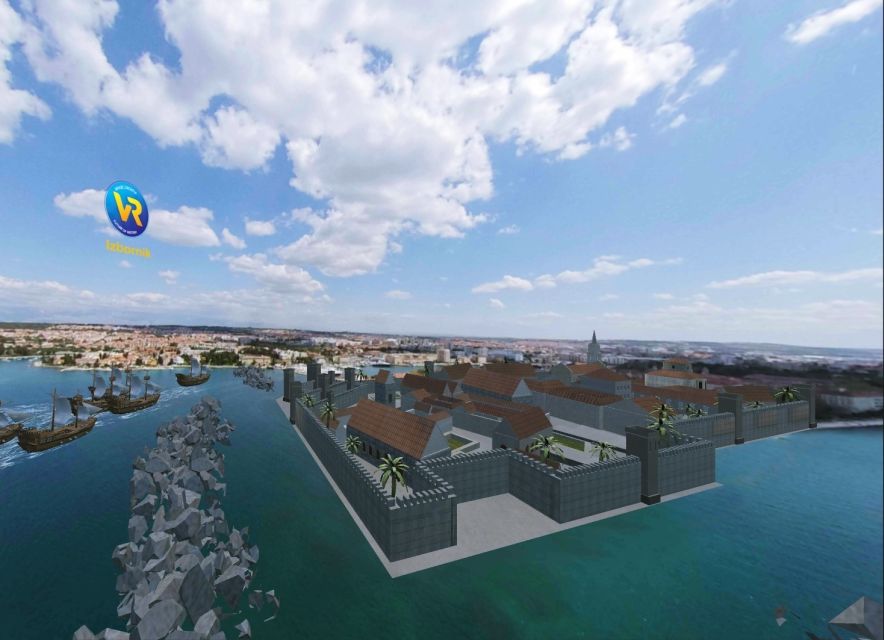
The Roman Forum is one of the most important stops because it shows how much Zadar has changed. In ancient times, this was the center of social and economic life. Today, you see surviving ruins in an open historic area, but the virtual reconstruction helps fill in the missing walls, people, and activity.
The appeal is not only visual. You learn to read the site as part of a functioning city rather than as scattered stones. The VR scene gives you a sense of how the forum operated and why its position mattered.
I would pay close attention to the transition between the real view and the virtual one. First, notice what remains in front of you. Then use the headset to compare the old arrangement with the present site. That comparison is the whole point of the tour, and it works best when you take a moment to study both versions.
The guide’s compact explanations are useful here. The information is meant to be approachable, not a university lecture. If you enjoy detailed archaeology, you may want more depth than the tour provides. If you want a clear introduction while standing on the site, the format is more successful.
Seeing the Fourth Crusade invasion of 1202
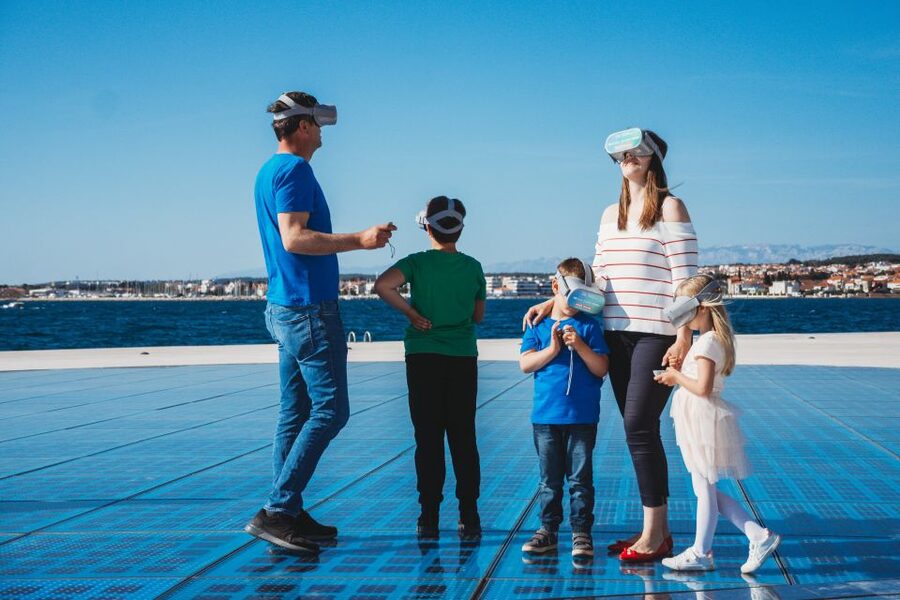
The tour also covers the Fourth Crusade and the invasion of Zadar in 1202. The VR reconstruction shows the attack coming from the sea, giving the event a visual scale that a simple date on a timeline cannot provide.
This is one of the more unusual choices in the program. Many city tours focus on rulers, churches, and grand buildings. Here, you get a sense of how vulnerable a coastal city could be when an attack approached by water.
The scene is valuable because it uses Zadar’s position as part of the story. You are not simply told that an invasion happened. You see the direction of the threat and connect the event to the city’s geography.
The experience also includes views of attacks from the air and sea during World War II. These scenes shift the focus from medieval conflict to modern destruction. The contrast helps you understand that Zadar’s past is not limited to its Roman and medieval periods.
The VR imagery may not satisfy someone looking for lifelike cinema. But the historical idea remains strong. Even modest graphics can clarify movement, location, and cause. I would judge this part by how well it explains the event, not by whether the buildings look like a current blockbuster film.
More Walking Tours in Zadar
- Zadar: Guided Walking Tour
★ 4.8 · 445 reviews - Zadar City Tour 120min Walk
★ 5.0 · 203 reviews - Zadar Walking Tour sponsored by Gligora Cheese and deli.
★ 5.0 · 119 reviews - Zadar: Culinary Walking Tour with Food Tastings
★ 4.8 · 63 reviews
Entering St. Chrysogonus’ Church virtually
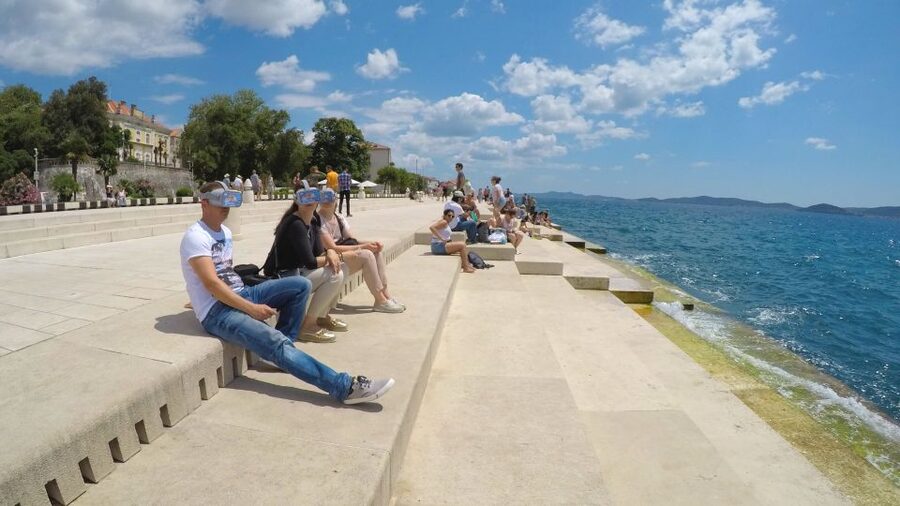
A special feature of the tour is the chance to see St. Chrysogonus’ Church, which is otherwise closed to the public. This is perhaps the clearest example of VR adding access that a normal walking tour cannot provide.
You do not enter the church in person. Instead, the headset gives you a virtual look inside. That distinction matters, but it is still a worthwhile way to see a site that is unavailable during an ordinary visit.
For many people, this will be more memorable than another view of a familiar square. It also gives the guide a chance to explain the church within the wider story of Zadar’s religious and civic development.
If you are particularly interested in church interiors, ask the assistant what you should look for before starting the scene. The headset and audio guide provide the material, but your attention will make the difference. As with the other stops, you control when to proceed, so there is room to look around.
Finding the former city market

The virtual tour takes you to the location of Zadar’s former city market. In relation to the modern town, the market was on the other side of the city. That simple fact can be hard to grasp from a standard street walk, because today’s urban layout does not immediately reveal the older arrangement.
This stop shows the tour at its most practical. You learn not only what once stood in a place, but also how the city’s functions shifted over time. Markets are central to urban life, so relocating one changes the way you picture daily movement, trade, and public space.
I like this kind of detail because it moves beyond the usual list of famous monuments. The market may not be the most dramatic VR scene, but it helps explain how ordinary life worked. For readers who want more than postcard views, that is a real benefit.
Floating above Zadar in a hot-air balloon
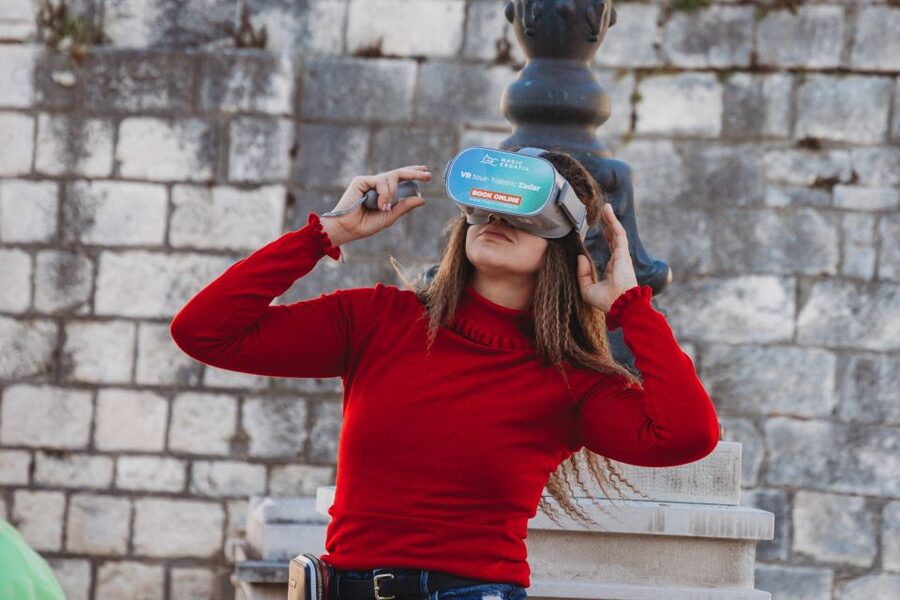
One of the tour’s more playful sequences gives you a view of Zadar’s peninsula from a hot-air balloon. You can see the old city from above and gain a sense of its overall form.
This aerial view is especially useful because a walking tour naturally gives you a street-level perspective. From the ground, it can be difficult to understand the peninsula’s shape or how its parts relate to one another. The virtual balloon ride changes your point of view without requiring an actual balloon trip.
The scene also adds variety. Two hours of standing at historical sites could become repetitive, but the movement from ground-level ruins to an aerial view keeps the format lively. Families and children may respond well to this change of scale.
Do not expect a real flight or physical motion. It is a visual sequence viewed through the headset. Its value is orientation and imagination, not an adrenaline rush.
Looking at Zadar after World War II
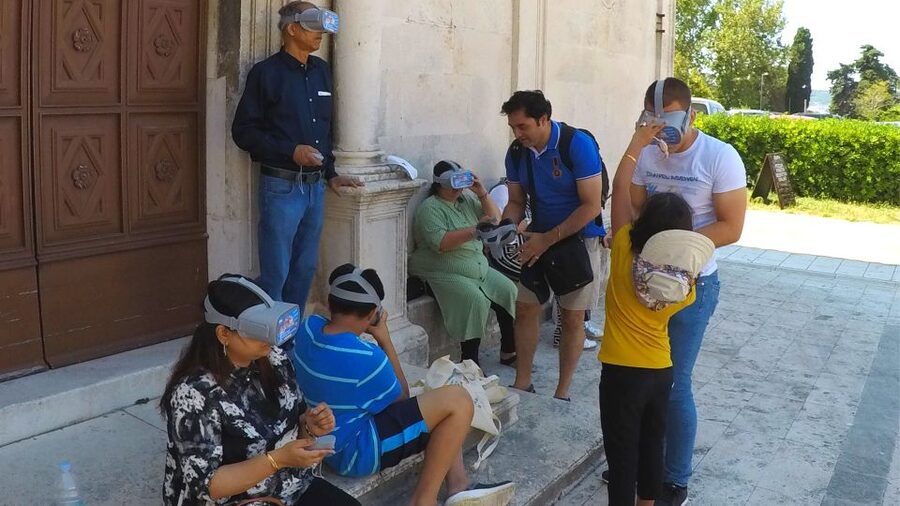
The tour closes part of its historical story by showing how Zadar looked after World War II. This is important because old towns are often presented as if their history ended in the medieval period. Zadar’s more recent damage and rebuilding also shaped what you see today.
The postwar view adds context to the city’s present appearance. Buildings and open spaces may look permanent, but the virtual reconstruction reminds you that urban areas can change quickly after conflict.
I find this period useful for visitors who want to understand modern Zadar, not just ancient Zadar. The program connects Roman remains, medieval invasions, closed churches, changing markets, wartime attacks, and postwar recovery into one visual route.
Again, the graphics may look dated to people familiar with new VR equipment. Still, the sequence can make a lasting impression if you focus on the before-and-after comparison.
The headset, image quality, and comfort
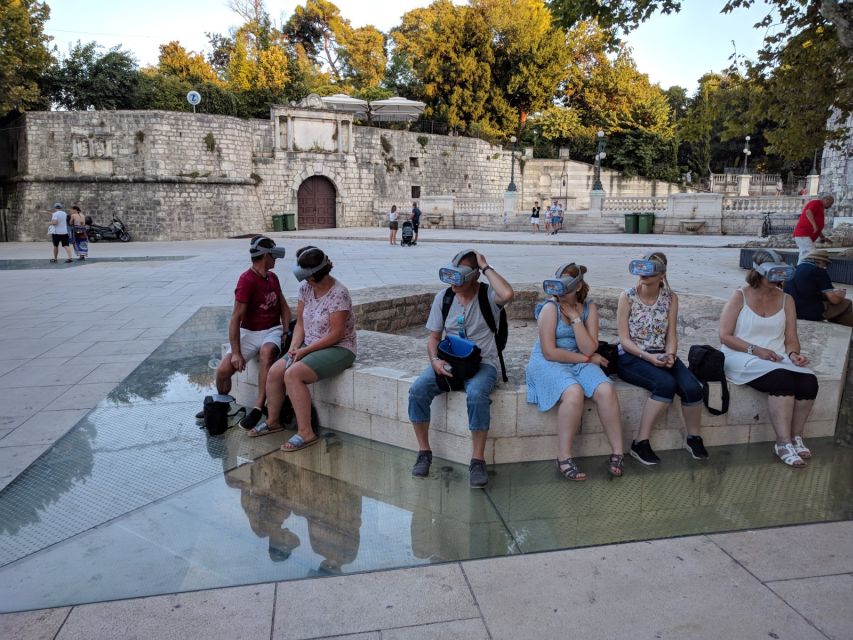
The equipment is an Oculus Go all-in-one headset with a controller. It does not require a separate computer or complex setup. The simple interface lets you choose the next point, and the assistant helps you operate it.
That ease matters for mixed-age groups. You do not need to arrive with technical experience, and the activity is designed for ordinary sightseeing rather than specialist users.
The main weakness is reliability. Some users needed repeated assistance because the glasses did not always function smoothly. The guide’s patience can reduce the frustration, but technical interruptions may break your concentration.
Image quality is another consideration. Several comments describe the visuals as dated or even obsolete by 2025 standards. I would not choose this activity if your main interest is advanced graphics. Choose it if you like the idea of seeing historical reconstructions at the exact places where events occurred.
The tour also uses stops where you can pause and view the VR scenes. A practical tip is to be ready for the assistant to choose a quieter, shadier place when possible. That makes it easier to concentrate and more comfortable to wear the headset during a sunny day.
Who will get the most from two hours and $35
At $35 per person, the tour costs more than a basic self-guided walk, but it includes a guide, an audio system, a two-hour route, and access to VR reconstructions. The value depends on how much you want interpretation and visual context.
I think the price makes sense for:
- First-time visitors who want a structured introduction to Zadar.
- Families with children who need a more active way to engage with history.
- People interested in Roman, medieval, and wartime events.
- Visitors who prefer short, focused tours rather than a full-day program.
- Anyone curious about seeing St. Chrysogonus’ Church despite its normal closure.
It may be less suitable if you want a slow architectural lecture, a highly detailed academic tour, or the newest VR hardware. The historical explanations are compact. That is a strength for some people and a limitation for others.
The tour is wheelchair accessible, according to the activity information. You should still bring a passport or ID card, which is listed as required. Food and drinks are not included, so plan those separately before or after the two-hour walk.
Free cancellation is available up to 24 hours before the start, and you can reserve now while paying later. Those terms are helpful if your Zadar schedule may change, though they do not affect the quality of the experience itself.
How to make the most of the route
I would begin by listening carefully to the assistant’s explanation of the controller. A minute spent learning the controls can save repeated interruptions later.
When a VR stop begins, first look around the full 360-degree scene. Do not rush straight to the next point. The extra details may be the best part, especially at the Roman Forum, the church interior, and the former market location.
Keep your expectations realistic. The tour’s strongest feature is the link between historical events and real places. The visuals support that lesson, but they are not the reason to buy a high-end headset.
If you are visiting with children, use the scenes as conversation starters. Ask what changed between the real street and the historical view. The invasion sequences, hot-air balloon perspective, and church interior may hold their attention better than a long explanation of dates.
For adults, the most useful approach is to treat the experience as a guided introduction. It gives you a framework for the city. Afterward, you can revisit the Roman Forum or walk around the peninsula with a clearer sense of what you are seeing.
Should you book Zadar’s VR history walk?
Book it if you want an imaginative, easy-to-follow introduction to Zadar and like the idea of seeing lost buildings, old street plans, and major conflicts at their original locations. The guide support, seven audio languages, and access to St. Chrysogonus’ Church add real value.
Skip it if modern VR image quality is your top priority or if you prefer detailed, traditional guiding without equipment. The graphics can look dated, and headset problems may require patience.
For most visitors, this is best as a first activity in Zadar. It gives you a useful map of the old town’s past, then leaves you free to explore the real streets with better questions and sharper eyes.
FAQ
Where does the Zadar VR history tour begin?
Meet at the souvenir shop in the red building next to the Sea Gate, at Poljana Pape Aleksandra III 7, 23000 Zadar, Croatia.
How long does the tour last?
The walking tour lasts two hours.
How much does the experience cost?
The listed price is $35 per person.
What equipment is included?
The activity includes an Oculus Go all-in-one VR headset and a controller, along with the walking tour and a tour assistant.
Which languages are available?
The audio guide is available in Croatian, English, Esperanto, French, German, Italian, and Spanish. The instructor language is English.
Do I need technical experience to use the VR headset?
No. The interface is designed for simple use, and the assistant is available throughout the tour to help operate the headset and controller.
Is the tour wheelchair accessible?
Yes. The activity information states that the tour is wheelchair accessible.
What should I bring?
Bring a passport or ID card. Food and drinks are not included.
More Historical Tours
- Dubrovnik Old Town History Walking Tour
★ 5.0 · 1,684 reviews - Walking Tour of Split with a ‘Magister’ of History
★ 5.0 · 1,122 reviews - Split Walking Tour with Professor of History
★ 5.0 · 926 reviews - Split: History and Heritage Walking Tour
★ 4.9 · 650 reviews
Just added around Zadar
- Zadar Guided Electric Bike Tour★ 5.0 · 9 reviews
- Zadar: Private Half Day Speedboat Tour★ 4.4 · 9 reviews
- Zadar: Sunset Panorama Tour with Eco Tuk Tuk★ 5.0 · 9 reviews
- PRIVATE Romantic Sunset Boat Tour Zadar with Local Wine 1,5h★ 4.5 · 9 reviews
- National Park Krka Private Return Day Transfer by Minivan★ 4.5 · 9 reviews
- Krka Waterfalls private transfer with Pickup & Drop Off★ 5.0 · 9 reviews
- Private 3 Hour Sightseeing Tour of Major Attractions in Zadar★ 5.0 · 10 reviews
- Private Sunset Tour across Zadar shoreline★ 5.0 · 10 reviews
Historical Tours, compared.


Walking Tour of Split with a ‘Magister’ of History
Read our review →


Split History and Gastro Small-Group Tour with Food and Drinks
Read our review →
PREMIUM Emperor’s Walking Tour for History Lovers + Museum
Read our review →Browse the lists this tour appears in