
Reviewed · WALKING TOURS
Zadar Walking Tour sponsored by Gligora Cheese and deli.
Zadar rewards a closer look. This 100-minute walk turns the old town into a readable story, moving from medieval People’s Square to Roman ruins, churches, defensive wells, and the local market. I especially like the central meeting point on Narodni Trg and the chance to hear practical food and shopping advice from a local guide. The main drawback is that the tour covers a lot in a short time, and warm weather can make the exposed streets uncomfortable.
I also like the flexible choice of three morning or afternoon departures, plus the local food angle connected with Gligora Cheese and deli. Guides such as Melina, Jasmina, Sara, Hajdi, Lucinja, and Inez have been praised for making the walk friendly and easy to follow. One useful caution: the meeting point should be confirmed carefully, since one participant found it difficult to locate the guide.
In This Review
- What makes this Zadar walk worth your time
- Starting at Narodni Trg, Zadar’s public living room
- St. Lawrence Church and a doorway into medieval Zadar
- St. Simeon and Croatia’s remarkable medieval silverwork
- Five Wells Square, where water helped save the city
- Queen Jelena Madijevka Park and an unusual military makeover
- Zadar Market, where the city shops and eats
- St. Chrysogonus, a Romanesque church with a royal connection
- St. Anastasia Cathedral and signs of wartime damage
- The Roman Forum and St. Donatus in one powerful stop
- What the pace, guides, and group size mean for you
- Is $18.14 a fair price?
- Should you book the Zadar Walking Tour?
- FAQ
- Where does the Zadar Walking Tour begin?
- How long does the tour last?
- What language is the tour offered in?
- How much does the tour cost?
- How many people can join the tour?
- Can I cancel for a full refund?
What makes this Zadar walk worth your time
- Five Wells Square links water, war, and city planning in one compact stop.
- The market adds a local taste with fish, produce, meat, souvenirs, and possible Pag cheese tasting.
- St. Donatus is a rare early medieval building with Roman columns reused inside.
- The route suits first-time visitors who want the main old-town sights without spending half a day.
- Local recommendations are part of the value, especially for restaurants and shopping.
- The group can include up to 30 people, though some departures have been much smaller.
Starting at Narodni Trg, Zadar’s public living room
The tour begins at People’s Square, or Narodni Trg, right in the center of Zadar’s old town. This is a sensible place to meet because it is easy to reach from the surrounding pedestrian streets and near public transportation.
The square began in the Middle Ages as Platea Magenta, the center of public life. It still feels like a natural stage for the city. On the north side, the City Guard building, or Gradska straža, gives you a fine example of Venetian-era design. Michele Sanmicheli designed it, and construction finished in 1562.
You spend about 10 minutes here. That sounds brief, but it is enough for a guide to explain how the square functioned and point out details you might otherwise walk past. I like this opening because it gives you a civic starting point before the tour moves into religious buildings, fortifications, and daily life.
The meeting spot is central, but do not assume central means obvious. Look for the exact People’s Square location named in your booking and arrive early enough to identify the guide. The one negative account about the experience concerned unclear directions and a difficult start, so this small bit of preparation matters.
More Walking Tours in Zadar
- Zadar: Guided Walking Tour
★ 4.8 · 445 reviews - Zadar City Tour 120min Walk
★ 5.0 · 203 reviews - Zadar: Virtual Reality Guided History Walking Tour
★ 4.4 · 86 reviews
St. Lawrence Church and a doorway into medieval Zadar
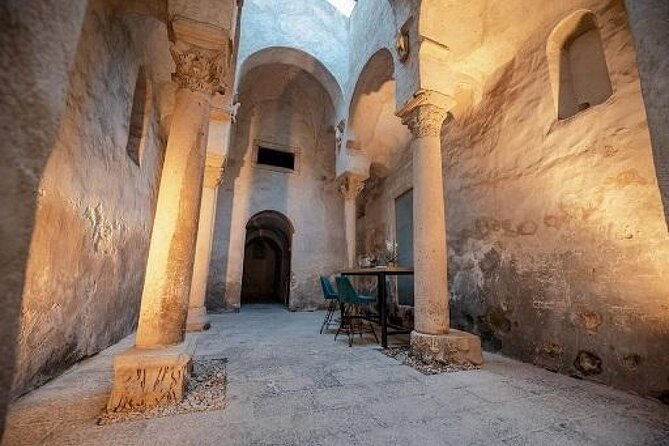
The remains of St. Lawrence Church are reached through the premises of Cafe Lovro on the square. That unusual entrance is part of the charm. The church is not presented as a grand, fully intact monument. Instead, you see the oldest part of Narodni Trg, dating from the 11th century.
This is a good reminder that Zadar’s past is often tucked into modern city life. A cafe can sit beside, or provide access to, a pre-Romanesque church remnant. You get a sharper sense of how old the peninsula is because the layers are not separated into neat museum rooms.
The stop lasts about 10 minutes and admission is free. The short visit also keeps the tour moving, though anyone hoping for a long, quiet church inspection may find the pace quick.
St. Simeon and Croatia’s remarkable medieval silverwork
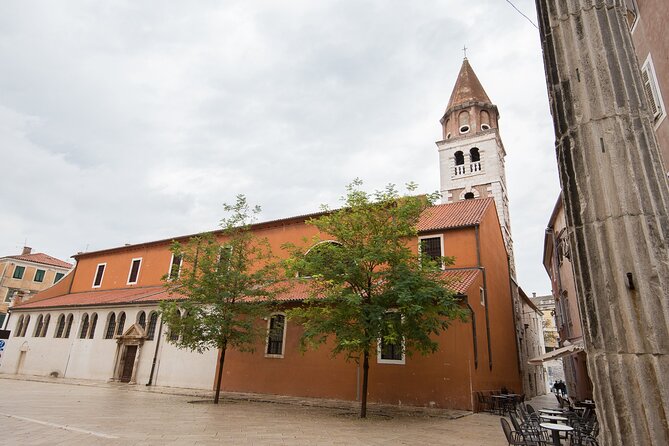
At St. Simeon’s Church, the focus shifts from architecture to one extraordinary object: a silver casket holding the mummified body of Simeon the God-receiver. The church’s patron saint is also known as Šimun or Šime.
The story comes from the Gospel of Luke. Simeon was an elderly man inspired by the Holy Spirit who held the infant Jesus in the Jerusalem Temple. Zadar claims his body, and the silver casket that preserves it is considered the most valuable work of medieval goldsmith art in Croatia.
You get about 10 minutes here. That is enough to understand why the object matters, but the stop depends heavily on the guide’s explanation. Without context, a silver reliquary can be easy to glance at and forget. With a good explanation, it becomes a window into faith, medieval craftsmanship, and Zadar’s importance as an Adriatic city.
The attraction is free according to the tour details. As with any working church, the exact viewing experience can depend on what is open at the time.
Five Wells Square, where water helped save the city
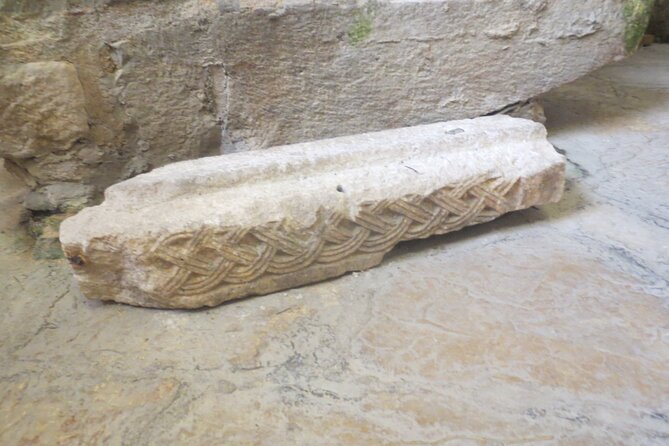
Five Wells Square is one of the most satisfying stops because its story is practical. The square sits between the medieval city walls and the Renaissance bastion Grimani. Its five stone wellheads line up in a row, just as the name promises.
In the Middle Ages, a defensive ditch lay below the old walls. During the 16th century, the Venetians built a large cistern with five ornamental wells to help Zadar withstand Turkish sieges. The wells were not mere decoration. They formed part of the city’s survival system.
This is exactly the kind of stop that makes a walking tour useful. You are not only looking at stones. You are learning why the city was built this way and how people dealt with siege, water, and limited space.
The guide allows about 10 minutes here. The square also provides a natural transition from military Zadar to public green space.
Something different for another day:
- Zadar: Plitvice Lakes Guided Day Tour with Tickets
★ 4.9 · 3,148 reviews - Zadar: Kornati Boat Trip with Lunch and Swim Stops
★ 4.5 · 1,498 reviews - Zadar: Plitvice Lakes with Boat Ride and Zadar Old Town Tour
★ 4.9 · 1,368 reviews - Zadar: Kornati and Telašćica Full-Day Boat Trip with Lunch
★ 4.1 · 1,193 reviews
Queen Jelena Madijevka Park and an unusual military makeover
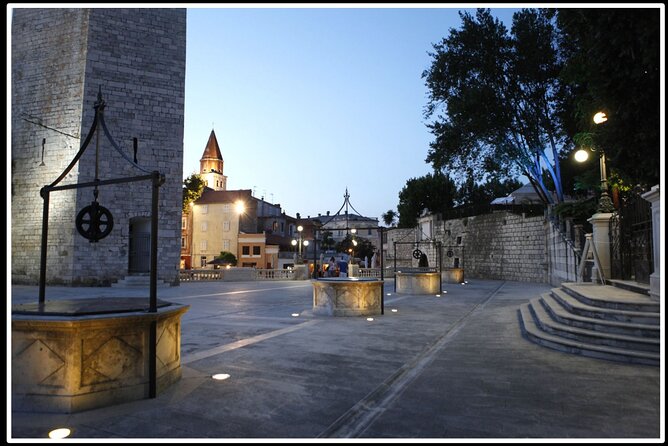
Queen Jelena Madijevka Park occupies the top of the Grimaldi bastion. It was founded in 1829 by Austrian commander Baron Franz Ludwig von Welden, a botanist who admired Dalmatian plant life.
Creating a public garden on top of a military structure was an unusual decision. It gave Zadar its first public park in Dalmatia and turned a defensive work into a place for rest. I like this stop because it adds a different pace to the walk. After churches, walls, and wells, you get a little breathing room.
The park visit lasts around 10 minutes. Do not expect a full botanical tour. The value lies in the idea, the view of how the bastion was reused, and the reminder that cities change purpose over time.
If you are walking in summer, this is a welcome pause, though the overall route still includes sunny streets and open squares.
Zadar Market, where the city shops and eats
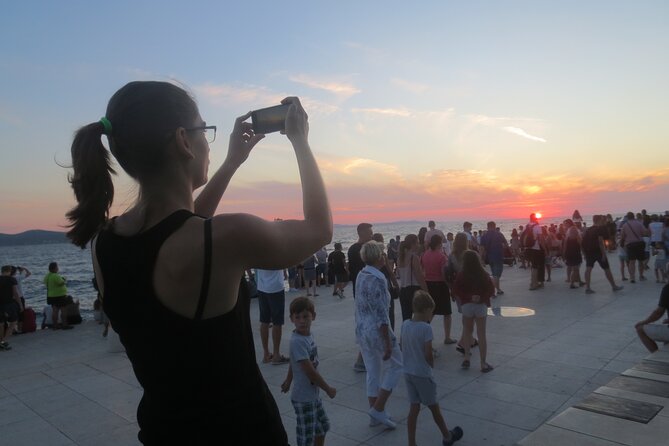
The main market, Trznica Zadar, is one of the most useful stops for anyone staying in town. It includes the open green market and a covered fish market on the old peninsula. The market’s current location dates from 1952, but its role reaches much further back. Earlier, Zadar’s main market occupied the Roman Forum.
Here you can expect locally grown fruit and vegetables, freshly caught fish, home-produced meat, traditional regional goods, and souvenirs. The market is not just a photo stop. It is where you can begin to understand what people buy, cook, and take home.
This is also where the tour’s Gligora connection becomes especially relevant. Several accounts describe a cheese tasting, including Pag cheese, at the famous cheese shop. The supplied tour details do not promise a tasting on every departure, so treat it as a possible feature rather than a guaranteed inclusion. Still, the local-food focus adds value that a standard monument-only walk would miss.
I would pay close attention to the guide’s restaurant and shopping suggestions here. A guide who lives in or knows Zadar well can help you make better choices for the rest of your stay. This practical advice was one of the most praised parts of the experience.
St. Chrysogonus, a Romanesque church with a royal connection
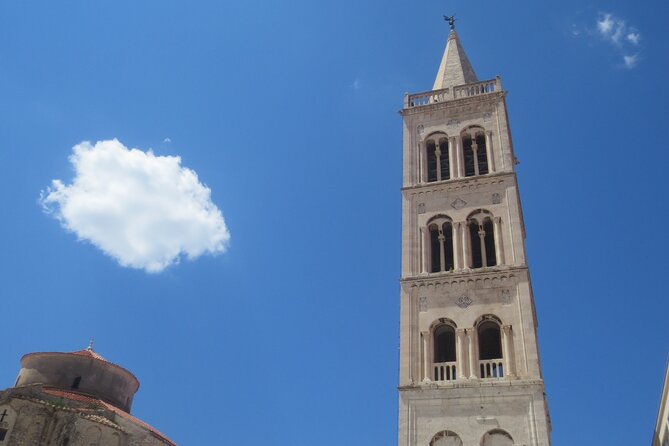
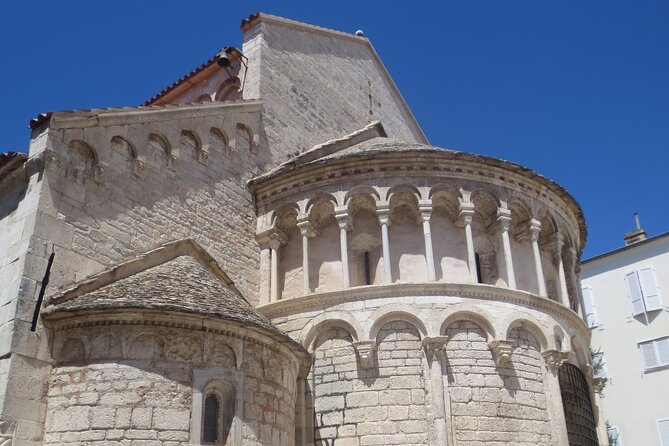
The Church of St. Chrysogonus is named for Zadar’s patron saint. It was consecrated in 1175 by Lampridius, Archbishop of Zadar, and built on the site of a Roman emporium.
The church is the remaining part of a larger medieval Benedictine abbey. That fact alone makes the stop worthwhile, since you are seeing one surviving piece of a much bigger religious complex.
The church also has a dramatic royal story. Elizabeth of Bosnia, the murdered queen dowager of Hungary and Dalmatia, was secretly buried here in 1387. Her body remained for three years before being moved to the Basilica in Székesfehérvár.
A bell tower was begun in 1485 but abandoned in 1546. An unfinished tower can tell you plenty about interrupted plans, changing priorities, and the long, uneven life of an old city.
You spend around 10 minutes here, with free admission. The drawback is that the church may be encountered mainly from outside or briefly, depending on access.
St. Anastasia Cathedral and signs of wartime damage
Zadar’s cathedral dates from the 12th and 13th centuries. Its facade is richly decorated, while the interior has three naves and surviving fresco remains in the side apses.
The building was badly bombed during World War II and later reconstructed. That detail is important because it changes how you read the church. This is not simply a medieval building preserved untouched. It is part of a city that suffered major destruction and then rebuilt its identity.
The left apse contains a marble sarcophagus with the relics of St. Anastasia. The choir has carved stalls, and a glass vestibule lets you look inside when the cathedral is closed, which happens often.
Only about five minutes are allotted here. That is enough for orientation and a quick look, but not a full cathedral visit. If the building is open and you want more time, you may need to return independently.
The Roman Forum and St. Donatus in one powerful stop
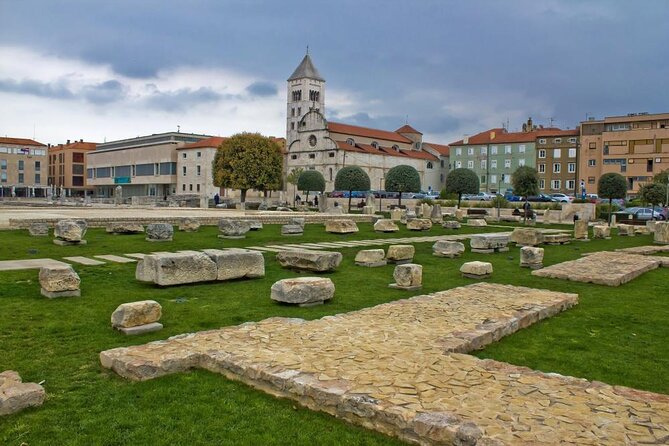
The Roman Forum is where Zadar’s ancient past becomes most visible. Built between the 1st century BC and the 3rd century AD, it was the center of civic and religious life in Roman times.
Today, Roman ruins appear among later buildings and city streets. That mix is one of Zadar’s defining pleasures. You do not need to enter a distant archaeological park to see antiquity. It is right in the middle of the old town, beside churches and modern foot traffic.
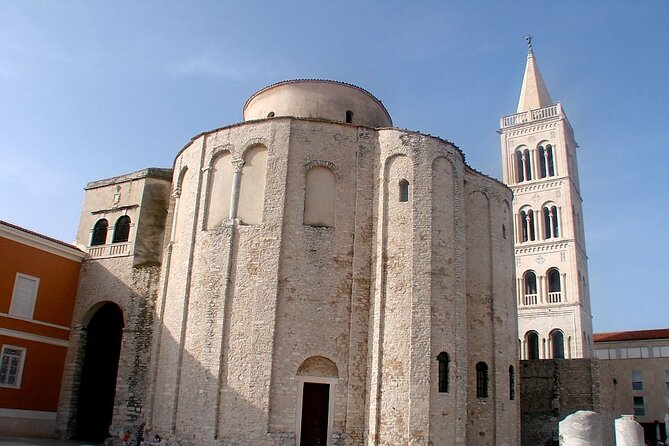
St. Donatus dominates one side of the Forum. The tour gives the church two separate moments of about seven minutes each, first as part of the Forum setting and then as a building worth examining on its own.
The church dates from the early 9th century and has a circular Byzantine-style design. It is one of the few buildings from the early Croatian kingdom to survive the Mongol invasion of the 13th century.
Inside, the design is simple and spare. Two complete Roman columns were reused from the Forum, and paving slabs from the Forum appeared after the original floor was removed. This is a lesson in Zadar’s habit of recycling its past. Roman materials became part of a Christian church, while the church itself later became a concert hall and exhibition space rather than a place of worship.
St. Donatus has not been used for services for roughly 200 years. The stop is short, but the building is unusual enough to leave a strong impression. If you enjoy architecture, this is likely the tour’s highlight.
What the pace, guides, and group size mean for you
The advertised duration is about one hour and 40 minutes. Most stops last 10 minutes or less, with only five minutes at the cathedral. That pace works well if you want a broad introduction before exploring selected places on your own.
The route is not a long-distance hike, but you are on your feet through old-town streets and open spaces. One account described September heat and limited breeze as uncomfortable. Choose a cooler departure if possible, carry water, and use sun protection.
The maximum group size is 30. That is not tiny, but the actual feel can be more personal. One evening group had only six people, and one participant received what amounted to a private tour. You should not count on a small group, but the possibility is a pleasant bonus.
The named guides include Melina, Jasmina, Sara, Hajdi Josic, Lucinja, Inez, Milena, Angela, Mirena, Zendka, and Sarasvati. The strongest praise centers on guides who explain clearly, add local stories, answer questions, and keep children involved. Sarasvati, for example, was singled out for engaging a 10-year-old with questions. Melina was also praised for taking time with a grandson’s questions.
The tour is offered in English. Most people can participate, service animals are allowed, and the activity is near public transportation.
Is $18.14 a fair price?
At $18.14 per person, the tour is fairly priced for a focused introduction to central Zadar. You get a local guide for nearly 100 minutes, a route linking ancient, medieval, Venetian, Austrian, religious, and food-related sights, plus suggestions for where to eat and shop.
The value is strongest on your first day. A good guide can help you understand places you have already seen on your own, while also directing you to corners you might miss. The experience is less valuable if you prefer to read every plaque slowly or visit each church at length.
Admission to the listed stops is free, so you are paying mainly for the guide’s time, explanations, local context, and practical advice. That is reasonable in a city where the layers of history are easy to miss without help.
Free cancellation is available if you cancel at least 24 hours before the start time. Cancellations or changes made inside that window are not refunded or accepted.
Should you book the Zadar Walking Tour?
I would book it if you are visiting Zadar for the first time, have limited time, or want the city’s ancient and medieval sights explained in plain English. It is also a good match for families, history fans, and anyone who wants restaurant, market, and shopping tips from a local guide.
I would skip it if you dislike group walks, need long visits inside each church, or plan to explore only at your own slow pace. The short stops give you orientation rather than exhaustive sightseeing.
For the best experience, choose a departure that avoids the hottest part of the day, confirm the Narodni Trg meeting details, and ask about the cheese tasting when you arrive. At this price, the tour earns its keep by helping you see Zadar as a living city, not just a collection of old stones.
FAQ
Where does the Zadar Walking Tour begin?
It begins at People’s Square, Narodni trg, in central Zadar. The tour ends back at the same meeting point.
How long does the tour last?
The experience lasts approximately 1 hour and 40 minutes.
What language is the tour offered in?
The tour is offered in English.
How much does the tour cost?
The listed price is $18.14 per person.
How many people can join the tour?
The maximum group size is 30 people.
Can I cancel for a full refund?
Yes. You can cancel at least 24 hours before the experience start time for a full refund. Cancellations or changes made less than 24 hours before the start time are not accepted and are not refunded.
Just added around Zadar
- Zadar Guided Electric Bike Tour★ 5.0 · 9 reviews
- Zadar: Private Half Day Speedboat Tour★ 4.4 · 9 reviews
- Zadar: Sunset Panorama Tour with Eco Tuk Tuk★ 5.0 · 9 reviews
- PRIVATE Romantic Sunset Boat Tour Zadar with Local Wine 1,5h★ 4.5 · 9 reviews
- National Park Krka Private Return Day Transfer by Minivan★ 4.5 · 9 reviews
- Krka Waterfalls private transfer with Pickup & Drop Off★ 5.0 · 9 reviews
- Private 3 Hour Sightseeing Tour of Major Attractions in Zadar★ 5.0 · 10 reviews
- Private Sunset Tour across Zadar shoreline★ 5.0 · 10 reviews
Walking Tours, compared.




Walking Tour of Split and Diocletian’s Palace
Read our review →


Krka Waterfalls tour with Trogir Walking tour and Krka panoramic boat cruise
Read our review →
City Walls Early Morning or Sunset Walking Tour
Read our review →Browse the lists this tour appears in