
Reviewed · WALKING TOURS
Pula Essentials Walking Tour
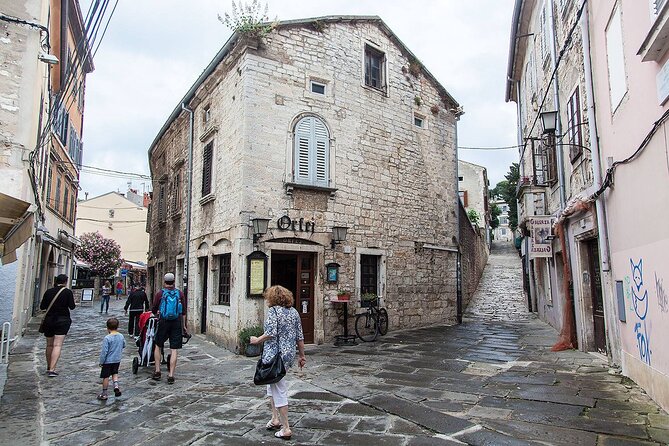
Pula tells its story one stone at a time. I like the way this 90-minute to two-hour walk links the old town’s major sights instead of treating them as separate photo stops. I also like the evening timing, when the city settles into its pre-dinner glow and you can finish near the Arena with time to visit inside.
The main drawback is clear: the Amphitheatre interior is not included, and most stops are viewed from outside. You also need decent weather, comfortable shoes, and a willingness to listen while standing or walking. Still, at $34.99, this is a sensible first look at Pula, especially if Stefano is leading your group.
In This Review
- Five useful things to know before you book
- Why this is a smart first walk in Pula
- Starting in Tito’s Park
- Forum Square, where Roman life met today’s café culture
- The Arch of the Sergii and Pula’s old entrance
- The Gate of Hercules and the Italian connection
- The Twin Gates and Pula’s more recent past
- Walking around the Arena’s outer walls
- What the guide adds to the experience
- Price, timing, and who gets the best value
- My verdict: book it for context, not just photos
- FAQ
- How long does the Pula Essentials Walking Tour last?
- What language is the tour offered in?
- How much does the tour cost?
- Where does the tour begin?
- Where does the tour end?
- Is entry to the Pula Amphitheatre included?
- Can I visit the Arena after the walking tour?
- How many people can join the tour?
- Is the tour suitable for most people?
- Can I cancel for a full refund?
Five useful things to know before you book
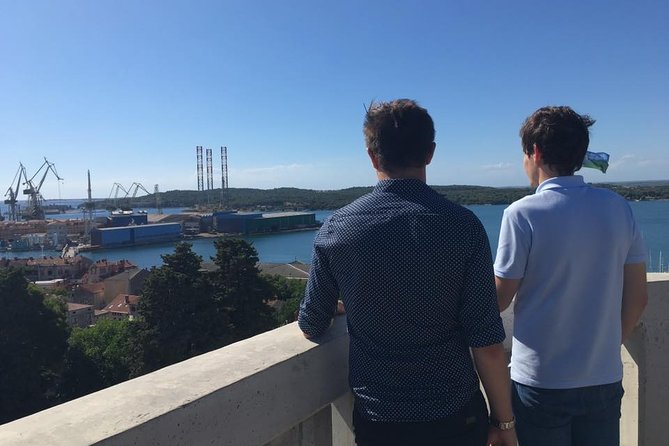
- The route begins in Tito’s Park and ends at the Arena entrance, making it easy to continue with an interior visit afterward.
- Stefano receives repeated praise for his storytelling, humor, local knowledge, patience, and restaurant advice.
- You cover Roman, Venetian, Austrian, Italian, and modern layers of Pula in one compact walk.
- The Amphitheatre is seen only from the outside, so budget separately if you want to enter.
- The group can include up to 30 people, though some departures have been much smaller and more personal.
- The tour costs $34.99 per person, with free cancellation up to 24 hours before departure.
Why this is a smart first walk in Pula
Pula is easy to walk, but its story is not always easy to read. Roman arches sit near later town streets. Italian cultural traces appear alongside Austro-Hungarian connections. The Arena dominates the city, yet the smaller gates and squares explain how daily life worked around it.
This tour gives you a basic map in your head. You begin in Tito’s Park, move through the old town, pass several Roman remains, and finish at the city’s most famous monument. I find that order useful because you see Pula’s parts before reaching its grand finale.
The guide’s role matters here. The tour is not just a stroll from one postcard view to another. The strongest comments describe Stefano as warm, funny, patient, and eager to answer questions. He has also offered suggestions for restaurants, ice cream, and places to visit the next day. That practical help can be worth as much as the history, particularly on your first evening.
The English-language tour is priced at $34.99. You are paying for a licensed guide and a structured introduction, not entrance tickets. For a family, couple, or solo visitor who wants context without committing to a long formal tour, I think the value is good. If you only want quick exterior photographs, you can walk much of this route on your own for free.
More Walking Tours in Pula
- Pula: Historic Walking Tour with Local Guide & City Views
★ 4.8 · 143 reviews - Pula walking tour
★ 5.0 · 96 reviews - Pula: Historic Sites Guided Walking Tour
★ 4.8 · 78 reviews
Starting in Tito’s Park
The meeting point is Tito’s Park, at Carrarina ul. 9. This is more than a place to gather. It gives the guide room to explain how Pula’s old town is laid out before you enter the streets.
Allow a little time to find the meeting point, and arrive ready to walk. The tour uses a mobile ticket and is offered in English. Public transportation is nearby, and service animals are allowed.
The opening talk sets up the city’s long sequence of rulers and influences. You will hear about Roman Pula, later Venetian connections, Austrian rule, and the Italian community’s place in the city. The guide’s ability to connect these periods is one of the main reasons to take the tour rather than simply follow a map.
This first stop lasts about 10 minutes. It is brief, but useful. If you arrive in Pula without knowing the difference between the Roman center and the later old town, this introduction helps you understand what you are seeing.
Forum Square, where Roman life met today’s café culture
Forum Square was the center of Roman public life. Today, it is also a place to sit down for a drink, which makes the stop especially easy to picture: a civic heart in Roman times, then a social gathering place in modern Pula.
The tour spends around 10 minutes here. Expect an explanation of the square’s role rather than a ticketed visit. Admission is free, and the value comes from the guide’s interpretation.
I like this stop because it shows how old spaces remain useful. You are not looking at an isolated ruin behind a barrier. You are seeing a public place that still draws people for ordinary reasons. That contrast helps the past feel connected to the city you are visiting now.
This is also a good point to ask questions. The guide has been praised for taking time with questions and for explaining local history in a way that works for adults and older children. Families should find the pace manageable, though younger children may lose interest during the historical detail.
The Arch of the Sergii and Pula’s old entrance
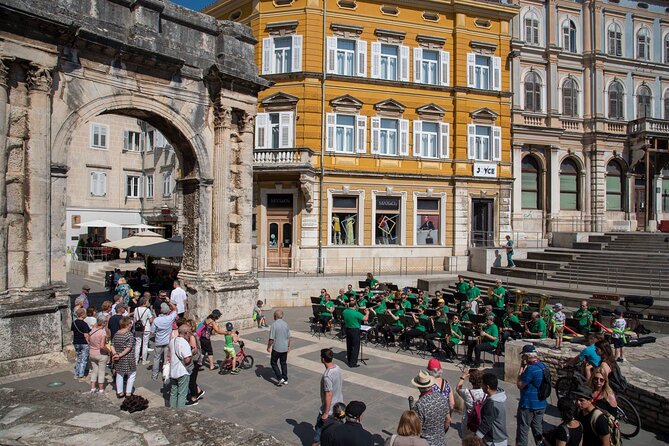
The Arch of the Sergii marks what was once the main entrance to the old Roman town. It remains one of modern Pula’s key meeting points, so this stop combines ancient purpose with present-day city life.
You spend about 10 minutes here. There is no admission fee, and you can focus on the arch’s setting, construction, and place in the old town’s story.
This is the sort of sight that can be easy to pass without a guide. You see an arch, take a picture, and move on. A good explanation gives it weight. You begin to understand that entrances are never just decoration. They control movement, signal importance, and help define a city’s limits.
The arch also makes a useful transition from the open square into the denser old-town streets. Keep your comfortable shoes on. The walk is leisurely, but you remain on your feet for most of the experience.
Something different for another day:
- Pula: Arena Entrance Ticket
★ 4.3 · 2,590 reviews - Medulin -Kamenjak 5h boat trip with lunch & drinks on Sandra Boat
★ 5.0 · 1,621 reviews - Full-Day Boat Tour of the Medulin Archipelago from Medulin
★ 5.0 · 1,389 reviews - 3hours all inclusive Sunset&Dolphin Tour from Medulin on Sandra
★ 5.0 · 1,130 reviews
The Gate of Hercules and the Italian connection
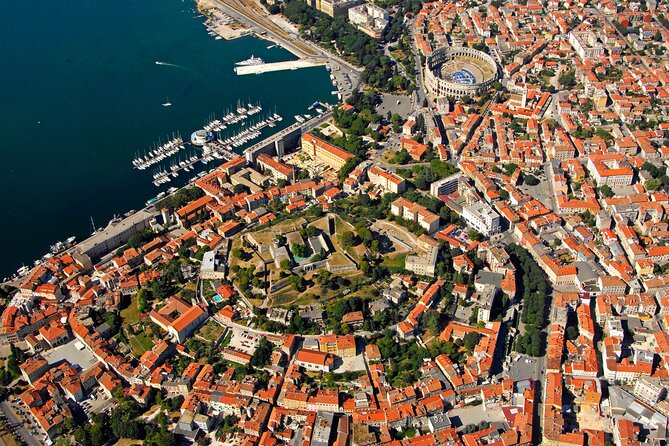
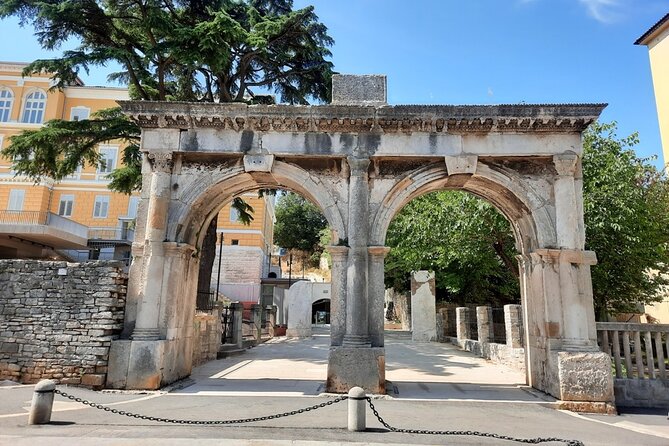
The Gate of Hercules is described as the oldest surviving gate in Pula. The stop lasts only about five minutes, but its small scale is part of its appeal.
The gate guards access to the Circolo, the social club of Pula’s Italian community. That detail adds a later cultural layer to the Roman remains. You are not only hearing about ancient Pula. You are also learning how different communities shaped the city’s identity.
Five minutes is enough to understand the point, but not enough for a long inspection. I would treat this as a compact history lesson between larger sights. The guide’s explanation is what makes it worthwhile.
This is also where the tour’s Italian angle becomes more visible. One particularly useful strength of the experience is that it does not present Pula as Roman and nothing else. The city’s story continues through Venetian, Austrian, Italian, and more recent periods.
The Twin Gates and Pula’s more recent past
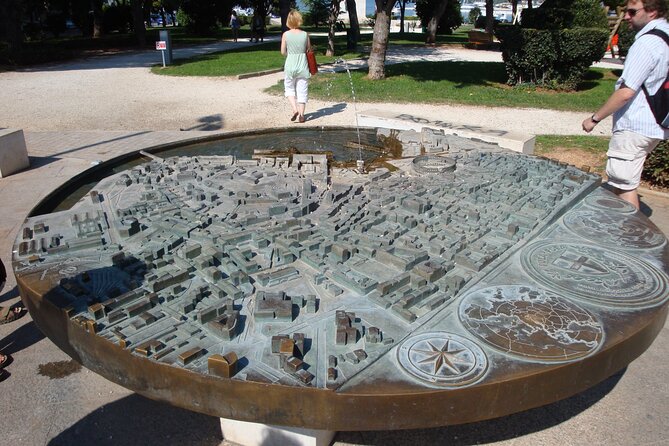
The Twin Gates form another old entrance to the town. The route pauses here for around five minutes, with attention not only to the gates themselves but also to secrets connected with Pula’s recent past.
That phrase points to one of the tour’s better habits: it looks beyond the most famous ancient monument. The gates may not command the same attention as the Arena, but they help you see how the old town worked and how its spaces carried on into later eras.
You will not get an interior attraction here, and the stop is short. Still, it is useful for anyone who wants more than a greatest-hits walk. The guide can point out details you might miss while moving between restaurants, shops, and larger monuments.
The smaller stops also keep the walk from becoming one long speech about the Arena. Pula has more to offer than its huge Roman amphitheater, and this section makes that clear.
Walking around the Arena’s outer walls
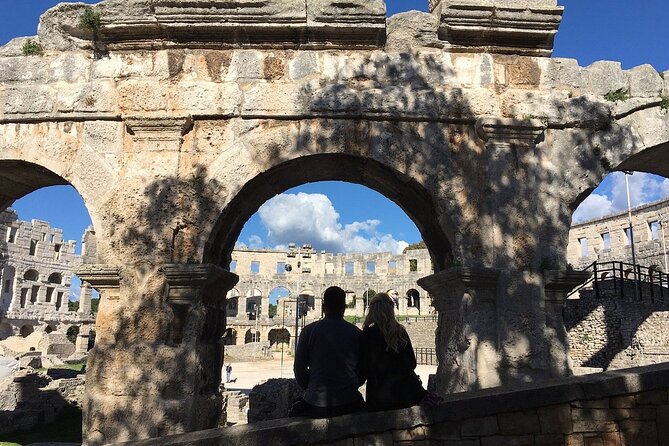
The final stop is the Amphitheatre de Pula, usually called the Arena. The tour spends about 20 minutes walking around its external walls and peeking inside where possible. It ends at Flavijevska ul. 3, directly in front of the main tourist entrance.
This ending works well. You approach the monument after learning about the town around it, then get time to admire its scale from outside. The pre-dinner light can be especially pleasant, giving the stone a softer look than it has under the harsh middle-of-day sun.
But plan carefully. Interior admission is not included. If you want to enter, you will need to buy a separate ticket and check the opening hours. One useful detail from the guide’s local advice is that he has helped people work out whether they still had time to visit inside after the walk.
Finishing here also gives you flexibility. You can enter the Arena if it is open, walk onward through Pula, or stop for dinner. Some participants have followed the guide’s restaurant recommendation and stayed for the evening, which shows the benefit of asking for local suggestions before saying goodbye.
What the guide adds to the experience
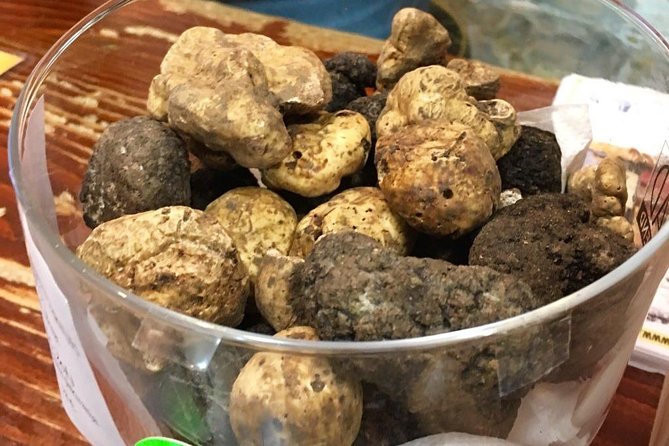
The guide is the heart of this walk. Stefano is named repeatedly in the feedback, and the praise is specific. I would expect an engaging delivery, clear English, a willingness to answer questions, and stories that connect Pula with the wider Istrian region and neighboring countries.
He has also been praised for adjusting to the group’s pace. One couple described the walk as relaxed and slow, while another family found the 90-minute format just right. If you prefer a fast march through sights, this may feel too unhurried. I see that as a benefit for most people, since you have time to look up, take photos, and ask questions.
Group size can reach 30 people, so the experience is not guaranteed to feel private. On quieter evenings, though, the group may be tiny. One departure became a private 90-minute walk for two people and one other participant because much of Pula was watching a Croatia football match.
Weather can change the mood. One group completed the walk in heavy rain but still found the guide’s energy and explanations worthwhile. Since the activity requires good weather, a cancellation may lead to another date or a full refund.
Price, timing, and who gets the best value
At $34.99, the Pula Essentials Walking Tour sits in a reasonable range for a guided city introduction. The fee includes a licensed guide, but not entrance charges. Since the route’s stops are viewed from public spaces, you are mainly paying for the stories, orientation, and local advice.
I would book it early if your schedule is fixed. It is often reserved about 27 days ahead, which suggests that popular dates can fill before arrival. Confirmation normally comes at booking, though reservations made within four hours of departure are confirmed as soon as possible, subject to availability.
The tour suits:
- First-time visitors who want a clear introduction before exploring alone.
- History-minded families who prefer a short walk to a full-day excursion.
- Couples and solo visitors who want restaurant and sightseeing suggestions.
- Cruise or short-stay visitors with only one evening in Pula.
- People who prefer a relaxed pace and time for questions.
I would think twice if you need full accessibility information beyond the details provided, dislike outdoor tours in uncertain weather, or want to spend most of your time inside the Arena. This is a walking and storytelling experience, not an admission tour.
Cancellation is free up to 24 hours before the local start time. Within 24 hours, the payment is not refunded, except that weather or minimum-group cancellations may lead to another date or a full refund.
My verdict: book it for context, not just photos
I would book the Pula Essentials Walking Tour early in a Pula stay, ideally on your first evening. You will see the main old-town sights, learn how Roman, Venetian, Austrian, and Italian influences overlap, and leave with useful ideas for food and the next day.
The strongest reason to go is the guide, especially if Stefano is leading. His humor, patience, local pride, and ability to answer questions turn a simple route into a readable story about Pula.
Book it if you want an easy introduction with real context. Skip it if you plan to wander independently and only need photographs, or if your main goal is an in-depth visit inside the Arena. For most first-time visitors, the $34.99 fee is fair because it helps you see Pula with better eyes.
FAQ
How long does the Pula Essentials Walking Tour last?
The tour lasts approximately 1 hour 30 minutes to 2 hours.
What language is the tour offered in?
The tour is offered in English.
How much does the tour cost?
The price is $34.99 per person.
Where does the tour begin?
The meeting point is Tito’s Park, Carrarina ul. 9, 52100 Pula, Croatia.
Where does the tour end?
The tour ends at Flavijevska ul. 3, 52100 Pula, Croatia, in front of the Arena’s main tourist entrance.
Is entry to the Pula Amphitheatre included?
No. The Arena is viewed from the outside, and entrance fees are not included.
Can I visit the Arena after the walking tour?
The tour finishes in front of the main entrance, so you have the option of continuing with an interior visit. Admission is separate.
How many people can join the tour?
The maximum group size is 30 people.
Is the tour suitable for most people?
Most people can participate. Service animals are allowed, and the meeting point is near public transportation.
Can I cancel for a full refund?
Yes. You can cancel at least 24 hours before the experience start time for a full refund. Cancellations within 24 hours are not refunded.
Just added around Pula
- Istria: Private Boat Tour with Skipper★ 5.0 · 9 reviews
- 3 Hours Private Wine and Sunset Tour★ 5.0 · 9 reviews
- Pula: Sunset/Night-time Illuminated Transparent Kayak Tour★ 4.0 · 9 reviews
- Electric Off-Road Scooter Tour in Pula★ 5.0 · 10 reviews
- Pula: Your Custom Full-Day Private Sail – Explore Istria’s Gems★ 5.0 · 10 reviews
- Pula Private 2-Hour Guided Walking Tour★ 5.0 · 10 reviews
- Pula: Private Brijuni Tour With Swimming, Dinner & Drinks★ 4.3 · 10 reviews
- Stop on Island & National Park Day Cruise with Lunch Drinks★ 5.0 · 10 reviews
Walking Tours, compared.




Walking Tour of Split and Diocletian’s Palace
Read our review →


Krka Waterfalls tour with Trogir Walking tour and Krka panoramic boat cruise
Read our review →
City Walls Early Morning or Sunset Walking Tour
Read our review →Browse the lists this tour appears in