
Reviewed · HISTORICAL TOURS
Dubrovnik History, Sweets & Liquors in a Private Palace (PRIVATE)
Old Dubrovnik feels better with a local guide. This two-hour private walk combines the city’s main sights with a rare visit to a private palace, where you can enjoy coffee, sweets, and homemade liqueurs. I especially like the personal guide and the chance to see an ordinary room inside an old aristocratic building, not just another polished monument. The main consideration is time: two hours gives you a fine introduction, but not a full tour of the city walls or major interiors.
Guides such as Pavo, Tea, Mara, and Sarah have earned warm praise for their friendly style, local stories, and ability to adjust the pace. The palace tasting is the memorable finish, though you should understand that access may focus on one historic room rather than an entire four-story building.
In This Review
- Key things to know before you book
- Starting at Pile Gate and finding your bearings
- Stradun, Onofrio’s Fountain, and the city’s public face
- Sponza Palace and Rector’s Palace
- Saint Blaise Church, the market, and the Cathedral
- The Old Harbour and Dubrovnik’s seafaring character
- The private palace visit is the real surprise
- Why the private format matters
- Two hours, $114.65, and the value question
- Who will enjoy this Dubrovnik walk?
- Practical details for a smoother visit
- Should you book this private Dubrovnik experience?
- FAQ
- Where does the tour start?
- Where does the tour end?
- How long does the experience last?
- Is this a private tour?
- What language is the tour offered in?
- Are food and drinks included?
- Can I cancel for a refund?
Key things to know before you book
- A private guide keeps the walk personal: Only your group takes part, so the guide can answer questions and adjust the pace.
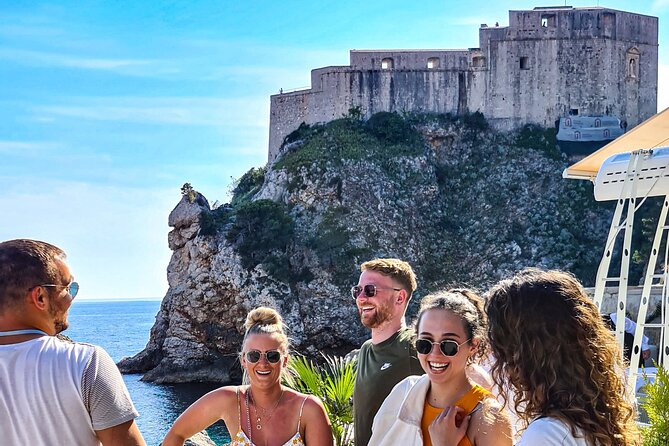
- The route covers Dubrovnik’s central sights: You’ll see Pile Gate, Stradun, Onofrio’s Fountain, Sponza Palace, Rector’s Palace, Saint Blaise Church, the market, Cathedral, and Old Harbour.
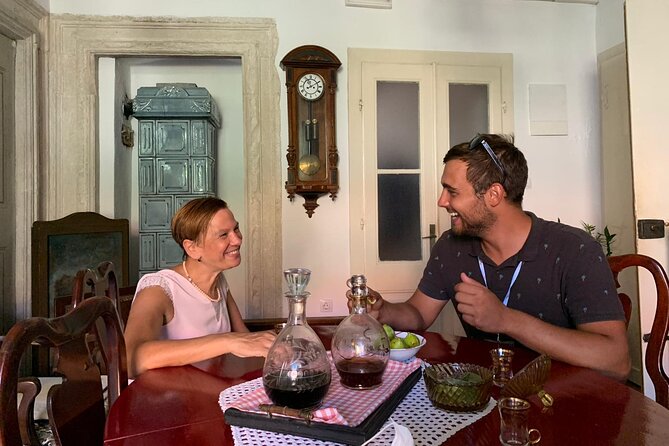
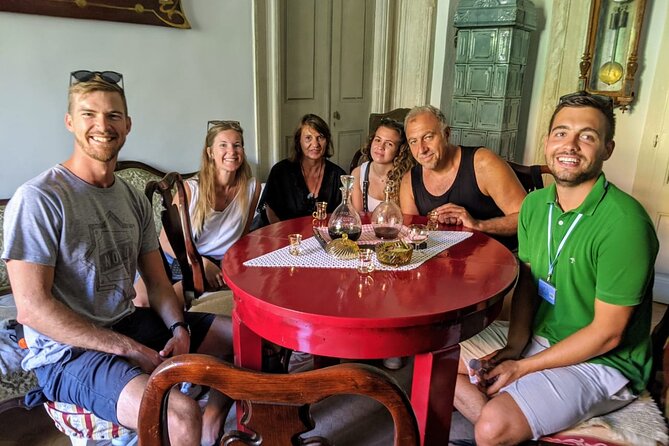
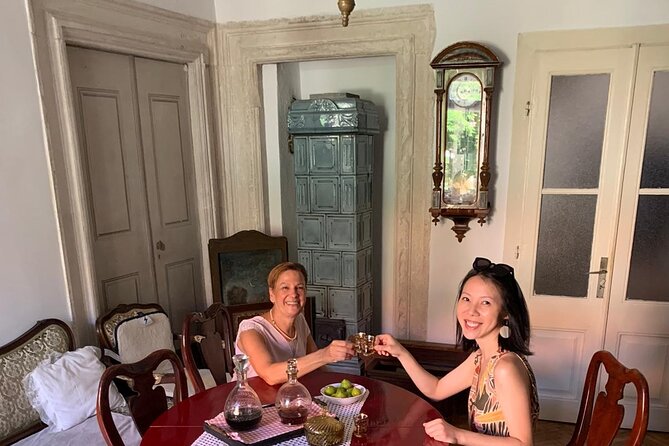
- The palace visit is the unusual feature: You may sit in a historic room with a restored ceiling, a sixteenth-century table, coffee, sweets, and local liqueurs.
- Pavo and Tea receive especially strong praise: Both are described as warm, amusing, flexible, and deeply connected to Dubrovnik.
- The tour works well as an arrival-day orientation: It helps you understand the Old Town before you explore the walls, museums, and restaurants on your own.
- The price is $114.65 per person: That is a serious cost for two hours, but private guiding and the rare home visit add value, especially for a small group.
Starting at Pile Gate and finding your bearings
The walk begins at Brsalje ul. 3, beside Pile Gate, the western entrance to Dubrovnik’s walled Old Town. This is a useful meeting point because Pile is one of the city’s clearest landmarks and a natural place to begin understanding how Dubrovnik is organized.
From here, you enter the historic center and follow Stradun, the broad main street that runs through the heart of the city. It is the obvious route, but the guide does not simply march you from one postcard view to the next. The route also turns into smaller streets, where you get a better sense of the compact medieval city and the way daily life fits inside its stone walls.
I like this structure for a first visit. You get the major sights without spending the whole time memorizing dates, and you also get some context for the side streets you might otherwise pass without noticing. The private format helps here. If you want to stop for a question, ask about a building, or slow down for a photograph, you are not holding up a large group.
More Historical Tours in Dubrovnik
- Dubrovnik Old Town History Walking Tour
★ 5.0 · 1,684 reviews - Game of Thrones & History of Dubrovnik Tour
★ 5.0 · 628 reviews - Dubrovnik: Old Town History Walking Tour
★ 4.9 · 474 reviews
Stradun, Onofrio’s Fountain, and the city’s public face
Stradun is Dubrovnik’s main urban spine, linking Pile Gate with the eastern side of the Old Town. Along this stretch, your guide introduces the city’s most important buildings and institutions, explaining how Dubrovnik functioned as a city-state and how its public spaces were used.
Onofrio’s Fountain is one of the first major sights on the route. It is an easy landmark to recognize, but its practical role matters more than its appearance. The fountain represents Dubrovnik’s long concern with bringing and managing water inside the fortified city. Your guide can place that structure within the larger story of how people lived in a dense stone town.
This is also where a private walk earns its keep. A good guide can move beyond the basic label on a monument and explain why the site mattered to residents. Pavo is praised for mixing facts with funny stories, while Tea is described as a teacher who makes information easy to remember. Those qualities matter in Dubrovnik, where every few steps can bring another church, palace, fountain, or plaque.
Sponza Palace and Rector’s Palace
Sponza Palace is one of the Old Town’s most important historic buildings. It is part of the city’s civic and commercial story, and it helps show how Dubrovnik’s wealth and government were organized. You see it from the outside on this walk, so anyone wanting a detailed interior visit should plan separate sightseeing time.
Rector’s Palace gives you another angle on power in the old republic. Its name points to the rector, the elected official who served as the city’s head of state for a limited term. The building is a useful stop for understanding how Dubrovnik balanced authority, law, commerce, and diplomacy.
I would treat these stops as an introduction rather than a museum tour. The guide gives you the framework, then you can return later if you want to explore interiors at your own pace. That is one reason this experience works well early in a Dubrovnik stay. You leave knowing which buildings deserve a longer visit and which stories you want to investigate.
Saint Blaise Church, the market, and the Cathedral
Saint Blaise Church is dedicated to Dubrovnik’s patron saint, a figure closely tied to the city’s identity. The church is one of the key landmarks on the route, and your guide can explain local traditions around Saint Blaise rather than leaving you with only an architectural description.
The green market adds a more everyday note. Instead of focusing only on palaces and official buildings, the route includes a place connected to food, shopping, and local routine. It helps break up the formal sightseeing and gives you a look at how the Old Town still serves as a lived-in center.
The Cathedral continues the religious and civic story. Dubrovnik’s churches are not isolated monuments. They reflect the city’s seafaring connections, wealth, faith, and repeated need to recover from disaster. You see the Cathedral as part of that wider story, with the guide connecting it to the city around it.
The route is not advertised as a food tour in the usual sense. The market is a sightseeing stop, while the tasting comes later at the private residence. If you are hoping to sample a long list of market foods, this is not the right format. The strength is the balance between landmarks and personal local context.
A few more tours and experiences worth a look
- Zagreb: Chocolate Museum Entry Ticket
★ 4.5 · 72 reviews - Lumbarda-Sunset Kayaking Experience with picnic: Wine and Sweets
★ 5.0 · 51 reviews - Lumbarda – Sunset Kayak Tour with a Picnic – Wine and Sweets
★ 5.0 · 45 reviews
The Old Harbour and Dubrovnik’s seafaring character
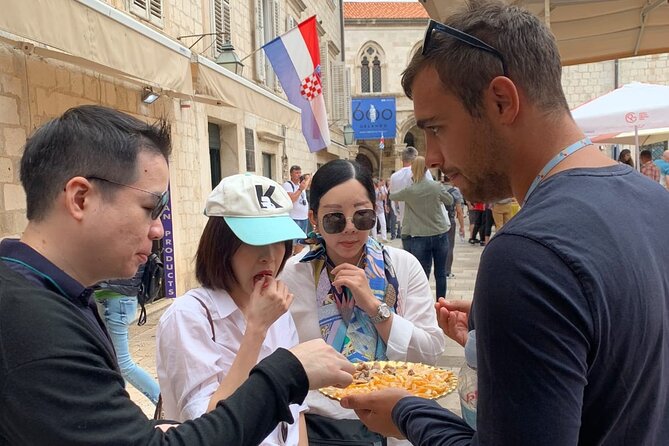
At the Old Harbour, the city’s relationship with the Adriatic becomes easier to picture. Dubrovnik was not simply a walled town admired for its streets. Its position by the sea shaped its trade, politics, wealth, and contact with other parts of the region.
The harbour also gives the walking route a change of pace. After the narrow streets and grand civic buildings, the water opens the view and gives you a better sense of why the city was built where it was. The stop is brief within a two-hour tour, but it helps tie the architecture to the practical life of the republic.
If you want to walk the complete city walls, plan that separately. The walls are not listed as part of this experience, and the tour ends inside the Old Town rather than taking you on a full circuit above the city. The guide’s orientation can make that later walk more meaningful, but it does not replace it.
The private palace visit is the real surprise
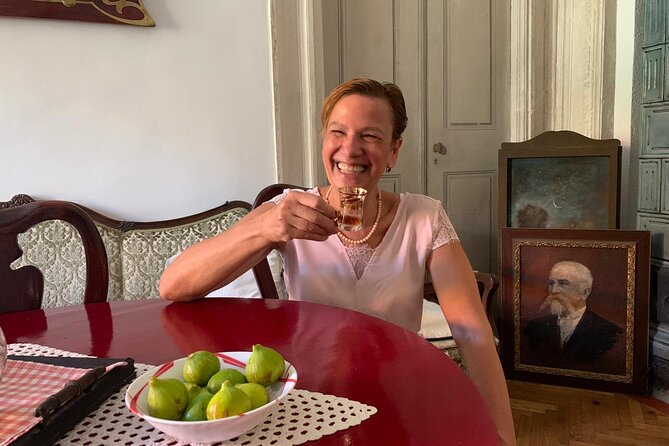
The final stop is what makes this different from a standard Old Town walk. You visit a private residence inside a former palace, an experience made possible through the local connection of the guide and the tour company.
Set your expectations correctly. You may see one principal room rather than tour every part of a large four-story building. That room, however, can be the most memorable setting of the afternoon. One visit included coffee and Easter bread at a sixteenth-century table. Another featured orange rind, figs, and homemade liqueurs. Rakija, the regional fruit brandy, may also be part of the tasting.
The restored ceiling in the salon has received particular praise. Details like this make the visit feel less like a formal attraction and more like a glimpse into a real old-city home. You are not just hearing that Dubrovnik’s aristocratic families lived in grand buildings. You are sitting in one of those spaces while sharing local food and drink.
I also like the social side of this stop. Coffee gives the guide and your group time to talk without walking, and the conversation can shift from monuments to family stories, local customs, and present-day Dubrovnik. Tea has shared stories about her family, including her father’s connection to the walled city. Pavo has been praised for explaining how the palace came into its current family ownership.
The alcoholic drinks are part of the experience, so keep that in mind when booking for children or anyone who does not drink. The focus is tasting, not a bar crawl. The supplied information confirms coffee, sweets, and local alcoholic drinks, with examples including liqueurs, figs, orange rind, and Easter bread.
Why the private format matters
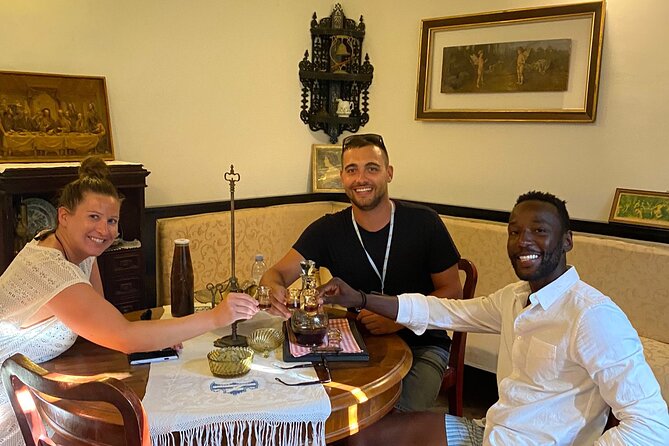
This is not a large group experience with a guide trying to satisfy thirty people at once. Only your group participates. That changes the feel of the walk and gives you a better chance to ask practical questions about restaurants, sights, shopping, and how to use the rest of your time in Dubrovnik.
Several guide names appear in the feedback, including Pavo, Tea, Mara, and Sarah. Pavo is repeatedly praised for his humor, energy, local knowledge, and easygoing manner. Tea is praised for her family connection to the Old Town, clear teaching style, flexibility, and ability to guide in French. Mara is singled out for answering questions generously and adapting to a chilly off-season morning. Sarah is described as both personable and well informed.
You should not assume you will receive a particular guide unless the booking process confirms it. Still, the consistent pattern is encouraging: the experience depends heavily on a local person who can tell stories, not just recite a prepared script.
The private format can also help with walking ability. One guide adjusted the pace and route to suit the group, and another accommodated last-minute timing changes while keeping the essential sights. That flexibility is useful in Dubrovnik, where polished stone streets, crowds, heat, and stairs can affect the pace.
Two hours, $114.65, and the value question
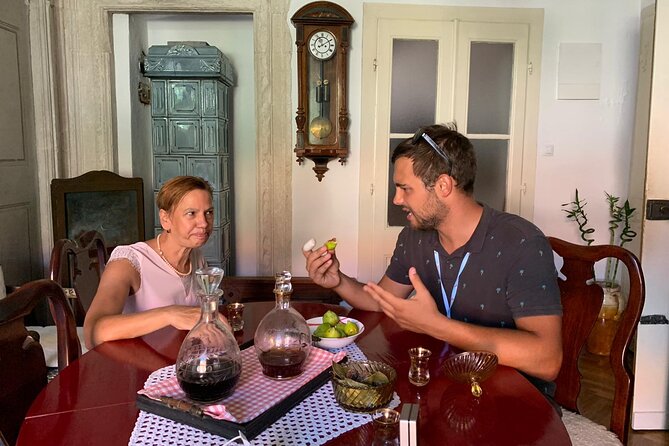
At $114.65 per person, this is not a budget walking tour. The price needs to be judged against what you receive: approximately two hours of private guiding, a broad Old Town orientation, a palace visit, and tastings of local specialties.
For a solo visitor or couple, the cost may feel high. For a family or small group, group discounts could improve the value, and the private format means you are not paying for a generic experience shared with strangers. A family of six, including teenagers and young adults, found the pace and mix of history, current life, local suggestions, and palace visit suitable for everyone.
I would compare the cost with your plans for the first day. If you intend to wander without guidance and only want a map-level introduction, this is more than you need. If you value local stories, dislike large groups, and want access to a private home that you could not arrange independently, the extra cost has a clear reason.
The tasting also makes the price easier to understand, though it is not a full meal. You still need to budget for lunch or dinner afterward. The tour ends at Gundulić Square, also called Gundulić Poljana, in the center of the Old Town, putting you near restaurants and further sightseeing.
Who will enjoy this Dubrovnik walk?
I would recommend it most strongly to:
- First-time visitors who want a clear introduction before exploring alone
- Couples who prefer a private, conversational tour
- Families with older children and teenagers
- Small groups willing to pay more for flexibility
- History fans who enjoy local stories as much as famous monuments
- People who want a cultural tasting without booking a separate food tour
- Visitors who value meeting local residents inside a historic home
The tour can also suit a short Dubrovnik visit. With 66 days as the average advance booking time, it is sensible to reserve early if your dates are fixed. That lead time does not guarantee a particular guide or time, but it suggests that waiting until arrival may limit your choices.
This is less suitable if you want a long architectural lecture, extensive museum time, or a complete walk around the city walls. It is also not the best match if you avoid alcohol and do not care about the private-home portion, since that is a major reason to choose this experience over an ordinary city walk.
Practical details for a smoother visit
Wear comfortable shoes. The route covers the central Old Town on foot, and the historic streets can be hard on your feet even when the distance is not great. You should also allow a little flexibility around the two-hour estimate, especially if your group has many questions or needs a slower pace.
The tour is offered in English. Service animals are allowed, public transportation is nearby, and most people can participate. No special physical requirement is stated, but tell the guide about walking concerns early so the pace can be adjusted when possible.
Book with the weather in mind. The experience requires good weather, and if poor conditions cancel it, you are offered another date or a full refund. You can cancel for a full refund up to 24 hours before the local start time. A cancellation or change inside that window is not accepted for a refund.
Bring an appetite for small tastes, but do not expect a full lunch. The exact treats can vary, though the experience has included coffee, Easter bread, figs, orange rind, and homemade liqueurs. If you have dietary restrictions, ask before booking because the available information does not specify substitutions.
Should you book this private Dubrovnik experience?
I would book it if you want more than a checklist of Dubrovnik monuments. The strongest reasons are the private guide, the local stories, and the chance to sit inside a historic palace room over coffee and traditional drinks. Pavo and Tea receive the most repeated praise, but the positive impressions of Mara and Sarah suggest that the experience is not tied to one personality alone.
Book it early if you want a particular date, especially during a busy season. Choose it as one of your first activities, then use the orientation to plan the city walls, museums, Cathedral interior, and meals afterward.
Skip it if $114.65 feels too steep for two hours, if you want a full wall walk, or if you prefer to explore Dubrovnik’s interiors independently. For everyone else, this is a polished but personal introduction, with enough famous sights to get you oriented and enough homegrown character to make the city feel human.
FAQ
Where does the tour start?
It starts at Brsalje ul. 3, 20000 Dubrovnik, Croatia, near Pile Gate.
Where does the tour end?
The tour ends at Gundulićeva poljana, also known as Gundulić Square, in the center of Dubrovnik’s Old Town.
How long does the experience last?
The walking tour lasts approximately two hours.
Is this a private tour?
Yes. Only your group participates in the activity.
What language is the tour offered in?
The tour is offered in English.
Are food and drinks included?
Yes. The experience includes local specialties such as coffee, sweets, and alcoholic drinks. Examples provided include homemade liqueurs, figs, orange rind, and Easter bread.
Can I cancel for a refund?
Yes. You can cancel at least 24 hours before the local start time for a full refund. If poor weather forces the provider to cancel, you are offered another date or a full refund.
Just added around Dubrovnik
- Dubrovnik Sunset Mountain Tour With Wine★ 5.0 · 9 reviews
- From Dubrovnik: Mali Ston Oyster Paradise Tour with Transfer★ 4.8 · 9 reviews
- Dubrovnik: Private Panoramic Half-Day Buggy Tour with Brunch★ 4.6 · 9 reviews
- Luxury Day tour to Mostar and Kravice waterfalls★ 5.0 · 9 reviews
- Montenegro from Dubrovnik Private Tour★ 5.0 · 9 reviews
- Sarajevo & Mostar Private Day Tour from Dubrovnik★ 4.5 · 9 reviews
- Blue Sea & Black Mountains – Montenegro★ 5.0 · 9 reviews
- Ston Oysters & Wine Tasting Tour from Dubrovnik★ 5.0 · 9 reviews
Historical Tours, compared.

Walking Tour of Split with a ‘Magister’ of History
Read our review →


Split History and Gastro Small-Group Tour with Food and Drinks
Read our review →
PREMIUM Emperor’s Walking Tour for History Lovers + Museum
Read our review →Browse the lists this tour appears in