

Reviewed · DIOCLETIAN PALACE TOURS
Split: Diocletian Palace & Old Town Guided Walking Tour
History is part of Split’s everyday life. This short walking tour makes sense of the city’s extraordinary Roman core, where homes, cafés, shops, and church towers occupy the remains of Emperor Diocletian’s palace. I especially like the route through the Peristyle courtyard and four ancient gates, and I like how local guides connect Roman ruins with medieval and Venetian Split. The main drawback is time: at 50 minutes, this is a brisk introduction rather than a full study of the palace.
I also appreciate the low price of $17 per person. For less than the cost of many longer sightseeing activities, you get a live guide, a clear route, and useful orientation at the start of your visit. Guides such as Ina, Natasa, Darko, Tin, and Ena have been praised for making the past easy to follow, answering questions, and adding practical suggestions for the rest of your time in town.
In This Review
- Key points to know before you book
- Starting on Split’s Riva promenade
- Why Diocletian’s Palace feels different
- Palace cellars and the route beneath the city
- Peristyle courtyard and the emperor’s private spaces
- Walking through the Bronze, Silver, Golden, and Iron Gates
- Cathedral of St. Domnius and the bell tower question
- The Benedictine, Town Hall, and Fruit Square
- What the guides do best
- Is $17 good value for 50 minutes?
- Best time to take this Split walking tour
- Who should book it?
- Should you book the Diocletian Palace walking tour?
- FAQ
- How long does the tour last?
- How much does the tour cost?
- Where does the tour begin?
- How do I find the meeting point?
- What languages are available?
- Is transportation included?
- Is food included?
- Is the tour wheelchair accessible?
- What should I bring?
- Can I cancel the booking?
Key points to know before you book
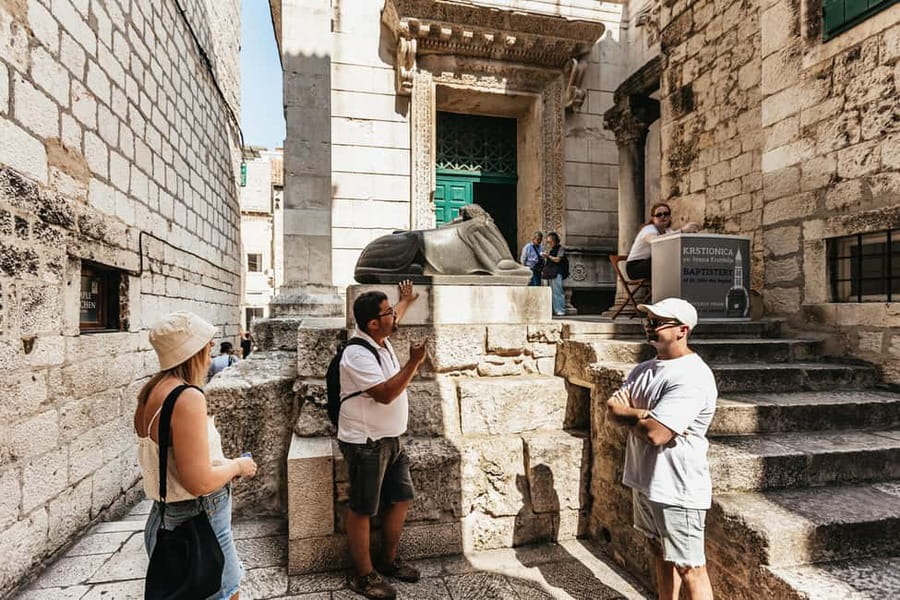
- Roman palace turned living city: Diocletian’s 4th-century palace is not an isolated monument. Split’s Old Town grew inside and around it.
- A compact 50-minute route: You see the main sights quickly, making this a good first activity or a sensible choice on a hot day.
- Four original gates: The Bronze, Silver, Golden, and Iron Gates show how the imperial complex connected with the sea, roads, and surrounding city.
- Guides bring different strengths: Ina is praised for her clear historical explanations and archaeological interest, while Natasa and Darko are noted for enthusiasm, humor, and local insight.
- Easy meeting point, with one small catch: Look for the open-top red bus and staff in red or white shirts beside it. One person had trouble finding the spot when the bus was delayed, so arrive early.
- Good value, limited depth: The tour covers the essentials, but palace cellars, the cathedral, and the bell tower deserve extra time if you want a closer look.
Starting on Split’s Riva promenade
The tour begins at Apodos Travel Agency, beside the lively Riva waterfront. This palm-lined promenade is one of the easiest places in Split to find, with cafés, open space, and the Adriatic close by. It also gives your guide a useful opening scene: the city you see today grew directly out of an imperial complex built more than 1,700 years ago.
Look for an open-top red bus and staff wearing red or white shirts. They connect you with the walking guide. This arrangement is simple once you know what to look for, but the meeting point can be less obvious if you are watching for a traditional office sign. One person reported that a delayed bus made the location harder to spot, so I would arrive several minutes early and keep an eye out for the red sightseeing stop.
From the Riva, you move toward Diocletian’s Palace and Split Old Town. There is no hotel pickup or city transport included, so you need to reach the starting point yourself. That is not much of a burden if you are already in central Split, but it matters if you are coming from a suburb, ferry terminal area, or another town.
More Old Town Walks in Split
- Split: Old Town and Diocletian Palace Walking Tour
★ 4.9 · 4,727 reviews - Diocletian’s Palace and Old Town SMALL GROUP Walking Tour
★ 5.0 · 502 reviews - SPLIT-PRIVATE Walking Tour of Diocletian’s Palace & Old Town
★ 5.0 · 467 reviews
Why Diocletian’s Palace feels different
Diocletian built the palace in the 4th century AD as a retirement residence and fortified complex. The key point for you is that this is not a quiet ruin outside town. It became the foundation of a continuing city, and its stone walls now frame ordinary life.
That mix is the reason I find a guided walk useful. On your own, you may see a column, arch, or wall and move on. A guide can explain how Roman planning, later medieval construction, and Venetian influence altered the site. One especially helpful point raised on the tour is that people living inside the palace helped keep it a community rather than turning it into a museum.
The experience is best understood as a story of adaptation. Roman rooms became part of later buildings. Ancient streets remained routes through the center. New religious and civic spaces appeared inside the old imperial shell. The result can look confusing at first, but the guide gives you a map in your head.
Palace cellars and the route beneath the city

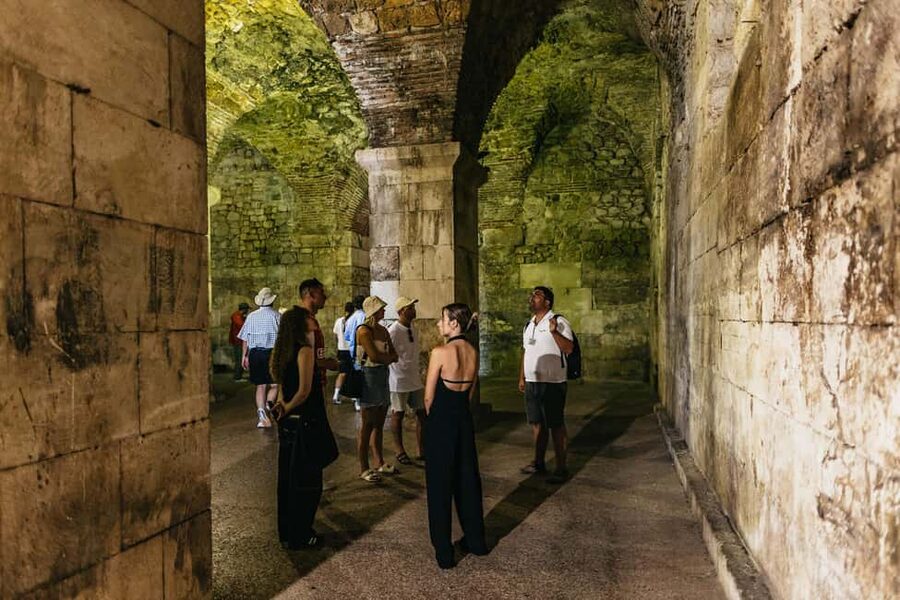
The palace cellars are among the most useful stops because they preserve the plan of the rooms above. They also offer a strong sense of the palace’s scale and defensive purpose. As you walk through the lower spaces, you can picture the emperor’s former apartments and the heavy structure needed to support them.
The cellars are also a practical place to understand how much of Split has been built over the centuries. Your guide points out what belongs to the Roman period and what reflects later use. This is where a short tour can save you time. You do not need to guess which stones matter or how the pieces fit together.
The limitation is that the tour moves on quickly. If you enjoy architecture, archaeology, or Roman engineering, you may want to return later and spend more time in the cellars. The guided route gives you orientation, not a detailed examination of every chamber.
Peristyle courtyard and the emperor’s private spaces
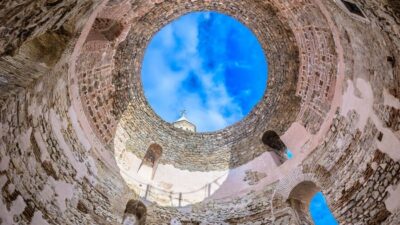
The Peristyle is the visual center of the palace. Its columns and open court create the grand moment of the walk, and the guide explains how this space related to imperial ceremony. It is also one of the places where modern Split and ancient Rome meet most clearly.
I like this stop because it is easy to understand even if you are not an architecture specialist. The proportions, stonework, and surrounding buildings communicate power without a long lecture. A good guide can then add the political and religious context, showing how the space changed as Split developed.
The route also includes the emperor’s former private chambers and private observatory. These stops add a human scale to the palace. Instead of seeing only a ceremonial complex, you get a sense of where Diocletian lived and how the residence functioned.
Expect other people around the Peristyle, especially during the busy season. The tour has been described as working well with groups of roughly 15 people, and guides have been praised for keeping everyone together and making room for people to hear. Still, you may need to stand close and pay attention when the guide begins speaking.
More Walking Tours in Split
- Walking Tour of Split and Diocletian’s Palace
★ 5.0 · 2,588 reviews - Krka Waterfalls tour with Trogir Walking tour and Krka panoramic boat cruise
★ 5.0 · 1,659 reviews - Split & Diocletian’s Palace Walking Tour
★ 5.0 · 1,125 reviews - Walking Tour of Split with a ‘Magister’ of History
★ 5.0 · 1,122 reviews
Walking through the Bronze, Silver, Golden, and Iron Gates

The four gates give the palace a clear physical structure. You pass through the Bronze, Silver, Golden, and Iron Gates, each an original entrance linked with a different side of the complex.
These gates are more than photo stops. They help you understand how the palace faced its surroundings and controlled movement. The Bronze Gate relates to the waterfront, while the other entrances connect with routes through the later city. Your guide uses them to show how Roman design shaped the streets you are walking on today.
The gates also make the walk feel like a proper journey through the palace. You are not simply visiting separate ruins. You are moving through the same basic framework that organized imperial life, defense, worship, and trade.
Some surfaces are uneven or cobbled, and participation requires walking over these areas with about 15 to 30 steps. Comfortable shoes are essential. The route is wheelchair accessible, and one guide helped steer a group toward paths with few or no steps for strollers and wheelchairs, but anyone with mobility concerns should still be prepared for historic paving and tight urban spaces.
Cathedral of St. Domnius and the bell tower question
The Cathedral of St. Domnius, or Sv. Duje, occupies Diocletian’s former mausoleum. That reuse tells you a great deal about Split. A structure built for an emperor was later adapted for Christian worship, and the building remains one of the city’s key landmarks.
The tour includes a visit to the cathedral area and presents the possibility of climbing the bell tower for views across Split and the harbor. The tower is a strong addition if you have time and are comfortable with steps, but the published inclusions do not clearly state that bell tower admission is included in the $17 price. I would confirm that point before booking if the climb is central to your plans.
The cathedral stop is especially valuable for visitors who want to understand how political and religious changes affected the palace. It is not just another pretty building. It shows how later generations reused Roman spaces rather than leaving them untouched.
The Benedictine, Town Hall, and Fruit Square
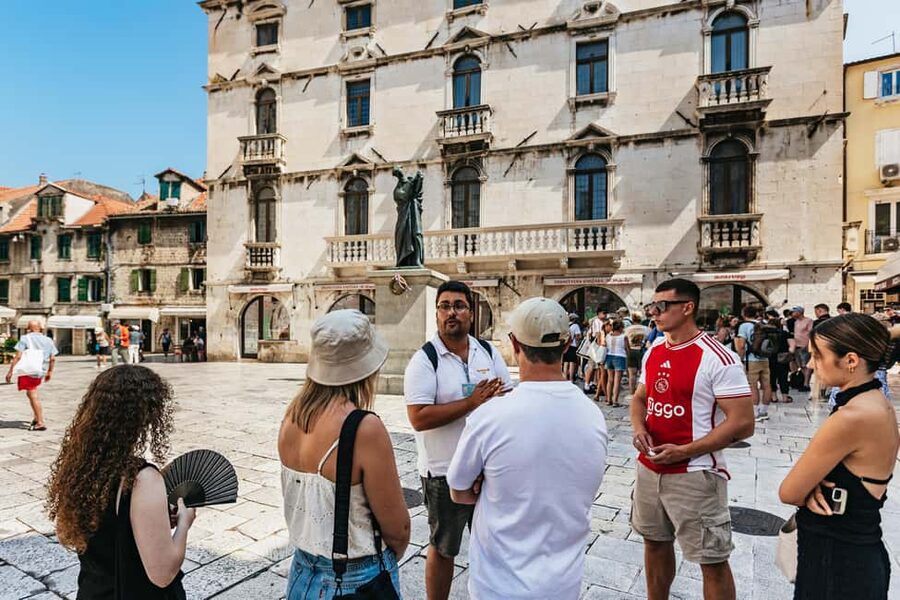
The tour goes beyond the most famous palace sights. You also hear about the Benedictine tradition in Split and visit the 15th-century Town Hall, which brings the medieval and civic sides of the Old Town into view.
These stops help keep the tour from becoming only a Roman history lesson. Split’s identity developed over many centuries, and its later buildings explain why the Old Town feels layered rather than neatly divided into Roman, medieval, and Venetian zones.
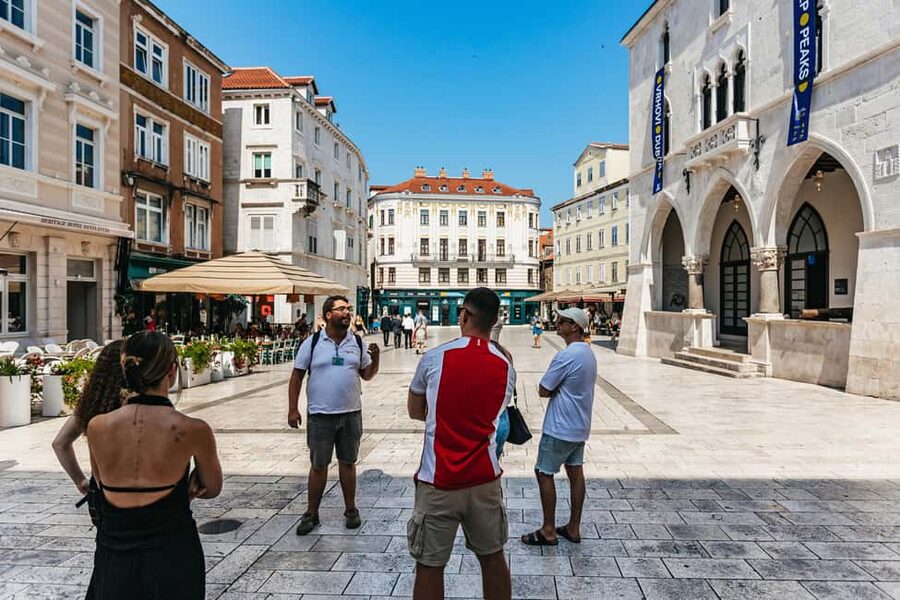
Fruit Square, with its baroque monuments, adds another change of mood. It is a good place to notice how the city’s public spaces evolved after the imperial period. I would pay attention to the guide’s local recommendations here, since several guides have offered suggestions for small businesses, traditional crafts, food production, and other places to see after the walk.
What the guides do best
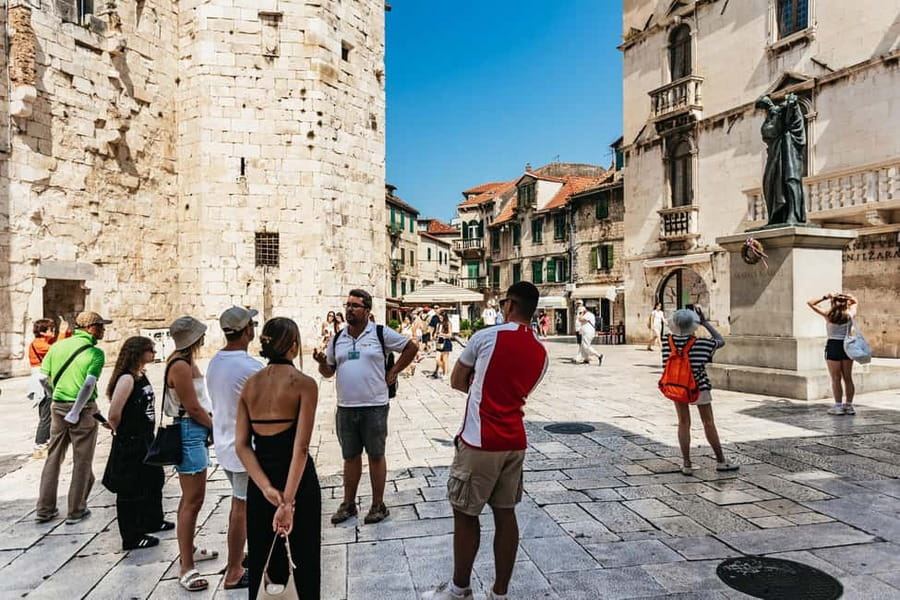
The strongest feature of this experience is the guide. Ina receives repeated praise for her clear explanations, archaeological interest, patience with questions, and lively presentation. Natasa is also singled out for her art history background, enthusiasm, and willingness to help families using strollers or wheelchairs. Darko is praised for humor and for connecting palace history with daily life in Split.
Tin has been appreciated for his strong English, confident delivery, humor, and habit of watching the back of the group. Ena is described as pleasant and well prepared. The guide assigned to you may vary, but the pattern is clear: the experience depends heavily on a personable local guide who can explain complex changes without burying you in dates.
The format leaves room for questions. Several people appreciated being able to ask about difficult historical points or stay afterward for extra curiosities. That is useful because Split raises obvious questions: How did a palace become a city? Why is a cathedral inside a Roman mausoleum? Which walls are ancient, and which are later?
One minor concern is sound. A person suggested that a microphone would help, particularly when the group is larger or the streets are noisy. If hearing every word matters to you, stay near the guide rather than drifting toward the back.
Is $17 good value for 50 minutes?
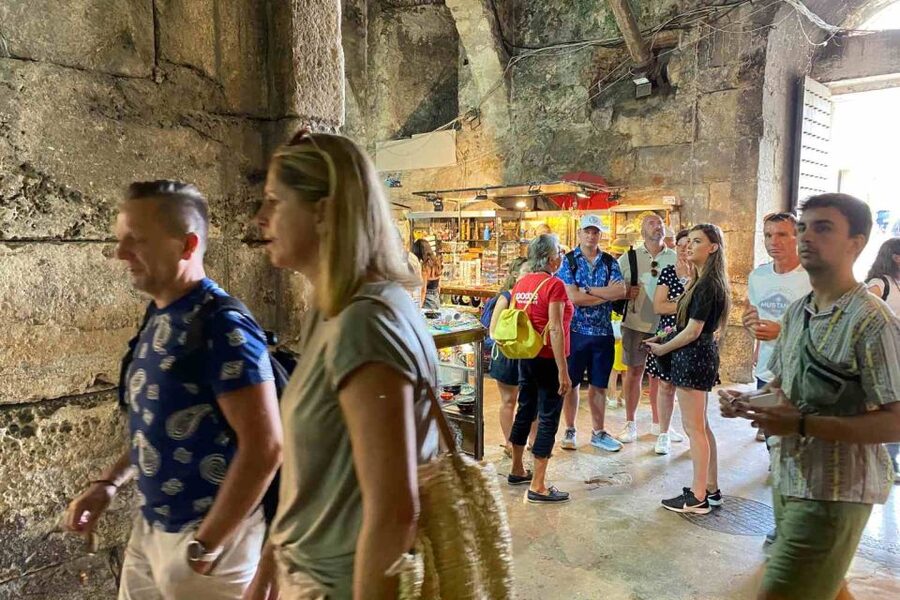
Yes, for most first-time visitors. At $17, you are paying for a focused introduction led by a local guide, not for an all-day historical program. The value comes from the structure: you see the main entrances, palace spaces, cathedral area, Old Town sights, Town Hall, and Fruit Square without spending your first hours trying to decode the city alone.
The short length is also a benefit in Split’s summer heat. One person called the timing ideal for a walking tour in hot weather, while others liked that it was long enough to cover the essentials without becoming tiring. If you are visiting from nearby Sutivan or have only a short stop in the city, the compact route makes practical sense.
There are limits. Meals, drinks, transport, souvenirs, and personal expenses are not included. The bell tower admission should also be checked, since it is described in the route but not listed among the included features. If you want an in-depth archaeological tour, this will feel too brief. If you want a clear first look, the price is hard to fault.
Best time to take this Split walking tour
I would book it near the start of your stay. Several guides provide suggestions for what to see and do afterward, and the route gives you a useful mental map of the Old Town. You can then return to the cathedral, cellars, gates, or squares that deserve more time.
Morning and late-day conditions can differ sharply in Split. On sunny days, bring water, sunglasses, and a hat. On windy days, long sleeves are sensible, especially along the Riva. Evening departures can create a darker, more atmospheric view of the old stone, though the tour remains a history walk rather than a dedicated night activity.
Wear shoes that can handle cobbles. You do not need special equipment, but sandals with poor support would make the uneven sections less pleasant.
Who should book it?
I think this tour suits first-time visitors, cruise or ferry stopovers, couples, families with older children, and anyone who wants context before exploring alone. It also works well for people who usually avoid tours but want a quick, organized introduction. The guides keep the pace moving and the length manageable.
Families with toddlers may appreciate the short duration. The route can also work for wheelchair users and strollers, although historic surfaces and steps mean you should discuss access needs at the meeting point.
I would choose something longer if you have a strong interest in Roman architecture or want extensive time inside the cathedral and cellars. This tour gives you the framework. You will need to return on your own for a slower look.
The booking terms are traveler-friendly: you can cancel up to 24 hours before the start for a full refund, and you can reserve now and pay later. The tour is offered in English, Spanish, and Italian.
Should you book the Diocletian Palace walking tour?
Book it if you want a concise, well-priced introduction to Split. The route covers the palace’s essential spaces, four gates, the cathedral, medieval civic sights, and Fruit Square, while the strongest guides add humor, local tips, and clear historical context.
Skip it only if you already know the palace well or want a long archaeological examination. For $17 and roughly 50 minutes, this is a practical way to get your bearings, understand why Split’s Old Town works the way it does, and decide where to spend the rest of your day.
FAQ
How long does the tour last?
The advertised duration is 50 minutes. The palace portion of the route is also described as taking about one hour, so allow roughly an hour for the experience.
How much does the tour cost?
The price is $17 per person.
Where does the tour begin?
It begins at Apodos Travel Agency in central Split, near the Riva promenade.
How do I find the meeting point?
Look for an open-top red bus and staff beside it wearing red or white shirts. They will connect you with the walking guide.
What languages are available?
The live tour guide is available in English, Spanish, and Italian.
Is transportation included?
No. You are responsible for getting to and from the starting point.
Is food included?
No. Meals and beverages are not included.
Is the tour wheelchair accessible?
Yes, the activity is listed as wheelchair accessible. You should still expect some uneven cobblestones and about 15 to 30 steps along the route.
What should I bring?
Bring comfortable shoes, water, and a camera. Sunglasses and a hat are recommended on sunny days, while long sleeves can help on windy days.
Can I cancel the booking?
Yes. You can cancel up to 24 hours in advance for a full refund. You can also reserve your place and pay later.
More Diocletian Palace Tours
- Split: Game of Thrones Tour with Diocletian’s Palace Cellar
★ 4.8 · 545 reviews - 90-min Diocletian Palace Walking Tour
★ 5.0 · 323 reviews - Split: Diocletian’s Palace Virtual Reality Experience
★ 4.4 · 308 reviews - Split: 1.5-Hour Walking Tour and Diocletian’s Palace
★ 4.7 · 256 reviews
Just added around Split
- Private VIP Blue Lagoon and 3 Islands Tour★ 4.5 · 9 reviews
- Split highlights – Evening walking tour★ 5.0 · 9 reviews
- Private boat transfer Split – Bol★ 5.0 · 9 reviews
- Private Photography Activity in Split★ 5.0 · 9 reviews
- From Split: Trogir & Blue Lagoon Boat Tour with Snorkeling★ 4.6 · 9 reviews
- Bike, Beer & Poljud Stadium Tour★ 5.0 · 9 reviews
- From Hvar: Blue cave group speedboat tour full day★ 5.0 · 9 reviews
- Split Walking Tour: History, Legends & Tales★ 5.0 · 9 reviews
Diocletian Palace Tours, compared.


Walking Tour of Split and Diocletian’s Palace
Read our review →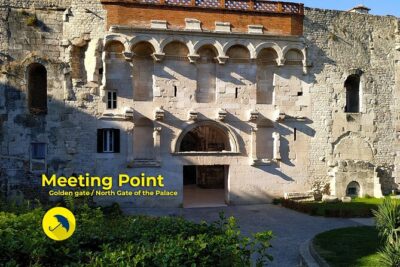
Game of Thrones Tour with Diocletian’s Palace Cellar
Read our review →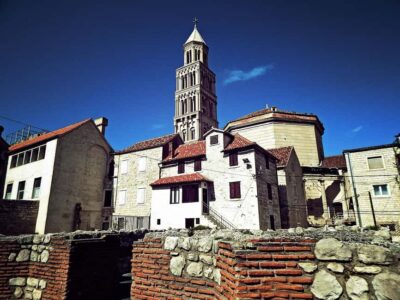
Diocletian’s Palace and Old Town SMALL GROUP Walking Tour
Read our review →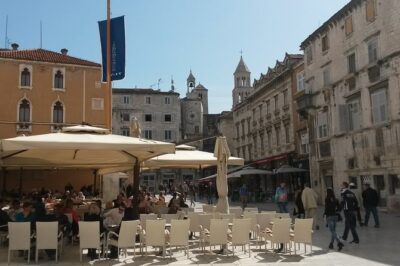
PRIVATE Walking Tour of Diocletian’s Palace & Old Town
Read our review →

Browse the lists this tour appears in