
Reviewed · DIOCLETIAN PALACE TOURS
Split: 1.5-Hour Walking Tour and Diocletian’s Palace
Split’s past is still part of daily life. I like how this 90-minute to two-hour walk uses Diocletian’s Palace as a living city, not a sealed museum, and I like the local guides’ personal stories about Croatian life, food, and history. The route also gives you a useful first look at the old town, from Roman gates to the Riva waterfront.
The main drawback is that entrance fees are not included, so you may need to pay extra for sites such as the cathedral or palace cellars if your guide takes you inside. The uneven streets, steps, and tight passages also make this a poor choice for anyone with limited mobility.
In This Review
- Key points at a glance
- Why Diocletian’s Palace feels different
- Starting at the Golden Gate
- People’s Square and Fruit Square
- The Riva and views toward Marjan Hill
- Entering the palace and its cellars
- Peristyle, the palace’s grand central space
- Saint Domnius Cathedral and the Roman mausoleum
- Vestibul and the palace’s changing styles
- Guides and the human side of Split
- Walking conditions, timing, and practical value
- Who should book this Split walking tour?
- Should you book it?
- FAQ
- Where does the tour start?
- How long does the walking tour last?
- What languages are available?
- Is Diocletian’s Palace included?
- Is entry to Saint Domnius Cathedral included?
- Does the tour include food or drinks?
- Is the tour suitable for people with limited mobility?
- Can I cancel for a full refund?
- Do I have to pay when I reserve?
Key points at a glance
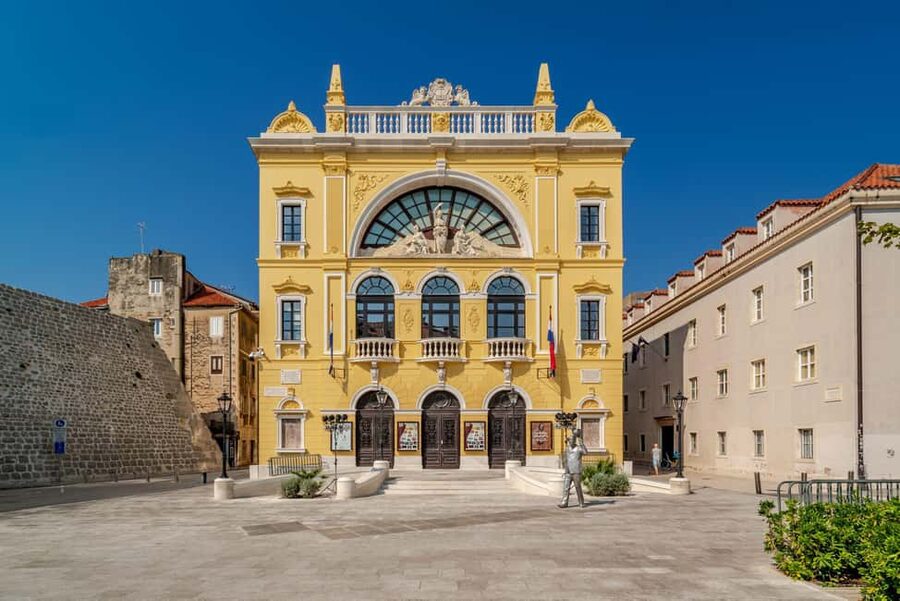
- Roman palace beneath a modern city: Walk through Diocletian’s Palace, where ancient walls, shops, homes, cafés, and later buildings share the same streets.
- A strong first orientation: The route connects the Golden Gate, People’s Square, Fruit Square, Peristyle, cathedral, Vestibul, and Riva in one compact walk.
- Local insight matters: Guides such as Sandra, Ana, Ivan, Jelena, and Anna have been praised for clear explanations, humor, personal stories, and practical Split advice.
- Best in cooler hours: The 8 a.m. or 6 p.m. departures may be more comfortable than a hot midday walk, based on past experience with the tour.
- Budget for extras: The $41 price covers the guide, but food, drinks, and admission charges are separate.
- Not designed for limited mobility: Comfortable shoes are essential, and the old town’s surfaces can be difficult to manage.
Why Diocletian’s Palace feels different
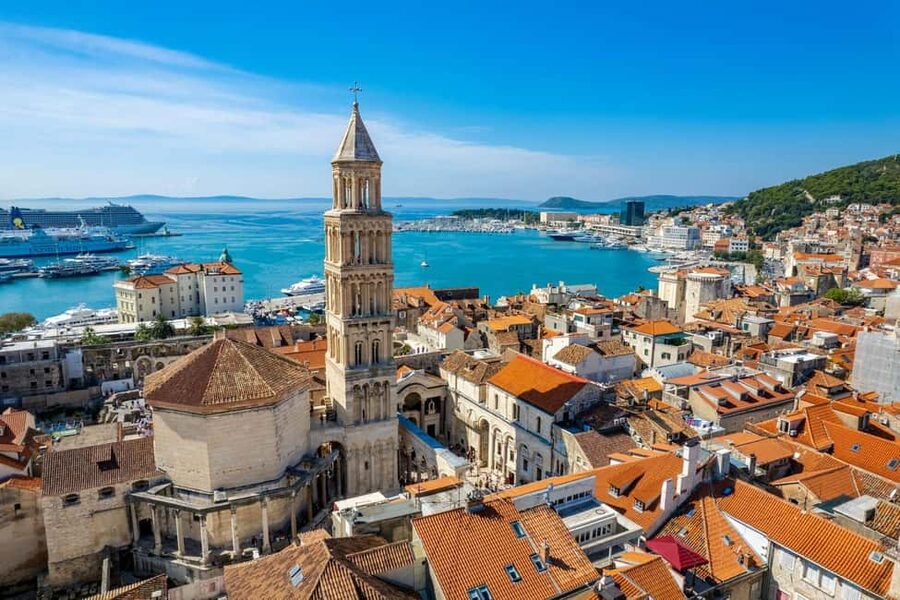
You may arrive in Split expecting a conventional archaeological site. Instead, you find a city center built inside and around a Roman emperor’s retirement palace.
Diocletian ordered the palace near the end of the third century, and construction took place around the turn of the fourth century AD. Its walls and gates once protected an imperial residence, military quarters, ceremonial rooms, and religious buildings. Today, those remains form the center of everyday Split.
That is the tour’s greatest strength. You are not simply looking at ruins from behind a barrier. You walk through lanes where modern life continues beside Roman stone. A café table may sit against an ancient wall. A residential doorway may be part of a structure that has survived for roughly 1,700 years.
I like this approach because it gives you context before you explore on your own. Split’s old town can feel confusing at first. Streets change character quickly, and Roman foundations are often hidden beneath later construction. A guide helps you see the pattern.
The experience is also more about orientation and storytelling than lengthy interior visits. At $41 per person, that distinction matters. You are paying for a guided introduction, not an all-inclusive admission package.
More Walking Tours in Split
- Split: Old Town and Diocletian Palace Walking Tour
★ 4.9 · 4,727 reviews - Walking Tour of Split and Diocletian’s Palace
★ 5.0 · 2,588 reviews - Krka Waterfalls tour with Trogir Walking tour and Krka panoramic boat cruise
★ 5.0 · 1,659 reviews
Starting at the Golden Gate
The walk begins at the South Tours Travel Agency, with the exact meeting point depending on the option you book. From there, the route reaches several of Split’s main sights, including the Golden Gate.
The Golden Gate was the main northern entrance to the palace. It gives you an immediate sense of the defensive scale of Diocletian’s complex. A guided explanation here is useful because the gate is not just an attractive arch. It helps you understand how the palace was organized and how people entered the imperial compound.
The route then passes the Game of Thrones Museum for a short guided stop. This is a small part of the experience, listed at about five minutes, so you should not book the tour expecting a full television-themed visit. It works better as a quick connection between modern popular culture and Split’s old streets.
If you enjoy the show, the stop adds a fun touch. If you are mainly interested in Roman and medieval history, it will be easy to treat it as a brief extra rather than a central attraction.
People’s Square and Fruit Square
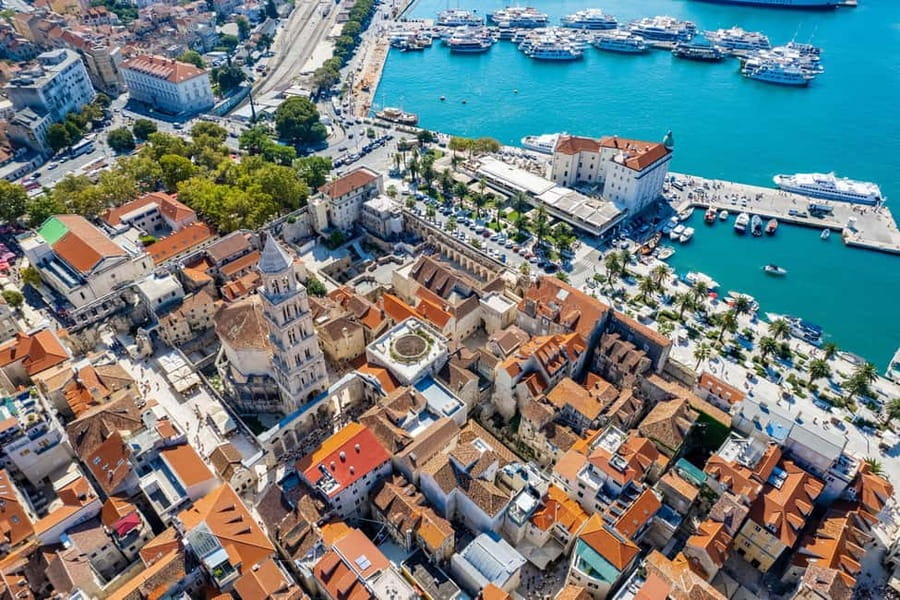
People’s Square, or Pjaca, shifts the story from imperial Rome to later urban life. It is one of the places where Split feels like a working town rather than an archaeological display.
The guide explains the architectural changes around the square, helping you spot the mix of periods. Roman remains are only part of the picture. Medieval, Venetian, Austro-Hungarian, and 20th-century elements all contribute to the old town’s appearance, though the exact balance depends on what your guide points out.
The next stop is Voćni Trg, or Fruit Square. Its name comes from the old fruit market once held there. This is a good place to hear about how local commerce shaped Split’s public spaces.
I especially value these two squares because they prevent the tour from becoming a single-story lesson about one emperor. You learn how the city continued to change after Rome, and how people adapted old walls and streets for new purposes.
The route is compact, but it is not a museum corridor. You may encounter pedestrians, café seating, and ordinary city movement along the way. That is part of the appeal, though it can make listening harder if the group is large or if you are standing near a busy passage.
The Riva and views toward Marjan Hill
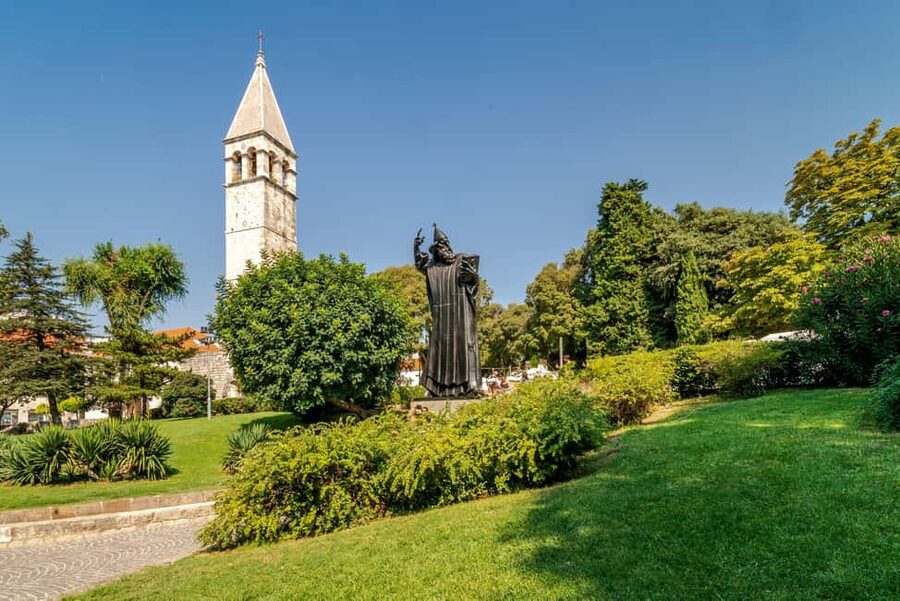
The walk continues to the Riva, Split’s waterfront promenade. Here, the palace gives way to open views, waterfront activity, and a chance to understand the city’s relationship with the Adriatic.
The guide points out Marjan Hill from the promenade. The view gives you a useful geographic reference, especially if you plan to spend more time in Split after the tour. One past guide also recommended Marjan Hill as a place for a wider view over the city.
The Riva stop is about ten minutes, so it is not a long waterfront walk. You get a short introduction and a chance to take photographs rather than a full exploration of the harbor area.
I like this pause in the route. After narrow old-town lanes, the waterfront gives you room to breathe and shows that Split is more than its Roman core. It also connects the historic center with the modern Mediterranean rhythm described by the guides: people meeting, walking, sitting, and using the center as part of normal life.
In hot weather, this section may feel easier than the enclosed lanes, but sun exposure can still be tiring. A morning or early evening departure is a sensible choice when available. One past booking specifically found the early morning start useful before the heat and crowds increased, while an evening start was praised for being cooler and less crowded.
More ways to see Diocletian's Palace:
- Split & Diocletian’s Palace Walking Tour
★ 5.0 · 1,125 reviews - Split: Diocletian Palace & Old Town Guided Walking Tour
★ 4.7 · 882 reviews - Split: Game of Thrones Tour with Diocletian’s Palace Cellar
★ 4.8 · 545 reviews - Diocletian’s Palace and Old Town SMALL GROUP Walking Tour
★ 5.0 · 502 reviews
Entering the palace and its cellars
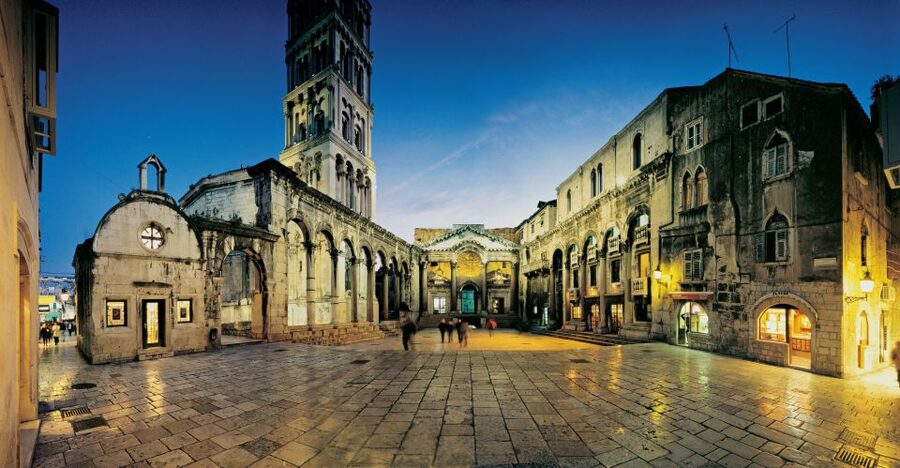
The tour returns to the heart of Diocletian’s Palace, including the palace cellars. These underground rooms are among the most useful places for understanding the original plan of the complex.
The cellars supported the rooms above and preserve the shape of the imperial residence below modern Split. Walking through them helps you see the palace as a planned Roman structure rather than a collection of unrelated stone walls.
Keep in mind that entrance fees are not included. The guide can explain the site, but admission to certain areas may require an additional payment. Ask at the beginning which interiors are covered by your booking and which are optional.
The supplied tour details describe a visit to the cellars and a guided stop at the palace, but the exact amount of time inside can vary. The overall walk is only 90 minutes to two hours, so you should expect a concise introduction rather than an exhaustive archaeological visit.
Peristyle, the palace’s grand central space
The Peristyle is the visual center of the ancient palace. This broad ceremonial square shows the formal side of Diocletian’s residence, with monumental stone, columns, and a strong sense of symmetry.
The most unusual detail is the black granite Egyptian sphinx. It is described as the last remaining Egyptian sphinx in the area, and it gives the square a striking link to the emperor’s interest in Egyptian imagery and Roman power.
This is a place where a guide adds real value. Without explanation, you may notice columns and weathered stone but miss why the square was important. With the right story, the Peristyle becomes a stage for imperial ceremony and a clue to how Rome presented authority.
The stop is listed at roughly ten minutes. That is enough to hear the main story and take in the setting, but not enough for a slow study of every architectural detail. If you want detailed archaeological interpretation, plan to return later and spend more time here.
Saint Domnius Cathedral and the Roman mausoleum
The Cathedral of Saint Domnius is one of the tour’s most important stops. It was formed from Diocletian’s imperial Roman mausoleum, creating a remarkable collision between Roman imperial architecture and later Catholic worship.
The cathedral is described as the oldest Catholic cathedral in the world. Its origins as a mausoleum make it especially interesting. Diocletian was a Roman emperor associated with persecution of Christians, yet the structure connected with his burial later became a Christian cathedral.
That change tells you a great deal about Split. Buildings survive, but their meanings can shift. A Roman imperial monument became part of the city’s Christian life, and later generations continued to adapt the palace rather than replace it.
The guided stop is listed at around ten minutes. Admission is separate, so you should be ready for an extra charge if you want to enter an area requiring a ticket. If you are working with a tight budget, you can still learn from the exterior and the guide’s explanation, but the interior may be worth the additional cost if you care about architecture and religious history.
Vestibul and the palace’s changing styles
The Vestibul is another memorable palace space. It served as an entrance area for the imperial apartments and is known for its rounded form and strong vertical shape.
The tour includes a visit and photo stop here, with about ten minutes for the explanation. It is a good place to notice how the Roman design differs from the later buildings surrounding it.
One reason Split rewards a guided walk is that the old town does not present its history in neat layers. Roman construction, later additions, modern homes, shops, and public spaces overlap. A guide can point out where one period ends and another begins, though the boundaries are often less clear than a date label in a museum.
You will also pass the West Gate and North Gate during the broader palace walk. These gates help complete the picture of the complex. Seeing more than one entrance makes the palace easier to understand as a fortified residence with a practical plan, not just a ceremonial monument.
Guides and the human side of Split

The strongest part of this experience is the guide. Past tours have been led by Sandra, Ana, Anna, Ivan, Jelena, Ina, Iva, and Elena, among others. The praise is consistent in its themes: clear history, friendly delivery, humor, patience, and useful local advice.
Sandra was especially praised for telling small stories and sharing her enthusiasm for Split’s past. Ana was valued for explaining the city through a Croatian perspective, discussing local life as well as Roman history. Ivan was described as warm and relaxed, with helpful advice about food and other things to do.
That personal angle changes the feel of the walk. You are not only memorizing dates. You may hear about local taverns, authentic food, Marjan Hill, and what is worth paying to see. One guide also helped visitors understand the city’s port and its present-day role.
Guide quality can never be guaranteed by a listing, and the language setup may affect the pace. English and Spanish are available, and one past participant found that sharing a tour between both languages made the experience less smooth. If precise historical detail is your main goal, ask how the language arrangement will work when you meet.
Small groups can also change the experience. Some past departures became nearly private when only a few people booked. That allows more questions and a more relaxed pace, but group size is not specified, so do not assume you will have the guide to yourself.
Walking conditions, timing, and practical value
Wear comfortable walking shoes. The old center includes uneven surfaces, narrow streets, and passages that can be difficult for anyone with limited mobility. The official guidance does not recommend the tour for people with mobility impairments.
One past booking involved a wheelchair route arranged by the guide, but that should not be treated as a standard feature. If accessibility is important to you, contact the provider before booking and explain your needs clearly.
The walk lasts 90 minutes to two hours. That is a good length for a first introduction. You get enough time to understand the main sights without spending half a day on basic orientation.
The $41 price is fair if you value a live guide and want history tied to the streets around you. It is less attractive if you only want to enter the cellars, cathedral, or other ticketed areas, since admission is not included. Food and drinks are also extra.
I would think of the price as payment for structure, explanation, and local advice. If you have only one day in Split, that structure can save time. If you already know the old town well, the tour may offer less value unless you want the local perspective.
Free cancellation up to 24 hours before the start and reserve-now, pay-later booking make it easier to fit the tour into a changing schedule. Check availability for the actual starting times, since the most comfortable departure is often more important than saving a few minutes.
Who should book this Split walking tour?
I would recommend it to a first-time visitor who wants to understand Split before exploring alone. It suits couples, families with older children, history fans, and anyone who prefers stories and orientation over a fast checklist of photographs.
It is also a good match for people arriving by cruise ship or visiting on a tight schedule. The route returns to the South Tours Travel Agency and covers the main old-town landmarks in a short period.
I would choose an early morning or evening start in summer if available. You will likely find the walk easier in cooler conditions, and the historic center may feel less pressured than it does during the busiest part of the day.
I would skip it if you dislike guided walks, need step-free access, or want long interior visits at each monument. In that case, use the route as a self-guided outline and spend your money on the individual sites that interest you most.
Should you book it?
Book this tour if you want a clear introduction to Split’s Roman core with a human voice. The palace, cathedral, Peristyle, squares, gates, and Riva make a strong route, while the guides’ local knowledge adds useful advice you may not get from a guidebook.
The $41 fee makes the most sense when you treat the experience as an orientation walk. Confirm which entrance fees apply, wear good shoes, and choose a cooler departure when possible. If you do that, this is a lively and practical way to get your bearings in one of Europe’s most unusual old towns.
FAQ
Where does the tour start?
The starting point is at the South Tours Travel Agency, but the exact meeting point may vary depending on the option you book.
How long does the walking tour last?
The tour lasts between 90 minutes and two hours.
What languages are available?
The tour is offered in English and Spanish.
Is Diocletian’s Palace included?
The route includes a guided visit and walk around Diocletian’s Palace, including the cellars and main palace areas. Entrance fees are not included.
Is entry to Saint Domnius Cathedral included?
No. Entrance fees are not included, so you may need to pay separately for admission.
Does the tour include food or drinks?
No. Food and beverages are not included.
Is the tour suitable for people with limited mobility?
No. The tour is not recommended for people with mobility impairments, and comfortable walking shoes are advised.
Can I cancel for a full refund?
Yes. You can cancel up to 24 hours in advance for a full refund.
Do I have to pay when I reserve?
No. The reserve-now, pay-later option allows you to hold a place without paying immediately.
Just added around Split
- Private VIP Blue Lagoon and 3 Islands Tour★ 4.5 · 9 reviews
- Split highlights – Evening walking tour★ 5.0 · 9 reviews
- Private boat transfer Split – Bol★ 5.0 · 9 reviews
- From Split: Trogir & Blue Lagoon Boat Tour with Snorkeling★ 4.6 · 9 reviews
- Private Photography Activity in Split★ 5.0 · 9 reviews
- Bike, Beer & Poljud Stadium Tour★ 5.0 · 9 reviews
- From Hvar: Blue cave group speedboat tour full day★ 5.0 · 9 reviews
- Split Walking Tour: History, Legends & Tales★ 5.0 · 9 reviews
Diocletian Palace Tours, compared.


Walking Tour of Split and Diocletian’s Palace
Read our review →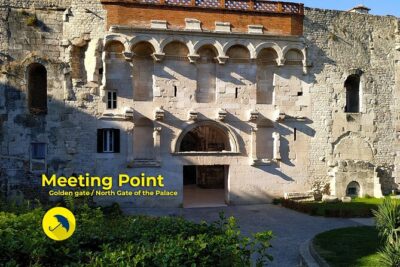

Diocletian Palace & Old Town Guided Walking Tour
Read our review →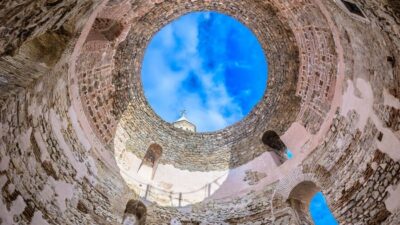
Game of Thrones Tour with Diocletian’s Palace Cellar
Read our review →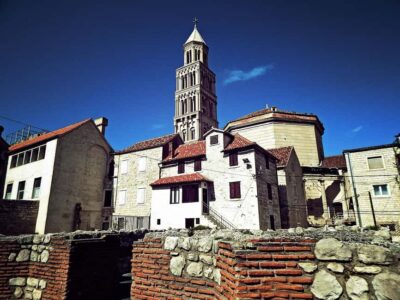
Diocletian’s Palace and Old Town SMALL GROUP Walking Tour
Read our review →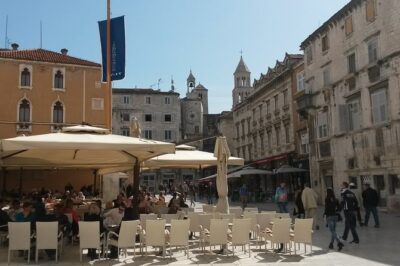
PRIVATE Walking Tour of Diocletian’s Palace & Old Town
Read our review →
Browse the lists this tour appears in