
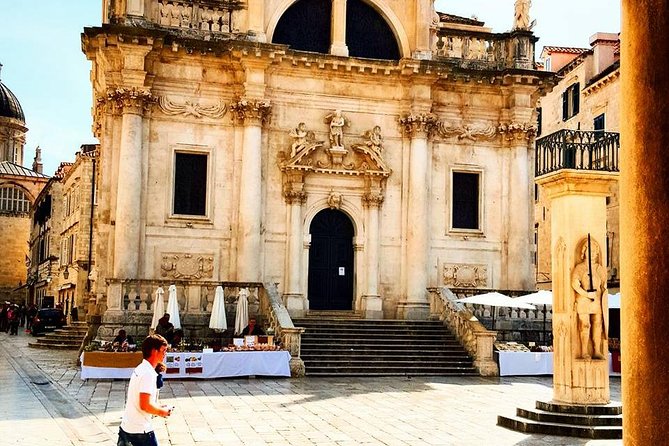
Reviewed · HISTORICAL TOURS
Dubrovnik walking history tour
Dubrovnik’s past is best read on foot. This 90-minute walk starts at Pile Gate and threads through the Old Town’s major monuments, from Franciscan Monastery and Orlando’s Column to Onofrio’s Fountain, Rector’s Palace, Sponza Palace, and the Cathedral of the Assumption. I like the focused route and the chance to hear local history explained by a licensed guide rather than piecing the city together from plaques. I also like the pace praised by several visitors, especially the balance between facts, stories, photographs, and practical local advice.
The main consideration is simple: the City Walls are not included. You will see important sights and learn how Dubrovnik developed, but the separate wall ticket costs 35 euros per person. The tour is also a group experience of up to 30 people, so it may feel less personal than a private walk.
In This Review
- Key Points at a Glance
- Starting at Pile Gate and Getting Your Bearings
- Franciscan Monastery and the First Layer of Dubrovnik
- Orlando’s Column and the Meaning of Freedom
- Onofrio’s Fountain and Dubrovnik’s 12-Kilometer Aqueduct
- Sponza Palace, a Strong Architectural Stop
- Rector’s Palace and the Center of Power
- The Cathedral of the Assumption After the 1667 Earthquake
- What the Guide Adds to the Walk
- Price, Group Size, and What You Actually Receive
- Who Will Get the Most from This Tour?
- Should You Book the Dubrovnik Walking History Tour?
- FAQ
- How long does the Dubrovnik walking history tour last?
- Where does the tour begin?
- Where does the tour end?
- What language is the tour offered in?
- Is a guide included?
- Are City Walls tickets included?
- How many people can join the tour?
- Can I cancel for a full refund?
Key Points at a Glance
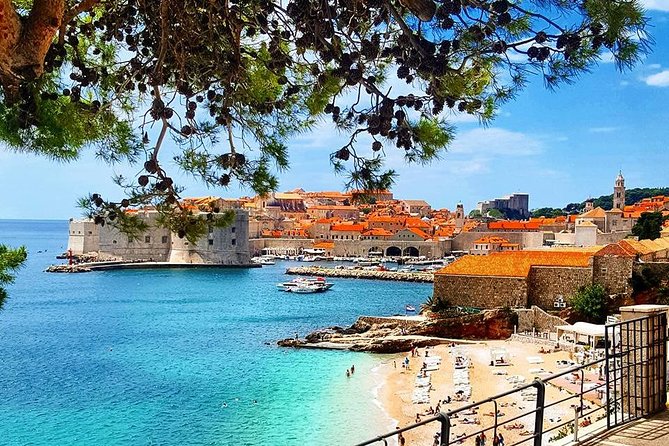
- Onofrio’s Fountain explains Dubrovnik’s water supply: You can learn about the 12-kilometer aqueduct that brought water to the city in the 15th century, and refresh yourself at the fountain.
- The route covers the Old Town’s essential monuments: Expect Pile Gate, the Franciscan Monastery, Orlando’s Column, Rector’s Palace, Sponza Palace, and the Cathedral of the Assumption.
- Ines receives the strongest praise: Her friendly manner, clear English, local knowledge, and stories about Dubrovnik and Croatia are repeatedly singled out.
- The tour lasts about 1.5 hours: That is long enough for a useful introduction without taking up your whole day.
- City Walls admission is extra: The wall ticket is listed at 35 euros per person, so budget for it separately if you want the elevated views and fortifications.
- Free cancellation is available up to 24 hours ahead: Cancellations made later are not refunded, and late changes are not accepted.
Starting at Pile Gate and Getting Your Bearings
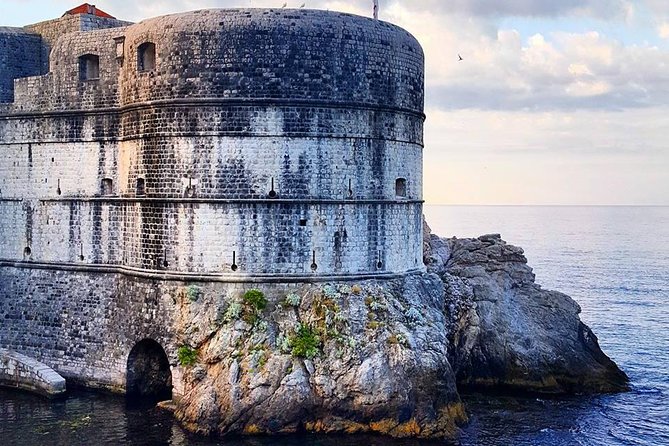
The meeting point is listed as Art Go’den, Brsalje ul. 1, Dubrovnik, near Pile Gate. This is a practical starting place because Pile Gate is one of the main entrances to Dubrovnik’s Old Town. You can meet your guide there before entering the historic center on foot.
The tour is offered in English and uses a mobile ticket. You do not need transportation during the walk, and the activity ends back at the meeting point. That return makes planning easier if you have a restaurant booking, a museum visit, or a bus connection afterward.
A group of up to 30 people is allowed. That is not a tiny group, but it is still manageable for a short city walk. Your experience will depend partly on how well you can hear the guide and where you are standing in the group. Staying close to the guide matters, especially in narrow streets or around busy monuments.
Dubrovnik can be hot, and the route is entirely outdoors apart from any access that may be available at individual sites. Bring water, wear comfortable shoes, and consider booking an earlier or later departure if you are sensitive to strong midday heat. The tour description specifically includes a chance to drink water at Onofrio’s Fountain, but you should still carry your own bottle.
More Historical Tours in Dubrovnik
- Dubrovnik Old Town History Walking Tour
★ 5.0 · 1,684 reviews - Game of Thrones & History of Dubrovnik Tour
★ 5.0 · 628 reviews - Dubrovnik: Old Town History Walking Tour
★ 4.9 · 474 reviews
Franciscan Monastery and the First Layer of Dubrovnik
After entering the Old Town, the walk takes in the Franciscan Monastery. This is an important early stop because it gives the guide a chance to place Dubrovnik’s religious buildings within the broader story of the city.
The value here is not simply seeing another old building. A guide can explain why monasteries mattered to the daily life of a medieval trading republic, and how religious institutions fitted into the city’s civic structure. Several comments praise the way the guide connected monuments to Dubrovnik’s importance rather than presenting isolated dates.
The route is especially useful if this is your first visit. Dubrovnik’s Old Town can feel like a series of beautiful stone streets with little explanation. A guide helps you understand how the buildings relate to one another and why particular squares, columns, and palaces mattered.
The Franciscan Monastery is also a reminder that this tour is primarily an orientation walk. You are moving through a historic center and hearing its story, not spending a long period at one attraction. If you want detailed time inside every church or palace, you will need separate visits.
Orlando’s Column and the Meaning of Freedom
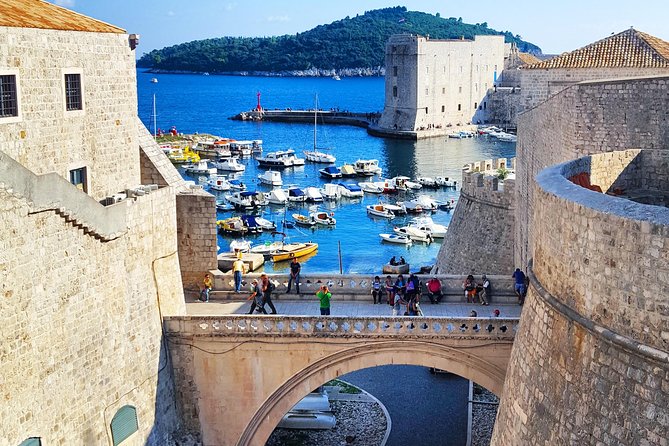
Orlando’s Column is another key sight on the route. The monument is connected with the city’s freedom, and it gives the guide a natural point for explaining Dubrovnik’s political identity.
This is one of the more useful parts of the walk because the Republic of Dubrovnik was not simply a pretty port. Its independence, diplomacy, trade, and civic rules shaped the buildings you see around you. A good explanation turns Orlando’s Column from a photo stop into a clue about the city’s place in European history.
The guides praised most often are strong at this kind of connection. Ines is described as friendly, easygoing, and clear in English, with a firm grasp of Dubrovnik, Croatia, and the former Yugoslavia. One comment also highlights the use of personal stories, local recommendations, legends, and historical facts. That mix should appeal to you if you prefer a human explanation over a memorized lecture.
Onofrio’s Fountain and Dubrovnik’s 12-Kilometer Aqueduct

Onofrio’s Fountain is one of the most distinctive stops because it explains a practical problem: how a fortified city secured its water. The fountain was built in the 15th century at the end of a 12-kilometer aqueduct that supplied Dubrovnik.
You can drink water from the fountain, which adds a small but memorable touch to the stop. It also helps you picture the achievement in everyday terms. A city may have impressive walls and palaces, but reliable water was just as important to its survival.
I like this stop because it gives the tour a useful change of pace. You are not only looking at grand architecture. You are learning how the city worked. The aqueduct helps explain the planning, engineering, and public needs behind Dubrovnik’s historic center.
The guide’s explanation matters here. A fountain can be easy to pass without a second glance, especially when the surrounding streets are full of ornate stonework. With context, it becomes one of the clearest examples of how Dubrovnik’s past was built around practical decisions as well as ceremony.
More Walking Tours in Dubrovnik
- Dubrovnik: Old Town Walking Tour
★ 4.8 · 5,174 reviews - Dubrovnik Discovery Old Town Walking Tour
★ 5.0 · 4,458 reviews - Dubrovnik: Game of Thrones Walking Tour
★ 5.0 · 1,732 reviews - Dubrovnik: City Walls Early Morning or Sunset Walking Tour
★ 4.8 · 1,523 reviews
Sponza Palace, a Strong Architectural Stop
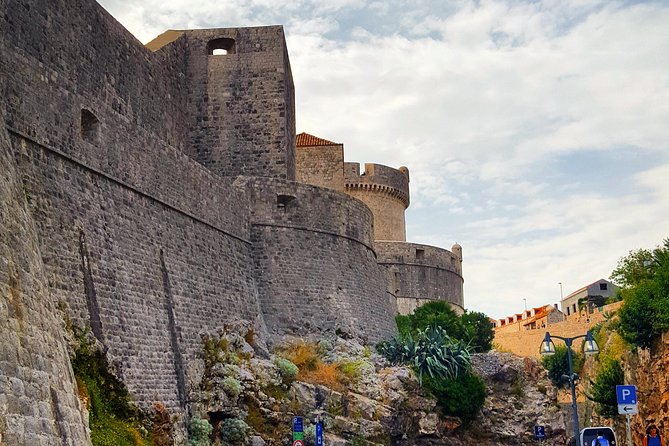
Sponza Palace is identified as the itinerary’s main stop and is one of the most important buildings on the walk. You will learn about its place in Dubrovnik’s civic and commercial life while taking in its architectural details.
The palace is especially useful for understanding how the city combined business, government, and public life within a compact Old Town. Rather than seeing Dubrovnik only as a destination of churches and walls, you get a sense of the systems that allowed the republic to function.
Because the tour lasts only 90 minutes, do not expect a long, room-by-room visit. The focus is on the monument’s role and appearance within the city. If you want to study Sponza Palace at length, note the guide’s explanation and return later on your own if admission and opening arrangements allow.
The walk’s value is that it points out what deserves a second look. You can return later with a better idea of what you are seeing, instead of wandering through the Old Town without a plan.
Rector’s Palace and the Center of Power
Rector’s Palace is another major highlight. The building helps explain Dubrovnik’s governing system and the role of the rector in the old republic.
This is where the tour’s political background becomes more concrete. The guide can connect the palace to the city’s leadership, public duties, and long-standing effort to protect its independence. Several reviews praise the way the guide explained not only what buildings were called, but why they mattered.
The palace is also a good example of the tour’s mix of grand sights and smaller details. You get an impressive monument, but the real benefit comes from learning how Dubrovnik was governed. That is the kind of information you are unlikely to absorb from a quick photograph alone.
Check your expectations about entry. The tour description says you will visit the Rector’s Palace, but it does not list a separate palace admission ticket as included. City Walls admission is specifically excluded, while the only included service named is the licensed guide. If entering the palace is important to you, confirm the arrangement before booking.
The Cathedral of the Assumption After the 1667 Earthquake
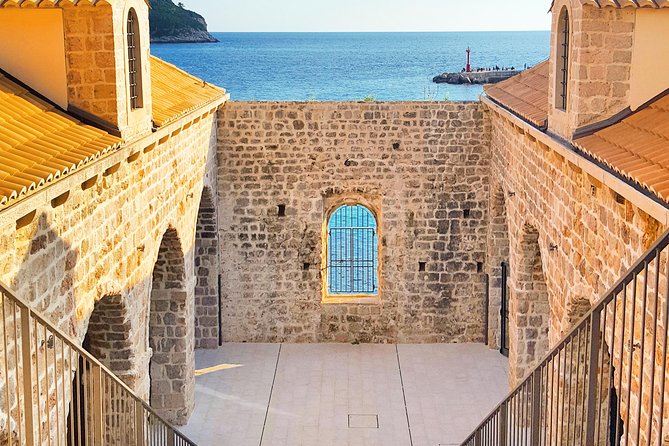
The Cathedral of the Assumption brings the route to another major part of Dubrovnik’s story. It is a Baroque church built after the devastating earthquake of 1667.
That date gives the guide a chance to explain change and rebuilding. Dubrovnik’s Old Town is not a single untouched medieval scene. It has been damaged, repaired, and reshaped over time. The cathedral shows how the city recovered and how later architectural styles became part of the historic center.
The cathedral also adds a quieter religious and artistic note to a route otherwise filled with civic buildings, monuments, and public spaces. You can compare its Baroque character with the older structures encountered earlier in the walk.
Again, the tour is best viewed as an introduction. You will hear the cathedral’s place in the city’s story, but the schedule does not allow unlimited time inside every sight. If you enjoy church art and interiors, plan a return visit separately.
What the Guide Adds to the Walk
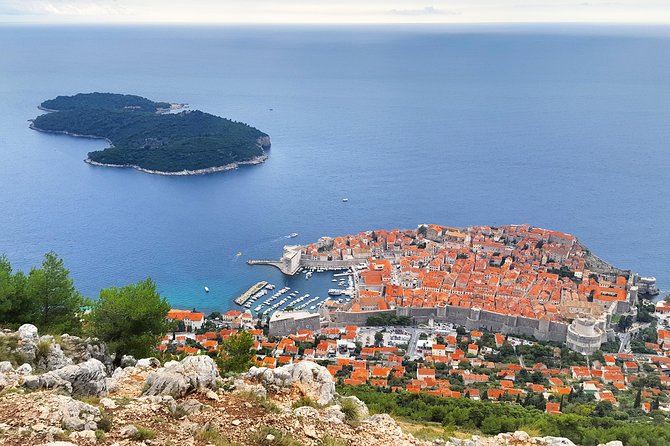
The most praised feature is the guiding. Ines is named several times, and the comments describe her as friendly, helpful, easygoing, and highly informed about Dubrovnik and Croatia. One visitor spells the name as Ynez, so the exact spelling may vary in individual comments, but Ines is the name most clearly associated with the experience.
The strongest descriptions point to a good balance: history, local knowledge, recommendations, legends, and personal stories. That balance matters in Dubrovnik, where facts can quickly become a blur of dates and rulers. You want enough background to understand the city, but also a guide who can make the streets feel connected to real life.
The pace is another strong point. The walk is described as thoughtful and well managed, with time for photographs and views without feeling rushed. That is important during a 90-minute tour. A guide who tries to cover too much can leave you tired and confused; a guide who moves too slowly may leave you with no time for the rest of your day.
The one serious service problem recorded is a cancellation caused by a guide becoming ill in extreme heat before reaching the meeting point. The payment was refunded in full, and the provider apologized. It appears to have been an unusual health emergency rather than a normal operating issue, but it is still a reminder to check your messages on the day of the tour.
Price, Group Size, and What You Actually Receive
At $33.61 per person, the tour is reasonably priced for a licensed 90-minute introduction, especially if this is your first time in Dubrovnik. You are paying for structure and explanation rather than admission to a major attraction.
That distinction matters. The City Walls ticket costs 35 euros per person and is not included. If you add that ticket, your total sightseeing cost rises sharply, but you are paying for a separate experience with a different focus. The walking tour explains the Old Town from street level; the walls provide a broader look at the fortifications and city.
The tour is booked, on average, 48 days in advance. That suggests you should not leave it until the last moment if your schedule is fixed, especially during a busy period. Confirmation arrives at booking, and free cancellation is available until 24 hours before the start time.
Service animals are allowed, the meeting point is near public transportation, and the activity is suitable for most participants. The supplied details do not describe the exact amount of stair climbing or the surface conditions, so ask the provider if you have mobility concerns.
Who Will Get the Most from This Tour?
I would choose this walk if you want a clear first look at Dubrovnik before exploring alone. It suits first-time visitors, history fans, cruise passengers with limited time, and anyone who prefers local explanation to guidebook reading.
It is also a good match if you want practical recommendations during your first hours in town. One highly praised guide is noted for giving local advice, which can help you decide what to see next.
You may want something else if you are seeking a private tour, a slow architectural study, or a full City Walls visit. A group of up to 30 people and a 90-minute schedule naturally limit personal attention and time inside each monument.
Should You Book the Dubrovnik Walking History Tour?
Book it if you want a well-paced introduction to Dubrovnik’s Old Town, with a licensed English-speaking guide and the city’s major historic sights in one compact route. The best reasons are the strong praise for Ines, the clear focus on Dubrovnik’s political and practical past, and the useful stops at Onofrio’s Fountain, Sponza Palace, Rector’s Palace, and the cathedral.
Before you commit, budget separately for the 35 euro City Walls ticket and confirm whether palace or cathedral entry is part of the day’s arrangement. Arrive ready for an outdoor walk, carry water, and stay near the guide in a larger group.
For most first visits, I think the $33.61 price is fair. It gives you the city’s basic framework, then leaves you free to return to the places that catch your eye.
FAQ
How long does the Dubrovnik walking history tour last?
The tour lasts approximately 1 hour and 30 minutes.
Where does the tour begin?
It begins at Art Go’den, Brsalje ul. 1, 20000 Dubrovnik, Croatia, near Pile Gate.
Where does the tour end?
The activity ends back at the meeting point.
What language is the tour offered in?
The tour is offered in English.
Is a guide included?
Yes. A licensed tour guide is included.
Are City Walls tickets included?
No. City Walls tickets are not included and are listed at 35 euros per person.
How many people can join the tour?
The maximum group size is 30 people.
Can I cancel for a full refund?
Yes, if you cancel at least 24 hours before the experience start time. Cancellations made less than 24 hours ahead are not refunded, and late changes are not accepted.
Just added around Dubrovnik
- Dubrovnik Sunset Mountain Tour With Wine★ 5.0 · 9 reviews
- From Dubrovnik: Mali Ston Oyster Paradise Tour with Transfer★ 4.8 · 9 reviews
- Dubrovnik: Private Panoramic Half-Day Buggy Tour with Brunch★ 4.6 · 9 reviews
- Luxury Day tour to Mostar and Kravice waterfalls★ 5.0 · 9 reviews
- Blue Sea & Black Mountains – Montenegro★ 5.0 · 9 reviews
- Montenegro from Dubrovnik Private Tour★ 5.0 · 9 reviews
- Sarajevo & Mostar Private Day Tour from Dubrovnik★ 4.5 · 9 reviews
- Ston Oysters & Wine Tasting Tour from Dubrovnik★ 5.0 · 9 reviews
Historical Tours, compared.


Walking Tour of Split with a ‘Magister’ of History
Read our review →


Split History and Gastro Small-Group Tour with Food and Drinks
Read our review →
PREMIUM Emperor’s Walking Tour for History Lovers + Museum
Read our review →Browse the lists this tour appears in