
Reviewed · MUSEUMS
Dubrovnik: Red History Museum Regular Ticket
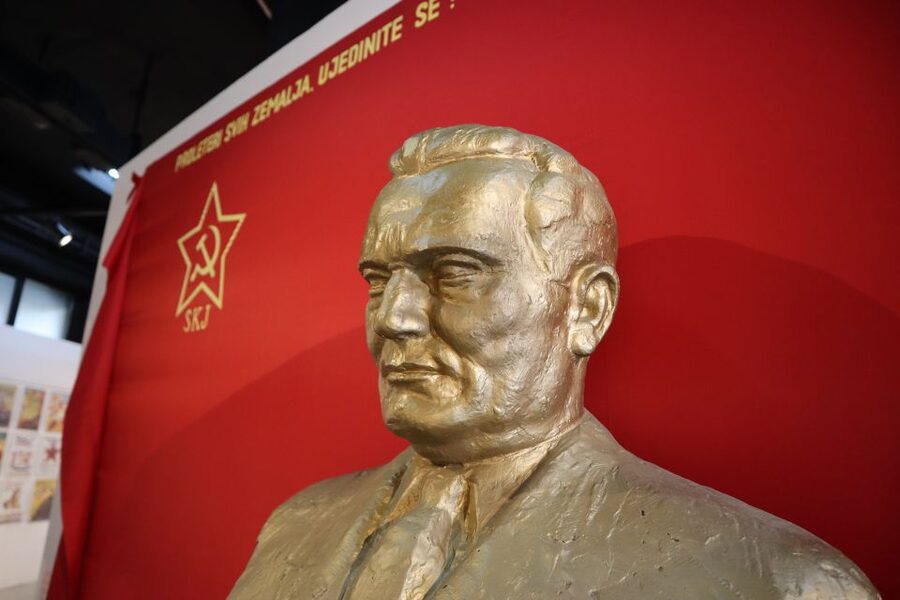
The past still has a living room. Dubrovnik’s Red History Museum turns Croatia’s communist era into something you can see, hear, and handle, rather than a dry sequence of dates. I like the interactive displays and the way old furniture, music, politics, and household products work together to show everyday life in Yugoslavia. I also like the chance to sit in a Yugo 45, the famously unloved car of the period.
The museum is fairly small, so you should not expect a full-day attraction. Some digital displays may need clearer instructions, and one visitor had trouble getting the virtual scanned images to work. Still, at $11 per person, this is a strong value for anyone who wants to understand modern Croatia through its recent past.
In This Review
- Key points to know before you go
- Why Dubrovnik needs a museum about communism
- Entering the 1953 T.U.P. factory complex
- A reconstructed home from Yugoslavia’s 1970s and 1980s
- Music, design, and politics in the same visit
- The Yugo 45 and the humor of everyday objects
- Communist Coca Cola, Fanta, drinks, and sweets
- Goli Otok and the museum’s more serious side
- Technology that adds interest, with one small weakness
- How much time should you allow?
- Is $11 a fair price?
- Who will enjoy this museum most?
- Should you book the Red History Museum?
- FAQ
- Where is the Red History Museum located?
- How much does regular entry cost?
- What historical period does the museum cover?
- What can I see inside the museum?
- Can I sit in a Yugo 45?
- Can I reserve now and pay later?
Key points to know before you go
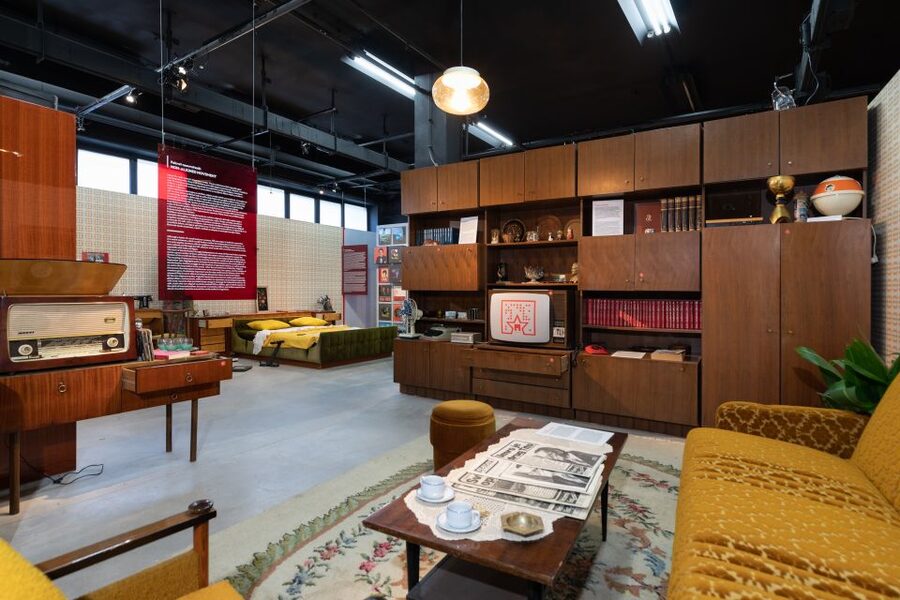
- Set inside the T.U.P. factory complex: The museum occupies Dubrovnik’s last factory complex, built in 1953 in the port area.
- A look at communist Yugoslavia: Exhibits cover daily life, politics, art, design, secret agencies, music, and the Non-Aligned movement.
- A reconstructed home: Old furniture and household objects help you picture life in the 1970s and 1980s.
- Hands-on details: You can sit in a Yugo 45 and examine communist-era versions of familiar drinks and sweets.
- A balanced presentation: The museum shows both ordinary life and harsher subjects, including Goli Otok prison.
- Good value at $11: The ticket includes regular entry, with the option to reserve now and pay later.
Why Dubrovnik needs a museum about communism
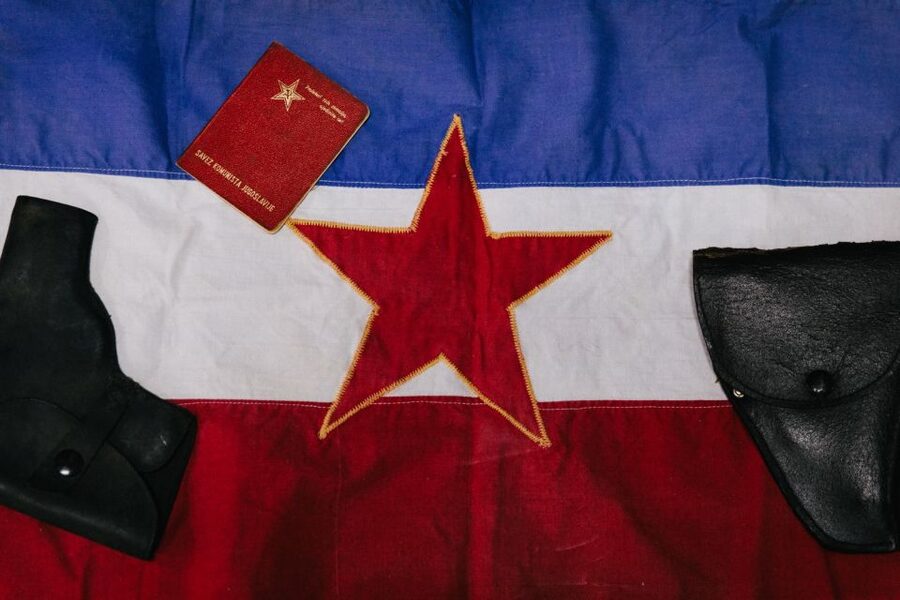
Dubrovnik is famous for medieval walls, stone lanes, and Adriatic views. Those sights are worth your time, but they tell only part of the city’s story. To understand Croatia today, you also need some sense of the political system and daily routines that shaped the lives of people who grew up before independence.
The Red History Museum focuses on the period when Croatia was part of Yugoslavia. That makes it useful for more than a history lesson. It gives you context for family memories, old buildings, regional politics, and the contrast between life then and life now.
This is Croatia’s first museum devoted to its communist history. The subject is recent enough to remain personal. People remember the music, furniture, cars, food, uniforms, and rules from their own childhoods, or from stories told by parents and grandparents.
That personal quality gives the museum its purpose. You are not simply looking at objects behind glass. You are being asked to think about how a political system reached into the home, the workplace, the shop, and the school.
More Historical Tours in Dubrovnik
- Dubrovnik Old Town History Walking Tour
★ 5.0 · 1,684 reviews - Game of Thrones & History of Dubrovnik Tour
★ 5.0 · 628 reviews - Dubrovnik: Old Town History Walking Tour
★ 4.9 · 474 reviews
Entering the 1953 T.U.P. factory complex
The museum is located in T.U.P., a factory complex built in 1953 in Dubrovnik’s port area. The setting matters. A former industrial site makes a better home for this subject than a polished modern gallery would.
The building connects the museum to the working world of socialist Yugoslavia. Factories were central to the period’s public identity, and the setting helps frame the displays before you even begin reading them. You are entering a place tied to production, labor, and the organized society the museum explains.
Do not expect the scale of Dubrovnik’s major historic attractions. This is a compact museum. Its size is part of the appeal, since you can take your time with the objects without feeling that you have signed up for a long march through endless rooms.
The museum uses both older objects and newer technology. That combination keeps the visit moving. One display may rely on a physical object with a familiar domestic feel, while another asks you to listen, scan, watch, or interact.
A reconstructed home from Yugoslavia’s 1970s and 1980s
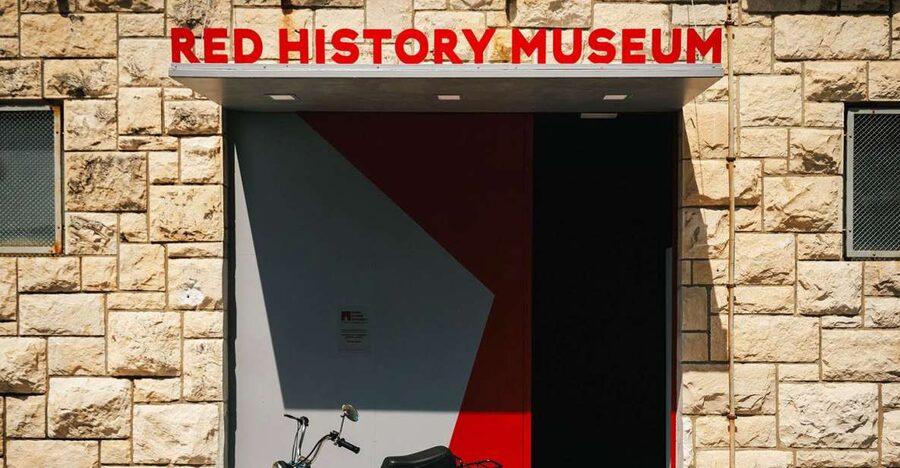
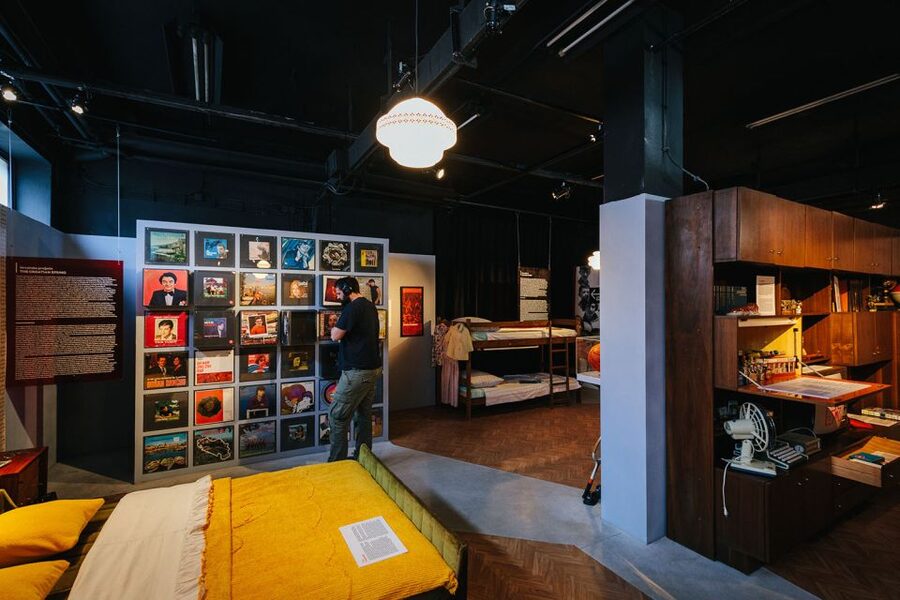
The reconstructed house is one of the strongest parts of the visit. Old furniture and household objects give you a physical sense of how life looked in Yugoslavia during the 1970s and 1980s.
This section helps translate political history into ordinary routines. A government system can seem abstract when you read about parties, borders, and institutions. A chair, cabinet, appliance, or other household item makes the period easier to picture.
I especially like this approach because it avoids making communism seem like only a story about official speeches. You get a glimpse of the home as a place where people listened to music, used everyday products, and built family routines under the wider presence of the Communist Party.
The museum also tries to show more than one side of the period. That balance is important. You may find nostalgia in the familiar objects and popular culture, but you are also reminded of political control and the limits placed on people’s lives.
The result is more useful than a simple good-versus-bad presentation. The museum lets you consider why some people remember parts of the era warmly while still acknowledging the pressure and surveillance associated with the system.
Music, design, and politics in the same visit
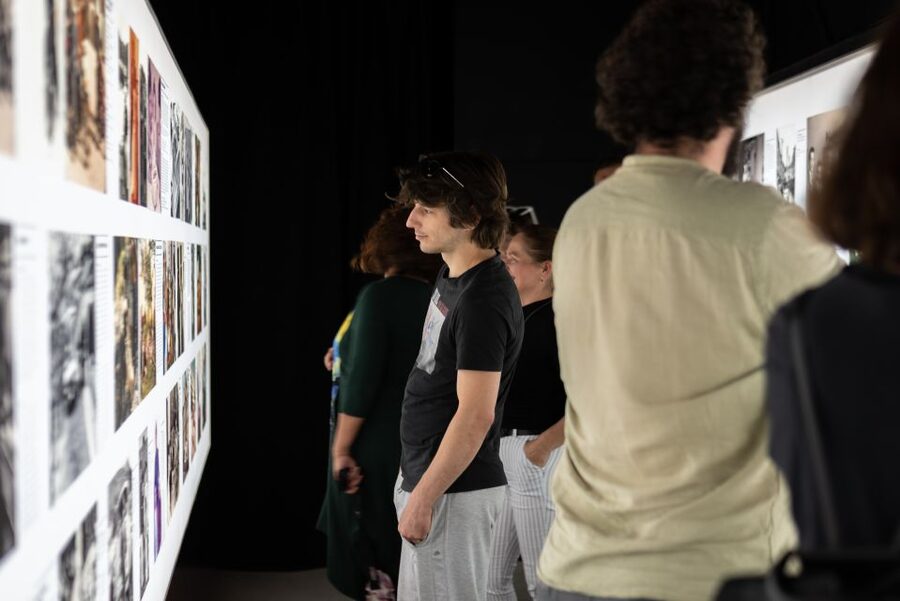
One reason the museum works well is its mix of subjects. It does not limit itself to government leaders or major political events. You also encounter art, design, music, secret agencies, and the role of Yugoslavia in the Non-Aligned movement.
The music is a particularly effective touch. Hearing the period’s greatest hits gives the exhibits an atmosphere that photographs and written explanations cannot provide on their own. Popular music helps show what people enjoyed and how culture formed part of daily life.
The design displays add another layer. Posters, packaging, objects, and interiors reveal how political ideas and consumer culture could exist side by side. This was not a world without style or entertainment. It had its own visual language and its own popular products.
The section on secret agencies points to the watchful side of the system. It reminds you that ordinary life existed alongside political monitoring. That contrast is one of the museum’s most worthwhile ideas: a person could enjoy music, shop for sweets, and arrange a home while still living within a controlled political system.
The Non-Aligned movement may be less familiar to many visitors. The museum gives you a chance to connect Yugoslavia with a wider international role rather than viewing it only through the later breakup of the country. That broader setting adds useful context to the Croatian story.
More Museums in Dubrovnik
- Skip the Line: Love Stories Museum Admission Ticket
★ 5.0 · 87 reviews - Visit Shell Museum Cavtat
★ 5.0 · 43 reviews - Museum of Selfies & Illusions Dubrovnik Ticket
★ 4.0 · 23 reviews - Love Stories Museum Skip-the-Line Entrance Ticket
★ 4.5 · 23 reviews
The Yugo 45 and the humor of everyday objects
The Yugo 45 is the museum’s most obvious photo opportunity. You can sit in the car often described as the worst car ever, a label that reflects its reputation more than a serious historical judgment.
The joke is part of the fun, but the car also has meaning. Cars are powerful symbols of everyday mobility, status, manufacturing, and national identity. A Yugo makes the period immediate in a way that a long political explanation cannot.
The museum’s use of humor helps keep the subject approachable. Communist history can feel heavy, especially when the discussion turns to repression and prison. A playful object gives you a moment to connect with the era through popular memory.
That does not make the museum lightweight. Instead, the ordinary and the serious sit next to each other. You can laugh at the car, listen to old music, and then confront a more difficult part of the political story.
Communist Coca Cola, Fanta, drinks, and sweets
Near the end, you can see and try popular drinks and candies from the period, including communist versions of Coca Cola or Fanta. These products are described as parallel universe versions of familiar brands.
This is a clever way to explain the difference between Yugoslav life and the consumer culture many visitors know today. Familiar names and flavors become a point of comparison. You begin to ask what was available, what was copied or adapted, and how people experienced Western-style products within a socialist system.
The sweets and drinks also make the visit more personal. Political history is easier to remember when it involves taste, packaging, and the small treats people associate with childhood.
I would not plan the entire visit around the tasting element. It is one part of the museum, not a food tour. Its value comes from the context: these products help you connect economic and political systems with the things people bought and enjoyed.
Goli Otok and the museum’s more serious side
The museum does not only present the appealing or nostalgic parts of Yugoslav life. A section about Goli Otok appears behind curtains, creating a deliberate shift in mood.
Goli Otok was a prison island associated with political punishment. The museum’s placement of this material behind curtains makes it feel separate from the domestic displays and popular culture. It signals that you are entering a harder part of the story.
This is an important inclusion. Without it, an exhibition about old furniture, music, cars, and sweets could drift into nostalgia. The Goli Otok material makes clear that the period also involved fear, punishment, and political control.
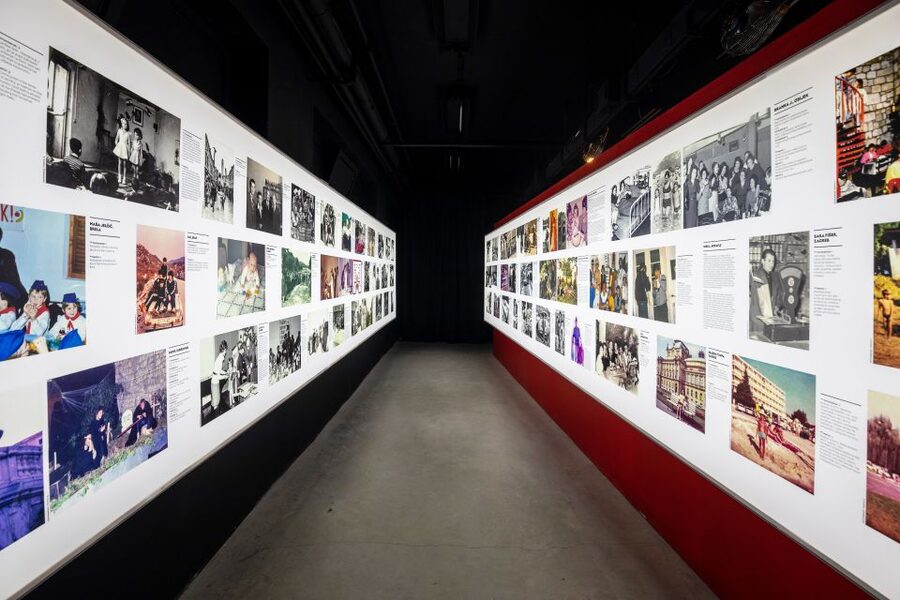
After this section, you can see a collection of photographs that continues the story. The images help anchor the subject in real people and real events. If you are interested in twentieth-century European history, this may be one of the most meaningful parts of the museum.
The presentation is not described as a guided political debate, so you should come ready to form your own conclusions. The museum gives you objects, images, sounds, and stories rather than asking you to accept a single simple verdict.
Technology that adds interest, with one small weakness
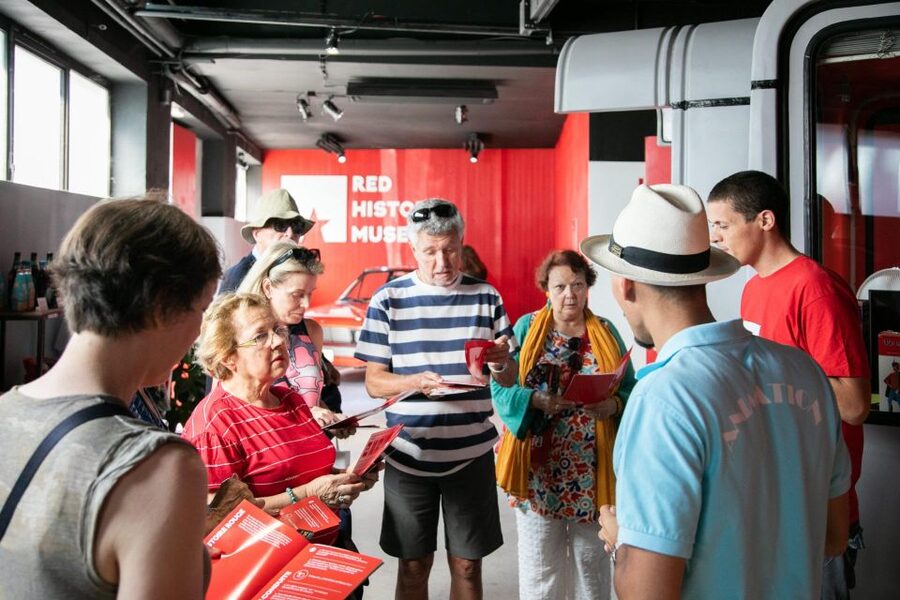
The Red History Museum uses new technology alongside physical exhibits. This is a good match for the subject, since it lets you move between personal objects and wider historical material.
Digital features can make a small museum feel active. You might listen to music, examine scanned images, or use interactive elements to find more information. These tools give you control over how much detail you want to explore.
One issue is that the virtual scanned images may not always respond as expected. A visitor found that scanning them did nothing, and the instructions could have been clearer. I would treat these displays as an extra rather than the main reason to visit.
The museum still works if every digital feature does not cooperate. Its strongest material is physical: the reconstructed home, furniture, photographs, car, drinks, candies, and other objects. The technology adds variety, but it does not carry the whole experience.
How much time should you allow?
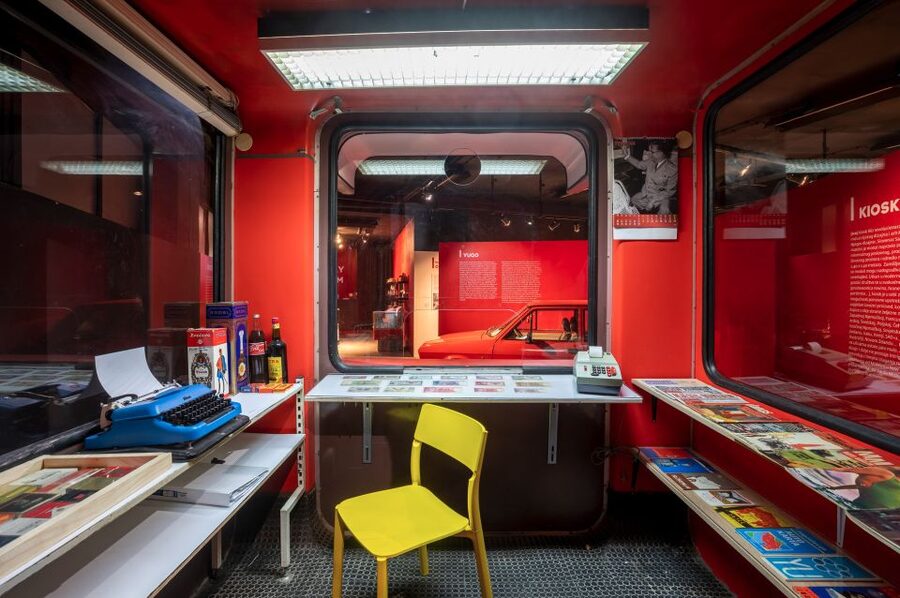
No visit length is provided, so I would avoid building a rigid schedule around it. Since the museum is small, you can likely fit it into a Dubrovnik port-area sightseeing plan rather than reserving an entire day.
Your ideal time depends on your interest. If you read every panel, listen to the music, try the interactive elements, and study the photographs, you will get more from the visit than someone who simply walks through for a quick look.
The museum’s compact format is useful when Dubrovnik is crowded and your day already includes major sights. It offers a change of pace from churches, walls, and historic streets. You can come here for a focused look at the twentieth century without committing to a large national museum.
If you are traveling with children, the Yugo, music, colorful products, and interactive features may keep the visit moving. Younger visitors may need help with the political background, especially the difference between daily life and government control.
Is $11 a fair price?
The regular ticket costs $11 per person. For Dubrovnik, where many attractions can quickly add up, that is a reasonable price for a focused museum with hands-on elements and a clear subject.
The value is strongest if you care about recent European history, family stories, design, politics, or the former Yugoslavia. You are paying not just for objects, but for a way to connect those objects with modern Croatia.
It may feel less worthwhile if you only want Dubrovnik’s medieval and maritime story. This museum is not a substitute for the city walls or old town sights. It serves a different purpose, and its value depends on your interest in the twentieth century.
The ticket includes regular entry to the Red History Museum. You can reserve a place and pay later, which helps if your schedule in Dubrovnik is still changing. You can also cancel up to 24 hours in advance for a full refund.
Who will enjoy this museum most?
I would recommend it to anyone who wants more context for Croatia than the usual old-town sightseeing provides. It is especially suitable for people interested in Yugoslavia, communism, political history, Cold War-era Europe, or everyday design.
It also works well for:
- History-minded visitors: The museum connects politics with real objects and personal routines.
- Families with older children: The car, music, drinks, sweets, and interactive elements offer breaks from written information.
- People with family ties to the region: The furniture and household objects may bring back memories or help explain family stories.
- Visitors seeking a rainy-day option: The museum offers an indoor historical stop in the port area.
- Culture-focused tourists: Art, design, music, and international politics receive attention alongside formal history.
I would be less likely to recommend it if you dislike museums that mix nostalgia with serious political material. The subject is not only cheerful old products and retro furniture. Goli Otok and the discussion of surveillance give the visit a darker edge.
Should you book the Red History Museum?
Book it if you want to understand how Croatia’s recent past still shapes its present. The museum’s best features are its physical setting, reconstructed home, period music, Yugo 45, consumer products, and willingness to show both familiar pleasures and political repression.
At $11, it offers good value, particularly when you want a short, focused attraction away from Dubrovnik’s medieval core. I would place it high on the list for history fans and anyone curious about Yugoslav life.
Skip it only if your time is extremely tight or your interests stop at Dubrovnik’s older history. For everyone else, the Red History Museum adds a human scale to a complicated period, and that makes it worth the stop.
FAQ
Where is the Red History Museum located?
The museum is in the T.U.P. factory complex in Dubrovnik’s port area. The complex was built in 1953.
How much does regular entry cost?
A regular entry ticket costs $11 per person.
What historical period does the museum cover?
The museum explores Croatia’s communist history and life under the Yugoslav regime, with attention to the 1970s and 1980s as well as wider political and social themes.
What can I see inside the museum?
You can see a reconstructed home, old furniture, photographs, period products, political and design displays, material about secret agencies and the Non-Aligned movement, and information about Goli Otok.
Can I sit in a Yugo 45?
Yes. The experience includes the chance to take a photo in a Yugo 45, a well-known car from the Yugoslav period.
Can I reserve now and pay later?
Yes. You can reserve your spot without paying today. Cancellation is available up to 24 hours in advance for a full refund.
More Museums
- Cavtat: Banac Gallery Entrance & Sparkling Wine
★ 4.9 · 19 reviews - Blue Lagoon & Underwater Museum from Split with Lunch & Drinks
★ 4.5 · 1,122 reviews - Zagreb: Skip-the-Ticket-Line Museum of Broken Relationships
★ 4.5 · 847 reviews - Zagreb: Nikola Tesla Technical Museum Ticket
★ 4.5 · 520 reviews
Just added around Dubrovnik
- Dubrovnik Sunset Mountain Tour With Wine★ 5.0 · 9 reviews
- From Dubrovnik: Mali Ston Oyster Paradise Tour with Transfer★ 4.8 · 9 reviews
- Dubrovnik: Private Panoramic Half-Day Buggy Tour with Brunch★ 4.6 · 9 reviews
- Luxury Day tour to Mostar and Kravice waterfalls★ 5.0 · 9 reviews
- Montenegro from Dubrovnik Private Tour★ 5.0 · 9 reviews
- Sarajevo & Mostar Private Day Tour from Dubrovnik★ 4.5 · 9 reviews
- Blue Sea & Black Mountains – Montenegro★ 5.0 · 9 reviews
- Ston Oysters & Wine Tasting Tour from Dubrovnik★ 5.0 · 9 reviews
Museums, compared.

Blue Lagoon & Underwater Museum from Split with Lunch & Drinks
Read our review →
Skip-the-Ticket-Line Museum of Broken Relationships
Read our review →

PREMIUM Emperor’s Walking Tour for History Lovers + Museum
Read our review →
Klis Fortress GOT and Olive Museum Entry Tickets
Read our review →

Browse the lists this tour appears in