
Reviewed · WALKING TOURS
The Best of Zagreb Private Walking Tour
Zagreb reveals itself one square at a time. The Best of Zagreb Private Walking Tour gives you a useful first look at the Croatian capital, linking its old-town landmarks with everyday places such as Dolac Market and Tkalciceva Street. I like the private format, which lets your group ask questions and set the pace, and I like the route’s mix of major sights, local food culture, and small historical details. Guides including Maks, Luceja, Ivan, and Denjan have been praised for clear, engaging storytelling.
The main consideration is time. Two hours is enough to get your bearings, but not enough for long visits inside attractions or a relaxed stop at every square. The route also includes hills, steps, and walking between stops, so you should wear comfortable shoes and treat this as an introduction to Zagreb rather than a full day of sightseeing.
In This Review
- Key points to know before booking
- Starting at Zagreb’s main square
- Zagreb Cathedral and the city’s market heart
- Tkalciceva Street, where Zagreb slows down
- Stone Gate and the climb to Gradec
- St. Mark’s Square and Lotrščak Tower
- Ilica and Zrinjevac finish the city picture
- How the private format changes the experience
- What the $191.56 price really buys
- The guide makes or breaks this short route
- Who should book this Zagreb walk
- Should you book the Best of Zagreb Private Walking Tour?
- FAQ
- Where does the tour begin?
- Can the guide pick me up?
- Where does the tour end?
- How long does the walking tour last?
- How many people can join?
- Is the tour offered in English?
- What sights are included?
- Are admission tickets included?
- Is the tour suitable for most people?
- Can I cancel for a full refund?
Key points to know before booking
- A private tour for up to 15 people: You pay $191.56 per group, not per person, so the value improves sharply with a larger party.
- Nine central Zagreb stops: The route covers Ban Josip Jelačić Square, the cathedral, Dolac Market, Tkalciceva Street, Stone Gate, St. Mark’s Square, Lotrščak Tower, Ilica, and Zrinjevac.
- A strong first-day orientation: You see the city’s main meeting place, market, medieval gate, church square, funicular area, and popular shopping street in one compact walk.
- History delivered by a local guide: Maks has answered questions about Croatia, the war, and Tito, while Luceja gave one family a clear account stretching from King Tomislav onward.
- Central pickup may be available: You can request pickup from a centrally located address or meet by the Manduševac Fountain on Ban Josip Jelačić Square.
- No admission fees are listed: The tour price covers the guided walk, while the route focuses mainly on exterior sights and public spaces.
Starting at Zagreb’s main square
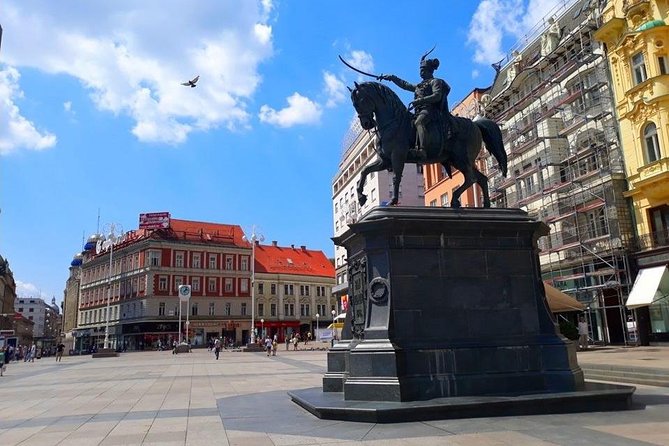
The tour begins at the Manduševac Fountain on Ban Josip Jelačić Square, Zagreb’s main public meeting place. If you are staying centrally, pickup may be arranged from your address, but you need to provide that address in advance.
This is a smart place to begin. The square connects the Lower Town with the older districts uphill, and it gives you an immediate sense of how Zagreb works as a city. Locals use it as a meeting point, so you are not beginning in an isolated monument zone. You are starting where daily city life happens.
Your guide uses the square to introduce historical stories and local trivia. Allow about 20 minutes here. The stop has no admission charge, and the open setting makes it easy to gather your group and begin without fuss.
The tour is offered in English and includes a mobile ticket. Since the activity ends back at the meeting point, you can plan the rest of your day from the same central area. That makes it practical for an arrival day, especially if you want a short orientation before exploring on your own.
More Walking Tours in Zagreb
- Zagreb: Small Group Walking Tour City Center and WW2 Tunnels
★ 4.9 · 895 reviews - Zagreb: City and WWII Tunnels Walking Tour
★ 4.9 · 845 reviews - Walking tour of Zagreb
★ 5.0 · 383 reviews
Zagreb Cathedral and the city’s market heart
The next stops bring you to two places that explain different sides of Zagreb. The Cathedral of Zagreb represents the city’s religious and historical importance, while Dolac Market shows how residents shop and eat today.
The cathedral visit is planned for about 10 minutes. That is enough for an outside look and a short explanation, but you should not expect a long interior visit or time for a detailed architectural study. The guide’s role here is to place the church within Croatian history and explain why it matters to Zagreb.
Dolac Market follows, with another 10-minute stop. Locals call it the city’s belly, and that description tells you what to look for. This is not simply a market included to fill a sightseeing route. It is a place tied to ingredients, shopping habits, and Croatian food culture.
I like this pairing because it keeps the tour from becoming a parade of statues and facades. You get a major religious landmark, then a working market where food and local routines take center stage. If you want to return later to browse more carefully, Dolac is an easy place to mark on your mental map.
The short market stop is also a limitation. Ten minutes will give you an introduction, not a full tasting or shopping session. If Croatian gastronomy is a main reason for your visit, use the tour to identify the market and return later with more time.
Tkalciceva Street, where Zagreb slows down
Tkalciceva Street is one of Zagreb’s best-known places for a coffee, a drink, or a meal. The tour allows about 10 minutes here and adds local historical trivia to the scene.
This stop is useful because it shows you how the old town is used after the monuments have been photographed. The street is associated with sitting down and taking a break, so your guide can help connect the physical setting with modern Zagreb life.
The brief timing means you probably will not settle in for a full meal or drink during the official tour. Still, you will know where to return when you want a less scheduled pause. A guide can also help you make sense of the unusual stories attached to the street, which may be easy to miss if you simply walk through on your own.
One especially useful feature of this private tour is the chance to ask for practical suggestions. A Spanish-speaking couple received help finding a charming restaurant where they could try Croatian wines. That does not promise a restaurant recommendation for every group, but it shows how the guide can tailor the conversation beyond memorized facts.
Stone Gate and the climb to Gradec
Stone Gate, or Kamenita Vrata, is one of the tour’s more atmospheric stops. It is described as the only surviving medieval access to Gradec and as a very sacred place for local people.
You get about 10 minutes here. The point is not simply to admire an old gateway. It is to understand how Zagreb’s older districts were entered and how the site still carries religious meaning. That combination of civic history and local devotion gives the stop more weight than a quick photo opportunity.
From here, the route continues uphill toward St. Mark’s Square. The walk helps you see the relationship between the lower city and Gradec, but it also means the route is not completely flat. If anyone in your group has limited mobility, ask about the walking conditions when arranging the tour. The supplied information says most people can participate, but it does not promise a step-free route.
Something different for another day:
- From Zagreb: Plitvice & Rastoke Guided Day Trip with Ticket
★ 4.9 · 2,955 reviews - Zagreb: Rastoke & Plitvice Lakes Guided Tour with Ticket
★ 4.9 · 1,897 reviews - Communism & Croatian Homeland War Tour
★ 5.0 · 1,355 reviews - Best of Zagreb with the WW2 Tunnels
★ 5.0 · 973 reviews
St. Mark’s Square and Lotrščak Tower
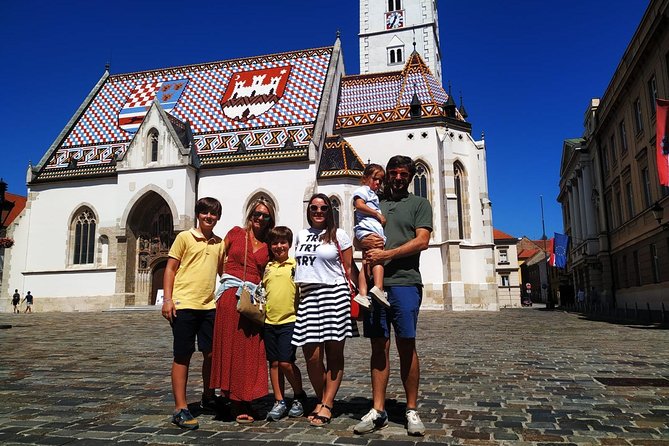
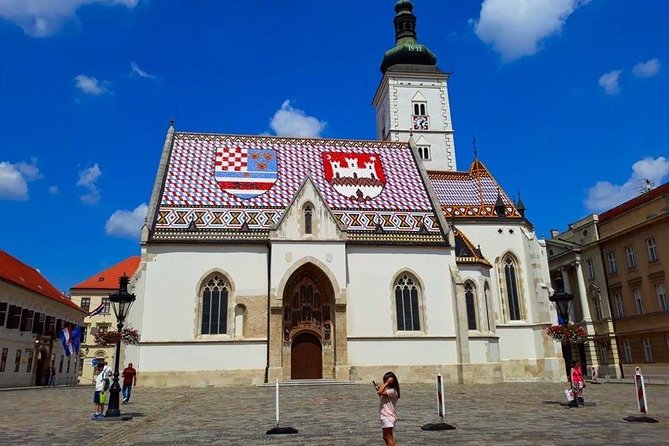
St. Mark’s Square is one of Zagreb’s signature scenes, especially for a photograph in front of St. Mark’s Church. The square receives about 10 minutes on the route.
The stop is short, yet it gives you time to take in the church and hear why this square matters. This is one of the places where the guide’s narrative helps. A quick photograph shows you the roof and the square, but a clear explanation gives the setting political and historical context.
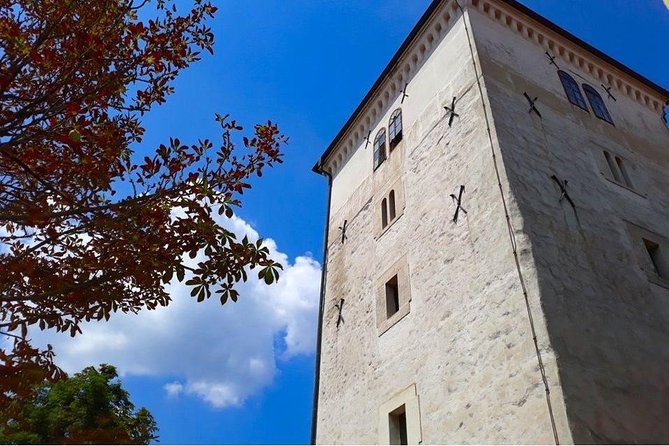
Lotrščak Tower comes next, also for about 10 minutes. The tower is tied to Zagreb’s famous cannon tradition. The tour information says that the cannon is heard every day at 12:00am if you are near the center. Because that stated time is unusual, confirm the exact cannon timing with your guide if hearing it matters to you.
The route description also points out Zagreb’s funicular, described as the world’s shortest public transportation. It is presented as the best way to reach the tower. The supplied information does not clearly say that the tour ticket includes a funicular ride, so do not assume transportation is part of the price. Ask before booking if you specifically want to ride it.
This is a good example of the tour’s value. You are not only shown a tower. You are given a small piece of Zagreb’s daily rhythm, a public transport curiosity, and a reason to pay attention to the soundscape around the old center.
Ilica and Zrinjevac finish the city picture
Ilica is one of Zagreb’s best-known streets and a popular route through the center. The tour gives it about 10 minutes.
The value here is contrast. After the medieval gate, sacred spaces, and old-town lanes, Ilica brings you back to a larger urban street. Your guide can explain why it matters to residents and how it fits into the city’s commercial life.
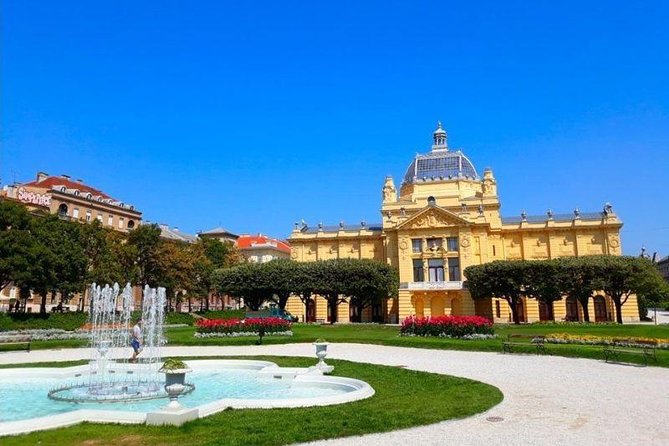
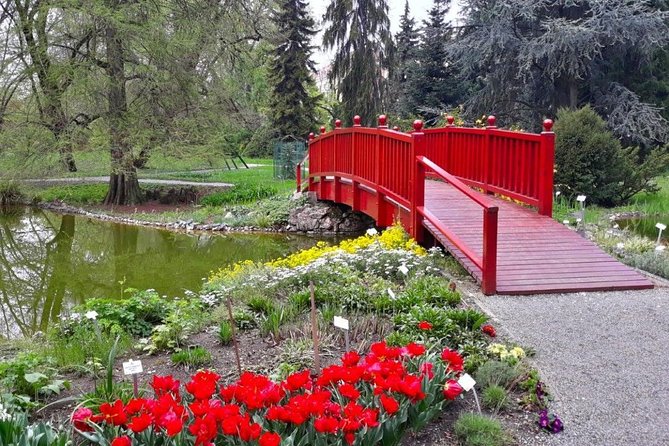
The final stop is Zrinjevac, with about 15 minutes. The phrase one square, a million stories fits the tour’s approach: the square is used as a place to gather several threads of Zagreb’s past and present.
Ending at Zrinjevac would make a natural transition to more independent sightseeing, but this activity returns to the original meeting point. That is worth remembering when you plan your afternoon. The route covers a lot of ground, yet the listed stops add up to roughly 105 minutes, leaving some of the two-hour estimate for walking and transitions.
How the private format changes the experience
A group of up to 15 people can participate, but only your own party joins the tour. That distinction matters. You are not waiting for strangers to take photographs, and your guide can respond to your interests instead of following a fixed public-group script.
The private setup is especially useful for families. One family specifically noted that their 17-month-old daughter enjoyed the tour. That does not mean every toddler will manage the full walk happily, but the format gives parents more room to pause, ask questions, and keep the experience manageable.
It also suits groups with mixed interests. One person may want Croatian political history, another may care about food, and another may simply want to find a good place for coffee. Maks has handled questions about the war and Tito, while Luceja has given a chronological account beginning with King Tomislav. Those examples suggest that the guides can adjust the depth and direction of the conversation.
The tour is offered in English. Service animals are allowed, public transportation is nearby, and most people can participate. Still, this is a walking tour through central streets and older districts, so comfortable footwear is more important than dressing for a formal attraction.
What the $191.56 price really buys
The price is $191.56 per group of up to 15 people. For one or two people, that is a substantial charge for a two-hour walk. For a family or larger party, the arithmetic looks much better: with 10 people, the cost is about $19 per person, and with 15, it is about $13 per person.
You are paying for a private guide rather than entrance tickets. The listed stops have no admission charge, and the experience is built around explanation, orientation, and efficient movement through the center. If you mainly want a guide to point out the main sights and answer questions, the price can be fair for a group.
The value is weaker if you prefer to wander without a schedule or if you want long interior visits. The tour does not appear to include extended time inside the cathedral or other attractions, and the short stops keep the route moving.
For a first morning in Zagreb, I think the price makes the most sense when shared by a family, friend group, or multigenerational party. You receive a city overview, a private conversation, and practical suggestions for the rest of your stay. Solo visitors and couples should compare the cost with a small-group walk or self-guided route before committing.
The guide makes or breaks this short route
The strongest part of the experience is the guide. A two-hour route can feel thin if the guide only recites dates. It can feel lively and useful when the person leading it explains connections, answers questions, and points out details you would otherwise miss.
Maks has been praised for discussing Croatian history, the war, and Tito with apparent enthusiasm. Luceja gave a detailed chronological account from the first Croatian king Tomislav while continuing through the city. Ivan has been described as funny and helpful, offering useful tips for the rest of a Zagreb stay. Denjan has been praised for clear, precise explanations and for making the route feel complete.
The feedback is not limited to English. Spanish-speaking participants appreciated a friendly guide who knew the area and history, while German-speaking participants enjoyed Ivan’s humorous explanation of Zagreb’s character. That suggests the company has several guides with different personalities, though you cannot assume you will receive a specific guide unless the provider confirms it.
The overall rating is 5 out of 5, with 100 percent of respondents recommending the experience and 18 reviews recorded. That is a small sample, so I would not treat it as proof that every departure will be perfect. Still, the praise is notably consistent: clear history, friendly delivery, useful advice, and a private pace.
Who should book this Zagreb walk
I would recommend this tour to first-time visitors who want a strong orientation before exploring alone. It is also a good fit for families, groups of friends, and anyone who prefers asking direct questions rather than listening silently in a large crowd.
Book it early if your dates are fixed. The experience is booked an average of 68 days in advance, which suggests that demand can be high, especially during popular travel periods.
You may want a different option if you need a fully accessible route, want to spend substantial time inside attractions, or prefer a slow food tour. The route touches Croatian gastronomy at Dolac Market, but it is not presented as a tasting tour. It also moves quickly enough that you should plan separate visits to the places that catch your attention.
Free cancellation is available if you cancel at least 24 hours before the start time. Changes or cancellations made inside that 24-hour window are not accepted for a refund, and local Zagreb time controls the deadline.
Should you book the Best of Zagreb Private Walking Tour?
Book it if you want to get your bearings fast, learn how Zagreb’s Lower Town and Gradec fit together, and have a guide who can answer questions about Croatian history and local life. The private format gives the route flexibility, and the group price becomes reasonable once shared among several people.
Skip it if you want a museum-focused visit, a long market meal, or a very slow walking pace. For most first-time groups, though, this is a sensible opening chapter: compact, informative, and broad enough to show you where to spend the rest of your time.
FAQ
Where does the tour begin?
It begins at the Manduševac Fountain on Trg bana Josipa Jelačića, Zagreb’s main square.
Can the guide pick me up?
Pickup may be available if you are staying at a centrally located address. You need to provide the address so arrangements can be made.
Where does the tour end?
The activity ends back at the original meeting point.
How long does the walking tour last?
The tour lasts approximately two hours.
How many people can join?
The private tour accepts up to 15 people in your group.
Is the tour offered in English?
Yes. The experience is offered in English.
What sights are included?
The route includes Ban Josip Jelačić Monument and Square, Zagreb Cathedral, Dolac Market, Tkalciceva Street, Stone Gate, St. Mark’s Square, Lotrščak Tower, Ilica, and Zrinjevac.
Are admission tickets included?
The listed stops have no admission charge. The experience is primarily a guided walk through public areas.
Is the tour suitable for most people?
The information says most people can participate. Service animals are allowed, and the tour is near public transportation.
Can I cancel for a full refund?
Yes, if you cancel at least 24 hours before the experience starts. Cancellations or changes made less than 24 hours before the start time are not accepted for a refund.
Just added around Zagreb
- Zagreb: VR 3D Immersive Film Experience – Voucher★ 4.6 · 9 reviews
- Zagreb GRAND Private Walking Tour★ 4.5 · 9 reviews
- Zagreb: Explore with an Art Historian – Private Walking Tour★ 4.9 · 9 reviews
- Croatian cuisine cooking class with Dolac market tour★ 5.0 · 9 reviews
- From Zagreb: Plitvice Lakes & Rastoke Private Tour★ 5.0 · 9 reviews
- Private Guided Tour of Ljubljana and Lake Bled from Zagreb★ 5.0 · 9 reviews
- Picturesque Samobor & Samobor Castle Half-day Tour★ 4.5 · 9 reviews
- Zagreb to Split Private Transfer via Plitvice Lakes National Park★ 5.0 · 9 reviews
Walking Tours, compared.




Walking Tour of Split and Diocletian’s Palace
Read our review →


Krka Waterfalls tour with Trogir Walking tour and Krka panoramic boat cruise
Read our review →
City Walls Early Morning or Sunset Walking Tour
Read our review →Browse the lists this tour appears in