
Reviewed · TICKETS
Pula Arena Amphitheater Admission Ticket
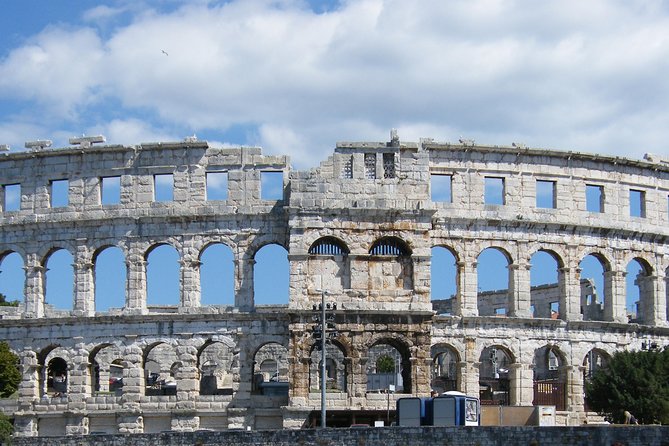
Pula’s Roman arena is impossible to miss. The enormous stone amphitheater sits just outside the old city walls, where its size and near-circular form make Rome’s influence feel very real. I like the freedom this ticket gives you, and I like that you can visit below the arena to see the ancient olive-oil production area.
The main drawback is simple: this is an admission ticket, not a guided tour. You explore alone, and the voucher may need to be exchanged for an entrance ticket at the arena. At about $15.38 per person, the price is reasonable for a major historic site, though some people may find it a little high for an hour of self-guided sightseeing.
In This Review
- Key points to know before visiting
- Why Pula Arena deserves your time
- What the one-hour visit is like
- The ancient walls and four floors
- The olive-oil production area below
- Is $15.38 good value?
- Choosing the best time to arrive
- Getting there and handling the voucher
- Who will enjoy Pula Arena most?
- Should you book the Pula Arena ticket?
- FAQ
- How much does the Pula Arena admission ticket cost?
- How long does a visit to Pula Arena take?
- Is this a guided tour?
- Can I visit at any time of day?
- What is the latest time I can enter?
- Is transportation included?
- Are food and drinks included?
- Does the ticket include a gladiator show?
- Can I cancel or change the booking?
Key points to know before visiting
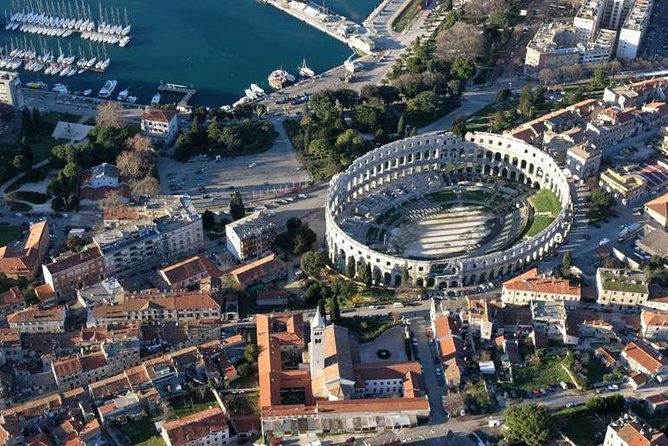
- A huge Roman amphitheater: Pula Arena measures about 132.5 by 105.1 meters and reaches 32.45 meters at its highest point.
- Four levels to explore: You can walk around the structure, study the ancient walls, and view the arena from different heights.
- The olive-oil area is easy to miss: Make time to visit the lower section, where ancient oil production is explained.
- Flexible entry times: Your ticket can be used during the attraction’s opening hours rather than at one fixed tour time.
- No guide or transport included: You arrange your own way to Pula Arena and explore at your own pace.
- Allow about one hour: That is enough for a focused visit, though you may stay longer if you enjoy Roman architecture or photography.
Why Pula Arena deserves your time
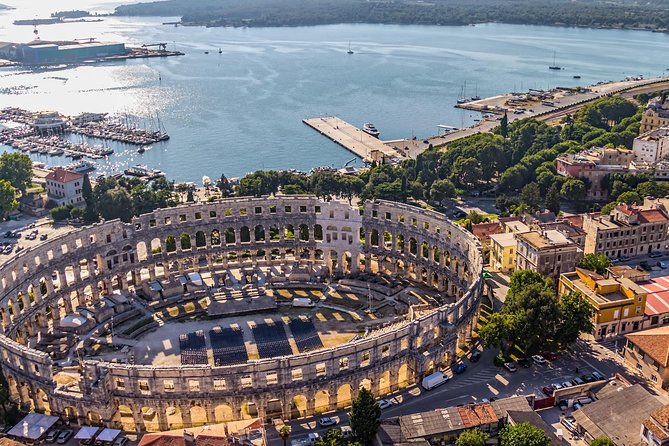
Pula is often described as Croatia’s answer to Rome, and the comparison makes sense the moment you see the amphitheater. The arena is not tucked away behind a museum door. It rises beside the city, with its pale Roman walls visible from a distance.
That setting gives the visit a useful sense of scale. You can look at the monument from outside before entering, then walk through the passage and see how much space the structure occupies. From the inside, the walls wrap around you, and the site feels far larger than photographs suggest.
The amphitheater was built according to the Roman land division grid, about 200 meters northeast of Pula’s city walls. Its two main outer axes measure approximately 132.5 and 105.1 meters, while the highest point reaches 32.45 meters. Those numbers matter because they explain why the arena feels more like a district of stone than a small archaeological ruin.
I especially like that the visit is not limited to one viewpoint. You can examine the exterior walls, walk through the arena, climb or access the available levels, and look down toward the central space. The four floors give you different angles on the construction and help you see how the building was organized.
The arena is associated with gladiatorial spectacles, so it is natural to picture ancient contests taking place in the dust. Still, the real appeal is the building itself. The stonework, arches, scale, and setting offer more than a quick photo stop.
More Roman arena visits:
- Pula: Arena Entrance Ticket
★ 4.3 · 2,590 reviews - Best of Istria: Amphitheater Pula + Rovinj + Hum Tour
★ 5.0 · 13 reviews - Salona & Amphitheater – Private guided tour – Admission incl.
★ 5.0 · 8 reviews
What the one-hour visit is like
This experience is self-guided, so you decide how quickly to move. A focused visit can take about an hour, which fits easily into a morning or afternoon in Pula. If you stop often for photographs or spend time examining the lower areas, you may want more time.
Begin outside. The exterior is one of the best parts of the site because you can see the full height of the walls without the interior crowds or railings breaking up the view. The two long axes give the arena its slightly elongated oval form, even though it can look almost circular from some angles.
Once inside, walk slowly rather than heading straight to the center. The walls are the main story here. You can see how the arches and repeated openings create a structure that is both practical and imposing.
The interior gives you a better sense of the arena’s former use. From various levels, you can look across the open central area and imagine how sound and movement would have carried through the building. The views from inside are also attractive because the arena’s location near the water adds a pleasant background to the old stone.
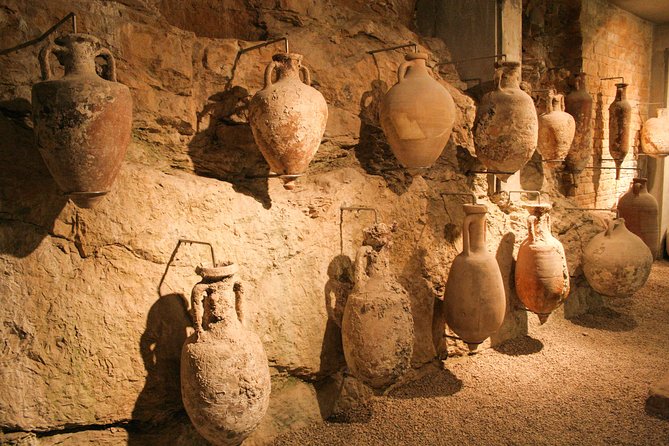
The lower section deserves special attention. Ancient olive-oil production is presented below the arena, and several people have found this more interesting than expected. It adds a daily-life angle to the visit, moving beyond gladiators and emperors to the work that supported Roman communities.
The attraction is not a guided presentation, so you should plan to read the available information and take your time. If you want a detailed explanation of Roman engineering, political life, or entertainment, this ticket alone will not provide a personal guide. Its strength is the freedom to see the place at your own speed.
The ancient walls and four floors
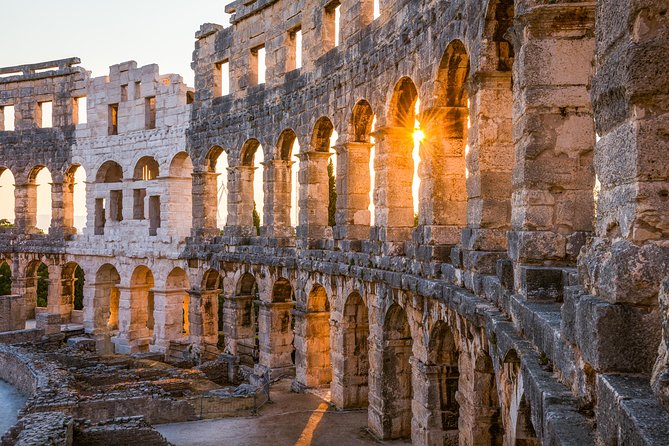
Pula Arena is at its best when you stop treating it as a single viewing platform. The four floors let you study the structure from different heights and see how the outer walls, inner spaces, and archways fit together.
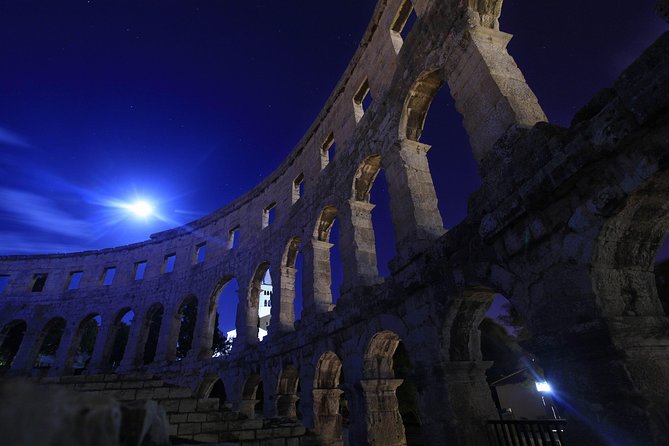
At ground level, the walls feel heavy and close. You can focus on the size of the stones and the repeated construction patterns. Higher up, the building opens out, and you gain better views across the central arena and toward the surrounding part of Pula.
This variety makes the ticket useful for independent sightseers. You do not have to keep pace with a guide or wait for a group to finish taking photographs. You can linger at a viewpoint, then move on when you are ready.
The site is also remarkably intact for a Roman amphitheater. That does not mean every original feature survives, but enough of the structure remains to make the form easy to understand. You can recognize the entrances, levels, outer wall, and central performance area without needing much imagination.
I would not rush through the outside after entering. Some of the most impressive photographs show the entire elevation from a distance. Inside, use the higher viewpoints for a broader image, then return to the lower levels for architectural details.
The olive-oil production area below
The lower section is a small but important part of the visit. It shows that Pula Arena is more than a setting for dramatic stories about gladiators. The ancient olive-oil production area points to the ordinary economic activity that helped Roman towns function.
This part is especially useful if you are visiting with children or with someone who prefers practical history to military stories. Oil production gives you a way to think about food, trade, work, and household life in the Roman period.
It is easy to overlook because the arena’s outer walls naturally draw your attention. I would make a specific plan to go below before leaving. The area does not replace a full museum visit, but it gives the admission ticket more substance and helps justify the cost.
A few more tours and experiences worth a look
- Zadar: Plitvice Lakes Guided Day Tour with Tickets
★ 4.9 · 3,148 reviews - From Zagreb: Plitvice & Rastoke Guided Day Trip with Ticket
★ 4.9 · 2,955 reviews - From Split: Plitvice Lakes Guided Tour with Entry Tickets
★ 4.9 · 2,468 reviews - Zagreb: Rastoke & Plitvice Lakes Guided Tour with Ticket
★ 4.9 · 1,897 reviews
Is $15.38 good value?
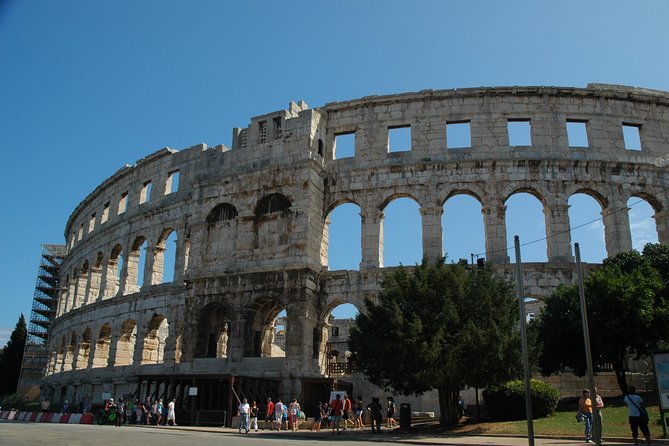
At $15.38 per person, this is not the cheapest quick attraction in Pula. The value depends on what you want from the visit.
I think the price works well if you care about Roman architecture, enjoy exploring without a guide, or want one of Pula’s major sights secured in advance. The building is large, well preserved, and substantial enough to occupy about an hour without feeling like a five-minute photo stop.
Prebooking also removes some uncertainty. You know admission is arranged before reaching the arena, and the ticket is valid throughout the daily opening period. That flexibility is useful if you are fitting Pula Arena around lunch, other sights, or an irregular arrival time.
The value is weaker if you expect a guided explanation, transport, food, or a longer organized program. None of those are included. This is simply access to the monument, with all fees and taxes covered.
Some ticket holders found the arena slightly pricey, while others considered it well worth the admission cost. That split is fair. The site is a major historic building, but the experience is short and independent. Go because you want to see the arena itself, not because you expect a full Roman history lesson.
Choosing the best time to arrive
The flexible ticket is helpful, but opening hours change by season. The supplied schedule lists these periods:
- September 1 through September 30: 8:00 AM to 9:00 PM
- October 1 through October 31: 8:00 AM to 8:00 PM
- November 1 through December 31: 9:00 AM to 9:00 PM
Additional seasonal information lists July and August from 8:00 AM to 11:00 PM, May and June from 8:00 AM to 9:00 PM, September from 8:00 AM to 9:00 PM, April from 8:00 AM to 8:00 PM, October from 9:00 AM to 7:00 PM, and November through March from 9:00 AM to 5:00 PM.
Because these times are not perfectly consistent across the supplied details, check the current schedule before setting out. The important rule is that the last entrance is one hour before closing. You should arrive at the entrance no later than one hour before the end of working hours.
Early morning is a sensible choice if you want quieter conditions. A Monday morning visit at about 9:30 had very few other people, according to the supplied experience details. Late afternoon can also be attractive in the longer summer opening period, but do not leave your visit until the final hour.
Getting there and handling the voucher
Transportation to and from Pula Arena is not included, so you make your own way to the site. The arena is near public transportation, which makes it practical to reach from the city.
If you are driving, parking was described as easy in one account. Another placed the attraction about 15 minutes from Pula Airport, making it a possible stop for an arrival or departure day if your schedule leaves enough room. Those details can vary with traffic and parking conditions, so allow a buffer.
The voucher exchange deserves attention. The prepaid voucher is not always the same thing as the final entrance ticket. Several people exchanged it at the entrance without trouble, but one person found the wording unclear and another had a confirmation issue before entry was resolved.
I would keep the voucher and booking confirmation easy to access on your phone, and I would arrive with time to spare. If you need help, the supplier asks you to contact its bookings department by phone. Calls are accepted, but text messages are not.
The booking confirmation is issued at the time of reservation. The activity allows service animals, is near public transportation, and is suitable for most people. The listed maximum is 15 participants, although this is a self-guided admission rather than a conventional group tour.
Who will enjoy Pula Arena most?
I recommend this ticket to independent visitors who like to set their own pace. It is a good match for anyone staying in Pula, for a short stop in the city, or for someone planning a wider visit around Istria.
Families may appreciate the open space and the simple idea of walking through a Roman arena. The lower olive-oil area adds variety for children who might lose interest in walls alone. You will still need to provide the historical explanation yourself because no guide is included.
History fans and photographers have the most to gain. The changing views from outside, inside, and above make the building more rewarding than a single postcard image suggests.
I would think twice if you need a fully narrated experience or if you are looking for a package with transport and several attractions. You may prefer a separate guided city tour, but that is not what this ticket offers.
The arena sometimes hosts evening gladiator shows, but those are separate events. An admission ticket does not include a show, so check the event schedule if that is important to you. Do not assume that buying entry to the monument also reserves a performance.
Should you book the Pula Arena ticket?
Book it if you want easy, flexible access to one of Pula’s defining sights. The arena is large, unusually well preserved, and rewarding from several angles. The olive-oil production area adds an unexpected layer, and the open timing makes it easy to fit into a day of sightseeing.
Before paying, make sure you are comfortable with a self-guided visit and a possible voucher exchange at the entrance. Check seasonal hours, arrive at least one hour before closing, and remember that the ticket is non-refundable and cannot be changed.
For most people already planning to visit Pula, I think the ticket is worthwhile. For a visitor who expects a guide or a long organized program, it may feel limited. The right choice comes down to whether you want a flexible hour inside a remarkable Roman building, or a more structured history experience.
FAQ
How much does the Pula Arena admission ticket cost?
The listed price is $15.38 per person.
How long does a visit to Pula Arena take?
The approximate duration is one hour, though you can explore at your own pace during opening hours.
Is this a guided tour?
No. This is a self-guided admission ticket. A guide is not included.
Can I visit at any time of day?
Yes, the ticket is valid during the amphitheater’s opening hours. Seasonal hours vary, so check the current schedule before visiting.
What is the latest time I can enter?
The last entrance is one hour before closing. You should arrive at the entrance no later than one hour before the end of working hours.
Is transportation included?
No. Transportation to and from the attraction is not included. The arena is near public transportation.
Are food and drinks included?
No. Food and drinks are not included in the ticket.
Does the ticket include a gladiator show?
No. The admission ticket covers entry to the amphitheater. Gladiator shows are separate events and should be checked against the event schedule.
Can I cancel or change the booking?
No. The experience is non-refundable and cannot be changed for any reason.
Just added around Pula
- Istria: Private Boat Tour with Skipper★ 5.0 · 9 reviews
- 3 Hours Private Wine and Sunset Tour★ 5.0 · 9 reviews
- Pula: Sunset/Night-time Illuminated Transparent Kayak Tour★ 4.0 · 9 reviews
- Electric Off-Road Scooter Tour in Pula★ 5.0 · 10 reviews
- Pula: Your Custom Full-Day Private Sail – Explore Istria’s Gems★ 5.0 · 10 reviews
- Pula Private 2-Hour Guided Walking Tour★ 5.0 · 10 reviews
- Pula: Private Brijuni Tour With Swimming, Dinner & Drinks★ 4.3 · 10 reviews
- Stop on Island & National Park Day Cruise with Lunch Drinks★ 5.0 · 10 reviews
Tickets, compared.

Plitvice & Rastoke Guided Day Trip with Ticket
Read our review →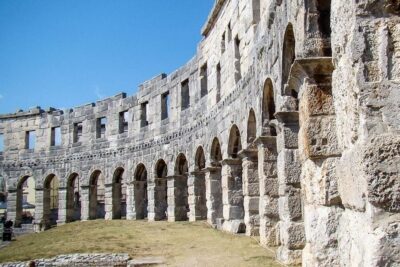

Plitvice Lakes Guided Tour with Entry Tickets
Read our review →
Rastoke & Plitvice Lakes Guided Tour with Ticket
Read our review →
Plitvice Lakes with Ticket & Rastoke Guided Tour from Zagreb
Read our review →From Split or Trogir: Plitvice Lakes Tour with Entry Tickets
Read our review →
Skip-the-Ticket-Line Museum of Broken Relationships
Read our review →Browse the lists this tour appears in