
Reviewed · WALKING TOURS
Exclusive old Zagreb walking tour
Zagreb reveals itself after dark. This 90-minute walk links the city’s key squares, churches, markets, viewpoints, and old lanes while guide Domagoj explains how Zagreb grew from Kaptol and Gradec into Croatia’s capital. I like the personal, relaxed style praised in the feedback, and I like that the route gives you both major sights and useful ideas for what to do afterward. The one catch is time: ninety minutes moves quickly, so you will get an excellent overview rather than a full look inside every site.
The $35 price is fair if you want a clear introduction to Zagreb, especially early in your stay. Domagoj has earned repeated praise for his history, humor, English, food tips, transport advice, and honest explanations of Croatia’s past and present. Since the walk takes place in evening hours, expect a sightseeing route built around atmosphere and exterior views, with limited time for lingering.
In This Review
- Key points at a glance
- Starting at King Tomislav Square in the evening
- Ban Jelačić Square and Zagreb’s city center
- Zagreb Cathedral and old Kaptol
- Dolac Market and Opatovina
- Climbing into Gradec through Kamenita Vrata
- St Mark’s Square and Zagreb’s political heart
- Gradec Lookout and the Strossmayer Promenade
- Lotrščak Tower and photos after dark
- The funicular line, Ilica Street, and Flower Square
- What $35 buys you in practical terms
- Who will get the most from this Zagreb walk?
- Should you book the Exclusive Old Zagreb Walking Tour?
- FAQ
- Where does the tour begin?
- How long does the walking tour last?
- What language is the tour offered in?
- How much does the tour cost?
- Is the tour wheelchair accessible?
- Which main Zagreb areas does the route visit?
- Does the tour include the Zagreb Cathedral interior?
- Does the tour include entry to museums or other attractions?
- Can I cancel and receive a full refund?
Key points at a glance
- Meet at King Tomislav Square: The tour begins near one of Zagreb’s grand central public spaces and then moves north through the historic core.
- Kaptol and Gradec in one walk: You see the two old settlements that shaped modern Zagreb, not just a string of disconnected monuments.
- Zagreb Cathedral and Dolac Market: The route pairs the city’s major religious landmark with its famous open-air market area.
- St Mark’s Square and Kamenita Vrata: Medieval streets, government buildings, churches, and one of old Zagreb’s best-preserved monuments form the heart of the walk.
- Night views from Gradec: Strossmayer Promenade and the area below Lotrščak Tower provide some of the tour’s strongest photo opportunities.
- A useful final orientation: The walk ends near Ilica Street, the Zagreb Octogone, and Flower Square, a handy area for an evening meal or drink.
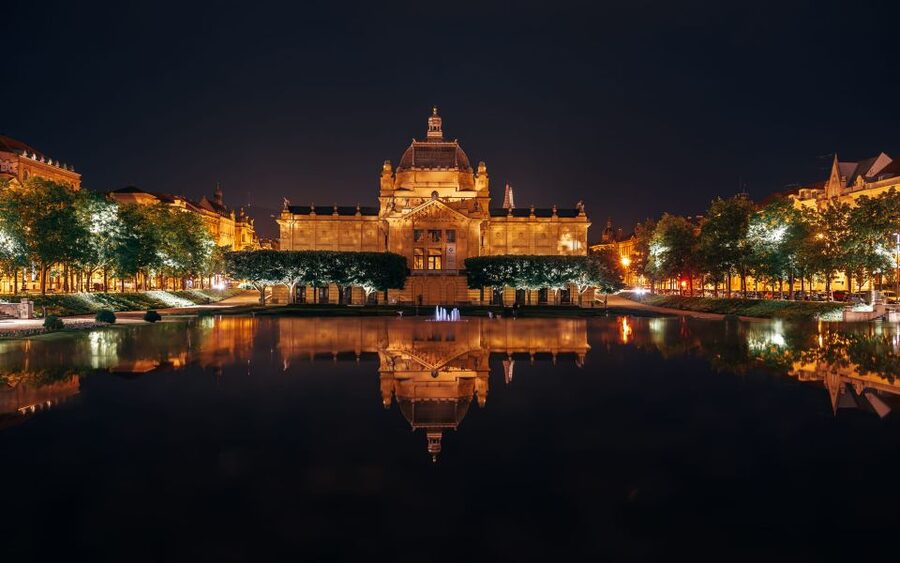
Starting at King Tomislav Square in the evening
The meeting point is King Tomislav Square, at the southern edge of Zagreb’s central zone. From here, the route heads toward Nikola Zrinjski Square and then Ban Jelačić Square, the city’s main gathering place.
This opening gives you a useful sense of Zagreb’s layout. You move from spacious, formal urban planning into the pedestrian heart of the city. If you have just arrived, that matters. A guide can help you connect places on the map before you begin exploring on your own.
The evening timing should suit visitors who want to tour after checking into a hotel or finishing a daytime excursion. It also changes the feel of the walk. Squares, churches, and old facades take on a softer look after sunset, though darkness can make small architectural details harder to see.
The tour promises discussion of local history, art, culture, and architecture. That broad mix is one reason the experience works well as a first activity. You are not only looking at buildings. You are learning how the city’s public spaces, religious institutions, government, and everyday life fit together.
More Walking Tours in Zagreb
- Zagreb: Small Group Walking Tour City Center and WW2 Tunnels
★ 4.9 · 895 reviews - Zagreb: City and WWII Tunnels Walking Tour
★ 4.9 · 845 reviews - Walking tour of Zagreb
★ 5.0 · 383 reviews
Ban Jelačić Square and Zagreb’s city center
Ban Jelačić Square is the natural center of Zagreb. It is a practical orientation point, with streets spreading toward the lower city, Kaptol, Gradec, and Ilica Street.
Here, Domagoj can give you the wider story before the route climbs into old Zagreb. His explanations have been praised for connecting Croatian history with current affairs, rather than stopping at dates and rulers. That is useful because Zagreb’s past can be difficult to follow when you encounter Roman Catholic, Austro-Hungarian, Yugoslav, and modern Croatian references in the same short walk.
I particularly value a guide who explains how places function today, not only how they looked centuries ago. The feedback points to that strength. Domagoj has also offered suggestions for museums, dining, transport, and areas worth exploring later, so keep a note on your phone or carry a small notebook.
The square is also a good place to ask questions. The guide is described as open to questions, and several comments highlight his polite, friendly manner and sense of humor. That makes the experience feel more like a conversation than a memorized speech.
Zagreb Cathedral and old Kaptol
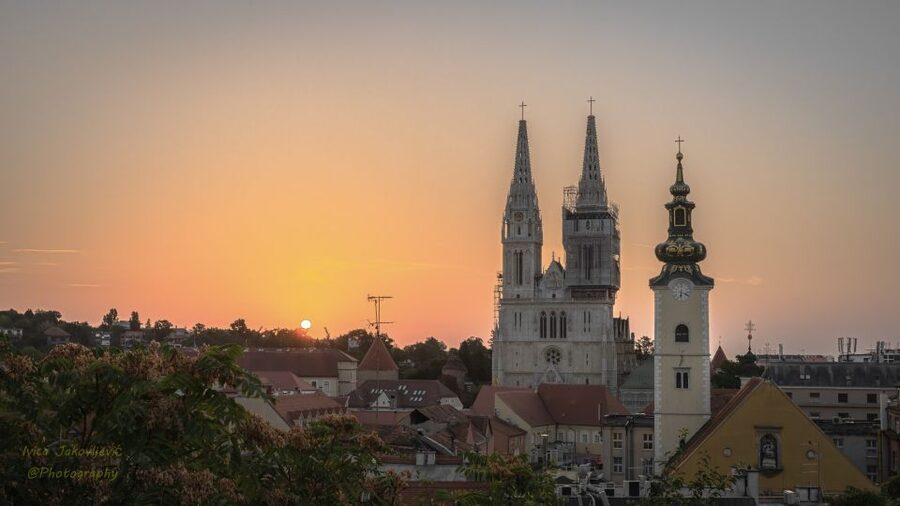
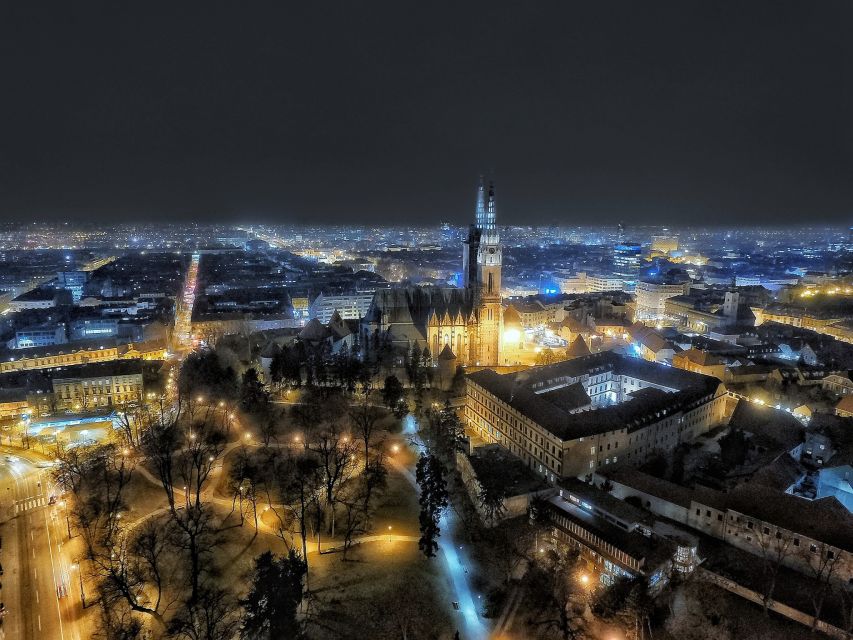
From the central square, the route continues to Zagreb Cathedral and Kaptol. The cathedral is one of the city’s defining sights, while Kaptol is tied to the Zagreb Archdiocese and forms one half of old Zagreb’s origin story.
This is where the tour gains depth. Instead of treating the cathedral as an isolated photo stop, the walk places it within the older religious center of the city. You begin to understand why Zagreb has more than one historic core and why Kaptol and Gradec developed as distinct areas.
The cathedral visit is described as part of the walking route, but the supplied details do not promise an interior visit. Plan on learning about the building and seeing it from the outside unless the guide tells you otherwise. If entering churches is important to you, ask Domagoj at the start.
The route’s historical focus may appeal to you if you want context without committing to a long museum tour. One visitor said the guide covered more about Croatia in one evening than they had learned in a lifetime. That is strong praise, but it also signals the pace: expect a lot of information packed into a short period.
Dolac Market and Opatovina
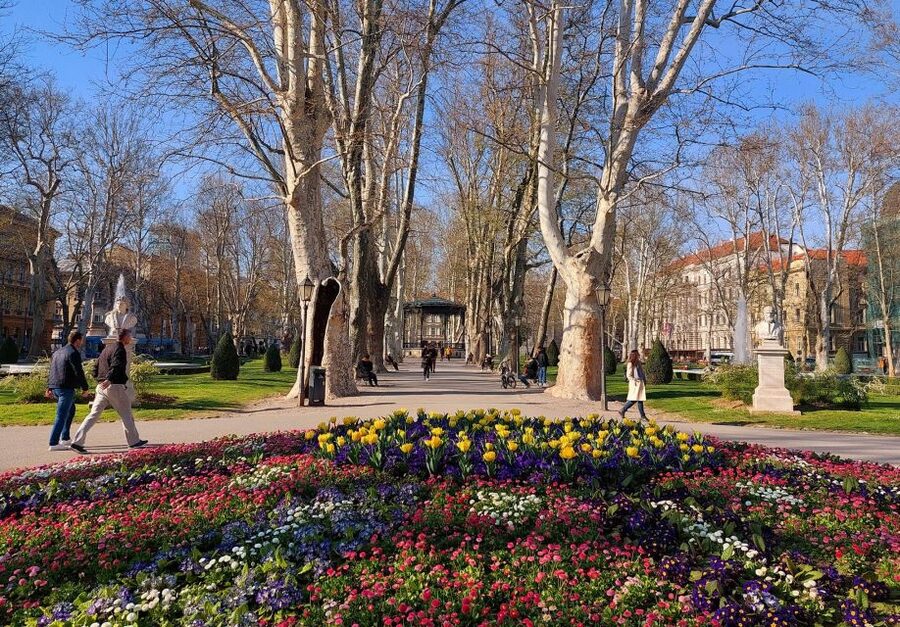
Next comes Dolac, Zagreb’s open-air market, followed by Opatovina. Dolac is one of the best places on the route for seeing the city as a living place rather than a collection of monuments.
The experience takes place in the evening, so the market may not be operating in its full daytime form. Even so, the location matters. A guide can explain why Dolac is central to local daily life and how it relates to the surrounding old quarter.
Opatovina helps carry you from the market area toward Gradec. This portion of the route shifts from broad civic spaces to older streets and smaller urban details. You may find this transition more memorable than another large square because it shows how Zagreb changes block by block.
This is also a good point to ask about food. Domagoj has provided dining and drink suggestions, and the route later finishes near places where Zagreb’s evening social life is easy to find. The tour does not include food or drinks, so recommendations are a useful extra rather than part of the package.
Something different for another day:
- From Zagreb: Plitvice & Rastoke Guided Day Trip with Ticket
★ 4.9 · 2,955 reviews - Zagreb: Rastoke & Plitvice Lakes Guided Tour with Ticket
★ 4.9 · 1,897 reviews - Communism & Croatian Homeland War Tour
★ 5.0 · 1,355 reviews - Best of Zagreb with the WW2 Tunnels
★ 5.0 · 973 reviews
Climbing into Gradec through Kamenita Vrata
Gradec is the second major old settlement behind modern Zagreb. It sits on the slope of Medvednica and developed alongside Kaptol. The route reaches it through Kamenita Vrata, or Stone Gate.
Kamenita Vrata is described as one of the best-preserved monuments of old Zagreb. It takes the form of a rectangular tower and marks a key passage into the historic upper town. This is not just another old doorway. Its position helps you see how the medieval city was entered and protected.
The walk through Gradec is likely to be one of the most atmospheric parts of the tour. You will be moving through the old town rather than along a modern commercial street, with the guide explaining the buildings and stories that shaped the area.
There is a practical point here. Zagreb’s old upper town includes slopes and historic streets, so comfortable shoes are sensible. The tour is listed as wheelchair accessible, and one parent specifically praised the route for working with a stroller. Still, conditions can vary by mobility needs, so discuss the route with the guide if you need a precise assessment.
St Mark’s Square and Zagreb’s political heart
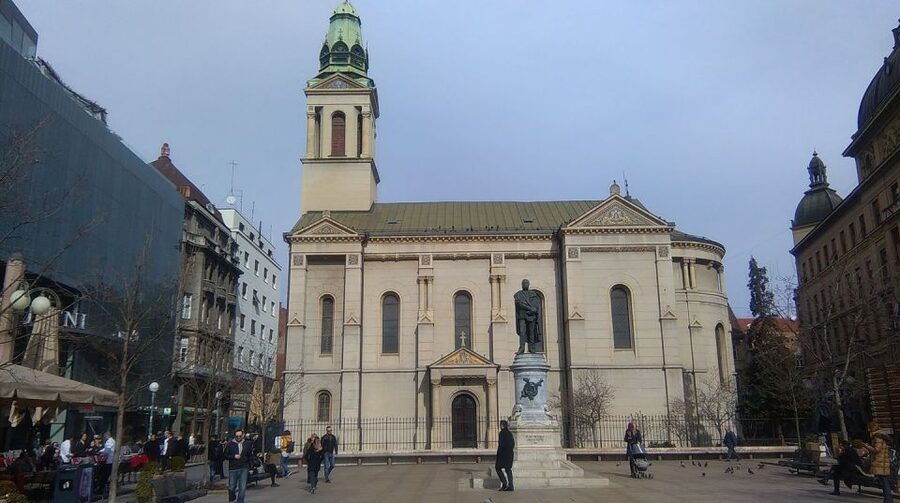
St Mark’s Square brings together some of the city’s most important historic and political buildings. The route includes the City Council, Parliament, the Museum of Broken Relationships, churches, and other historic structures around the square.
The value here is the concentration of subjects. In a few steps, you encounter religion, local government, national politics, museums, and architecture. The guide’s role is especially important because the square can otherwise feel like a quick photo stop.
The Museum of Broken Relationships is one of Zagreb’s best-known cultural attractions, but this walking tour does not promise entry. If you want to visit it properly, note its location and return later with more time. The same advice applies to any church or museum on the route.
St Mark’s Square is also a good place to hear about present-day Croatia. The tour’s strongest praise centers on explanations that connect the past to current affairs. That can make the political buildings more meaningful than they first appear.
Gradec Lookout and the Strossmayer Promenade
After St Mark’s Square, the route continues to the Gradec lookout and then along the Strossmayer Promenade. This section shifts attention from formal history to views over Zagreb.
You will have a chance to pause for photographs, but do not expect a long scenic break. The entire experience lasts ninety minutes, and the route still has several stops ahead. If photography is your main goal, tell the guide early so you can judge where to spend your limited time.
Strossmayer Walk is a pleasant link between the upper town and the next viewpoint. The route lets you experience Zagreb from above before dropping toward the lower city. That change in elevation helps you understand the city’s shape in a way a bus tour cannot.
I also like the fact that the viewpoint is built into the walk rather than treated as a separate detour. You get historical streets, political landmarks, and city views in one compact outing. The tradeoff is that the guide must keep the group moving.
Lotrščak Tower and photos after dark
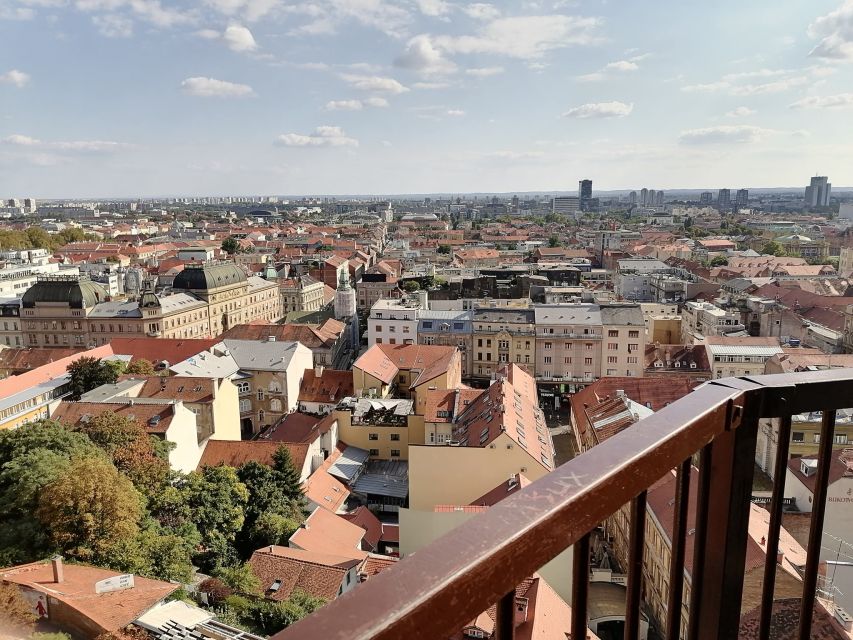
The next destination is the Zagreb viewpoint beneath the ancient Lotrščak Tower. This is promoted as the place for special night photographs of Zagreb.
The nighttime setting is a real strength. Zagreb’s upper town can feel different after dark, and the city lights offer a more atmospheric view than a midday stop. If you carry a phone, clean the lens before the tour and keep the night mode ready. That is simple advice, but it can make the difference between a useful photo and a blur.
The supplied details do not say that you enter Lotrščak Tower. Treat it as an exterior landmark and viewing area unless the guide confirms otherwise. The tour focuses on walking, explanation, and viewpoints, not admission to attractions.
This is probably the point where the evening schedule matters most. You gain mood and city lights, but you may lose some detail in the buildings. If you want to study architecture closely, visit the upper town again during daylight.
The funicular line, Ilica Street, and Flower Square
From the viewpoint, the route follows the line of Zagreb’s funicular toward Ilica Street. The funicular itself is a major part of Zagreb’s identity, and following its path gives you a practical connection between the upper and lower parts of the city.
Ilica is described as the longest street in Zagreb. The route then continues to the Zagreb Octogone and ends at Flower Square, where Zagreb’s young people gather at pubs at night.
This final stretch is useful because it brings you back into the city’s social center. You finish with ideas for the rest of your evening rather than being left beside an isolated monument. Flower Square is a sensible place to continue for food, drinks, or a short walk through the central streets.
The ending also makes this tour a good first-night choice. You finish with a better sense of where central Zagreb sits and where you might return. Domagoj’s food, drink, museum, and transport suggestions can help turn the rest of your stay into a more confident exploration.
What $35 buys you in practical terms
At $35 per person, this is not the cheapest way to take a walk through Zagreb, but the price is reasonable if you value a private-feeling introduction and detailed explanation. You are paying for ninety minutes with a live English-speaking guide, a carefully connected route, and local advice that can save you time later.
The phrase unique approach to travelers is part of the experience description, and the comments give that idea some substance. The guide is repeatedly described as personal, relaxed, friendly, humorous, and honest. One person specifically appreciated a group that did not feel overcrowded, though the tour does not promise a fixed group size.
The overall score is 4.4 from 32 reviews. Most of the supplied comments are highly positive, especially about Domagoj’s command of history and his ability to explain Zagreb and Croatia clearly. The rating is strong, but it is not a reason to expect perfection. The main limitation is simply the short format and the lack of guaranteed interior visits.
Free cancellation up to 24 hours before the start and the reserve-now, pay-later option reduce the financial risk. Check the available evening times before booking, since the exact start time is not fixed in the supplied details.
Who will get the most from this Zagreb walk?
I would recommend this tour to first-time visitors who want their bearings quickly. It covers the central squares, both old settlements, the cathedral, Dolac, Gradec, St Mark’s Square, the funicular area, and Flower Square without asking you to spend half a day on the introduction.
It also suits people who prefer conversation to a large scripted group. Domagoj’s English, humor, and willingness to answer questions are recurring strengths. If you care about politics, architecture, local life, and Croatian history, you will have plenty to ask about.
Families may find the route useful because it is listed as wheelchair accessible, and a parent reported that it worked well with a stroller. Still, the upper town route and its historic surfaces deserve a quick check with the guide if you have specific mobility concerns.
You may want a different format if you prefer long museum visits, food tastings, or a slow photography walk. This tour takes you past several attractions, but it does not include admissions, meals, or drinks. Its job is to connect the city and explain it.
Should you book the Exclusive Old Zagreb Walking Tour?
Book it if you want a compact, personal introduction to Zagreb with strong historical context and practical advice for the rest of your stay. The best reason to choose it is Domagoj’s clear love of the city, paired with explanations that reach from medieval Zagreb to modern Croatia.
Skip it if you already know the old town well or want extended time inside museums and churches. For most first-time visitors, though, the combination of Kaptol, Gradec, St Mark’s Square, night viewpoints, Ilica Street, and Flower Square makes $35 a sensible use of an evening.
FAQ
Where does the tour begin?
The tour begins at King Tomislav Square in Zagreb during the evening.
How long does the walking tour last?
The tour lasts 90 minutes.
What language is the tour offered in?
The live tour guide speaks English, and English is the stated tour language.
How much does the tour cost?
The listed price is $35 per person.
Is the tour wheelchair accessible?
Yes. The activity is listed as wheelchair accessible.
Which main Zagreb areas does the route visit?
The route includes King Tomislav Square, Nikola Zrinjski Square, Ban Jelačić Square, Zagreb Cathedral, Kaptol, Dolac, Opatovina, Gradec, Kamenita Vrata, St Mark’s Square, the Gradec lookout, Strossmayer Walk, Lotrščak Tower, Ilica Street, the Zagreb Octogone, and Flower Square.
Does the tour include the Zagreb Cathedral interior?
The route includes a visit to Zagreb Cathedral, but the provided details do not confirm that an interior visit is included. Ask the guide for the current arrangements.
Does the tour include entry to museums or other attractions?
The provided details do not list admission to the Museum of Broken Relationships, Lotrščak Tower, or other attractions. The experience is described as a walking tour.
Can I cancel and receive a full refund?
Yes. You can cancel up to 24 hours in advance for a full refund. The reserve-now, pay-later option also lets you book without paying immediately.
Just added around Zagreb
- Zagreb: VR 3D Immersive Film Experience – Voucher★ 4.6 · 9 reviews
- Zagreb GRAND Private Walking Tour★ 4.5 · 9 reviews
- Zagreb: Explore with an Art Historian – Private Walking Tour★ 4.9 · 9 reviews
- Croatian cuisine cooking class with Dolac market tour★ 5.0 · 9 reviews
- From Zagreb: Plitvice Lakes & Rastoke Private Tour★ 5.0 · 9 reviews
- Private Guided Tour of Ljubljana and Lake Bled from Zagreb★ 5.0 · 9 reviews
- Picturesque Samobor & Samobor Castle Half-day Tour★ 4.5 · 9 reviews
- Zagreb to Split Private Transfer via Plitvice Lakes National Park★ 5.0 · 9 reviews
Walking Tours, compared.




Walking Tour of Split and Diocletian’s Palace
Read our review →


Krka Waterfalls tour with Trogir Walking tour and Krka panoramic boat cruise
Read our review →
City Walls Early Morning or Sunset Walking Tour
Read our review →Browse the lists this tour appears in