
Reviewed · WALKING TOURS
Best of Zagreb Walking Tour
Zagreb reveals itself one old street at a time. This three-hour walk links the city’s best-known sights with local stories, from the Grič Tunnel and Stone Gate to the daily cannon shot at Lotrščak Tower. I like the small-group format, limited to 10 people, and the chance to ask a local guide where to eat, shop, and continue exploring. I also like that a local product tasting adds a small taste of Zagreb beyond the monuments.
The main consideration is the walking itself. Zagreb’s Upper Town includes uneven streets and some slopes, so this tour is not suitable for people with limited mobility. At $84 per group of up to two, it offers particularly good value for a couple, though the price works differently if more people join the group.
In This Review
- Five details that make this Zagreb walk worthwhile
- A smart first look at Zagreb’s old center
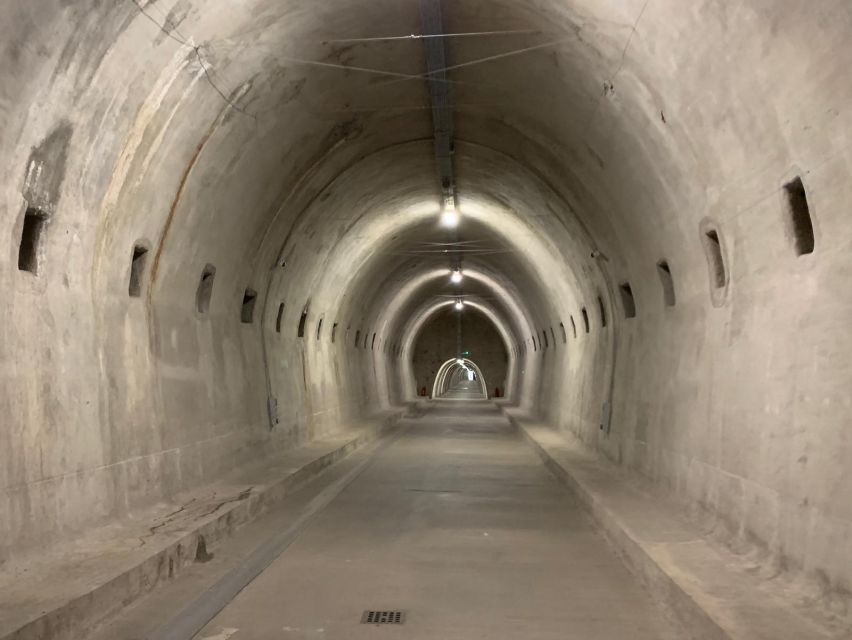
- Through the Grič Tunnel to Zagreb’s old heart
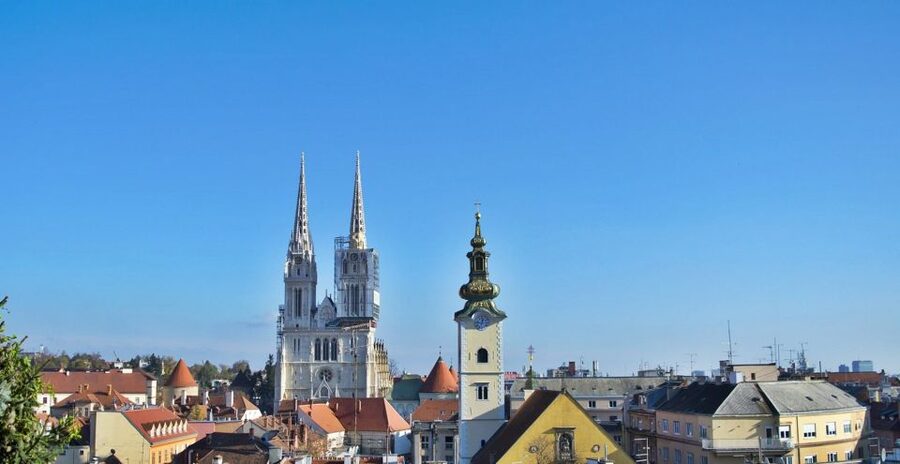
- Ban Jelačić Square and Zagreb Cathedral
- Dolac Market and the tradition of Kumica
- Stone Gate and the story beneath the walls
- St. Mark’s Square and the stories of power
- Lotrščak Tower and the daily cannon
- What the guide adds to the three-hour route
- Is $84 good value for two people?
- Who should book this Zagreb walking tour?
- Should you book the Best of Zagreb Walking Tour?
- FAQ
- Where does the Best of Zagreb Walking Tour start?
- How long does the tour last?
- What language is the tour offered in?
- How many people can join the tour?
- Is food included?
- What should I wear or bring?
- Is the tour suitable for people with limited mobility?
Five details that make this Zagreb walk worthwhile
- The route connects Zagreb’s essential Upper Town sights in a compact three-hour outing.
- The Grič Tunnel leads into the historic center, giving the tour an unusual starting point.
- Dolac Market introduces Kumica, the traditional market woman central to Zagreb’s local life.
- Stone Gate comes with one of the city’s most unusual stories, not just a quick photo stop.
- Lotrščak Tower offers a prime city viewpoint, plus the explanation behind Zagreb’s daily cannon blast.
- Guide Iva receives especially strong praise for clear English, local insight, patience, and help with photographs.
A smart first look at Zagreb’s old center
This tour begins at Ilica 50, a central meeting point, and then heads into Zagreb’s historic core. The route is designed to give you both the headline sights and the stories that make them easier to remember.
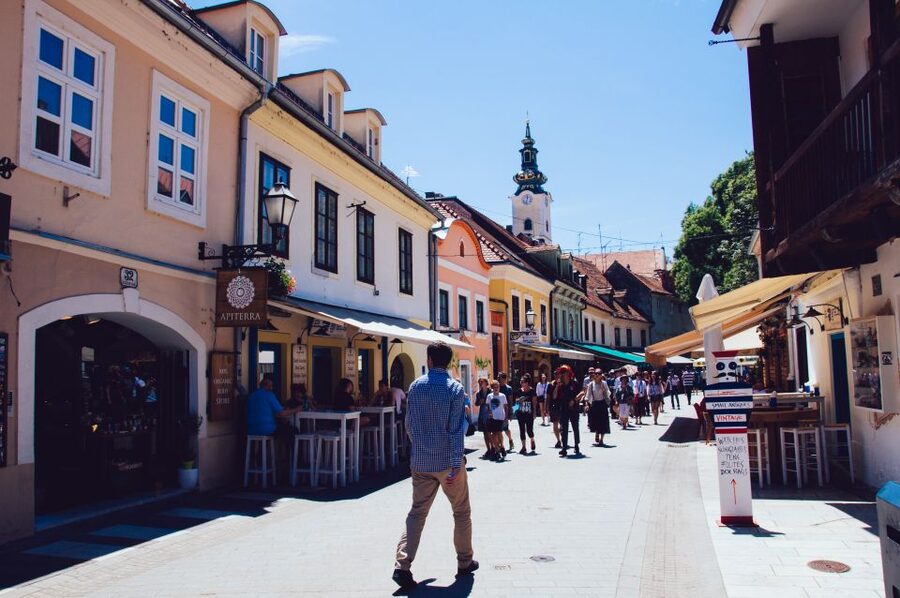
That balance matters in Zagreb. The city center is compact enough to walk, but its past is not simple. Medieval Upper Town, royal power, religious tradition, peasant uprisings, local markets, and modern city life all sit within a short distance of one another. A guide helps you connect those pieces instead of seeing a series of attractive buildings with no context.
The English-language tour lasts about three hours. That is long enough for a proper introduction without taking up your whole day. You can also ask for suggestions about food, shopping, and what to do next, which makes the outing useful beyond the route itself.
The experience has a rating of 4.9 from 22 reviews, with praise focused heavily on the guides. Iva is repeatedly described as friendly, energetic, passionate about Zagreb, and able to explain both history and everyday city life. One particularly practical detail is that she has helped guests take better photographs, a welcome touch when you are trying to fit a whole church roof or city view into one frame.
More Walking Tours in Zagreb
- Zagreb: Small Group Walking Tour City Center and WW2 Tunnels
★ 4.9 · 895 reviews - Zagreb: City and WWII Tunnels Walking Tour
★ 4.9 · 845 reviews - Walking tour of Zagreb
★ 5.0 · 383 reviews
Through the Grič Tunnel to Zagreb’s old heart
The walk starts by passing through the Grič Tunnel. This underground passage provides a change of pace from the usual city tour opening at a square or church. It also brings you toward the Upper Town and the shortest funicular in the world.
The funicular is an important Zagreb curiosity, even if the tour does not focus on riding it. Your guide uses the area to explain how the old and newer parts of the city connect. You get an early sense of Zagreb as a place where small practical features have become part of the city’s identity.
This first section should help you get oriented. You are not simply moving from stop to stop for photographs. The guide introduces the old center as a lived-in part of Zagreb, with traditions that still matter to residents.
Comfortable shoes are essential. The walk is not described as extreme, but the historic center is not built for easy, flat strolling everywhere. If you need step-free access or have difficulty with slopes and uneven surfaces, choose a different way to see the city.
Ban Jelačić Square and Zagreb Cathedral
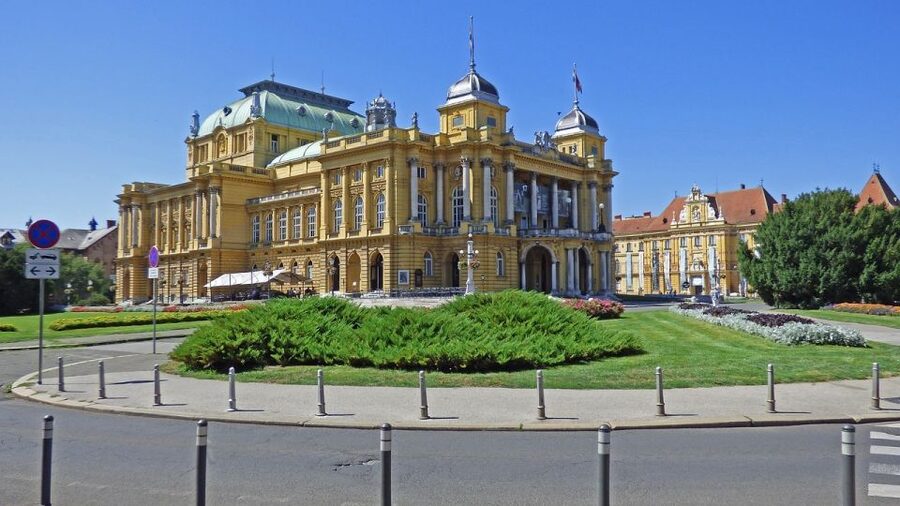
The route pauses at the main square, Ban Jelačić Square, where your guide introduces Zagreb’s story in broad strokes. This is a good place to understand the city’s role as Croatia’s capital and to see how the center functions as a meeting point.
The stop is brief, so do not expect a long lecture in the square. Its value comes from giving you a framework for everything that follows. Once you know the basic shape of Zagreb’s past, the Upper Town’s gates, churches, towers, and government buildings make more sense.
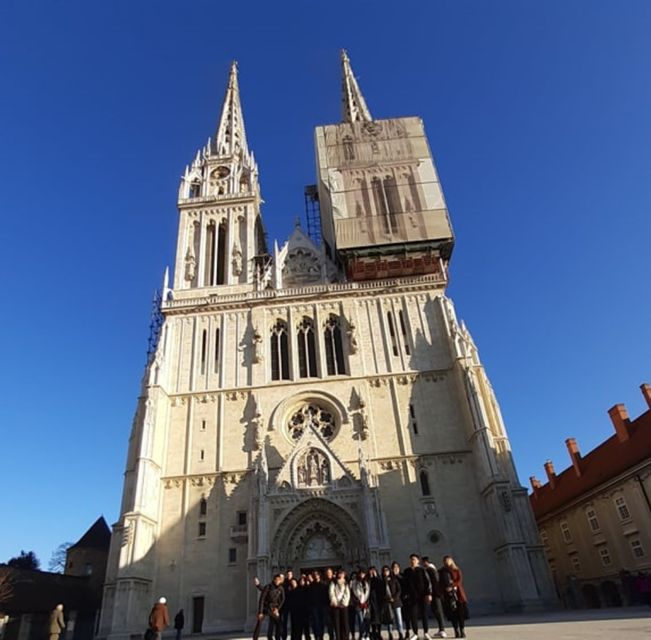
Next comes Zagreb Cathedral, the country’s largest sacred building and one of its most important cultural monuments. The cathedral is a major visual marker in the city, with a scale that sets it apart from the surrounding streets.
Your guide explains why the cathedral matters rather than treating it as a quick exterior photo. You should be ready for a respectful visit to a sacred place. Sleeves and knees need to be covered before entering religious sites, so dress with that in mind, especially in warm weather.
The cathedral stop also shows why a walking guide can be more useful than a self-guided route. Architecture tells only part of the story. The guide can explain the building’s place in Croatian culture and answer questions while the details are in front of you.
Dolac Market and the tradition of Kumica
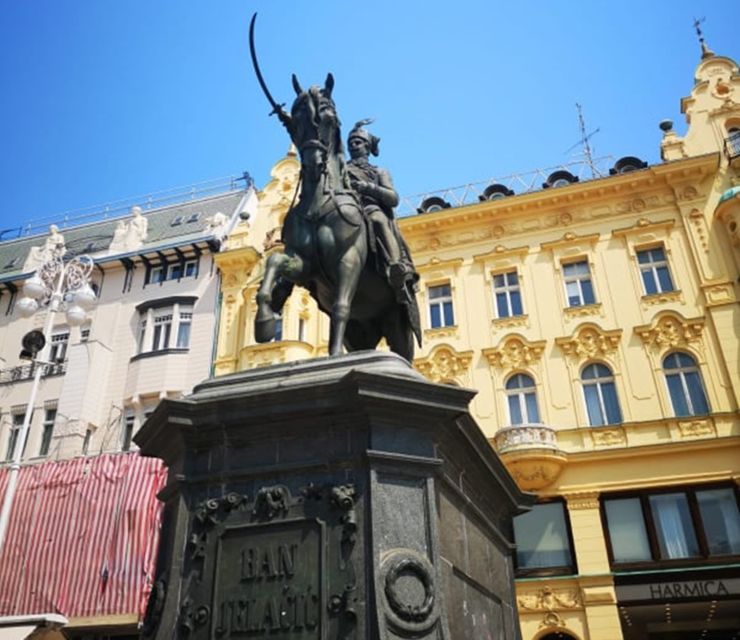
The next major stop is Dolac Market, Zagreb’s oldest open market, built on the site of demolished old walls. This is one of the most rewarding parts of the route because it brings you close to ordinary city life.
Your guide introduces you to the meaning of Kumica, the traditional market woman associated with Dolac. This is not just a word to memorize. It points to the long connection between Zagreb and the people who brought food and local products into the city.
The market visit gives the tour a welcome change of rhythm. After grand religious and civic sights, you see a place tied to shopping, food, work, and neighborhood habits. A local product tasting is included, which adds a small but useful sensory element to the history.
Food and drinks beyond that tasting are not included, so budget separately if you want to buy something at the market. The tour does not promise a full meal or a market feast. Think of the tasting as an introduction, then use your free time later to return if you want more.
I especially like this stop for visitors who want Zagreb to feel like a real city rather than an outdoor museum. The market shows how tradition can survive in daily routines.
Something different for another day:
- From Zagreb: Plitvice & Rastoke Guided Day Trip with Ticket
★ 4.9 · 2,955 reviews - Zagreb: Rastoke & Plitvice Lakes Guided Tour with Ticket
★ 4.9 · 1,897 reviews - Communism & Croatian Homeland War Tour
★ 5.0 · 1,355 reviews - Best of Zagreb with the WW2 Tunnels
★ 5.0 · 973 reviews
Stone Gate and the story beneath the walls
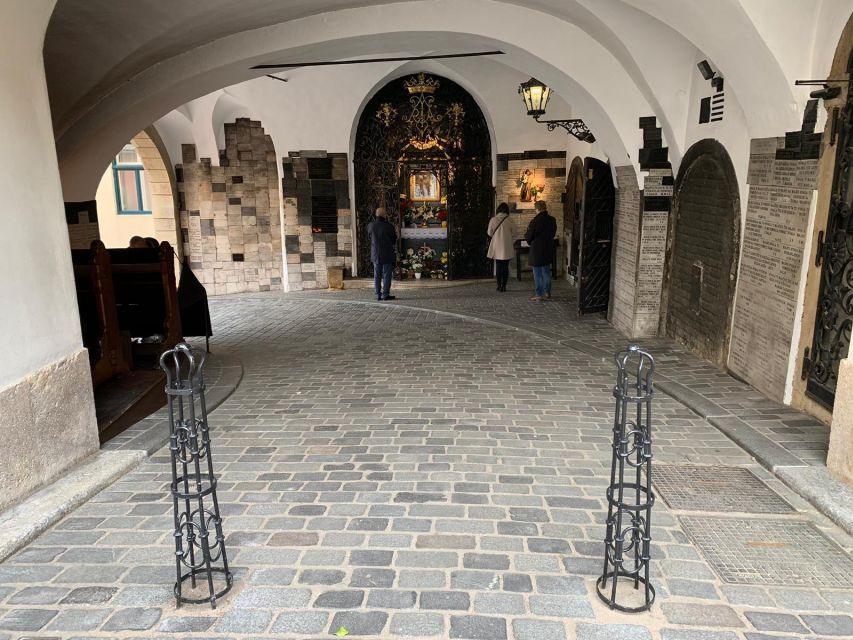
Stone Gate is one of the best-preserved old monuments in Zagreb and one of the city’s most familiar symbols. It is also a place where the tour shifts from straightforward urban history into local story.
The guide explains the unusual tale connected with the gate and the traditions that have grown around it. This is exactly the kind of detail that can be easy to miss if you walk through alone. You may see an old passageway, take a picture, and continue. With a guide, the site becomes a place tied to memory, belief, and the city’s sense of itself.
Stone Gate is also a sacred place, so the clothing rule about covered shoulders and knees may apply here as well. Keep your voice low and follow the guide’s instructions when entering or pausing inside.
This stop is not large, and the route may not linger for a long time. That is part of the benefit of a small group. You can ask for clarification without shouting across a crowd, and the guide can adjust the explanation to the questions you actually have.
St. Mark’s Square and the stories of power
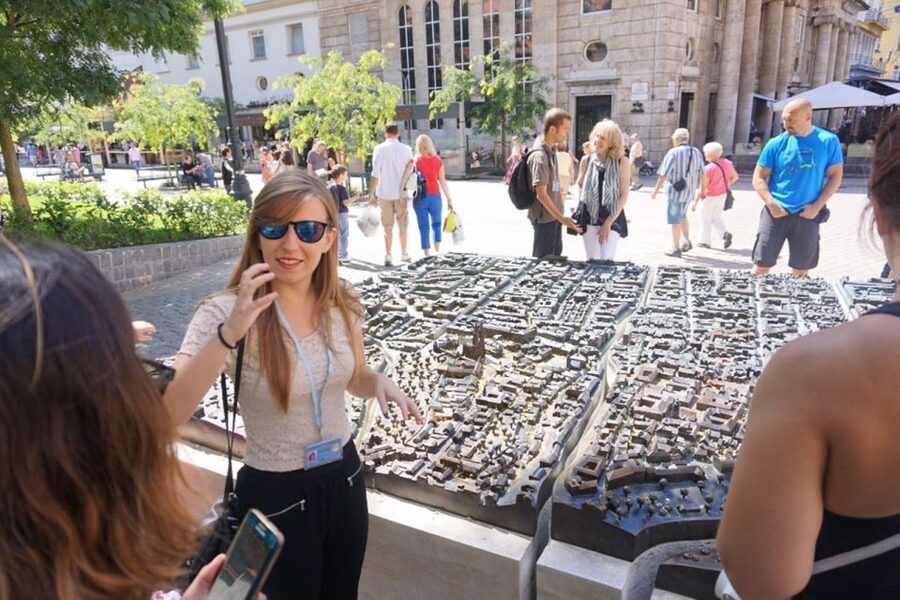
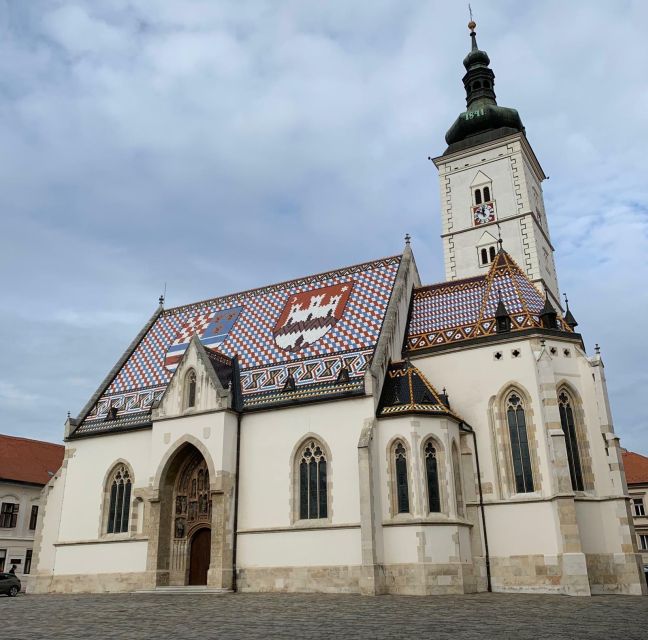
St. Mark’s Square brings you into one of Zagreb’s most recognizable settings. St. Mark’s Church is famous for its colorful tiled roof, but the square carries political and historical weight as well.
Here, the guide covers influential kings, peasant rebellions, and other episodes from Zagreb and Croatia’s past. Those stories give the square more meaning than its attractive church roof alone. You begin to see Upper Town as a place where authority, religion, and public life have met for centuries.
The exact pace depends on the group and the guide. Some people will want more political history, while others may prefer architecture or local customs. The strongest feedback about Iva points to her willingness to answer questions and adapt her explanations, which is useful here because St. Mark’s Square can raise many questions in a short time.
Photography is easy at this stop, but be considerate. Government buildings and sacred places are still working spaces, not just backdrops.
Lotrščak Tower and the daily cannon
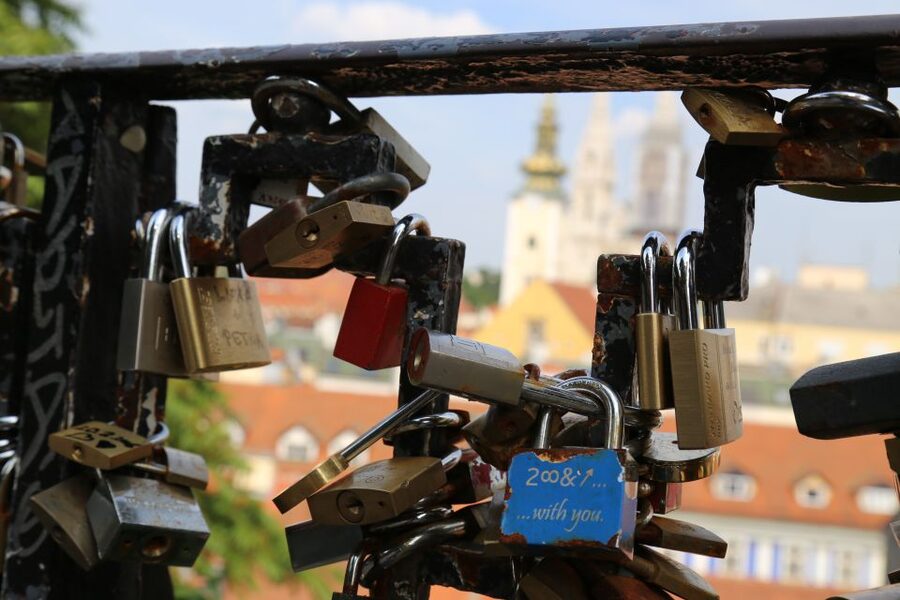
The final major highlight is Lotrščak Tower. It is one of the best places in Zagreb for a city view, and the guide explains why a cannon fires there every day.
The cannon tradition is a memorable ending because it combines a practical historical explanation with a little local drama. Your guide can tell you why the shot continues and what role the tower once played in protecting the city.
The viewpoint is a strong reason to keep your camera ready. You get a chance to photograph Zagreb from above and to see how the Upper Town relates to the lower city. The stop also gives the walking route a clear finish: you have moved through tunnels, squares, markets, gates, churches, and towers, then ended with a broad view.
You should expect stairs or uneven access around historic sites, which is another reason this tour is not recommended for people with mobility impairments. If walking becomes difficult, this is not a route where you can easily avoid every change in level.
What the guide adds to the three-hour route
The guide is the central reason to book this experience. Zagreb’s main sights can certainly be found on a map, but the value comes from how the guide links them.
Iva receives especially warm praise for her English, local knowledge, friendly manner, and attention to small details. One guest noted that she even knew the names of the horses in the city’s sculptures. That kind of detail is not essential for seeing Zagreb, but it shows the level of preparation and affection she brings to the walk.
She is also praised for answering questions, sharing recommendations, and helping with photographs. Another useful point is that she has met people at their hotel in at least one case, but the stated meeting point for this experience is Ilica 50, so confirm arrangements before assuming hotel pickup is included.
The group is limited to 10 participants. That is small enough for conversation and questions, though it does not guarantee a private tour. Some bookings have felt private when only two people attended, but you should reserve based on the advertised small-group format.
Is $84 good value for two people?
The price is $84 per group of up to two people. For a couple, that works out to $42 per person for three hours with a licensed local guide, a tasting, and a focused route through Zagreb’s principal historic sights.
That is a fair price if you value personal explanation and local recommendations. The price becomes less attractive if you are content to walk past the sights independently and read brief descriptions on your phone. Zagreb’s center is compact, so the tour is not selling transport or access to a long list of paid attractions. It is selling structure, interpretation, and time with a guide.
The strongest value comes from the first day of your visit. You can ask what to do next, where to eat, and where to shop while you still have time to use the advice. The route also helps you avoid spending half a day figuring out how the Upper Town fits together.
Cancellation is flexible up to 24 hours before the start for a full refund, and you can reserve now and pay later. Starting times depend on availability, so check the schedule before building the rest of your day around it.
Who should book this Zagreb walking tour?
I recommend it most for first-time visitors who want a clear introduction to Zagreb in one morning or afternoon. It suits couples particularly well because the $84 rate covers up to two people.
It is also a good fit if you enjoy history presented through stories rather than a list of dates. Dolac Market, Kumica, Stone Gate, the cannon tradition, and the peasant rebellions give the walk a local flavor that a simple photo route would miss.
You should think twice if you dislike walking, have limited mobility, or want a tour built around food and drinks. Only a local product tasting is included, and additional food and drinks cost extra.
Dress respectfully for the sacred sites, wear comfortable shoes, and keep some room in your schedule afterward. The guide’s recommendations about food, shopping, and further sightseeing are one of the tour’s practical benefits.
Should you book the Best of Zagreb Walking Tour?
Book it if you want the main Zagreb sights explained by an engaging local guide, with enough time for questions and a few personal recommendations. The route is compact, the small group keeps it conversational, and Lotrščak Tower provides a satisfying viewpoint at the end.
I would choose it especially for a two-person booking, when the $84 group price offers solid value. Skip it if you need an accessible route or prefer to explore at your own pace without a fixed walking schedule.
FAQ
Where does the Best of Zagreb Walking Tour start?
The meeting point is Ilica 50 in Zagreb.
How long does the tour last?
The experience lasts three hours. The sightseeing and walking portion is listed as about two and a half hours within the overall tour time.
What language is the tour offered in?
The tour is offered in English with a live English-speaking guide.
How many people can join the tour?
The group is limited to 10 participants. The price of $84 covers a group of up to two people.
Is food included?
A local product tasting is included. Additional food and drinks are not included.
What should I wear or bring?
Wear comfortable shoes for the walking route. Before entering sacred places, cover your sleeves and knees.
Is the tour suitable for people with limited mobility?
No. The tour is not recommended for people with mobility impairments.
Just added around Zagreb
- Zagreb GRAND Private Walking Tour★ 4.5 · 9 reviews
- Zagreb: VR 3D Immersive Film Experience – Voucher★ 4.6 · 9 reviews
- Zagreb: Explore with an Art Historian – Private Walking Tour★ 4.9 · 9 reviews
- Croatian cuisine cooking class with Dolac market tour★ 5.0 · 9 reviews
- From Zagreb: Plitvice Lakes & Rastoke Private Tour★ 5.0 · 9 reviews
- Private Guided Tour of Ljubljana and Lake Bled from Zagreb★ 5.0 · 9 reviews
- Picturesque Samobor & Samobor Castle Half-day Tour★ 4.5 · 9 reviews
- Zagreb to Split Private Transfer via Plitvice Lakes National Park★ 5.0 · 9 reviews
Walking Tours, compared.




Walking Tour of Split and Diocletian’s Palace
Read our review →


Krka Waterfalls tour with Trogir Walking tour and Krka panoramic boat cruise
Read our review →
City Walls Early Morning or Sunset Walking Tour
Read our review →Browse the lists this tour appears in