
Reviewed · WALKING TOURS
Zadar: City Highlights Walking Tour in Polish
Zadar saves its best light for the end. This two-hour evening walk makes the city’s old center easier to read, moving from the Land Gate through Five Wells Square, the National Square, and the Roman Forum before reaching the Sea Organ. I like the clear route and the timing, since the fading sun gives familiar stone buildings a softer look. I also like that the tour is led in Polish, with guide Łukasz Mrzygłód praised for telling interesting stories.
The main consideration is the minimum group size: six full-price participants are needed for the tour to run. The walk also includes churches, so you should dress suitably if entry is possible. At $23 per person, I see good value here for anyone who wants a short, focused introduction rather than a long daytime history lecture.
In This Review
- Key points to know before booking
- Why an evening walk works so well in Zadar
- Starting at the Land Gate and entering the old city
- Five Wells Square and the practical side of old Zadar
- Passing St. Szymon and reaching the National Square
- The Roman Forum and Church of St. Donatus
- Ending beside the Sea Organ at sunset
- What $23 gets you
- Who will get the most from this Polish tour
- Should you book the Zadar sunset walk?
- FAQ
- How long does the Zadar walking tour last?
- What language is the live tour guide?
- Where does the tour begin?
- Which Zadar sights are included?
- What should I bring?
- Can I cancel the booking?
Key points to know before booking

- Sunset finishes the route at Zadar’s famous Sea Organ, giving the walk a strong visual ending.
- The route begins at the Land Gate, then links several central sights without requiring transport.
- You see more than monuments, including how Zadar changed across roughly 3,000 years.
- Polish-speaking guidance is the central feature, making this especially useful for Polish-speaking visitors.
- Five Wells Square, the Roman Forum, and St. Donatus provide some of the best photo settings in the old city.
- The tour costs $23 and lasts two hours, with free cancellation up to 24 hours before departure.
Why an evening walk works so well in Zadar
Zadar is a city best understood in layers. Roman remains sit beside medieval churches, later gates, open squares, and modern waterfront art. In full daylight, those pieces can feel like separate stops. At dusk, the changing light helps tie them together.
I like the evening schedule because it gives the tour a natural rhythm. You begin near the old city entrance, spend the middle of the walk among historic streets and monuments, and finish beside the Adriatic as the sun goes down. That is more memorable than simply checking off a list of buildings.
The light also matters for photographs. The Land Gate, Five Wells Square, and the Church of St. Donatus all offer strong backgrounds, and the lower sun can bring out details in the old stone. You should still bring a phone or camera only if you are comfortable walking with it, since the tour remains a moving history walk rather than a dedicated photo session.
The tour is conducted in Polish. That is not a minor detail. History is much easier to follow when you can catch names, dates, and small jokes without translating in your head. If you prefer Polish-language guidance, this makes the experience more useful than a larger multilingual group where commentary may feel less direct.
More City Tours in Zadar
- Zadar City Tour 120min Walk
★ 5.0 · 203 reviews - Zadar: Guided City Walking Tour
★ 4.9 · 56 reviews - Zadar City Tour 120min Walk
★ 5.0 · 45 reviews
Starting at the Land Gate and entering the old city
Meet at the entrance to the city, in front of the Land Gate, also called Kopnena vrata. This is a practical starting point because the gate gives you an immediate sense of how Zadar was once protected and approached.
The Land Gate is one of the city’s key historic entrances. From here, your guide sets the scene for the changes Zadar has gone through over about 3,000 years. That broad time span is one of the most useful parts of the walk. You are not just hearing that a building is old. You are getting a framework for how Roman, medieval, and later periods fit into the same compact center.
I would arrive a little early. The meeting point is specific, but old city entrances can be busy and easy to pass if you are watching the street instead of the gate. Comfortable shoes matter here. The tour is on foot for two hours, and historic paving can be less forgiving than a smooth sidewalk.
The Land Gate also gives you one of the first major photo chances. With the gate behind you, you can frame the old entrance and nearby city streets in a single shot. At evening light, the stone may look especially warm.
Five Wells Square and the practical side of old Zadar
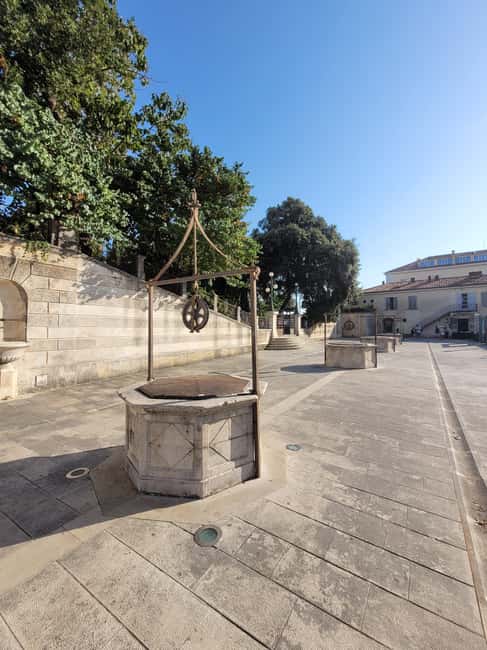
From the Land Gate, the route continues to Five Wells Square. This stop adds a useful everyday angle to the tour. Instead of focusing only on grand churches and Roman ruins, the square shows how water supply and city defense shaped life inside the walls.
The name points to the wells that helped provide water for the city. You will hear how the square fits into Zadar’s past, and it is a good place to connect practical urban needs with the larger story of the city. A fortification is not only a wall or gate. People inside also needed drinking water, storage, and dependable access during difficult periods.
I like this stop because it gives the route a change of pace. The Land Gate feels like an official entrance. Five Wells Square feels more like a working piece of the city. It helps you picture residents using the old center rather than viewing it as a collection of monuments built only for admiration.
The square is also one of the recommended photo locations. You can take pictures with the wells and historic surroundings in the frame, though the exact light will depend on the starting time and season. Since the tour lasts two hours and departure times vary, check the available start time carefully if sunset photography is important to you.
Passing St. Szymon and reaching the National Square
The walk then passes the Church of St. Szymon on the way to the National Square. This section helps connect the major landmarks instead of making them feel like isolated points on a map.
Churches in Zadar carry both religious and civic importance, and this is one reason the clothing advice matters. Potential entry to churches requires appropriate clothing. The information provided does not guarantee entry, so I would treat the interior visit as possible rather than promised. Wear something respectful from the start, especially if your sightseeing plans include other churches later.
The National Square gives the tour another change in character. Open squares often make city history easier to understand because you can see how streets, buildings, and public space relate to one another. Your guide can explain the location as part of Zadar’s development while you continue toward the Roman Forum.
This portion of the walk is also where the guide’s storytelling matters most. The route covers many centuries in a short time, and a simple list of dates would be hard to remember. The strongest praise for Łukasz Mrzygłód concerns his interesting stories. That suggests the tour’s value rests not only on seeing the sights, but on how he connects them.
More Walking Tours in Zadar
- Zadar: Guided Walking Tour
★ 4.8 · 445 reviews - Zadar Walking Tour sponsored by Gligora Cheese and deli.
★ 5.0 · 119 reviews - Zadar: Virtual Reality Guided History Walking Tour
★ 4.4 · 86 reviews - Zadar: Private Walking Tour Through 3,000 Years of History
★ 4.7 · 71 reviews
The Roman Forum and Church of St. Donatus
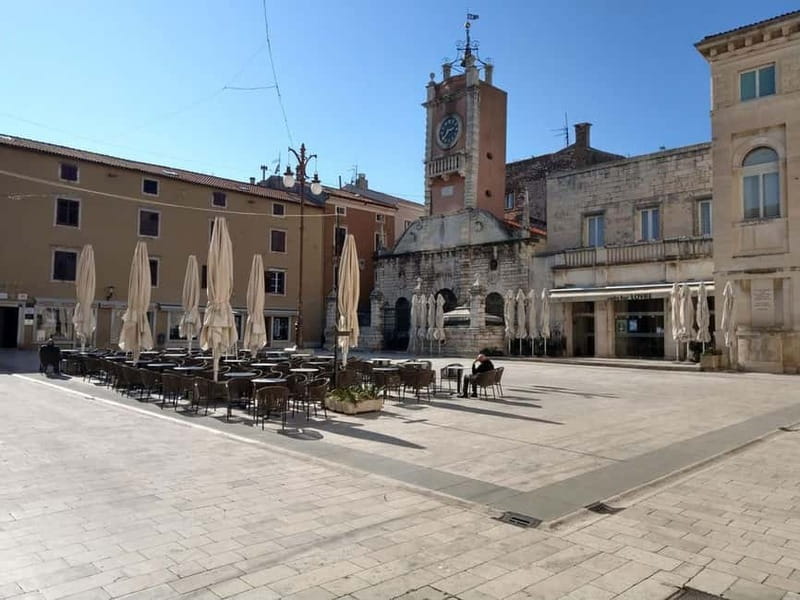
The Roman Forum is the historical centerpiece of the walk. It gives you a direct look at Zadar’s ancient foundation and helps explain why the city has such a dense mixture of old structures.
You will see the forum in the setting of the modern city, rather than in a remote archaeological park. That makes the site especially useful for understanding continuity. Roman public space remains part of the city people walk through today, while later buildings rise around it.
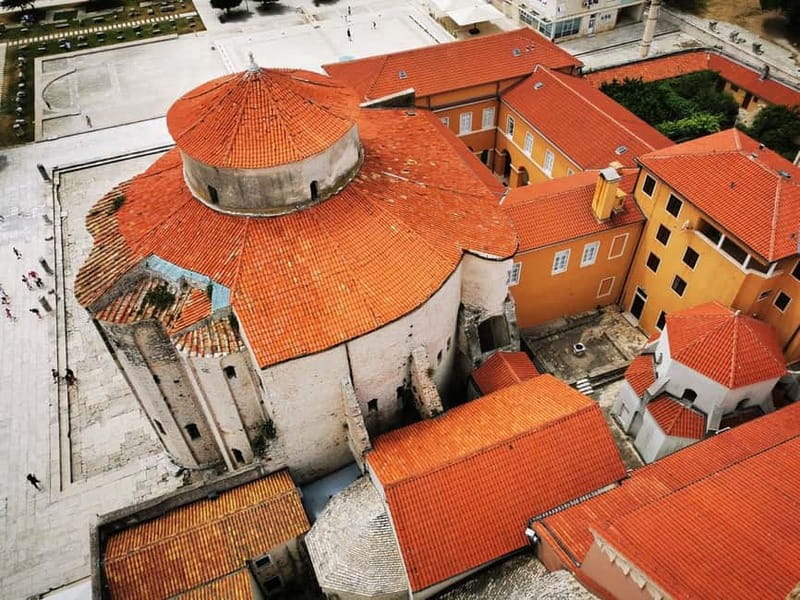
Nearby, the Church of St. Donatus provides one of Zadar’s most recognizable views. Its round form is easy to identify and makes a striking contrast with the Roman remains around it. I would listen closely here, since this is the point where the tour’s long historical story becomes most visible: ancient civic life, later religious architecture, and modern urban movement all share one area.
The Roman Forum and St. Donatus are also strong stops for photographs. The tour specifically highlights the chance to capture St. Donatus, Five Wells Square, and the Land Gate in your pictures. You may not have unlimited time at each place, so I would take a few quick photos, then put the phone away while the guide explains the setting.
A possible drawback is that a two-hour walk cannot give every monument a full treatment. If you want detailed archaeology, church interiors, or a long study of Roman Zadar, you will need more time on your own. I see this tour as a well-paced overview, not a specialist seminar.
Ending beside the Sea Organ at sunset
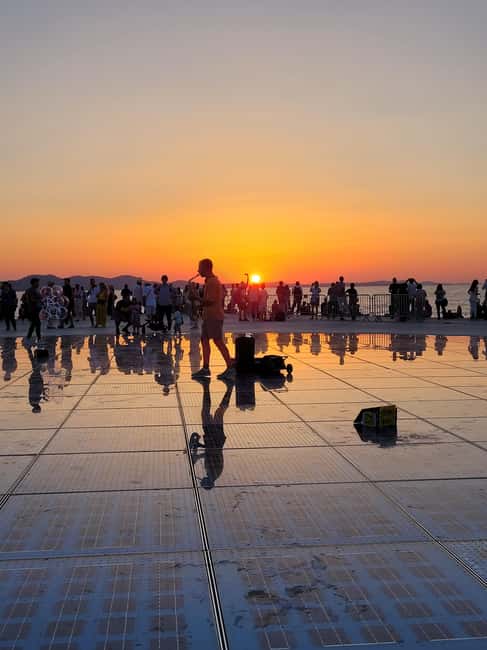
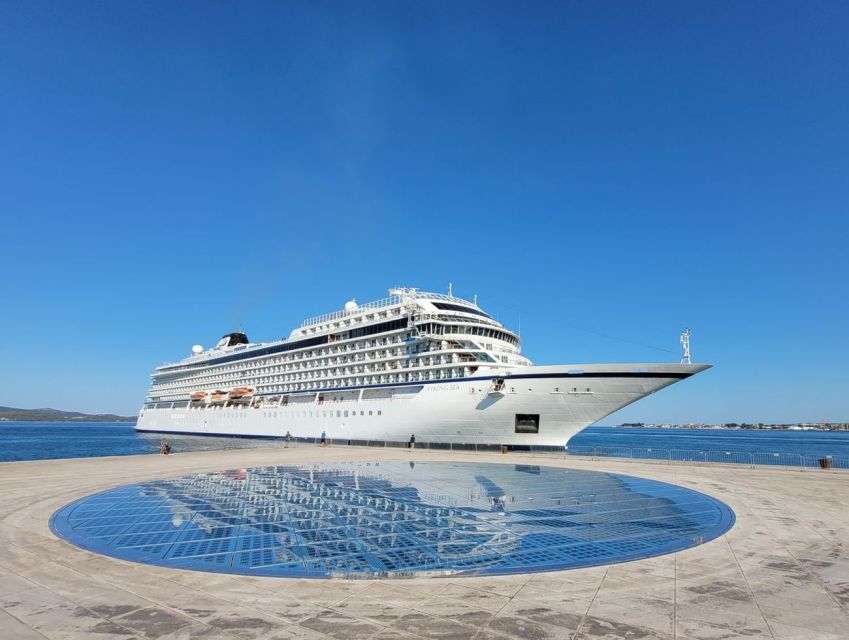
The route finishes at the Sea Organ, the most atmospheric stop of the evening. This waterfront installation uses the movement of the sea to create sound, making it different from the stone monuments visited earlier.
The Sea Organ is a smart final stop because it links old Zadar to the present day. You begin with a historic city gate and ancient remains, then end with a modern work shaped by the Adriatic. The tour’s subject is not only the past. It also shows how Zadar continues to use its waterfront and public spaces.
The sunset is the main reward here. As the light fades, the waterfront becomes a place to pause rather than hurry to the next sight. You can listen to the organ, watch the sky change, and take in the city from the edge of the sea. The experience description calls the sunset one of the world’s most beautiful, which is promotional language, but the timing clearly gives you a good chance to see Zadar at its most scenic.
Bring water and a hat, especially if the walk begins while the sun is still high. The tour is in the evening, but heat can linger in Dalmatia, and two hours on foot is enough to make hydration useful. Comfortable shoes remain important right through the final stop.
There is a small point to clarify about the ending. The route description places the final moment at the Sea Organ, while the activity information says the walk ends back at the meeting point. I would confirm the exact return arrangement when booking, particularly if you have a dinner reservation or evening transport after the tour.
What $23 gets you
At $23 per person, you are paying for a two-hour guided introduction in Polish, not transportation or admission tickets. The route is entirely a walking experience, and the listed inclusions are the tour and guide.
I consider that fair value if you want orientation, context, and a carefully timed sunset finish. A guide can show you how the Land Gate, Five Wells Square, St. Szymon, National Square, Roman Forum, St. Donatus, and Sea Organ fit together. That saves you from spending your first evening piecing the old center together from separate notes.
The value is also stronger for Polish-speaking visitors. A short tour in a language you understand well can be more useful than a cheaper walk where you miss details. The high rating of 4.9 from 34 reviews supports confidence in the overall experience, and the specific praise for the guide’s stories is more helpful than a rating alone.
Still, I would not book it if you want a private tour, a large number of interior visits, or extensive time at every stop. The tour needs at least six full-price participants, so it is not designed as a guaranteed one-person experience. It is best viewed as a small-group option when the minimum is met, though the exact group size is not provided.
You can reserve now and pay later, which helps if your Zadar plans are still shifting. You can also cancel up to 24 hours in advance for a full refund. Those terms reduce the risk of booking around uncertain evening plans.
Who will get the most from this Polish tour
I would recommend this walk to Polish-speaking visitors who have limited time in Zadar and want the major sights explained in a clear order. It suits couples, families with older children, and anyone who prefers a calm evening introduction over a long daytime program.
It is also a good first activity in the city. After the walk, you will know where the Roman Forum, Five Wells Square, St. Donatus, Land Gate, and Sea Organ are located. That makes it easier to return later for a slower look.
I would be more cautious if you have mobility concerns, since the experience is a two-hour walking tour and the surface conditions are not specified. The provider specifically recommends comfortable shoes, which is a useful clue about the demands of the route.
The tour is less suitable for visitors who do not understand Polish. The live guide language is Polish, and no other language is listed. You should also check the date and departure time carefully, since the available starting times vary and the sunset effect depends on the season.
Should you book the Zadar sunset walk?
I would book this tour if you want Polish-language stories, major old-town sights, and a sunset at the Sea Organ in one compact outing. The route covers the essential historic center without asking you to organize several separate stops.
I would skip it only if you need guaranteed departure with fewer than six full-price participants, extensive church access, or a specialist-level history tour. For most Polish-speaking visitors, $23 is a sensible price for two hours of context and a well-chosen evening route. Bring water, wear comfortable and respectful clothing, and confirm the final return point if your evening schedule is tight.
FAQ
How long does the Zadar walking tour last?
The tour lasts two hours. Starting times vary, so check availability for the date you want.
What language is the live tour guide?
The live tour guide speaks Polish. Łukasz Mrzygłód is the named experience provider.
Where does the tour begin?
The tour begins at the entrance to the city, in front of the Land Gate, also called Kopnena vrata.
Which Zadar sights are included?
The route includes the Land Gate, Five Wells Square, the Church of St. Szymon, National Square, the Roman Forum, the Church of St. Donatus, and the Sea Organ.
What should I bring?
Bring comfortable shoes, a hat, and water. Appropriate clothing is needed if the tour enters churches.
Can I cancel the booking?
You can cancel up to 24 hours in advance for a full refund. You can also reserve now and pay later. A minimum of six full-price participants is required for the tour to go ahead.
More City Tours
- Zadar City Tour 90min Walk
★ 5.0 · 32 reviews - Zadar: City and Wine Tour in Zadar with Eco Tuk Tuk
★ 5.0 · 17 reviews - Rent a Bike in Zadar – Helmet, Lock and city map included
★ 5.0 · 17 reviews - Dubrovnik: City Walls Early Morning or Sunset Walking Tour
★ 4.8 · 1,523 reviews
Just added around Zadar
- Zadar Guided Electric Bike Tour★ 5.0 · 9 reviews
- Zadar: Private Half Day Speedboat Tour★ 4.4 · 9 reviews
- Zadar: Sunset Panorama Tour with Eco Tuk Tuk★ 5.0 · 9 reviews
- PRIVATE Romantic Sunset Boat Tour Zadar with Local Wine 1,5h★ 4.5 · 9 reviews
- National Park Krka Private Return Day Transfer by Minivan★ 4.5 · 9 reviews
- Krka Waterfalls private transfer with Pickup & Drop Off★ 5.0 · 9 reviews
- Private 3 Hour Sightseeing Tour of Major Attractions in Zadar★ 5.0 · 10 reviews
- Private Sunset Tour across Zadar shoreline★ 5.0 · 10 reviews
Walking Tours, compared.




Walking Tour of Split and Diocletian’s Palace
Read our review →


Krka Waterfalls tour with Trogir Walking tour and Krka panoramic boat cruise
Read our review →
City Walls Early Morning or Sunset Walking Tour
Read our review →Browse the lists this tour appears in