
Reviewed · WALKING TOURS
Walking Tour Split
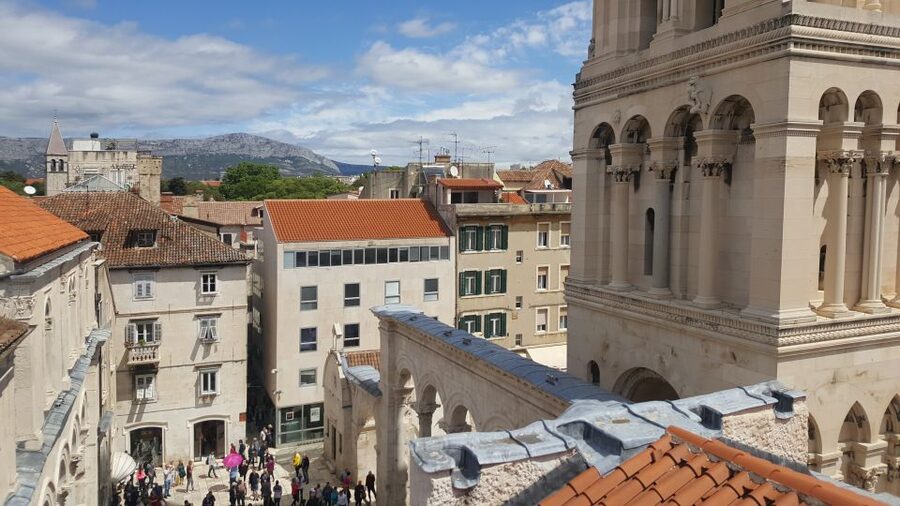
Split reveals itself on foot. This 90-minute walking tour takes you through the Old Town and the UNESCO-protected Diocletian’s Palace, with a licensed local guide explaining both Roman-era landmarks and modern Split. I especially like the compact route and the chance to ask for ideas for the rest of your day. The main drawback is that entrance tickets are not included, so this is primarily an outdoor orientation tour.
I also like the personal feel reported by past participants, especially with guides such as Anna and Victoria G. Anna led a private-feeling off-season tour for only two people, while Victoria was praised for linking ancient history with her affection for present-day Split. At $28 per person, the tour offers a useful first look at the city, though independent visitors who only want to see the main squares may find the price less compelling.
In This Review
- Key points about this Split walking tour
- Why Split is best understood on foot
- Entering Diocletian’s Palace and the Roman core
- Peristyle, Vestibul, and Jupiter’s Temple
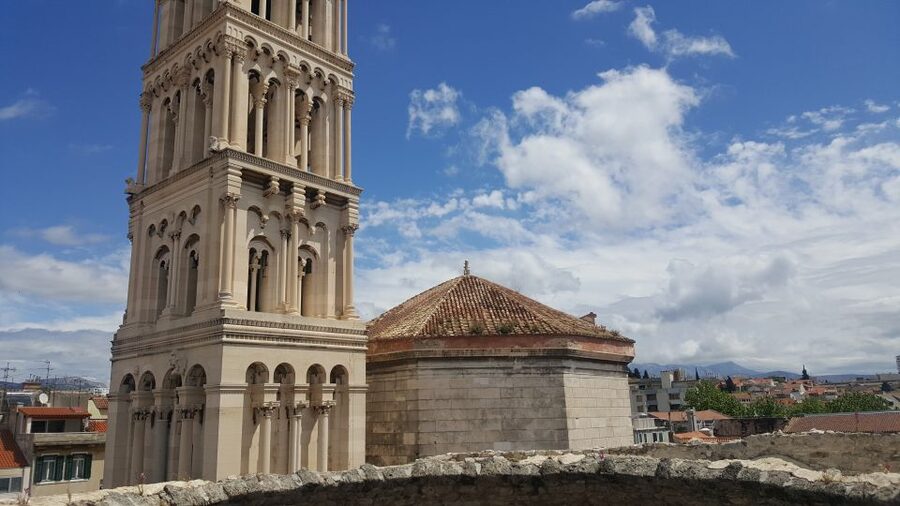
- Cathedral of St. Duje and the Golden Gate
- Pjaca and Fruit Square, where the palace becomes a city
- The guides make the short format work
- What $28 buys you
- Timing, meeting point, and practical planning
- Who will get the most from this walk
- Should you book the Walking Tour Split?
- FAQ
- How long does the Walking Tour Split last?
- Where does the tour start?
- Where does the tour end?
- Which languages are available?
- Are entrance tickets included?
- Can I cancel the booking for a refund?
Key points about this Split walking tour
- Diocletian’s Palace forms the heart of the route: You walk through the ancient palace complex rather than viewing it only from outside.
- The itinerary covers Split’s main landmarks: Expect the Cathedral of St. Duje, Peristyle, Jupiter’s Temple, Vestibul, Golden Gate, Grgur Ninski statue, Pjaca, and Fruit Square.
- Local guides add the human side: Anna and Victoria G were singled out for clear explanations, warmth, and enthusiasm for Split.
- The 1.5-hour length is easy to fit into a busy day: It works well before a ferry, beach visit, museum stop, or evening meal.
- The price includes guidance and insurance, not admission tickets: You pay for the walk and interpretation, while any indoor visits cost extra.
- English and Spanish are available: Check the selected departure time and language when booking.
Why Split is best understood on foot
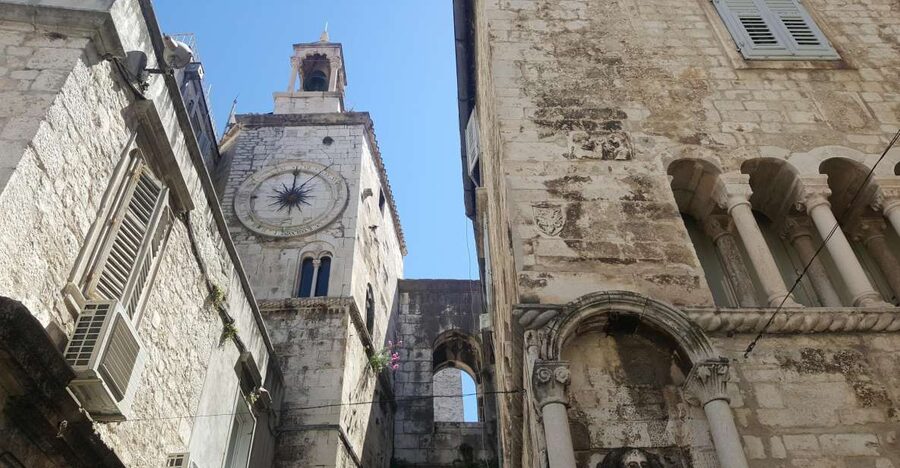
Split is not a city you should rush through from one landmark to the next. Its oldest center is built around Diocletian’s Palace, but the palace does not feel like a single sealed monument. Streets, homes, shops, cafés, churches, and public squares occupy the old Roman structure.
That makes a walking tour useful. You are not simply looking at a cathedral or a gate. You are learning how the old palace became the setting for everyday city life. A guide can point out how ancient and contemporary Split share the same small streets, walls, and gathering places.
The route begins in front of the National Theatre at Trg Gaje Bulata 1. This is a practical meeting point near the city center, and the tour ends at the same place. Since the walk does not require transport, you avoid the usual trouble of finding a bus, parking space, or taxi for a short central route.
I would choose this tour early in a Split visit. The guide can help you get your bearings, explain the city’s central sights, and suggest additional activities for later. That final point matters because the tour lasts only 1.5 hours. It gives you a framework, not a full day of sightseeing.
More Walking Tours in Split
- Split: Old Town and Diocletian Palace Walking Tour
★ 4.9 · 4,727 reviews - Walking Tour of Split and Diocletian’s Palace
★ 5.0 · 2,588 reviews - Krka Waterfalls tour with Trogir Walking tour and Krka panoramic boat cruise
★ 5.0 · 1,659 reviews
Entering Diocletian’s Palace and the Roman core
The palace is the main reason to book this experience. It is the historic center of Split, and the tour gives you a guided walk through its streets rather than a quick photo stop at the edge.
You can expect the guide to explain the palace’s Roman origins and its place in the story of old and contemporary Split. One participant described Victoria G’s tour as covering the Roman period while also showing how much she cares about her city. That combination is important. Dates and names help, but they make more sense when tied to the streets you are standing in.
The palace also gives the tour its strongest sense of place. You may pass from a large public area into a narrow passage, then emerge into a square or courtyard. The appeal is not only the age of the stones. It is the way the ancient setting remains part of daily city life.
Do not expect a quiet archaeological park. The palace is part of a living town. That can mean activity around the central sights, but it also means you get a better sense of Split as a real city rather than a preserved display.
Peristyle, Vestibul, and Jupiter’s Temple
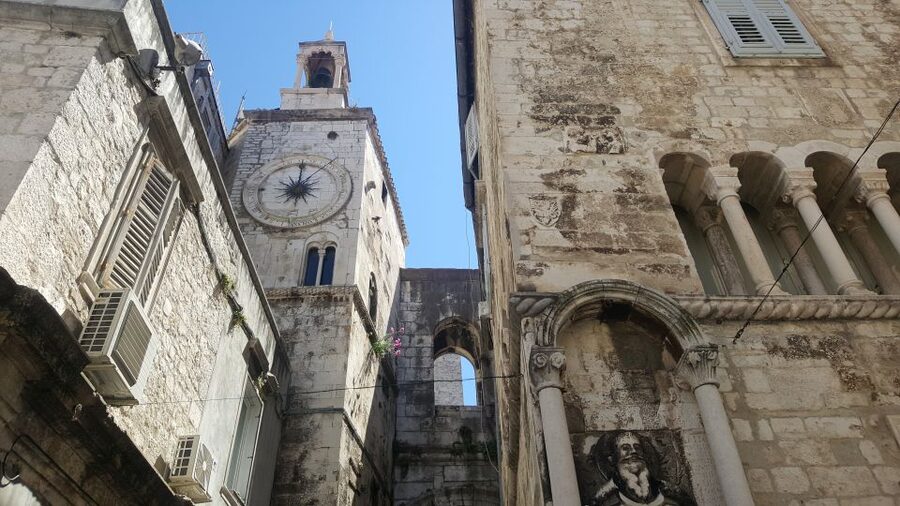
Peristyle is one of the key stops on the route. This central palace space helps you understand the scale and purpose of the complex. Your guide can explain the setting and its role in the Roman design, giving the surrounding columns and stonework more meaning than they would have on their own.
The Vestibul is another important palace feature. It connects the grander public areas with the routes leading deeper into the complex. On a short tour, places like this are valuable because they show how the palace was organized. You are seeing not just a list of monuments, but the relationship between entrances, courtyards, temples, and passageways.
Jupiter’s Temple adds another layer to the story. It lets the guide discuss the religious side of the Roman palace and helps separate the different functions within the complex. These stops are especially useful if you do not already know much about Roman architecture.
The tour description does not promise admission to every interior. That is a key distinction. You are paying for a guided walk around Split city center, while tickets and entrance fees are separate. If you want to spend time inside a particular sight, ask the guide about it during or after the tour and budget for any extra charge.
Cathedral of St. Duje and the Golden Gate
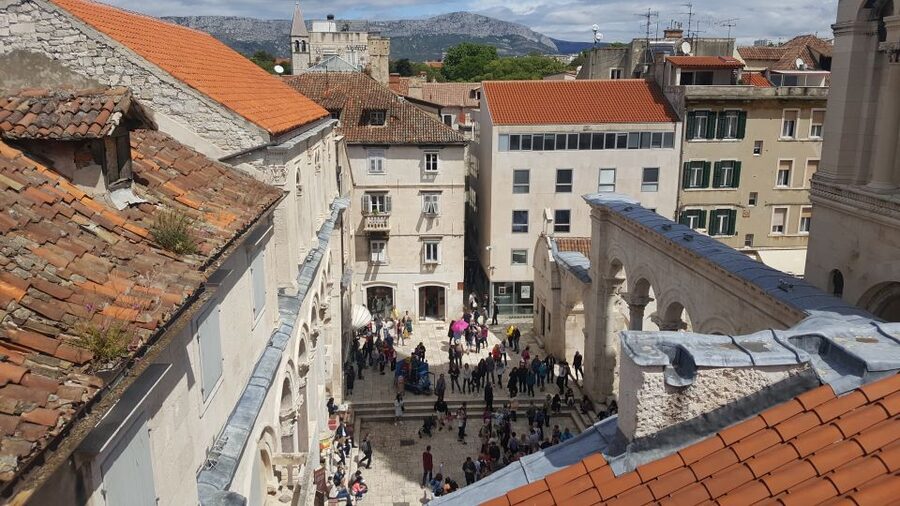
The Cathedral of St. Duje is among the most important sights on the route. Its presence within the palace area shows how Split’s religious and civic life developed inside the older Roman setting.
A guide is helpful here because the cathedral is not an isolated attraction. It belongs to a larger story about how the palace changed over time. The tour focuses on both heritage and culture, so you should expect an explanation that connects the building to Split rather than a quick identification and photo.
The Golden Gate provides another clear landmark. As one of the major entrances to the palace, it helps you picture how people once entered and moved through the complex. It is also a useful reference point for exploring on your own after the tour.
Nearby, the Grgur Ninski statue adds a more local and contemporary touch to the route. The statue is one of the city’s recognizable sights, and it gives the guide a chance to move beyond ancient Rome. This is one reason the tour works better than a simple palace checklist. You see how different periods sit side by side in central Split.
Something different for another day:
- Split: Krka Waterfalls Trip with Boat Cruise and Swimming
★ 4.8 · 10,519 reviews - From Split: Krka Waterfalls, Food & Wine Tasting Tour
★ 5.0 · 9,326 reviews - Blue cave, Mamma Mia and Hvar, 5 islands speedboat tour
★ 5.0 · 7,150 reviews - From Split: Krka Waterfalls, Food & Wine Tasting Tour
★ 4.9 · 6,598 reviews
Pjaca and Fruit Square, where the palace becomes a city
Pjaca and Fruit Square show the social side of the Old Town. These spaces help you shift from palace history to the life of Split’s public center.
The names alone can blur together if you explore without context. A local guide can explain why these squares matter and how they fit into the city’s layout. You also get a better idea of where to return for a meal, a drink, more sightseeing, or simply another walk through the old streets.
I like that the route includes these squares instead of staying only with formal monuments. Split’s character comes from the mix of grand ruins and ordinary urban life. A tour that includes both gives you a more useful first impression.
The guide can also point you toward additional activities around the city center. This is worth using. Ask about what to see next, especially if you have a free afternoon after the tour. The experience is designed to finish back at the National Theatre, so you can continue exploring without arranging a transfer.
The guides make the short format work
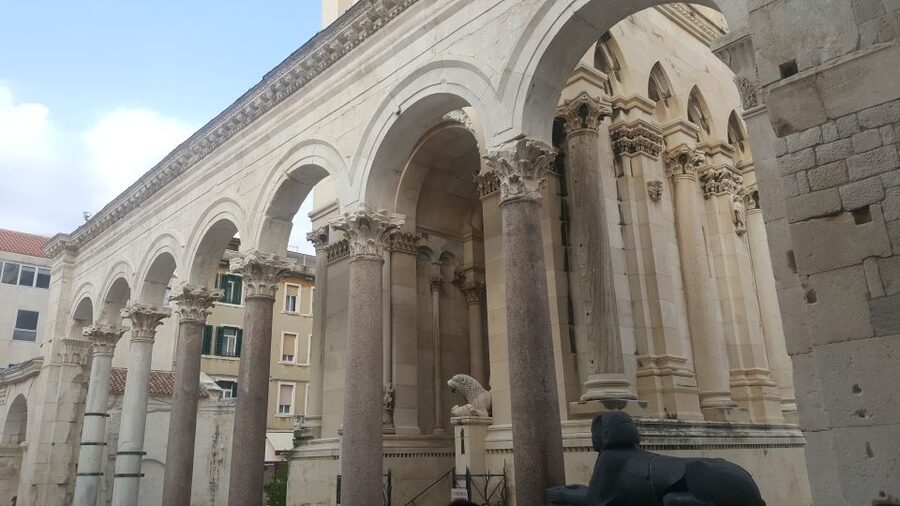
A 1.5-hour tour leaves little room for wandering off course. The guide therefore matters a great deal. The strongest comments focus on personal attention, clear explanations, and enthusiasm for Split.
Anna received especially warm praise for being professional, engaging, and willing to operate a December tour for only two people. That detail suggests a helpful attitude during the off-season. It also shows why checking available dates can be worthwhile outside summer. You might find a smaller group and have more opportunity to ask questions.
Victoria G was praised for presenting both Roman history and the story of modern Split. Her love of travel and her home city came through in the experience. That is the kind of guide I want on a city walk: someone who can explain the past without making the present disappear.
The available languages are English and Spanish. Make sure you select the language that suits you when checking times. The tour is led by a live guide, not an audio recording, so questions are part of the value.
One Spanish-language assessment called the tour interesting and the guide kind and attentive. That matches the wider picture: the experience seems strongest when you want conversation and explanation, rather than simply being escorted from one sight to another.
What $28 buys you
At $28 per person, the tour sits in the affordable range for a guided city introduction. The fee includes a licensed tour guide, the walking tour around Split city center, and insurance. You are paying for structure, local explanation, and the chance to ask questions while the sights are in front of you.
The value depends on how you travel. If you are visiting Split for the first time, the tour can save you from treating the palace as a confusing collection of stones and alleys. It gives you a short orientation and helps you decide where to spend more time later.
The price is less attractive if you prefer to read signs, follow a map, and move at your own pace. You will also need to pay separately for any sight that requires admission. Since tickets are not included, check the extra costs before deciding to enter a cathedral or other paid attraction.
The tour’s 4.7 rating from 61 reviews supports the idea that it delivers a solid introduction. Still, ratings cannot tell you if the pace or style suits you. The best match is someone who wants history explained in person and values a local perspective.
Timing, meeting point, and practical planning
The meeting point is in front of the National Theatre, Trg Gaje Bulata 1, 21000 Split. The activity returns to this same point, which makes planning easy. You do not need to arrange a second meeting location or figure out where to collect belongings at the end.
The advertised duration is 1.5 hours. That is long enough to cover the main central sights without taking over your day. I would leave some time afterward because you may want to revisit Peristyle, pause in one of the squares, or follow the guide’s suggestions for another activity.
Check the available starting times before booking. The specific departure time is not fixed in the information provided, and your choice may affect how the walk fits around meals, ferries, museum visits, or other plans.
Comfortable walking shoes are sensible for any Old Town route, though no special equipment is listed. The tour takes place in the city center and ends where it starts. If you need information about access or personal requirements, ask the provider before reserving, since those details are not supplied here.
The cancellation policy is friendly for uncertain plans. You can cancel up to 24 hours in advance for a full refund, and the reserve-now, pay-later option lets you hold a place without paying immediately.
Who will get the most from this walk
This tour suits first-time visitors who want a clear introduction to Split before exploring independently. It is also a good choice if you have only part of a day and want to see the main sights without committing to a longer excursion.
History fans will appreciate the Roman focus, particularly the walk through Diocletian’s Palace, Peristyle, Jupiter’s Temple, Vestibul, and Golden Gate. You also get the Cathedral of St. Duje and the city’s central squares, so the route does not stay in one historical period.
Families and mixed-age groups may like the short length. Ninety minutes is easier to manage than a half-day tour, and the guide’s live explanations can keep the experience more engaging than reading a guidebook while walking.
Spanish-speaking visitors have a clear option, as do English speakers. Solo visitors and couples may benefit from the chance to ask questions directly, especially if the group is small. Anna’s off-season experience shows that a smaller booking can still go ahead, though you should not assume every departure will be private.
You may want to skip it if you have already studied Split closely, know the palace layout, and prefer complete independence. You should also think twice if your priority is extensive interior sightseeing, since entrance fees are not part of the tour.
Should you book the Walking Tour Split?
Book it if you want a friendly, efficient introduction to Split with a guide who can explain the city’s Roman foundations and later life. The route covers the essential center, the meeting point is convenient, and the 1.5-hour format leaves plenty of time for your own plans.
The biggest reason to choose it is the guide-led context. Anna and Victoria G were praised for warmth, enthusiasm, and strong explanations, which is exactly what can turn a short walk through Diocletian’s Palace into a useful start to your visit.
Skip it if you only want free access to outdoor sights or plan to spend most of your time inside paid attractions. At $28, the tour is best value when you want local guidance, a sensible route, and help deciding what to do next in Split.
FAQ
How long does the Walking Tour Split last?
The tour lasts 1.5 hours.
Where does the tour start?
It starts in front of the National Theatre at Trg Gaje Bulata 1, 21000, Split, Croatia.
Where does the tour end?
The activity ends back at the National Theatre meeting point.
Which languages are available?
The live tour guide is available in English and Spanish.
Are entrance tickets included?
No. Tickets and entrance fees for sights are not included in the tour price.
Can I cancel the booking for a refund?
Yes. You can cancel up to 24 hours in advance for a full refund. You can also reserve now and pay later.
Just added around Split
- Private VIP Blue Lagoon and 3 Islands Tour★ 4.5 · 9 reviews
- Split highlights – Evening walking tour★ 5.0 · 9 reviews
- Private boat transfer Split – Bol★ 5.0 · 9 reviews
- Private Photography Activity in Split★ 5.0 · 9 reviews
- From Split: Trogir & Blue Lagoon Boat Tour with Snorkeling★ 4.6 · 9 reviews
- Bike, Beer & Poljud Stadium Tour★ 5.0 · 9 reviews
- From Hvar: Blue cave group speedboat tour full day★ 5.0 · 9 reviews
- Split Walking Tour: History, Legends & Tales★ 5.0 · 9 reviews
Walking Tours, compared.




Walking Tour of Split and Diocletian’s Palace
Read our review →


Krka Waterfalls tour with Trogir Walking tour and Krka panoramic boat cruise
Read our review →
City Walls Early Morning or Sunset Walking Tour
Read our review →Browse the lists this tour appears in