
Reviewed · WALKING TOURS
Split: city center private walking tour 2 h
History is built into Split’s streets. This private two-hour tour brings you through Diocletian’s Palace, its cellars, Peristil, medieval squares, markets, and the waterfront, with a licensed guide who can adjust the pace and focus to your interests. I especially like the personal format and the chance to see the palace as the living center of Split, not simply as an isolated monument. The main consideration is that the advertised two-hour schedule is ambitious, and the listed stop times add up to more than two hours, so some visits may be brief.
I also like the choice of meeting directly on the Riva, where it is easy to find your bearings, and the availability of English, French, and Croatian guides. Guides such as Zrinka and Yvonna have been praised for clear explanations, warmth, humor, and useful advice about continuing your time in Split. One past booking felt the tour did not include enough walking through smaller streets and alleyways, so you should tell your guide early if that is important to you.
In This Review
- Key things to know before booking
- Why Split makes a good walking-tour city
- Starting on the Riva beside the palace cellars
- The Green Market and Fishmarket: Split beyond the monuments
- Entering Diocletian’s Palace and its underground rooms
- Peristil and the imperial ceremony
- St. Duje Cathedral, Diocletian’s former mausoleum
- Golden Gate and the Gregory of Nin statue
- People’s Square, Old Town Hall, and Fruit Square
- Finishing on the waterfront
- How much walking and time should you expect?
- Guide quality and language choices
- Is $141 good value for a private group?
- Practical advice before you go
- Who should book this Split tour?
- FAQ
- How long is the Split private walking tour?
- Where does the tour meet?
- Where does the tour finish?
- How much does the tour cost?
- Is the tour private?
- Which languages are available?
- Are cathedral and palace cellar entrance fees included?
- Is the tour wheelchair accessible?
- What should I wear for the tour?
Key things to know before booking
- The palace is still Split’s city center: Diocletian’s former imperial residence now forms the core of everyday life, with shops, cafés, homes, and narrow lanes inside the ancient walls.
- The cellars are both archaeological remains and a film location: The underground rooms helped support the imperial apartments above and were used for Game of Thrones filming.
- This is a private group of up to 20 people: You get a guide devoted to your group, rather than joining a fixed public walk.
- The route covers more than the palace: You also visit the Riva, Green Market, Fishmarket, People’s Square, Fruit Square, the Golden Gate, and the Gregory of Nin statue.
- Admission tickets are extra: Cathedral and cellar entrance fees are not included, so allow for additional cost if you want to enter both.
- Comfortable shoes matter: You will walk across uneven surfaces, and cathedral visitors must cover their shoulders and knees.
Why Split makes a good walking-tour city
Split is a city where different periods sit directly on top of one another. Roman imperial architecture, medieval lanes, Venetian-era squares, markets, cafés, and a busy waterfront all occupy a compact central area. You do not need a bus to connect the major sights. You need a good pair of shoes and a guide who can explain what you are looking at.
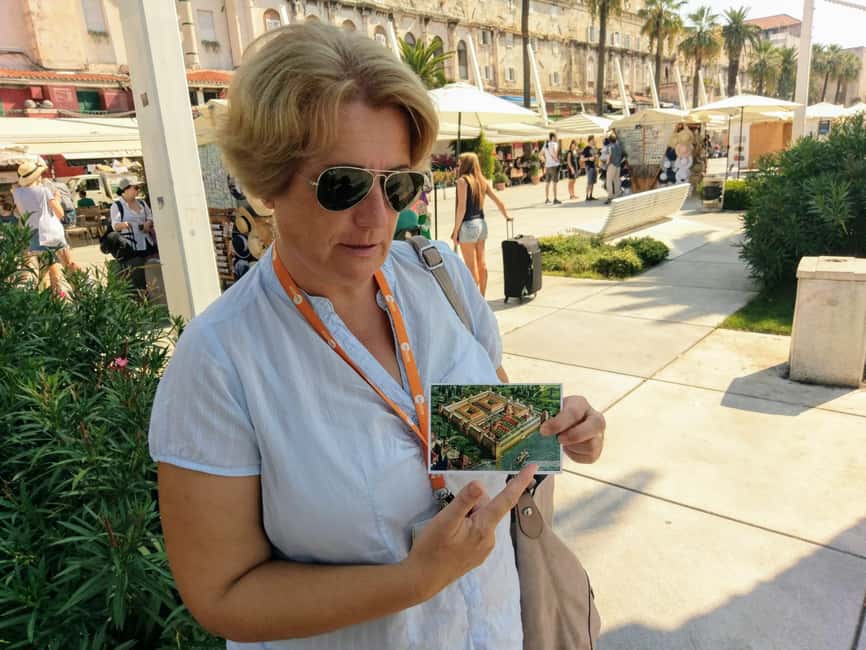
The story begins about 1,700 years ago, when Emperor Diocletian built a large residence beside the sea. The palace was not just a grand house. It included a mausoleum, temples, ceremonial courtyards, service areas, and underground rooms. Over time, people built into and around the Roman structure, creating the unusual city center you see today.
That is the real value of this tour. A guide can point out where the Roman plan ends and later Split begins. Without that help, the palace may look like a collection of handsome stones and confusing passageways. With context, the city becomes easier to read.
The private format is useful here. You can ask why a particular column was reused, how the cathedral changed function, or which parts of the palace are still original. You can also ask to slow down for photographs or move more quickly through places that interest you less.
More City Tours in Split
- Split: City Highlights Electric Tuk-Tuk Tour
★ 4.9 · 1,317 reviews - Split Game of Thrones Tour: City of Dragons
★ 4.7 · 556 reviews - Eco City Tour Split
★ 5.0 · 538 reviews
Starting on the Riva beside the palace cellars
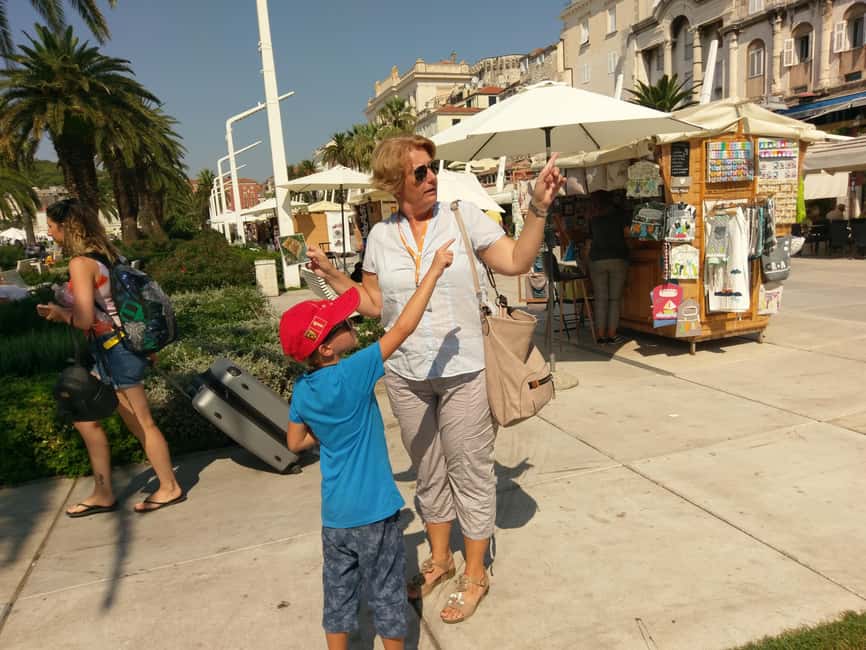
The meeting point is on the Riva promenade, in front of the entrance to the cellars of Diocletian’s Palace at Obala Hrvatskog narodnog preporoda 15b. This is a practical starting point because the Riva is one of the easiest places to locate in central Split. Look for the model of the historical core of the city, which is also used as the return point.
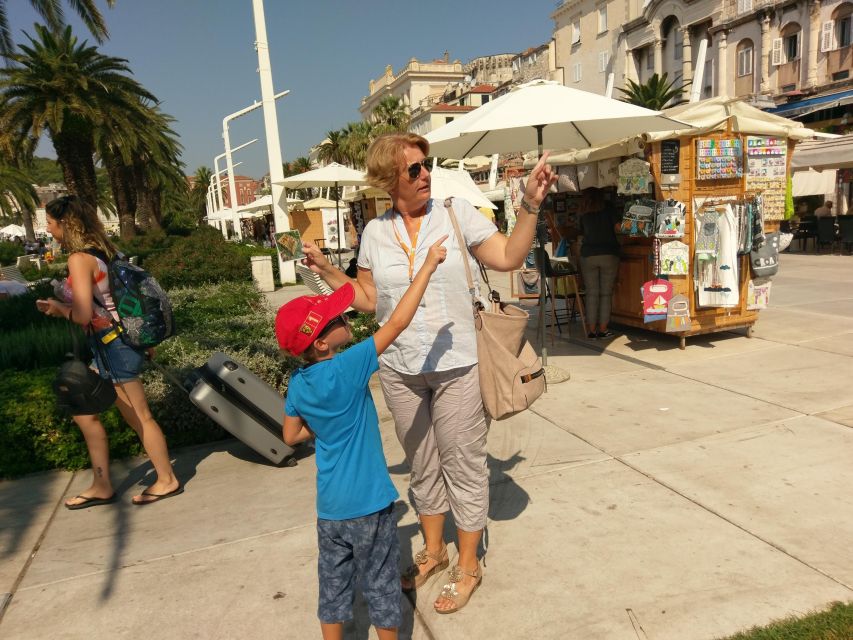
The Riva itself is worth a few minutes. It is Split’s broad waterfront promenade, lined with restaurants and cafés, and it gives you an immediate sense of how closely the city is tied to the sea. Starting here also lets your guide explain the palace’s position before you enter its more enclosed spaces.
If you are meeting in summer, give yourself extra time to reach the promenade. Split’s central streets can be crowded, and it is better to arrive early than to search for the meeting point while the tour is starting. No transfer is included, so you make your own way to the Riva.
The Green Market and Fishmarket: Split beyond the monuments
The Green Market is a welcome change from formal sightseeing. This is where you see the practical side of Split, with stalls and local shopping close to the historic center. The planned visit lasts about 10 minutes, so think of it as a quick introduction rather than time for a long shopping stop.
Your guide can help you understand how the market fits into daily city life. If you enjoy food, local commerce, and ordinary routines, say so. The private arrangement gives you a better chance of shaping the conversation around those interests.
The Fishmarket is another short stop, listed at about 10 minutes. Together, these markets prevent the tour from becoming a procession of monuments. You get a glimpse of the city as a place where people shop and work, not only as a site of Roman remains.
Do not expect a cooking class or a food tasting. Neither is included. The appeal is the setting and the chance to see parts of central Split that are easy to pass without understanding.
Entering Diocletian’s Palace and its underground rooms
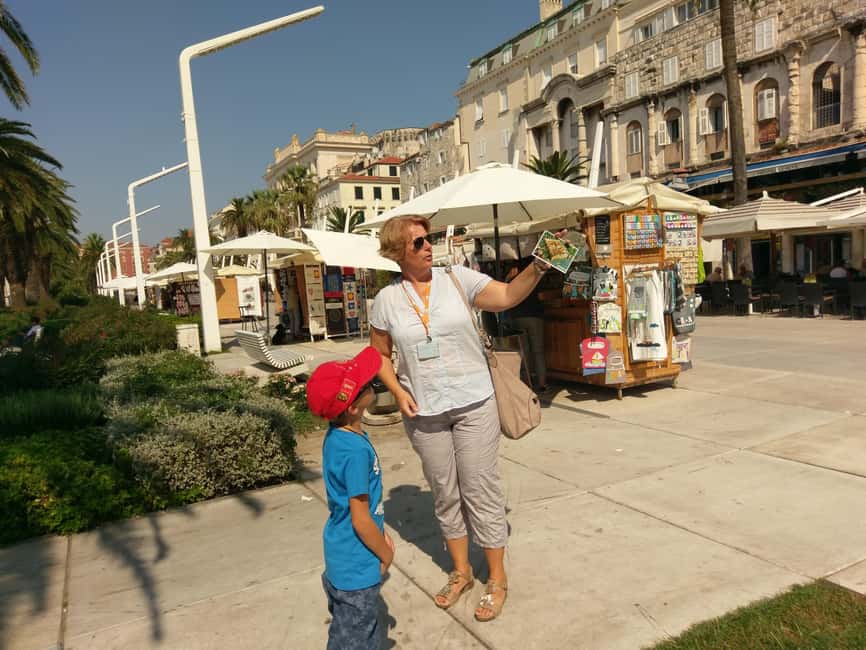
The central portion of the tour focuses on Diocletian’s Palace, with about 45 minutes set aside for a guided visit. The palace is now the heart of Split, which makes it different from a preserved archaeological site standing apart from modern life. Streets, businesses, and homes occupy the old imperial complex.
The cellars are one of the clearest places to understand the original design. Their architectural purpose was to support and raise the imperial residential area on the floor above. In other words, these underground rooms were not simply storage spaces added later. They helped create the palace’s structure.
The cellars are also linked to Game of Thrones as a filming location. That detail may appeal to fans, but the rooms are worth seeing even if you have never watched the series. Their vaulted spaces and stone construction help you picture the scale of the palace below ground.
Entrance fees to the cellars are not included. This matters when comparing the $141 group price with other tours. The cost covers the private licensed guide, but you should budget separately for the admission tickets you choose to buy.
The listed duration for the palace visit is 45 minutes, though the exact time inside may depend on your pace and the guide’s interpretation. Ask questions here. This is the part of Split where a short explanation can save you from missing the point of the architecture.
More Walking Tours in Split
- Split: Old Town and Diocletian Palace Walking Tour
★ 4.9 · 4,727 reviews - Walking Tour of Split and Diocletian’s Palace
★ 5.0 · 2,588 reviews - Krka Waterfalls tour with Trogir Walking tour and Krka panoramic boat cruise
★ 5.0 · 1,659 reviews - Split & Diocletian’s Palace Walking Tour
★ 5.0 · 1,125 reviews
Peristil and the imperial ceremony
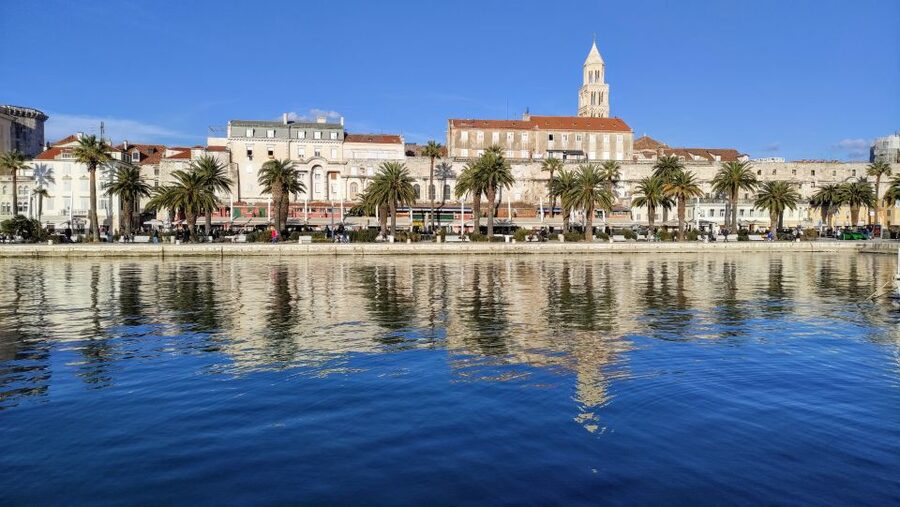
From the lower levels, you walk up the stairs toward Peristil, the palace’s striking central courtyard. The route from the cellars to Peristil gives the tour a strong sense of movement, from the practical underground structure to the ceremonial space above.
Peristil was designed for Diocletian and the cult of the living son of Jupiter. Its purpose was not merely decorative. This was a place where imperial power and religion were displayed together, and your guide can explain how the layout supported that message.
The visit is scheduled for about 15 minutes. That is enough for an explanation and photographs, but you may want to linger. The courtyard is one of the places where the palace feels most grand, even though later building has changed the surroundings.
You will also see the former temple associated with Jupiter. The site helps connect the palace’s political story with its religious one. If you are interested in Roman emperors, ancient religion, or architecture, this is a good place to ask for more detail.
St. Duje Cathedral, Diocletian’s former mausoleum
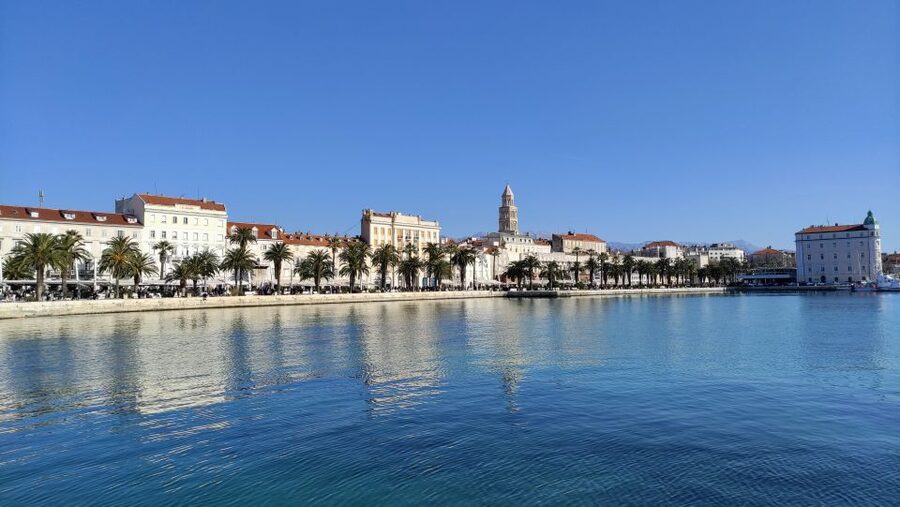
The Cathedral of St. Duje gives Split’s Roman story a dramatic twist. It was originally Diocletian’s mausoleum and later became a Christian cathedral. St. Duje is the patron saint of Split, so the building links the city’s Roman past with its Christian identity.
It is often described as the oldest cathedral in the world, a claim tied to its use of Diocletian’s original mausoleum structure. Your guide can help explain the change in purpose, which is more interesting than treating the cathedral as just another old building.
Admission to the cathedral is not included. If you want to enter, dress appropriately. Shoulders and knees must be covered, so pack a light layer or wear suitable clothing even in warm weather.
The tour description does not specify how long you will spend inside the cathedral, and the full route has a tight schedule. If the cathedral matters greatly to you, tell the guide at the beginning. A private tour should make that kind of adjustment easier, subject to opening hours and the pace of the group.
Golden Gate and the Gregory of Nin statue
The Golden Gate is one of the palace’s most recognizable entrances and receives about 10 minutes as a guided stop and photo point. It is a useful place to understand how people entered the imperial complex and how the palace connected to the wider city.
Nearby, the statue of Gregory of Nin gets another 10 minutes, mainly for photographs. The statue is a well-known Split landmark and adds a later Croatian chapter to the Roman setting. Your guide can explain why it matters locally and point out the custom associated with touching part of the statue, if relevant during your visit.
These stops are short, but they work well as part of a compact overview. If your priority is photography, the private format lets you ask for a moment to frame the shot. If your priority is architecture, ask the guide to focus on the gate’s role in the palace plan.
People’s Square, Old Town Hall, and Fruit Square
The medieval and Venetian-era center begins to feel more distinct around People’s Square, also called Pjaca. This is a useful contrast to the Roman palace. The square reflects the period of Venetian rule and shows how Split’s civic life developed beyond Diocletian’s original residence.
The stop includes time for photographs, a visit, and shopping, with about 15 minutes planned. That is enough to look around, but not enough for a serious shopping session. Keep your expectations modest and use the time to notice the square’s architecture and its position within the old city.
The Old Town Hall is a very brief photo stop of about five minutes. It gives you another piece of Split’s civic story, though the short timing means the explanation may be concise.
Fruit Square follows, with about 15 minutes for a visit and photographs. Like People’s Square, it helps show that Split is more than a Roman monument. Later urban life grew around the palace, filling the old spaces with markets, public buildings, lanes, and gathering places.
This is also the section where the tour may feel less like a formal archaeological visit and more like a city walk. One practical point is worth stressing: one person found there was not enough walking through the smaller streets and alleyways. If exploring the texture of old Split matters to you, request more time in these areas instead of lingering at every photo stop.
Finishing on the waterfront
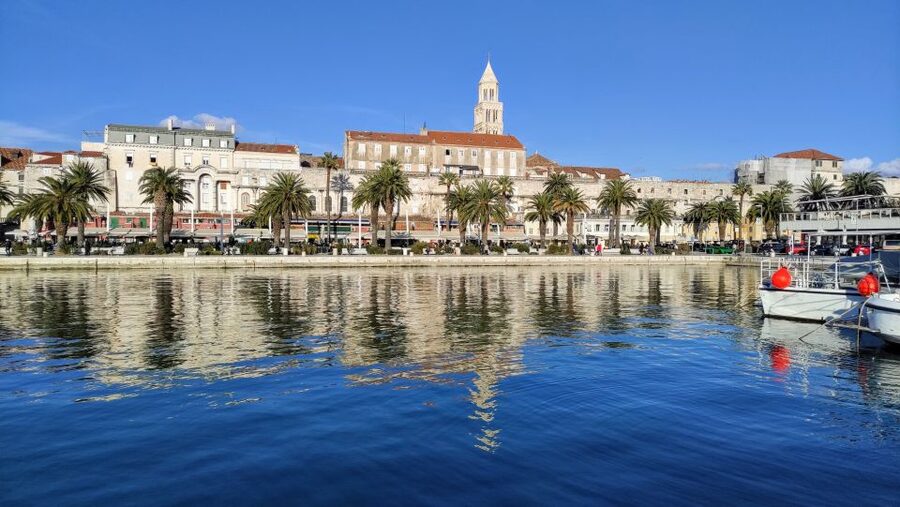
The route ends back at the Riva and returns to the model of Split’s historic core. Finishing beside the sea is convenient, especially if you want to continue with lunch, coffee, or a separate visit to the palace cellars.
The Riva is also a useful orientation point for the rest of your day. You can return to the palace, browse the nearby markets, or remain along the waterfront. The tour does not include a transfer, so ending in this central location is more useful than being dropped somewhere outside town.
The Riva section is listed at about 15 minutes. Depending on the group’s pace and the time spent at earlier stops, the guide may treat it as both an introduction and a conclusion rather than a long separate visit.
How much walking and time should you expect?
The experience lasts two hours and is a private group tour for up to 20 people. The route is wheelchair accessible, but the old center includes uneven surfaces, stairs, and historic passageways. The supplied information specifically advises comfortable shoes, and that advice is worth taking seriously.
There is an odd timing point to consider. The listed stop durations add up to roughly 150 minutes before allowing for movement between sites, while the advertised tour duration is two hours. These times are likely approximate and may overlap, but you should not assume that every stop receives its full stated duration.
This is not necessarily a problem. A guide may explain one place while walking to the next, and some stops are photo points rather than full visits. Still, if you want a slow, detailed exploration of every square and alley, two hours may feel short.
A private tour is especially useful for families, couples, and small groups with mixed interests. You can ask for more Roman history, more local life, more French-language explanation, or a gentler pace. Groups interested in Game of Thrones can ask about the cellars, while architecture fans may prefer more time at Peristil and the Golden Gate.
Guide quality and language choices
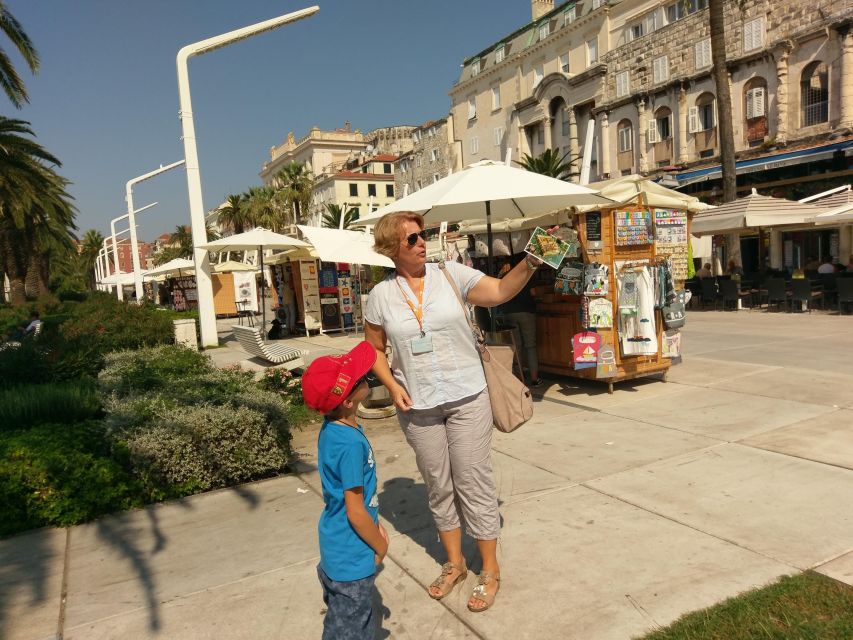
The guide is licensed, and tours are offered in English, French, and Croatian. The strongest pattern in the available feedback is praise for the guides’ warmth, clear explanations, humor, and love for Split.
Zrinka has been singled out for being engaging, helpful, and good at adding local information. Yvonna has been praised for her affection for the city and for making the historic center easier to understand. French-speaking visitors have also responded well to guides who speak French fluently, which is useful if you want more than a translated script.
The guide can make or break a short city tour. Two hours leaves little room for vague commentary, so it is encouraging that the strongest impressions focus on explanations and personal connection. Still, no guide can cover all of Split in detail within this time. Go in with one or two priorities and communicate them at the start.
Is $141 good value for a private group?
The price is $141 per group of up to 20 people, not $141 per person. For a full group, that can be strong value, especially if you want a private guide and the ability to tailor the pace. For one or two people, the cost is harder to justify than a shared walking tour, but you are paying for privacy and flexibility.
The licensed guide is included. Transfers are not included, and entrance fees for the cathedral and palace cellars are extra. Add those costs before comparing this option with a tour that includes admissions.
The best value comes when you use the private format properly. Ask questions, request a focus on alleyways or Roman architecture, and tell the guide if you want practical suggestions for the rest of your stay. If you simply follow a fixed script without speaking up, you lose one of the main reasons to choose a private tour.
The price also makes sense for a family or group of friends who can divide the fee. A private group of up to 20 people has room for a large family, though a very large group may move more slowly through narrow historic spaces.
Practical advice before you go
Wear shoes that can handle uneven surfaces and stairs. The center is historic, and comfort will affect how much attention you can give the guide.
Cover your shoulders and knees if you plan to enter the cathedral. If you are visiting in hot weather, carry a light cover-up rather than relying on luck at the door.
Arrive at the Riva meeting point early. The address is Obala Hrvatskog narodnog preporoda 15b, in front of the palace cellars entrance. The historical-core model is used as the starting and return reference.
Check the cancellation terms carefully before booking. The supplied information gives two different deadlines, one saying cancellation up to 24 hours in advance for a full refund, and another saying cancellation up to 14 days before the tour with no refund after that point. Confirm the exact terms shown at checkout.
You can reserve now and pay later, which helps if your Split plans are still shifting. Starting times vary, so availability needs to be checked for your chosen date.
Who should book this Split tour?
I would choose this tour if you want a clear first introduction to Split and prefer a guide focused on your own group. It suits visitors who want Roman remains, medieval squares, markets, and the waterfront in one compact walk.
It is particularly useful if you are visiting Split for a short time, arriving without much background, or traveling with people who want different levels of detail. The French-language option is another real advantage.
I would think twice if your main goal is a long, slow walk through every alleyway. One past experience found the walking portion too limited, and the two-hour schedule is tight for the number of stops. You can improve the fit by asking for more old-street exploration at the beginning.
For most first-time visitors, the tour offers a sensible structure. You see the essential palace sights, learn how Split grew around them, and finish with a practical sense of where to go next. That combination makes the price easier to defend for a group.
FAQ
How long is the Split private walking tour?
The tour lasts two hours.
Where does the tour meet?
You meet on the Riva promenade in front of the entrance to the cellars of Diocletian’s Palace, at Obala Hrvatskog narodnog preporoda 15b, 21000 Split, Croatia.
Where does the tour finish?
The tour returns to the model of the historical core of the city of Split.
How much does the tour cost?
The price is $141 per private group of up to 20 people.
Is the tour private?
Yes. It is offered as a private group experience.
Which languages are available?
The live guide service is available in English, French, and Croatian.
Are cathedral and palace cellar entrance fees included?
No. Entrance fees to the cathedral and the cellars of Diocletian’s Palace are not included.
Is the tour wheelchair accessible?
Yes, the activity is described as wheelchair accessible. You should also note that the route includes historic areas with uneven surfaces and may include stairs.
What should I wear for the tour?
Wear comfortable shoes because there is walking on uneven surfaces. If you plan to enter the cathedral, your shoulders and knees must be covered.
Just added around Split
- Private VIP Blue Lagoon and 3 Islands Tour★ 4.5 · 9 reviews
- Split highlights – Evening walking tour★ 5.0 · 9 reviews
- Private boat transfer Split – Bol★ 5.0 · 9 reviews
- Private Photography Activity in Split★ 5.0 · 9 reviews
- From Split: Trogir & Blue Lagoon Boat Tour with Snorkeling★ 4.6 · 9 reviews
- Bike, Beer & Poljud Stadium Tour★ 5.0 · 9 reviews
- From Hvar: Blue cave group speedboat tour full day★ 5.0 · 9 reviews
- Split Walking Tour: History, Legends & Tales★ 5.0 · 9 reviews
Walking Tours, compared.




Walking Tour of Split and Diocletian’s Palace
Read our review →


Krka Waterfalls tour with Trogir Walking tour and Krka panoramic boat cruise
Read our review →
City Walls Early Morning or Sunset Walking Tour
Read our review →Browse the lists this tour appears in