

Reviewed · DIOCLETIAN PALACE TOURS
Essential Diocletian’s Palace Tour for First-Time Visitors
Split’s old center rewards a good guide. This 1.5-hour walking tour gives you a clear introduction to Diocletian’s Palace, from the Golden Gate and Peristyle to Jupiter’s Temple, the cathedral, and the Riva promenade. I like the small group of no more than 10 people, which should make it easier to ask questions, and I like the practical restaurant and sightseeing advice offered after the walk. The English-language tour is led by a licensed guide, including Jelena Tanjić, whose humor and explanations of modern Split have earned especially warm praise.
The main thing to keep in mind is that this is an orientation tour, not a ticketed deep visit inside every monument. The Substructures and Bell Tower are not included, and wheelchair users cannot take part. At $17 per person, it is a strong value if you want to understand Split quickly, but you may want extra time afterward for the paid sights.
In This Review
- Key points at a glance
- Why Diocletian’s Palace can be hard to read alone
- Meeting at Gregory of Nin and the Golden Gate
- People’s Square shows Split’s later life
- Jupiter’s Temple and the logic of Roman worship
- Peristyle is the visual center of the Palace
- Saint Domnius Cathedral reveals the Palace’s changing identity
- The Vestibule brings history and a little playfulness
- Diocletian’s Cellars come with an important limit
- Finishing near the Riva promenade
- What the storytelling adds
- Is $17 a fair price?
- Who should book this Split walking tour?
- Should you book it?
- FAQ
- How long does the Diocletian’s Palace tour last?
- How much does the tour cost?
- What language is the tour offered in?
- How many people are in the group?
- Where does the tour start?
- Which major sights are included?
- Does the tour include the Substructures and Bell Tower?
- Is the tour suitable for wheelchair users?
- Can I cancel the tour for a refund?
Key points at a glance
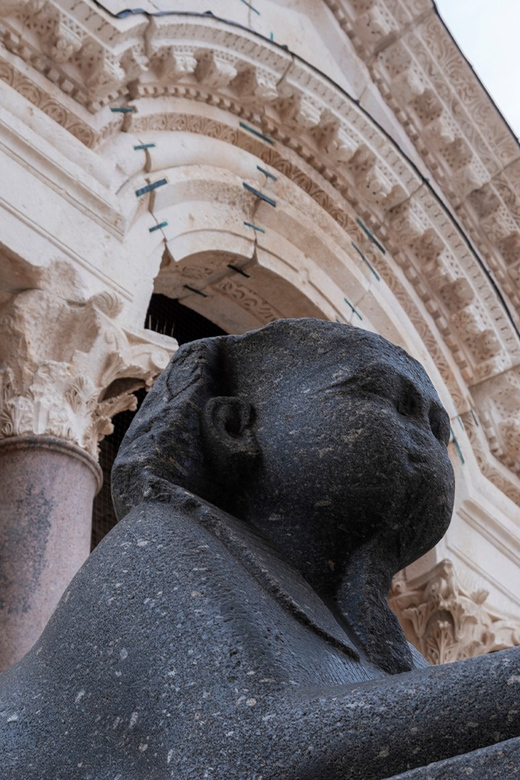
- A compact route through Split’s essential center: Visit the Golden Gate, People’s Square, Jupiter’s Temple, Peristyle, Saint Domnius Cathedral, Vestibule, Cellars, and Riva.
- Limited to 10 participants: The small format supports questions and a more personal conversation with the guide.
- Jelena adds present-day context: Her stories connect Roman-era Split with daily life in the city now.
- The Vestibule selfie is part of the fun: The group pauses beneath the dome for a shared photo.
- Useful after-tour help: You receive personal suggestions for food, sights, and local experiences, plus restaurant and bar vouchers.
- Good value at $17: You get a guided introduction without paying for entry to the Bell Tower or Substructures.
Why Diocletian’s Palace can be hard to read alone
Split’s historic center is not a tidy museum laid out behind one gate. It is a living part of the city, with homes, shops, cafés, churches, squares, and Roman remains sharing the same narrow streets. Without some context, the Palace can feel like a collection of attractive stones rather than one connected story.
This tour is built for that first encounter. It moves through the central sights in a logical order and explains how the old Roman complex became the heart of modern Split. I especially like that the guide does not stop at ancient history. The tour also addresses present-day life, which helps you understand why this is a city center rather than a preserved stage set.
The guide’s background adds another useful layer. Jelena is from Bosnia and Herzegovina and has lived in Split for many years, so she can place the city within the wider Balkans. That regional point of view may be especially helpful if Split is your first stop in Dalmatia or your first visit to this part of southeastern Europe.
More ways to see Diocletian's Palace:
- Split: Old Town and Diocletian Palace Walking Tour
★ 4.9 · 4,727 reviews - Walking Tour of Split and Diocletian’s Palace
★ 5.0 · 2,588 reviews - Split & Diocletian’s Palace Walking Tour
★ 5.0 · 1,125 reviews
Meeting at Gregory of Nin and the Golden Gate
The meeting point is in front of the large statue of Gregory of Nin, beside the Palace’s north entrance, the Golden Gate. Look for the guide with a black umbrella. The color may not be glamorous, but it should make the meeting point easier to spot in a busy square.
The statue itself gives the tour a useful opening landmark. From there, you enter the Palace through the Golden Gate and begin looking at Split as both a Roman complex and a working city. This is a practical place to start because you get your bearings before moving into the tighter streets and enclosed spaces.
The Golden Gate is one of the Palace’s defining entrances. Here, the guide can explain how the Roman emperor Diocletian organized access to his residence and how the old walls shaped the later city. You do not need a strong background in Roman history to follow the discussion. The tour is designed to explain the main ideas in plain language.
People’s Square shows Split’s later life
From the Roman entrance, the walk continues to People’s Square, known as Pjaca, the main square of Split. This stop helps show how the city grew beyond the original Palace structure.
I like this part of the route because it shifts your attention from emperors and ancient walls to the public life of the city. Squares are where a city’s layers become easiest to see. Medieval and later buildings sit close to Roman remains, and the guide explains how the center developed over time.
Pjaca is also a useful reference point for your own exploring. After the tour, you will know where one of Split’s main gathering areas is located and how it relates to the Palace. The stop is brief, but it gives the old center a clearer shape in your mind.
Jupiter’s Temple and the logic of Roman worship
Jupiter’s Temple is one of the tour’s most important historical stops. The small structure offers a direct look at the religious side of Diocletian’s complex and gives the guide a chance to explain Roman beliefs and imperial power.
The value here is not just seeing the building. A good explanation helps you understand why a temple was placed within the Palace and how religion supported the emperor’s public image. The tour’s storytelling approach keeps this from becoming a list of dates and names.
You should also expect the setting to be compact. This is an urban walking tour through old streets, not a spacious archaeological park. That can make the remains feel more immediate, but it also means you may need to stand close to the guide and pay attention when the area is busy.
Something different for another day:
- Split: Krka Waterfalls Trip with Boat Cruise and Swimming
★ 4.8 · 10,519 reviews - From Split: Krka Waterfalls, Food & Wine Tasting Tour
★ 5.0 · 9,326 reviews - Blue cave, Mamma Mia and Hvar, 5 islands speedboat tour
★ 5.0 · 7,150 reviews - From Split: Krka Waterfalls, Food & Wine Tasting Tour
★ 4.9 · 6,598 reviews
Peristyle is the visual center of the Palace
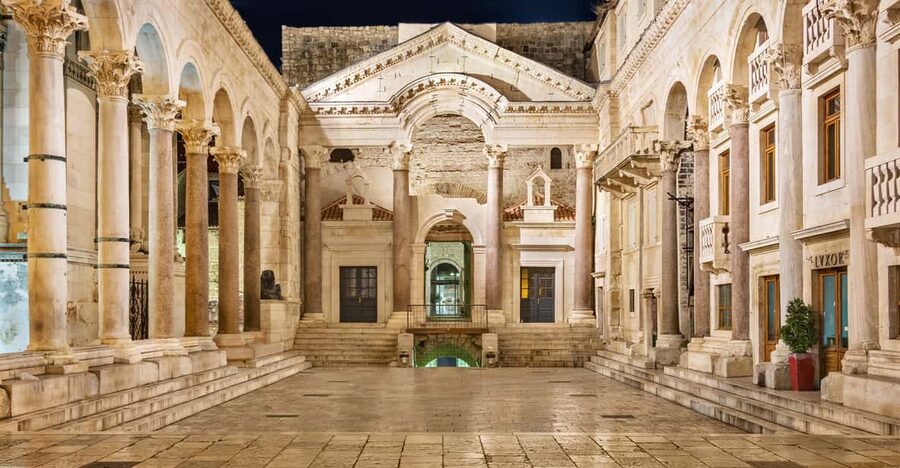
The Peristyle is likely to be the moment when the scale and purpose of the Palace come together. This ceremonial courtyard is one of Split’s best-known spaces, and the tour explains how it worked as part of the imperial residence.
Here, I appreciate the balance between history and atmosphere. The guide can point out the surrounding architecture, explain the courtyard’s role, and connect the space to the later life of Split. You get the essential story without being left to guess what you are looking at.
Peristyle is also where a group tour may feel most public. It is a major sight, so the surroundings can be active. A small group remains useful because the guide can keep the explanation focused rather than trying to manage a large crowd.
Saint Domnius Cathedral reveals the Palace’s changing identity
The Cathedral of Saint Domnius shows how the Roman Palace changed after Diocletian’s time. Its presence within the old complex is a clear reminder that Split did not abandon the Palace and start over somewhere else. Later generations adapted the existing structures for new religious and civic purposes.
The tour includes a guided visit to the cathedral area, but the supplied details do not say that admission to the Bell Tower is included. One review specifically notes that the Bell Tower is not part of the tour. If climbing the tower matters to you, plan to treat it as a separate activity.
That limitation is not a serious flaw for a short introduction. In fact, skipping paid interior access lets the guide keep the walk moving. You can decide later if you want to return and spend more time inside.
The Vestibule brings history and a little playfulness
The Vestibule is one of the more memorable stops because of its rounded interior and dome. The guide includes a group selfie beneath the Vestibule dome, giving the tour a light moment after the more serious historical explanations.
I like this detail because it feels personal without taking over the experience. You are not simply marching from monument to monument. There is room for a shared memory, and the photo can help you remember the route later.
The Vestibule also offers a good example of the Palace’s architectural variety. The enclosed form feels different from the open Peristyle, and the guide’s explanation helps you notice how each area served a different purpose.
Diocletian’s Cellars come with an important limit
The route includes Diocletian’s Cellars, also called the Substructures. These underground spaces are central to understanding how the Palace was built and organized. They helped support the upper levels and preserve the layout of the imperial residence.
There is a practical catch: access to the Substructures is not included in the tour. The guide can discuss this part of the Palace, but you should not assume that the $17 price covers entry into the ticketed underground area.
This distinction matters when you compare the tour with a longer paid Palace visit. If you have only a short time in Split, the guided overview may be exactly what you need. If underground architecture is your main interest, budget separately for admission and return after the walk.
Finishing near the Riva promenade
The route takes you toward Split’s Riva, the waterfront promenade. This is a smart finish because it shifts the mood from Roman courtyards and enclosed lanes to the open edge of the city.
The Riva is a useful place to continue your day. You can use the guide’s recommendations to choose a restaurant or bar, or simply pause and decide what to explore next. The tour’s stated finish is at Split Riva, while the meeting information also says the activity ends back at the meeting point. Confirm the exact final point when you book, especially if you have a timed departure.
The guide’s personal recommendations are one of the strongest practical benefits. You receive suggestions on where to eat, what to see, and which local experiences to try, along with vouchers for discounts at selected restaurants and bars. The exact businesses and savings are not specified, so ask the guide for current details.
What the storytelling adds
The strongest praise for this experience centers on the guide’s presentation. Jelena is described as combining solid historical explanation with humor, and the route is structured so she previews what you will see before returning to each stop with more detail.
That method suits Split well. The Palace contains many names, periods, and architectural changes, so hearing the broad outline first helps you follow the smaller details later. You can ask questions as you go, rather than trying to absorb a long lecture at the start.
I also like the attention to modern Split. A guide who lives in the city can explain more than Roman emperors. You get a sense of how the old center functions today and how the past remains part of ordinary city life.
Is $17 a fair price?
At $17, this is an inexpensive way to get a guided introduction to central Split. The price includes a 1.5-hour English walking tour, a licensed guide, small-group attention, the Vestibule selfie, local suggestions, and access to restaurant and bar vouchers.
The value depends on what you want. If you are happy to walk past the main sights and read signs on your own, you can explore the Palace without paying for a guide. But the layout is layered, and the historical meaning is not always obvious. For a first visit, the explanations can save time and help you choose which paid sights deserve a closer look.
Do not compare the price with a full archaeological ticket. This tour does not include the Bell Tower or Substructures access, and it is not meant to replace a longer monument visit. Think of it as a practical first look, followed by independent exploring.
Who should book this Split walking tour?
This experience suits you best if:
- You are visiting Split for the first time.
- You want the main sights explained in a short period.
- You prefer a small group over a large city tour.
- You enjoy history mixed with humor and present-day local context.
- You want food and sightseeing advice after the walk.
- You are traveling solo, with friends, or as a family.
- You have limited time and need a quick orientation.
It may not suit you if you use a wheelchair, want extensive interior access, or prefer a long specialist tour focused only on Roman architecture. The 1.5-hour length is a benefit for many people, but it also means the tour cannot explore every corner of the Palace.
The activity offers free cancellation up to 24 hours before the start, and you can reserve now and pay later. Starting times vary, so check availability before choosing it around a ferry, cruise departure, or other fixed plan.
Should you book it?
I would book this tour if you want a friendly, efficient introduction to Split rather than a full archaeological study. The strongest reasons are the small group, Jelena’s clear and humorous style, the regional perspective, and the useful advice for the rest of your stay.
Book it with the right expectations. You are paying for orientation, storytelling, and local guidance, not admission to every major monument. Pair the walk with a separate visit to the Substructures or Bell Tower if those sights matter to you, and you will get more from both experiences.
FAQ
How long does the Diocletian’s Palace tour last?
The tour lasts 1.5 hours.
How much does the tour cost?
The listed price is $17 per person.
What language is the tour offered in?
The live guided tour is offered in English.
How many people are in the group?
The group is limited to 10 participants.
Where does the tour start?
It starts in front of the large statue of Bishop Gregory of Nin, beside the Golden Gate, the north entrance to Diocletian’s Palace. Look for a black umbrella.
Which major sights are included?
The route includes the Golden Gate, People’s Square, Jupiter’s Temple, Peristyle, the Cathedral of Saint Domnius, Vestibule, Diocletian’s Cellars, and Split Riva.
Does the tour include the Substructures and Bell Tower?
No. Access to the Substructures and Bell Tower is not included.
Is the tour suitable for wheelchair users?
No. The activity is not suitable for wheelchair users.
Can I cancel the tour for a refund?
Yes. You can cancel up to 24 hours in advance for a full refund. You can also reserve your place and pay later.
Just added around Split
- Private VIP Blue Lagoon and 3 Islands Tour★ 4.5 · 9 reviews
- Split highlights – Evening walking tour★ 5.0 · 9 reviews
- Private boat transfer Split – Bol★ 5.0 · 9 reviews
- From Split: Trogir & Blue Lagoon Boat Tour with Snorkeling★ 4.6 · 9 reviews
- Private Photography Activity in Split★ 5.0 · 9 reviews
- Bike, Beer & Poljud Stadium Tour★ 5.0 · 9 reviews
- From Hvar: Blue cave group speedboat tour full day★ 5.0 · 9 reviews
- Split Walking Tour: History, Legends & Tales★ 5.0 · 9 reviews
Diocletian Palace Tours, compared.


Walking Tour of Split and Diocletian’s Palace
Read our review →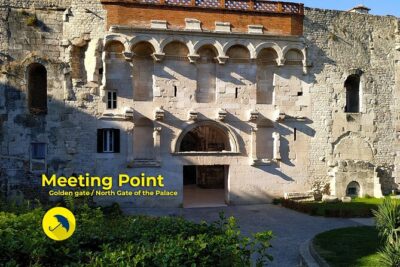

Diocletian Palace & Old Town Guided Walking Tour
Read our review →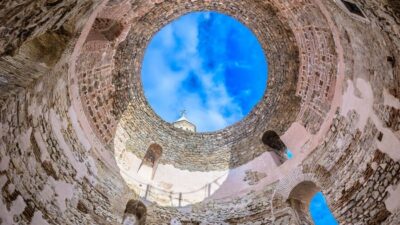
Game of Thrones Tour with Diocletian’s Palace Cellar
Read our review →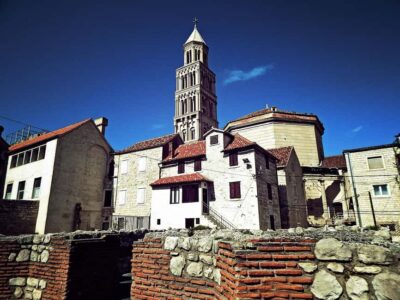
Diocletian’s Palace and Old Town SMALL GROUP Walking Tour
Read our review →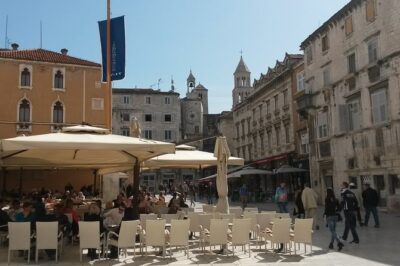
PRIVATE Walking Tour of Diocletian’s Palace & Old Town
Read our review →
Browse the lists this tour appears in