
Reviewed · DIOCLETIAN PALACE TOURS
Diocletian’s Palace Small Group Tour in Split
Ancient Rome still runs daily life here. This two-hour walk through Split’s Diocletian’s Palace combines major Roman sights with the city’s living streets, and I especially like the choice of several departure times and the chance to get practical tips from a local guide. The guides also earn strong praise for their friendly manner, clear explanations, and personal touch.
The main drawback is the short length. Two hours gives you a useful map of the old town, but not much time for lingering or detailed visits, and cathedral admission is not included. Group size can also vary, so you may get a small group like the reported 20-person departure, or a much larger gathering.
In This Review
- Key points to know before you book
- Why Diocletian’s Palace feels unlike a normal palace
- Meeting at Mrčelina 1 and getting your bearings
- Entering the 17-century maze of Split’s old town
- The Peristyle, where Roman power meets city life
- The Vestibule and its striking geometry
- Diocletian’s Cellars and the foundations beneath Split
- The Golden Gate and the emperor’s formal entrance
- What the guides add to the two-hour format
- Is $60.21 a fair price?
- Who will get the most from this walk?
- Should you book the Diocletian’s Palace tour?
- FAQ
- Where does the tour start?
- Where does the tour end?
- How long does the tour last?
- What language is the tour offered in?
- Is admission to Diocletian’s Palace included?
- Is food or drink included?
- How large can the group be?
- Can I cancel for a full refund?
Key points to know before you book
- The palace is Split’s old town: You are walking through a real city center, not a walled ruin set apart from modern life.
- The Peristyle is the dramatic heart: Roman columns, temples, unusual acoustics, and daily urban activity all meet in one square.
- The cellars explain the palace’s survival: These ancient substructures are among the best-preserved complexes of their type.
- Local guides add practical value: Luka, Sandra, and Jelena were singled out for warmth, clear history, humor, and useful shop tips.
- Morning departures can help in August: An early start was praised as a more comfortable way to walk through Split.
- It is a compact orientation tour: You return to the South Tours Travel Agency after roughly two hours, with food and cathedral tickets separate.
Why Diocletian’s Palace feels unlike a normal palace
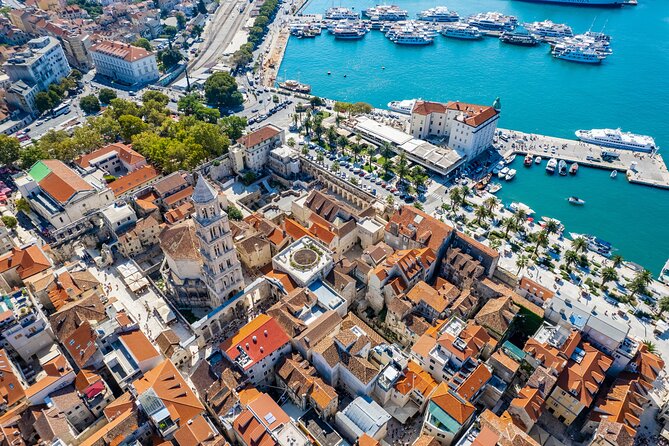
I like this tour because it begins with the right correction: Diocletian’s Palace is not simply a grand residence you walk through room by room. It is a huge Roman complex that now forms about half of Split’s old town.
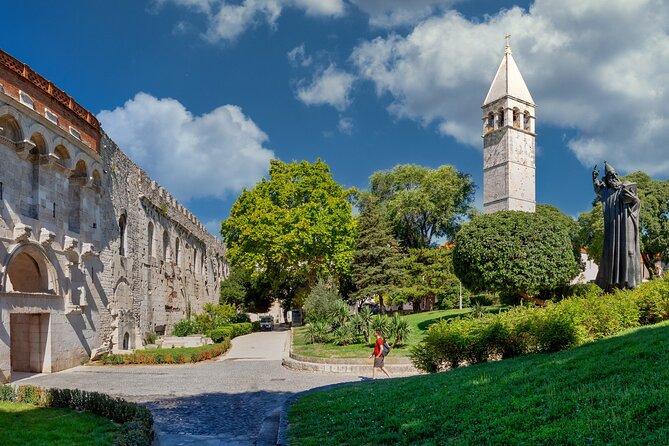
Emperor Diocletian built it at the turn of the fourth century AD as his retirement residence. Yet the word palace can give you the wrong picture. About half of the complex was for the emperor’s use, while the rest housed a military garrison. Its defensive shape and thick remains make it feel as much like a fortress as a home.
The unusual part is that modern Split grew inside these Roman walls. You are not only looking at columns and stonework. You are walking along local streets, passing later buildings, and seeing how daily Mediterranean life continues among structures nearly 1,700 years old.
That makes a guided walk especially useful. Without context, the palace can look like a maze of alleys with impressive stones scattered through it. A good guide shows you which pieces belong to the imperial complex, which came later, and how the old town developed around what survived.
The experience is offered in English and includes a local, professional guide. The strongest praise goes to guides who mixed history with personal advice. Luka was especially appreciated for his energy and recommendations. Sandra was praised for her clear knowledge and warm personality, while Jelena provided both historical detail and suggestions for shops. Those details matter because Split is easier to enjoy when you understand not only what you are seeing, but also how the center works today.
More ways to see Diocletian's Palace:
- Split: Old Town and Diocletian Palace Walking Tour
★ 4.9 · 4,727 reviews - Walking Tour of Split and Diocletian’s Palace
★ 5.0 · 2,588 reviews - Split & Diocletian’s Palace Walking Tour
★ 5.0 · 1,125 reviews
Meeting at Mrčelina 1 and getting your bearings
The tour begins at South Tours Travel Agency, Mrčelina 1, 21000 Split. It also ends there, so you do not need to arrange transport from a distant finishing point.
You should allow enough time to find the agency before the start. One departure had a minor meeting issue, so this is not the moment to cut things close. Your booking confirmation is provided at the time of booking, and the mobile ticket makes it convenient to keep the details on your phone.
Several departure times are available throughout the day. That flexibility is useful if you are fitting the walk between a ferry arrival, lunch, or another Split activity. Still, the timing can change the feel of the experience. An early morning departure in August was praised as a comfortable choice, so I would favor the earliest practical option during hot weather.
The advertised capacity can reach 99 people, though one small-group departure had about 20 people and another became a private tour. That range is worth noting. A smaller group makes it easier to hear the guide and ask questions. A larger group may feel less personal, especially in narrow streets and busy squares.
You need a moderate level of physical fitness. This is a walking tour through old streets, with no promise of a seated format. Wear sensible shoes and expect the uneven feel of a historic city center.
Entering the 17-century maze of Split’s old town
The first and longest part of the walk covers Diocletian’s Palace and the surrounding city center. The scheduled time is about two hours, with the Peristyle, Vestibule, cellars, and Golden Gate visited along the way.
This broad portion of the tour is valuable because it gives you the overall shape of Split. The palace is not a single attraction with one obvious entrance and exit. It is a network of streets and spaces built over centuries. Without an overview, it is easy to see one square, snap a photo, and miss how the pieces fit together.
Your guide can point out the mixture of periods that makes the center so unusual. The old town includes Roman remains, later buildings, and modern urban life. The supplied description even points to an ancient Egyptian sphinx and a 20th-century building, a reminder that Split’s story is not frozen in Roman times.
I like this approach more than a pure monument tour. You get to see the palace as a place people use, not only as an archaeological site. The reward is atmosphere and orientation. The tradeoff is that the walk may feel less orderly than a museum visit, because the city itself is the setting.
The broad first stop is listed as free admission. That means the tour price mainly pays for the guide’s interpretation and your route through the old town, rather than a package of separate entrance tickets.
The Peristyle, where Roman power meets city life
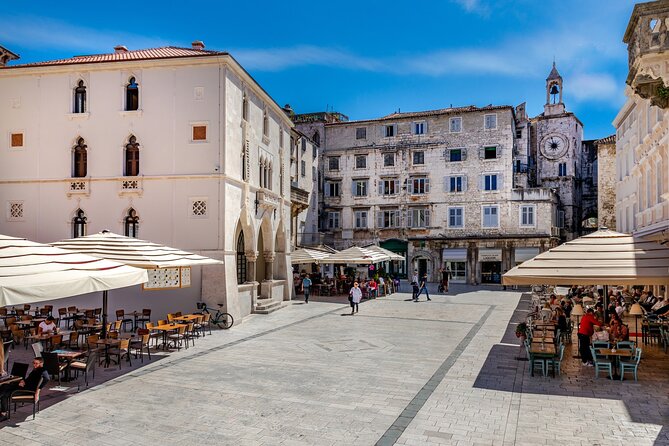
The Peristyle is the central square of Diocletian’s Palace and one of the most memorable stops on the route. It was designed around the emperor’s public image. Diocletian was celebrated as the living son of Jupiter, so this was no ordinary courtyard.
The square is surrounded by temples and Roman architectural remains. Its beauty is only part of the appeal. The space also has unusual acoustics, which helped turn it into a setting for opera, ancient literature, and other performances.
The scheduled stop is about 10 minutes. That is enough for a guide to explain the square’s purpose and point out the major features, but it is not a long study session. If you want extended time for photographs or quiet observation, you may need to return on your own later.
What I value here is the contrast between the original imperial plan and the current urban setting. The Peristyle is not merely an empty Roman plaza. It remains a stage for city life, which gives the space more character than a preserved ruin with no connection to the present.
Something different for another day:
- Split: Krka Waterfalls Trip with Boat Cruise and Swimming
★ 4.8 · 10,519 reviews - From Split: Krka Waterfalls, Food & Wine Tasting Tour
★ 5.0 · 9,326 reviews - Blue cave, Mamma Mia and Hvar, 5 islands speedboat tour
★ 5.0 · 7,150 reviews - From Split: Krka Waterfalls, Food & Wine Tasting Tour
★ 4.9 · 6,598 reviews
The Vestibule and its striking geometry
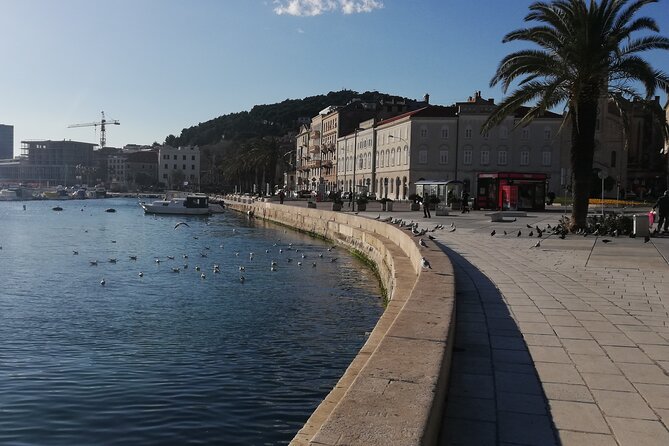
The Vestibule offers a quick but worthwhile stop. From the outside, its plan is rectangular. Inside, it is circular, creating a strong change in shape as you move through the structure.
The space belonged to the old imperial court and still makes a monumental impression. The scheduled visit lasts about 10 minutes, so expect a concise explanation rather than an extended architectural lesson.
This is one of the stops where a guide can help you notice what your eyes might skip. The simple outside shape and rounded interior are easy to appreciate once someone directs your attention to them. It is a good example of how the palace uses geometry, scale, and movement to create a sense of power.
Do not expect a separate ticket for the Vestibule on this tour. The listed stops are included without admission charges. The cathedral is the notable exception, since its ticket is not part of the experience.
Diocletian’s Cellars and the foundations beneath Split
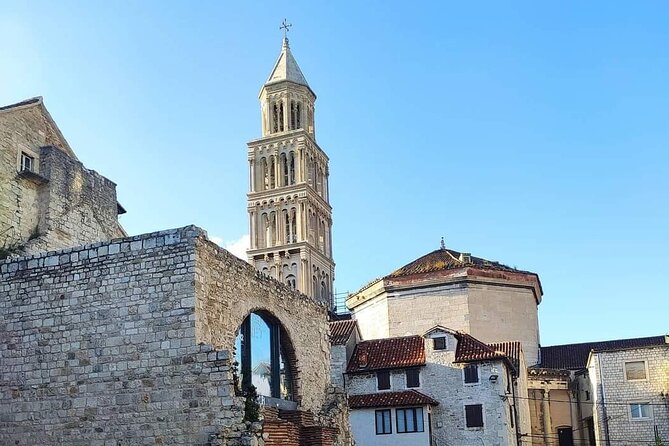
The cellars are among the most important parts of the tour. The substructures are exceptionally well preserved, and they help explain why Split’s historic core received UNESCO World Heritage status in 1979.
These underground spaces were built to support the palace above. Their preserved form gives you a clearer idea of the original layout than many upper sections, which changed as the city grew. As you walk through them, you can better understand the size and planning of the imperial complex.
The scheduled stop is about 10 minutes. Again, that is enough for a useful introduction, but not enough to cover every corner or historical question. If underground spaces are your main interest, you may want to ask the guide where you can spend more time after the walk.
The cellars also provide one of the clearest reasons to take a guided tour instead of simply wandering. Stone corridors can look alike, and the important point is not only what survives, but what those foundations tell you about the palace above.
The Golden Gate and the emperor’s formal entrance

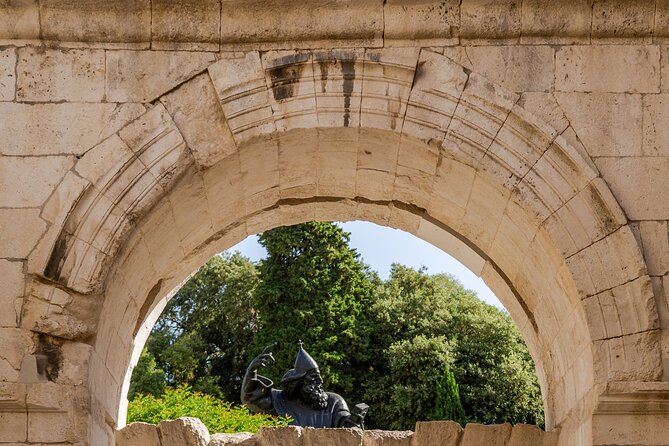
The Golden Gate, known in Roman times as Porta septemtrionalis, was one of the palace’s main defensive entrances. It was built as a rectangle with double doors and formed part of the military defenses.
The gate also has a memorable historical association. Diocletian is said to have entered the palace through it on June 1, 305. A guide can turn that date and doorway into a clear moment in the story of the complex.
You get about 10 minutes here. That allows time to understand the gate’s defensive role and take in its scale. It also gives you a useful contrast with the palace’s more ceremonial spaces. The Peristyle projected imperial authority, while the Golden Gate controlled movement and protected the complex.
The stop is free, like the other main points on the route. Since the tour ends back at the agency, you can later return to the gate or nearby streets if you want another look.
What the guides add to the two-hour format
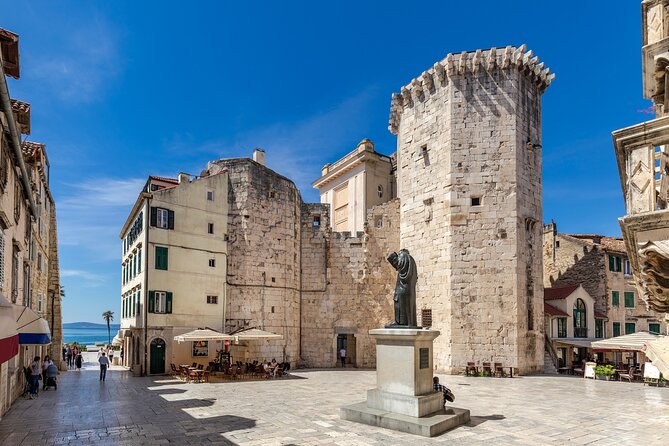
The guides are the strongest reason to choose this experience. The praise is not limited to historical accuracy. The best comments focus on guides who are friendly, generous with their time, able to answer questions, and willing to share suggestions about Split beyond the basic monuments.
Luka was praised for knowing a great deal, offering useful recommendations, and clearly enjoying his work. Sandra received similar praise for her history explanations and approachable style. Jelena was appreciated for combining city knowledge with practical tips on shops and for making time for questions.
One guide was described as having a quirky sense of humor, which can make a short history walk easier to remember. Another small group received a clear explanation of the whole old town in a compact amount of time.
That range suggests a tour style that can adapt to the group and guide. You should not expect a scripted lecture with no room for questions. At the same time, guide quality can vary from one departure to another, as it can with any walking tour. The experience is strongest when you engage, ask about local life, and use the guide’s recommendations.
The tour is in English. If you want detailed explanations of every Roman structure, two hours may feel brief. If you want a well-organized introduction before exploring alone, the length works well.
Is $60.21 a fair price?
At $60.21 per person, this is not the cheapest way to stroll through Split. You can walk through much of the old town without paying admission. The value comes from the local guide, the route, the historical connections, and the time saved figuring out the palace yourself.
I think the price makes the most sense for a first visit, especially if you want a clear introduction soon after arriving. The palace is large and confusing enough that a good explanation can prevent you from missing the main structure of the city center.
The value is also better if you use the walk as a starting point. Take notes on the shops, streets, and places that interest you, then return later at your own pace. The guide’s local suggestions can be as useful as the Roman facts.
The price is harder to justify if you already know the palace well, prefer independent exploration, or want admission to the cathedral included. Food and drinks are also separate, so plan those costs on your own.
The average booking point is 45 days before the tour. That suggests you should reserve ahead if your Split schedule is fixed, though the available departure choices give you some flexibility.
Who will get the most from this walk?
I would recommend this tour to first-time visitors who want a strong sense of place in a short window. It suits anyone who likes history but also wants to see how old buildings fit into present-day life.
It is a good match for:
- You are visiting Split for a short time and need an efficient introduction.
- You prefer learning from a local guide rather than reading signs alone.
- You want practical advice about shops and the old town.
- You enjoy walking through streets instead of touring only formal museums.
- You can manage two hours of walking at a moderate fitness level.
You might choose something else if you want a slow, highly detailed archaeological study. The route covers several major areas, but the stops are brief. You may also prefer independent sightseeing if a group of up to 99 people feels too large, even though some departures are much smaller.
Free cancellation is available when you cancel at least 24 hours before the start time. Changes or cancellations inside that window are not accepted for a refund, so keep the local start time in mind.
Should you book the Diocletian’s Palace tour?
Book it if you want a friendly, efficient introduction to Split’s old town, especially on your first day. The best parts are the Peristyle, the preserved cellars, the Golden Gate, and the guide’s local perspective on the streets between them.
Choose an early departure in hot August weather if possible. Arrive with time to find Mrčelina 1, wear comfortable shoes, and remember that the cathedral, food, and drinks cost extra.
I would book this tour for orientation and context, not as a complete exploration of every corner. At $60.21, it earns its price when the guide is engaging and you use the two hours to plan what you want to see next. If you want Split’s Roman core to make sense before you wander on your own, it is a solid choice.
FAQ
Where does the tour start?
The tour starts at South Tours Travel Agency, Mrčelina 1, 21000 Split, Croatia.
Where does the tour end?
The activity ends back at the meeting point at South Tours Travel Agency.
How long does the tour last?
The tour lasts approximately two hours.
What language is the tour offered in?
The tour is offered in English.
Is admission to Diocletian’s Palace included?
The listed palace stops have no admission ticket charge. Tickets for the cathedral are not included.
Is food or drink included?
No. Food and drinks are not included in the tour price.
How large can the group be?
The activity can have a maximum of 99 participants. Some departures may be smaller, and one reported group had about 20 people.
Can I cancel for a full refund?
Yes, if you cancel at least 24 hours before the experience start time. Cancellations or changes made less than 24 hours before the start are not accepted for a refund.
Just added around Split
- Private VIP Blue Lagoon and 3 Islands Tour★ 4.5 · 9 reviews
- Split highlights – Evening walking tour★ 5.0 · 9 reviews
- Private boat transfer Split – Bol★ 5.0 · 9 reviews
- From Split: Trogir & Blue Lagoon Boat Tour with Snorkeling★ 4.6 · 9 reviews
- Private Photography Activity in Split★ 5.0 · 9 reviews
- Bike, Beer & Poljud Stadium Tour★ 5.0 · 9 reviews
- From Hvar: Blue cave group speedboat tour full day★ 5.0 · 9 reviews
- Split Walking Tour: History, Legends & Tales★ 5.0 · 9 reviews
Diocletian Palace Tours, compared.


Walking Tour of Split and Diocletian’s Palace
Read our review →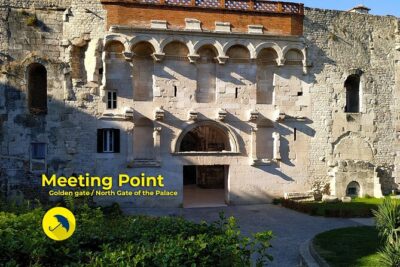

Diocletian Palace & Old Town Guided Walking Tour
Read our review →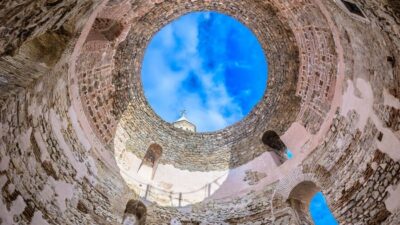
Game of Thrones Tour with Diocletian’s Palace Cellar
Read our review →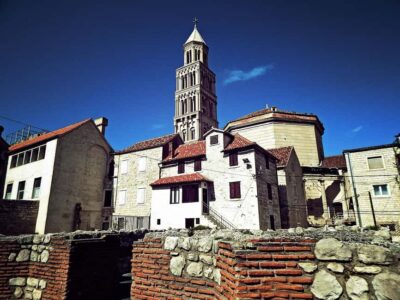
Diocletian’s Palace and Old Town SMALL GROUP Walking Tour
Read our review →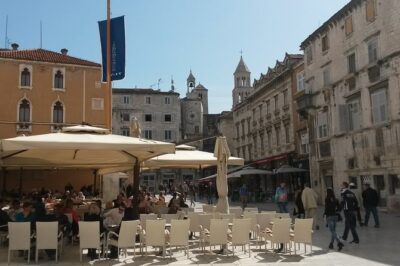
PRIVATE Walking Tour of Diocletian’s Palace & Old Town
Read our review →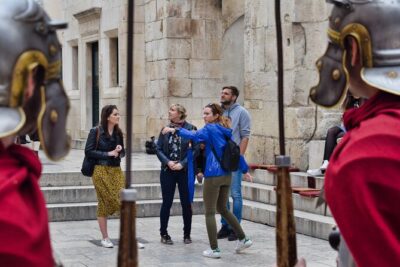
Browse the lists this tour appears in