
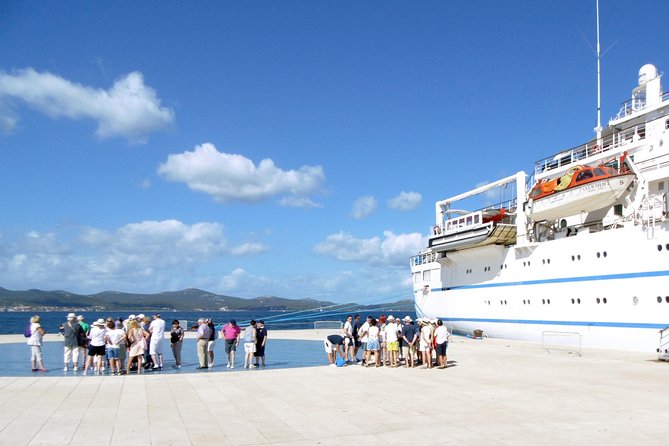
Reviewed · WALKING TOURS
WALKING TOUR ZADAR: Top rated guide, Tastings, Private tour
Zadar’s old town tells many stories. This private walking tour brings the city’s Roman forum, medieval churches, Venetian defenses, and famous waterfront sounds into one well-paced visit, led by an English-speaking local guide. I like the private format, which gives your group room to ask questions, and the Maraschino tasting, a small but memorable taste of local culture. The main drawback is that church admission is not included, despite wording that could leave you expecting more than an exterior visit.
The tour costs $295.01 per group of up to 15 people, so the value improves sharply with a family or larger party. I also like the flexible start time, especially if you are arriving by cruise ship. Allow two hours, meet at Poljana Pape Aleksandra III 7, and expect to finish back where you began.
In This Review
- Key points to know before booking
- Why this two-hour Zadar walk works
- Starting with Zadar’s Roman Forum
- St. Donatus and the Cathedral of St. Anastasia
- The waterfront: Greeting to the Sun and the Sea Organ
- People’s Square and Kalelarga
- St. Simeon and the silver chest
- The Five Wells and Zadar’s defenses
- The Maraschino tasting
- Guides, pace, and the private advantage
- Is $295 a fair price?
- Practical details before you go
- Who should book this Zadar tour?
- Should you book it?
- FAQ
- How long does the Zadar walking tour last?
- How much does the private tour cost?
- Is the tour private?
- What languages are available?
- Where does the tour start?
- Where does the tour finish?
- Is Maraschino tasting included?
- Are church admission tickets included?
- Can the start time be changed for a cruise ship schedule?
Key points to know before booking
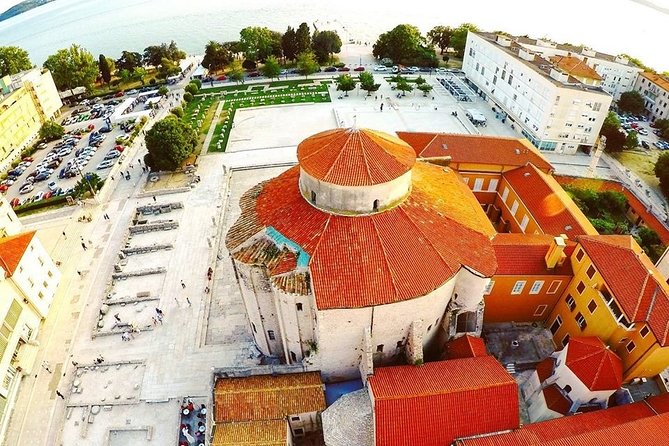
- Roman Zadar in a compact walk: The route links the Forum, St. Donatus, the cathedral, People’s Square, St. Simon’s Church, and the Five Wells.
- A genuinely private experience: Only your group participates, with a licensed guide speaking English, German, Spanish, French, or Italian.
- The waterfront finale: The Sea Organ and Greeting to the Sun give the tour a modern, playful finish beside the Adriatic.
- Maraschino is included: You sample Zadar’s famous fruit liquor, known for its distinctive aroma and long local tradition.
- Useful for cruise schedules: The start time can be adjusted to suit your ship’s arrival.
- Church interiors need clarification: St. Donatus and the Cathedral of St. Anastasia are discussed, but admission inside is not included.
Why this two-hour Zadar walk works
Zadar is easy to underestimate. At first glance, its old town can seem like a pleasant collection of polished stone streets, Roman fragments, churches, and cafés. A good guide gives those pieces a timeline and explains why the city looks the way it does.
That timeline is unusually long. Zadar’s first permanent inhabitants were the Liburnians, seafaring merchants who lived here as early as 1000 B.C. Later came Roman rule, followed by centuries shaped by different powers, including Venice. The tour uses the streets and monuments to explain those changes rather than treating each sight as an isolated photo stop.
The private setup matters. With a group of two, six, or even 15, you can ask about food, local customs, the recent war, or places to return to later. Guides such as Lucija, Lea, and Ivana have been praised for clear English, strong local knowledge, and a warm approach. Lea was also careful to match the walking pace to the age range of her group, which is useful if your party includes older relatives or children.
The two-hour length is another practical advantage. You get a clear introduction without giving up an entire morning or afternoon. Still, this is a highlights walk, not a full study of every church and museum. You will see the outside of several major buildings and hear their stories, but you should not expect long interior visits.
More Walking Tours in Zadar
- Zadar: Guided Walking Tour
★ 4.8 · 445 reviews - Zadar City Tour 120min Walk
★ 5.0 · 203 reviews - Zadar Walking Tour sponsored by Gligora Cheese and deli.
★ 5.0 · 119 reviews
Starting with Zadar’s Roman Forum
The Forum is the best place to begin because it gives you the city’s basic shape. Zadar became a Roman colony about 2,000 years ago, and the Romans laid out a regular network of streets and public spaces. The Forum was the center of social life, commerce, public business, and civic display.
Your guide spends about 15 minutes here, explaining the surviving complex and helping you read the scattered columns and stone remains. Without that context, the Forum can look like a collection of ruins. With it, you begin to picture the public square as a working center of Roman Zadar.
The stop is free, and it is outdoors. Bring sun protection in warm weather, since the Forum is an open stone space with limited shade. The guide’s explanation is the main value here, not a formal museum presentation.
St. Donatus and the Cathedral of St. Anastasia
The Church of St. Donatus is one of Zadar’s most recognizable buildings. Built in the ninth century as a private chapel for Bishop Donat, its round form is unlike the standard church shape you may see elsewhere in Croatia.
The tour passes by St. Donatus for about 10 minutes. Your guide explains Bishop Donat and how the church is used today, but entrance is not included. This distinction matters. If you want to see the interior, ask the guide or operator about current admission arrangements before booking, and budget separately for any ticket.
Next comes the Cathedral of St. Anastasia, the largest cathedral in Dalmatia. You learn about the saint and the Romanesque building that carries her name. This is another exterior-focused stop, listed at about 15 minutes, with admission not included.
I appreciate the way these two stops fit into the city’s timeline, but the ticket wording deserves care. The tour covers the buildings and their stories. It does not promise paid entry inside them. If church interiors are central to your plans, this tour may work best as an introduction followed by an independent return visit.
The waterfront: Greeting to the Sun and the Sea Organ
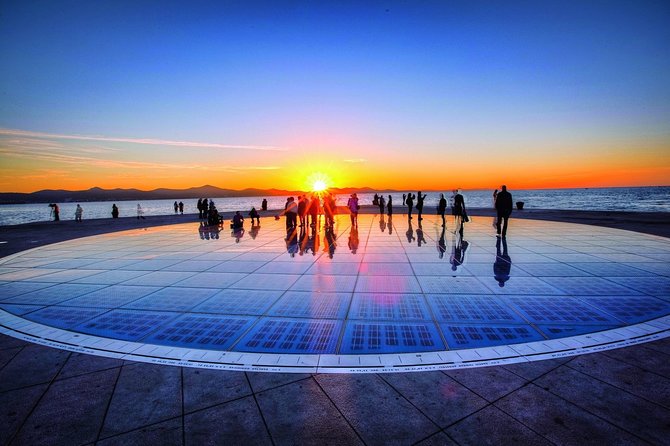
Zadar’s modern waterfront attractions provide a sharp contrast to the ancient Forum. At the end of the peninsula, Greeting to the Sun uses a large circle of solar panels to create a light display after dark. The attraction was built in 2005, and your guide shares lesser-known facts about its design and purpose.
The stop lasts about 10 minutes and is free. If your tour takes place during daylight, you will mainly see the installation and hear its story rather than experience its nighttime light effect. That is not a flaw, but it is worth knowing when setting expectations.
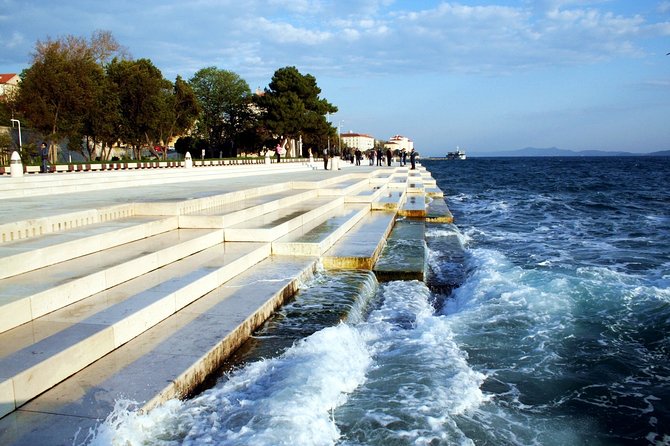
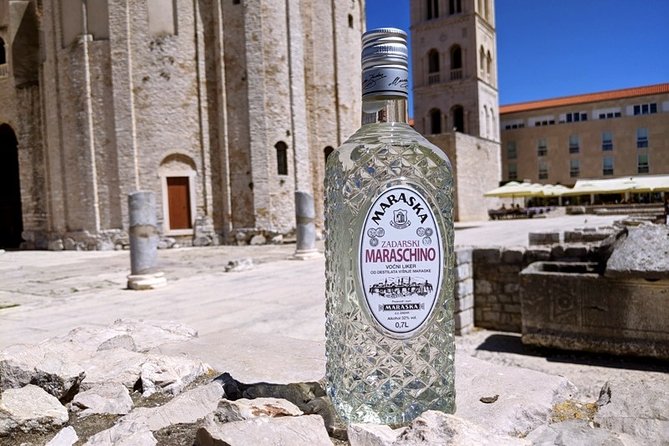
A short walk brings you to the Sea Organ, a set of stone steps built into the waterfront. Pipes beneath the steps turn the movement of the water into sound. The result is not a concert with a fixed program. It is an ever-changing melody shaped by waves, wind, and tide.
The tour allows about five minutes here. That is enough for an introduction, but you may want to return later and sit by the water on your own. The Sea Organ is one of those places where a guide’s explanation helps, but listening quietly afterward is part of the pleasure.
A guide may also tell you about local customs and seaside life. One unusual detail shared on a tour is Zadar’s annual event in which people jump into the sea at the same time to show how clean the water is. It adds a personal, local note to the promenade rather than leaving you with only an architectural explanation.
Something different for another day:
- Zadar: Plitvice Lakes Guided Day Tour with Tickets
★ 4.9 · 3,148 reviews - Zadar: Kornati Boat Trip with Lunch and Swim Stops
★ 4.5 · 1,498 reviews - Zadar: Plitvice Lakes with Boat Ride and Zadar Old Town Tour
★ 4.9 · 1,368 reviews - Zadar: Kornati and Telašćica Full-Day Boat Trip with Lunch
★ 4.1 · 1,193 reviews
People’s Square and Kalelarga
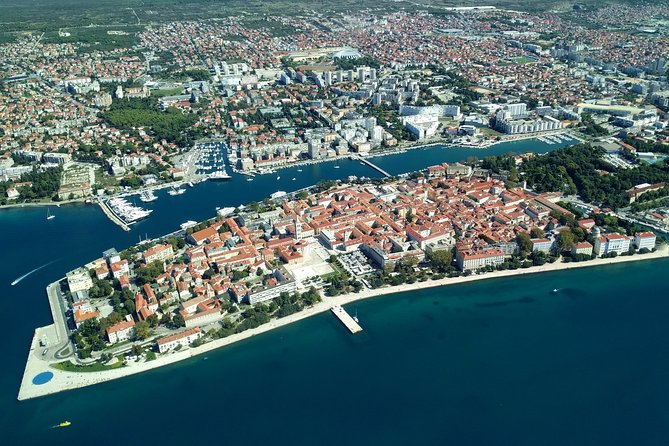
Narodni Trg, or People’s Square, has been the center of public life in Zadar for centuries. This is a useful stop because it connects monuments with ordinary city life. You are not just looking at old façades. You are seeing the place where public activity continues today.
The guide points out the City Loggia, the City Guard, and the clock tower. You also learn about Kalelarga, meaning Wide Street, the city’s best-known thoroughfare. The route spends around 15 minutes here.
This section is particularly helpful if you plan to explore alone afterward. You will have a clearer sense of how the old town connects, where the main street runs, and which public squares deserve a second look. The stop also gives you a break from the strictly ancient and religious sights.
Because the tour is private, you can ask your guide for suggestions about what to visit after the walk. Guides have been praised for pointing out places beyond the standard route, including local food, customs, and less obvious details in the old town.
St. Simeon and the silver chest
St. Simeon’s Church began as an Early Christian basilica in the fifth century. Inside is a silver chest holding the relics of St. Simon, Zadar’s patron saint.
The guide spends about 15 minutes explaining the saint and the chest, which is considered a major example of goldsmith’s work. This is an important cultural stop, since it links religious devotion, local identity, and fine craft.
Again, check the difference between hearing about an interior and entering it. The attraction is listed as free on the route, but the tour information does not promise paid admission inside every church. If the chest is a priority, confirm what you will see during the walk.
The Five Wells and Zadar’s defenses
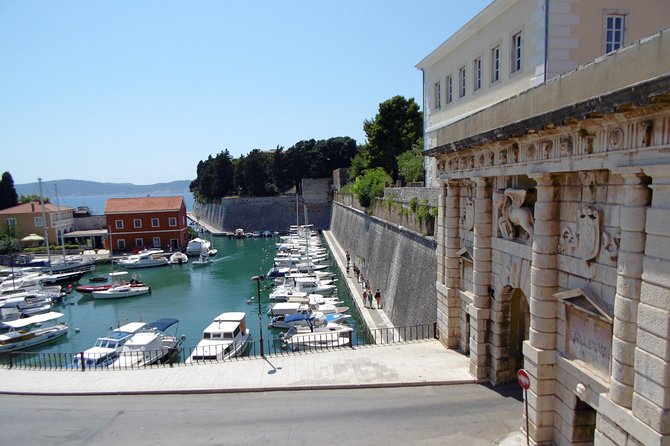
The final listed stop is Five Wells Square, where the Venetians built a large water cistern. In a city that has faced repeated attacks and shifting rule, water storage was not a minor convenience. It was part of keeping the population supplied during a siege.
Here, your guide connects the wells to Zadar’s defensive walls, which are included on UNESCO’s World Heritage List. This is a strong ending because it brings together practical engineering, military history, and the city’s long relationship with Venice.
The stop lasts about 15 minutes and is free. You will likely leave with a better understanding of why Zadar’s old town is shaped by walls, gates, water systems, and narrow streets. The city’s past is not just decorative. Its buildings reflect the pressures of defense and survival.
The Maraschino tasting
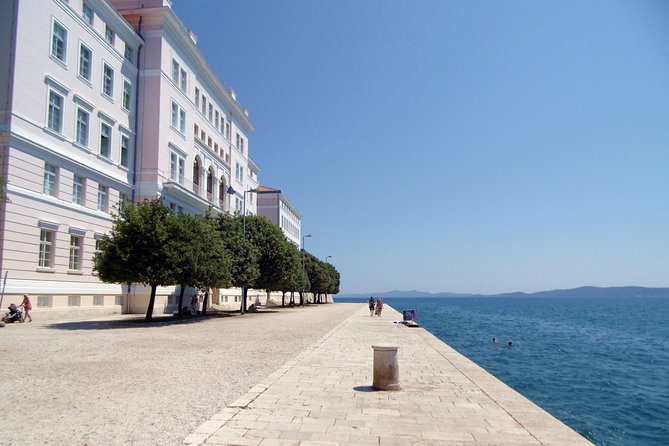
The tasting adds something the usual monument walk often misses. Maraschino is a fruit liquor associated with Zadar, and the tour includes a sample. Its aroma and flavor have been enjoyed by famous figures including Charlie Chaplin, Ernest Hemingway, and Charles Baudelaire.
This is not presented as a full food tour, so keep your expectations in proportion. You get one local specialty rather than a series of restaurant visits or a meal. Still, it gives you a direct connection to the city’s food and drink culture.
If you do not drink alcohol, ask about the tasting before the tour. The supplied information confirms the Maraschino sample but does not specify a nonalcoholic alternative.
Guides, pace, and the private advantage
The strongest part of this experience is the guide. Lucija has been praised for being patient when a group arrived late and for showing pride in Zadar and Croatia. Lea is described as energetic, clear in English, and attentive to walking speed. Ivana has also received warm praise for showing the finest parts of the old town in an interesting, never dull way.
A guide can also add personal context. One tour included discussion of the 1991 to 1995 war, including grenade marks still visible on walkways and changes in architecture linked to the groups that ruled the city at different times. Those details help you understand modern Zadar, not just its Roman and medieval past.
The tour is offered in English, German, Spanish, French, and Italian. You receive a licensed local guide, but you do not receive pickup or drop-off. You need to reach the meeting point at Poljana Pape Aleksandra III 7 on your own.
The flexible start time is especially helpful for cruise passengers. The tour can be adjusted around your ship’s schedule, and guides have shown patience when arrivals run late. Still, you should contact the provider as soon as you know your timing. A flexible start is useful, but it is not a guarantee that any delay can be absorbed without limit.
Is $295 a fair price?
At $295.01 per group, the price is not cheap for one or two people. For a couple, the cost works out to roughly $147.50 per person. For a family or group of 10, it becomes about $29.50 per person, and for 15 people it is less than $20 per person.
That makes the tour best suited to families, multigenerational groups, wedding parties, and cruise groups who want their own guide. You are paying for privacy, a licensed local guide, language choice, a flexible start time, and the Maraschino tasting.
For a solo visitor or couple on a tight budget, a group tour or self-guided walk may offer better value. The private format becomes worthwhile when you care about asking questions, setting a comfortable pace, or keeping the whole group together.
The rating is 4.9 out of 5 from 11 ratings, with 100 percent recommending it. That is a very strong record, though the sample is small. I would put more weight on the repeated comments about guide quality and clear communication than on the number alone.
Practical details before you go
The route is a walking tour through the historic center and waterfront. Most people can participate, and service animals are allowed. The meeting point is near public transportation, but pickup and drop-off are not provided.
Wear comfortable shoes. The exact amount of walking between stops is not stated, but the itinerary covers the Forum, several churches, People’s Square, the waterfront, and Five Wells Square in about two hours.
The experience requires good weather. If poor weather causes cancellation, you are offered another date or a full refund. You can cancel for a full refund up to 24 hours before the start time. Changes or cancellations made less than 24 hours before the start are not accepted for a refund.
Who should book this Zadar tour?
I would choose this walk if you have only a short time in Zadar and want the main sights explained in a sensible order. It is also a strong choice for cruise passengers, families, and groups who prefer a private pace.
The tour suits you especially well if local stories matter as much as photographs. You hear about Roman planning, church traditions, Venetian defenses, the recent war, local customs, and Maraschino. That range gives the walk more substance than a simple checklist of monuments.
I would hesitate if you want extensive interior visits, a food tour with several tastings, or a slow half-day exploration. The itinerary is compact, and several major buildings are viewed from outside.
Should you book it?
Book this Zadar walking tour if you want a friendly private guide, a flexible start time, and a well-chosen introduction to the old town. The repeated praise for Lucija, Lea, and Ivana suggests that the guide is the heart of the experience.
The best value comes with a larger group. Before paying, confirm the church admission details and tell the operator your cruise arrival time or any mobility concerns. If you do that, you should get a useful first look at Zadar, plus the pleasant bonus of hearing the sea play its stone organ.
FAQ
How long does the Zadar walking tour last?
The tour lasts approximately two hours.
How much does the private tour cost?
The price is $295.01 per group, with up to 15 people included.
Is the tour private?
Yes. Only your group participates in the activity.
What languages are available?
The licensed local guide can provide the tour in English, German, Spanish, French, or Italian.
Where does the tour start?
The meeting point is Poljana Pape Aleksandra III 7, 23000 Zadar, Croatia.
Where does the tour finish?
The tour ends back at the meeting point.
Is Maraschino tasting included?
Yes. A tasting of Maraschino, a local fruit liquor, is included.
Are church admission tickets included?
Admission inside the Church of St. Donatus and the Cathedral of St. Anastasia is not included. The tour provides information about these buildings, and St. Donatus is passed by without an interior visit.
Can the start time be changed for a cruise ship schedule?
Yes. The start time can be adjusted to suit your cruise ship schedule.
Just added around Zadar
- Zadar Guided Electric Bike Tour★ 5.0 · 9 reviews
- Zadar: Private Half Day Speedboat Tour★ 4.4 · 9 reviews
- Zadar: Sunset Panorama Tour with Eco Tuk Tuk★ 5.0 · 9 reviews
- PRIVATE Romantic Sunset Boat Tour Zadar with Local Wine 1,5h★ 4.5 · 9 reviews
- National Park Krka Private Return Day Transfer by Minivan★ 4.5 · 9 reviews
- Krka Waterfalls private transfer with Pickup & Drop Off★ 5.0 · 9 reviews
- Private 3 Hour Sightseeing Tour of Major Attractions in Zadar★ 5.0 · 10 reviews
- Private Sunset Tour across Zadar shoreline★ 5.0 · 10 reviews
Walking Tours, compared.




Walking Tour of Split and Diocletian’s Palace
Read our review →


Krka Waterfalls tour with Trogir Walking tour and Krka panoramic boat cruise
Read our review →
City Walls Early Morning or Sunset Walking Tour
Read our review →Browse the lists this tour appears in