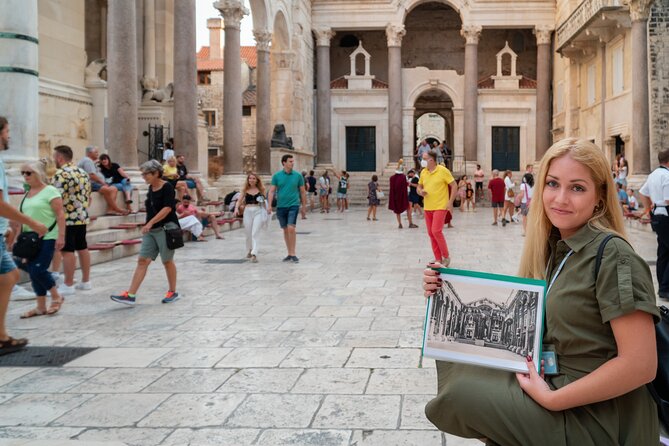
Reviewed · SPLIT TOURS
Storytelling World War II in Split Tour
History can hide in plain sight. This two-hour tour connects Split’s Roman streets with its World War II past, using old photographs, maps, and local stories to show what happened where you are standing. I especially like the archival images from the City Museum and Ina Nikolic’s personal, story-led approach. The main drawback is that the tour involves quite a bit of standing, with less walking than some visitors may expect.
I also like the small group limit of 15 people, which should make questions easier and the photographs easier to see. Ina’s talk can run longer than scheduled, a pleasant bonus if you enjoy history, but something to keep in mind if you have a tight evening plan.
In This Review
- Key points at a glance
- Why World War II Split deserves its own tour
- Starting on the Split Riva
- The Green Market and Split’s worst bombing
- Entering Diocletian’s Palace through the Silver Gate
- World War II beneath the Roman columns
- Narodni Trg and the city’s public tragedies
- Marmontova Ulica and the ordinary street
- Prokurative, prisons, and executions
- Ina Nikolic’s storytelling style
- Price, group size, and what you receive
- Who should book this Split tour?
- Should you book it?
- FAQ
- How long is the Storytelling World War II in Split Tour?
- What language is the tour offered in?
- How much does the tour cost?
- Where does the tour begin?
- Where does the tour end?
- Is pickup available?
- What is included in the tour?
- How large is the group?
- Can I cancel for a refund?
Key points at a glance
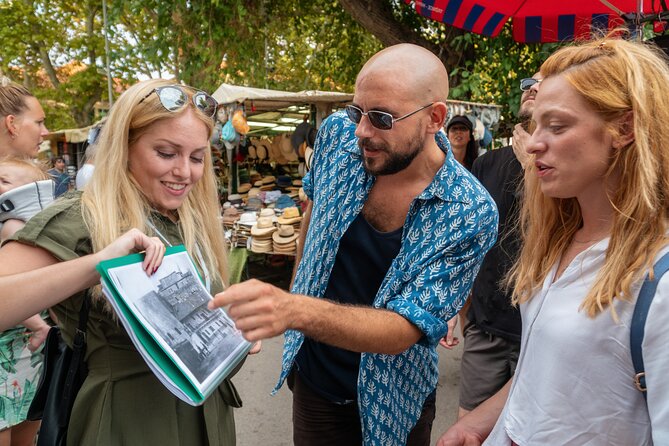
- Archival photographs used on the street: Ina has permission to show photographs held in the Museum of the City of Split, including images not on permanent public display.
- A World War II route through the old center: The tour links the Riva, Green Market, Diocletian’s Palace, Narodni Trg, Marmontova Ulica, and Prokurative.
- Strong local storytelling: Ina connects Split’s wartime events with the wider conflict, Jewish history, and, at times, the wars of the 1990s.
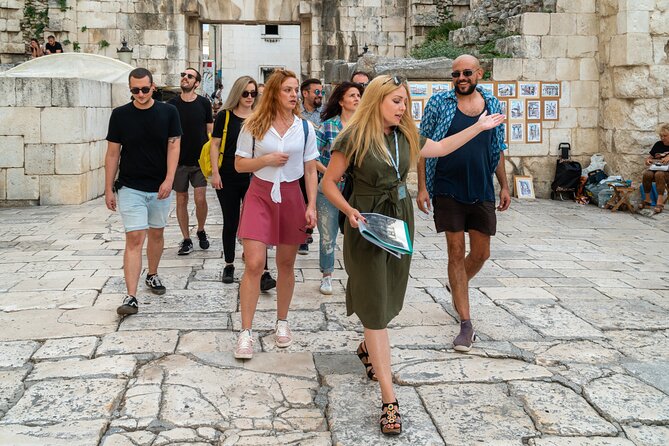
- Mostly standing and listening: The route includes short walks between stops, but the format is closer to an outdoor history talk than a brisk city walk.
- Small-group setting: A maximum of 15 people keeps this more personal than a large coach-style tour.
- Useful for history-minded visitors: The tour suits adults, families with older children, and anyone who wants more than ancient Roman monuments.
Why World War II Split deserves its own tour
Split is often introduced through Emperor Diocletian’s Palace, Roman columns, medieval squares, and the sea-facing Riva. That is a fine way to begin exploring the city, but it leaves out the events that shaped the lives of local families in the twentieth century.
This tour shifts your attention from ancient stone to modern memory. You learn when the war reached Split, why the city became involved, and how bombing, occupation, imprisonment, executions, and political violence affected familiar public spaces.
That change in focus is the tour’s main value. You may already have walked through the Green Market or crossed Narodni Trg without knowing what happened there during the war. Ina’s photographs help you compare the present-day streets with their wartime appearance, so the history has a clear physical setting rather than floating as a list of dates.
I also appreciate that the tour does not treat World War II as an isolated European story. The guide places Split’s experience within the larger conflict and gives attention to Jewish history. She may also connect the subject with Croatia’s wars in the 1990s, giving you a broader view of how recent events continue to shape the city.
Other Split trips people book alongside this one:
- Split: Krka Waterfalls Trip with Boat Cruise and Swimming
★ 4.8 · 10,519 reviews - From Split: Krka Waterfalls, Food & Wine Tasting Tour
★ 5.0 · 9,326 reviews - Blue cave, Mamma Mia and Hvar, 5 islands speedboat tour
★ 5.0 · 7,150 reviews
Starting on the Split Riva
The tour begins on the Riva at Obala Hrvatskog narodnog preporoda 27. This is a practical starting point in the center, close to Split’s waterfront and within easy reach of the old city.
The opening 15 minutes answer three basic questions: when the war began in Split, where it began, and why. Those questions provide a useful frame for the rest of the route. Instead of receiving disconnected facts at each stop, you get a starting point for understanding the city’s wartime position.
The Riva itself is an interesting place to begin because it is one of the most recognizable public spaces in Split. The tour uses that familiar setting to show how ordinary streets and gathering places can become part of military and political events.
You should arrive ready to stand while listening. The Riva can be a lively part of town, so the guide’s photographs and clear explanations matter here. This is not a museum room with seats and controlled lighting. It is an outdoor talk in the middle of the city.
The Green Market and Split’s worst bombing
After the Riva, the group reaches the Green Market, where the guide discusses what is described as the most horrific bombing in Split. The stop lasts about 15 minutes and has no admission charge.
This is one of the route’s strongest moments because it links wartime destruction with a place that still serves an everyday purpose. Markets are about food, errands, and local routine. Learning that this setting was touched by one of the city’s darkest attacks makes the past feel immediate without requiring a formal memorial site.
Ina’s use of historic photographs is especially helpful here. You can look at the present-day market area while seeing evidence of how the place looked during the war. That then-and-now comparison is a repeated strength of the tour.
The main practical point is pace. You are likely to spend more time listening than walking at this stop. If you prefer a fast-moving tour with constant sightseeing, this format may feel slow. If you want a serious explanation of one important event, the time is well used.
Entering Diocletian’s Palace through the Silver Gate
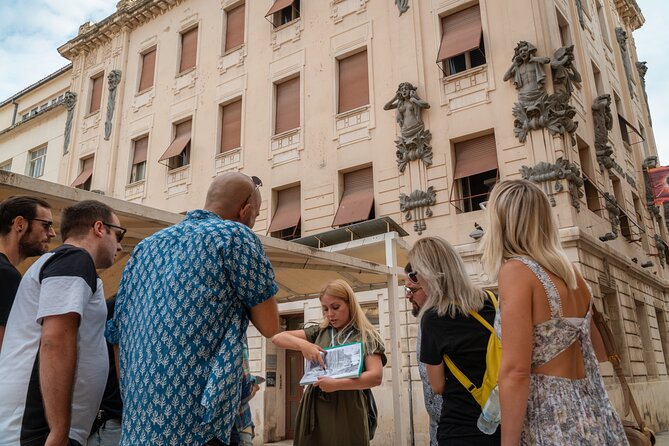
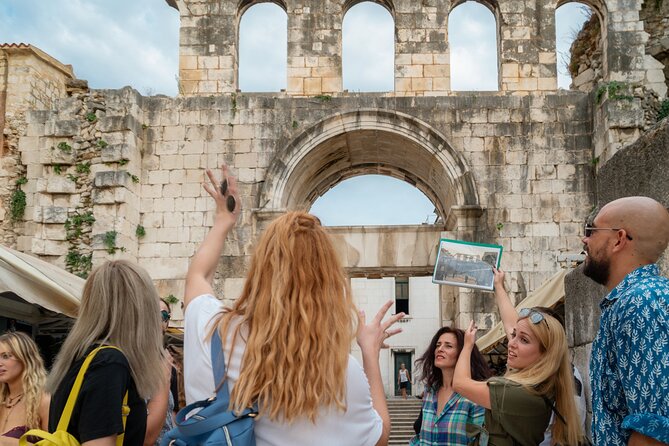
The Eastern Gate, also called the Silver Gate, is a short five-minute stop. It is the eastern entrance to Diocletian’s Palace, and the guide uses it to continue the story of how the old center was affected during World War II.
Because this stop is brief, it works as a link between the broader city and the palace complex. You are not visiting the gate as an archaeological site in the usual way. Instead, you are learning how a structure from the Roman period became part of a much more recent conflict.
That contrast is one of the tour’s recurring ideas. Split’s ancient buildings did not exist in a sealed historic bubble. They remained part of a living city, and residents experienced twentieth-century violence in and around them.
The gate is also a useful reminder that wartime history does not always happen in purpose-built military locations. It can unfold at entrances, squares, markets, streets, and buildings people still use every day.
Something different for another day:
- From Split: Krka Waterfalls, Food & Wine Tasting Tour
★ 4.9 · 6,598 reviews - Split/Trogir: Blue Cave, Mamma Mia, Hvar and 5 Island Tour
★ 4.6 · 6,320 reviews - Blue Lagoon & 3 Islands Cruise with Lunch from Split
★ 4.5 · 5,756 reviews - Split: Old Town and Diocletian Palace Walking Tour
★ 4.9 · 4,727 reviews
World War II beneath the Roman columns
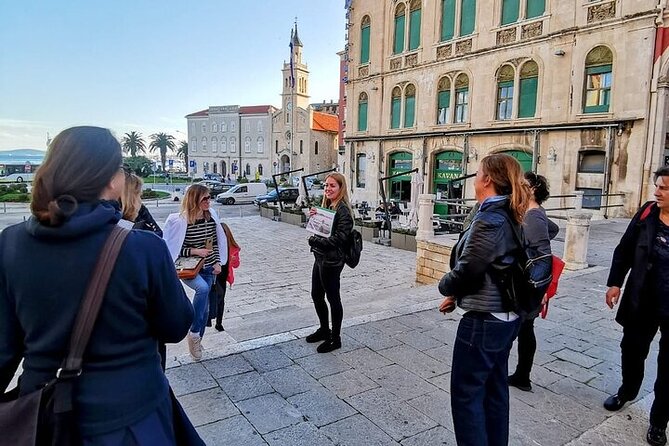
At the Peristyle, you spend about 15 minutes examining which parts of Diocletian’s Palace were attacked during the war. This is likely to be the most visually striking stop for first-time visitors because the setting is so famous.
The Peristyle is usually associated with Roman architecture. Ina adds another layer by showing damage and wartime events connected with the palace. Her archival photographs give you a way to see the square as more than an ancient monument.
I like this part of the route because it asks you to hold two time periods in mind at once. The palace is nearly two thousand years old, but its stones also carry traces of modern conflict. The result is a more honest picture of Split, one that includes both celebrated antiquity and painful recent events.
The stop may appeal to families with older children. One published account describes a 16-year-old enjoying the experience, which fits the tour’s mix of visual material and clear storytelling. Younger children who need constant movement may find the long explanations harder to follow.
Narodni Trg and the city’s public tragedies
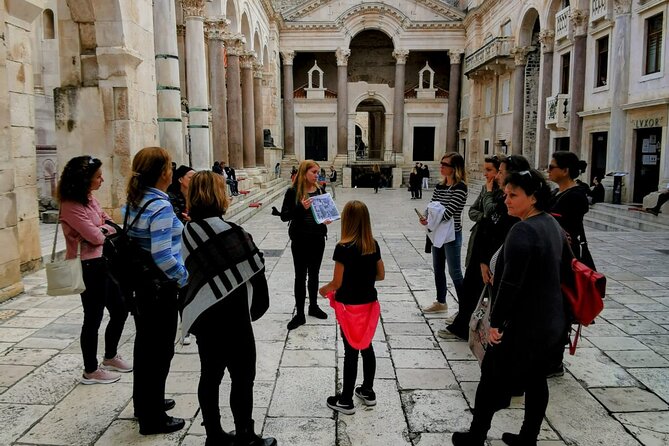
Narodni Trg, the main square, receives another 15-minute discussion. Here, Ina explains terrible events that took place during the war.
The square is important not just because it is central, but because public spaces often reveal how a city responds to fear and political control. The tour focuses on what happened in Split rather than offering only a broad military timeline. That local scale is the reason to choose this experience over a general World War II lecture.
This stop also gives you room to ask questions. Ina is praised for answering questions and for having a wide command of Split’s past, from ancient times through the twentieth century. Her style appears to be conversational rather than purely scripted, though the amount of discussion can vary with the group.
The photographs are valuable again. An old image can help you notice a building, street angle, or open space that would otherwise look ordinary. Bring your attention to the surroundings, not only to the guide. The best way to take part is to compare the image with what you see in front of you.
Marmontova Ulica and the ordinary street
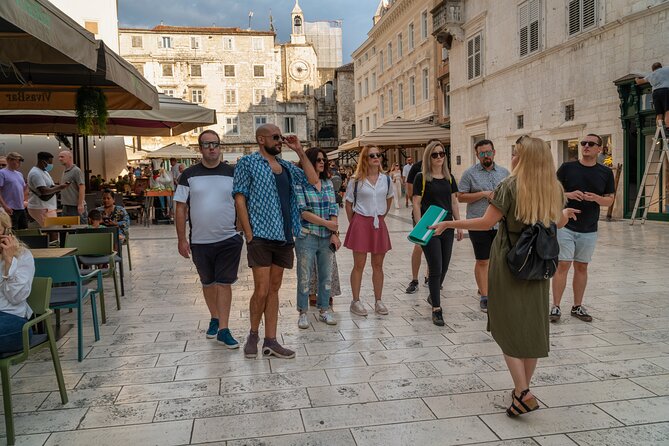
Marmontova Ulica is Split’s main street and receives a shorter five-minute stop. The guide explains how this street became a witness to wartime horrors.
This is not a long sightseeing pause, but it adds an important point: conflict affects routine routes as well as grand squares. A main shopping and walking street can carry difficult memories even when there is little visible evidence today.
The short duration also helps keep the tour moving toward Prokurative. You will not receive the same depth here as at the Green Market or Peristyle, but the stop supports the larger message that wartime Split extended through the whole center.
Again, expect to stand. The route is not demanding in terms of distance, but several stops involve listening in place. Comfortable shoes still make sense because you will walk between the locations on city streets.
Prokurative, prisons, and executions
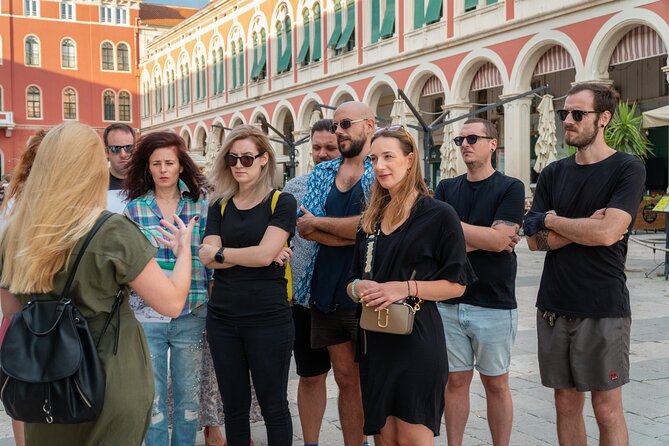
The tour ends at Republic Square, known locally as Trg Republike or Prokurative. The final history segment lasts about 15 minutes and covers prisons and executions during the war.
This is a serious ending rather than a light final anecdote. It gives the route a clear emotional weight and returns to the theme of public places being used in ways far removed from their present-day appearance.
The end point is convenient. You remain in Split’s historic center, close to the promenade, so you can continue exploring or make your way to another central destination. The tour does not return you to the Riva, but the two locations are both in the old center.
If you are planning dinner or another timed activity, allow a little flexibility. The stated duration is about two hours, while the listed stops add up to roughly 85 minutes of formal visit time. That leaves room for walking, questions, photo comparisons, meeting arrangements, and a guide who may continue beyond the planned finish.
Ina Nikolic’s storytelling style
Ina Nikolic is the central reason this tour receives such strong praise. The most repeated compliments focus on her passion, warmth, storytelling, and command of Split’s past. She is a licensed local guide, and her approach appears to be personal rather than mechanical.
Her strongest tool is the combination of narrative and visual evidence. She brings old photographs and aerial maps, then compares them with the streets you see today. That method helps you understand location and scale. You do not have to rely on imagination alone.
I also value the attention to Jewish history. This subject can disappear from general city tours, especially when guides focus only on armies and political leaders. Here, the local human cost receives more attention.
The guide may also extend the discussion into the wars of the 1990s. That can be useful if you want to understand Croatia’s more recent past, though it means the tour is not limited to a narrow military chronology. If you want only battles, dates, and commanders, this may not be the right fit. If you want Split’s lived experience across several periods, the wider scope is a plus.
Price, group size, and what you receive
The price is $60.01 per person. For a two-hour city tour, that is not the cheapest way to see Split, but the value depends on what you want from a guide.
You are paying for a licensed local guide, a small group capped at 15 people, and access to archival photographs from the Museum of the City of Split that are not on permanent display. You are also paying for a focused subject that standard palace tours usually do not cover.
At the maximum group size, the experience should still feel manageable, though you may need to position yourself so you can see the photographs clearly. A smaller booking would offer the most personal setting, especially if you have detailed questions about local families, Jewish history, or wartime events.
Pickup is offered from the Split ferry port at Obala kneza Domagoja. The meeting point can also be arranged in the center for group members, while the stated starting address is on the Riva. Confirm the exact meeting arrangement after booking, since confirmation is subject to availability and is sent within 48 hours.
Free cancellation is available if you cancel at least 24 hours before the start time. Service animals are allowed, the tour is near public transportation, and most people can participate. No admission tickets are required at the stops.
Who should book this Split tour?
I would choose this tour if you have even a modest interest in World War II, local memory, Jewish history, or the way modern events shaped an ancient city. It is also a good choice if you have already seen Diocletian’s Palace and want to understand the streets around it in a new way.
Families with older children can benefit from the photographs and location-based stories. The tour has enough visual material to help a teenager follow the subject, while the content is serious enough for adults who want more than a simplified overview.
It is less suitable if you want a relaxed sightseeing walk with frequent movement and scenic stops. You will walk through the center, but you will spend a lot of time standing while Ina speaks. The subject also includes bombing, imprisonment, and executions, so it is not a light entertainment tour.
Should you book it?
Book this tour if you want Split’s twentieth-century story told by a local guide who clearly cares about the subject. The archival photographs, then-and-now comparisons, Jewish history, and wartime locations make the $60.01 price easier to justify, especially in a group of 15 or fewer.
Skip it if your time in Split is very short and your only goal is ancient architecture, food, or waterfront views. For everyone else, this is a thoughtful way to see familiar streets differently. Just wear comfortable shoes, expect plenty of standing, and leave a little extra time in case Ina’s stories run past the two-hour mark.
FAQ
How long is the Storytelling World War II in Split Tour?
The tour lasts approximately two hours.
What language is the tour offered in?
The tour is offered in English.
How much does the tour cost?
The listed price is $60.01 per person.
Where does the tour begin?
The stated starting point is Obala Hrvatskog narodnog preporoda 27 on the Split Riva.
Where does the tour end?
The tour ends at Republic Square, also called Trg Republike or Prokurative, in Split’s historic center.
Is pickup available?
Yes. Pickup is offered at the Split ferry port, at Obala kneza Domagoja. A flexible meeting point in central Split may also suit group members.
What is included in the tour?
The experience includes a local licensed guide and old World War II photographs held in the Museum of the City of Split archive. The guide has permission to use these images.
How large is the group?
The tour has a maximum of 15 participants.
Can I cancel for a refund?
Yes. You can cancel for a full refund up to 24 hours before the experience begins. Changes or cancellations made less than 24 hours before the start time are not accepted for a refund.
Just added around Split
- Private VIP Blue Lagoon and 3 Islands Tour★ 4.5 · 9 reviews
- Split highlights – Evening walking tour★ 5.0 · 9 reviews
- Private boat transfer Split – Bol★ 5.0 · 9 reviews
- From Split: Trogir & Blue Lagoon Boat Tour with Snorkeling★ 4.6 · 9 reviews
- Private Photography Activity in Split★ 5.0 · 9 reviews
- Bike, Beer & Poljud Stadium Tour★ 5.0 · 9 reviews
- From Hvar: Blue cave group speedboat tour full day★ 5.0 · 9 reviews
- Split Walking Tour: History, Legends & Tales★ 5.0 · 9 reviews
Split Tours, compared.

Krka Waterfalls Trip with Boat Cruise and Swimming
Read our review →
Blue cave, Mamma Mia and Hvar, 5 islands speedboat tour
Read our review →
Blue Cave, Mamma Mia, Hvar and 5 Island Tour
Read our review →
Blue Lagoon & 3 Islands Cruise with Lunch from Split
Read our review →