
Reviewed · FOOD & DRINK
Split: Private Food Tasting Tour
Taste Split one bite at a time. This two-hour private walk links the Green Market, Fish Market, chocolate shop, and old pastry shop with stories about Dalmatian food. I like the small private format and the mix of savory snacks, sweets, olive oil, and local wine. I also like that a local English-speaking guide gives context instead of simply handing you samples. The main catch is that $176 covers up to two people, so solo visitors pay a steep price for a short tour.
I would book this early in your Split stay. It helps you recognize local foods for the rest of your trip, and the meeting point at the Golden Gate puts you right inside Diocletian’s Palace. Just remember that this is a tasting walk, not a full lunch, and the current two-hour format should not be confused with separate wine or cooking experiences sometimes offered by the same provider.
In This Review
- Key points at a glance
- Starting beneath Split’s Golden Gate
- The Green Market: where Dalmatia begins with produce
- The Fish Market and Split’s seafood culture
- Dalmatian snacks with a story behind them
- Olive oil, wine, and the right expectations
- Chocolate with a Guinness World Record
- Finishing at Split’s oldest pastry shop
- What the two-hour pace feels like
- Who gets the most from this food walk
- Practical booking advice for Split
- Should you book the Split food tasting tour?
- FAQ
- Where does the Split food tasting tour begin?
- Where does the tour finish?
- How long does the experience last?
- What food and drinks are included?
- Does the tour visit local markets?
- Are chocolate and pastries included?
- Is this a private tour?
- Is hotel pickup included?
- Can children join the tour?
Key points at a glance
- Four useful food stops: See Split’s Green Market, Fish Market, a local chocolate shop, and the city’s oldest pastry shop.
- Classic Dalmatian tastes: Try prosciutto, cheese, Soparnik, salted anchovies, almonds in sugar, olive oil, local wine, and homemade bread.
- Private for up to two: You get a personal guide rather than a large group, with room for questions about food and local customs.
- A good first morning in Split: The tour gives you an introduction to Dalmatian eating before you choose restaurants and market foods on your own.
- Moderate walking: The route covers several central food stops, but one detailed account described the walking as manageable rather than strenuous.
- Plan around the restrictions: Children must stay with an adult, unaccompanied minors are not allowed, and the experience is not suitable for wheelchair users.
Starting beneath Split’s Golden Gate
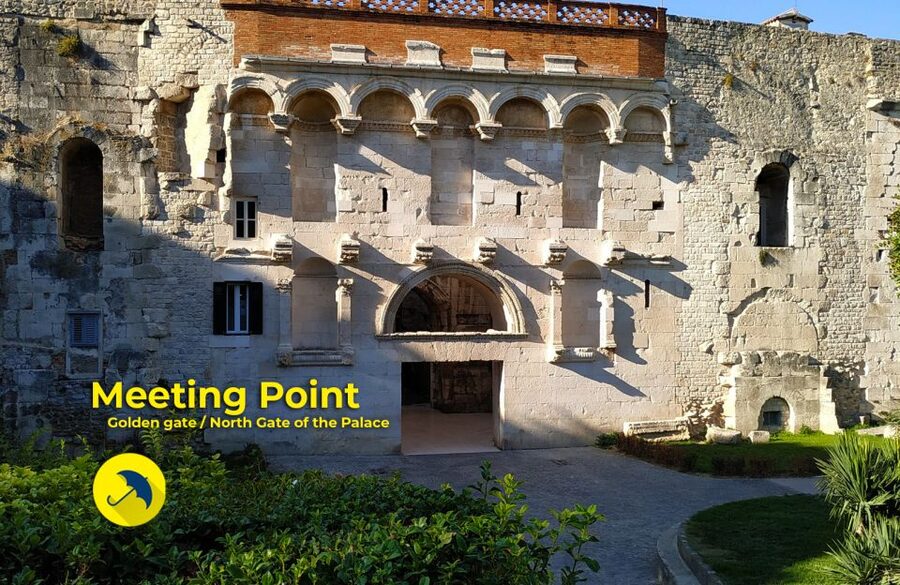
Your meeting point is the Golden Gate of Diocletian’s Palace, down the stairs from the bronze statue of Gregory of Nin. Look for the guide carrying a blue umbrella. This is a clear landmark in the old center, but the stairs and the busy setting make it wise to arrive a few minutes early.
The location is fitting. You are not being picked up at a hotel and driven to a distant food venue. You begin among the stone lanes of Split’s historic core, then move into the markets that still serve the city’s daily life. The return point is also the Golden Gate, so you finish where you began.
The guide leads in English, and the tour is a private group experience. For two people, that can be a pleasant arrangement: you can ask why a dish is made a certain way, how to use olive oil, or what to buy later without waiting for a large group to catch up.
Several guides have received strong praise for their approach, including Marta, Antonio, Antonia, Jakov, Darko, and Ivan. The most consistent strengths are clear explanations, warmth, humor, and a real interest in local food. Guide assignments can change, so book this for the format rather than expecting one particular person.
More Food Tours in Split
- From Split: Krka Waterfalls, Food & Wine Tasting Tour
★ 5.0 · 9,326 reviews - From Split: Krka Waterfalls, Food & Wine Tasting Tour
★ 4.9 · 6,598 reviews - Split: Blue Lagoon and 3 Island Cruise with Food and Drinks
★ 4.8 · 1,969 reviews
The Green Market: where Dalmatia begins with produce
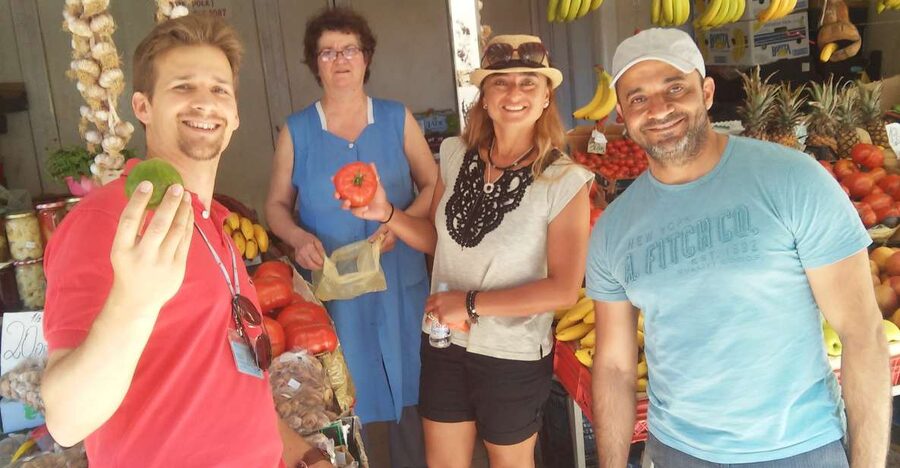
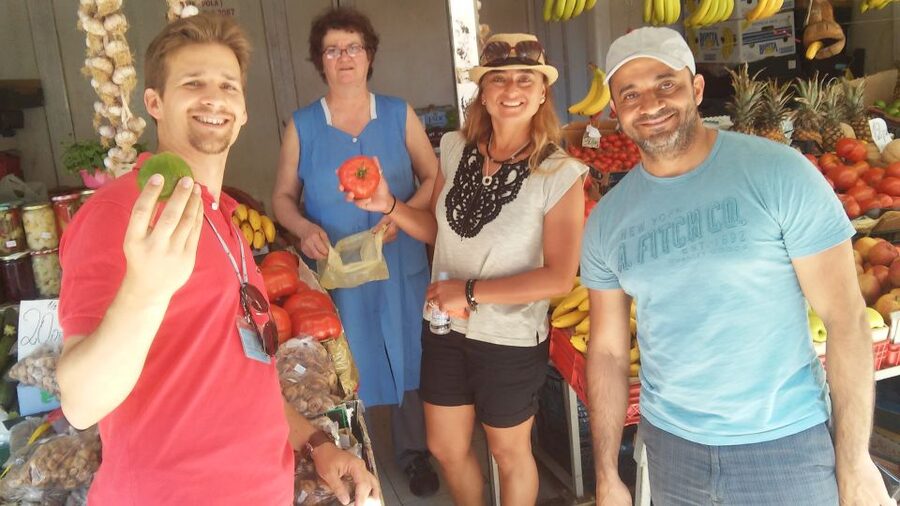
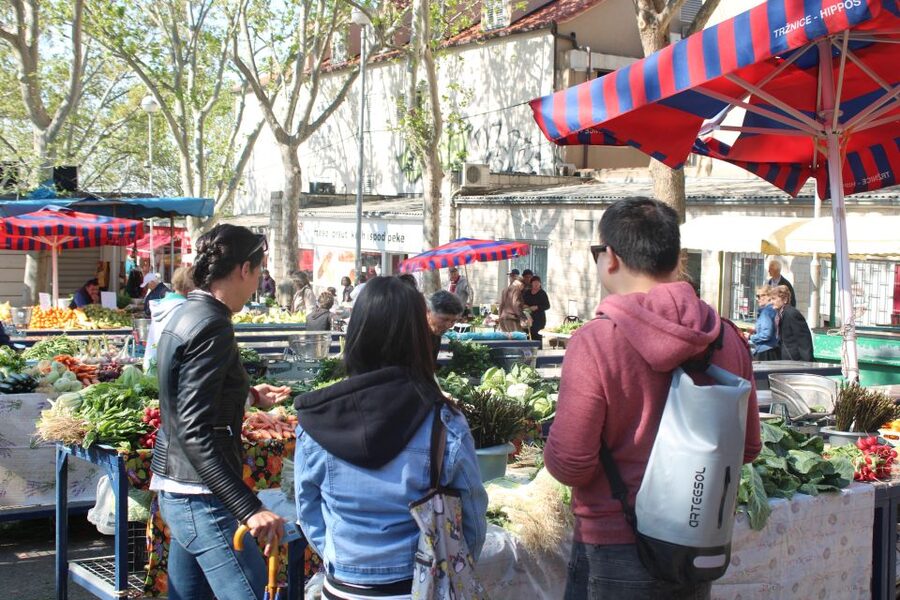
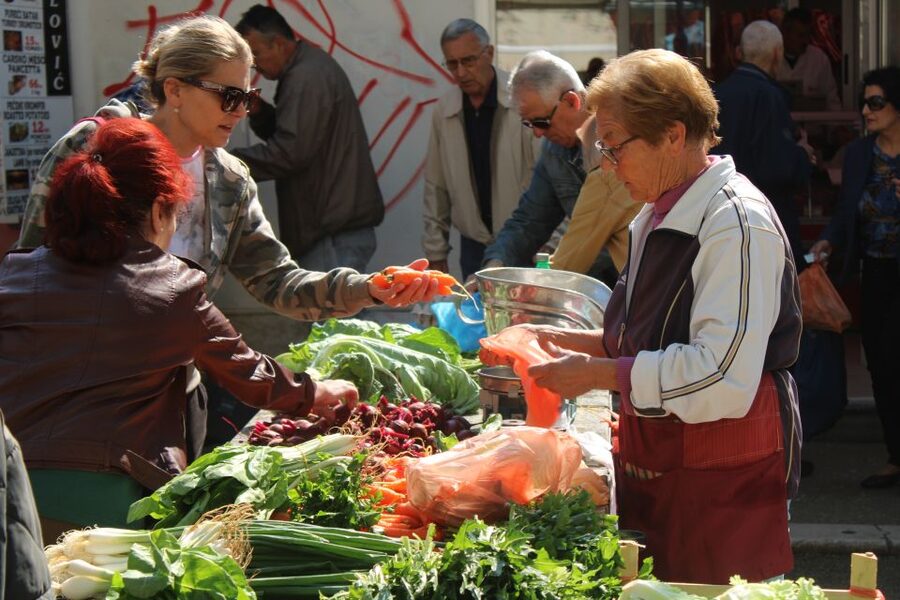
The Green Market, or farmers’ market, is one of the most useful stops because it gives you a quick lesson in how people shop for food in Split. You may see the produce that supports everyday Dalmatian cooking, along with ingredients used beside fish, cheese, cured meat, and bread.
The value here is not just the tasting. A guide can explain how market foods fit into local meals and point out the difference between something eaten as a snack and something meant for a longer meal. That context matters in Croatia, where a small plate of cheese, prosciutto, bread, and olives can be more than a starter. It can be the meal.
The Green Market is also a practical stop for your own holiday. After the tour, you will have a better idea of what looks local and what you might want to buy for a picnic. You may also pick up ideas for gifts, though the tour itself is built around tasting and explanation rather than shopping time.
Do not expect a full produce lesson or a cooking class in two hours. The guide has several stops to cover, so the market visit works best as a lively introduction rather than an exhaustive tour of every stall.
The Fish Market and Split’s seafood culture
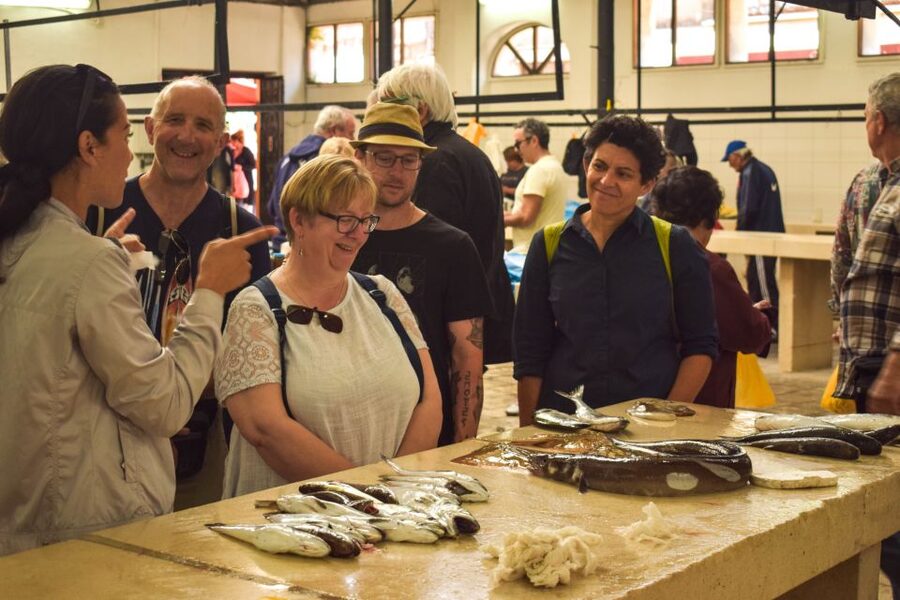
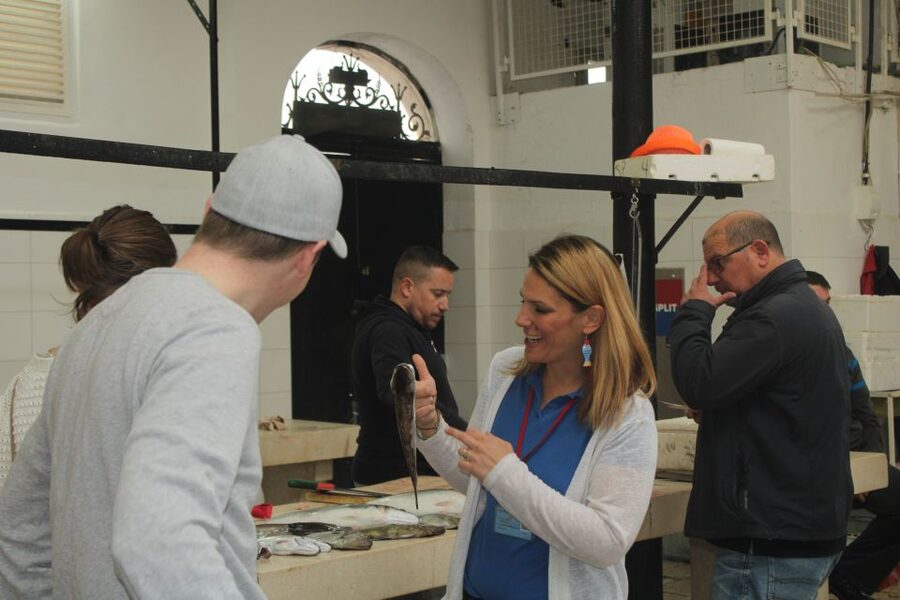
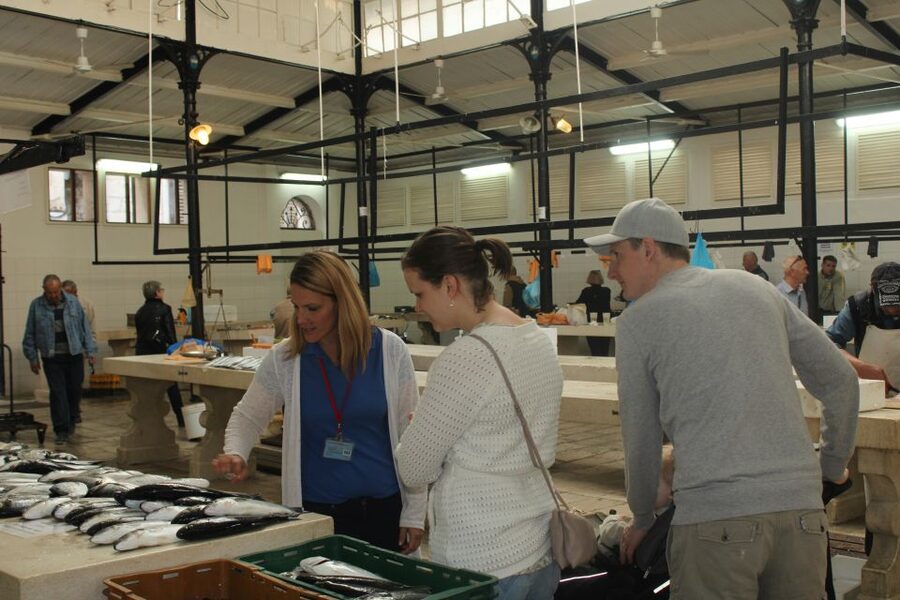
The Fish Market adds a different side of Dalmatian food. Fish and seafood are central to the coast, and this stop gives the guide a chance to explain how local ingredients are selected and traditionally prepared.
Past versions of this kind of experience have included choosing fish at the market and having it cooked elsewhere for lunch. That is not part of the current advertised two-hour tasting package, which lists salted anchovies, local wine, olive oil, and other samples instead. I would not book this tour expecting a cooked fish meal unless the operator confirms that separately.
That distinction is important. The current experience is a food walk with several tastings. It is not a market-to-table lunch, and it does not include hotel pickup or a restaurant meal in the listed inclusions.
Still, the Fish Market is a worthwhile stop. You get a clearer sense of the connection between Split’s location on the Adriatic and its food traditions. If you already plan to order grilled fish or seafood during your stay, the guide’s explanations can help you make a more informed choice.
The market can also be active and crowded, especially when cruise ships are in port. One useful detail from the tour’s history is that the start time has sometimes been moved earlier to avoid cruise crowds. Check the confirmed start time and accept an early morning slot if offered. You may gain a calmer visit and a more comfortable walk.
Dalmatian snacks with a story behind them
The heart of the experience is the tasting itself. The food list includes Dalmatian prosciutto with homemade bread, cheese, almonds in sugar, Soparnik, salted anchovies, olive oil, and local wines. Arancini are also highlighted as a traditional snack.
These are not random samples chosen simply because they are easy to serve. They represent several parts of Dalmatian food culture: cured meat, simple bread, preserved fish, regional pastry, nuts, sweets, and the everyday use of olive oil.
Soparnik is especially useful to try with a guide. It is a traditional savory pastry associated with Dalmatian cooking, and hearing the story behind it gives you more than a quick taste. Arancini bring another familiar local flavor, while prosciutto and cheese show how much of the region’s food depends on good ingredients served without fuss.
The guide also explains the customs and background connected with each bite. This is where the tour earns its place over simply walking into a shop and buying snacks. You learn what the food is, how it fits into local life, and what you might see again on a restaurant menu.
The quantity should be enough to make the tour satisfying, but you should not treat it as lunch. A detailed account described the samples as just nice, which is a useful expectation. You will taste many items, but the point is variety and understanding, not a large sit-down meal.
Something different for another day:
- Split: Krka Waterfalls Trip with Boat Cruise and Swimming
★ 4.8 · 10,519 reviews - Blue cave, Mamma Mia and Hvar, 5 islands speedboat tour
★ 5.0 · 7,150 reviews - Split/Trogir: Blue Cave, Mamma Mia, Hvar and 5 Island Tour
★ 4.6 · 6,320 reviews - Blue Lagoon & 3 Islands Cruise with Lunch from Split
★ 4.5 · 5,756 reviews
Olive oil, wine, and the right expectations
Local olive oil is included among the tastings. This may seem like a small detail, but olive oil is one of the clearest ways to understand the region’s cooking. You can pay attention to how it is presented with bread and how it changes the taste of a simple snack.
Local wine is also included. The experience is not marketed as a full wine tour, so expect a taste rather than an extended flight. One account specifically wished for more wines, while other food and wine experiences connected with the provider involved different guides and longer formats.
That makes the boundary worth noting. If you want a dedicated wine excursion, book one separately and check the schedule carefully. The food walk gives you a short introduction to local wine alongside food, not a serious tasting course.
The same applies to olive oil. You will get a taste and explanation, but this is not an agricultural visit or a producer tour. For most people, that is the right balance in a two-hour city walk.
Chocolate with a Guinness World Record
The local chocolate shop is one of the more unusual stops. It has a Guinness World Record, which gives the tasting a memorable talking point and breaks up the traditional savory foods.
The shop adds variety to the route. After cured meat, cheese, bread, anchovies, and Soparnik, chocolate gives your palate a clear change of direction. It also shows that Split’s food identity is not limited to old recipes and market goods.
Ask the guide about the record and the shop’s place in the city’s food scene. The supplied details do not specify the exact record or the precise chocolate sample, so I would avoid booking with a fixed expectation about one particular product. The useful promise is a visit to a local chocolate shop with a notable claim, not a long chocolate-making demonstration.
This stop is likely to work well for families with older children, provided an adult accompanies them. Keep in mind that the minimum drinking age is 18, so younger participants should expect food tastings rather than wine.
Finishing at Split’s oldest pastry shop
The tour ends its food story with sweets at the city’s oldest pastry shop. That follows a familiar pattern in Dalmatian dining: after salty, savory foods, you finish with pastry or another sweet bite.
The pastry stop gives the guide another chance to explain how Split’s food traditions have changed and continued. You may learn which sweets locals associate with the city and what to look for during the rest of your stay.
I like this ending because it leaves you with something you can repeat on your own. You can return to the shop, compare its pastries with other bakeries, or use the guide’s suggestions when choosing dessert later.
As with the chocolate visit, the exact pastry selection is not specified. Think of this as a guided introduction to the shop rather than a guaranteed order of one named dessert. That keeps the experience flexible, though visitors with strict dietary needs should ask about ingredients before booking.
What the two-hour pace feels like
Two hours is a sensible length for a first taste of Split. You have enough time to visit several stops without giving up half a day of sightseeing. The route also finishes at the Golden Gate, making it easy to continue through Diocletian’s Palace afterward.
The walking appears manageable rather than demanding. One detailed account praised the amount of coverage without finding the walk excessive. Still, the route includes market areas and the stairs at the meeting point, and the operator states that the experience is not suitable for wheelchair users.
A private tour can also adjust its rhythm better than a large group. If you need a little more time at one stop, you can ask. The tradeoff is price: $176 per group of up to two works out to $88 per person for two people, before any additional food or drinks you buy yourself. For a solo visitor, the full group price is much harder to justify.
The tour lasts two hours, and starting times vary. If your schedule is open, an early start may be the smartest choice, especially on a day when cruise passengers are in town. You will also have the rest of the day for the palace, museums, lunch, or a trip outside central Split.
Who gets the most from this food walk
I would recommend this experience to first-time visitors who want a quick, friendly introduction to Dalmatian food. It suits couples especially well because the private price is fixed for two people and the format leaves room for questions.
It is also a good choice if you prefer food stories to restaurant lectures. The guide connects the snacks with local markets, customs, and city life, so you get both flavor and context.
Families can book it if children are accompanied by an adult and are comfortable with the listed foods. The chocolate and pastry stops may appeal to younger eaters, while the anchovies, olive oil, cheese, and cured meat offer plenty for adults.
I would hesitate if you need a wheelchair-accessible route, want a full lunch, or expect a long wine tasting. I would also compare the cost carefully if you are alone. A private tour offers personal attention, but $176 for two hours is a premium price.
Practical booking advice for Split
No hotel pickup is included. Meet at the Golden Gate, down the stairs from Gregory of Nin’s bronze statue, and look for the blue umbrella.
Free cancellation is available up to 24 hours before the start for a full refund. You can also reserve now and pay later, which helps if your Split plans are still shifting.
The tour is offered in English with a licensed guide. Confirmation comes at booking. Children must be accompanied by an adult, unaccompanied minors are not permitted, and the minimum drinking age is 18.
I would eat lightly beforehand, but I would not arrive hungry enough to expect lunch. The tastings cover many flavors, and the point is to sample rather than fill up. Afterward, you can use the guide’s food suggestions to choose a proper meal nearby.
Should you book the Split food tasting tour?
Book it if you want a short private introduction to Dalmatian food with a local English-speaking guide. The best parts are the market visits, the range of traditional snacks, the stories behind the food, and the easy fit at the start of a Split itinerary.
Think twice if you want a full meal, a serious wine program, or an accessible route. At $176 for up to two people, the value is strongest for a couple who will use the guide’s advice for the rest of the trip. For that audience, this is a practical and tasty way to get oriented before Split’s menus start looking like a list of unfamiliar names.
FAQ
Where does the Split food tasting tour begin?
It begins at the Golden Gate of Diocletian’s Palace, down the stairs from the bronze statue of Gregory of Nin. Look for a guide with a blue umbrella.
Where does the tour finish?
The tour returns to the Golden Gate after the two-hour food tasting walk.
How long does the experience last?
The food tasting tour lasts two hours. Starting times vary, so you need to check availability for the date you want.
What food and drinks are included?
Included tastings include prosciutto, cheese, almonds in sugar, Soparnik, salted anchovies, local wines, olive oil, and other traditional food and snacks. Arancini and Dalmatian prosciutto with homemade bread are also highlighted.
Does the tour visit local markets?
Yes. The experience visits both the Farmers’ Market, also called the Green Market, and the Fish Market.
Are chocolate and pastries included?
The route includes a visit to a local chocolate shop with a Guinness World Record and a visit to the city’s oldest pastry shop. Traditional food and snack tastings are included.
Is this a private tour?
Yes. It is a private group experience priced at $176 for a group of up to two people.
Is hotel pickup included?
No. Hotel pickup is not included. You need to meet the guide at the Golden Gate.
Can children join the tour?
Children must be accompanied by an adult, and unaccompanied minors are not allowed. The minimum drinking age is 18.
Just added around Split
- Private VIP Blue Lagoon and 3 Islands Tour★ 4.5 · 9 reviews
- Split highlights – Evening walking tour★ 5.0 · 9 reviews
- Private boat transfer Split – Bol★ 5.0 · 9 reviews
- Private Photography Activity in Split★ 5.0 · 9 reviews
- From Split: Trogir & Blue Lagoon Boat Tour with Snorkeling★ 4.6 · 9 reviews
- Bike, Beer & Poljud Stadium Tour★ 5.0 · 9 reviews
- From Hvar: Blue cave group speedboat tour full day★ 5.0 · 9 reviews
- Split Walking Tour: History, Legends & Tales★ 5.0 · 9 reviews
Food & Drink, compared.
Blue Lagoon and 3 Island Cruise with Food and Drinks
Read our review →
Krka National Park Tour with tour Guide & Wine tasting from Split & Trogir
Read our review →
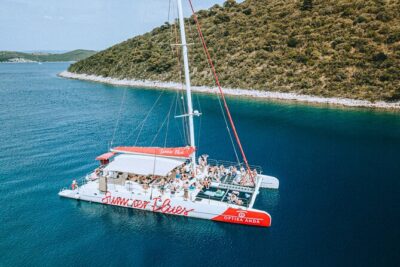
Full-Day Catamaran Cruise to Hvar & Pakleni Islands with Food and free Drinks
Read our review →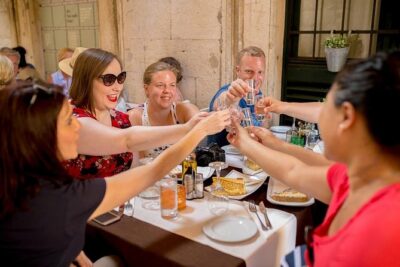
Dubrovnik Food and Drink Walking Tour with a Local Guide
Read our review →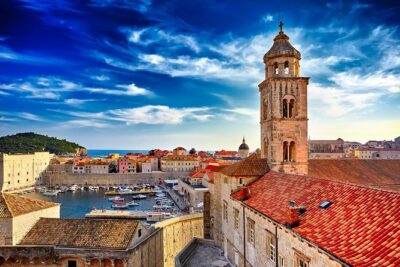
Dubrovnik Guided Group Tour with Ston Oyster tasting from Split & Trogir
Read our review →Browse the lists this tour appears in