Reviewed · HALF-DAY
Split and Trogir Half Day Tour from Split (with port pickup)
Two Croatian cities, one busy morning. This four-hour outing links Trogir’s compact old town with Split’s remarkable Diocletian’s Palace, making it a useful choice when your cruise stop gives you limited time. I like the central pickup and city-center finish, and I like that guides such as Tina, Sandra, Roko, and Hrvoje bring local stories to the Roman and Venetian sights. The main drawback is the pace: you cover a lot of ground, and admission fees, food, drinks, and the walk back to the ship are not included.
At $78.61 per person, the tour offers a practical package for anyone who wants transport, a professional guide, and an introduction to two major Croatian sights without arranging separate taxis or buses. Trogir is the quieter pleasure, with a small medieval core that is easy to explore on foot, while Split supplies the bigger historical punch.
You should expect walking on uneven old-town surfaces, some waiting around busy port traffic, and a group that could reach 50 people. The experience has a 4.8 rating from 133 reviews, with 95 percent recommending it, but the timing instructions matter. Cruise passengers must provide ship and docking details when booking, and a late arrival can mean a missed tour without a refund.
In This Review
- Key points to know before booking
- Why this half-day route works
- Meeting your guide at Split’s cruise terminal
- Trogir’s stone lanes and layered past
- Kamerlengo Fortress and Trogir’s waterfront
- St. Lawrence Cathedral, Trogir’s grandest monument
- Diocletian’s Palace, where Roman ruins became a city
- St. Domnius Cathedral and the Roman mausoleum
- Prokurative and Split’s Venetian echo
- What the guides do best
- The price, group size, and real value
- Who should book this tour?
- Should you book Split and Trogir in four hours?
- FAQ
- How long does the Split and Trogir tour last?
- Where does the tour start?
- Where does the tour end?
- How do I find the guide at the port?
- Is the tour suitable for cruise ship passengers?
- Are admission tickets included?
- Is transportation provided?
- How large can the group be?
- What happens if I need to cancel?
Key points to know before booking
- A smart cruise-port pairing: You see Trogir and Split in one morning, then finish in central Split.
- Trogir comes with free exploring time: The schedule allows about an hour in the historic town beyond the guided commentary.
- Diocletian’s Palace is still part of daily life: The palace is not an isolated ruin, but roughly half of Split’s old center.
- The guides make the difference: Tina, Sandra, Roko, Hrvoje, and Josipa are praised for clear storytelling, humor, care, and local insight.
- Port timing needs care: The meeting point is by the red hop-on, hop-off buses at the cruise-terminal entrance, not somewhere inside the terminal.
- Budget for extras: Entry tickets, meals, drinks, and transport back to the ship are outside the tour price.
Why this half-day route works
The appeal is simple. Split and Trogir are close enough to combine, but different enough to make the pairing worthwhile.
Trogir gives you a small, walkable historic center shaped by Greek, Roman, Venetian, Romanesque, Gothic, Renaissance, and Baroque influences. Split gives you a living city built inside and around a Roman emperor’s retirement palace. In four hours, you get two distinct views of Dalmatian history without spending the whole day on a bus.
The air-conditioned coach matters in Croatia’s warmer months. You will be moving between the coast and old stone streets, often in bright sun, so a cool ride gives your legs and attention a break. Transfer times are approximate, though, and traffic can affect how long you have at each stop.
The tour is conducted in English and includes live commentary, taxes, handling charges, a professional guide, and pickup at the port. It does not include entry fees or food. The group maximum is 50, although several past departures had only seven or a small handful of people. That means the actual feel may range from personal and relaxed to more structured and crowded.
A few more tours and experiences worth a look
- Half-Day Rafting Experience on Cetina River with Cliff Jumping and more
★ 5.0 · 940 reviews - Split: Half-Day Blue Lagoon, Shipwreck, and Trogir Boat Tour
★ 4.2 · 673 reviews - Split: Half-Day Blue Lagoon, Čiovo and Trogir Boat Tour
★ 4.5 · 634 reviews
Meeting your guide at Split’s cruise terminal
The official starting point is the New Split Berth for Cruise Ships at Obala kneza Domagoja 16. The guide is supposed to hold a Croatian Trails sign at the entrance to the ship’s terminal, next to the red hop-on, hop-off buses, past the fence as you leave the ship.
This is one detail to take seriously. Do not rely on general directions from port staff. Follow the written instructions and look for the sign and red buses. One poor experience began with confusion over the start time, while the operator stated that the passenger’s booking information had called for a later departure. The lesson is practical: enter your actual docking, disembarkation, and re-boarding times carefully, then check your Viator messages before leaving the ship.
For early cruise arrivals, pickup is listed at 9:00 AM when the ship arrives between 7:00 and 8:30 AM. If your ship arrives later, exact instructions are sent about a week before the tour. That flexibility is useful, but it also means you should not assume every departure begins at the same time.
Trogir’s stone lanes and layered past
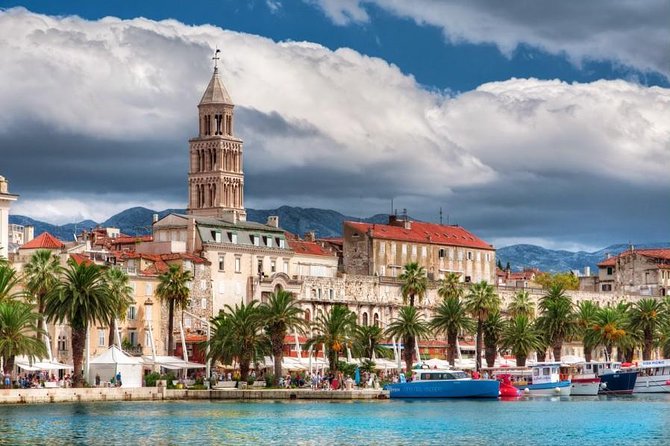
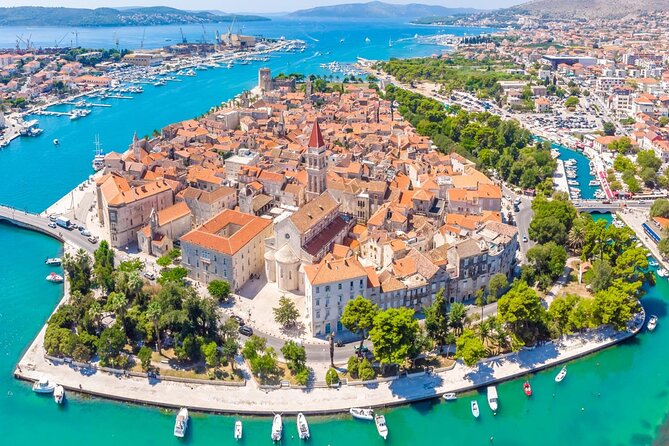
The day generally begins with a short coastal ride to Trogir, though the exact order can depend on the departure arrangement. Founded by Greek colonists in the third century BC, Trogir has more than two millennia of continuous urban use.
The old town is compact, so one hour can give you a satisfying first look. You will pass Romanesque churches and Venetian-era buildings, with later Renaissance and Baroque details filling in the picture. The pleasure here is not one giant monument. It is the way architectural periods sit close together in a small area.
The guided portion helps you understand what you are seeing instead of treating Trogir as a pretty collection of stone walls. Sandra has been praised for sharing useful recommendations for restaurants and shops during free time, and Tina’s local stories add a personal touch to the historical explanation.
You should use the free period wisely. This is a good time to take photographs, browse shops, find a gelato, or pause at a café. A past guide recommendation for gelato in Trogir received special praise, so leaving room for a small treat is sensible. The hour is not long enough for a slow meal, but it is enough to get your bearings fast and enjoy the town without constant commentary.
Kamerlengo Fortress and Trogir’s waterfront

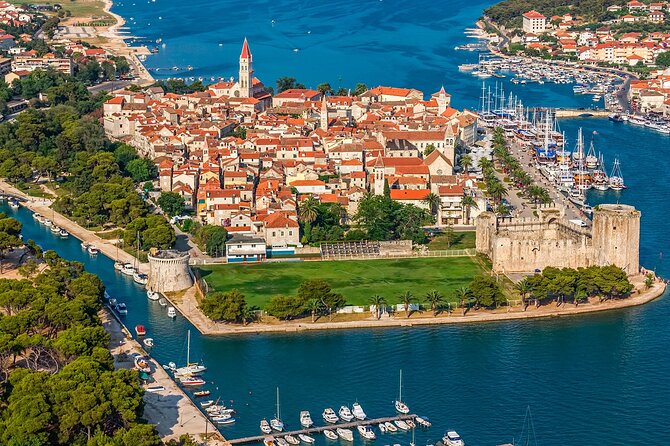
Kamerlengo Fortress is scheduled for about 20 minutes. Built in the mid-15th century as part of the expansion of the Veriga Tower, it reflects Trogir’s defensive importance during the Venetian period.
The fortress is also used for summer performances, which gives it a second life beyond military history. If the gates are open and you choose to enter, the ticket cost is not included. The schedule allows only a short stop, so treat this as a focused visit rather than a full fortress exploration.
The site helps explain Trogir’s position on the water. It is a reminder that these towns were shaped not only by churches and palaces, but also by trade, rival powers, and the need to protect a valuable harbor. The guide’s commentary is especially useful here because the stone structure itself cannot tell you much about its former role.
Something different for another day:
- Split: Krka Waterfalls Trip with Boat Cruise and Swimming
★ 4.8 · 10,519 reviews - From Split: Krka Waterfalls, Food & Wine Tasting Tour
★ 5.0 · 9,326 reviews - Blue cave, Mamma Mia and Hvar, 5 islands speedboat tour
★ 5.0 · 7,150 reviews - From Split: Krka Waterfalls, Food & Wine Tasting Tour
★ 4.9 · 6,598 reviews
St. Lawrence Cathedral, Trogir’s grandest monument
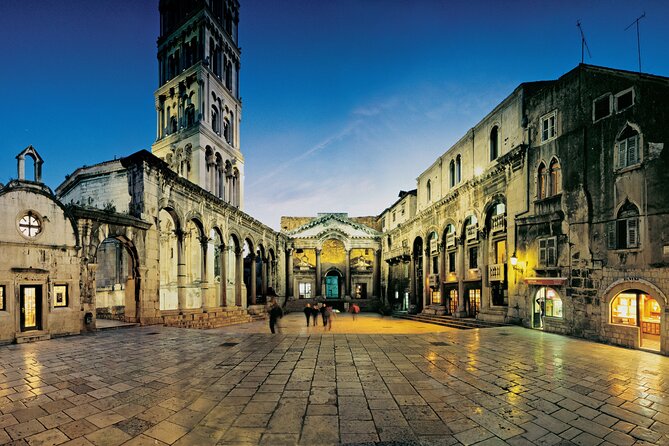
The Cathedral of St. Lawrence gets about 15 minutes. It is a Roman Catholic, triple-naved basilica built in Romanesque-Gothic style, with construction continuing over several centuries.
That long building period is the point. The cathedral shows how architectural tastes changed in Dalmatia, rather than presenting one clean style from one short period. It is described as Trogir’s most imposing monument, and even a short exterior explanation can help you read the city more clearly.
Admission is listed as free for this stop, though the tour does not include paid entry fees generally. Since the visit is brief, check the guide’s instructions before assuming you will have time to explore every interior feature. Trogir rewards close looking, but the clock remains the boss on a half-day tour.
Diocletian’s Palace, where Roman ruins became a city
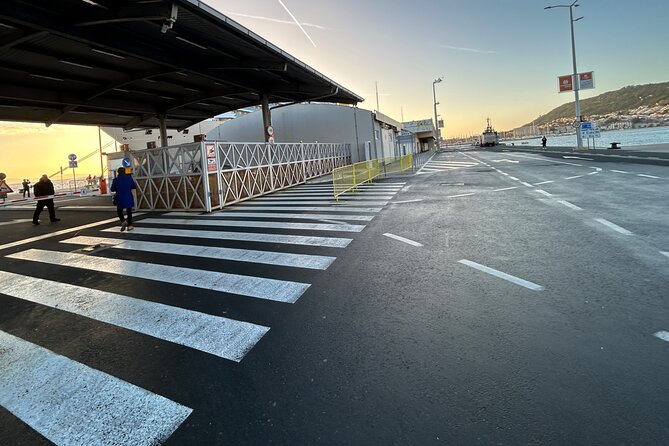
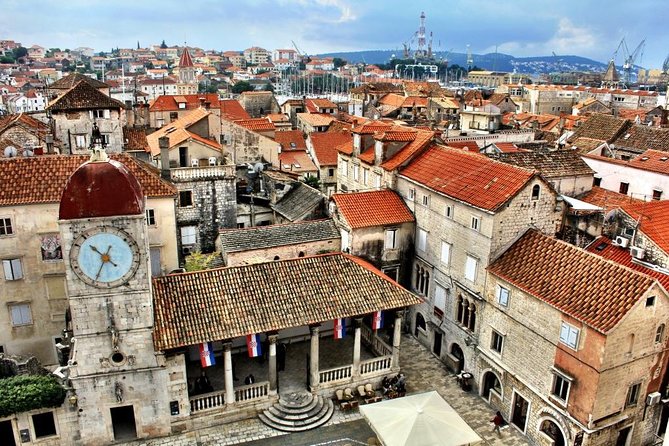
Split’s centerpiece is Diocletian’s Palace, built by the Roman emperor Diocletian around the turn of the fourth century AD. Today, the palace forms about half of Split’s old town and city center.
That fact changes how you experience it. You are not walking through a fenced archaeological park removed from modern life. The ancient walls, streets, cellars, homes, shops, and public spaces are woven into the working city. A guide can point out how the imperial complex shaped Split and how later residents adapted it.
The tour allows about 20 minutes at the palace, with admission not included. That is enough for a guided introduction, but not a leisurely examination of every corner. If Split is your main reason for booking, you may want to return after the official program ends. The tour finishes on the Riva, and the palace area is close enough for continued independent exploring.
Tina receives especially strong praise for explaining the palace, the city, and Croatian history with energy and clarity. She is also described as a local schoolteacher with excellent English. Sandra is praised for humor and an easy manner, while Roko is remembered for making the history of both towns feel personal and lively.
St. Domnius Cathedral and the Roman mausoleum
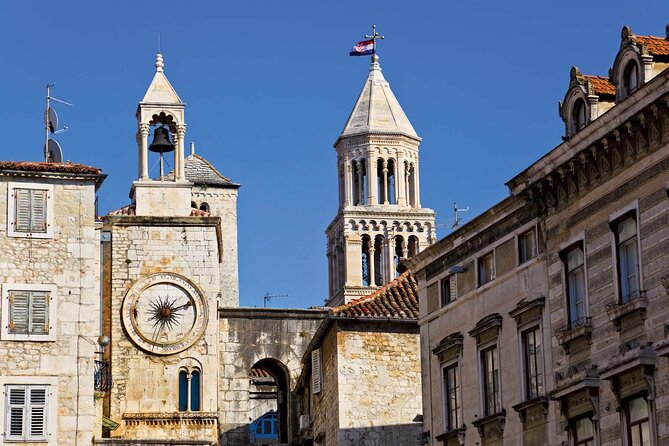
The Cathedral of St. Domnius is another short stop, listed at about 20 minutes. Its unusual story is its strongest feature: the church complex developed from an imperial Roman mausoleum, with a bell tower added beside it.
Strictly speaking, the church is dedicated to the Virgin Mary, while the bell tower is dedicated to St. Domnius. Together they are known as the Cathedral of St. Domnius. This kind of detail is exactly why a guide adds value. Without explanation, you might see a church and bell tower. With context, you see a Roman imperial structure transformed into a Christian place of worship.
Entry is not included, so you will need to decide if paying for access fits your remaining time and budget. The tour price covers guidance and transport, not a complete ticketed visit to every monument.
Prokurative and Split’s Venetian echo
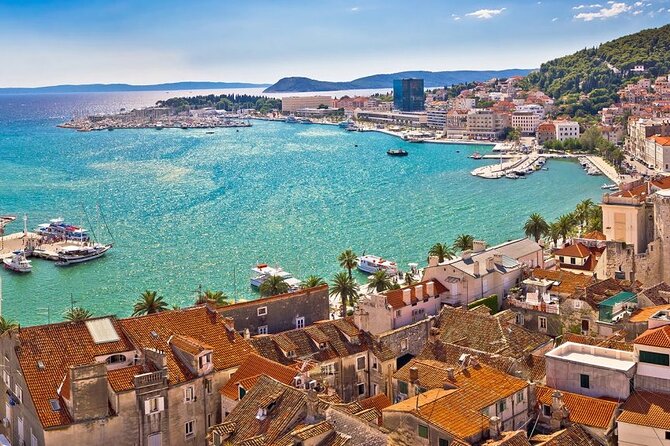
Prokurative is a quick 15-minute stop and costs nothing to visit. Its formal name is Republic Square, though Prokurative is the name you will hear locally.
The square was developed in the 19th century under General Marmont and initiated by Split mayor Antonio Bajamonti. Its design draws heavily from Italian architecture and resembles St. Mark’s Square in Venice. The Venetian connection is not accidental: the architect came from Venice and wanted a reminder of home.
This stop gives the tour a later historical layer. Split is not only Roman. Its appearance also reflects Napoleonic-era planning, local politics, and strong ties across the Adriatic. Fifteen minutes is enough to see the layout and hear the story, but not enough to linger over every facade.
What the guides do best
The most praised part of this experience is the guiding. Tina appears repeatedly as organized, funny, caring, and highly informed about Croatian history and daily life. Sandra is described as warm, engaging, and helpful with food and shopping suggestions. Roko is praised for mixing professionalism with humor, while Hrvoje receives credit for keeping the tour interesting even in heavy rain.
That range matters because the route itself is compact and information-heavy. A flat recital of dates would make the morning tiring. The strongest guides connect the buildings to people, politics, religion, and local identity.
Guides have also been praised for checking on people in hot weather and adjusting to group needs. That is useful on a walking tour with older family members or anyone who needs a slower pace. Still, the physical demand should not be underestimated. One assessment placed it around Level 2, with a lot of walking. Expect old-town streets and uneven paving, and dress for the weather.
The tour operates in all weather. Bring suitable clothing, especially if rain is possible. A rainy day may reduce sightseeing time because traffic and wet streets can slow the program, but the historic centers remain worthwhile.
The price, group size, and real value
At $78.61, this is not the cheapest way to see Split and Trogir. You are paying for the convenience of port pickup, an air-conditioned coach, a guide, and a carefully arranged route. For a first visit during a cruise stop, that convenience can be worth more than saving a few dollars while trying to coordinate two towns independently.
The value is strongest if you want historical context and dislike transport planning. It is weaker if you prefer to explore at your own pace, want long museum visits, or already know both cities.
Remember the extra costs. Food and drinks are not included. Entry fees are not included. The tour also does not provide drop-off at the ship. It ends at Split Riva, and the guide can help you find a taxi, but the terminal is about a 20-minute walk away.
That walk is manageable for many people, but it matters when your ship has a strict all-aboard time. Leave a safety margin for the return, especially during busy port periods. Traffic can also change the transfer time, so do not plan your ship departure around the tour’s exact advertised duration.
Who should book this tour?
I would choose this outing if you are making a single cruise stop in Split and want a clear introduction to two historic centers. It suits first-time visitors, couples, families with moderate fitness, and anyone who values a good guide over free-form wandering.
It is also a strong choice if Trogir is on your wish list but you do not want to arrange a separate transfer. The combination gives you a small town, a major city, Roman remains, Venetian-era architecture, churches, a fortress, and local commentary in one morning.
I would hesitate if your priority is deep independent exploration. Four hours is tight, and the schedule includes several short visits. A group of up to 50 may also feel less personal than the small departures praised by people who had seven or fewer companions.
The cancellation terms are simple but strict. You can cancel for a full refund up to 24 hours before the start time, but late cancellations and changes are not refunded or accepted. If the minimum number is not reached, the operator offers another date or experience, or a full refund. Cruise passengers should also know that a missed tour caused by a late or non-arriving ship is not refundable.
Should you book Split and Trogir in four hours?
Book it if you want efficient sightseeing, reliable transport, and a guide who can make Roman and Venetian history readable. The best reason to go is the pairing of Trogir’s intimate old town with Split’s unusual living palace, not any single short stop.
Skip it if you need a slow morning, a private experience, or guaranteed time inside every monument. For most cruise passengers, though, this is a sensible way to turn limited port time into a substantial Croatian introduction. Confirm your ship details, meet at the red buses with the Croatian Trails sign, wear good walking shoes, and keep time for the walk back to the terminal.
FAQ
How long does the Split and Trogir tour last?
The tour lasts approximately four hours. Transfer times can vary with traffic and the time of day.
Where does the tour start?
It starts at the New Split Berth for Cruise Ships, Obala kneza Domagoja 16 in Split.
Where does the tour end?
The tour ends at Split Riva in the city center. Drop-off at the ship terminal is not included, and the walk back takes about 20 minutes.
How do I find the guide at the port?
Look for a guide holding a Croatian Trails sign at the entrance to the ship’s terminal, next to the red hop-on, hop-off buses and past the fence as you leave the ship.
Is the tour suitable for cruise ship passengers?
Yes. Cruise passengers must provide their ship name, docking time, disembarkation time, and re-boarding time when booking.
Are admission tickets included?
No. Entry fees are not included in the tour price. Food and drinks are also excluded.
Is transportation provided?
Yes. The tour includes an air-conditioned vehicle and port pickup.
How large can the group be?
The maximum group size is 50 people. Some departures may be much smaller.
What happens if I need to cancel?
You can cancel at least 24 hours before the start time for a full refund. Cancellations or changes made less than 24 hours before the tour are not refunded or accepted.
Just added around Split
- Private VIP Blue Lagoon and 3 Islands Tour★ 4.5 · 9 reviews
- Split highlights – Evening walking tour★ 5.0 · 9 reviews
- Private boat transfer Split – Bol★ 5.0 · 9 reviews
- From Split: Trogir & Blue Lagoon Boat Tour with Snorkeling★ 4.6 · 9 reviews
- Private Photography Activity in Split★ 5.0 · 9 reviews
- Bike, Beer & Poljud Stadium Tour★ 5.0 · 9 reviews
- From Hvar: Blue cave group speedboat tour full day★ 5.0 · 9 reviews
- Split Walking Tour: History, Legends & Tales★ 5.0 · 9 reviews
Half-Day, compared.

Zrmanja River: Half-Day Guided Kayaking Tour Near Zadar
Read our review →
X-Adventure Sea Kayaking Half Day Tour in Dubrovnik
Read our review →
Half-Day Rafting Experience on Cetina River with Cliff Jumping and more
Read our review →
Half-Day Blue Lagoon, Shipwreck, and Trogir Boat Tour
Read our review →
Half-Day Blue Lagoon, Čiovo and Trogir Boat Tour
Read our review →
Split and Trogir Half Day Tour from Cruise Ships
Read our review →