Reviewed · SPLIT TOURS
Private Split and Trogir tour with LOCAL
Roman stones, cold water, warm food. This private six-hour outing connects Diocletian’s Palace and Trogir with the clear source of the Cetina River, a picnic, and a home-cooked local meal. I like the mix of famous sights and ordinary Croatian life, especially the chance to eat Peka with a local family and sample homemade wine and liquor. The main consideration is the price, $389.77 per person, which makes the most sense for a private group that values personal guiding and food more than a low-cost sightseeing trip.
You begin at 9:30 a.m. and travel in an air-conditioned vehicle with a guide. Daniela receives especially warm praise for her friendly manner, personal stories, patience with delays, and clear explanations. The day covers a lot in six hours, so you should expect highlights rather than long visits at every monument.
In This Review
- Key details that shape the day
- Why this Split and Trogir day works
- Starting among the columns of Diocletian’s Palace
- Beneath the palace in Diocletian’s Cellars
- Meeting St. Domnius beside the imperial mausoleum
- One hour inside the living palace
- The road to the Cetina River source
- Picnic food, local wine, and a family kitchen
- Two hours exploring Trogir’s stone lanes
- What the $389.77 price really buys
- Who will enjoy this day most
- Should you book the Split and Trogir tour?
- FAQ
- How long does the tour last?
- What time does the tour start?
- Is this a private tour?
- Is pickup available?
- What places in Split are included?
- What can I see in Trogir?
- Does the experience include food and drinks?
- Can I cancel for a full refund?
- What happens if bad weather cancels the tour?
Key details that shape the day
- A private outing for your group: Only your own party participates, which allows a more relaxed pace and room for questions.
- Split’s Roman core: See the Peristyle, Diocletian’s Cellars, St. Domnius Cathedral, and the wider palace area.
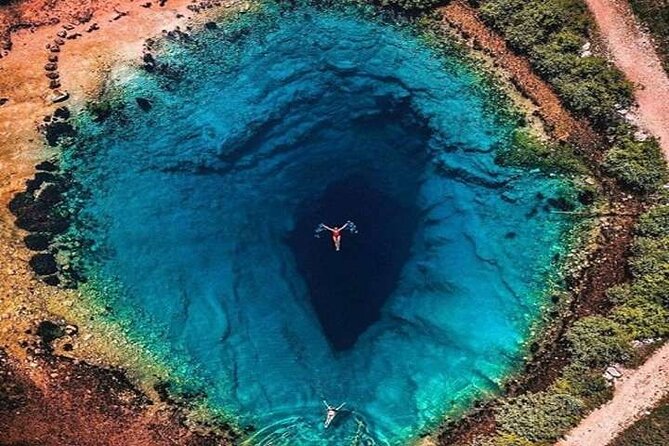
- The Cetina River source: Visit the Eye of the Earth, where the water is described as strikingly clear and very cold.
- Food at a local home: Enjoy a picnic and a traditional meal, including Peka, cheese, prosciutto, bread, fruit, and baked treats.
- Trogir in two hours: Walk through its UNESCO-listed old town, cathedral, fortress, walls, loggia, and main square.
- Flexible cancellation: You can receive a full refund if you cancel at least 24 hours before the 9:30 a.m. start.
Why this Split and Trogir day works
I like tours that show more than a city center, and this one makes a genuine effort to connect Croatia’s monuments with its countryside and kitchen. Split supplies the Roman setting, the Cetina area brings fresh air and open space, and the family meal gives you a social experience that a standard bus tour cannot provide.
The private format matters. With only your group taking part, Daniela can adjust explanations and pacing more easily than a guide leading a large crowd. One account describes her taking time to share personal experiences, while another notes that she handled a delay with patience. That sort of flexibility can make a full day feel less mechanical.
You also get a practical vehicle with air conditioning. Croatia can be hot, and the drive between Split, the river source, and Trogir is much more pleasant when you can sit comfortably between stops. Pickup is offered, but the exact meeting details should be confirmed when you book.
The drawback is simple: six hours is a tight schedule for Split, the Cetina source, a meal, and Trogir. You will see important highlights, but this is not the right choice if you want a slow museum day, a long cathedral visit, or hours of free time in Trogir.
A few more tours and experiences worth a look
- SPLIT-PRIVATE Walking Tour of Diocletian’s Palace & Old Town
★ 5.0 · 467 reviews - Private Krka Waterfalls tour with 30min Boat Cruse
★ 4.0 · 458 reviews - Split by Private Electric Rickshaw – Palace & Hidden Gems
★ 5.0 · 412 reviews
Starting among the columns of Diocletian’s Palace
The day begins at the Peristyle, the central square of Diocletian’s Palace. Built in the third century as the main entrance to Emperor Diocletian’s retirement residence, it is framed by columns and leads toward the former imperial mausoleum, now the Cathedral of Saint Domnius.
The Peristyle is a fine place to begin because it helps you understand Split’s unusual character. This is not a sealed archaeological park sitting apart from modern life. The old palace became the heart of the city, with homes, shops, cafés, and restaurants occupying spaces within and around the ancient walls.
You have about 15 minutes here. That is enough to take in the square and hear the basic story, but not enough for a detailed architectural talk or extended photography session. I would use the opening stop to get your bearings and ask Daniela how the day will be paced.
The square has also served as a place for ceremonies and cultural events. Look up at the stonework, then notice how daily life continues around it. That contrast, Roman imperial design beside ordinary city activity, is one of Split’s best features.
Beneath the palace in Diocletian’s Cellars
The next stop is Diocletian’s Palace Substructures, often called the Cellars. These underground rooms were built in the fourth century to support and raise the emperor’s residential quarters above them.
The cellars are valuable because they preserve the palace’s original plan more clearly than many parts above ground. Their arches, walls, and passages show the practical side of Roman building. You are looking at engineering as much as decoration.
The visit lasts about 20 minutes, with no admission fee listed for the tour. The chambers have also hosted exhibitions and cultural events and have appeared in film and television productions, including Game of Thrones. That connection may interest fans, but the real reason to visit is the structure itself.
Keep your expectations in check. Twenty minutes is a compact introduction, not an exhaustive underground exploration. If you want to linger over every chamber, this portion may feel short. Still, it gives you a useful sense of how the palace was supported and why the complex has survived so well.
Meeting St. Domnius beside the imperial mausoleum
The Cathedral of Saint Domnius began life as Diocletian’s mausoleum in the early fourth century. It later became a Christian cathedral in the seventh century, creating an unusual link between Roman imperial power and the city’s later religious life.
The building contains Romanesque, Gothic, and Baroque elements. Inside, you can see carved stone, ancient sarcophagi, and a wooden choir dating from the thirteenth century. The bell tower is one of Split’s best-known landmarks and offers broad views, although the listed visit does not promise time to climb it.
You have about 20 minutes here. That allows a focused look at the cathedral and its setting, especially if Daniela explains how the building changed over time. It does not allow a full religious-art tour or a leisurely bell tower visit.
I appreciate this stop because it adds meaning to the Peristyle. You are not seeing unrelated monuments. You are watching one Roman structure change purpose as Split changed around it.
Something different for another day:
- Split: Krka Waterfalls Trip with Boat Cruise and Swimming
★ 4.8 · 10,519 reviews - From Split: Krka Waterfalls, Food & Wine Tasting Tour
★ 5.0 · 9,326 reviews - Blue cave, Mamma Mia and Hvar, 5 islands speedboat tour
★ 5.0 · 7,150 reviews - From Split: Krka Waterfalls, Food & Wine Tasting Tour
★ 4.9 · 6,598 reviews
One hour inside the living palace
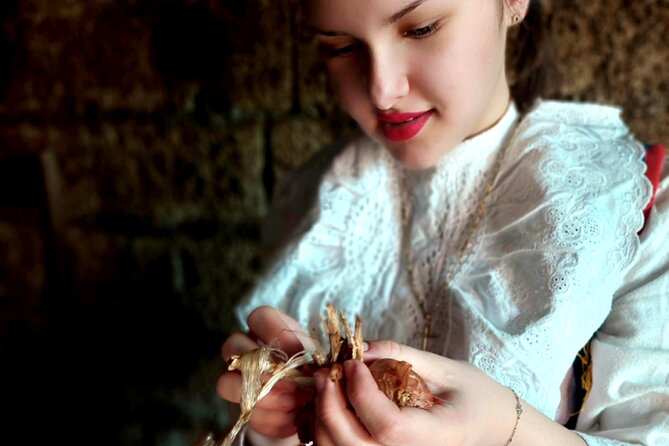
The wider Diocletian’s Palace area receives about an hour. This is the part of the Split visit where the earlier stops come together.
Diocletian built the palace in the early fourth century as a retirement home, combining the comforts of a grand villa with the defenses of a military fortress. The complex covers roughly 30,000 square meters and includes the Peristyle, underground cellars, temples, residential areas, and later medieval additions.
The palace is a UNESCO World Heritage Site, but its importance is not limited to the official title. I like the way ancient walls still form part of a working city. You might pass a café tucked into old stone, a shop occupying a former palace space, or residents going about their day in buildings that began as imperial quarters.
The one-hour block is useful for orientation and context, yet it remains a highlights visit. You will not see every corner of the palace, and you should not expect long independent shopping or dining time here. If Split is your main interest, consider returning on another day to explore at a slower pace.
The road to the Cetina River source
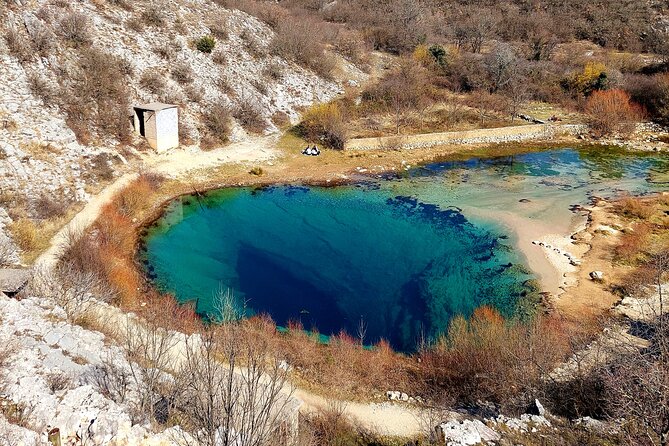
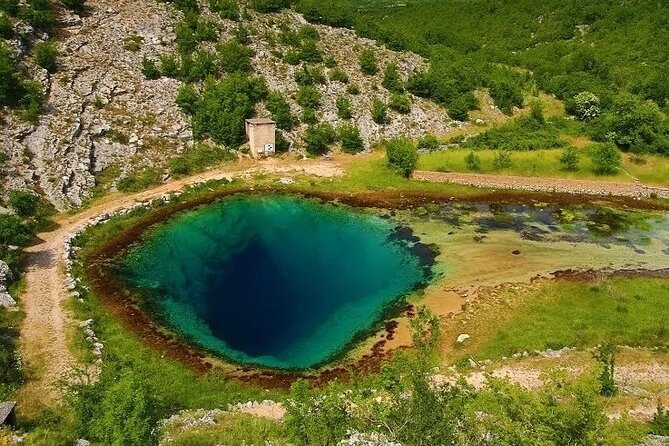
The countryside portion changes the mood. Instead of stone streets and enclosed courtyards, you head toward the source of the Cetina River, also described as the Eye of the Earth.
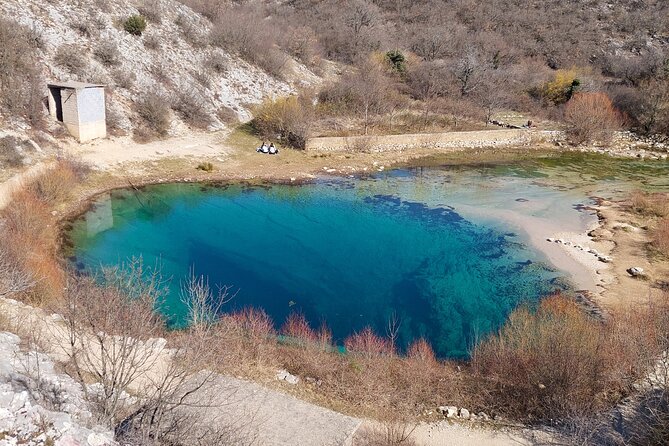
This natural spring is known for remarkably clear water. It is also very cold, so treat it as a viewing stop rather than assuming you will swim. The dark blue-green pool, visible from above, is one of the day’s most memorable contrasts with urban Split.
A private vehicle is a real advantage here. You can relax during the drive, ask questions, and avoid the strain of managing a separate connection to a rural site. The tour description promises comfortable air-conditioned transport, and that matters during warm Croatian weather.
The available information does not give a precise driving time or a separate duration for the spring visit. That is worth clarifying before booking, especially since the full experience lasts about six hours. The river source is a major reason to choose this outing, so you will want to know how much time is planned there.
Picnic food, local wine, and a family kitchen
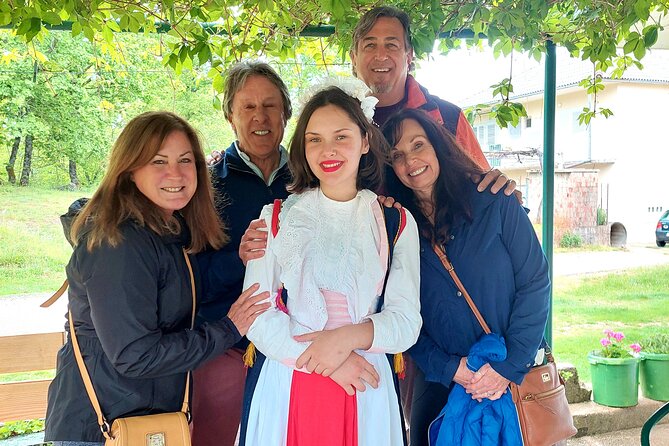
Food is the most personal part of the experience. At the local home, you can expect a meal with homemade wine and liquor, along with cheese, prosciutto, bread, and other local items. The picnic includes fruit and pastries, including poppy-seed and cinnamon croissants according to the experience details.
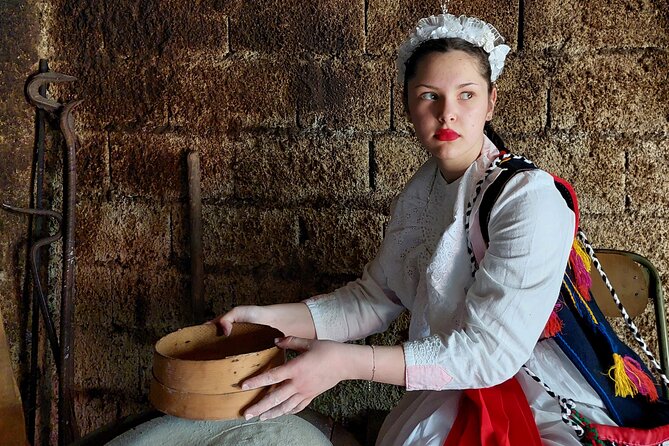
The main dish is Peka, a traditional Croatian preparation cooked under a bell-like lid with hot embers above it. The meal is hosted by Daniela’s grandmother, known as Baka, which gives this stop a family feel rather than a restaurant feel.
That distinction matters. A restaurant can serve a polished local dish, but a family table offers a closer look at how food and hospitality work in everyday life. You may also learn how a local dish is made, not simply eat the finished plate.
The meal is clearly a major reason to book. One couple praised the combination of Peka, wine, cheese, prosciutto, and bread. Another group of five enjoyed the family welcome along with the picnic. I would allow enough time to eat without rushing, but remember that the day still has Trogir ahead.
Wine and liquor are included as part of the tasting experience. If you do not drink alcohol, confirm what nonalcoholic options are available before booking. The tour is centered on tasting local products, so that detail may matter to you.
Two hours exploring Trogir’s stone lanes
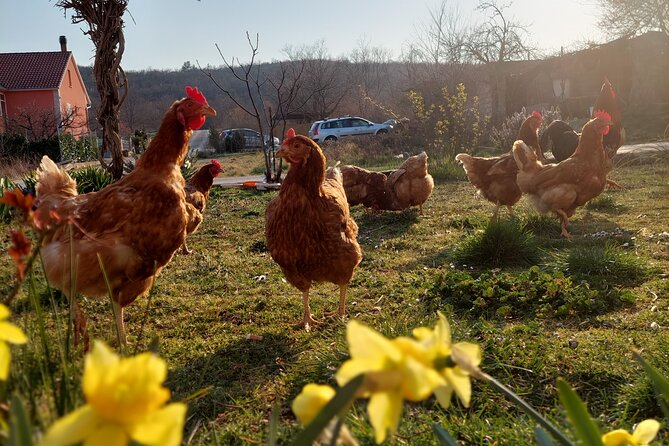
Trogir receives the longest listed stop, about two hours. That is sensible because the old town packs many important sights into a small area.
Trogir’s historic center is a UNESCO World Heritage Site filled with narrow streets, medieval buildings, and Romanesque details. Its compact scale makes it well suited to a guided walk, especially after the broader palace complex in Split.
The Cathedral of Saint Lawrence is the main architectural prize. Its Romanesque style and Master Radovan portal make it one of the town’s most important sights. The portal is packed with carved figures and details, so Daniela’s explanation can help you notice more than you would on a quick pass through the square.
Kamerlengo Fortress provides a different view of Trogir’s past. Built by the Venetians in the fifteenth century, it looks across the town and nearby sea. The City Walls add another layer, showing how the settlement was defended and contained.
You will also see the Renaissance Town Hall, the main square, and the Venetian-style Loggia. The loggia is a pleasant place to pause and take in the surrounding stonework. The itinerary does not list separate admission charges, and the stops are presented as included, but ask Daniela if you want to enter every interior rather than view the buildings from outside.
The pace appears designed to be comfortable rather than hurried. A private visit helps here, since you can ask for extra context or pause briefly for photographs. Still, two hours will not cover every lane, shop, church, and fortress room in detail.
What the $389.77 price really buys
At $389.77 per person, this is a high-priced day trip. The value depends heavily on the size of your party and what you want from a guide.
You are paying for a private experience, air-conditioned transportation, a guide, Split and Trogir sightseeing, a visit to the Cetina source, a picnic, local food, and tastings at a family home. For a group that wants one organized day with personal attention, that package can be worthwhile.
The cost is harder to justify if you mainly want transportation between Split and Trogir. Both towns can be visited independently, and a budget-minded visitor may prefer to arrange public transport and spend the difference on meals or admission fees.
I would choose this tour for a couple or small family that values convenience and personal contact. Group discounts may improve the per-person value, so check the price for your exact party size rather than assuming the headline figure tells the whole story.
The experience is booked, on average, 47 days ahead. That suggests you should plan early if your Croatia dates are fixed, particularly if you want Daniela or a specific departure date. Confirmation arrives at booking, and a mobile ticket is provided.
Who will enjoy this day most
You are a good match for this tour if you want several kinds of Croatia in one outing:
- Roman monuments in Split
- A clear mountain-water source
- A local meal and wine tasting
- Medieval and Venetian architecture in Trogir
- Private transport and a dedicated guide
It also suits people who prefer conversation and context to a rigid audio guide. Daniela’s personal stories and willingness to accommodate a delay are useful qualities when the day includes several moving parts.
The tour may not suit you if you need a slow schedule, dislike long vehicle transfers, or want to spend most of the day in one place. It also may not be ideal if you are paying alone and trying to keep costs low.
Most travelers can participate, and service animals are allowed. The tour is near public transportation, though pickup is offered. Since the experience depends on good weather and a minimum number of participants, a cancellation can result in a new date, another experience, or a full refund.
Should you book the Split and Trogir tour?
I would book it if you have one free day and want more than a standard city walk. The strongest features are the private format, Daniela’s friendly guiding, the Eye of the Earth, and the meal with Baka. Those details give the outing a human feel.
I would skip it if your priority is the lowest possible price or a long, unhurried visit inside Split’s monuments. At nearly $390 per person, the food, countryside stop, transportation, and personal service need to matter to you.
For the right group, this is a useful balance: ancient stone in the morning, cold river water and open countryside, then a family table and Trogir’s medieval lanes. Just confirm the pickup point, the exact order of stops, and how much time is planned at the Cetina source before you pay.
FAQ
How long does the tour last?
The tour lasts approximately six hours.
What time does the tour start?
The listed start time is 9:30 a.m.
Is this a private tour?
Yes. Only your group participates in the activity.
Is pickup available?
Yes. Pickup is offered, though the exact arrangements should be confirmed when booking.
What places in Split are included?
The tour includes the Peristyle of Diocletian’s Palace, Diocletian’s Cellars, the Cathedral of Saint Domnius, and the wider Diocletian’s Palace area.
What can I see in Trogir?
The Trogir portion includes the old town, Cathedral of Saint Lawrence, Kamerlengo Fortress, city walls, Town Hall, and the Loggia.
Does the experience include food and drinks?
Yes. The experience includes a picnic, a local meal, and samples of local and homemade wine and liquor. Food mentioned includes fruit, croissants, cheese, prosciutto, bread, and Peka.
Can I cancel for a full refund?
Yes, if you cancel at least 24 hours before the experience’s start time. Cancellations within 24 hours are not refunded.
What happens if bad weather cancels the tour?
If poor weather causes cancellation, you will be offered a different date or a full refund. If the minimum number of participants is not reached, you will also be offered another date or experience, or a full refund.
Just added around Split
- Private VIP Blue Lagoon and 3 Islands Tour★ 4.5 · 9 reviews
- Split highlights – Evening walking tour★ 5.0 · 9 reviews
- Private boat transfer Split – Bol★ 5.0 · 9 reviews
- From Split: Trogir & Blue Lagoon Boat Tour with Snorkeling★ 4.6 · 9 reviews
- Private Photography Activity in Split★ 5.0 · 9 reviews
- Bike, Beer & Poljud Stadium Tour★ 5.0 · 9 reviews
- From Hvar: Blue cave group speedboat tour full day★ 5.0 · 9 reviews
- Split Walking Tour: History, Legends & Tales★ 5.0 · 9 reviews
Split Tours, compared.
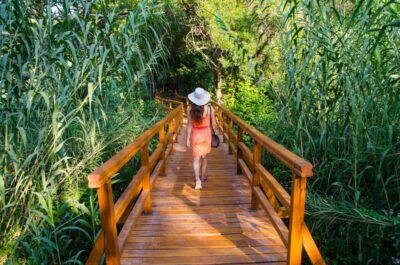
Krka Waterfalls Trip with Boat Cruise and Swimming
Read our review →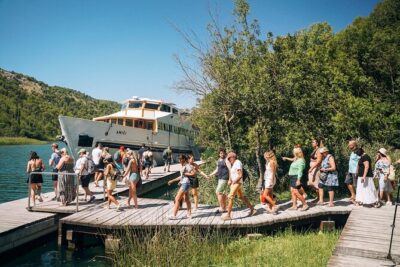
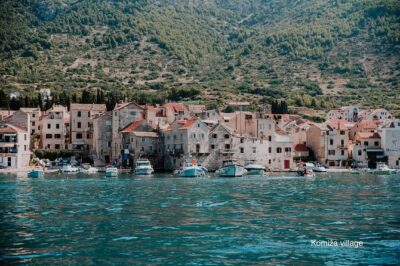
Blue cave, Mamma Mia and Hvar, 5 islands speedboat tour
Read our review →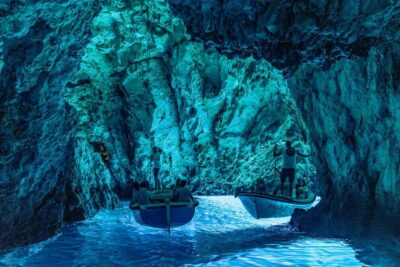
Blue Cave, Mamma Mia, Hvar and 5 Island Tour
Read our review →
Blue Lagoon & 3 Islands Cruise with Lunch from Split
Read our review →