
Reviewed · PULA TOURS
Odkryj tajemnice Puli z polską przewodniczką
Pula’s stones have plenty to say. This two-hour walk brings the city’s Roman, Venetian, and Austro-Hungarian past together with a Polish-speaking licensed guide, making the story easier to follow and far more memorable than a solo stroll. I especially like the focus on the Sergii Arch and Twin Gate, along with the unusual link between Pula, the Argonauts, and the Golden Fleece.
I also like that the tour is built around walking rather than transport, so you see how the monuments fit into the old city. The main consideration is simple: amphitheater entry is not included, and the tour is not suitable for wheelchair users. At $41 per person, the price makes the most sense for visitors who want context, stories, and a personal explanation in Polish.
In This Review
- Key points to know before booking
- Why a guided walk helps in Pula
- Meeting the guide below the amphitheater
- The amphitheater: more than a giant Roman arena
- Twin Gate and the old city walls
- The Sergii Arch and its unanswered questions
- Forum Romanum and the layers beneath modern Pula
- Argonauts, the Golden Fleece, and Pula’s mythical side
- Venetian and Austro-Hungarian traces
- The guide makes the biggest difference
- Is $41 good value?
- Who should book this Pula walk?
- Final verdict: book for stories, not just sights
- FAQ
- How long does the Pula walking tour last?
- What language is the tour conducted in?
- Where does the tour start?
- Where does the tour finish?
- Is the amphitheater admission ticket included?
- Is hotel pickup and drop-off provided?
- What should I bring to the tour?
Key points to know before booking
- Two hours on foot: The route covers Pula’s major historic sights at a steady walking pace.
- A Polish-speaking guide: The experience is led by a licensed guide, with Monika and Marta praised by name for their warmth, humor, and clear explanations.
- Roman Pula takes center stage: You see the amphitheater, Twin Gate, old city walls, Forum Romanum, and the Sergii Arch.
- More than Roman ruins: Venetian influence and memories of the Austro-Hungarian monarchy are part of the story.
- Strong for families: The explanations are designed to be accessible, with anecdotes and details that can hold children’s attention.
- Plan for the basics: Wear comfortable shoes, carry water, and bring a camera. Hotel pickup, meals, and attraction tickets are not included.
Why a guided walk helps in Pula
Pula can look straightforward at first glance. You see a grand Roman amphitheater, a few arches, old gateways, and a central square. But the city’s story crosses several periods, and the remains are spread through streets that are still part of daily life.
A guide helps you connect those pieces. Instead of seeing the Roman amphitheater as an isolated monument, you learn how it relates to the old walls, the Twin Gate, the Forum, and the city’s changing rulers. The result is a better sense of how Pula developed over time.
The Polish language is a major advantage if you want to ask questions or follow historical details without working through a second language. The feedback about Monika points to a guide with archaeological training, a strong sense of humor, and real enthusiasm for Pula. Marta is also praised for explaining the sights with passion.
That personal touch matters on a walking tour. Dates and names are useful, but a good guide also tells you what to notice and why a battered stone or half-preserved gateway deserves your attention. The high rating of 5 out of 5 from 12 reviews reflects consistent approval of the guides’ approach, not just the monuments themselves.
Other Pula trips people book alongside this one:
- Pula: Arena Entrance Ticket
★ 4.3 · 2,590 reviews - Medulin -Kamenjak 5h boat trip with lunch & drinks on Sandra Boat
★ 5.0 · 1,621 reviews - Full-Day Boat Tour of the Medulin Archipelago from Medulin
★ 5.0 · 1,389 reviews
Meeting the guide below the amphitheater
The walk starts at the Monument to the Sailor with a raised hand, below Pula’s amphitheater. This is a practical starting point because the amphitheater is one of the city’s clearest landmarks, but give yourself enough time to locate the monument before the scheduled start.
You should arrive ready to walk. There is no hotel pickup or drop-off, so you need to make your own way to the meeting point. The experience finishes back there, which makes it easier to continue sightseeing afterward or return to your accommodation.
The tour lasts about two hours. That is long enough to cover the central sights without turning the outing into an exhausting half-day march. It also means you should not expect a slow, detailed visit inside every monument. This is primarily an outdoor city walk, with the guide supplying the wider story.
The amphitheater: more than a giant Roman arena
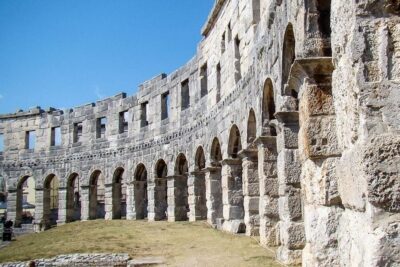
The amphitheater is the natural opening chapter. Its size gives you an immediate sense of Pula’s importance during Roman times, and the guide explains the building’s place in the city rather than simply pointing out its arches.
One useful detail is the naming. The guide explains why it should not be called the Colosseum. That distinction may sound picky, but it helps separate Pula’s amphitheater from Rome’s famous Flavian Amphitheatre. You also hear about the spectacles held here and can picture the sound of weapons and crowds that once filled the arena.
The tour does not include an admission ticket. That keeps the walking-tour price separate from the cost of entering the monument, but it also means you need to budget extra if you want an interior visit. Ask the guide how to fit a separate visit into your day, since the supplied details do not include a ticket arrangement.
For many people, the amphitheater will be the biggest visual reward. Still, I would not book this experience only for a quick photo of it. The better value comes from understanding how this building fits into Pula’s wider Roman setting.
Twin Gate and the old city walls
The Twin Gate gives the walk a closer, more human scale. Huge arenas can make ancient Pula feel distant, while a city gateway helps you imagine people entering and leaving through a controlled point in the walls.
The guide shares the story behind this unusual gate and the former defensive system. You learn about the old walls and hear how the city was shaped by protection, movement, and changes in power. The remains may not look dramatic from every angle, so the explanation is especially useful here.
This is also the kind of stop where a camera helps. Photographing the stonework is worthwhile, but look beyond the obvious arch. The guide can direct your attention to the relationship between the gateway, the surrounding streets, and the parts of the old city that survive nearby.
The route is not designed for wheelchair users. Uneven historic paving, gateways, and a walking-only format can make this difficult, so anyone with mobility concerns should consider that limitation before reserving.
Something different for another day:
- 3hours all inclusive Sunset&Dolphin Tour from Medulin on Sandra
★ 5.0 · 1,130 reviews - Dolphin Watching & Sunset Boat Tour With Dinner and Drinks
★ 5.0 · 1,075 reviews - Pula: Kayaking,Snorkeling, Cliff jumping Tour with Wetsuit
★ 4.8 · 861 reviews - BOAT & KAYAK! Sea Adventure – Snorkeling & Cliff Jumps
★ 5.0 · 808 reviews
The Sergii Arch and its unanswered questions
The Sergii Arch is one of Pula’s most elegant Roman remains. It is not simply a triumphal arch placed at random. Its story involves the Sergii family and raises questions about memory, status, and the way wealthy Romans marked their presence in the city.
The guide reveals the arch’s secret and gives you a reason to study its decoration rather than walking past it. This is where a local explanation earns its keep. Without background, you may notice the shape and carvings but miss the human story attached to them.
The arch also shows how Roman remains can live alongside an active city. You are not visiting a sealed archaeological park. You are walking through a place where ancient stone sits within modern streets, which gives the experience a more grounded feel.
If you enjoy architecture, this may be one of the strongest stops after the amphitheater. If your main interest is military history, the Twin Gate and old walls may hold your attention longer.
Forum Romanum and the layers beneath modern Pula
The Forum Romanum presents another side of the city. Here, the focus shifts from spectacle and defense to public life. The forum was a central civic area, and the guide uses it to explain how Roman Pula functioned beyond the amphitheater.
You can expect a walk through an open urban setting rather than a long indoor museum visit. That keeps the pace easy, though it also means the quality of the stop depends heavily on the guide’s explanation. The forum remains are more rewarding when you understand what kind of public activity once took place there.
This is one reason I prefer taking the tour early in a Pula visit. Once you know the forum’s role and recognize the Roman traces, you can return later with a better eye. The walk gives you a map in your head, not just a list of monuments.
The guide also places Roman Pula alongside later Venetian and Austro-Hungarian influences. That wider view prevents the city from becoming a one-period attraction. You see how each era left a mark, sometimes in grand buildings and sometimes in less obvious urban details.
Argonauts, the Golden Fleece, and Pula’s mythical side
Not every stop is about masonry. The tour also explores what Pula has to do with the Argonauts and the Golden Fleece. This brings myth into the city’s story and adds a lighter, more surprising thread to the walk.
You should treat this as cultural background rather than a promise of a dramatic myth-themed attraction. The value is in hearing how Pula is connected with a much older world of legends and seafaring stories. It gives the city an imaginative side that complements the Roman remains.
This story can work particularly well for families. Children may not remember every historical date, but a tale involving the Argonauts and the Golden Fleece can make the city easier to picture. One review specifically praises the guide’s ability to explain Pula in a way that even children can follow.
Venetian and Austro-Hungarian traces
Pula’s past did not end with Rome. The walk points out evidence of the Republic of Venice and memories from the Austro-Hungarian monarchy, showing how the city changed under different political powers.
The supplied details do not list every later building or give a fixed stop-by-stop schedule for these periods. That is worth knowing. You are booking a broad historical walk, not a specialist architectural tour devoted only to Venetian or Austro-Hungarian design.
Still, the range is a strength. You get a clearer picture of Pula as a crossroads, with layers that cannot be understood through Roman ruins alone. I like this approach because it keeps the tour from feeling like a single monument with a short walk attached.
The guide’s role is important here. A later period can be harder to spot than a massive arena, so listen for changes in the city’s character, political control, and built environment. The walk is most useful when you stay curious about the transitions between eras.
The guide makes the biggest difference
The strongest praise focuses on the guides’ delivery. Monika is described as warm, funny, enthusiastic, and highly professional, with archaeological expertise and a strong connection to the subject. Marta is praised for speaking with passion, while other comments highlight a friendly manner and clear explanations.
That combination is valuable. A guide can know a great deal and still make a walk tiring if the information arrives as a string of dates. Here, the repeated emphasis is on approachable storytelling, anecdotes, and contact with the group.
You should also expect the guide to adapt the tone for different ages. The comments about children suggest that the explanations are not aimed only at specialists. That makes this a good pick for families, couples, and Polish-speaking visitors who want an introduction rather than an academic lecture.
Guide assignments can vary, so you should not assume that Monika or Marta will lead every departure. Their names are useful indicators of the standard praised in the feedback, but the confirmed guide may be different.
Is $41 good value?
At $41 per person, this is not the cheapest way to look at Pula’s monuments. You can walk through parts of the historic center independently and see several sights from the outside without paying for a guide.
The question is what you want from the visit. If you mainly need photographs and a quick orientation, the price may feel high. If you want the stories behind the Sergii Arch, Twin Gate, Forum Romanum, and the city’s changing rulers, the cost is easier to justify.
The licensed Polish guide is the main value. You are paying for two hours of explanation, local interpretation, and a route that links separate sights into one story. Since the amphitheater ticket, food, and transport are extra, include those costs in your day’s plan.
The reserve-now, pay-later option also gives you some planning flexibility. You can secure a place without paying immediately, and cancellation is allowed up to 24 hours before the tour for a full refund.
Who should book this Pula walk?
I would recommend it most strongly to Polish-speaking visitors who want an easy first look at Pula. It suits couples, families, and anyone who prefers a guide to a phone screen or printed notes.
It is also a good choice if you have only a short stay and want to cover several central sights in two hours. The route gives you useful orientation for later independent exploration.
You may want something else if you need a wheelchair-accessible activity, a private vehicle, a meal, or included entry to the amphitheater. You should also look elsewhere if your main goal is a long interior visit at one monument rather than a broad city walk.
Bring comfortable shoes, water, and a camera. Dress for changing weather, since the experience takes place on foot outdoors. Smoking, alcohol, and drugs are not allowed during the activity.
Final verdict: book for stories, not just sights
You should book this tour if Pula’s history feels more interesting when a person explains it to you. The Roman amphitheater is the headline attraction, but the Sergii Arch, Twin Gate, Forum Romanum, Venetian traces, Austro-Hungarian memories, and Argonaut legends give the walk its real range.
At $41, it offers solid value for Polish-speaking visitors who want an engaging introduction with a licensed guide. I would skip it only if you plan to explore entirely on your own, need accessible routing, or want admission to the amphitheater included. For everyone else, this is a friendly, story-led way to get your bearings in Pula.
FAQ
How long does the Pula walking tour last?
The walking tour lasts approximately two hours.
What language is the tour conducted in?
The tour is conducted in Polish with a licensed Polish-speaking guide.
Where does the tour start?
The meeting point is at the Monument to the Sailor with a raised hand, below the amphitheater.
Where does the tour finish?
The activity finishes back at the original meeting point.
Is the amphitheater admission ticket included?
No. A ticket to enter the amphitheater is not included in the tour price.
Is hotel pickup and drop-off provided?
No. Hotel pickup and drop-off are not included.
What should I bring to the tour?
Bring comfortable walking shoes, water, and a camera. You should also be ready for different weather conditions.
Just added around Pula
- Istria: Private Boat Tour with Skipper★ 5.0 · 9 reviews
- 3 Hours Private Wine and Sunset Tour★ 5.0 · 9 reviews
- Pula: Sunset/Night-time Illuminated Transparent Kayak Tour★ 4.0 · 9 reviews
- Electric Off-Road Scooter Tour in Pula★ 5.0 · 10 reviews
- Pula: Your Custom Full-Day Private Sail – Explore Istria’s Gems★ 5.0 · 10 reviews
- Pula Private 2-Hour Guided Walking Tour★ 5.0 · 10 reviews
- Pula: Private Brijuni Tour With Swimming, Dinner & Drinks★ 4.3 · 10 reviews
- Stop on Island & National Park Day Cruise with Lunch Drinks★ 5.0 · 10 reviews
Pula Tours, compared.
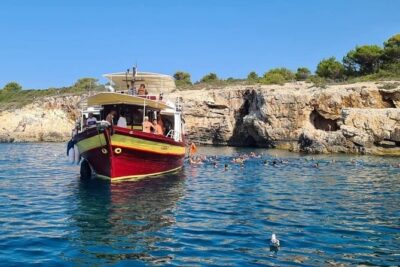
Medulin -Kamenjak 5h boat trip with lunch & drinks on Sandra Boat
Read our review →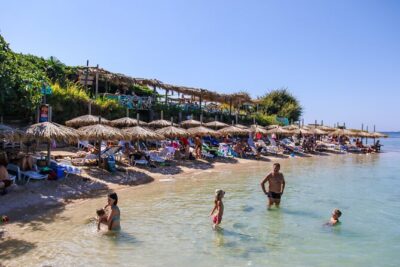
Full-Day Boat Tour of the Medulin Archipelago from Medulin
Read our review →
3hours all inclusive Sunset&Dolphin Tour from Medulin on Sandra
Read our review →
Dolphin Watching & Sunset Boat Tour With Dinner and Drinks
Read our review →
Kayaking,Snorkeling, Cliff jumping Tour with Wetsuit
Read our review →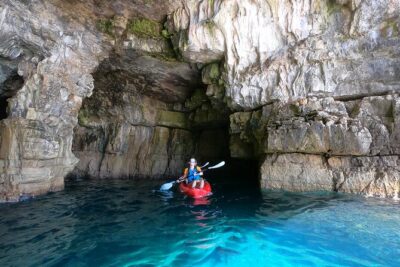
BOAT & KAYAK! Sea Adventure – Snorkeling & Cliff Jumps
Read our review →
National Park Brijuni Island Visit & Dolphin Cruise
Read our review →Browse the lists this tour appears in