Reviewed · SPLIT TOURS
Nocturnal Tours Trogir & Split – Soul of the Old Split Tour
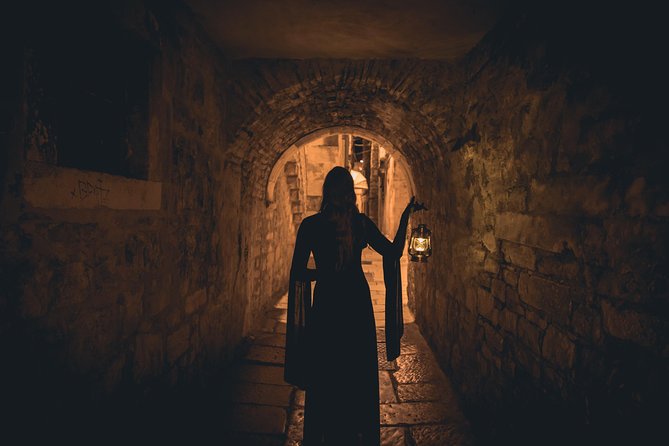
Split comes alive after dark. The Soul of the Old Split Tour pairs a lantern-lit walk with stories about emperors, fishermen, artists, and local heartbreak, giving you a lively introduction to the old center without taking up your whole evening. I especially like the small maximum of eight people and the guide’s strong storytelling focus.
I also like the route’s mix of famous sights and less formal city corners, from Diocletian’s Palace to Matejuška harbor. The main consideration is timing: the tour begins at 9:00 pm, and its nighttime setting may not suit anyone who prefers daylight sightseeing or a slower, more detailed archaeological tour.
- Lantern-lit atmosphere: See Split’s old center after dark, when the palace lanes take on a different mood.
- A Roman emperor at the center: Diocletian’s life and mysterious death provide the tour’s main historical thread.
- Only eight people maximum: The small group should make it easier to hear the guide and ask questions.
- Local stories beyond the monuments: Hear about Split humor, a famous love tragedy, and the fishermen of Matejuška.
- A useful evening length: The walk lasts about 1 hour and 20 minutes, leaving room for dinner or a late stroll afterward.
- A highly praised storyteller: The guide has been warmly praised for sharing unusual stories with clear affection for Split.
In This Review
- Why Split Works So Well After Dark
- Beginning at Diocletian’s Palace at 9:00 pm
- Narodni Trg and the People Who Shaped It
- Touching Grgur Ninski’s Toe
- Riva Harbor, Split’s Public Stage
- Kino Karaman and a Claim to Film History
- Matejuška, Fishermen and Roko and Cicibela
- What the Small Group Changes
- Is $28.90 a Fair Price?
- Who Will Enjoy This Walk Most?
- Weather, Cancellation and Evening Planning
- Should You Book the Soul of the Old Split Tour?
- FAQ
- Where does the Soul of the Old Split Tour start?
- What time does the tour begin?
- How long does the experience last?
- Where does the tour end?
- What language is the tour offered in?
- How many people can join the tour?
- Is the tour accessible to most people?
- Can I cancel for a full refund?
Why Split Works So Well After Dark
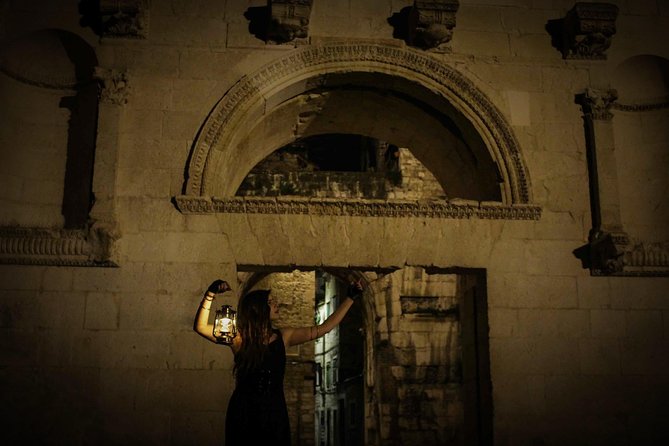
By day, Split’s old center can feel like a busy open-air museum. At night, the same stone passages become more intimate. The lantern-lit format puts attention on the guide’s voice, the shape of the palace walls, and the stories attached to each place.
This is not a museum-heavy tour with long stops inside ticketed sites. Every stop listed is free to enter, and the value comes from interpretation rather than admissions. You are paying for a compact route, a small group, and a guide who can connect scattered corners of town into one story.
The tour is offered in English and lasts approximately 80 minutes. The scheduled stops account for about 70 minutes, so the remaining time likely allows for walking between locations, pauses, and the natural rhythm of a small-group outing. That makes the pace fairly brisk but not extreme.
The overall rating is 4.8 from 10 reviews, and 90 percent of customers recommend it. That is a positive signal, though the sample is small. The clearest praise focuses on the guide’s storytelling, entertainment, and ability to share material you may not hear on a standard sightseeing walk.
Beginning at Diocletian’s Palace at 9:00 pm
The meeting point is Hrvojeva 4, near the old town, with the walk starting at 9:00 pm. From there, the story of Split begins with Diocletian’s Palace, the huge Roman complex that still forms the core of the city.
The palace is more than a single preserved building. It is the setting in which Split’s ancient and modern life overlap. Streets, shops, homes, and public spaces occupy the former imperial complex, so you are not simply looking at ruins from behind a barrier. You are walking through a living part of the city.
The guide focuses on Emperor Diocletian, a figure presented as controversial and still surrounded by mystery. That is a good choice for an evening tour. His retirement, personality, and death give the walk a central question, while the palace provides the physical evidence around you.
You should expect about 30 minutes here, the longest stop on the route. That allows the guide to establish the basic story before moving into more personal tales from later periods. The stop has no admission charge, but you should not expect a full archaeological lecture or a visit to every section of the palace.
I like this opening because it gives the tour structure. Instead of hopping between unrelated monuments, you first learn why Split exists where it does and why the palace still matters. If you have already taken a detailed daytime palace tour, this portion may repeat some basics, but the nighttime storytelling should give it a different tone.
Other Split trips people book alongside this one:
- Split: Krka Waterfalls Trip with Boat Cruise and Swimming
★ 4.8 · 10,519 reviews - From Split: Krka Waterfalls, Food & Wine Tasting Tour
★ 5.0 · 9,326 reviews - Blue cave, Mamma Mia and Hvar, 5 islands speedboat tour
★ 5.0 · 7,150 reviews
Narodni Trg and the People Who Shaped It
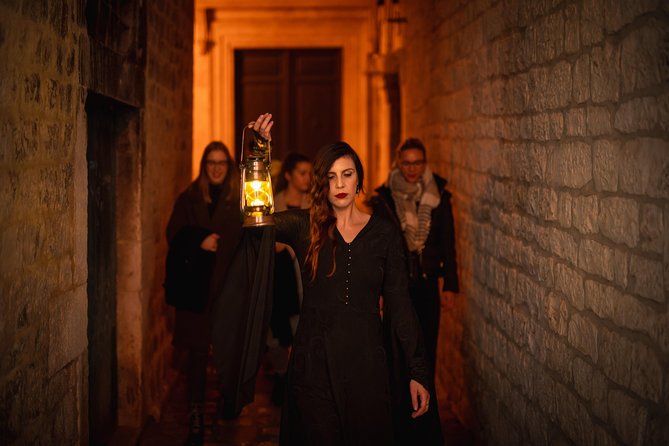
The next stop is Narodni Trg, or People’s Square, for about 10 minutes. This has long been a meeting place for Split, and the tour uses the square to shift from imperial history to the city’s social life.
That change is important. Split is not only a Roman site. Its character comes from people gathering, arguing, celebrating, gossiping, and giving the city its own sense of humor. The guide tells stories about personalities connected with the square, helping you see it as a stage for local life rather than just another attractive plaza.
A 10-minute stop is enough for a focused explanation without letting the walk lose momentum. You will hear selected stories rather than a full account of every building around the square. That is useful if you want a readable introduction, though less useful if your main goal is architectural detail.
The square also helps you get your bearings. It connects naturally with the palace area and shows how the old town’s public spaces work together. Keep listening for names and stories you may want to ask about later, since the small group makes questions easier than on a large city walk.
Touching Grgur Ninski’s Toe
The statue of Grgur Ninski receives a short five-minute stop. At 8.5 meters high, it is an imposing work by Ivan Meštrović, described as Croatia’s most important sculptor.
This is a quick photo and explanation stop, not a long art-history session. The statue’s scale makes it easy to spot, while the guide gives you a reason to pay attention beyond its size. If you enjoy public art, this is a useful reminder that Split’s story continued long after Roman rule.
The short timing works well in a compact evening route. You get the visual landmark without spending too much of the tour on a single sculpture. Still, anyone especially interested in Meštrović should treat this as an introduction and seek out a longer explanation elsewhere.
The stop breaks up the historical narrative with a strong modern Croatian symbol. It also gives you a chance to look around and notice how quickly Split moves between ancient stone, medieval lanes, and later civic spaces.
Riva Harbor, Split’s Public Stage
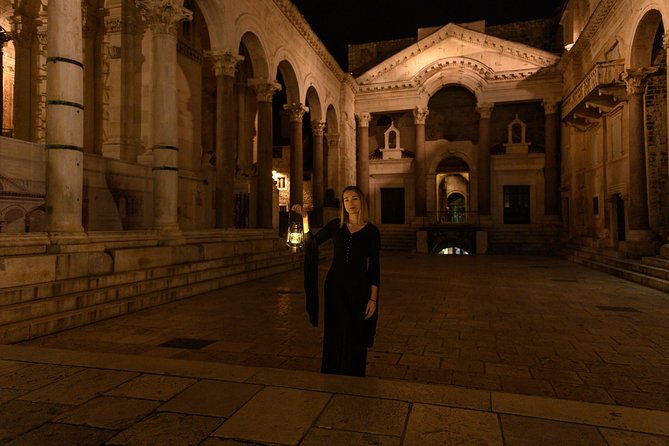
The 10-minute visit to Riva Harbor brings the walk toward the waterfront. Split’s Riva is the city’s main promenade, and the tour treats it as a mirror of local life.
This is where the guide turns toward laughter, local humor, personal attractions, and a great love tragedy. Those subjects may sound lighter than the story of Diocletian, but they reveal how residents understand their own city. A place is remembered through jokes, romances, and public rituals as much as through rulers and dates.
The harbor stop should also provide a pleasant change of setting. After the enclosed stone spaces of the palace, the promenade opens toward the water and the city’s public front. The tour data does not promise a long scenic pause, so expect storytelling rather than a formal viewpoint session.
I like this part because it prevents the walk from becoming a parade of monuments. You are encouraged to listen for the personality of Split, including its specific humor. That kind of local framing can make later independent walks more enjoyable because you start noticing how the city presents itself.
If you want sunset photography or a leisurely drink by the waterfront, the 10-minute stop may feel brief. The tour has a clear schedule, so plan to return to the Riva afterward if you want more time there.
Something different for another day:
- From Split: Krka Waterfalls, Food & Wine Tasting Tour
★ 4.9 · 6,598 reviews - Split/Trogir: Blue Cave, Mamma Mia, Hvar and 5 Island Tour
★ 4.6 · 6,320 reviews - Blue Lagoon & 3 Islands Cruise with Lunch from Split
★ 4.5 · 5,756 reviews - Split: Old Town and Diocletian Palace Walking Tour
★ 4.9 · 4,727 reviews
Kino Karaman and a Claim to Film History
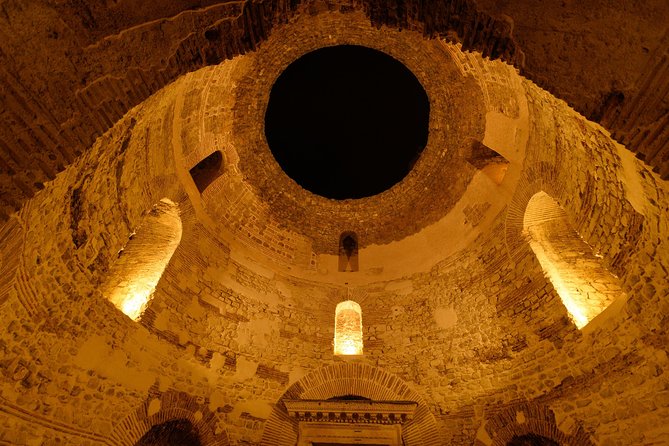
Kino Karaman gets about five minutes. It is described as the oldest cinema in Split and in all of Europe, which makes it an unusual stop on an old-town walking route.
The attraction here is not a long cinema visit. It is the story of a cultural institution and the way modern entertainment became part of Split’s identity. A cinema stop also adds variety after the Roman palace, public squares, and waterfront.
Because the stop is so short, you should keep your expectations in check. The tour presents the cinema as a notable landmark, but the available information does not indicate a screening, interior visit, or extended film history. Think of it as a compact story attached to a place you might otherwise walk past.
That is one of the route’s strengths. The guide appears willing to point out details that do not always make it into a standard highlights tour. You get a broader picture of the city, not just the most famous ancient remains.
Matejuška, Fishermen and Roko and Cicibela
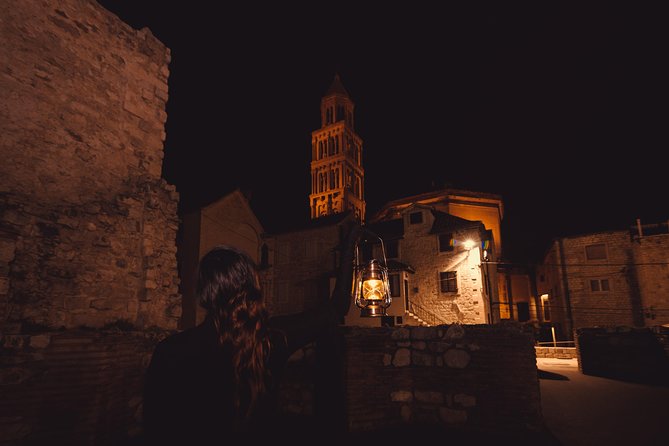
The final stop is Matejuška, the old fishermen’s harbor, with around 10 minutes devoted to it. The tour connects this port with the beloved local love story of Roko and Cicibela.
Matejuška gives the evening a human ending. The palace introduces an emperor, while the harbor brings you to working people and a story of love. That movement from power to ordinary life is one of the most appealing features of the route.
The harbor is also the tour’s endpoint. You finish at Pharmacy Matejuška, Pharmacy Split Riva, Trumbićeva obala 16. The ending is practical because you are near the waterfront, but the experience does not include a return to the starting point. You should keep that in mind when planning your next move.
The information provided does not say that the tour includes a meal, drink, or time inside the harbor area. You are receiving the story and the walk, not a bundled evening out. If you want to eat afterward, the end point gives you a logical place to continue your night, though specific restaurant arrangements are not part of the tour.
What the Small Group Changes
The maximum group size is eight people, and that is a major part of the experience’s value. A guide can speak more naturally to a small circle, and you are less likely to lose the thread of a story in crowd noise.
A small group also helps with questions. If you are curious about Diocletian, local personalities, or the Roko and Cicibela story, you have a better chance to ask without interrupting a large procession. The guide can also adjust the tone slightly based on the group’s interest.
The strongest praise centers on the guide’s storytelling. One customer described the guide as a fantastic storyteller who shared stories unlikely to appear on other tours. Another praised the guide for combining beautiful sights, fun, and safety during the period when Covid precautions mattered.
The guide’s name is not provided, so I cannot tell you who will lead your particular departure. The available comments refer to a female guide and show clear affection for Split. That warmth matters here because much of the tour’s appeal depends on delivery. The facts are useful, but the local stories need personality.
The small group does not guarantee a private tour. You may still walk with other people, and the tour requires a minimum number to operate. If that minimum is not reached, the provider offers another date or experience, or a full refund.
Is $28.90 a Fair Price?
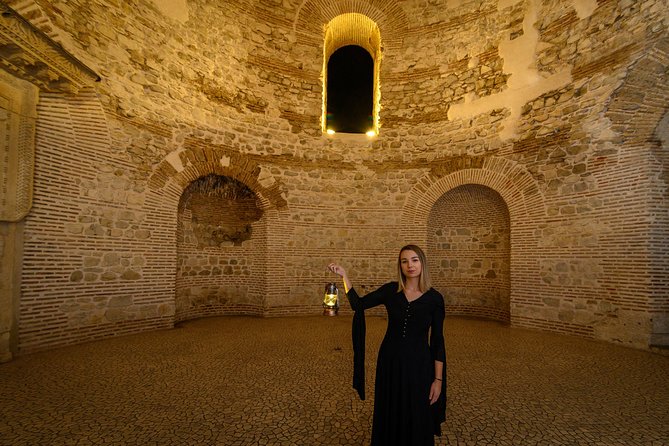
At $28.90 per person, this is priced as an affordable guided introduction rather than a luxury private walk. Since the route uses free public locations, the price pays for the guide, the planning, the lantern-lit presentation, and the compact small-group format.
I think the value is strongest for a first evening in Split. You get the major historical anchor of Diocletian’s Palace, several central public spaces, the Riva, and Matejuška in about 80 minutes. That can save you time while giving you a list of places to revisit independently.
The value is weaker if you only want entrance tickets or a long archaeological explanation. There are no paid admissions included, and the stop at each location is short. You are buying stories and orientation, not access to a special interior or an extensive museum program.
The price also makes sense for solo visitors and couples who prefer a social but controlled group. With only eight places, the experience should feel more personal than a large city tour, while costing far less than a private guide.
Who Will Enjoy This Walk Most?
I would recommend it to you if you want a short introduction to Split that mixes Roman history with local character. It suits first-time visitors, couples looking for an evening activity, and anyone who enjoys stories about real people more than a list of dates.
It is also a good fit if you arrive in Split with limited time. The route covers several central places, starts late, and ends near the waterfront. You can use it as an orientation walk before exploring the old town on your own the next day.
Families may appreciate the short stops and dramatic subjects, though the 9:00 pm start may be late for young children. History fans should enjoy Diocletian’s Palace, but those seeking technical detail about Roman architecture may want a more specialized daytime tour as well.
You might skip this experience if you dislike nighttime walks, prefer a self-guided visit, or want a tour with indoor access and extensive historical detail. The format depends heavily on the guide’s ability to tell a good story, and the available feedback suggests that storytelling is the main strength.
The tour is offered in English only. Most people can participate, and service animals are allowed. It is near public transportation, but no specific transport route is provided, so you should check your own connection to Hrvojeva 4 before setting out.
Weather, Cancellation and Evening Planning
This experience requires good weather. If poor weather forces a cancellation, you are offered another date or a full refund. It also requires a minimum number of participants, with the same general choice of another date, another experience, or a full refund if the minimum is not met.
You can cancel for a full refund up to 24 hours before the 9:00 pm start. Changes or cancellations made less than 24 hours before the start are not accepted for a refund, and all cut-off times use Split’s local time.
Bring a practical attitude toward the evening. The walk is outdoors, the start is fixed, and the route ends somewhere different from where it begins. A mobile ticket is provided, so keep your booking confirmation easy to access.
Should You Book the Soul of the Old Split Tour?
Book it if you want a personable evening walk with memorable local stories, especially if Diocletian’s Palace is on your must-see list but you do not want a two-hour lecture. The eight-person limit, $28.90 price, and strong praise for the guide’s storytelling make this a sensible way to get oriented.
I would choose it early in your Split stay, then return to the palace, Riva, and Matejuška at your own pace. Skip it only if you need a highly detailed archaeological tour, dislike late starts, or want included admissions and a longer stop at each sight.
FAQ
Where does the Soul of the Old Split Tour start?
The tour starts at Hrvojeva 4, 21000, Split, Croatia.
What time does the tour begin?
The tour starts at 9:00 pm.
How long does the experience last?
It lasts approximately 1 hour and 20 minutes.
Where does the tour end?
The tour ends at Pharmacy Matejuška, Pharmacy Split Riva, Trumbićeva obala 16, 21000, Split, Croatia.
What language is the tour offered in?
The tour is offered in English.
How many people can join the tour?
The tour has a maximum of eight participants.
Is the tour accessible to most people?
Most people can participate, and service animals are allowed. The experience is also near public transportation.
Can I cancel for a full refund?
Yes. You can cancel at least 24 hours before the start time for a full refund. Cancellations or changes made less than 24 hours before the start are not accepted for a refund.
Just added around Split
- Private VIP Blue Lagoon and 3 Islands Tour★ 4.5 · 9 reviews
- Split highlights – Evening walking tour★ 5.0 · 9 reviews
- Private boat transfer Split – Bol★ 5.0 · 9 reviews
- From Split: Trogir & Blue Lagoon Boat Tour with Snorkeling★ 4.6 · 9 reviews
- Private Photography Activity in Split★ 5.0 · 9 reviews
- Bike, Beer & Poljud Stadium Tour★ 5.0 · 9 reviews
- From Hvar: Blue cave group speedboat tour full day★ 5.0 · 9 reviews
- Split Walking Tour: History, Legends & Tales★ 5.0 · 9 reviews
Split Tours, compared.

Krka Waterfalls Trip with Boat Cruise and Swimming
Read our review →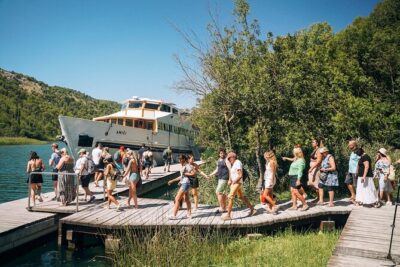
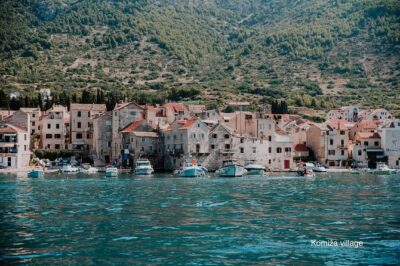
Blue cave, Mamma Mia and Hvar, 5 islands speedboat tour
Read our review →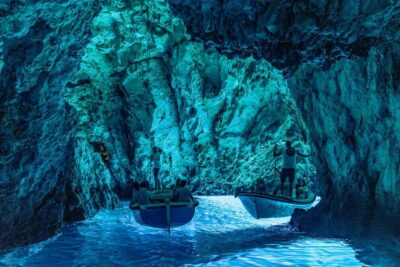
Blue Cave, Mamma Mia, Hvar and 5 Island Tour
Read our review →
Blue Lagoon & 3 Islands Cruise with Lunch from Split
Read our review →