Reviewed · SPLIT TOURS
Experience Split With Local Professional Historian – Small Group
History is hiding in plain sight here. I like the way this two-hour walking tour connects Roman buildings with everyday life in modern Split, and I especially like the small maximum of 12 people, which makes questions and conversation much easier. The guide, Boris, is a local historian with a master’s degree in history and a background as a history teacher.
The picture book with old images and 3D reconstructions is another smart touch. It helps you picture Diocletian’s Palace before later centuries changed it. The main limitation is that the tour moves quickly and does not include admission tickets, so you may want extra time afterward for paid interiors such as the cathedral or cellar areas.
In This Review
- Key points to know before booking
- Why this is a good first look at Split
- Starting at the Golden Gate and Gregory of Nin
- Walking through Diocletian’s Palace
- The Peristyle, where the palace made its power clear
- The cellars and the Triclinium
- Jupiter’s Temple and Roman religion
- Saint Domnius Cathedral and the palace’s changing identity
- The Vestibule and the emperor’s private quarters
- Riva Harbor and the city beyond the palace walls
- Fruit Square and the stories behind everyday places
- Ending at Pjaca, Split’s People’s Square
- What makes Boris a strong guide
- Group size, pace, and practical matters
- Who should book this Split walking tour?
- Should you book it?
- FAQ
- How long does the Split history tour last?
- What language is the experience offered in?
- Where does the tour begin?
- Where does the tour end?
- What is the maximum group size?
- Are admission tickets included?
- What happens if bad weather cancels the tour?
Key points to know before booking
- Boris brings Split’s past to life: His history-teaching background shows in the clear explanations, questions, and personal stories.
- The group is capped at 12 people: You get a more personal walk than with a large guide-led crowd.
- The route covers the city’s essential core: You visit the Golden Gate, Peristyle, Jupiter’s Temple, Saint Domnius Cathedral, Riva, Fruit Square, and Pjaca.
- 3D images make the ruins easier to understand: A display book shows how Diocletian’s Palace may have looked in Roman times.
- The tour links Roman, medieval, and modern Split: You are not limited to emperors and columns. You also hear about local customs, recent life, and the city’s changes.
- You finish in a useful spot: The walk ends at People’s Square, close to cafés, restaurants, shops, and more sights.
Why this is a good first look at Split
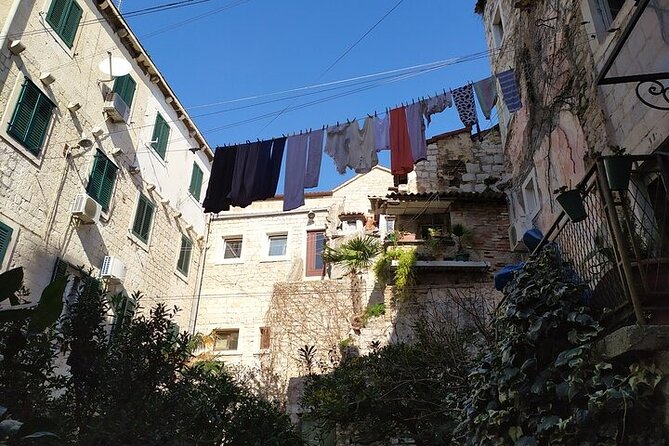
Split can be confusing at first. The old city is not a neatly preserved archaeological park with every period separated behind a fence. Modern homes, cafés, shops, church buildings, laundry, and Roman stonework all share the same compact center.
That mixture is exactly what makes the city interesting, but it also means that a casual stroll can leave you seeing plenty without understanding much. This tour gives you the basic framework. You learn why the palace was built, how it changed after the Roman period, and how it became the center of daily life in Split.
I like this approach because it does not treat Diocletian’s Palace as a dead monument. The palace is also the old city. People still move through its gates, gather in its squares, and use buildings that began with a Roman emperor.
Boris also brings the present into the conversation. His personal stories about living in Split, along with suggestions for food, coffee, ice cream, shops, and other activities, add practical value. The result is part history lesson and part orientation walk.
The experience costs $38.62 per person, which is a fair price for a small-group tour led by a local history professional. You are paying for interpretation, not transport or entry tickets. If you prefer to wander alone and read signs at your own pace, this may feel unnecessary. If you want the city to make sense quickly, the price is easier to justify.
Other Split trips people book alongside this one:
- Split: Krka Waterfalls Trip with Boat Cruise and Swimming
★ 4.8 · 10,519 reviews - From Split: Krka Waterfalls, Food & Wine Tasting Tour
★ 5.0 · 9,326 reviews - Blue cave, Mamma Mia and Hvar, 5 islands speedboat tour
★ 5.0 · 7,150 reviews
Starting at the Golden Gate and Gregory of Nin
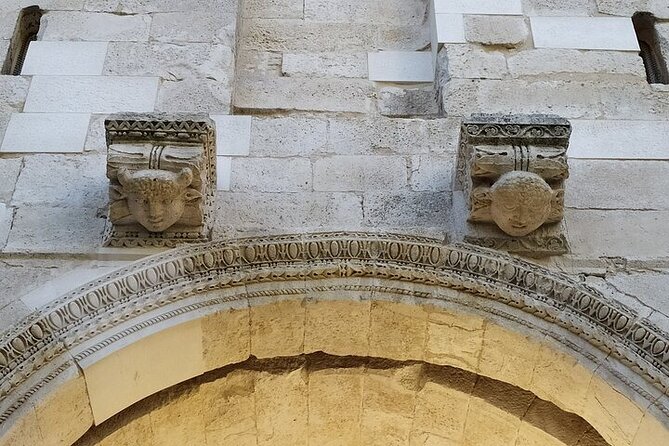
The meeting point is the Golden Gate, the northern entrance to Diocletian’s Palace. Despite its grand name, the gate is made of stone, not gold. It is one of the most recognizable entrances to the old city and a sensible place to begin because it introduces both the palace and Split’s medieval streets.
Boris uses the gate to explain the importance of the palace and its position in the city. You begin with the larger story before moving into details, which helps you understand why the route keeps crossing between Roman remains and later buildings.
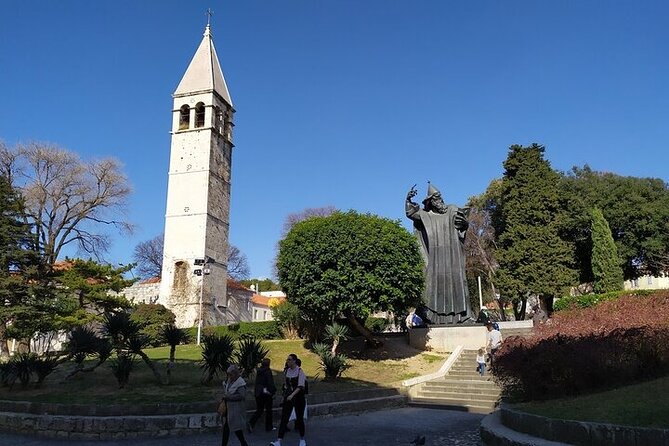
Just opposite the Golden Gate is the statue of Gregory of Nin, or Grgur Ninski. The statue was made by the sculptor Ivan Meštrović and is one of Split’s best-known public monuments. Boris explains the historical figure, the meaning of the monument, and the story connected with it.
You will also see the famous polished toe. Rubbing it is a familiar Split ritual, though the key value here is the explanation behind the statue rather than the photo opportunity alone. This opening section takes about 25 minutes in total and gives you a useful sense of the city’s layers.
Walking through Diocletian’s Palace
Diocletian’s Palace is the central subject of the experience. It was built by Roman Emperor Diocletian, one of the empire’s most successful rulers, and it remains unusually well preserved in its basic structure.
The important point is that this was not simply a palace in the modern sense. It was a large complex with ceremonial areas, religious buildings, private imperial spaces, service areas, and strong defensive walls. Boris explains how those parts worked together and how the site changed as the Roman world changed.
The picture book is particularly useful here. Ruins can be hard to read when you are looking at partial walls, altered entrances, and buildings that have been reused for centuries. The old pictures and 3D reconstructions give you a clearer idea of the original Roman design.
This visual aid also helps children and teenagers follow the tour. Boris has been praised for asking questions and including younger members of a group instead of speaking only to the adults. That makes the experience a good fit for families who want history without a stiff lecture.
The palace section includes the Peristyle, Jupiter’s Temple from the outside, the central substructure or cellars, the Triclinium, and the former mausoleum, now connected with Saint Domnius Cathedral. The route is compact, but the subject is large, so expect a steady pace.
The Peristyle, where the palace made its power clear
The Peristyle is the visual and ceremonial heart of Diocletian’s Palace. It was a place where people could be brought closer to the emperor, while also being reminded of the distance between the ruler and everyone else.
From this central court, Boris explains how the palace was organized and how people moved through it. The space makes more sense once you understand that its design was meant to connect areas of the complex while also controlling access to the emperor’s private world.
The Peristyle is also where later history becomes easy to see. Christianity changed the use of important Roman buildings, and the palace was gradually absorbed into the medieval city. A Roman mausoleum became part of the cathedral complex, while former imperial spaces took on new purposes.
This is one of the best places to use the reconstruction images. Look around the court while comparing the existing stonework with the earlier version shown in the book. You get a better sense of what is original, what was changed, and how the city grew inside the old palace walls.
Something different for another day:
- From Split: Krka Waterfalls, Food & Wine Tasting Tour
★ 4.9 · 6,598 reviews - Split/Trogir: Blue Cave, Mamma Mia, Hvar and 5 Island Tour
★ 4.6 · 6,320 reviews - Blue Lagoon & 3 Islands Cruise with Lunch from Split
★ 4.5 · 5,756 reviews - Split: Old Town and Diocletian Palace Walking Tour
★ 4.9 · 4,727 reviews
The cellars and the Triclinium
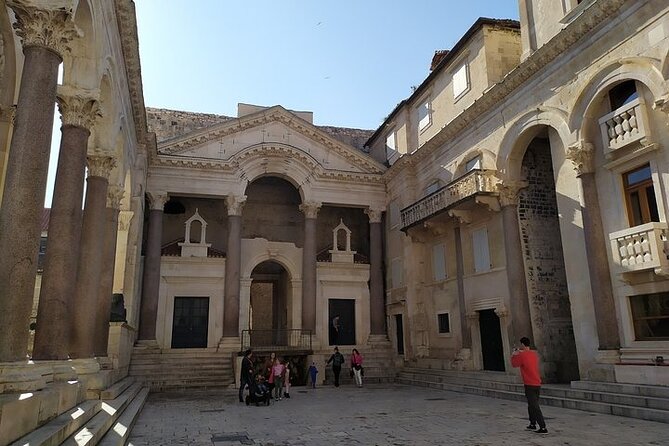
The central part of the Diocletian’s Palace substructure provides another useful lesson. Boris explains how the lower areas were used over time and why they matter to Split’s development.
The cellars are valuable because their layout helps reveal the plan of the rooms above. In a place that has been altered repeatedly, the lower structure can make the original arrangement easier to understand. The guide also places these spaces in the wider story of Split rather than treating them as isolated ruins.
The Triclinium adds a more human detail. Here, the subject turns to Roman dining customs and the way an emperor’s dining room was organized. You hear about eating habits and the formal nature of imperial meals.
This is the kind of detail that keeps the tour from becoming a list of dates. A question about where an emperor ate can lead to a clearer picture of rank, ceremony, and daily routines inside the palace. The stop is brief, so anyone especially interested in Roman domestic life may want to ask questions while you are there.
Jupiter’s Temple and Roman religion
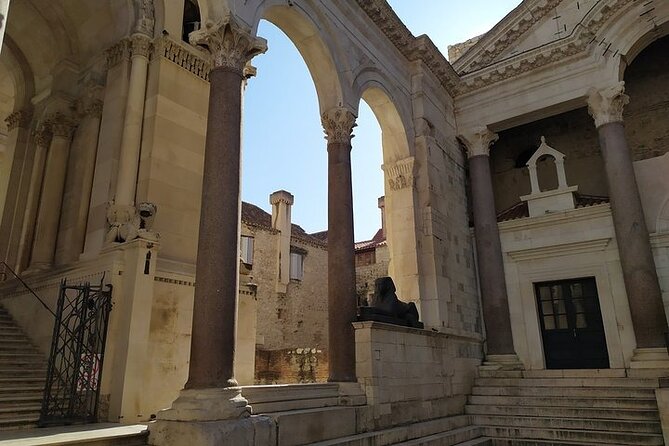
Jupiter’s Temple is viewed from outside, but that is enough for Boris to explain the role of religion in Roman public and private life. Temples were not optional decoration in a Roman imperial residence. They helped express the authority of the emperor and the beliefs that shaped public life.
The stop lasts about 10 minutes. That keeps the walk moving, though it also means you should not expect a long architectural study of the temple. The value is in understanding how the temple fits into the larger palace plan and why Roman religious buildings were essential to the complex.
The short visit also works well for a first tour. You get the main idea, then can decide later if you want to spend more time examining the site on your own.
Saint Domnius Cathedral and the palace’s changing identity
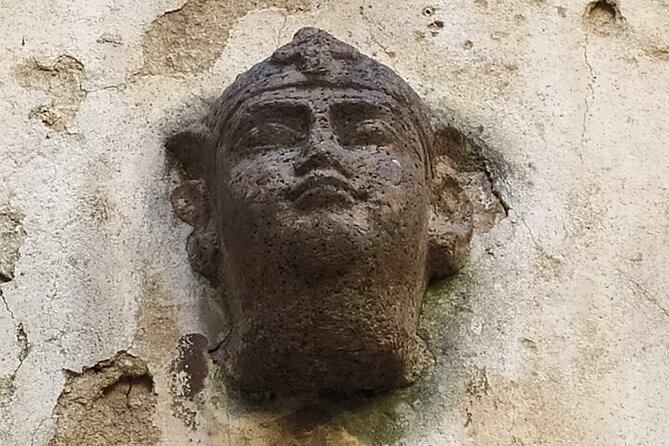
The cathedral is visited from outside. Boris points out significant parts of the building and explains its story, then notes details you can look for if you choose to enter independently.
This is a key transition in the tour. A building associated with Diocletian’s imperial world later became part of a Christian cathedral. That change says a great deal about how the palace survived. It was not preserved as a perfect Roman time capsule. It remained useful, and later communities adapted it.
Because the inside is not part of the guided visit, plan your expectations carefully. You receive context and orientation, but you do not get a full interior tour. The same applies to other places where the tour focuses on the exterior or explains a site without including an admission ticket.
The Vestibule and the emperor’s private quarters
The Vestibule was the entrance to Diocletian’s private chambers. Its decoration reflected the importance of the rooms beyond it, and Boris explains both its function and its original appearance.
This stop helps you picture the difference between public ceremony and private access. The Peristyle showed imperial authority to a wider audience. The Vestibule marked the approach to a more restricted part of the palace.
It is a short stop, around 10 minutes, but it fits neatly into the larger explanation of how the emperor’s residence operated. If you like architecture, this is a good moment to ask how the space connected with the rest of the palace.
Riva Harbor and the city beyond the palace walls
The route then leaves the palace area for Riva, Split’s main waterfront promenade. Boris explains how Riva developed over the centuries and why it became so important to local life.
This section is useful because it broadens the tour beyond Roman remains. Split is not only a palace with a harbor attached. Riva is a central place for meeting, walking, and watching city life, and it gives you a better feel for how the old center connects with the waterfront.
The stop lasts about five minutes, so it is more of a quick orientation than a long harbor walk. Still, the location helps you understand the city’s shape and gives you an easy place to return later.
Fruit Square and the stories behind everyday places
Fruit Square, formally Trg Braće Radić, is small and charming. Boris explains why it is called Fruit Square and points out the important monument in its center and the notable buildings around it.
This is one of the tour’s most useful habits: giving meaning to ordinary public spaces. A square may look like a pleasant place for a photograph, but its name and buildings can tell you how people used the city in earlier periods.
The stop lasts about 10 minutes. It is also a good reminder that Split’s history is not confined to the grandest Roman monuments. Small squares and side streets often show how the old city continued to function after the palace changed purpose.
Ending at Pjaca, Split’s People’s Square
The tour finishes at People’s Square, known locally as Pjaca or Piazza. Since medieval times, it has served as a center for city activity, and Boris explains the square’s story along with nearby buildings such as the old City Hall.
This is a practical ending point. You are still in the center, with easy access to other parts of Split. Boris also suggests places to visit after the walk, including sights that were not included in the route.
The final recommendations can be especially useful if this is your first day in town. The tour does not try to cover every church, museum, shop, or viewpoint. Instead, you finish with a basic map in your head and ideas for how to use the rest of your time.
What makes Boris a strong guide
The guide is the main reason to choose this experience over a basic self-guided walk. Boris is described as a local history teacher and professional historian, and his style combines facts with questions, humor, and personal stories.
He speaks English fluently and encourages questions throughout the walk. That matters in a small group because you can ask about topics beyond the standard route, including Croatia’s regional differences, political changes, local culture, and modern Split.
He also pays attention to practical details. The guide can help take photos, and his restaurant, coffee, ice cream, and activity suggestions are tailored to the group. Several people especially valued the way he connected the past with places they could visit later.
The experience can sometimes run closer to two and a half hours when the group asks many questions. That is a positive sign if you enjoy conversation, but it is worth remembering if you have a tightly timed ferry, meal, or other booking.
Group size, pace, and practical matters
The maximum group size is 12 people. That is small enough for a more personal experience, especially in narrow streets where a large group can become awkward. You are more likely to hear the guide clearly and get an answer when you raise a question.
The tour is offered in English and lasts about two hours. It begins at the Golden Gate, at Dioklecijanova 7, and ends at People’s Square. There is no transport, so you should be ready for continuous walking through the old city.
Most people can take part, and service animals are allowed. The route is near public transportation, though the supplied details do not specify the exact walking distance or surface conditions. Wear comfortable shoes and allow a little extra time if you want to linger at the end.
The price includes a licensed local guide and the display book with pictures and 3D reconstruction images. Admission tickets are not included. The stops are listed without admission charges, but the cathedral and other interior areas may require separate planning if you decide to visit them after the guided explanations.
Free cancellation is available up to 24 hours before the start time. The experience depends on good weather and a minimum number of participants, so a weather or minimum-group cancellation may lead to another date or a full refund.
Who should book this Split walking tour?
I would choose this for a first visit to Split, especially if you want the palace to make sense rather than simply photograph it. It suits history fans, families, curious couples, and anyone who prefers a small group to a large flag-led procession.
It is also a good choice near the beginning of a Croatia trip. You receive useful context about Split, Croatia, and regional differences, then can use the guide’s local suggestions during the rest of your stay.
You may want something else if you have already studied the palace in detail, dislike guided schedules, or need a tour that includes every interior ticket. In that case, a self-guided visit with extra time inside the cathedral and cellars could suit you better.
Should you book it?
Book it if you want a clear introduction to Split led by a local historian. The strongest features are Boris’s teaching style, the small group, the visual reconstruction book, and the balance between Roman monuments and modern local life.
At $38.62, it offers solid value for two hours of focused history and practical orientation. Just remember that the route is compact, some sites are viewed from outside, and admission tickets are not included. For most first-time visitors, this is a smart way to get your bearings before exploring Split on your own.
FAQ
How long does the Split history tour last?
The tour lasts approximately two hours. It may run longer when the group has many questions and discussions.
What language is the experience offered in?
The tour is offered in English.
Where does the tour begin?
The meeting point is the Golden Gate at Dioklecijanova 7, 21000 Split, Croatia.
Where does the tour end?
The tour ends at People’s Square, also called Pjaca Square, in central Split.
What is the maximum group size?
The experience allows a maximum of 12 participants.
Are admission tickets included?
No. Admission tickets are not included in the price.
What happens if bad weather cancels the tour?
If poor weather causes a cancellation, you will be offered another date or a full refund.
Just added around Split
- Private VIP Blue Lagoon and 3 Islands Tour★ 4.5 · 9 reviews
- Split highlights – Evening walking tour★ 5.0 · 9 reviews
- Private boat transfer Split – Bol★ 5.0 · 9 reviews
- From Split: Trogir & Blue Lagoon Boat Tour with Snorkeling★ 4.6 · 9 reviews
- Private Photography Activity in Split★ 5.0 · 9 reviews
- Bike, Beer & Poljud Stadium Tour★ 5.0 · 9 reviews
- From Hvar: Blue cave group speedboat tour full day★ 5.0 · 9 reviews
- Split Walking Tour: History, Legends & Tales★ 5.0 · 9 reviews
Split Tours, compared.

Krka Waterfalls Trip with Boat Cruise and Swimming
Read our review →
Blue cave, Mamma Mia and Hvar, 5 islands speedboat tour
Read our review →
Blue Cave, Mamma Mia, Hvar and 5 Island Tour
Read our review →
Blue Lagoon & 3 Islands Cruise with Lunch from Split
Read our review →