
Reviewed · PULA TOURS
Discover the Essence of Pula: Private Tour with a Local Pro
Pula’s Roman past is packed into a walkable old town. This private two-hour tour links the Arena, ancient gates, the Forum, and a World War I tunnel with the help of a local history teacher. I like the private format and the chance to hear personal stories rather than receive a standard script. I also like that the route includes small details you could easily miss on your own. The main drawback is that admission to several sights costs extra, so the advertised price is not the full cost if you want to enter them.
Guide Dalen earns especially warm praise for his humor, enthusiasm, and love of Pula, while Halan is also described as an excellent guide. The route begins near the Arena and finishes at the Forum, making it useful for getting your bearings early in a stay. At $60.01 per person, the tour is best value for couples, families, or friends who want personal attention and a brisk introduction to the city.
In This Review
- Key reasons to consider this Pula walking tour
- Why a private two-hour walk works well in Pula
- Starting with the Pula Arena
- A pause at Tito’s Park and its miniature Pula
- Passing through the Twin Gates
- Going below ground in Zerostrasse
- The Gate of Hercules and a name from antiquity
- Reaching the Forum after two millennia of city life
- Ending at the Temple of Augustus
- What the guides add to the route
- Is $60.01 per person good value?
- Who should book this private Pula walk?
- My booking advice
- Should you book it?
- FAQ
- How long is the private Pula tour?
- Where does the tour start and finish?
- Is admission to the attractions included?
- Is the tour private?
- What language is the tour offered in?
- Can I cancel for a full refund?
Key reasons to consider this Pula walking tour
- A private route through seven major sights: Your group gets the guide’s attention without being folded into a large crowd.
- A history teacher leads the walk: Dalen and Halan are praised for clear explanations, humor, and personal touches.
- The Arena anchors the experience: You see one of Europe’s best-preserved Roman amphitheaters near the start.
- The route crosses several eras: Roman monuments, Tito’s Park, a medieval gate area, and a World War I shelter all fit into two hours.
- You finish at the Forum: The tour ends in one of Pula’s most useful central squares for further sightseeing or a meal.
- Entry fees are not all included: The Arena, Zerostrasse, and Temple of Augustus may require separate admission.
Why a private two-hour walk works well in Pula
Pula is compact, but its story is not. Roman emperors, medieval city walls, Yugoslav-era memory, and twentieth-century military history all appear within a short distance of one another. A guide helps you connect those pieces instead of seeing them as a collection of old stones.
The private setup matters most here. You can ask why a gate looks different from another, pause for an explanation, or move along if a subject is less interesting to your group. You are not adjusting your pace to a busload of people, and the guide can add local suggestions along the way.
The tour lasts about two hours, with the remaining time used for walking between stops. That makes it a good first activity in Pula. You get a broad outline of the city without giving up half a day, then you can return to the Arena, Forum, or tunnel if one place catches your attention.
The route is conducted in English. It requires a moderate level of fitness because you walk through the old town and may enter an underground tunnel. The meeting point is at Park NimfejaArena near the Pula Arena, and the walk ends at Forum Square, at Forum 3.
A few more tours and experiences worth a look
- Private Boat Trip with Sandra Boat Medulin, Kamenjak, Ceja
★ 5.0 · 119 reviews - Private Boat Tour to Kamenjak and Levan Island with Lunch
★ 5.0 · 82 reviews - Brijuni Islands: Sunset & Dolphins private boat tour
★ 4.8 · 46 reviews
Starting with the Pula Arena
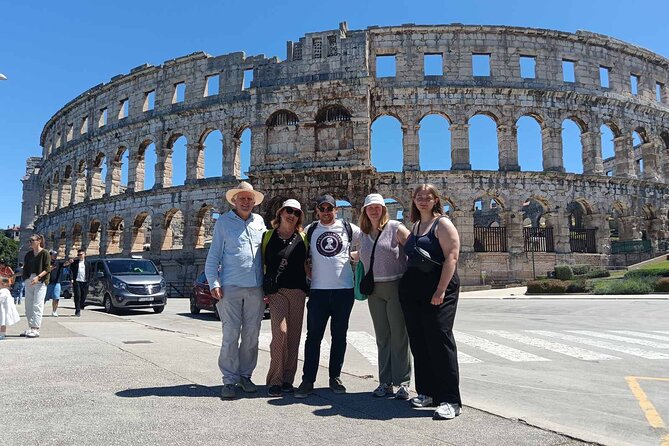
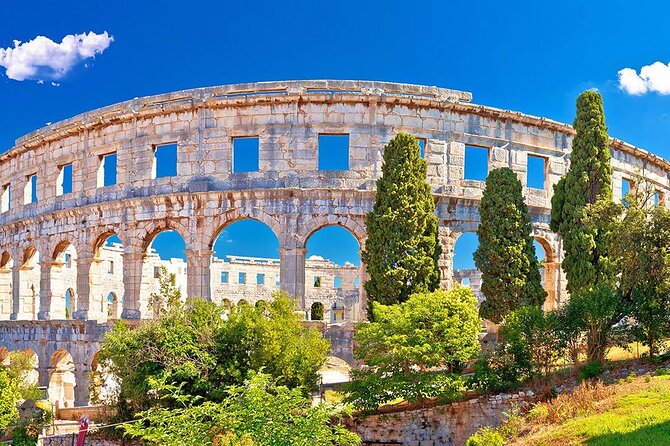
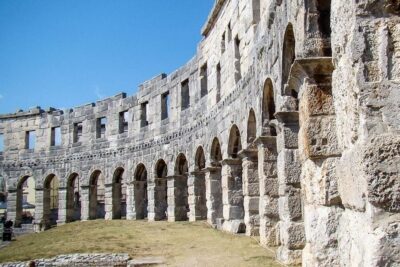
The Pula Arena receives about 30 minutes, and it deserves that opening position. Built during the first century AD, it could hold more than 20,000 spectators for gladiatorial contests, battles, and public shows. Its large outer walls are the first clear sign that Pula was not a minor Roman outpost.
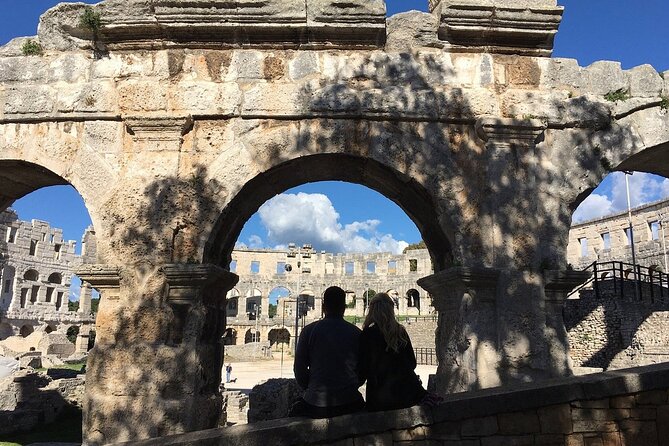
The amphitheater is unusually well preserved, which makes its scale easy to understand even before you enter. Your guide can help you read the structure as more than a photogenic facade: the arches, seating levels, entrances, and underground areas all served practical purposes in Roman public life.
Admission is not included. That point is worth checking before you arrive, since the short stop may tempt you to enter while the group is there. If you do buy a ticket, you can explore the underground passages and chambers, which add a useful look at the machinery and working spaces behind the spectacles.
If you prefer to keep costs down, the exterior still gives you a strong introduction. The tour’s value does not rest only on entrance tickets. It is also about understanding why the Arena was built, how it functioned, and how it fits into Pula today, where the ancient structure still hosts concerts, film events, and theater.
A pause at Tito’s Park and its miniature Pula
The next stop is Tito’s Park, a brief ten-minute pause near the center. It is free to visit and offers a change of pace after the Arena’s heavy stonework.
The park is named for Josip Broz Tito, the former president of Yugoslavia. Its most distinctive feature is a miniature model of Pula. This gives you a bird’s-eye look at the city’s layout, landmarks, and position, which can make the rest of the walk easier to follow.
The stop is short, so do not expect a long park visit or a detailed museum presentation. Its value is visual and local. You get a quiet green space, a different period of Pula’s past, and a model that helps you understand how the old center fits together.
Passing through the Twin Gates
The Twin Gates receive about ten minutes and are free to see. This old entrance once controlled access into the city and gives you a sense of how Pula was organized before modern streets and traffic changed the way people moved around.
A quick stop here works because the guide can explain the gate’s role while you look closely at its structure. On your own, you might simply pass through and continue toward the Forum. With context, it becomes part of the city’s defensive and civic story.
Do not expect a large enclosed monument or a long interior visit. This is an outdoor stop, best treated as a compact history lesson and a photo pause.
Something different for another day:
- Pula: Arena Entrance Ticket
★ 4.3 · 2,590 reviews - Medulin -Kamenjak 5h boat trip with lunch & drinks on Sandra Boat
★ 5.0 · 1,621 reviews - Full-Day Boat Tour of the Medulin Archipelago from Medulin
★ 5.0 · 1,389 reviews - 3hours all inclusive Sunset&Dolphin Tour from Medulin on Sandra
★ 5.0 · 1,130 reviews
Going below ground in Zerostrasse
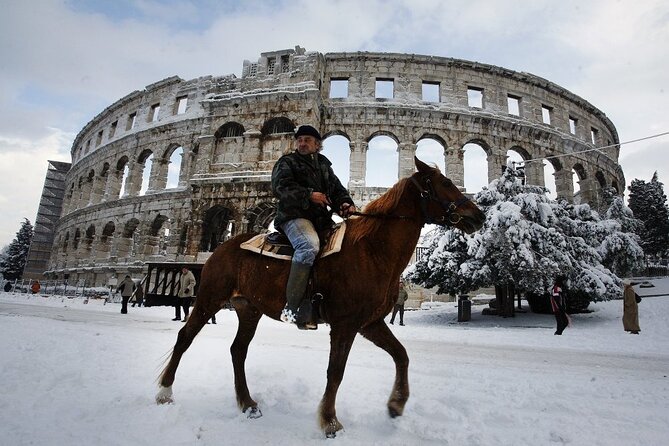
Zerostrasse brings a different kind of history to the route. This underground tunnel system was built during World War I as a shelter. The ten-minute visit helps you see how Pula’s role changed long after the Roman period.
The tunnel is one of the more unusual stops because it shifts your attention from temples and gates to the practical fear of aerial attack. The contrast is useful: the Arena shows public spectacle, while Zerostrasse shows ordinary people seeking protection during wartime.
Admission is not included, so you should allow for an extra fee if you want to enter. The supplied details do not state the exact ticket price, so check locally before booking your budget around it. If anyone in your group dislikes enclosed spaces, ask the guide about the visit before going below ground.
The stop lasts only ten minutes, but that brevity is part of the tour’s design. You receive an introduction rather than an extended tunnel exploration. The route keeps moving, which helps it cover several periods in a short time.
The Gate of Hercules and a name from antiquity
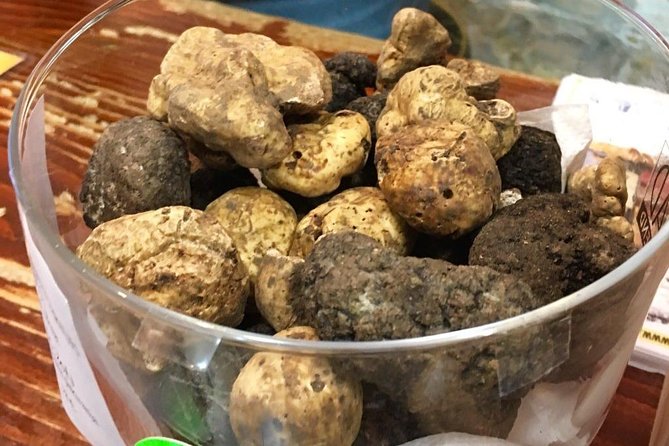
The Gate of Hercules is another free ten-minute stop. Its name comes from the depiction of Hercules’ head on the ancient gate, giving the monument a direct link to mythology and Roman-era city life.
Small features like this are where a local guide can earn the tour fee. A quick look at a weathered carving does not always explain itself. Dalen’s background as a history teacher, along with his reported humor and personal enthusiasm, should make these brief stops more memorable than a walk past them with a guidebook.
Again, the stop is short. If you want extended time for photographs or close inspection, you may need to return independently after the tour. The benefit here is seeing how the gate fits into the wider route, not spending a long time at one isolated structure.
Reaching the Forum after two millennia of city life
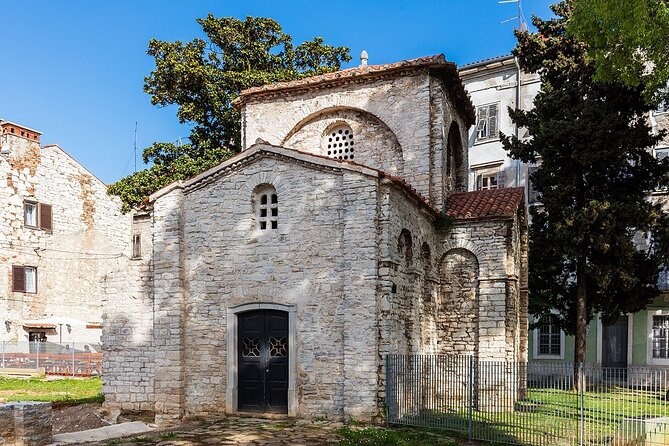
The Forum receives about 20 minutes and is the longest stop after the Arena. It is the main square in Pula’s old center and once served as the heart of political, administrative, and religious life.
This is where the route begins to gather its threads. The gates and Arena show the physical reach of Roman Pula, while the Forum shows where public decisions and ceremonies took place. The square also includes later layers, including the town hall built on the site of the former Roman Capitolium.
The Forum remains a working public space rather than a sealed archaeological site. That makes it a good place to finish a walking tour. You can continue exploring from here, find a place to eat, or use the square as a reference point for the rest of your day.
The guide can also point out how Roman and later architecture share the same setting. You may find that the most useful part is not one particular building, but the explanation of how the square changed while remaining central to Pula.
Ending at the Temple of Augustus
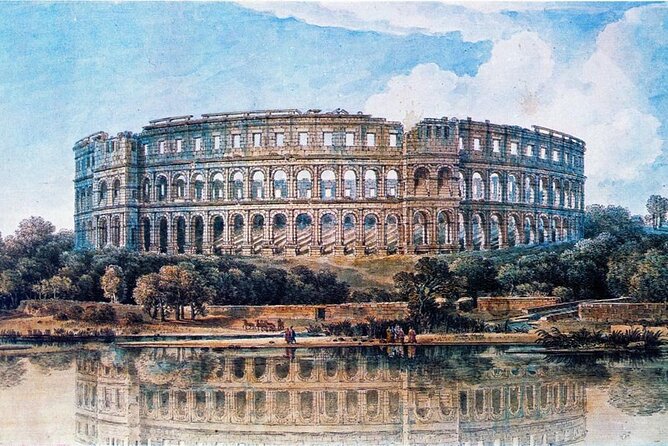
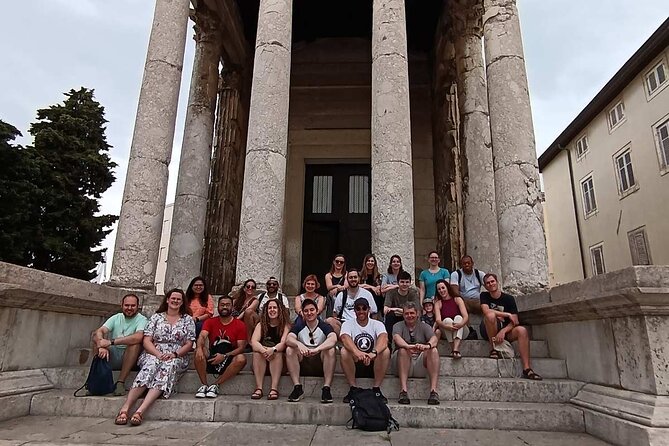
The Temple of Augustus is the final named stop, with about ten minutes allocated to it. Built between 2 BC and AD 14, it was dedicated to Emperor Augustus and remains one of Croatia’s best-preserved Roman monuments.
Its Corinthian columns and compact design make it easy to appreciate in a short visit. The temple also has a difficult modern history. It suffered major damage during World War II bombing and was later restored, so what you see today reflects both ancient construction and careful repair.
Admission is not included. The building now serves as a museum, but the available information does not specify its current ticket price or the exact objects displayed inside. If your group wants more than an exterior explanation, ask the guide about entry before the stop begins.
Finishing here works well because the Temple sits directly on the Forum. You are not left at an isolated meeting point or sent back across town. The final location gives you an easy base for independent sightseeing.
What the guides add to the route
The strongest praise centers on the guides, especially Dalen. He is described as a history teacher who brings facts to life with humor, enthusiasm, and personal details about Pula and Croatia. That combination matters because a two-hour route can otherwise feel like a rapid list of dates and monuments.
Dalen is also praised for recommending places to eat and spots where you might sample free brandy or gin. Treat that as an informal bonus, not a promised part of the tour. Still, it shows why a local guide can be useful beyond the official stops.
Halan is also singled out for being highly informed and enjoyable. Since the booking information does not guarantee a particular guide, you should not assume Dalen will lead every departure. The important point is that the available feedback repeatedly praises the local, educational approach rather than a simple scripted walk.
The guide’s role is especially helpful at the overlooked corners of Pula. You are shown details you might walk past, and the tour connects the Roman, Yugoslav, and wartime periods instead of treating ancient monuments as the whole story.
Is $60.01 per person good value?
At $60.01 per person, this is not the cheapest way to walk around Pula. Much of the route is visible from public streets and squares, and several stops are free. You are paying mainly for private attention, interpretation, and the efficient way the route covers the city.
For a couple or small family, the price can make sense if you want to ask questions and set the pace. It is also useful if your time in Pula is limited, since the route covers the city’s main sights in about two hours and ends in the central Forum.
You should add entrance fees for the Arena, Zerostrasse, and Temple of Augustus if you plan to go inside. The exact amounts are not provided here, so check before arrival. The cost is easier to justify if you regard the tour as an orientation walk and then choose only the interiors that interest you most.
The perfect blend of eras is another reason the price may work. You are not paying for two hours focused on only one monument. You move from Roman entertainment to city planning, wartime shelter, ancient gates, and a restored temple, with local explanation tying it together.
Who should book this private Pula walk?
I would choose this tour if you are visiting Pula for the first time and want a clear introduction without committing to a full-day excursion. It suits couples, families, and small groups that value conversation and a flexible private setting.
It is also a strong match for anyone who enjoys history but does not want a formal lecture. The guide’s humor and personal stories appear to be a major part of the appeal, especially for people who find dates and monuments easier to remember when linked to a human story.
You should think twice if you want long, unhurried visits inside every attraction. The Arena, Zerostrasse, and Temple each receive limited time, and the walking time between stops uses part of the two-hour experience. This is an overview, not a museum tour.
A moderate fitness level is required. Service animals are allowed, and the meeting area is near public transportation. The tour is available in English and is private to your group.
Free cancellation is available up to 24 hours before the start time. The experience depends on good weather and a minimum number of participants, although a private booking can still be affected if that minimum is not reached. In either case, you are offered another date or experience, or a full refund.
My booking advice
I would book this early if your dates are fixed, since it is commonly reserved about 43 days ahead. That does not guarantee that every departure sells out, but it suggests the experience is often planned well before arrival.
Try to schedule it near the beginning of your stay. The end point at Forum Square makes it easy to continue exploring, and the guide’s suggestions about food and local drinks may help shape the rest of your day.
Bring comfortable walking shoes and budget for optional entry tickets. If underground spaces are a concern, ask about Zerostrasse before the walk. Also remember that the guide assignment may vary, so book for the private history-focused format rather than for one named person alone.
Should you book it?
Yes, if you want a lively introduction to Pula, personal attention, and a route that covers more than the famous Arena. The guide’s history-teaching background, humor, and local tips are the tour’s strongest assets.
Skip it if you prefer to explore slowly at your own pace or plan to spend most of your time inside each monument. For everyone else, $60.01 buys a useful two-hour framework for Pula, with enough context to help you decide where to return afterward.
FAQ
How long is the private Pula tour?
The tour lasts approximately two hours, including walking time between the stops.
Where does the tour start and finish?
It starts at Park NimfejaArena near the Pula Arena in Pula. It ends at Forum Square, Forum 3, in the old town.
Is admission to the attractions included?
Admission is not included for the Pula Arena, Zerostrasse, or the Temple of Augustus. Tito’s Park, the Twin Gates, the Gate of Hercules, and the Forum are listed as free stops.
Is the tour private?
Yes. Only your group participates in the activity.
What language is the tour offered in?
The tour is offered in English.
Can I cancel for a full refund?
Yes. You can cancel at least 24 hours before the experience start time for a full refund. Cancellations or changes made less than 24 hours before the start time are not refunded or accepted.
Just added around Pula
- Istria: Private Boat Tour with Skipper★ 5.0 · 9 reviews
- 3 Hours Private Wine and Sunset Tour★ 5.0 · 9 reviews
- Pula: Sunset/Night-time Illuminated Transparent Kayak Tour★ 4.0 · 9 reviews
- Electric Off-Road Scooter Tour in Pula★ 5.0 · 10 reviews
- Pula: Your Custom Full-Day Private Sail – Explore Istria’s Gems★ 5.0 · 10 reviews
- Pula Private 2-Hour Guided Walking Tour★ 5.0 · 10 reviews
- Pula: Private Brijuni Tour With Swimming, Dinner & Drinks★ 4.3 · 10 reviews
- Stop on Island & National Park Day Cruise with Lunch Drinks★ 5.0 · 10 reviews
Pula Tours, compared.
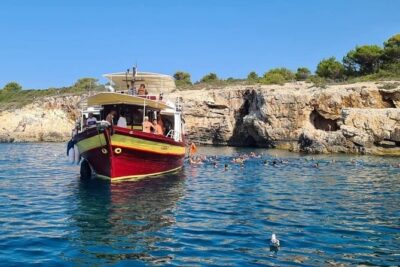
Medulin -Kamenjak 5h boat trip with lunch & drinks on Sandra Boat
Read our review →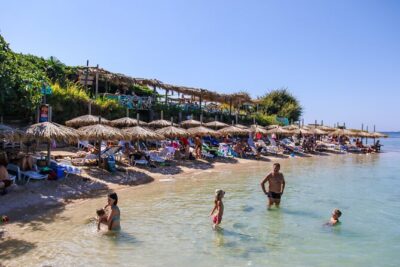
Full-Day Boat Tour of the Medulin Archipelago from Medulin
Read our review →
3hours all inclusive Sunset&Dolphin Tour from Medulin on Sandra
Read our review →
Dolphin Watching & Sunset Boat Tour With Dinner and Drinks
Read our review →
Kayaking,Snorkeling, Cliff jumping Tour with Wetsuit
Read our review →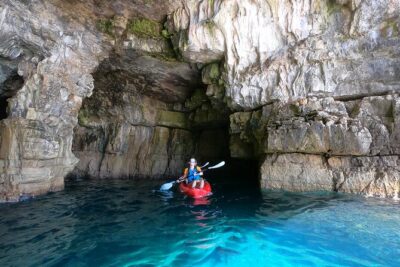
BOAT & KAYAK! Sea Adventure – Snorkeling & Cliff Jumps
Read our review →
National Park Brijuni Island Visit & Dolphin Cruise
Read our review →Browse the lists this tour appears in