Reviewed · GUIDED
Controversies behind Split and Croatia-Anthropologist guide
Split gets more interesting when the arguments begin. This two-hour walking tour looks past the postcard views and asks why Diocletian’s Palace, old squares, and modern public spaces remain contested. I especially like the anthropological approach and the use of maps and visuals on an iPad, which help connect places to people. The main drawback is that you will spend much of the tour standing outdoors, and the subject matter can be politically sensitive.
I also like the small maximum of 12 people, since that gives you a better chance to ask questions. Guide Marin is praised for his warmth, humor, preparation, and teaching style. If you want only a quick list of dates and architectural facts, this may feel too argumentative. If you want to understand how Split’s past still shapes Croatian identity, it offers unusually good value at $35 per person.
In This Review
- Key points about Split’s controversy tour
- Why this Split walk offers more than palace facts
- Starting at Diocletian’s Palace
- Riva and the public life of Split
- Venetian power at Trg Braće Radić
- Ancient graves beneath Narodni trg
- Šperun and the neighborhood behind the tourist image
- Tuđman Square and Croatia’s difficult 20th century
- Finishing at Matejuška with a modern view
- What the $35 price really buys you
- Pace, group size, and practical comfort
- Who will get the most from this experience
- Should you book the Split controversy tour?
- FAQ
- How long does the tour last?
- How much does the tour cost?
- What language is the tour offered in?
- How many people can join the tour?
- Where does the tour begin?
- Where does the tour end?
- Can I cancel for a full refund?
Key points about Split’s controversy tour
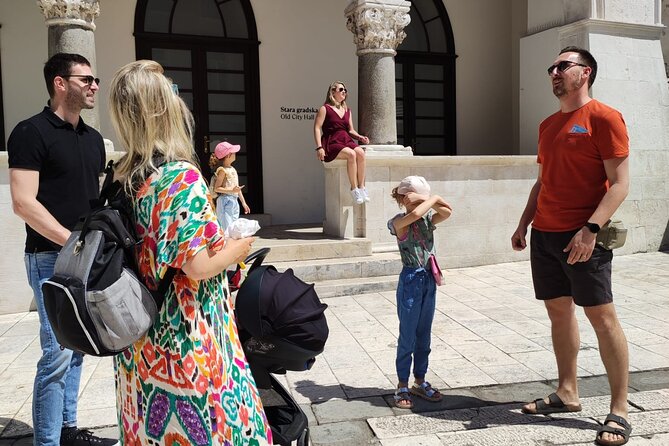
- Diocletian’s Palace is treated as a living argument, not just a Roman monument.
- Guide Marin uses maps and iPad visuals to explain geography, borders, and historical change.
- The tour connects ancient, Venetian, Ottoman, socialist, and modern Croatian periods in one walk.
- A maximum of 12 people keeps the group small enough for questions and discussion.
- Standing outdoors can become tiring, especially during warm weather, so bring water and wear good shoes.
- The walk ends at Matejuška, with a famous view of Split and a final look at the city today.
Why this Split walk offers more than palace facts
Many tours of Split begin and end with Roman stonework. That makes sense: Diocletian’s Palace is the city’s great visual draw. But this experience takes a different route. It treats the palace and surrounding streets as places where power, religion, migration, memory, and local pride have collided over centuries.
I like that focus because Split is not simply an ancient city preserved for sightseeing. People live, work, eat, argue, and build businesses inside and around the old center. The tour asks you to consider who controlled these spaces in different periods, how local people viewed those changes, and why old conflicts still affect public life.
The word anthropological matters here. You are not just collecting facts about emperors or architectural styles. You are looking at how communities formed, how different groups were treated, and how people in Croatia remember difficult periods. That includes topics that can be uncomfortable, such as the Jewish ghetto, political division, and the way modern Croatian history is taught.
Marin’s teaching background appears to shape the experience. He is described as warm, open to questions, and able to explain difficult subjects with humor. He also uses maps and visuals on an iPad, a useful touch when geography or shifting borders become hard to follow from the street alone.
A few more tours and experiences worth a look
- From Split: Plitvice Lakes National Park Guided Tour
★ 5.0 · 3,002 reviews - From Split: Plitvice Lakes Guided Tour with Entry Tickets
★ 4.9 · 2,468 reviews - From Split: Plitvice Lakes National Park Guided Tour
★ 5.0 · 2,355 reviews
Starting at Diocletian’s Palace

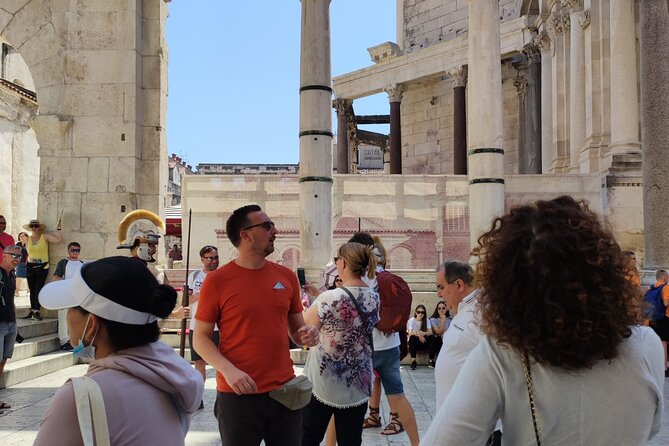
The tour begins at Ul. kralja Tomislava 12 and spends about 35 minutes around Palazzo di Diocleziano. The palace is the obvious place to begin, but the approach is less predictable than a standard imperial biography.
You will hear how the palace has been a contested place in different historical periods. That may mean looking at who used its spaces, how the complex changed over time, and how modern Split balances daily life with the demands of tourism and preservation. The point is not to admire a perfect Roman shell. The point is to understand how a monument can become part of a city’s arguments about ownership, identity, and change.
The palace portion includes admission, according to the tour details. Still, you should expect a walking discussion rather than a long indoor museum visit. The focus remains on the site and the stories attached to it.
I would pay close attention here if this is your first activity in Split. The palace is easier to understand once you see it as the city’s core, not as an isolated archaeological attraction. Later stops build on that idea by showing how Venetian, Ottoman, Yugoslav, and modern Croatian influences overlap in a compact area.
Riva and the public life of Split
From the palace, the walk reaches Obala Hrvatskog narodnog preporoda, better known as the Riva. The stop lasts about 15 minutes and costs nothing beyond the tour price.
The Riva is a traditional Mediterranean promenade, but this tour uses it as a public stage. It is where everyday social life takes place and where important historical events have unfolded. That makes it a useful counterpoint to the palace. The first stop looks at an enclosed monument tied to imperial power. The Riva shows how a city gathers in the open.
This is also where the tour’s social focus becomes clear. You are encouraged to think about public space, not just scenery. Who gathers here? Which events are remembered? How does a promenade become part of civic identity? Those questions add weight to what might otherwise be a pleasant waterfront stroll.
Shade may be available at points along the route, and Marin has made an effort to find it when possible. Even so, this is an outdoor walk. Split can be hot, and the tour involves standing while listening, so water, comfortable footwear, and a hat are sensible choices.
Venetian power at Trg Braće Radić
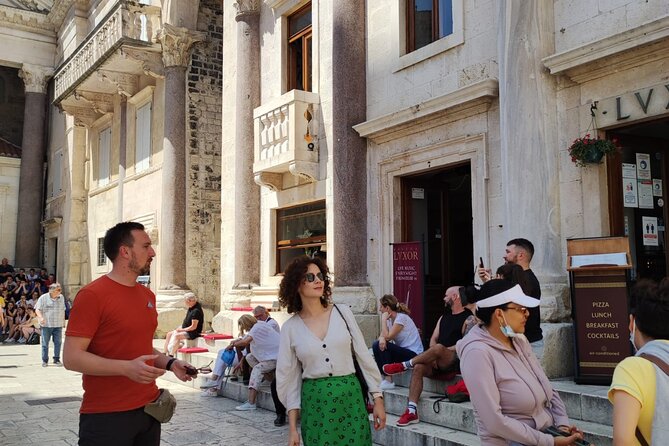
The 15-minute stop at Trg Braće Radić shifts the story toward Venice and the period when Split stood near the frontier with the Ottoman Empire. The square’s Venetian character gives the discussion a strong visual setting.
This part is useful because it does not treat the past as settled or neutral. The tour looks at how the era of conflict is understood today and why it still affects local identity and politics. That distinction matters. A date-heavy account might tell you that Venice controlled the region or that Ottoman pressure shaped its defenses. This experience asks how those facts became part of the way people explain themselves.
You may also notice how quickly Split’s historical frame changes. At the palace, the major reference point is Roman imperial rule. At this square, Venice and the Ottoman frontier take over. The tour keeps showing you that the city’s identity was built from several powers, not from one uninterrupted national story.
If you prefer strictly cheerful sightseeing, this stop may feel serious. I see that as part of its value. The tour is willing to discuss historical memory rather than smoothing over conflict for the sake of an easy afternoon.
Something different for another day:
- Split: Krka Waterfalls Trip with Boat Cruise and Swimming
★ 4.8 · 10,519 reviews - From Split: Krka Waterfalls, Food & Wine Tasting Tour
★ 5.0 · 9,326 reviews - Blue cave, Mamma Mia and Hvar, 5 islands speedboat tour
★ 5.0 · 7,150 reviews - From Split: Krka Waterfalls, Food & Wine Tasting Tour
★ 4.9 · 6,598 reviews
Ancient graves beneath Narodni trg
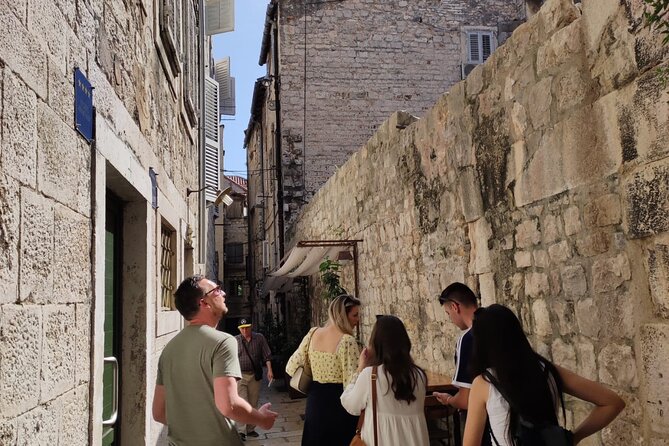
Narodni trg offers one of the walk’s more striking details. Beneath the square lie human remains because the area was once an ancient graveyard.
That fact changes the way you see the pavement under your feet. A central public square can look ordinary, even polished, while holding evidence of much older uses. The guide also discusses later events at this location, including some infamous episodes. The result is a layered view of urban space: a place can serve as a burial ground, a civic center, and a setting for conflict at different times.
I like this stop because it demonstrates the tour’s method in a simple way. It does not need a grand monument to make a point. It takes a familiar square and reveals the people and events beneath its modern appearance.
The 15-minute format is enough for a focused explanation, but you should not expect a full archaeological lecture. The tour covers many periods across two hours, so each stop gives you a clear piece of the larger story rather than exhaustive detail.
Šperun and the neighborhood behind the tourist image
At Šperun ulica, the tour enters one of Split’s best-known neighborhoods. It is a popular area for tourists staying in the city, yet many visitors do not know the story behind it.
This is a valuable distinction. A neighborhood can become popular with visitors while its older social meaning fades from view. The stop encourages you to look beyond accommodation, restaurants, and attractive lanes. You may find that the area’s identity has more to do with local life and historical change than with its present role on a holiday map.
The information provided does not specify every detail Marin covers here, so I would treat this as a conversation point rather than a fixed checklist. Ask questions. The guide is described as open to them and able to connect local customs, people, and past events to the streets around you.
This is also a good moment to notice the pace. The tour moves through several locations, but the individual stops are short. If you want to photograph every doorway or pause for coffee, you will need to do that before or after the walk.
Tuđman Square and Croatia’s difficult 20th century
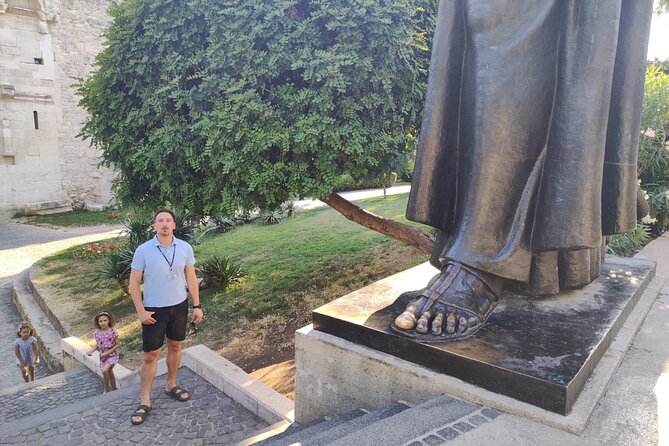
The 15-minute stop at Trg Franje Tuđmana brings the tour into modern Croatian history. The square is named for Franjo Tuđman, Croatia’s first president, and that name opens the discussion of the turbulent end of the 20th century.
This is likely the most politically sensitive part of the experience. The period remains difficult in Croatian schools and continues to divide Croatian society. A useful guide should help you understand the competing memories without forcing you into a simplistic good-versus-bad version of events.
Marin’s balance appears to be one of the tour’s strongest qualities. The walk is designed around controversial issues, but the goal is not controversy for its own sake. It is to explain how politics, geography, war, national identity, and education affect the way a country tells its own story.
I would recommend this stop to anyone who wants more than an ancient-history introduction to Croatia. You will not leave with every detail of the modern period, but you should have a clearer sense of why certain topics remain sensitive and why local identity cannot be separated from recent history.
The subject may be challenging if you are expecting a relaxed sightseeing loop. That is not a flaw, but it is important to know what you are booking.
Finishing at Matejuška with a modern view
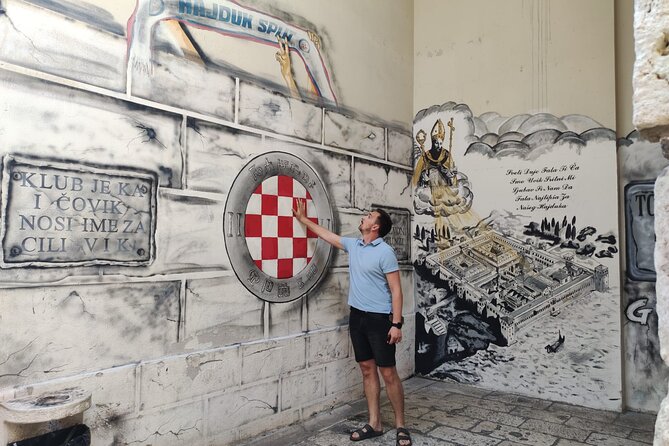
The walk ends at Matejuška after about 10 minutes of final discussion. This small waterfront area provides a strong closing point because the tour moves from imperial monuments and old squares to modern Split.
The ending includes one of the city’s most famous views. The location is also used for final thoughts about present-day Split, bringing the earlier discussions into the current city rather than leaving them locked in the past.
I like that the route has a clear beginning and end. You start near the palace and finish at Trumbićeva obala 2, close to the waterfront. That makes the tour easy to fit into a day of sightseeing, though you should check your plans carefully if you need to return to the starting point.
Matejuška is a natural place to continue exploring on your own, but the tour details do not promise food, drinks, or extra activities there. Think of it as the final viewpoint and discussion site, not a built-in meal stop.
What the $35 price really buys you
At $35 per person, this is not the cheapest way to walk around Split. You can see many squares and waterfront streets without paying anything. The value comes from the interpretation.
You are paying for about two hours of connected explanation, a small group capped at 12, and a guide who brings together ancient history, geography, local culture, and current political questions. If you only want directions and a few dates, the price may seem high. If you want to understand why the city feels the way it does, the cost is reasonable.
The use of maps and iPad visuals is especially useful for a subject involving borders, tribes, migrations, and changing rulers. Several parts of the tour deal with groups who passed through or settled in the region, along with their habits and contradictions. Visual aids can make those shifts easier to grasp than a spoken list of names.
The strongest praise centers on Marin’s preparation, humor, warmth, and ability to answer questions. One particularly useful detail is his effort to find shade when possible. That will not remove the heat or standing time, but it shows attention to the group’s comfort.
Pace, group size, and practical comfort
The listed schedule adds up to about two hours:
- Diocletian’s Palace: 35 minutes
- Riva: 15 minutes
- Trg Braće Radić: 15 minutes
- Narodni trg: 15 minutes
- Šperun: 15 minutes
- Trg Franje Tuđmana: 15 minutes
- Matejuška: 10 minutes
Most of the walk takes place outdoors, with short talks at each location. Some people may find standing tiring, especially because the tour packs many ideas into a relatively compact route. Comfortable shoes will help, and you should plan for sun exposure.
The maximum group size is 12, which is small enough for personal attention without making the experience feel like a private tour. Most people can participate, and service animals are allowed. The starting point is near public transportation, another helpful feature if you are arriving from outside the old center.
Multiple departure times make it easier to fit into a busy Split schedule. The tour is offered in English and uses a mobile ticket. You receive confirmation when booking.
Free cancellation is available up to 24 hours before the start time. Changes or cancellations inside that window are not refunded, and poor weather can lead to a different date or a full refund. Since the activity depends on walking outdoors, check the forecast before committing to a tightly packed day.
Who will get the most from this experience
I would choose this tour if you enjoy asking why a place developed as it did. It suits people interested in:
- Local identity and Croatian politics
- The human stories behind monuments and squares
- Ancient, Venetian, Ottoman, and modern history
- Geography and changing borders
- Social issues that standard sightseeing tours often skip
- Small groups and question-led discussion
It is also a good choice for anyone who has already seen the palace and wants a different way to understand it. The tour does not simply repeat what is written on public signs. It adds context about tribes, communities, local attitudes, and contradictions.
I would be more cautious if you have limited mobility or dislike standing for long talks. The description says most people can participate, but it does not promise seating at each stop. I would also skip it if your main goal is a fast orientation walk with restaurant tips and photo stops.
Should you book the Split controversy tour?
Book it if you want Split to make more sense, not just look beautiful. The small group, thoughtful route, visual aids, and strong guide make $35 a fair price for an experience built around ideas rather than attractions alone.
The best reason to go is Marin’s teaching style. He brings humor and warmth to subjects that can otherwise feel heavy, and he welcomes questions. The main caution is equally clear: you will be outdoors, you will stand, and you will hear about painful and divisive parts of Croatian history.
For a first visit, I would schedule it early in your stay. It can give you a framework for the palace, the old squares, the waterfront, and the modern city. If you want a more honest picture of Split than a string of architectural facts, this is a smart pick.
FAQ
How long does the tour last?
The tour lasts approximately two hours.
How much does the tour cost?
The price is $35 per person.
What language is the tour offered in?
The tour is offered in English.
How many people can join the tour?
The maximum group size is 12 travelers.
Where does the tour begin?
The meeting point is Ul. kralja Tomislava 12, 21000 Split, Croatia.
Where does the tour end?
The tour ends at Trumbićeva obala 2, 21000 Split, Croatia, at Matejuška.
Can I cancel for a full refund?
Yes. You can cancel at least 24 hours before the experience starts for a full refund. Cancellations or changes made less than 24 hours before the start time are not refunded. If poor weather causes the tour to be canceled, you will be offered another date or a full refund.
Just added around Split
- Private VIP Blue Lagoon and 3 Islands Tour★ 4.5 · 9 reviews
- Split highlights – Evening walking tour★ 5.0 · 9 reviews
- Private boat transfer Split – Bol★ 5.0 · 9 reviews
- From Split: Trogir & Blue Lagoon Boat Tour with Snorkeling★ 4.6 · 9 reviews
- Private Photography Activity in Split★ 5.0 · 9 reviews
- Bike, Beer & Poljud Stadium Tour★ 5.0 · 9 reviews
- From Hvar: Blue cave group speedboat tour full day★ 5.0 · 9 reviews
- Split Walking Tour: History, Legends & Tales★ 5.0 · 9 reviews
Guided, compared.

Plitvice & Rastoke Guided Day Trip with Ticket
Read our review →
Plitvice Lakes Guided Tour with Entry Tickets
Read our review →
Plitvice Lakes National Park Guided Day Tour from Split
Read our review →
Rastoke & Plitvice Lakes Guided Tour with Ticket
Read our review →