
Reviewed · CITY WALLS & OLD TOWN TOURS
Trogir: Old Town Guided Walking Tour
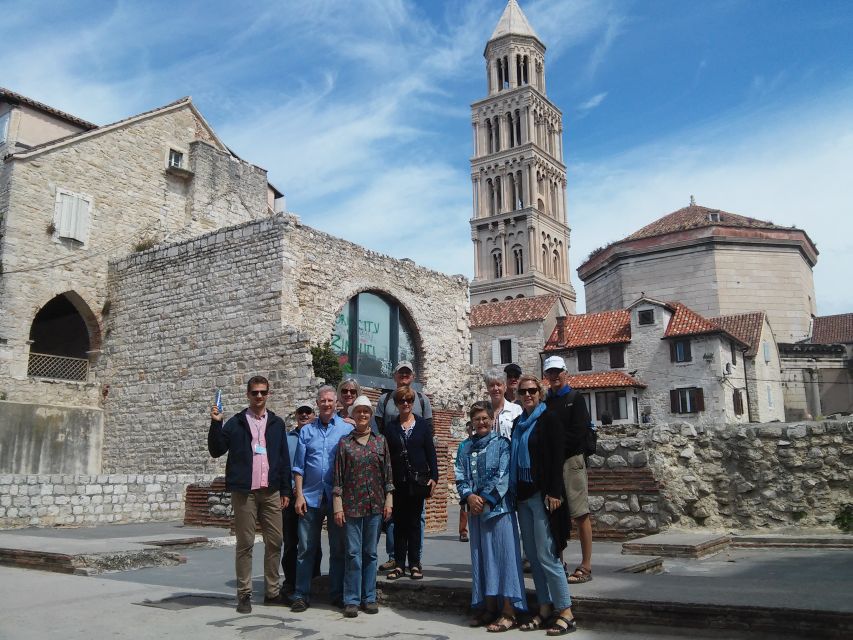
Trogir rewards slow footsteps. This 75-minute walking tour gives you a useful first look at the UNESCO-listed Old Town, with a local English-speaking guide leading you from the North Gate through the promenade, narrow lanes, and main square. I like the clear route, which covers major sights without wasting time, and I like the human touch: guides such as Antonia, Ante, Slavko, Ivan, and Marija have been praised for their humor, warmth, and command of local stories.
The price is $23 per person, a fair deal if you want context rather than a quick stroll with no explanation. The main caution is pace. One hour and fifteen minutes passes quickly, and the tour focuses on exteriors, so you should not expect extended visits inside the cathedral or fortress. Trogir can also be busy, especially on weekends, and one group had to wait when a guide arrived late from Split.
In This Review
- Key points to know before you book
- Why a guided walk works so well in Trogir
- Meeting at the North Gate with a blue umbrella
- Along the promenade toward Kamerlengo Fortress
- Narrow lanes and Trogir’s old stone character
- St Lawrence Cathedral and the main square
- City Loggia and the Venetian Gothic Ćipiko Palace
- What the 75-minute schedule really feels like
- Price, value, and what is not included
- Busy weekends, holidays, and timing advice
- How the guides shape the experience
- Should you book the Trogir walking tour?
- FAQ
- How long is the Trogir Old Town walking tour?
- What language is the tour offered in?
- Where is the meeting point?
- What sights are included on the route?
- Does the tour include entry to the cathedral or fortress?
- Is food or drink included?
- Can I cancel the tour for a refund?
Key points to know before you book
- Meet at the North Gate: Look for the guide holding a blue umbrella.
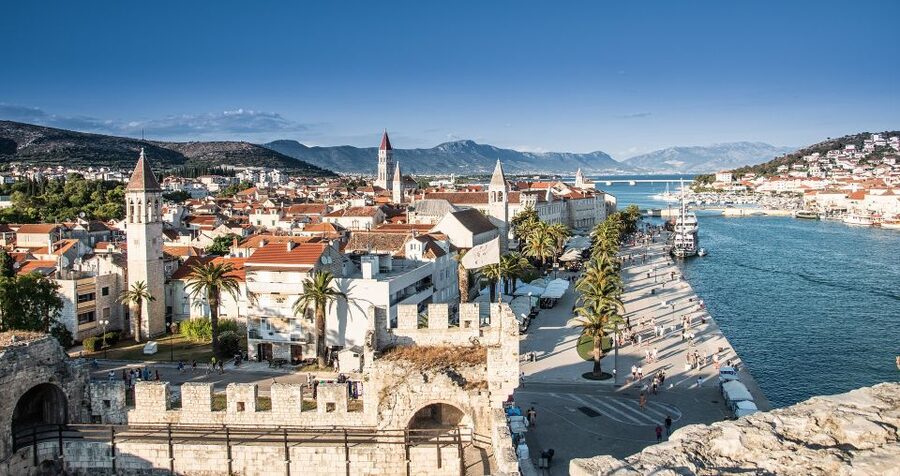
- The route covers Trogir’s essential sights: You’ll see the promenade, Kamerlengo Fortress, St Lawrence Cathedral, City Loggia, and Ćipiko Palace.
- Local stories add color: Along with dates and architecture, you hear myths, legends, and unusual tales tied to the town.
- The tour is short but well focused: Seventy-five minutes is enough for orientation, but not for a leisurely exploration of every lane.
- English is the only listed language: The experience includes a live guide and walking tour, but no food or drinks.
- Best for first-time visitors: It suits anyone who wants a clear introduction before exploring Trogir alone.
Why a guided walk works so well in Trogir
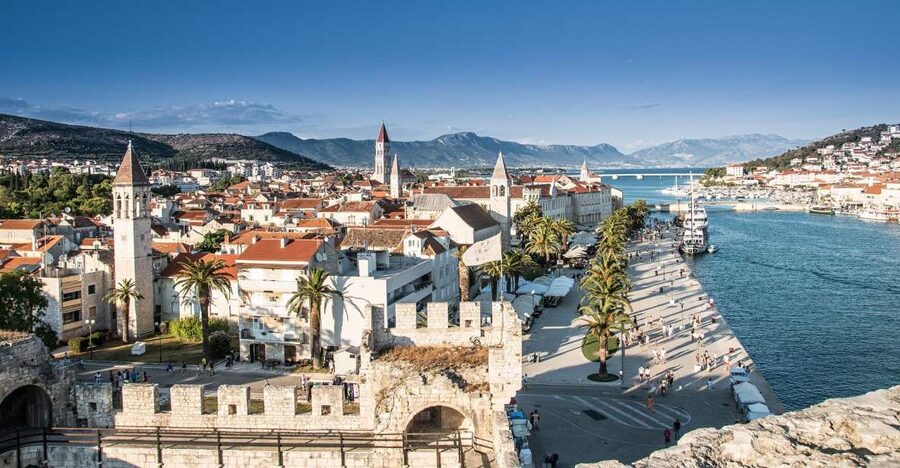
Trogir is compact, old, and easy to underestimate. You can wander through its stone lanes in minutes, take a few photographs, and leave without understanding why the town looks the way it does. A guide gives those walls, arches, courtyards, and public buildings a story.
I like walking tours here because the Old Town is best read at street level. The route moves through spaces built for daily life, trade, worship, defense, and public business. You are not simply pointed toward a church or fortress. You learn how the pieces fit together.
The guide also helps you notice details you could pass without a second glance. Venetian Gothic decoration, Romanesque forms, a stone loggia, and a fortress on the waterfront tell different parts of Trogir’s past. Urban legends and local myths make the walk less like a string of dates and more like a conversation about a place with plenty of personality.
The average rating is 4.6 from 76 reviews, and the strongest praise centers on the guides. That matters more here than polished equipment or a long list of stops. A good guide controls the pace, explains the architecture in plain language, and knows when a local story will make a building memorable.
More Walking Tours in Trogir
- Trogir: City Highlights Guided Walking Tour
★ 4.9 · 199 reviews - Trogir walking tour with a local guide
★ 5.0 · 129 reviews - Split Old Town Walking Tour
★ 5.0 · 25 reviews
Meeting at the North Gate with a blue umbrella
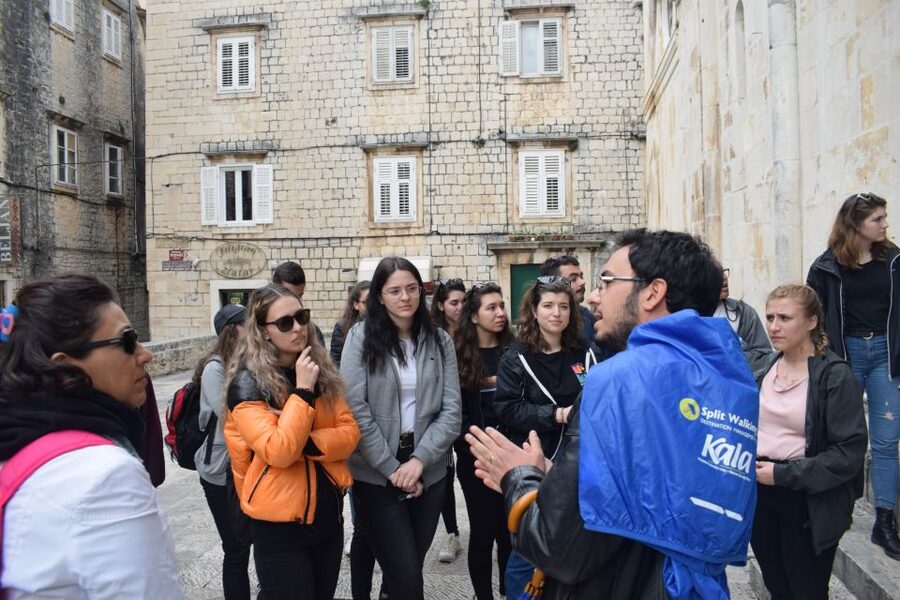
Your starting point is the North Gate of Trogir’s Old Town. The blue umbrella is the identifying marker, so it should be easy to spot once you reach the meeting area.
This is a practical meeting place because the North Gate leads directly into the historic center. You begin in the old town rather than spending part of the tour on an approach from a modern neighborhood. Arrive with comfortable shoes and a little patience around the start time, since the narrow streets can be crowded and groups may need a moment to gather.
The tour is offered in English with a live guide. Several guides have led this experience, including Antonia, Ante, Slavko, Ivan, Frane, Marija, and Mario. The individual guide will shape the tone. The best comments describe guides who mix solid facts with humor and keep the walk friendly rather than formal.
One practical warning comes from a delayed start linked to traffic from Split. If you have a train, ferry, airport transfer, or timed admission immediately afterward, leave extra room. A walking tour in the Old Town may last 75 minutes, but real schedules can shift.
Along the promenade toward Kamerlengo Fortress
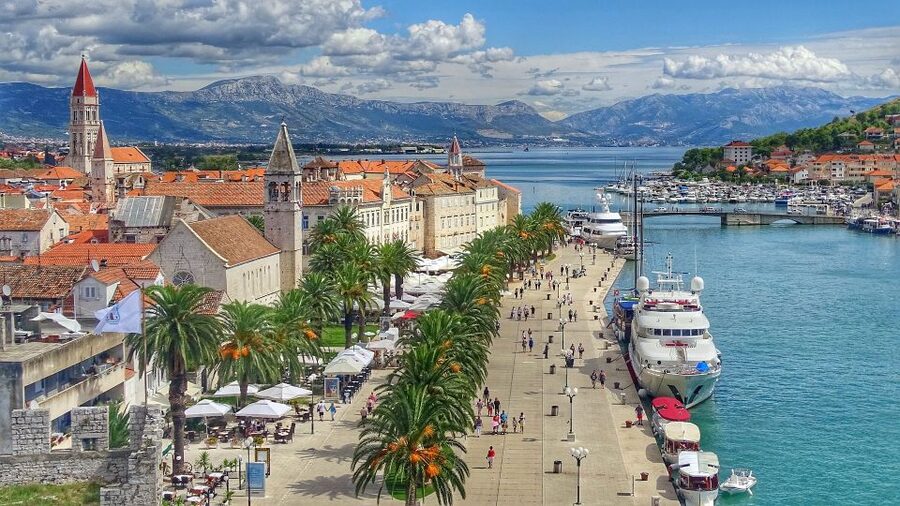
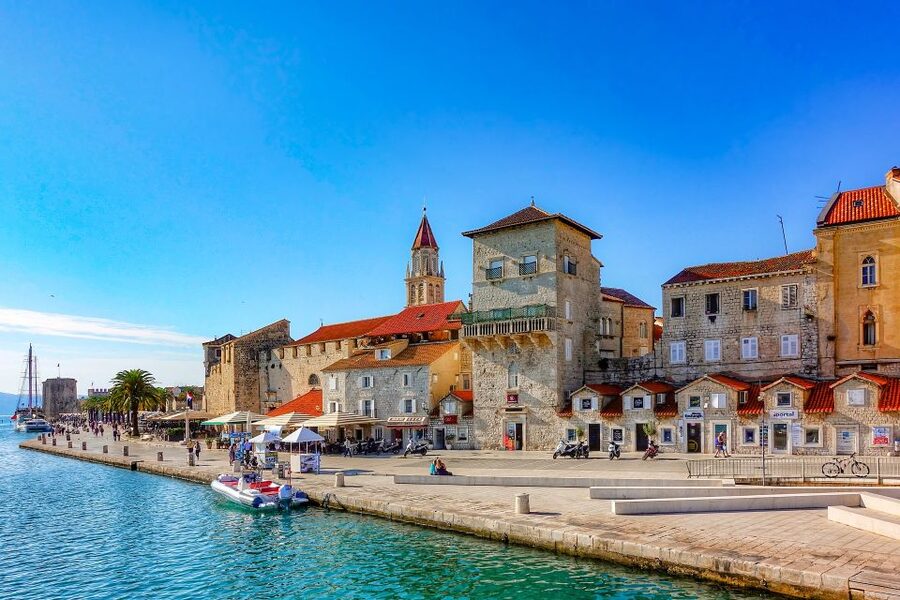
From the North Gate, the route heads toward the promenade, also known locally as the Riva. This waterfront stretch gives you an early sense of Trogir’s setting and its social life. It is a good place to look back toward the old stone buildings and forward toward the fortifications.
Kamerlengo Fortress is one of the tour’s most useful visual anchors. You see it from the outside as you pass along the waterfront, and the guide explains its place in Trogir’s story. The fortress gives the town a tougher edge. Without it, Trogir might seem like a refined collection of churches and palaces. With it, you see that this was also a defended port.
The tour does not promise a full fortress visit, so set your expectations correctly. You get an exterior view and historical context rather than time to climb around the structure at length. If you want to explore the fortress in greater detail, treat the walking tour as an introduction and return later on your own.
The promenade can be one of the busier parts of the route. That is part of the experience, but it can also make listening harder. Stay close enough to hear the guide, particularly if the group spreads out near the waterfront.
Narrow lanes and Trogir’s old stone character
The route then turns into the narrow alleyways of the Old Town. This is where the experience becomes more than a checklist of landmarks. The streets are small enough that the town feels intimate, and the stone architecture is close enough to inspect without needing a grand viewpoint.
Your guide shares stories about Trogir’s past, including myths and urban legends rooted in local history. This is a welcome balance. Dates and architectural labels help you understand the town, but a memorable local tale gives you something to carry into the next street.
The guides praised most highly have been described as entertaining, funny, and generous with information. Antonia, in particular, received warm praise for her extensive local knowledge and sense of humor. Ante was described as entertaining, while Marija was appreciated for combining humor with clear explanations.
A small issue is information density. One person found that guides sometimes kept talking without enough pauses. That is useful advice if you prefer time to absorb each point or take photographs. You can always ask for a moment to look around, but the short schedule means the guide has plenty to cover.
More Old Town Walks:
- Dubrovnik: Old Town Walking Tour
★ 4.8 · 5,174 reviews - Split: Old Town and Diocletian Palace Walking Tour
★ 4.9 · 4,727 reviews - Dubrovnik Discovery Old Town Walking Tour
★ 5.0 · 4,458 reviews - Dubrovnik Old Town History Walking Tour
★ 5.0 · 1,684 reviews
St Lawrence Cathedral and the main square
The route reaches the main square, where you see the exterior of the 13th-century St Lawrence Cathedral. The cathedral is one of Trogir’s central landmarks, and its Romanesque-Gothic style shows how the town’s architecture developed over time.
The word exterior is important. This tour is designed as a walking orientation, not an interior church visit. You will learn about the cathedral’s role and appearance while standing in the square, but entry is not listed as part of the experience. If seeing the inside is a priority, you should plan separate time for it.
The main square is also a good place to understand how Trogir’s public buildings relate to one another. The cathedral is not an isolated monument. It shares the urban space with the City Loggia, the bell tower, and nearby palaces. From the guide’s explanation, the square becomes a record of religious, civic, and aristocratic life.
The short stop works well for a first visit. You get enough information to recognize the cathedral later and to appreciate the building’s place in the town. You do not get the slow study that an architecture specialist or serious photographer might want.
City Loggia and the Venetian Gothic Ćipiko Palace
The City Loggia is another important stop. Its bell tower and stone construction make it one of the fine architectural examples within the Old Town. A loggia was a public space, and its presence helps you imagine Trogir as a working civic center rather than a backdrop built only for sightseeing.
The guide explains what you are looking at and why it matters. This is where a local guide can save you time. Without context, the City Loggia might register as another attractive stone building. With context, you can begin to see the difference between religious, defensive, and civic architecture.
You also see the facade of Ćipiko Palace, built in Venetian Gothic style. The palace adds a more elegant note to the route, with a facade that reflects the influence of Venice on Dalmatian towns. You are looking at the exterior only, but that is enough to compare its design with the cathedral and loggia nearby.
I like this part of the itinerary because it gives the walk architectural range. The fortress shows defense. The cathedral shows faith and long building traditions. The loggia shows civic life. Ćipiko Palace points to wealth and Venetian influence. Four stops, four ways to read the Old Town.
What the 75-minute schedule really feels like
Seventy-five minutes is a sensible length for a general introduction. It is long enough to cover the main sights, yet short enough to fit into a day trip from Split or a busy Dalmatian itinerary. You finish with a basic map in your head and a better idea of where to return.
It is not a slow, wandering tour. You will move from one point to the next, listen while standing in public spaces, and keep an eye on the guide in busy areas. One participant described a tour as lasting 60 minutes, so the actual experience may occasionally be shorter than the advertised 75 minutes. That is worth considering if you want extensive detail.
The route is especially useful at the beginning of your visit. Afterward, you can return to the cathedral, fortress, loggia, or palace facade with more understanding. You can also use the guide’s stories to make your own walk through the side streets more rewarding.
If you have only a short stop in Trogir, the tour is efficient. If you have a full day, it should be the opening activity rather than the entire plan. Leave time for your own wandering, meals, and any interiors you want to visit.
Price, value, and what is not included
At $23 per person, the tour offers good value for a compact introduction led by a local English-speaking guide. You are paying for interpretation, not transportation or admission tickets. That distinction keeps the price reasonable, but it also means you should not expect food, drinks, or entry to attractions to be included.
The value is strongest for first-time visitors who would otherwise walk past the main sights without much context. A clear explanation of the cathedral, fortress, City Loggia, and Ćipiko Palace can make the rest of your time in Trogir more purposeful.
The value is weaker if you already know Trogir well or prefer to explore without a schedule. Since the tour concentrates on exteriors, you may still need to pay for separate admissions if you want to go inside sites afterward. You are also buying a group experience, so the pace will not be tailored entirely to your interests.
Some tours offer pickup from Split, but that is not part of the activity details here. The stated meeting point is the North Gate in Trogir, so plan to reach the town on your own unless your booking specifically includes another arrangement.
Busy weekends, holidays, and timing advice
Trogir’s charm can come with crowds. One useful tip is to choose a weekday instead of a weekend if your schedule allows. The lanes and promenade are easier to navigate when the town is less crowded, and you may hear the guide more clearly.
Check the calendar for local holidays as well. One participant arrived to find many shops closed because it was a holiday. The Old Town and Riva were still enjoyable, but the commercial side of the visit was quieter than expected.
Morning or late-day timing may also affect how the walk feels, but starting times vary. Check availability when you book. Whatever time you choose, bring water in warm weather and wear shoes suited to uneven stone streets. The activity is entirely on foot, and wheelchair users may find the Old Town route unsuitable.
The tour is a good fit for couples, families with older children, solo visitors, and anyone arriving from Split for a short visit. It is less suitable for people who need a step-free route, dislike group pacing, or want a long, specialist lecture on architecture.
How the guides shape the experience
The most consistent strength is the guiding. This is not a tour where the monuments do all the work. Trogir is beautiful, but the guide decides whether you simply admire it or understand it.
Antonia has been especially praised for her humor and local knowledge. Ante, Ivan, Frane, Slavko, Marija, and Mario also received strong comments for making the walk informative and enjoyable. That range suggests the provider has several capable guides rather than relying on one star performer.
You should still expect differences in style. Some guides may speak quickly because they are trying to fit a lot into the time. If you want photographs or a pause between stories, ask politely. A good guide can usually adjust, but the schedule remains tight.
The presence of myths and urban legends is a real advantage. These stories help break up the architectural information and give the tour a local voice. Just remember that legends are not the same as documented history. Enjoy them as part of Trogir’s storytelling tradition while keeping the factual explanations separate.
Should you book the Trogir walking tour?
Book it if you are visiting Trogir for the first time and want a well-priced introduction to the Old Town. The route covers the main sights, the guide adds useful stories, and the 75-minute length fits neatly into a day trip. I especially recommend it if you often look at old buildings and wonder what you are seeing.
Skip it if you want extensive interior visits, a private guide, or a completely relaxed pace. You may also prefer to explore independently if you already understand Dalmatian and Venetian architecture.
For the best experience, choose a weekday if possible, arrive at the North Gate early, look for the blue umbrella, and leave extra time after the tour. The most sensible plan is to use the walk to get your bearings, then return to the places that caught your interest.
FAQ
How long is the Trogir Old Town walking tour?
The advertised duration is 75 minutes. One experience was described as lasting 60 minutes, so allow for some variation in the actual timing.
What language is the tour offered in?
The live guided tour is offered in English.
Where is the meeting point?
Meet by the North Gate of Trogir’s Old Town. Look for a guide holding a blue umbrella.
What sights are included on the route?
The walk includes views of the promenade, Kamerlengo Fortress, St Lawrence Cathedral, the City Loggia and bell tower, and the facade of Ćipiko Palace.
Does the tour include entry to the cathedral or fortress?
The tour information lists exterior views of these landmarks. Admission inside the cathedral or fortress is not included.
Is food or drink included?
No. Food and drinks are not included in the $23 tour price.
Can I cancel the tour for a refund?
Yes. You can cancel up to 24 hours in advance for a full refund. The reserve-now, pay-later option also lets you hold a place without paying at the time of booking.
More Walking Tours
- Private Trogir walking tour with LOCAL guide
★ 4.8 · 23 reviews - Discover Trogir: Guided Walking Tour of a Medieval Gem
★ 5.0 · 13 reviews - Walking Tour of Split and Diocletian’s Palace
★ 5.0 · 2,588 reviews - Dubrovnik: Game of Thrones Walking Tour
★ 5.0 · 1,732 reviews
Just added around Trogir
- Split: Hvar, Brač, and Pakleni Cruise with Lunch and Drinks★ 4.0 · 9 reviews
- Trogir 1,5-Hour Small Group City Tour★ 4.5 · 10 reviews
- Boat rental – 1 day from Trogir★ 4.5 · 10 reviews
- 50 Shades of Blue★ 5.0 · 10 reviews
- From Trogir, Seget, Okrug: Krka Waterfalls & Šibenik Culture Tour★ 5.0 · 10 reviews
- Private Captain Tailored tour – from Split and Trogir★ 5.0 · 11 reviews
- Private boat tour for small groups to Blue Lagoon and Solta Island★ 5.0 · 11 reviews
- Trogir: White Lagoon, Maslinica & Blue Lagoon Speedboat Tour★ 4.8 · 11 reviews
City Walls & Old Town Tours, compared.





City Walls Early Morning or Sunset Walking Tour
Read our review →
Plitvice Lakes with Boat Ride and Zadar Old Town Tour
Read our review →
Plitvice Lakes with Boat Ride & Zadar Old town tour
Read our review →Browse the lists this tour appears in