
Reviewed · WALKING TOURS
Rovinj: Guided Walking Tour
Rovinj tells its story one stone at a time. This 90-minute walk connects the farmers market, old harbor, narrow lanes, former Jewish Ghetto, and Saint Euphemia Church in a compact introduction to Istria’s most photogenic town. I like the route because it explains how Rovinj changed from an island settlement into the town you see today, and I like that your guide is a local person born in Rovinj. You get more than dates and monuments. You get practical advice about coffee, gelato, restaurants, beaches, and daily life.
The main consideration is the footing. About half the walk takes place on old cobblestones, followed by an uphill walk to the church. The climb is described as fairly easy, but anyone with limited mobility may find the surface and slope difficult. The experience costs $32 per person, which is fair if you value local stories and food tips, though it is less attractive if you only want a quick look at the sights.
In This Review
- Key points to know before you go
- Starting beside Rovinj’s farmers market
- Valdibora Square and the missing bridge
- Carera Street and the money behind old Rovinj
- The waterfront, Aperol, and the practical side of the walk
- Cobblestone lanes near the old Jewish Ghetto
- Following the walls to Saint Euphemia Church
- What makes Goran’s guiding effective
- Is $32 a fair price?
- Who should book this Rovinj walk?
- Should you book the guided walk?
- FAQ
- How long does the Rovinj walking tour last?
- How much does the tour cost?
- Where does the tour begin?
- Where does the tour finish?
- Which languages are available?
- Is food or drink included?
- Does the tour explain why Rovinj has no bridge at Bridge Square?
- Does the route include cobblestone streets?
- Is the tour suitable for people with mobility impairments?
- Can you cancel for a full refund?
Key points to know before you go
- The walk begins beside the farmers market: Meet at the white World War II memorial on Pietra Ive Street, just off the market and in front of the ATM operated by Auro Domus.
- Rovinj’s island past is the central story: At Valdibora Square, you learn where the old channel and bridge once stood, and how the channel was filled roughly 1,000 years ago.
- The route ends at Saint Euphemia Church: The hilltop church gives you one of Rovinj’s best sunset viewpoints over the Adriatic.
- Goran receives especially warm praise: His humor, clear English, local knowledge, and restaurant and gelato suggestions are repeatedly singled out.
- The tour mixes history with useful local advice: You learn where locals shop for produce, where to have coffee with a view, and which beach areas to seek out.
- Cobblestones matter: Wear sturdy shoes, and think twice about booking if walking on uneven streets or uphill is a serious concern.
Starting beside Rovinj’s farmers market
Your meeting point is easy to miss if you rely only on the name of the tour. Look for the large, rectangular, whitewashed World War II memorial on Pietra Ive Street, just off the local farmers market. The ATM operated by Auro Domus is the stated starting marker, and the guide meets you in front of the memorial.
This is a useful place to begin because the market gives you an immediate sense of local life. You are not starting at an isolated attraction or a generic hotel lobby. You are at the edge of lower-town Rovinj, where produce and everyday errands still frame the town’s rhythm.
Arrive with enough time to find the memorial without rushing. The tour lasts 90 minutes, and the route covers several distinct parts of town. A short pause before the start also gives you a chance to notice where locals buy fruits and vegetables, one of the practical details your guide can explain.
The tour is offered in English, Italian, Portuguese, French, or Croatian. The guide is a licensed local professional, and the strongest feedback centers on Goran. He is repeatedly praised for his humor, clear English, engaging delivery, and ability to answer questions rather than simply recite prepared facts.
More Walking Tours:
- Rovinj walking tours
★ 5.0 · 94 reviews - Private walking tour Opatija -Romantic spotlight of the Adriatic
★ 5.0 · 12 reviews - Dubrovnik: Old Town Walking Tour
★ 4.8 · 5,174 reviews
Valdibora Square and the missing bridge
The first major stop is Valdibora Square, the area people approaching Rovinj from the north would see first. Here, the guide explains the old channel that once separated Rovinj from the mainland and points out where the bridge used to be.
This is the tour’s most useful piece of town history because it changes how you read the streets. Rovinj feels like a compact peninsula today, but for centuries its residents lived on a small island. The channel was filled about 1,000 years ago, turning the former island into a connected town.
That story gives meaning to Bridge Square, too. The name can seem puzzling when there is no bridge to cross. Instead of treating the name as a minor curiosity, the guide uses it to show how the town has been altered over time. A missing structure becomes evidence of a major change in Rovinj’s shape and daily life.
I like this kind of explanation because it helps you understand the town before you get lost in it. Rovinj’s old center is full of bends, steps, and lanes that can feel random on a first visit. Once you understand the former island and the filled channel, the layout begins to make more sense.
Carera Street and the money behind old Rovinj
From the northern approach, the route continues along Carera Street. This is where the tour turns from geography to commerce. You hear how Rovinj accumulated wealth through trade in olive oil, fish, and wine during the 18th century.
The value here is not just learning which goods were sold. Trade helps explain the older houses, the narrow street plan, and the town’s connection to the wider Adriatic. Rovinj was not simply a fishing village preserved for photographs. Its fortunes were tied to work, shipping, food production, and regional exchange.
Carera Street also gives the guide a chance to explain the difference between the town’s present appearance and its working past. Today, you may be thinking about cafés, shops, and photographs. The stories point you toward the labor and trade that supported the town before modern tourism became important.
The historical material seems to be presented in a conversational way. Goran is praised for making facts stick without turning the walk into a lecture. That matters on a 90-minute tour. You get enough context to see the town differently, but not an exhausting catalog of names and dates.
The waterfront, Aperol, and the practical side of the walk
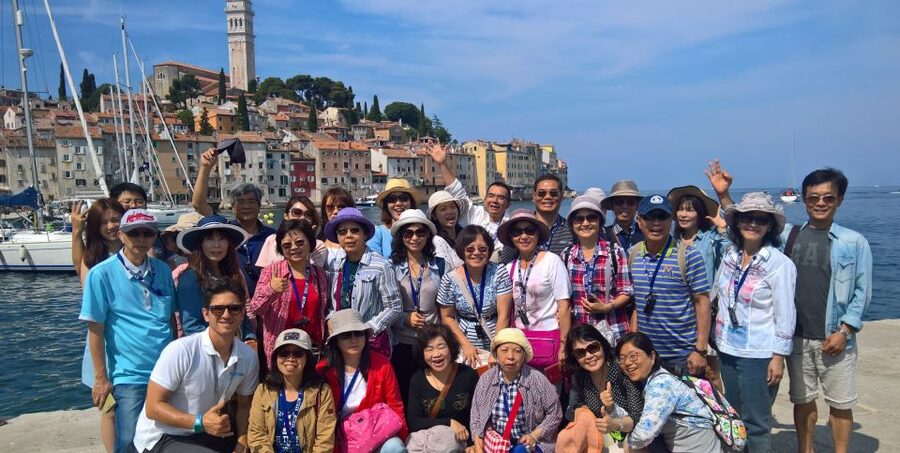
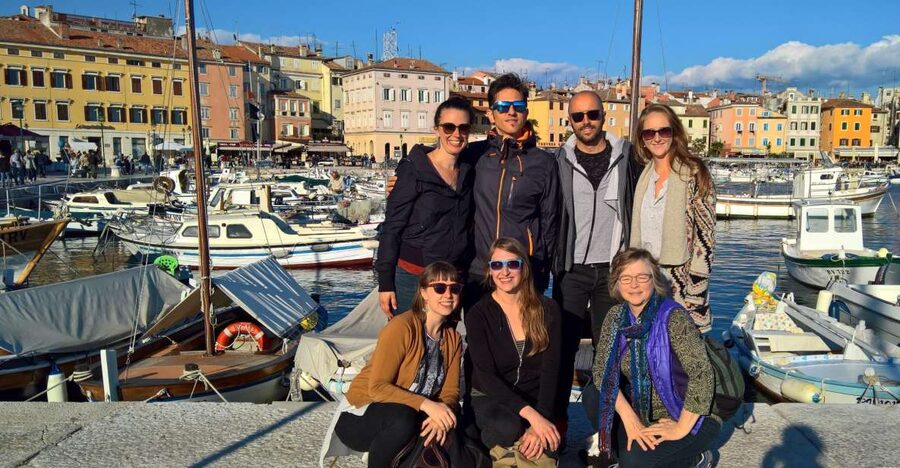
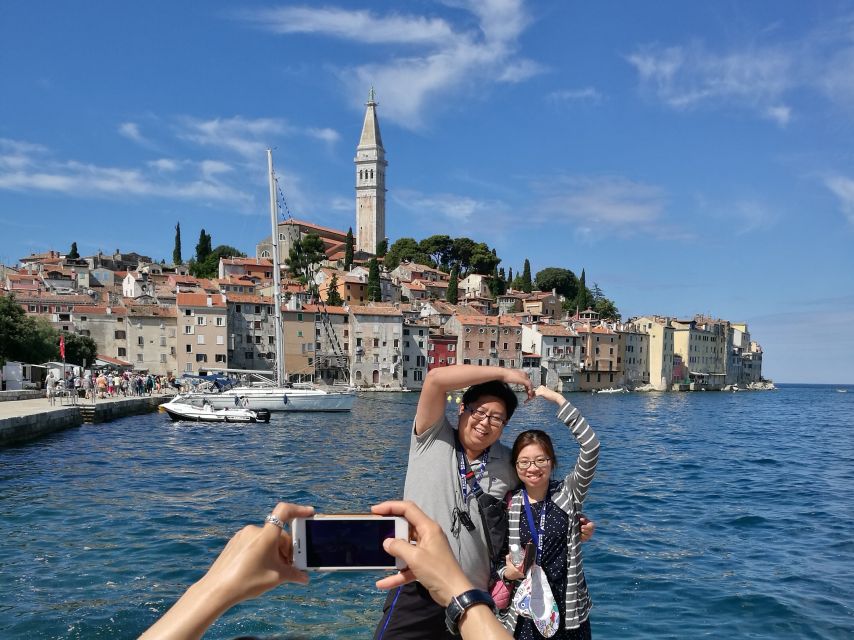
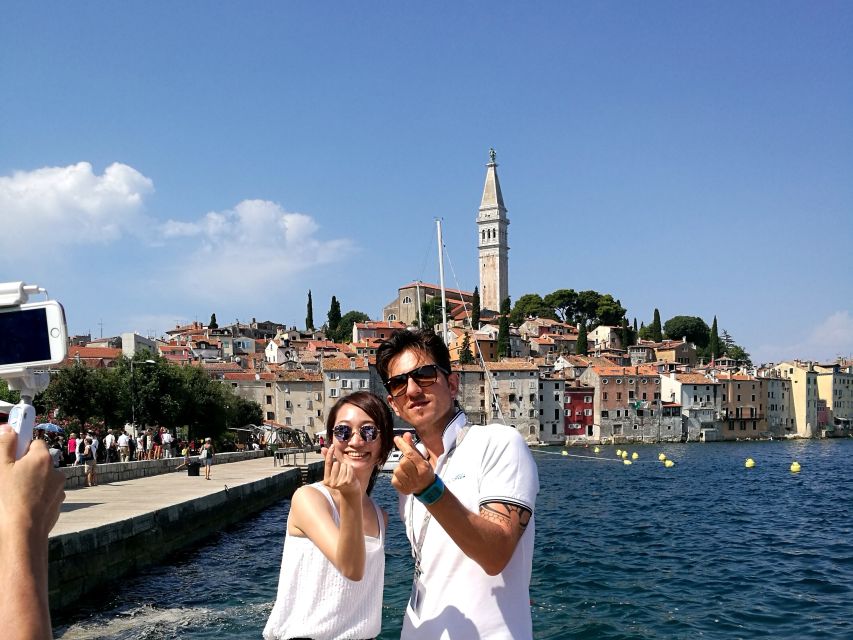
The waterfront is one of the route’s natural pauses. It is a place to look back at Rovinj’s skyline with the blue Adriatic behind it, and it also makes a fine spot for an Aperol Spritz after the tour.
This is one of the tour’s better transitions. You are not only being led from one monument to the next. You are shown how to enjoy the town. A good local guide understands that a waterfront view, a cold drink, and a well-timed pause can be as useful as another paragraph about medieval construction.
Bring your camera, but do not treat the stop as a formal photo session. The important benefit is orientation. From the water, you can see how tightly the old town rises toward Saint Euphemia Church. The church is not an isolated building at the top of a hill. It is the visual anchor for the entire center.
The waterfront is also where local recommendations become especially practical. The guide can tell you where to drink coffee with the best view and point you toward beach areas. Food and drink are not included in the $32 price, so plan to pay separately for anything you order.
A few more tours and experiences worth a look
- Private Guided Sunset Dolphin Watching in Adriatic Sea
★ 5.0 · 12 reviews - Zadar: Plitvice Lakes Guided Day Tour with Tickets
★ 4.9 · 3,148 reviews - From Split: Plitvice Lakes National Park Guided Tour
★ 5.0 · 3,002 reviews - From Zagreb: Plitvice & Rastoke Guided Day Trip with Ticket
★ 4.9 · 2,955 reviews
Cobblestone lanes near the old Jewish Ghetto
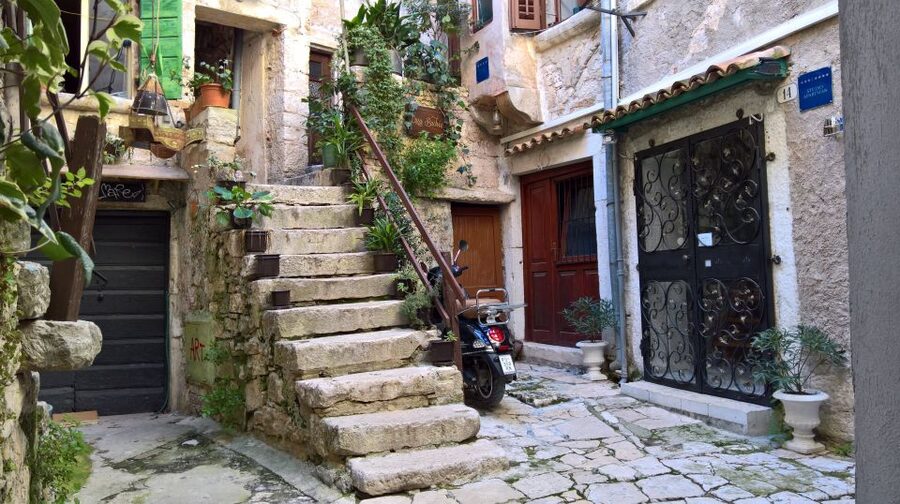
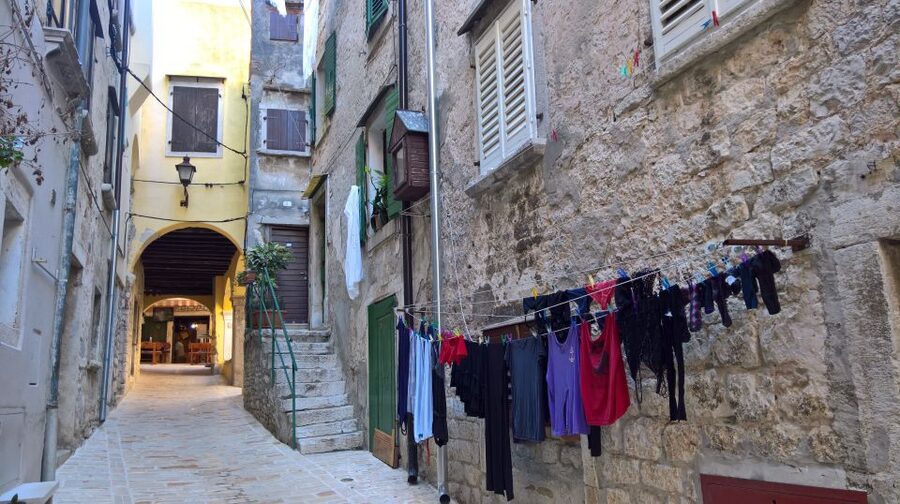
The route then turns into the older center, where the streets become narrower and more winding. You pass through the maze of cobbled lanes toward the area around the old Jewish Ghetto, just off the Arch of the Bearded, and continue toward the former stables area.
This part of the walk rewards patience. Rovinj is not best understood from one grand square. Its character comes from the compressed streets, worn surfaces, and small changes in level. The guide helps connect those physical details with the people who lived and worked here.
The reference to the old Jewish Ghetto adds another layer to the town’s social past. It is not presented as a detached museum exhibit. Instead, it sits within the ordinary streets of the old center, where different communities and working spaces once shaped daily life.
The former stables area also helps you picture a less polished Rovinj. Today, the old center is a popular place to stroll and eat. Hearing about stables and older living quarters reminds you that these lanes were once functional spaces, not just attractive backdrops.
This is the point where good footwear matters most. Half of the tour takes place on cobblestones, and old stones can be slippery or tiring even when the route is not technically difficult. Wear shoes with a firm sole, especially if you are walking in warm weather and plan to continue exploring afterward.
Following the walls to Saint Euphemia Church
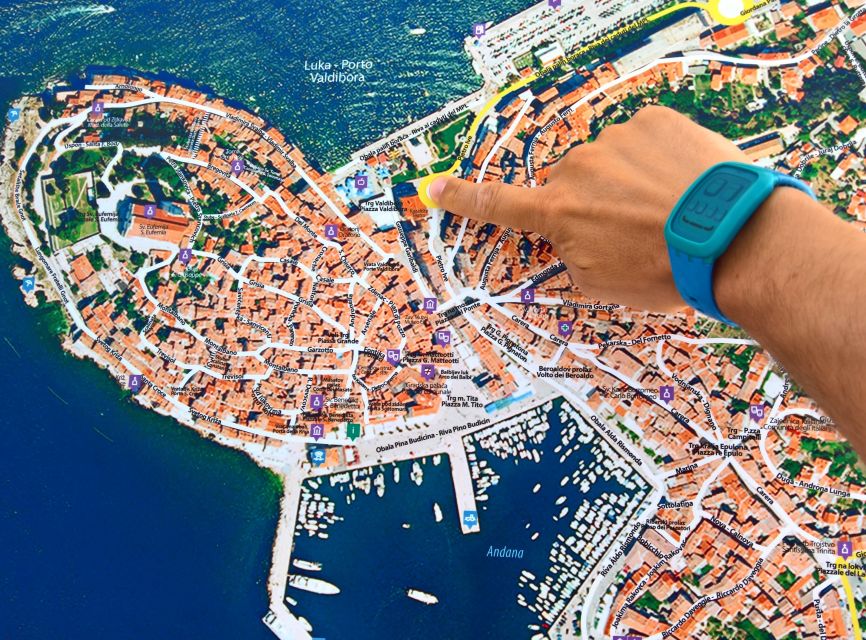
The final stretch follows the ancient city walls and climbs toward Saint Euphemia Church. The walk uphill is described as fairly easy, but it is still a climb over old streets. You should be comfortable walking on uneven ground for the full 90 minutes.
Saint Euphemia is the natural finish because the church watches over the town from its hilltop position. From here, you can look back across the rooftops toward the Adriatic and understand why this is often considered Rovinj’s best place for sunset.
The timing of your tour matters if sunset is a priority. The walk ends at the church, but the starting time varies, so check the available departures and choose one that leaves you there at a useful hour. The experience does not promise a sunset departure, so you should not assume every start time will work for evening views.
Ending here also gives you flexibility. You can stay near the church for the view, walk back through the old center, or use the guide’s suggestions to find coffee, cake, gelato, or dinner. That makes the tour a practical first activity in Rovinj rather than a self-contained attraction that ends with no next step.
What makes Goran’s guiding effective
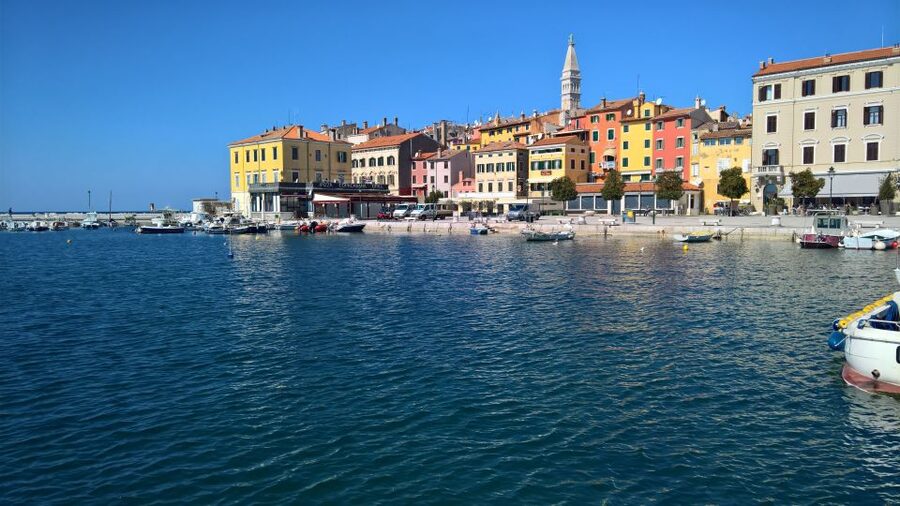
Goran is the guide most often named in the feedback, and the praise is notably consistent. People describe him as funny, animated, friendly, clear in English, and well informed about Rovinj, Croatian history, local culture, and the surrounding area.
The humor matters. Historic towns can blur together when every guide delivers the same solemn speech. Goran’s style is described as engaging and easy to follow, with enough personality to keep the information from feeling dry.
His local recommendations are another strong point. You receive suggestions for restaurants, coffee houses, traditional foods, cakes, gelato, and beach areas. Those tips can save you from choosing a place based only on a menu outside or a scenic table. They also give the tour value beyond its official 90 minutes.
The experience appears especially good for people who like to ask questions. The guide is described as happy to discuss the city, its people, history, and recent past. One small group of five received individual attention, but you should not assume every departure will have that same group size.
Is $32 a fair price?
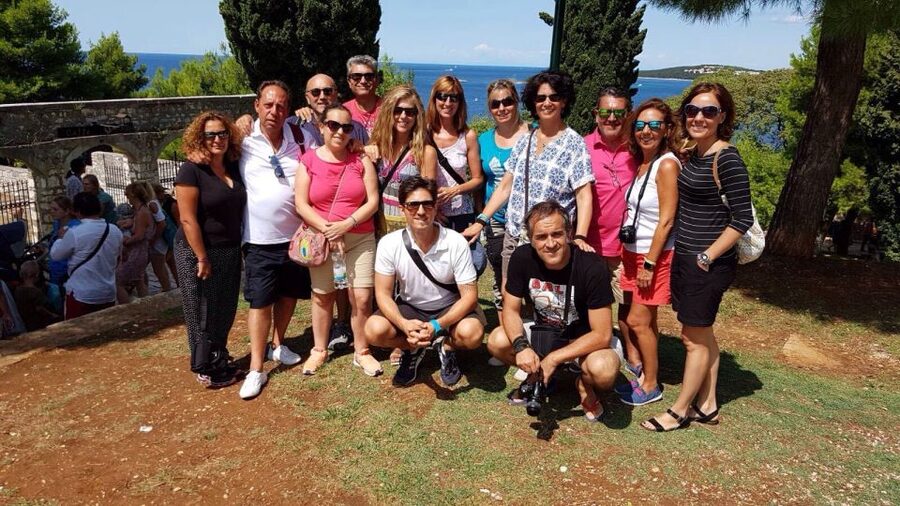
At $32, this is not the cheapest way to walk around Rovinj. You can explore the streets without paying for a guide. The question is what you would miss by doing so.
The price includes a licensed local guide and 90 minutes of focused attention. You are paying for the story of the missing channel, the town’s island past, trade along Carera Street, the old Jewish Ghetto area, the city walls, and the church viewpoint. You are also paying for recommendations that can shape the rest of your stay.
I consider the price reasonable for a first visit, particularly if you have only a short time in town. The route covers the main old-town setting without requiring a full-day commitment, and the local food and coffee advice may help you spend the rest of your budget more wisely.
The value is lower if you already know Rovinj well or prefer to wander silently at your own pace. It is also lower if you mainly want interior access to monuments, since the experience is a guided walk and does not list admission to attractions or food and drinks as included.
There is some welcome booking flexibility: you can reserve and pay later, and cancellation is free up to 24 hours before the start for a full refund. Check the available starting times before you commit, especially if sunset at Saint Euphemia is important to you.
Who should book this Rovinj walk?
I would choose this tour for a first visit, a short stay, or the first morning of a longer Istrian trip. It gives you a working map of the old center and explains why the town looks the way it does.
It suits you if you enjoy history told through streets and ordinary places rather than only through major monuments. It also suits anyone who wants direct suggestions for food, drinks, coffee, gelato, and beaches from someone who grew up in Rovinj.
Families with older children may appreciate the short duration and storytelling, though the cobbles and uphill finish still require steady walking. People with mobility impairments should not book it, since uneven streets cover much of the route and the climb to the church can be challenging.
You should also bring water, comfortable shoes, and sun protection. The tour may include shade in parts of the old center, but conditions vary, and the walk includes exposed waterfront areas and an uphill finish.
Should you book the guided walk?
Book it if you want Rovinj to feel like a lived-in town rather than a pretty collection of lanes. The former channel, the trade along Carera Street, the old Jewish Ghetto area, and the walk to Saint Euphemia give the town a clear story.
I especially recommend it if Goran is listed for your departure. His humor, local roots, clear English, and practical restaurant and gelato advice are the strongest reasons to choose this particular walk.
Skip it if you dislike cobblestones, want a completely private experience, or prefer discovering every lane without a set route. For most first-time visitors who can manage the walking, $32 buys a useful introduction, a fine view, and advice you can use long after the church bell fades behind you.
FAQ
How long does the Rovinj walking tour last?
The tour lasts 90 minutes.
How much does the tour cost?
The listed price is $32 per person.
Where does the tour begin?
Meet in front of the white World War II memorial on Pietra Ive Street, just off the farmers market. The starting point is also identified as the ATM operated by Auro Domus.
Where does the tour finish?
The tour finishes at the Church of Saint Euphemia.
Which languages are available?
The tour is offered in English, Italian, Portuguese, French, and Croatian.
Is food or drink included?
No. Personal expenses, including food and drinks, are not included.
Does the tour explain why Rovinj has no bridge at Bridge Square?
Yes. The guide explains where the former channel and bridge were located and how the channel was filled about 1,000 years ago.
Does the route include cobblestone streets?
Yes. About half of the walk takes place in the historic old town on cobblestones.
Is the tour suitable for people with mobility impairments?
No. The tour is not considered suitable for people with mobility impairments because of the cobblestones and the uphill walk to Saint Euphemia Church.
Can you cancel for a full refund?
Yes. You can cancel up to 24 hours in advance for a full refund. You can also reserve now and pay later.
Just added around Rovinj
- Sunset Dolphin Watching Boat Tour from Vrsar★ 4.5 · 10 reviews
- Postojna Cave & Predjama Castle – Shore Excursion from Rijeka★ 4.5 · 10 reviews
- Rovinj or Vrsar: Lim Fjord & Rovinj islands Speedboat Tour★ 4.9 · 10 reviews
- Istria Wine Tour from Rijeka and Opatija★ 5.0 · 11 reviews
- Private Guided Sunset Dolphin Watching in Adriatic Sea★ 5.0 · 12 reviews
- WW2&UNDERGROUND discovering the unknown EXTENDED TOUR★ 5.0 · 12 reviews
- Private walking tour Opatija -Romantic spotlight of the Adriatic★ 5.0 · 12 reviews
- Poreč: Boat tour to Rovinj with lunch and drinks★ 4.8 · 12 reviews
Walking Tours, compared.




Walking Tour of Split and Diocletian’s Palace
Read our review →


Krka Waterfalls tour with Trogir Walking tour and Krka panoramic boat cruise
Read our review →
City Walls Early Morning or Sunset Walking Tour
Read our review →Browse the lists this tour appears in